Peace Over Presents: Finding Joy in the Holidays | Pennywise Coaching
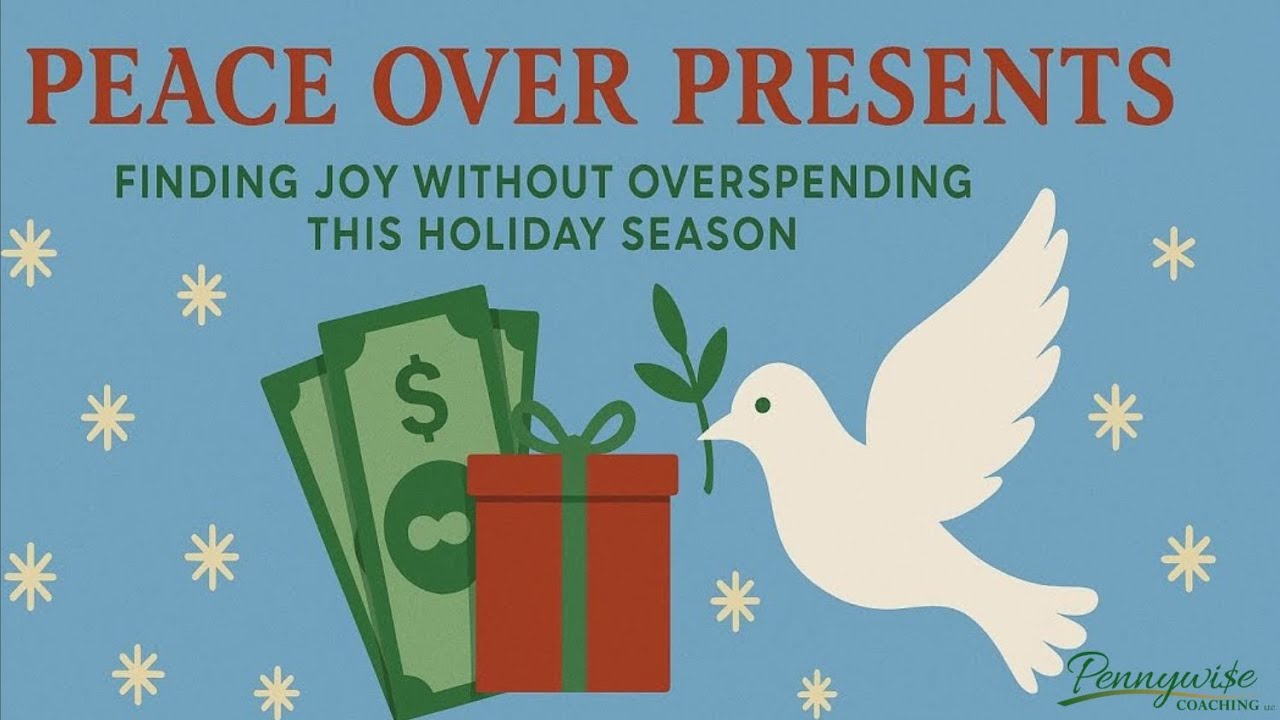
Penny Kidd leads a group coaching session on reducing holiday stress and spending. Participants share their budget struggles and explore alternatives like white-elephant swaps, experience gifts, and sinking funds to avoid debt while honoring what matters most.
Chapters
This is my first time pretty much doing this talk, so, and I feel really safe and at home to do this with you all because you all will give me honest feedback. So, um, it's one of those conversations about the holidays that we have pretty consistently and that we can be stressed out by, and so I just wanted to kind of come in and share some ideas and some viewpoints. I'm gonna follow up with some tools. And if I think in my email yesterday, I gave you an option to download my, um, Planning for Peace ebook if you want that. Um, it's a little more journal-y kind of format where you can get some stuff out of your head, but also maybe think about some different things. But we're gonna use that as a little bit of the framework for today anyway. So whether you ever read it or not, But I'm gonna start. I was playing with the polls, so I wanna start with an anonymous poll. So I'm gonna start. If you have access, Beth, you probably may not be able to do this, but a couple questions here about how do you feel about the holiday? How much money does your family typically spend? And what's your favorite part of Christmas or Hanukkah? So let me give you just like a minute or 2 to answer these off the top of your head, and then we'll jump in.
I'm gonna click on time with family, but it's also with friends too.
Fair enough.
Okay. Yep.
That's all family to me.
Me too.
Family by choice. Okay, couple more. Does it— is the poll gonna work for you, Beth? I can't tell. Maybe not if you— I can't do it and I can't—
they—
it mutes my microphone automatically because I'm driving. So that's fine. I have to tap to speak. Okay, then I think we're done. I'm gonna close it. I'm gonna end the poll and share that with you guys. So this is kind of some of the topics we're going to talk about. But, um, one of us said, I love every minute of it. Three of us said, I like it, but I feel stressed by the strain on my money. And one is, I dread it. And I couldn't answer, but I think I'm somewhere in between. I like it, but I dread it sometimes too. So, um, how much money? Anywhere from under $200 to over $1,000, right? Or around $1,000, let's say, is, is and we'll talk about what kind of historically people do. And the favorite part, interesting, is the time with family or the religious celebration. You know, it's not— nobody said, oh, it's the gifts, it's the presents. So, um, so that's interesting. And I think I'm— I, I just— maybe I'll run that as a poll on my Facebook page or something, but I just, um, kind of wanted to start with that. So one of the things that, um, I feel like there's this paradox, right, with the holidays of it's supposed to be joyful, but then it's pressure, and then it's this whole dichotomy that I find really fascinating about the expectations and then the giving, which sometimes doesn't feel like you're giving, it feels like you have to. And so, you know, this is one of those areas where both can be true, right? So, um, You all have permission to feel any kind of way. And Denise, if you have the option to come off or on camera and off mute, we're gonna just kind of have a dialogue. You don't have to stay on mute unless it's crazy in your house. But does anybody want to weigh in and tell me what you think the average American is spending on holidays this year?
Too much.
There we go. 500.
Oh gosh, I, I'd put it at at least $2,000. Okay.
Yeah, I'd say a thousand, close to a thousand.
Thousand.
Like, probably they think it's a thousand, but it's closer to $2,000 because little things come in, right?
And that's like the crux of all this, I think, is that in the stats say around, I think it was $1,600.
Okay.
And it says per person, but I don't know if that counts as a family, but obviously I think Jeanette has 9 children or something. Denise has 6 plus, you know, so it, it vary— it does vary obviously on who you have in your circle, friends, family, or whatever. So we can't say, well, just because I don't spend that much, it's not too much or too little, right? We're all— and that's the whole crux of— and you all know my business well enough to know that I'm about helping people be mindful and intentional with their money, and it all depends. So when somebody says, well, how much should I spend on this? I'm like, well, it depends. I don't know, do you have 9 kids or no kids? Do you have, you know, do you live in California or do you live in Podunk, Kansas? I don't know. So I'm not here to tell you numbers or what you should or shouldn't do, but I want you to start thinking about what are you doing willingly and because you choose to. Is that fair? Is there— do you guys have any reaction to that or any kind of feels or thoughts about the numbers that you might be spending or not spending or the people around you?
I always try to keep receipts and never add them up because in the end it ends up not mattering because we get through it and it's fun by all. And so I just, I try not to worry, but I know in the back of my head it's at least $2,000 because of a party that we throw on Christmas Eve. And then my husband, I always want to keep it to one gift, but he likes to keep it to like, no, they're still kids. I was like, no, kids, they're kids, married kids. No, we got to do this. So the only thing that we've done now is we have a gift exchange among everybody involved. And so that should be just one gift. But my husband is extremely generous. He goes, no, I still want to buy for everybody. So I was like, dang it. So I can never rein it in, but it's getting better. But I know it's easily $2,000 to $3,000 a year, easily, no matter the circumstance. It's just— it's odd. It's just— that's what it is.
So how are the rest of you feeling about the cost or the money or the expectations?
I think mine has changed over the years from the standpoint of, you guys, I haven't been married yet and I don't have children, and all of my friends' kids that I had adopted over time, they're all having their own kids and live, you know, away. And I'm not in my original hometown anymore, you know, I haven't been since my parents died. And my siblings and I, we have always, they count on me to make the family peanut brittle recipe. I'm the one that does, you know, like all this crazy stuff. So my real expense is like making things for people I love. And peanut brittle or like blackberry jam because I go pick blackberries every summer and they love my jam and lemon curd when I pick lemons and blah, blah, blah, blah, blah. So it's more— that is what we do. So my cost is like supplies for like the kitchen and mailing.
That's awesome.
Which still can be a cost, right? I mean, I think—
and it is a cost, but that's why I put mine at the $200 range, because I have two siblings, my friends locally, we tend to do things together, um, you know. So we're in my family, we've always been more of the experiences type people too. So yeah, I'm in a very like a maybe a unique situation now that our parents have died, because it used to be really different when they were living.
Cool.
Anybody else want to share?
I think for me, one of the things I'm trying to figure out, and hopefully, you know, you guys might have some ideas, in our family, among my children, which, you know, there are 8 kids that participate and myself, so there are 9 of us, plus then we have, you know, daughters and sons, I think sons-in-law yet, but daughters-in-law as well. So Um, that's been made easy because we just do a gift. You know, everybody takes one person, uh, like Lynn was talking about. I think it was— no, it was, uh, Denise was talking about that. Uh, so that part's easy, but it's for me, it's the grandkids, and I have 10 grandkids. So even if I spend $25 on each grandkid, it's $250 out of the, out of the chute, just like that. So, and then some of them require mailing because they're not there and You know, that sort of thing. So I'm, I'm open to suggestions, but that's been probably my biggest expense for Christmas has been those grandkids.
Well, and I want to talk about how we align the holiday with our values. And I've said this to certain people, I've felt more peer pressure as an adult in, in not just the holidays, but in keeping up with my kid does this competitive blah, blah, and I have to live there or drive this or go to this country for my vacation, right? And we get swept up in this kind of pressure to do like everybody else does. And even from your spouse, like Denise is saying, I'm trying to keep it this way and my spouse is out of control on this side. How do we merge those two and have the dialogue with family? I'm really kind of excited Grant's here, but I also can't talk to him because, um, or talk about him Um, but he and I, we've had money conversations for many, many years, and he's actually sort of sidelining on my business a bit here and there, and we're building some stuff together. But, um, one of my biggest challenges has been having money conversations around Christmas, and I don't want to buy for everybody. And when our kids were little— Grant and I are the only ones in our family that have children. And I remember us having this like, okay, what's our boundary going to be? Okay, $25 per kid. So I'd buy $25 for his two and he'd buy $25 for my two, and then we'd ship it. So then you add the shipping cost. Pretty soon, one year we went, why are we doing that? We're both spending the same dollars. How about I'll buy for my kids and put your name on it, and you buy for my kids and I'll put your name on it? We'll save the shipping. And then, then a few years later or whatever, we go, okay, that's just silly. Our kids have so many things Why are we continuing to buy them things so that Aunt Penny, you know, they know that Penny cares about them? And, you know, it helps when the kids get older, but also he's got a very large extended family on his wife's side. I have a small extended family on my husband's side, but it never seemed to fail that the kids had way too much stuff.
Yeah.
And Christmas was just becoming about stuff, and they didn't even know who gave them what. And you'd have this frenzy and you'd be like, do you even know what I bought you?
Like, no.
Can they tell you next year? No. And so it started feeding this. So now, even for quite a few years, our family— so we just get together for Christmas. And now that our kids are out of college and we don't have to worry about Christmas break so much, we're finding ways to get together outside of this expensive time of year. But it's taken a lot of dialogue and trust with somebody that I can speak honestly to I have not had the same experience with my sister-in-law's side of the family, and they are really upset that they want to send gifts. And every year we'd say we don't want gifts, and they'd send gifts, and then we would feel obligated, yeah, to then send a gift at the last minute. Literally a couple years ago, we all exchanged Hickory Farms cheese boxes, and I'm like, okay, this is just stupid. I could go buy my own damn Hickory Farms cheese box, right? And so we brought it up again. Well, then we upset them because, I don't know, they, you know, we want, we want to— this our— we want to show people we love you. If you love me, come, you know, do something else for me. And we're going to talk a little bit about the love languages. And I think that it doesn't mean you don't care about somebody because you're choosing to have some focus on your own finances. And your plan, right? Um, so I think starting with your why on all things when we're working on change— why are we doing it? And not just because we're expected to, right? So I would encourage you to challenge the shoulds in your life and say, okay, I'm doing this because I want to, this aligns with my values, whatever. And Carol put a— you want to just talk about that, Carol, in your comment?
Yeah, sure. I knew we wouldn't all have a chance to say anything. So as you were talking about it, I remember some of the things I've done is you kind of just almost when you're changing things, it's like you just have to have that one awkward year. Like, you know, you know, you don't know how to say it. Or maybe, you know, what about the friends? Because it just, it just gets out of control. But then there's that one awkward year where they give you something and you don't give them anything back, and then you're like, okay, so that's all right because we're still friends. And then like next year is kind of this unwritten rule that we don't have to get anything for anybody unless we do have the conversation ahead of time, which can be weird. So that's another way to do it.
I think it can be weird, but I think it's also important as much as you can. As if you care about somebody in any kind of way, you should be able to say, I love you, and can we not exchange presence anymore. Because— and then, you know, the other thing I was thinking about, the dichotomy between even like what we talked about earlier, how much do I spend? Well, how much do you make? And these families that say everybody puts in $100 because we draw the name and everybody's supposed to— well, $100 to me might be very different than it is to you. And so to give a, a fixed amount of dollars that everybody's supposed to do the same I guess it's one thing if we're doing the gift exchange and there's an agreement, but even that, I've had clients tell me, wow, I'm supposed to spend— I don't, I can't remember what the number was— $300 on my gift. And I was like, yeah, but you're working on getting out of debt.
You're try—
you've got different agenda than your sister has, you know. So having that, that awkward conversation, I think you're right, Carol, that if you— even though I felt like we had done it over and over again, it had to come come to a head and be kind of ugly before we were able to get to the place to say, okay, and now you're appreciating that what, what my love language is, is not gifts, and you're stressing me out by buying me a gift. You're not blessing me, right? And because then it triggers all that guilt and emotion, and I should respond because they'll think I don't love them.
So I had a work friend that her gift language was definitely gift, or her love language was gifting every year. And I, I have got every kind of Bronco paraphernalia in the world. I've got a chili pot, I've got barbecue tools, I've got all coming from her. 90% of them are sitting on a shelf in the back corner somewhere that I'm not using. And she gave me a big tall— actually, I have it right here— a big tall, um, water bottle, Broncos of course, and filled it with M&M's. And so the next year I said, I'm going to give you this back because I want the M&M's, but I don't need any more Bronco crap. Just fill it with M&M's and give it back to me wrapped up. Perfect. That's all I need. And she did for a couple of years. That worked. But then it goes against everything. She, she has to go buy something new and special. And I'm like, no, I don't need it. If you really want to do something, that's what I need and want. I'll eat the M&M's all year long and I'll think about you all year long, right?
Right.
It worked for a couple years.
Work is— that leads me into one of my most memorable stresses around holidays was at work when I worked at the county, and the expectation that, you know, every time somebody's mom died or was sick, they were passing the envelope to say, here, put And they would tell you how many dollars to put in there a lot of times, you know. And then it would come around to the holiday, and I would be like, and we have to do the holiday party, and everybody— or you need to do Secret Santa, or you're kind of a, you know, you're the Scrooge, you're the one not participating. And then we'd go to the holiday party with the gift exchange and have this, you know, $25 or $50 limit. And then everybody was buying a bottle of wine, and I'm like, you're buying wine that I don't even drink. If we're gonna have a wine exchange, let's call it that, you know. And so Every year I would say, why do we have to do this? And let me just opt out. I love coming to the party. I love being with you, and I care about my coworkers, but I really— if I'm cutting out my friends and my family on my list, why do I have to do this at work to be a team player? And so even though it was a bunch of social workers that I thought would appreciate this and understand the emotional part of it, it took a lot of time to finally keep talking about Love Languages, and I said, you know what really matters to me is acts of service. So if you wanna come file my stack of papers for me, that would be a beautiful gift. I don't need a trinket that I'm gonna take home and go, what do I do with this? I have everything I need, right? And again, it's those awkward conversations that are important and, and finding a way to speak somebody else's love language. So is anybody not familiar with the Five Love Languages quiz? I know it, you know it. It's fun to do again. So let me pull that up. I was gonna, um, I'll share it in the link here, or you can even just go, um, Google Five Love Languages quiz. But I found it so I can drop it for you, and then, um, if you're on a computer, you can click on it and go do it later. But it's really kind of interesting, and then to have maybe your family and friends do it Like, what's your love language?
I'm a quality time. I'm a quality time, hands down. So as long as my kids, some of the kids come home, I'm happy. I need nothing else. I just like spending time with the people. So the whole gift thing, it needs to change. It's changing, but it's not just the one awkward conversation. It's kind of morphing. It's morphing. And yeah, and all my kids are at completely different stages of income. So our gift exchange this year was, they put, they said, there's no limit, but something made is really appreciated. Some creative gift, whatever, whatever. It's up to you. And there's no money. That doesn't have to be $30. It doesn't have to be $100. It's whatever you can contribute. And that is very thoughtful. And we all understand where we're all at. Fortunately, my kids are all still pretty close with one another that they all know where each other's at. So I think that it'll be interesting to see what comes out this year in terms of that. Um, and, uh, but, but yeah, that one awkward conversation, we've tried to have that and it doesn't ever go over because there's this commercialized tradition and it should be just one gift. It shouldn't be this multiple gifts. And, and even my parents went overboard when with Santa gifts and it's like, and that's where I got, they all have to have 3 gifts because that's what Santa brings. Where Santa should bring one gift or no gift or no Santa at all. But it's how we— it's how we grew up. But yeah, my love language hands down is just quality time. So I don't need anything. I don't mind giving things, but I don't need anything.
You touched on that idea of the traditions, right? We feel like even like cards, for instance, sending Christmas cards, most stressful point of Christmas for me.
Yeah.
Like I don't do it. It can be very expensive now. You know, Grant's really good and puts—
he—
but he puts a lot of time and money into his card, and I think he does it as much for himself as he does for anybody else. But, um, I quit doing it years ago, about the time my life got interesting, when I went into business for myself. I quit doing the card. I'm like, that was weird, but maybe it coincides with social media, and I feel like, ah, most people kind of know what I'm up to. But it also became an obligation and a have-to. And same with baking and cookies and fudge and all the things that we think we have to do to celebrate this season. We have to buy this decoration, or some people buy all new decorations every year because they want a certain new look, or every other year or something like that. And I was like, when you start thinking about that and we couple that with what we talked about early on with how much are people spending, if they're spending $1,500 a year and they haven't planned it and they don't have the cash for that, it's going on a credit card. And then something like 30% of the population is chasing that debt till May or June. And they were— I was pulling up my calculator— they're like, if you're only paying the minimum on that $1,500, you're going to spend another— I think it was $1,200 in interest. And it takes like 4 years to pay that off or something. So I think one of my tips that you would expect from Penny White's coaching is that We have to start planning ahead what the budget is. So we're talking about the emotion and the plan and what values you have, but also how are you going to fund it so it doesn't dig into your real goals for life, whether that's eliminating debt or building wealth or wherever you're at in your stage or giving it to charity. I don't know what your goals are, but if you're getting caught up in the have-tos and you can't afford it and you're putting it on credit, because you think, well, our family expects that we do that, or my friends and I always have to exchange. The real cost is what you're not able to do with that money, plus the interest rate that you're paying. So some people say, when is the best time to start planning for Christmas?
January, the year before.
Yeah, exactly. Yeah, it's not September, right? And when we all of a sudden this time of year go, oh crap, Christmas is coming, Like, yep. And it's December 25th every year.
You know, I always have to laugh because my property taxes are due in December.
Ooh, ouch.
And I think that that is the rudest thing ever. And it's hilarious because, you know, I squirrel away, you know, I mean, I just kind of squirrel the little acorns and it's kind of like I just gave myself the gift early of paying the dang thing off because I thought it is just rude that there's a December.
That's interesting.
Yeah, we have it broken into December and April, but, you know, I'd just rather—
yeah.
Any other thoughts about that, about sinking funds? Or somebody— when I did this the other day, I was talking to somebody and they mentioned Christmas clubs. Do you guys remember Christmas clubs? And I think her credit union still does it. I haven't seen one for a long time. I haven't either. But that was basically the same thing that I'm, you know, you're putting aside $25 a paycheck or something. And we did that. That was way before I was ever budgeting, back when I worked in Weld County. But what, what was ironic was in November it would drop into my checking account so I could start spending it. And we always spent more than whatever the Christmas club was.
So then I know one thing I do is that I will buy things throughout the year if I see them and I go, oh, this would be good for so-and-so.
Right.
And I really do put myself on a pretty strict limit with my grandkids of $25, you know, so I'm not going to buy them the world. They're not going to get their favorite whatever, you know, because usually that's more than $25. But because I have so many, I need to really just keep that, that hard barrier for me because otherwise, like, like you're saying, I would be spending, you know, $2,000, $3,000, $4,000. I could be spending a lot of money. But I don't have—
I don't even think you have to justify it by saying I have so many. It's just, and that's my choice. Yeah, you know, and if we can, if we can start appreciating each other instead of guilting each other about what we do or don't do with our money. And like, the biggest gift to me would be if the whole wide world would take care of them own selves and we didn't rely on somebody else for, you know, taking care of us in our old age. Like Mary Ellen can appreciate that. She's a finance person. You know, we know how expensive it is, right? So expensive. And, and yet do people get on their deathbed, look back and go, I remember that present I got in 1982?
No.
You know, and we just get it all worked. So, you know, I think just having those conversations, we're simplifying this year. And, you know, we're going to focus on time together, not stuff, whatever. So, and if there's other conversations you guys have had or you want to share, I don't know, maybe Grant has a different perspective about us growing up.
Well, no, I certainly remember the Christmas savings accounts. And, but I was going to say that, you know, ever since our kids got old enough and we weren't necessarily exchanging gifts, we were every other year getting together. And I can tell you that my kids don't remember the gifts, but they can remember, oh, and 2017, we went to Scottsdale and remember we went to the whatever, you know, they'll remember the get-togethers that we spent money on. We didn't— I don't think we exchanged any gifts, or if we did, it was very minimal. And, um, but they remember where we were and what we did and the experiences they had. So I think my family has traded in experiences for gifts, kind of, you know, like the family get-togethers. That's, that's where I enjoy spending time with my family. I'd rather invest it in a trip to spend time with my family so I create a memory, as opposed to some little trinket that's going to end up in Goodwill in 5 years anyways.
So it would be interesting if families did more of the white elephant thing that sometimes groups do, you know, like, let me go look in my closet what I can give you that I could just pass around.
And we—
because I know there's the fun in the opening gifts. One of the traditions in my family kind of started back with our mom. We were, we were pretty poor when we grew up, and our, our, our gifts were literally wrapped in, um, comics, comic paper, whatever, because my dad, my dad really grumbled about Christmas and hated the cost of it. And so one way to save money was to not buy wrapping paper. And it might have started the year he lost his job, I don't remember, but we carried it on after that. We kept the colored, colored comics. People would come over, oh, how cute, you guys use And I was like, yeah, it's because we can't afford the wrapping paper. But they just thought it was really clever, right? And so we're using wrapping paper from the newspaper in the recycle bin. And, and then they gave Dad something to do Christmas morning.
He could read the comics while we're all open—
exactly, while we're opening presents. And my mom would wrap socks and underwear and things we needed just to have something to open. But then it became this kind of funny thing, like she would use um, funny names on the tag. So it never said 'To Penny,' it's— it would say 'To Henny Penny' or something, whatever nickname or whatever something. So my family, my kids, that's become like more of the tradition now. Like, they hate if they get a package with their name and my name on it. They're like, 'No, where's the fun?' You know, because now it's like a puzzle before you open it. So you have to read the name and figure out who it goes to and then who it's from. And it's all about like— it could be from Bronco Boy to blah blah blah, right? You know, but it's funny, those traditions, and they have nothing to do with money, right? And like Grant said, that's what matters to them.
Well, and Penny, you had an interesting comment about the white elephant type thing. When my parents were aging, um, I was the youngest, and I flew home and I said, you know, none of us need anything. And they both kind of looked at me, and I said, said, if you would like to bequeath us things from like your anniversary wedding, from your anniversary, from things here that have special meaning. So we started an annual tradition of they would tell me the history behind whatever something was, and I would write that on the card, you know, for my brother, for my sister, or, you know, for myself. So it was funny because the silver water pitcher with the engraved L on it, when my brother was remarried, I had been the one to received that, I gave it to him as the wedding gift, and he was like, thank you. So, you know, I mean, it just— it was kind of like repurposing in advance. And yeah, there was still a whole lot to clean out after they died, but, you know, it was also things that were meaningful and things that my siblings wanted.
Guess what?
Everybody kind of had their thing early.
I love that.
That is a good idea.
We've been doing a lot of planning with my in-laws, and I think I finally have them you know, thinking about stuff. And the other day I was over there and my mother's like, here, do you want the silver? I'm like, I have my mom's silver I don't use, but maybe Mallory wants it. And so then, you know, but I really appreciate that she's even starting to think that way because I would rather get something when somebody's living than— yeah, and you're having to go through and going, I don't know who made this, let's put it in Goodwill. Well, then hear the story about it, you know, why was it meaningful for Yeah, and if you guys don't know Lynn, she does some really cool end-of-life stuff. She's got a great email. You should get on her email. Always learn something new from Lynn's, um, so I don't know how to describe what you do. If we have a second at the end, I'll have you introduce yourself. But, um, so yeah, setting aside and teaching your kids some of these values, right? And creating the sinking fund is what we call that when you're setting aside little bits of money all year long. So if you didn't do it last year, start for next year, right? Or start from every paycheck from now till December whenever you're going to buy stuff, right? So, um, I think that's a, that's a great way to help reduce the roller coaster of Christmas and set the boundary and say, this is what my budget is. It's $1,000, it's $2,000, it's $500, whatever, right? Um, and you have to give yourself some grace in this process because it's not going to happen overnight, and these conversations don't happen overnight. But it really is about freedom and, you know, your, your choices in the long game. So I have a tool, um, that I'm gonna— might be easier to send it to you after, but I'm gonna see if I can drop it in here now. But I created a holiday budget that is in Google Drive, and it's one that you can copy and save for yourself. I think here, maybe I can share it, screen share it a minute, and then I'll see if you want it. Um, But I think, let's see, share screen.
More computer savvy than me.
I know, I'll have to send you— I'll, I'll walk you through it. That's okay. Okay, so here's how it looks. So you, you copy this link, you'll get this, and you'll say, okay, you want to use this, you have to make your own copy, right? Because I'm going to Zoom stomping on the On the original Wise Guys. Wise Guys are my people. So, and then the way this works is that you can either start with your total up here and go, okay, here's my $1,000, and I put that in the total. And then it says, okay, what do you have left to budget? I have $1,000 left. And then if you start putting in, you know, I'm just making up numbers.
Whatever.
It's chipping away at what you have left to budget because we want to get down to zero on your plan. And then when you go spend, you put it in the actual side of— I spent $207.99, and then that's the actual spent, right? And you still have $720— $792.01 to spend. So, and this is editable. So like, if you don't have kids, take that out. Or if you want to add dogs or whatever. I have this one, I have a travel one I've developed, I think I have a wedding one. So, you know, it's just a way to start getting your head around all these micro spends, you know, the airfare, the, the parking, the wrapping supplies, the flowers, the gift exchange, the party you're hosting. Like Denise said, you know, you have this big party, that's not cheap. So these are all places that help you get your head around. So you can either start with the total number, or you can take that number out and start saying, okay, well, I think I'll spend this— it's going to be more than that, um, and I'm going to need this and, you know, whatever. I'm not really paying attention to the— so don't count my— but then it builds. Okay, here's how much you're going to need to have in your budget, right? So you've got at least $687 so far. So that helps you go, wow, even if I only do $25 per person or if I do $10 per person or whatever, it adds up. So I'm going to email this to you also with the recording and the and I'll drop the link in our chat here if you want to pick it up today. But I think it's some place to start, just to start figuring out, can I get my head around this whole idea, right? What other areas do you guys feel like cause you stress that maybe you found some ways to deal with that we haven't talked about yet?
So Christmas cards always caused me stress because I was the only one that did them and there was always about 80 to 100 that went out.
Yeah.
And, um, and it, I put additional stress on myself because I wanted it to be creative and I wanted to create it and not, not buy Christmas cards, but just writing them, addressing them with 6 kids just took too much time. And I finally gave it up a couple years ago. They've been gone for a while, but finally gave it up. And so now my husband will do it, but he doesn't do the list. He just thinks of somebody and then he sends a card. And so, and then I was like, well, who did you send it to? So it's oddly still very stressful because one, I feel guilt for not sending out cards, um, and, uh, and two, um, I'm not doing them but he is. So it's still a darn issue. But, but I'm— I don't I don't make the time for it, and that has alleviated, um, time stress for me.
Yeah.
And now you just got to work on the guilt of letting go, letting it be, you know, letting it be how it is. Say it again. Oh, Beth. Oh, you're talking.
I'm sorry.
I'm— I thought I was on mute.
Sorry.
Um, anybody else? What other kind of places? Where are you finding ease in your holidays?
Um, so on the holiday card thing, I— what I used to do, and I celebrate Christmas, so what I used to do for Christmas cards when the kids were little is we all— I used to, before I had kids, I used to always do it like at the last minute and it came out after the holiday and all. And then I thought, well, hang on, we have— we always have Veterans Day off and I never have a plan for that. So what I'll do is I'll go ahead and order the card then, because by then I kind of wanted to do like the, um, the pictures, you know. I really enjoyed like Shutterfly, and plus you get a really good deal at the beginning of the season, you know, before Thanksgiving, right? So I just made that in my plan, and actually that worked really well, and I didn't have to pay like, you know, extra for shipping fast or what have you, and Um, I did of course have to pay for the stamps, but what would happen was I would get them prior to Thanksgiving, and usually around Thanksgiving I had some downtime. So what I would do is I would just address them all, and honestly, I got to this crazy point where like on Friday or Saturday after Thanksgiving I would just send them and then I was done.
Yeah.
And then what I realized was people stopped— a couple of years ago I realized that people stopped sending them to me as much, and I thought to myself, why am I doing this? So last year I didn't send the card, and I didn't get that many back. But then I had like, you know, you get those free cards in the mail from places you maybe donated. So I just had a bunch of those, and I just— every time I got a card, I would just send them back, like a generic one. Yeah, I don't have any generic ones left, so I should probably go out and get, um like just like a $5 or $10 packet or something just to have them. And I haven't done that, but I really love that I don't have to do it anymore. There's part of me that goes, oh, I should really do it now. So for me, I just— I have been sort of ruthlessly trimming away things I don't want to do, and it started It started at COVID because talk about like, it's— this isn't money as much, although it all, it all relates. I used to be this crazy person, and now that I look back on it, at the time I didn't think of this at all, but I would open up my home to my entire family. I would displace myself, my children. I would go through the entire home, re—
re—
position everything such that it would receive my family. I would get all— buy all the food. I would accommodate everybody's needs. It's no wonder I was stressed out, right? And then what I realized was in COVID, I didn't have to do that. And then what happened was like in '22, like after the '21 and '20 I said to my sister, I think I'd like you to stay in a hotel. And she was like, talk about that awkward first year.
Yeah.
And she like, it was, it kind of stung. But they don't stay at my house anymore.
Interesting.
Yeah.
And you still have a sister and you figured it out, right?
I still have a sister. Last Christmas was the best because we didn't go anywhere. We went for a hike.
Like, it—
it— like, I didn't— I didn't go anywhere, do any of that. Like, it just— I've had so many years of so much stress around holidays. Yeah, now I'm just trying to— and Thanksgiving too. And I was gonna— we were gonna do a Punta Cana vacation, and that was going to be like our gift to one another, like we were talking about Grant and other But, and in the end, my, my dad was not— it was too sick. And anyway, we're not doing that, so we're taking that money and we're— a portion of that money— and we're just Airbnb-ing it close to them. So that's gonna be great. But, um, so those are some things I've done. I've really worked really hard on this. Um, Boundaries Coach Mary, whatever her last name is, I'm not remembering it right now.
Mary Brown.
Mary Brown. Yeah, she's no longer doing this, but she really helped me, um, because I was in a small group mastermind of like really deciding what did I want my holiday to be. She had this whole worksheet, and wow, wow, that was an eye-opener on some of the triggers. So my biggest stress is not money at all around holidays because I, like you Penny, grew up with very limited funds. So it was never this big splashy thing. Literally, that's how we got our underwear. It came at Christmas, and I thought that was normal. You know, that is when you got your underwear and socks. Yeah, I still like buy underwear from my mother to give me at Christmas. I was thinking like, oh, I would, because I like certain kind, just because she likes doing it. Yes, you know, and she would save the tags. I thought that was normal, like you, you know, and save, save the paper. We'd use that like 5 times. Like, I, again, I thought that was normal. Now I don't do any of that stuff, you know, but, but I did because that's how I grew up.. And, um, when I was a single mom, I all throughout the year, just like what I think Jeanette was saying, somebody was saying, is like I would just, as I was going to yard sales and what have you, I would just pick stuff up, I would put in the closet. That's how I would buy stuff. Like, how else was I gonna do it? I, I always grew up with you never put money on a credit card that you do not have in the bank. End of story. Like, that was the, that was the baseline.
Yeah.
And then I grow up and realize that not everybody has that, right?
So, business.
Yeah, yeah, yeah, right.
Yeah.
Anyway, that's kind of my scoop.
That's great. Who else wants to share? What are some of the ways that you find ease, and what would you share with somebody else that's worked for you?
I say just making small changes over time. I mean, I can relate to what every single one of you have said. We've started doing more more experience. My kids— I have one in college and a senior in high school, and we just went to Florida in October, right? So they know that Christmas will be more like, what do you need? Do you need new pants? Do you need a new jacket? Like, whatever it will be, they'll tell me what they need because they know we just went, you know. And I used to host Christmas Eve and Christmas Day for both sides of the family, and it would be so stressful. But now we do one Yankee swap, and everyone buys one present, and we just pick. We only buy for the little kids now. No one goes overboard, and we all just bring something. And then my husband's family said, we don't have to do Christmas Eve anymore. We're all killing ourselves to drive all over the place hours, and then we get home in the middle of the night. What if we did brunch the Sunday after Christmas? And I was like, sold, you know, because I was like staying up all night cleaning up on Christmas Eve so that my family could come the next day. And we're just like doing little things to, you know, spread out that stress and not spend too much money and just have time together.
When we were talking about cards and the stress of that, when I was doing— one of the last cards I sent was on Valentine's Day, because then I was like, ah, I never got to my Christmas cards. And I thought, I'm gonna send it when people hardly ever get cards, you know, or the middle of January. And you— it's like the gifts sometimes back in the day when you got so many cards, you didn't even know who sent your card. And I think the next piece for you, Carol, is to say, thank you for this card. I don't have to obligatorily send you one back, you know. And I think sometimes we can receive without giving and still be okay with that.
Yeah.
And it feels weird, like, it's like some people will have a stash of gifts in their house in case somebody shows up and brings them a gift. I'm like, yeah, I'm not there. I'm just like, I didn't buy you a gift, you know, whatever. And I, I hope things are changing in that way. I don't see it as much as I used to, but I, I think there are other times of year to spread joy, for sure.
Sounds like I'm the last holdout on the Christmas cards. Everybody else gave up.
I still do Christmas cards.
Do you?
And I do, Ray, I do only for my family and the goofy friends that I've had that I grew up with, you know, went to school with when we were in grade school and high school.
Yeah.
And like Penny said, mine has really become more about me because I do— I still do the Christmas letter, which my mom did, all of us growing up. And I've enjoyed going back and reading those letters, what our life was for a year. And so now it's become my journal for my kids as to what happened that year. Yeah. I still have 150 people, you know, quite a few international. So it's an expensive ordeal. But I use a card service, SendOutCards, that I posted in there, and I just upload my addresses and it sends it out. So it's not as painful experience as handwriting every card and every envelope. I certainly had years of that too, but I do it as much for chronicling my life. And there is a little bit of a pressure because I get about March, I'll get a, if I don't send it right away, I'll get the, I didn't get your letter this year. You know, because the people are looking for it. But then I have the other people that like, are you still sending a really long letter? I said, don't read the letter. Just look at the pictures and then you don't have to read the rest of it. Those who want it, read it. Those who don't, don't. Um, I took the stress out of it, beside doing it for me, and then you guys get a benefit if you want the benefit. If not, throw it away. I don't care.
Maybe you should have an opt-out button on the bottom. If, if you choose not to want this anymore, text me and say, you know, I'll save me $2 or whatever, $5 per card, whatever it is. I do have a new hack about that that my daughter stumbled on because she's getting married next year, and she— somebody told her you can buy forever stamps on Etsy and, or eBay and Poshmark, and started looking. And you can buy, you can buy rolls of Forever cards, Forever stamps at like 45 cents a stamp. Well, today they're 78 cents a stamp, but I do that. I think that's brilliant. I didn't know that, so I'm gonna start doing that.
Smart.
Yeah, yeah. I, I was like, is that legal? I'm like, yeah, I guess you can just buy them.
And one of, I, okay, so I was I was not sure, and I got the ones that have like this really cute heart, like little pink heart on it and stuff, and it didn't even say forever, and it didn't say anything. And I thought, oh crap, I might have just wasted my money. So I did a stamp to my sister because I figured, okay, you know, she'll let me know whether or not she gets this.
And she's like, oh yeah, I got it, I loved your stamp.
And I said, okay, good, thank you.
Which side is that on?
She's—
Mallory got them on Poshmark, but I've also seen them on eBay. I thought Poshmark was just clothes, but so did I.
Um, yeah, I thought Poshmark was clothes too.
Um, I actually saw it in an Instagram post.
Really?
Um, and it said Forever Stamps, you know, get like the roll for $19 or something.
And I thought that was a scam.
I did too.
I tried it because I thought, what the heck? I mean, if I lose $20, I lose $20. I mean, okay. This was worth a chance, and it, it worked.
Well, she spent like $200 on stamps because she's like, I don't care what goes on my wedding invitations, but I'm going to be sending a bunch of wedding, a bunch of save the date, a bunch of— yeah, so I might as well save the money on— and, you know, she didn't care that it had a cute wedding stamp on it. I was like, that's my girl, that's my Pennywise daughter. So anything else you guys want to share before we wrap up? This was really great for me. I'm going to send in the chat— I have a workshop coming up. I think it's December, whatever this date is.
December—
let me click on it. I have— oh, December 8th from 6 to 7 Mountain Time. That's my next event, um, if you want to come. That's just kind of a, a generic budgeting, to be or not to be smart with your money, my mindful, intentional. And then I also have, um, some of you are aware I'm doing a group coaching program and a more of a DIY versus my one-on-one stuff, um, but it's called Purposeful Spending Academy, and that's only $37 a month. But we have a once-a-month group support meeting on top of some DIY videos and stuff. So if, if it's not good fit for you, it might be for other people, you know, kids or family or whatever, to kind of start being more intentional and get their finances in shape. So I really appreciate everybody and your feedback and your inclusion in it. And like I said, I'm open to any feedback now or later. I'll hit—
I'll stop.
Thank you for doing it, offering like the whole food pantry option. I really— that, you know, That's a— it's a critical time for some— for people. So that was really nice.
It's up over $100 between this one and the one that I'm doing. I'm doing this again December 1st at 5:30 PM Mountain Time. So if you know of anybody else that you think might come do this, and then I'm matching the donations. So thank you for all of you that donated to that, because, um, we know it's a really critical time right now, and I just thought that's a good way to kind of, um, hit, you know, twice.
And you didn't tell us what we had to donate, so we got to choose. That's right. Thank you.
That's right.
No, I—
because, you know, it doesn't matter how much, right? It, it all adds up. It's everybody— again, it's about what we want to do or can do. There shouldn't be an obligatory amount.
So
More from Penny

Where can you save money and still enjoy life? I saved $35 on concert tickets! #budgeting #finance

#primeday2026 doesn’t mean you buy stuff that is not in your budget! #amazon #primedaydreamdeals

A group could be your ticket to financial success! #budgetingtips #financialfreedom #money #debtfree







