Planning Meals Saves Money. Who doesn't want to save money?! #budgeting #mealplanning
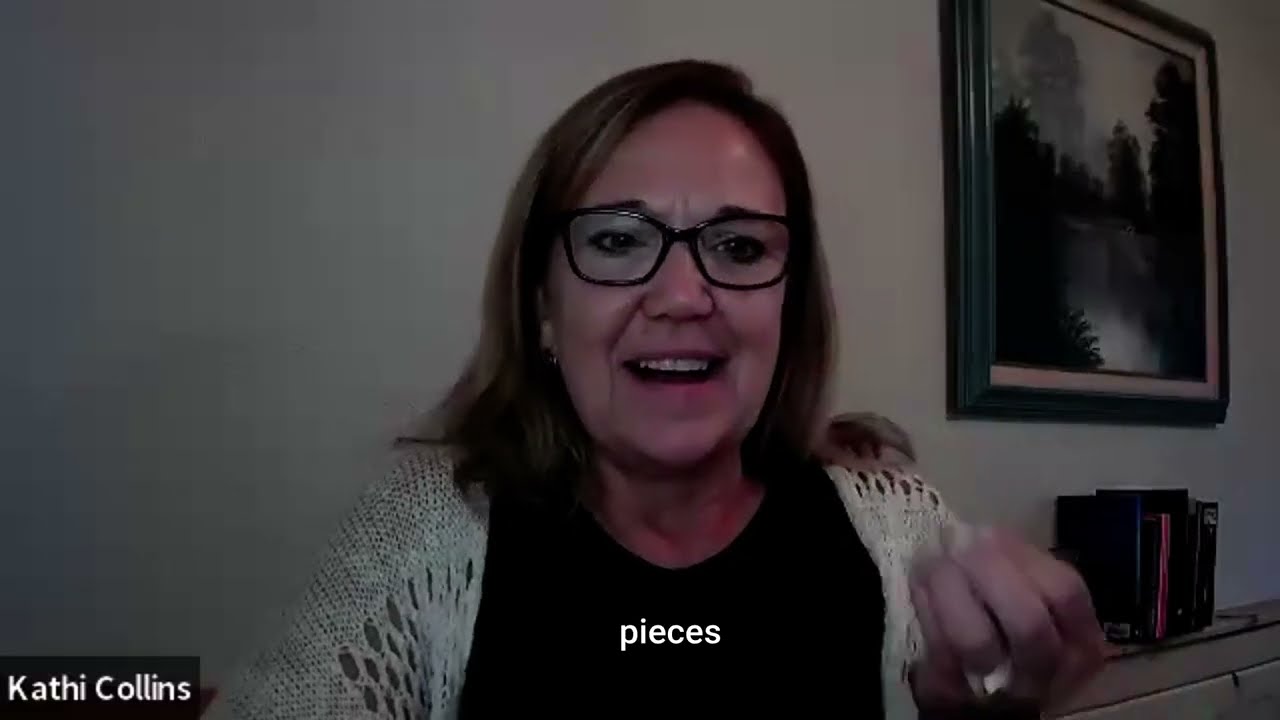
Penny Kidd and certified health coach Kathy Collins discuss why healthy eating doesn't have to be expensive. They cover meal prep, grocery planning, and budgeting apps, plus Kathy's course on kitchen basics and cost-comparison shopping. Small habit changes compound: rotisserie chickens, buying in bulk, and online shopping to skip impulse buys.
Chapters
Hey everybody, Penny with Pennywise Coaching. I'm here today with my friend Kathy Collins, and we're going to talk a little bit about meals and food and money and kind of some of the things that she's got going on and how these things intersect with money. So thanks, Kathy, for coming. I appreciate your opportunity to chat with you. You and I've already had many conversations around how these two parts of our— everybody's lives intersect. So I'm really anxious to hear a little bit about you and kind of what you do for a living and kind of what you've got going on. So just share a little bit with us about, about what makes Kathy Collins tick.
Awesome. Well, thank you so much, Penny, for having me today. I really appreciate you. And yes, we have been speaking a lot about food and money and how they intersect and Yeah, they're just kind of the, the big pillars of kind of what makes everything work in our family life and in just in life in general. And just to give you a little bit of a background, I'm a certified health coach, went through the year-long program with the Institute of Integrative Nutrition in New York City. And at the end of the program, yes, you're a certified health coach and And we explore all different types of health coaching, all different types of avenues of nutrition. And then we also talk about what are those important pieces of nutrition and how to integrate that into your life. So a lot of times those pieces are based on financial needs and things that we have available. So the fact that we're talking today just makes so much sense. For us to talk about food without talking about money, especially in this day and age when things have gotten to be a little bit more expensive, we have to kind of figure out a way to balance the two.
Yeah, because I think sometimes people think that they're exclusive of each other and that eating healthy has to be super expensive. So what do you find people have the most challenges with?
Well, that exact thing is that people think that for them to be able to eat healthy, it's going to cost so much more money that they automatically think they can't afford it. And there's little tips and tricks that they can do that doesn't require spending an exorbitant amount of money to be able to eat healthy. And it's just being educated on what nutrition is and what healthy eating is. Because a lot of times we don't learn that specific piece. You know, they teach you a little bit in school. I don't even know if they still teach that in school anymore because so many programs have been cut. But to know what a healthy meal looks like, I don't know if anyone could really tell you what that is.
Well, and I was, you know, not too many years younger before I learned even how to read labels. On and to compare things and look for certain elements, whether it was sugars or fats or, you know, all the things that you probably talk about all the time. But I sure don't remember learning any of that in school.
Right. No. All of these important key pieces of living life well, we're not taught in school.
Right.
You can do algebra and geometry, but yeah, don't get me started.
Yeah, we don't know how to do money. What would be like a starting place for people as they're figuring out this journey and what they need to do? And where do you point people to begin with?
So a lot of times when I'm working with clients, we just have a conversation about what their life looks like because for them, I think the big stumbling block is How do I integrate healthy eating into my busy lifestyle? And I'm sure you work with people a lot on how they can save money because they're just, you know, so busy that it's hard to stop and think about that.
Right.
But if you have, you know, the basic building blocks of, you know, I know you're busy, you work all day, you don't have time to prep meals all, you know, at night. But maybe you can prep meals one time during the week and then you're set up for the whole week. And you grocery shop one time at the beginning of the week and you plan your meals. So a lot of times that's what I work with people on, is to just add a little bit of structure, not over-planning because that feels very overwhelming to do on a day-to-day and a week-to-week basis. But if they're adding just a small change, week to week, that's where the big changes can happen. We just take very small steps towards getting that accomplished. It feel like it's more of a bite-sized chunk as opposed to a big, you know, big thing that you're trying to accomplish.
Yeah, I'm, I'm smiling because I'm thinking you're saying the same things I say about money.
It's so true. It's so true because, I mean, it's just once you learn how to take, you know, take that on, you can apply it to all areas of your life.
Yes. And I think people assume it's all or nothing. And I just think for money and food, it's progress, not perfection.
Absolutely. Absolutely. And I help people kind of break that mold or that fear that they're not doing enough. But if they're eating something healthy today, then that's a win. And then they can carry that over to the next day and maybe add one more thing. So it doesn't have to be a huge change all at once.
Yeah. And I think 1% growth is still growth.
It's still forward. Yes. It's still that progress that you're moving forward.
Well, I see on my side of the fence people struggling with, you know, a lot of them have a fair amount of debt. Now, some don't, and they just want to be better with their money and find more money that they can grow and invest. But because it's easy to spend every dollar we make, no matter what we make, if you're also emotionally burdened and stressed by your debt and kind of lighting dollar bills on fire because you're throwing it away to Visa, then that doesn't ever feel good to people either. But when you really start looking at it and take the shame away and start saying, okay, what is the thing we can do? What's the 1% better we can do? And how can we keep more of our money instead of just being like, oh well, screw it, I just have to, you know, go buy this, or—
and right, yeah, it's just a dumpster fire. So I, you know, no matter what I do, it's not going to make a difference.
Yeah. And I think the reason that I have such great success with people is because they slow down and they look at it and we get to have conversation about things that are not always comfortable for people to talk about. And in our world, most people don't share their financial story with others and they think everybody else is doing it right and they're the only ones in this situation. That is just not true.
It is not true.
We're all just in this journey together. Till we die.
It's so true. And we don't, you know, we're so good at giving advice to others and trying to help all these other people. But for us to stop and talk about what's going on with us, just like with our health, we don't take the time to do that.
Yeah.
So to have that, you know, allocated amount of time, whether it's every week or every other week, to have that dedicated to talk about money or to talk about your health and how you want to change that. That's progress right there, just to take that step.
Well, and I'm sure you talk with people about their why as well as I do. Why do you want this, right? Because if we don't think about why we want it, we're not going to sustain it and we won't change anything.
Yeah, you know, it might sound like a great idea, but if we don't really deep down really want it to change, it won't. And you, like you said, it won't sustain. We'll do it for a week or two and then we'll go back to our old habits because that's what's comfortable.
So I know you have a new course that you have to offer for people as well. So can you tell me a little bit about what that looks like, who it's good for, and what we would learn in that course?
Absolutely. So this course came about because my daughter was in college at CSU and she was moving out of the dorms into her apartment, and she got into an apartment and she didn't know what a healthy meal was supposed to look like. She didn't know what tools like pots and pans and knives and things. It's really overwhelming. If you go to Target or Walmart and you look at the rows and rows of things that you think you need in your kitchen, it's hard to know exactly what's critical.
Mm-hmm.
So we created this course, my partner and I, Therese Rabatt. And basically what we wanted to do with this course was to help people become self-sufficient in the kitchen. So it's called The Basics of Cooking: Mastering Your Kitchen. It's— we call it an online cooking course, but it's really a foundational course to get you set up so you can start cooking in your own kitchen.
Okay.
So we walk you through all the different tools that you need, the ones that, you know, are critical. We also talk about the ones that are kind of the nice to have, but it's a handful. It's not many because those are the things that really will do most things for you. We also walk you through how to grocery shop and how to avoid the tricks that grocery stores will do to try to make you spend more money. They keep moving things around to make you walk through the entire store. And then we tell you to shop on the perimeter of the store because that's where all the healthy stuff is. That's where the refrigerated things are. That's where the fruits and vegetables are. So, you know, we walk you through every aisle of the grocery store so you know how to navigate that store. So that way you can get in with what you need and get out before you spend a ton more money. So right there, you know, we're working with trying to help you stay within your budget. And then we talk about the difference in costs between cooking at home and doing DoorDash, because I know a lot of kids in my daughter's age group, it was just so easy to order DoorDash or Uber Eats. Because it's right there.
Yeah.
And it's so much easier than having to try and cook for yourself. Right. But from a nutrition standpoint and from a cost standpoint, and we go through those costs in detail with this course, it's extraordinary how much different it is. And it's, you know, it's— I don't think, as you have probably worked with people, your clients, they just have no idea how much money they're spending. Food delivery.
100%. And that's come up for me more and more. And so that's become kind of this passion project of mine as well, is to help people. I'm not a nutritionist and I'm not a great cook, but I'm like, there's simple ways to just get dinner and, you know, eat twice, cook once kind of things. So that, because we are a busy society and if you're going, going, going, it seems easier to just DoorDash, right?
Absolutely.
You know, I had a client recently who just had started budgeting and was using the app that I like, the Cube Money app, and was like, okay, I only have this much money left for dining. And she was putting it in the app or something for like Noodles and Company or something. And she said by the time it came up to like $40 and she was like, for noodles, I'll go home.
And she—
but it was the first time she had slowed down to think about what is this costing me? What's the impact, the nutritional impact. It is pretty fascinating. I went and got a fancy coffee from a new little coffee shop here last weekend, I guess, and I hadn't been there before, so I was looking on their website and I pulled up the nutritional chart. Oh my God, I could not believe how much sugar was in one fancy coffee. And so I was like, okay, maybe we need to adjust here. So in that one moment, I had that impact of the cost of that coffee, I had a buy one, get one free coupon. So I'm like, oh, it's only half. But then when I realized without that coupon, it was going to be $15 for 2 coffees and the calorie wham for something you're just drinking. Yeah, I just think if, if I had not been doing it that way, if I had just gone through the drive-thru, wouldn't have even thought twice about it.
Things are more expensive than they were just a few years ago.
Yeah.
So when you factor that in and then you factor all of the other fees and things that they add, I mean, the cost alone is crazy. But then, yes, the nutritional piece of it as well, especially delivery, or even if you go out, you don't know exactly what you're getting.
100%.
Yeah. You have no idea what that food, you know, how that food started, how it was prepared, what oils they used. In the preparation, how much salt it contains. All of these are factors that will contribute to poor health if done over and over because our bodies just aren't set up to manage those kind of ingredients every day.
What makes it so yummy is the fact that they're putting all that junk in it.
Yes, and that's the problem. And even the food manufacturers have figured out how to make the food so good that we all want to eat it.
Yeah.
Regardless of the, the health benefits that there are, you know, usually not many.
Yeah. Yeah, for sure. Do you also have, um, some tools or anything that you have to give away as far as like pantry items or things to keep on hand or, you know, those kinds of things that make it more likely that you'll cook versus—
Absolutely. In the course, we go through it. We have 7 modules in our course, and after every module, there's handouts that are downloadable for those type of things. So we have a list of tools that you can download to your phone and then go to the store and get what you need. You know, all of the pantry items, the spices, and there's only a handful of spices we recommend because then there's spice blends that will give you more bang for your buck because you're getting 3 spices in one blend.
Yeah.
So that right there saves you money and it gives you that flavor flair that you need to kind of make things taste a little bit better or different than what you had yesterday.
Right.
So all of the modules have tools like that. We also offer a meal planning guide. So it walks you through the benefits of meal planning. And then how to meal plan your week out. So we walk through in the course, there's a module dedicated to meal planning and why it's so helpful because it helps you with your grocery shopping. It helps you just get your head around what you're eating for the week. And then, you know, exactly what you need at the store. And then, you know, exactly what you're cooking every day. So it takes the brain damage out. So you're not struggling every time you open up the refrigerator, not knowing what you're doing, and you always have food in your fridge. That's been the common complaint is, well, I can't cook at home because I don't have any food in my fridge. Well, yes, that's true. So then, you know, the tendency is just to order Uber Eats because it's easy and you're starving, but that only serves one meal, and then you're back in that cycle the next day. Yeah, so it just becomes this hamster wheel of ordering Uber Eats because you're not taking the time to even grocery shop. And in this day and age, we can online grocery shop cheaper than ordering Uber Eats.
For me, I had that shift in mindset during the pandemic, right? When you had to deliver and whatever, and you're all staying away from things. It taught me that sometimes online shopping is better financially, and you're not as tempted to walk by the package of Oreos. When you're shopping, you can see how much it costs before you check out. So I think it's a win-win to do it online and go pick it up.
Absolutely.
Even if you're paying for delivery, you can afford to do that. It's free, I think, to go just pick it up. When you really look at what you're buying, you typically buy the same things all the time. Mm-hmm. So it becomes kind of second nature. Okay, we need milk, we need eggs, we need whatever, right? So, um, And the other hack I like to do for food and money is to buy local. Um, like I have a Beef Gal that I buy a quarter cow and I have a big freezer. I can buy that much higher quality for many fewer dollars, right?
Absolutely.
Um, and so yeah, that piece is a kind of a hidden component that I don't think a lot of people think about.
No. And I don't think people realize how convenient online grocery shopping is. Because it's kind of a new thing since COVID You know, we haven't really been doing it that long, and I don't think people really realize how those impulse buys really derail your budget, right? Because it's so tempting to buy those things that are at the store. And if you're not there tempted by those things, you can stay on your budget so much easier. You can run to your fridge, look what you need, and then go order it on your online shopping. You look at your pantry, see what you ran out of, replace those things to where you're not duplicating things either.
That's again how food and money— like if you think, oh, I might need that, so I'll get 2 of them. And that's what a lot of people when they're first learning to budget and we're saying, okay, set a limit for your groceries, set a limit for your eating out or your clothing or all the things. Sure. And how do you keep track of that? I have an app that I really love. Well, it's not my app, but one I really love that helps people stay to their plan on their dollars. Same thing, like you can see, okay, and I'll tell people like the big box stores like Costco and Sam's and stuff aren't always a great deal for somebody. There's one or two in your family, you know, it's kind of death by a thousand cuts. Do I really need 17 rolls of paper towels or whatever? Yes, it's less expensive, but if you can't afford it right now, it didn't really serve you. And then there's the waste, you know, You know, if you buy 12 tomatoes and you only get through 4 of them, you didn't really get a great deal cuz you're throwing it away. So you really have to be careful about those big box stores. A lot of times they're processed foods in quantity there anyway. Right? I think like we said at the very beginning, it's progress, not perfection. And if that's where you have to start and you're learning baby steps and You know, I love the rotisserie chickens at those places or whatever, cuz you can make multiple meals with fairly easy time prep. Because great, we have to face it that with a busy society, time is also a factor in both money and food.
Time is a huge factor and it weighs into a lot of things and it impacts our decisions in those areas greatly. If we just have the tools to do things more efficiently. I think it can help us in both areas and then we don't have to worry about it so much. It becomes a little bit more routine and you kind of set up schedule or you know exactly what you need when, or, you know, and how much it's gonna cost. Then you don't have to think about it as much. And then that leaves more time and energy for fun stuff. Right.
For sure. Well, awesome. This was great. Is there any last minute things you wanna share or have thought of as we're talking or?
No, this was fantastic. Thank you again for having me. I really enjoyed it. Yeah, we hit some good stuff today.
We're smart. We know something. Well, thanks again. So tell us how people can reach you. I'll put all that in the, you know, notes of wherever all this is posted, but tell us what the easiest way for people to reach you.
Yeah, easy way to text or phone, um, on my phone, my mobile phone, 303-507-2599. You can see my website at complete lifestyle wellness.com and the link to the course is also on the website. So you can check out the information on the course and see a brief little video on that as well.
So awesome. Yeah, great. Well, and mine is pennywisecoaching.com. So fairly easy to find me. I have a book, uh, Make Your Money Behave. So you can find that on Amazon if it's a little like DIY, get you started kind of thing. And then I have a community as well that people can join. So very similar. And, you know, find us on all the socials and all the places as well. We would just love to help all of you improve both sides, money and food. So thanks for being a part of our conversation today. All right. Thanks everybody. Be wise.
More from Penny

Where can you save money and still enjoy life? I saved $35 on concert tickets! #budgeting #finance

#primeday2026 doesn’t mean you buy stuff that is not in your budget! #amazon #primedaydreamdeals

A group could be your ticket to financial success! #budgetingtips #financialfreedom #money #debtfree







