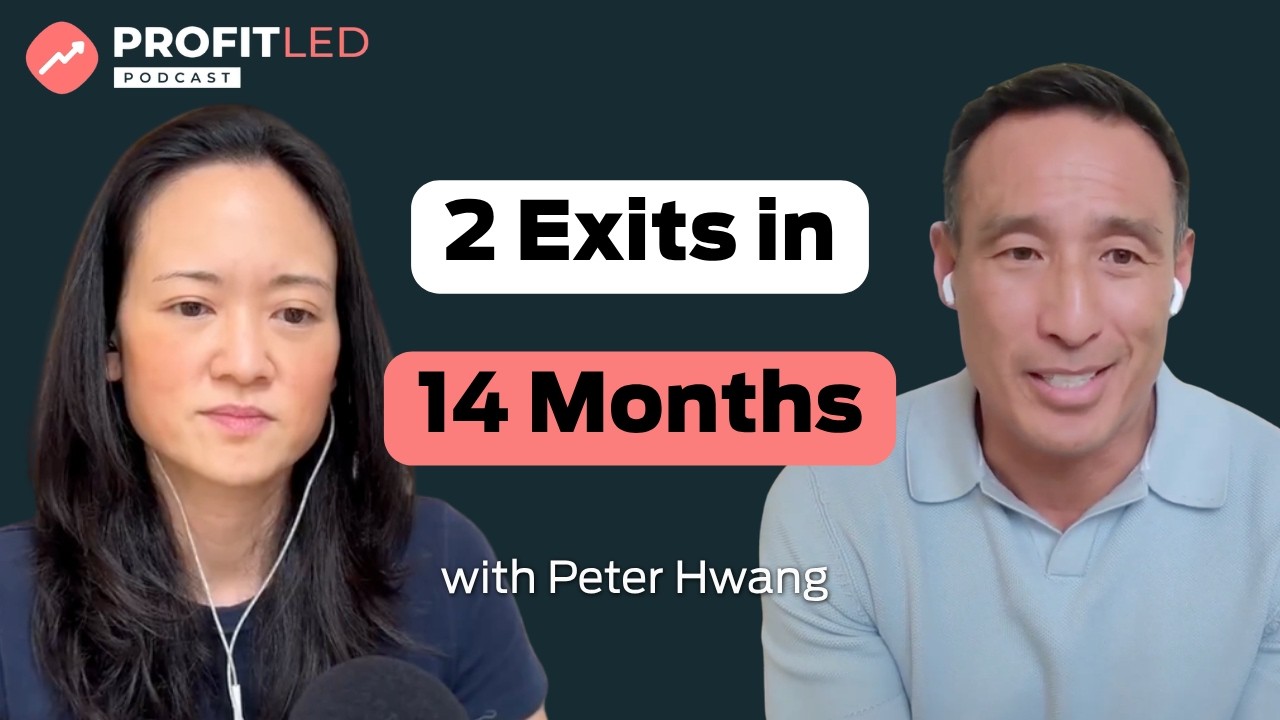
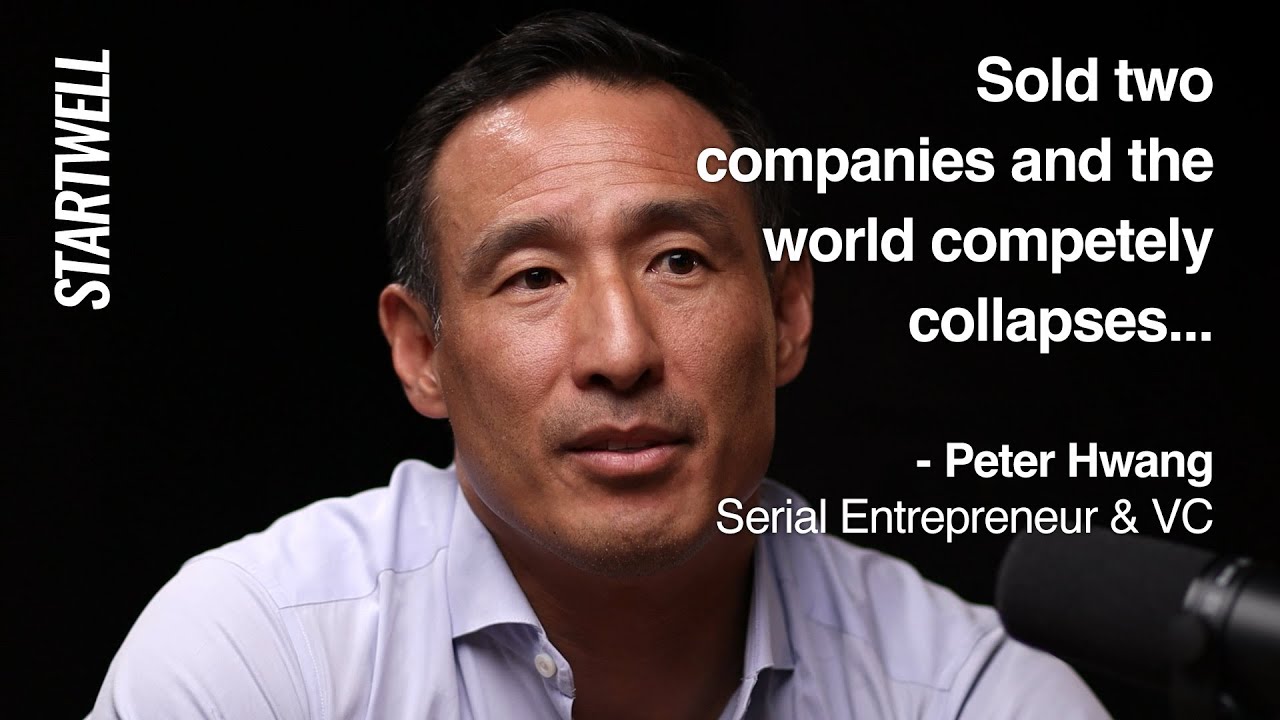
Peter Hwang: 4 Exits, 5 Industries and the Journey from Collapse to a $263M Deal

Peter Hwang discusses four exits across five industries, including the 2008 collapse of Enwise and a later $263M deal. He covers arrival fallacy, scarcity mindset, and why market timing matters more than most founders think.
Chapters
It's crazy. There's something called arrival fallacy, and the whole premise around arrival fallacy is like, when you actually reach the pinnacle of what you think is the pinnacle of your success, um, it doesn't usually feel the way you think it feels.
My guest today is Peter Hwang. Peter has built and exited 4 companies across 5 industries, starting with his first exit in his early 20s. But the moment that shaped him was not an exit. It was the collapse. In 2008, Peter was running a company with 15,000 customers at a $15 million run rate with a signed term sheet to go public. And when the housing market crashed, the deal vanished overnight. The company was $3 million in debt. His house was double mortgaged, and his wife Cindy was 6 months pregnant.
We were like raised— I was raised kind of by my sisters because my parents were never around. They were just working, right? So you just kind of see what that struggle looks like. And in many respects, I think it just— I learned a lot from What they sacrificed. So I grew up with like a very white, very well-off neighborhood, and all my friends were like that. So it also actually gives you some level, like a lot of insecurity. Like I had to go work at a Baskin-Robbins, you know, while they're going on trips. Like we never went on a family vacation ever. And that was just how we grew up, right?
Came back in 2012, built Global Faces and sold it to private equity, and then helped build New Strike, a cannabis brand, and led its $263 million sale to HEXO, a public company. 2 exits in 12 months.
My wife Cindy says, like, I remember at the time she's like, you can't just find a way to turn off your brain, can you? I'm like, I can't. Like, I just have to, I have to keep going. I have to figure out something else. It just felt very lonely. It felt like a lonely existence. It felt like maybe my, my entrepreneurial chapter or my business life wasn't completely finished yet. There's a level of like, you've got to be okay with not understanding that you have control of everything, right? So that whole premise of letting go Is something that I've actually learned quite a bit in the last little while. And I think it's crazy important for founders because like a lot of founders are just very stressed out and they actually hold on, like the whole concept of holding on stick too tight. Like you really wanna make sure everything goes perfectly, but the reality is things aren't gonna go perfectly. They're just not.
What advice or, or mental models or tools or, or sort of tactics can a founder really draw upon to arrive at that place of calm and letting go? What would, what advice would you want to pass on for someone?
It's cliché, but you have to be okay with who you associate yourself with. Meaning like they, like if you have this level of trust and have this level of like—
Peter, welcome to the show.
That was a hell of an intro. Thanks for having me, Kristen. Thank you so much.
What a story though. What a journey. And it is such an honor to be able to dig in. And one of the places that we want to start is just kind of Going back to younger you growing up in Mississauga, you know, we had talked a little bit earlier about, you know, your family and the work ethic that your parents really demonstrated in their own businesses when they were building. And you grew up in a first-generation immigrant family in Canada, parents working almost every day, no built-in network. What did that environment teach you about work and taking risk early on? Wow.
Well, my parents are— so this is like a not atypical immigrant story. So my parents were first-generation immigrants. They came from Korea to better start a better life with a family. Um, my— I have 2 older sisters. One sister was born in Korea and my, um, my middle sister Sophia and I were born in Atlanta, Georgia. So I'm a dual citizen. Um, nice. And it was just, it was your typical, like they came to the US For the US, you know, American dream. You come here, you work in a factory, you own a convenience store, which they did both of, and then they owned a Baskin-Robbins. So they basically worked in retail and hospitality for 25 years. They worked 25 years every single day, like 365 days a year. We were like raised, I was raised kind of by my sisters because my parents were never around. They were just working, right?
Wow.
So you just kind of see what that struggle looks like. And in many respects, I think it just, I learned a lot from what they sacrificed. I learned a lot from their struggle. I learned a lot from how hard they worked, but I wouldn't say it was like the entrepreneurial, you know, learnings I learned from my parents. It was just basically how hard they worked and what they sacrificed.
And so that visual, well, how did that shape when you're, you know, coming out, leaving home eventually? What core beliefs Did you leave with that kind of, as you look back on that journey, shaped where you would start building your own first company in, in, um, in the restaurant industry, if I'm understanding that was your very first exit, right?
And my dad hated it because, because he was literally, he's like, why are you working in retail? He's like, is it, it's your, every Asian parent wants their kids to get an education, work at the bank, you know, become a doctor, whatever the case might be, like become a CEO.
Doctor, lawyer.
Yeah, exactly. So I think what we learned, I think from my parents was like, literally like their sacrifice was, my life was hard and don't get me wrong, like my life, my 2 sisters' life was hard because again, we didn't have much. So we kind of just worked whatever we could. We worked at my parents' store. We really kind of helped them out and we just did whatever we could to kind of survive and, um, just work as hard as we could.
In terms of the, um, seeing yourself as a street rat, as you mentioned, and one of the things that I read about you earlier was just how you've gone door to door when you were in your teens. Uh, to sell effectively like a service door-to-door, knocking on doors. So early sales training, if you will. But what led you to, to hustle like that, to sort of start to do that? What was the drive? If you really look back to that moment, what motivated you?
I, I think every aspect of my initial entrepreneurial career was just some level of like freedom and some level of just making money. That's all. Like when you're young, Yeah. You just see kind of what your parents didn't have and what you didn't have growing up. Everyone I grew up with were like, their parents were doctors, lawyers. Like, so I grew up with like a very white, very well-off neighborhood and all my friends were like that. So I think—
That shapes you. That shapes you in terms of what's possible.
It does, but it also actually gives you some level, like a lot of insecurity. So I basically just tried to acclimate in any way, shape, or form I can. And, um, that was a struggle growing up. Like I had to go work at a Baskin-Robbins, you know, while they're going on trips. Like we never went on a family vacation ever. And that was just how we grew up.
Your parents always worked, right? So much to unpack there. Just, I'm just curious because, you know, one thing that you often see when you start a business, you have a certain mindset and effort in equals output to a certain point. But then you have to start thinking about scale, and you've built and scaled very large companies, as we'll dive into a little bit further. But you think about that mindset of working hard, hard work equals results. Has that always been your mindset all the way through, if you were to kind of look at the through line, or did that change in terms of how you believed you could be successful?
That's a great question. Okay, so I have, I think resilience and hard work is probably one of the most important, if not the most important thing. But I'll tell you exactly where I actually feel from an actual success perspective, like what are determinants of success for an entrepreneur or anyone, quite frankly, if you're starting a company. I think it's market timing first, resilience second, execution, and then idea.
Yeah.
But I genuinely believe that like the 1 and 2 in terms of market timing and resilience probably go hand in hand because I think, yeah, you have to work harder than anyone, but you have to almost be resilient of like what goes wrong and all the different things you have to go through to make sure you're just like really picking yourself off the floor every day. Because like entrepreneurship is hard. And I think for myself, like I think I've gone through, I can count on my hand some of the great moments that I've had where I'm like, this is, it feels great. But I can't count on my hand in any way, shape, or form. The actual number of times where I'm like, holy shit, this is like, this feels like a merry-go-round of like, you're eating crap every day just to, you know, keep going and stuff like that. So I would think hard work for sure. Hard work is like, yeah, I think I work harder than anyone. Um, but in the same respect, I also feel like you have to have this level of resilience and like tolerance for pain as an entrepreneur that you have to be okay with.
Yeah. Scarcity mindset is something we talked about as well. And, you know, coming from the backstory and we'll kind of start to shift towards your builds, but you had told me that scarcity is something that you carried through in all of your builds. And you hear a lot today, especially around entrepreneurs, have an abundance mindset, believe, you know, in what's possible. But at the same point, I'm just curious, like, did you, as you look to the successes you've had, would that scarcity mindset that you started with have shaped all the way through, or did that start to sort of change as you got some wins underneath you and built some more successes? I'm curious.
Yeah, I think the Asian culture is always built off of the mindset that you have to work harder. Like, and honestly, like, I wasn't your typical academic, right? So for me, I literally was like, I had to work harder because I didn't have, you know, the street smarts, sorry, the book smarts. And for my mentality was always like, you just gotta keep working, working, working until you choose something. So It was almost like the scarcity mindset as my scarcity mindset as an entrepreneur was like, I don't think I ever felt like a tremendous amount of bliss or happiness in the moment of like when I got these wins. It was always like, okay, onto the next, onto the next, onto the next. Right.
Not enough. Never enough.
Yeah. And it's, it's until you get to the point where you're just like crazy comfortable to do whatever you want. But that being said, that leads to a whole different other level of like, you know, concerns that you have in terms of like, when is it enough, right? So, right. Yeah.
I have that too. And the arrival fallacy, which we'll talk about sort of more after the deal, but curious. So Extreme PETA was the first build that you had, and that was in retail, and then you exited that business. That was your first exit. How, how old were you? Just so we can kind of get the timeline here for folks.
That was the year after school. So, you know, after university. So, nice. Yeah, that was like when I was 20, 4, I think. 24. For exact— and it was just—
24.
Yep. It was, um—
Most people are traveling Europe at this stage, but you've already built and exited a retail business, which is never easy. Although you grew up in the space, which is interesting, and your father, as you mentioned, wasn't fully, fully pumped that you had jumped into that space in terms of his vision for your life, it sounded like. And so at that moment, I'm curious, did you feel that sense of like, Belief in yourself and what you could achieve? Did that change the way that you saw yourself compared to what you felt when you were growing up in that affluent space in Mississauga, the way that you had shaped your identity?
Yeah, it shaped me to the extent of like, I was moonlighting at the time. I had a job at CIBC Finance. I was moonlighting at Extreme Pita Thursday, Friday, Saturday night. You would sleep in the back on a smelly futon that smelled like pitas. And It was just, yeah, that mentality became normal to just work like that, right? So I think that if it did anything, it probably started my entire entrepreneurial career to just say like, you gotta work your butt off to make sure things can transpire, right? So I think for us, we had 4, it was 5 partners at the time. 2 of the main partners, they ended up buying us out and they bought us out like 2 years later, sorry, not even like a year and a half later. After we started it. And it was just a very quick exit because a franchise development company looked at our concept and they wanted to buy us out. So the 2 brothers stayed on, you know, 3 of us got bought out, but it was like, it was like at that particular point as a king's ransom, I felt like it was like, okay, what do I do next? Right? So I just wanted to kind of parlay that into the next startup, next build. Like I got the itch, it's got the bug.
That's been consistent, just seeing the way you parlayed that. And we are going to get to all of those exits, To follow, but I wanna start back in 2008 first, just to kind of ground the story for some of the challenges that you faced, very tremendous challenges as we kind of dig into this in terms of you had a build, you had a company that did not make it. Um, and that was back in 2008. Set the scene for us in terms of those listening. What was the business doing, um, in the months before that? And before you had a term sheet pulled, something completely out of your control.
Yeah, it was an interesting business. So the company, which is called Enwise at the time, Enwise, it was basically a home retrofit company. So if you recall back in 2005, they launched this eco-energy program where it was in all of the eco-energy grants. So if you change equipment in your home, HVAC, windows, doors, anything that obviously is for energy-efficient purposes, you would get this rebate from the government. So I built an entire model where we would actually have energy retrofits. So trucks on the road, many installers like replacing old equipment, HVAC equipment, the windows, doors, and then I would finance that. And that was my background with CIBC Finance. So I would finance that and I would actually have a rental program with that. You would get rebates from the government. So it was a very kind of topical—
Great model.
Yeah, it was a, it was a great model and it was like, it was a finance rental program, but it was very topical because we had government assistance. We had like very, a lot of momentum about providing eco-energy efficient programs for people's homes. So it was a great model. So we launched that and we had a run rate within like a 2-year period of like $15 million and 15,000 customers, just under 15,000 customers. With that, we got approached by an investment bank that talked about, hey, do you want to go public via CPC transaction? And we signed a term sheet at that particular point. There was probably a year in advance of like, you know, talking about how we actually have to build up the company to get this run rate of revenue and this, you know, number of customers. So we bought that revenue. We did tons of promotions. We was, it was very much kind of buying revenue. It was like buying your user base. So we did that.
To show that ramp.
Yeah. To show that ramp. And that's not uncommon. Like you, like back then, and even, I would even argue From 2010 to 2022. Like that's all you did is buy users, right? So we did that. We bought users, we got tons of people as recurring rental users. So it was a really great platform, great program. And then we had a term sheet to go public in, I think we started conversations in 2007 and then we were supposed to go public in August of 2008. And it was such a buildup to the story because everything was like going amazing. We were in debt for sure, but we were buying obviously that user base and we saw this ramp up hockey stick of revenue. And then if you recall in 2008, there was like this entire like aura around the housing market collapse and like what's going on. The markets were like getting really, really kind of nervous. And I think from our perspective, we had, I thought we were just like insulated because we just had this great model and it was like this high run rate of revenue that was happening and we're growing so quickly. And then I remember the day it happened. This is where, you know, all the market news with Bear Stearns and all these kind of collapses happening. And I ended up getting an email that basically, you know, from the investment bank, they just said, listen, as per clause 16.5, I'm not even sure what the clause was, 16.4, we are unfortunately terminating the term sheet to go public and the financing is concurrent financing is being pulled as well. And I remember that day so vividly because it was like, it's one of those carpet pulls where you have so much great feelings in your mind in regards to what's going to happen when this happens. And then all of a sudden it just got pulled and all of a sudden everything kind of collapsed to the point where I'm just thinking about all the different things I got to work out to try to figure out what my next step is. And this wasn't necessarily just for the business, it was for my personal life because there's a lot of different things we did that I did to actually make this business work. And a lot of it was like double mortgaging my house, investing a lot of money, my own personal money into it, having friends and family come into the business. So it was like, it was a very difficult time. And I had that one moment where I'm like, 20 million things were racing my brain all at the same time.
Geez. And so First of all, by email, you received this completely out of the blue. And you had said, just given your traction, you felt protected from what was happening. But then it was clear that, I mean, this was out of your control. And so then you kind of jump into contingency plan. What do we do? For you personally, what was, if you don't mind me asking, like, what was that? What was the conversation with Cindy, like with your wife? Like, what was that? My God, like you had, you had more double mortgaged your house. This was a lot of risk on the line for this build, which you do as an entrepreneur. You do because you're doubling down on your vision and what you see as possible. But what did that look like for you?
Well, so it was funny. Not only did we, not only did I double mortgage the house, I actually had, we had like a pool project that was going on that like it was, it was like Everything in my mind was like, this was like a foregone conclusion that this moment in time was going to happen. We're going to go public and all of a sudden things would just skyrocket and it would just kind of build off the momentum that we already built. So when that, again, when that day happened, it was like this entire brain was going a million miles an hour saying, okay, what do I do next? What do we do next? And then the first thing I thought of was this conversation I was going to have with Cindy.
Yeah.
So I get home, And the way our kitchen is, like it has, we had a window that looked onto this construction project. And for whatever reason, I'm not sure why it was, but Cindy was literally like, sorry, to even create more of a backstory, we had 2 daughters at the time and Cindy was 6 months pregnant with a third. And for whatever reason, I think she was just in the back doing cleaning up some maintenance, whatever. And she had the shovel and just like digging this trench. It was just a very like, I was looking at it and I'm like, oh my God, this is like the purest definition of how I feel right now. She had a big belly digging this trench and it was like, she's sweating. And then I'm like, I'm going to have to tell her that first of all, all of this is in jeopardy. And secondly, just have to, I have to just get a sense of like what she's thinking because she's always been that support mechanism for me as a crazy entrepreneur. She's like always been like, Yeah, just go for it. Like whatever happens happens, like it's fine. But that was it. It felt different at that time because like I said, like you have a house that you're tremendously in debt with. You have 2, like 2 young daughters, 2 young kids, and a 3rd one on the way. So it was just a lot of heaviness that I had to go into that conversation to build myself up to tell her. So I ended up telling her that this happened. And it was probably a few hours that went by and a lot of tears, a lot of what do we do next type situation. And then she turned to me and said, like, listen, like we started with nothing, Pete. And like, if we got to start again, it's going to be completely fine. And it was probably— That was probably one of the moments that I realized, okay, A, this one is an absolute keeper if I didn't know that already. But secondly, it kind of reaffirmed the fact that everything was going to be okay because you're not feeling alone in the process of what do you do next, right? So, and I say this to everybody, when times are good for businesses, your friends, your people around you are abundant. It's like the entire like party on a ship. Right. And the second things go awry and things go badly, it is the, and they will, it's the lonely existence on earth.
Yeah.
And people jump off that ship and you don't, there's obviously the two sides of the coin in regards to perspective. One is You'll know who your friends are and you'll know truly in the bad times who comes out of the woodwork. But in the same respect, it gives you clarity in regards to, okay, are you ready to do this? And is this the life that you want to live? Because it's to your point, Preston, it's inevitable. Like bad times are going to happen. And when you start businesses, like nothing goes perfectly. And if they do, then you've gotten really lucky. But Truthfully, it's like, yeah, you learn your tribe, you learn your people, and that's probably the best gift you can get is that you just, you get to know, you know, who the most loyal supporters of your, of who you are. And in the best of times, they're everywhere. In the worst of times, they're few and far between. And so you'll know exactly who those people are.
No, that's powerful. And so much of this is not about the business. This is actually just about How you showed up and you, you two showed up together with this idea just to, to continue the build, to choose the hard path and that resilience that we were talking about earlier that you had came through, but to not feel alone in that and to continue to choose this. Was there any, at any point where you thought, I need to step off this ship? Or, or was it always clear to you now that the worst in your mind has happened? Did that provide a lot of clarity in terms of how you would go forward into the next chapter?
Honestly, at that particular point, I think you're right. There's a level of stubbornness and they call it ego, call it stubbornness. People call it resilience, but there's just this first gut reaction you have, which is basically, oh, this is really bad. And The first gut reaction you have is going to be, I don't know if I'm going to withstand this, so let's just shut it down. But then afterwards, everything kicks in in terms of like your mentality, which is, I got to at least try this out and see if I can actually make this work. And then as you start to get into the motions, you realize, okay, this is not only something that's probably needed, it's probably something that you're going to get a lot of learnings from. And like I said, I'm fast forwarding and I'm kind of summarizing the, summarizing the 2 years kind of post. that letter coming out, but you just realize really quickly, like all the different thing building blocks that happen during the worst of times in those moments is stuff that you'll probably carry forward for any other business or any other learnings that you have. Because like I said, bad things happen, right? So you have to actually just take it as learning experience and that's hard to do at the time, but that's probably the biggest thing. In retrospect, and I can say this in retrospect because I started many, but all my large exits happened post that. But I don't think they would've happened unless I actually went through that experience.
Powerful. And that was, that was the playbook essentially that, that you parlayed into the next experience, it sounds like. And kind of shifting to it. So you, you stayed, you built and rebuilt, restructuring the business for 2 years, got the business back to profitability. And only then decided to shut it down. And one of the things that, you know, I've been through a shutdown of a business that I've built before. I think that there is actually a certain wisdom in knowing when to fold 'em, if you will. And I think there's a lot of rhetoric in startups around like, just stick it out, like keep grinding. But at a certain point, you have to be thoughtful about the information you're working with and thoughtful of your options and understand what's best at that time. I'm just curious what kind of went through your decision set as you thought about, should I continue with this or should I close it? And maybe it was out of your control then as well, but I'm just curious.
Um, yeah, it was, it was funny. I think this, this probably lends itself to the learning experience, right? Like it was outta my control to the extent of we got the business back to profitability, but we're just slowly but surely getting outta the debt. And it got to the point where it was about 2 years in, I guess close to 2 years in. And we started creeping out of debt and one of the largest creditors comes to me, he's like, Pete, what are you doing? He's like, I see what you're trying to do. He's like, but you're doing this with very few resources and I love the fact that you restructured the business. This is amazing. But the reality is like, I'm actually okay with the fact that you've kind of inched down on this debt. Let's just call it a day. Right? So it was almost like when we actually decided to actually bankrupt the company and push the company into receivership, that was when he was okay with like being the secured creditor, taking a lot of the assets. But he just, at that particular point, it was almost like that learning experience for me was the 2 years was a lot of just gaining experience of how to become a real operator, restructuring a business, bottom-up building it again. And then I would say like majority of the shareholders I had and a lot of the people that were part of that journey, they just said like, listen, I saw how hard you grinded. So by all means, like, there's no love lost here. The reality is like we all kind of knew what we were getting ourselves into when we actually invested in the business and to withstand a complete market collapse and still continue the business, you know, 2 years later, it's pretty admirable. So again, for me, it's like, I, I wasn't even thinking of it that way. I was just thinking in the context of like, just don't quit and don't give up. But at one, at that particular point, I felt kind of peace with it, you know? 'Cause it was, we were kind of forced into it. I kind of felt peace with it and it was just like, yeah, it's ready to move on.
So in terms of the, the next phase, many folks who have been through a hard failure, depending on their mindset, don't build again. You know, they go take a job, they, you know, look for alternatives and that is okay. So what was that period like for you? Did you jump right in right away, or did you have a bit of a period where you just needed to decompress from that build?
No, I had a quiet period. I had about a 2-year quiet period. And I shouldn't say quiet period. I had a 2-year period of consulting because that's typically what you do is like you, you consult for other businesses because it's a safe bet to do. So I took some of my learnings that I obviously had with, with Enwise, and then I took that into consulting. So I consulted for a couple of companies. And then it was, that was probably the quiet phase of me just being okay with working for somebody else, so to speak. And it was probably really good for me to do that because I didn't feel like I had to have tons of pressure on my shoulders, always be the person that's kind of at the front face of the company and taking on the good and the bad, so to speak. So I took 2 years of just like quietness. And that was, that quietness was like, obviously is call it like PTSD kind of recovery is just realizing, okay, what is learning a lot about myself, learning about what I want to do, learning what, to your point, do I actually want to be in this quiet phase where I want to actually go work for somebody? So it was almost like that consulting phase was almost like a kind of a good kind of learning experience for me to say, what do I do next? And to your exact point, this is why I think, and again, it's so cliché, but what you take from failure is literally going to carve out your entire path and journey going forward, right? So during that entire restructuring we had with the failed company, I had a sales agency, a group of sales leaders in the sales agency that came and approached me and said, Pete, I know we didn't do well with that business, but I have another idea. And that's kind of how Global Faces started. They basically said like, listen, We want to start this sales agency that goes effectively face-to-face, door-to-door street pitching for charities, and love to have you kind of come on board and help us lead this because, you know, kind of seeing what you built out with Nwise, and I think there's a lot of things you can help out in terms of building this. So we just happened to catch like a moment in time in which the I was kind of at the point where I'm like, sure, I'd love to try it again. And the fact that they were so embracing of kind of all the warts and all the different things was like, that was the best thing you can actually take from it, right? You're like, okay, well, they know every aspect of the failure. They know every aspect of how hard I work. So let's see what we can do with this. So yeah, it was a perfect kind of marriage, so to speak, because when we got in business together, There was zero expectations. There was, we just gotten, gotten partnership together, just like, like rolled the sleeves and grind it out. So, oh, that's cool. Yeah, I can talk about that business, but it was like, it was a great kind of starting of the business in terms of like all 4 partners having the same mentality.
And this is where, again, looking at your story from years later, looking backwards, just from, from my own understanding, it sort of went from that, that failure point as you describe it to this incredible ride. Where you have 2 exits, uh, sizable exits. So let's, let's talk about that path, um, and how the failure accelerated that and the learning. And so this, this partnership, it sounds like a true partnership because you're not wasting energy masking. You're literally just, this is who we are, warts and all. Let's get into the work. What made the growth of one of the largest face-to-face fundraising platforms possible? When you think about the way that you built that business, what— Accelerated the growth?
So I, I mentioned earlier about the fact that market timing is probably the biggest determinant of an entrepreneur's success. And I truly believe that, like, obviously we talk about resilience, we talk about idea execution, the concept you have, but the reality is market timing is truly the thing that drives a determinate, like the main determinant of success. Because everyone has good ideas. Um, but the reality is if you don't catch the wave and reverse like good timing, then you're never gonna, you're gonna be, you might be successful. It might take a lot longer or you may never be successful. So we caught a wave where the, it was the inflection point of like the manual process of actually fundraising was turning digital. This is when tablets was just coming in and we were the first company to digitize the tablet process, the actual fundraising process. So when we went door to door, we actually have any of our street pictures. So anyone you see on this, street corners of every city, you know, many, all the major cities in North America that were fundraising on behalf of St. Jude's Hospital, SickKids, World Vision, Red Cross. They were all our fundraisers. And we, we, they initially had like paper tablets back, you know, before 2012, whereas like you're just, you're going through the manual process of signing a donor up.
Yeah.
And then you take 50 applications, you bring it back to the office, and then you put them into the database system. We're the first company that digitized the process where actually we collect payments via tablets.
So Hmm.
We caught that tailwind from a technology perspective, and then we just happened to be really, really good at acquiring donors. So I had 1,200 brand ambassadors, literally, you know, face going face to face, knocking on doors, standing on street corners, standing in malls for every charity in the world. So that inflection point was really, it just, if that is another company that kind of skyrocketed, but it was a tailwind of obviously having a digital process that we kind of built into our systems. And that tailwind was also the lead determinant of like why private equity approached us, because when we actually had all the fundraisers using tablets and we were aggregating all the different impression-based data points. So every engagement we had with every single fundraiser, that's where every single potential donor, we were talking to them about, okay, what do you like? You know, how much do you donate? You know, where do you live? So we had all these different profiles. It's all, it's all the demographic analysis around like potential donor profiles. And we would actually be able to, we owned all the aggregated data. We would be able to tell all the charities right down to an exact postal code or zip code where the most loyal donors were. So it became as much of a data play as it was obviously, you know, a high torque sales engine.
So a lot of businesses, they get into the build, they build a really solid business model and they're, you know, got a steady eddy. They're continuing to scale, doing the same things. And then at a certain point, they hit a moment where they go, I've got a data asset here, particularly if they're tech-enabled, which really every business is tech-enabled. But many people are sitting on data they don't actually recognize as valuable. What advice would you have for a founder who's running a business? Maybe it's a traditional business in tech, but they're not necessarily capturing the value from that data. How should they think about data as a value driver of their business?
Well, it might not be the main determinant of why the value of your company will be what it is at a liquidity event or sale, but it's the main reason why companies are going to approach you or the value of your company is going to be valued higher because there's always something to do with that. If you own that data and you own the intelligence around that data, there's always something to do with it. And again, even if you're not the one to do something with it, someone else will find someone. Something to do with it. So a perfect example is like literally— That's a good point. Well, it is because we didn't own the personalized data because they weren't our donors, but we owned all the aggregated data. So I can actually tell literally every single charity right down to an exact postal code or zip code. If you use your fundraising, use a different type of fundraising engine, it might be direct mail, it might be social media, it might be digital. If you go in these postal codes and zip codes, you'll have a higher chance to get a most loyal, more loyal donor. And we actually, we had all the data that can support that. So that was like the one thing that you realize is like, of course we got paid on a cost per acquisition to acquire donors, but the real power in what we're building was a data engine to actually tell donors where to fundraise better and smarter and faster. So it was, that's kind of where the value that private equity saw, because with that, we're now able to grow and scale really, really fast and efficiently.
And this is where looking at your business as a buyer would look at it is a little bit different often than how a founder's looking at their business. And, you know, oftentimes, and I've been here, where you're building, you're around the mission of the business, and you're rallying around that, that vision and purpose, and you tend to sort of not necessarily see beyond the day-to-day way that you generate profit. But then if you look in the intangibles, like the data, um, that's where someone like a private equity firm may see the business a little bit differently.
Mm-hmm.
And so it's really important in our view for founders to understand the value, be able to position the value through the lens of that buyer. From the private equity perspective, they clearly saw value in that data asset. What 2 to 3 moves that you made do you think made that, that exit possible? And my understanding that was like a mid-8-figure kind of exit, sizable one. What made this one a win and a success?
I think there's a couple of key things. So one, we, we, from a revenue perspective, we just had this hockey stick of revenue. And the way our business model worked was we were effectively almost like an HR recruiting firm where you can just dial, like we had great systems, process data, like all the digital assets on the backend, but we were just an HR recruiting firm. Like we can actually acquire donors on a whim by just dialing up, dialing down the rep count and the agent count in the field. Right. So that was very predictable in terms of your ability to like really ramp up revenue and continue to ramp up revenue. So. That was the one thing, obviously it was just, that was very, very, very predictable for private equity. The second thing I would say was like, yeah, like we stumbled upon our data asset. I'm not suggesting in any way, shape, or form we got lucky because we built the digitized processes to actually aggregate that data, but we didn't know how powerful that data was, right?
Right.
So that's really one thing that everyone, going in eyes wide open, every single company I invest into and every single company I actually start, always has a data asset on the back end that you can probably do something with. So that's number 2. And the 3rd one's more philosophical than anything, is like, I don't build companies for exit. Um, I build companies for optionality for exit, um, which is basically everything associated with like, just govern yourself and build a business that is, is a good business that has good business fundamentals, and everyone sees it as a mainstream business because they've heard about it before. They've seen you on the street, they've bought your product and get to the point where you actually are just running a really good business and then continue to ramp and scale it. And one day something's going to happen, whether it is the optionality to go public, whether it's the optionality for someone's going to buy you out, because someone will find you, whether it's an M&A transaction, a deal. So I agree, like the entire concept around 70% of businesses fail, many of those businesses fail because they're almost like squeezing the stick too hard. Like they're—
Mm-hmm.
positioning their company only for an exit, where you gotta position your company to be a really good business first and foremost, and then an exit or optionality for exit will come.
Well, and you, you met, this is so, so well put. So that 70% stat is, is of folks who go to market with their business to sell it. The M&A process completely fails. And in our experience, it's because people are selling their business for the wrong reason. They're not necessarily the strongest version of the business. You know, it's, it's due to death, disability, divorce, you know, there's 5 Ds, disagreement with partners, et cetera. There's a lot of bad reasons to go to market with your business when your business may not be at its maximum value. Um, and I, so I, I love this idea and we share this philosophy of optionality and of really just building a business that is built on great fundamentals, that's profitable, that has a path to scale, that has predictability. I'm hearing that in kind of the way that you drive the growth engine of the business. And then thinking, I think, of that, of that potential blind spot for some founders around like beyond what's gonna show up in QuickBooks and your P&L. What are those other elements like your systems, the way that you thought about the tech to enable it, and then digging deeper into the actual data itself, particularly in an era where, you know, companies are building LLMs and they're feeding kind of basic data, like what sort of, you know, in traditional spaces even there's a ton of value. If you run a law firm, there's just, there's a ton of data in any business. And so thinking about that in a strategic way is really valuable. Um, curious, shifting forward. So you go from this, this one exit in private equity to another one, um, in the cannabis space to a public company. Let's talk about that build. Set the scene for us just to kind of get a sense. You go from this one into, again, parlaying it. I love that word that you referenced earlier to a very sizable one.
So I think, again, this is kind of why I talk about market timing. Because the timing from 2010 to 2022, this is where it was probably the greatest moment in time for anyone to start businesses and in multiple different sectors and industries. And I talk about this, like, and you gotta be really open and honest with like, you gotta be the whole concept that you gotta be lucky to be good. Because I think if I look at many individuals that are friends, colleagues, associates, partners, the wealth that they've created will last from that period of time. There's a lot of luckiness and a lot of fluke that was there. And if whether you're in real estate, because you benefited from low interest rates, whether you're in tech, because you got massive amounts of funding to buy users and buy tech users and buy revenue during that era. So you name the tech company, there's multiple ones out there. And the cannabis sector was probably exactly that. It was a moment in time where literally Canadian legislation was happening. And I always joke about this, like Canada has never been a predominant world stage leader for any industrialized revolution ever or industry. Cannabis was one of the first, like genuinely, like where all eyes were on cannabis because on Canada, because it was the first country in the world that fully legalized both federal legislation around recreational and medical use cannabis. So you had multiple different companies that were way ahead of the game, like Germany, like Australia, like European countries that are coming to Canada.
Yeah.
US was coming to Canada to actually do public listings. So all the major public listings were happening in this moment in time where I joke about this because genuinely, like I said, I'm probably one of the most realists when it comes to cannabis sector where like we did exceptionally well, but we caught this moment time and the tailwinds that I talked about earlier, where if you catch market timing and you're on the right place, right time, and you're early enough, you'll catch it and you don't even know what you have, right? So that was a perfect example of that. Like the different businesses, like it was such an absolute crazy whirlwind because I was still running Global Faces at the time when I started NewsStrike with the partners. So it was like, it was a passive investment at first, And we were just early entrants into the actual licensing process and we got our license relatively early. Sorry, we got our, like, our application in relatively early. So we were in the early applicants into the, into the process. I think they were application 110.
Wow.
Which is very early, but then literally Health Canada, and I joke about this, but Health Canada had the initial 10 applicants that they approved in the system. And you named, you, if like all the largest companies in cannabis, Canopy, yeah. Yep. Canopy, Tilray, HEXO at the time, they're all the early entrants in which they got their early application approved and all of them screwed up. Meaning like it was way too quick. It was like the way they actually issued these licenses was way too quick. So they're making errors, QA/QC errors. Everything was like, just, it was like literally. complete dog's breakfast in terms of the way everyone was operating, because no one knew how to do it.
But you, you could learn.
Well, but, but here's, here's the crazy part about it. Because all of the different applicants were running too far, too fast in this really regulated industry, Health Canada shut down the program. So they basically said whoever's in the program, they're grandfathered in. And now they, they, all those companies got a head start. They got, they got a head start in terms of refining the processes, acquiring customers. They got a head start in regards to becoming a public company. So all those companies were the first companies that went public and then they had the biggest head start. So that's why I talked about market timing.
Love it.
And all of us were on the outside looking in that are early on in the application process, just waiting, okay, when are they going to open up again? When are they going to open up again? And I remember the day because we, my partner, who's my brother-in-law at the time, we were joking about, I don't know, like a month earlier and said like, listen, why don't you just buy my shares for $20,000 at the time, because this is going to be really just one of those, it's going to be a long wait, long haul. It just seemed like forever that they're going to open the program. And sure enough, a few months later, they opened up the program and all of a sudden this entire snowball rolling down the hill came to fruition where if I use Newstrike's example, we literally got our license. We signed a term sheet to go public. 6 months later, we signed the Tragically Hip as brand ambassadors and partners, and they're all great guys. They're really good business partners. They're our entire brand. Brand DNA was all about trying to provide, you know, rep— a good credible way to educate people about the benefits of recreational use cannabis. So it was one of those like, get a really great brand ambassador being the Tragically Hip that represents everything kind of In terms of Canadian kind of iconic representation. And it was just a good— it was a great partnership. They were off their farewell tour. Gord Downie, God rest his soul, got diagnosed with brain cancer. So I think it was one of those, like, it was a moment in time where all of them were looking to do something else that was more of a legacy play. So when they signed on, it was, like I said, that was just a moment where it was like the craziest kind of movement. Signing up, I think it was like Christmas time. It was like right before Christmas. And then 6 months later we ended up going public and that's when the entire like chaos happens. Within a year and a half period, we ended up raising $160 million off 2 bought deal financings. We start building this 400,000 square foot greenhouse facility. Everything was going crazy. So it was like this, that's what I mean by market timing. I don't think there's anything that the founders predicted it during that moment. And by the way, you can actually take that exact example and put it into multiple different industries, whether it be commercial real estate, people that built massive commercial real estate properties. You can put it in the tech sector where someone started a marketplace during the moment in time when marketplace was like really huge and massive.
Uber for everything, network effects, et cetera.
So if you started something, you were getting big funding. So That's what I mean by market timing is you have like from 2010, 2022, this like crazy momentum where anyone following on with an industry, you got to piggyback off of that level of success, right? So markets are everything. So that was a crazy ride. We ended up building it up. And when I sold Global Faces, I was always on the board of directors the entire time, but I came on as president. to effectively just launch a distribution across multiple provinces. So we launched out in 10 provinces through all the cannabis boards and we started selling our product. And it was, don't get me wrong, behind the scenes it was chaos, complete chaos. 'Cause like you're doing everything, you're doing grow, manufacturing, packaging, distribution, everything in one fell swoop. So it was the craziest ride. And then during that crazy ride, literally like M&A deals were happening like crazy. So we ended up raising $160 million. And then we get— and beginning approached by Molson Coors Hexo at the time about, listen, let's— we have some thoughts in regards to how we can collaborate. And the biggest thing is like Hexo was in Quebec and we were across the country, but also we had this great brand partnership with the Tragically Hip. So it was just a great kind of story for them in terms of like, Pairing that up. And if I'm being honest, it was great for us because it was a moment in time when cannabis was still at its peak, but it was like slowly but surely trending towards the downward side of it, which is like, okay, how much, how big are these companies getting and how big is this actual market? Right? So when we exited, we exited at a perfect time. And I always talk about the entire founder story about you gotta be lucky to be good, right? So in many respects, you gotta be lucky to actually catch a wave, but you also have to be lucky to actually sell your company at a time where the market timing works for you, right? So that was exactly right. You kind of mentioned kind of piggybacking off of the pain points of bottom-up building a really, really difficult business. I'm not saying in any way, shape, or form that Global Faces and Newstrike were easy builds. They're very, very difficult builds, but we felt this aura of almost being not indestructible, but feeling this aura about just if you work hard, The markets are great. You know, you can still, you, you'll, whatever you do, you'll just kind of build on top of it and the momentum is there. So that's why I talk about—
The snowball.
Yeah. The snowball effect.
The snowball going down a hill.
For sure.
Yeah. Well, and I think very refreshing, by the way, around luck and timing and also, you know, hard work, dedication, focusing on catching the win. But a lot of people will say, oh, it's not luck, it's just being in the right place, right time, which, you know, depending on how you define luck, I find that very refreshing because there are a lot of folks who work extremely hard building a business. And for example, there's an education education gap, and they're having to do a ton of work to educate a market. You had a market that frankly, all of the forces, you know, government forces, et cetera, like were, were propping up and enabling the environment for a lot of this to happen. And then given the licensing and all of the elements that kind of create a little bit of barriers for folks to get in, you were able to get in very early. And so I love just the refreshingness of that, of that view that there's, there's part luck here. Luck, be lucky to be good. I'm curious about this idea of timing and the capital markets. And we often talk with folks like, it's very difficult to time the, the private capital markets. That's, that's less in your control than the control of the levers of growth in your business, for example. Um, what advice would you have for a founder building right now in any industry on how they should be looking outside of what they're doing day to day to just be thoughtful about maybe the timing? of when it's best if they're thinking about a liquidity event?
So I think there's 2 points there. One is if you're starting a company and one is if you're actually looking for liquidity then. So if you're starting a company in this market right now, I tell everyone, and I think we just talked about kind of my failed exit in 2008 because of market circumstances. I would actually argue unequivocally this market is worse that we're in right now. I don't think there's any doubt in my mind. Like I said, I've been almost a 30-year entrepreneur in which I've seen a few market turns. This is by far, by far our worst market. And I'll tell you why. It's, I talk about the death by a thousand cuts theory in this market, which is basically there's not one moment in time or one circumstance that's happened, which basically has collapsed the market. This has basically been like a period of, like now it's like going on 4 years where in late 2021, 2022, it was like the signaling of like, okay, the market's slowing down right now. Capital funding is going to be drying up. And any company that thought they were going to get funding for their business, like, and there was this, by the way, there's this Y Combinator letter that got issued, I think May 2022, that explicitly stated any founder that got funding in the VC markets over the last like 18 months, make the assumption that you better use your whatever cash and reserves that you have, use that to get the default alive, which means basically just mothball the company or try to get to profitability, which it's very hard to do because many of those companies were tech companies that were funded based on concepts. So it was a very difficult thing to put out there. And so now you have all these companies that have failed or had to pivot their businesses, or if they didn't know how to pivot their businesses, they've just basically, their default to live is essentially there's collapse. So that's kind of where If you're starting a business, go into it eyes wide open, knowing that the funding environment is extraordinarily strained. And by the way, that letter explicitly said, hey, anticipate that within the next 2 years, funding is going to be a little bit harder. So that would've been 2024. Now we're approaching 2026. So we're almost like—
We're still there.
We're almost getting to the point where it's like another 2 years passed. So it's the exact same market environment. Like I said, I would actually argue it's worse now because now you have levels of unemployment happening. You have a lot of levels of like cost of living going up. All these different things are happening where it's this compounding factor, right? So I really, anyone who really is building a business right now, go into it eyes wide open knowing that you gotta do this in a very bootstrapped way, knowing that funding is not gonna be readily available. So if you're gonna be doing this, like use resources, use innovation, use people, use like, make the assumption that things are going to be There have to be probably more bootstrapped than usual to actually get your startup off the ground. So that's number one. And which, by the way, there's a whole crop of founders that I've either advised or invested in the last couple of years that it's a new mentality that there's a new muscle that they're actually building up, which is like they don't know any differently in terms of, because they were never part of the old, like previous 10 years where they got funding, no problem. So this is far more of like they're using The entire theory of I'm going to do more with less. So the new crop of founders actually, yeah, they're learning the scarcity model.
Well, and this idea of, you know, growth at all costs, and I was part of that era where it was truly about buying customers, full acquisition mode versus now really looking at unit economics and digging deep into, is this something that could be profitable? And could my customer, my revenue fund my business versus spending time in fundraising, but you're in fundraising, you're also building. And with Tradish, I'm curious, you'd mentioned this is one of the hardest, um, kind of builds that you've done. It's, you know, my understanding is you're solving food scarcity. You're looking at a better solution for that. Um, when you think about the playbook that you've essentially built from all of these experiences, from your first exit to the failure to the 2 sizable exits, one to private equity, one in the public markets. You're now at a point where, and we'll talk a little bit about post those exits and what that felt like, but tell me about what you're building now and how those have shaped the way that you build.
So Tradish is a funny model. I think I'm probably okay with getting into a very, very hard build because of the position I'm in in life, right? This is as much of it is as a a passion project as it is something that I truly believe is needed in the world, right? So again, if I talk about the young founders, young founders don't have that opportunity to actually fund a big build and look at huge infrastructure, how to tweak it and how to be patient with how do you actually figure out this problem?
Yeah.
So the difference is I think I looked at I looked at Tradish and maybe call this an opportunity, but I looked at Tradish as something that was extraordinarily needed because if you think of the entire concept of cost of living, food affordability, food inflation, all this happened again, piggybacking off a moment in time where if you think about like the way food has in groceries very specifically has been built over the past decade, it's basically built off of convenience. So like you actually now have layers of convenience, which is Uber Eats, Instacart, DoorDash, like anyone that's delivering food to your door, but they're building off the highest cost grocery retail. So they're actually, they're a delivery service for grocers. If you think about that concept, like grocery stores in and of itself have a lot of bloat, have a lot of costs, have tons of different costs embedded into the system in the supply chain. So I wanted to test out a theory around if you just basically cut out the cost, the middleman cost and all the costs in the supply chain and try to optimize that as best way possible and use other people's infrastructure, can you find a way to cut costs in the system and then essentially pass those savings on to the consumers? And I wanted to test that out. I wasn't sure if I could figure it out, but I wanted to test it out at a very small scale to see if I can procure better, I can actually mitigate my costs in terms of You know, the supply chain side of it, and I can actually deliver to the customer in a very cost-effective way. So I've been able to figure that out and do that in the traditional model. And as a result, with very— again, keep in mind, we're about a year and a half into our startup right now. We actually provide up to 25% savings to the average grocery store, like the big 3 grocery stores, and our quality is actually better because we don't hold inventory. With what? So there was a very, very strong chance I was going to shut down the business because if we couldn't figure out the thesis or that thesis wasn't true, Then there's no way you can scale it. But now, if you think of like, I have very minimal revenue, because again, we're in startup mode, but I can offer that 25% savings. I've actually built a feature called transparent pricing in the app that shows you what we're priced, what each one of our products are priced, and what your grocery cart is priced compared to the big 3 grocers as well. So it's full transparent pricing, which shows you the savings.
Oh, I love that.
So now that I've been able to kind of crack the code on it, now I believe I can just build and scale on top of it now. But The problem is, to be honest, is like you're going up against the establishment in many respects, right? The grocery system is an oligopoly of 3 largest grocers, and then the other big 2 are like Walmart and Costco, right? So it's like, it's a very daunting environment, but the fact still remains, it's a problem. Like cost of living is a problem. Food affordability is a problem. Food scarcity is a problem. Food insecurity is a problem. So all that isn't going to go away with the current establishment and the current ecosystems that exist right now. So Again, that's kind of where going back to my main point, which is like, because it's a passion project, but because it's a passion project around what a big problem I know needs fixing, I had to try it out. So that's kind of where we're at today. So now getting to the point where we understand the savings that we can provide customers, we understand exactly kind of who our tribe is, so to speak, in terms of our customers that are actually very loyal to us. So again, now goes back to the data play, which I'm understanding data patterns of like really what customers want. And then I can use AI and tech to actually get personalized shopping carts for every one of my customers. So now it's like I'm getting back into the entire tech play, which is like fixing the infrastructure and the supply chain first was the most important thing to see if I can actually pull it off from an operational perspective. Now that I've been able to figure that out, then now we're into the actual, let's get back into like being very prescriptive in terms of the data that we have. personalized shopping carts and more of the tech side of it. So this is kind of where it's gonna get fun again.
Oh, it's fun. I, I love that. And in terms of your playbook, something we talked about earlier in another conversation was just around how you, you build with this idea of optionality in mind. And a lot of entrepreneurs are typically, they're, they're building, they have a job and they hit a point where they're like, how do I actually build an asset out of my business? Right? How do I become an owner from an operator? Um, you're in the build. You talked about that 3-year gestation period where you're kind of, you're really looking for repeatability. Like, is this, is this something that can be scaled? And then you talked about this idea of like a, you know, 3 to 5 year window for, for optionality. Do we keep growing? Do we look at exit? Um, walk me through that, that mindset, because that's a very different way of building and one that sounds like you've carried through these successful outcomes.
I don't think I, I don't think I built that from scratch. I think I built that from learnings. So, I believe that, yeah, I talk about the 3-year gestation period of like, actually, you don't, you have no idea what you've built or what you have, but you're modifying it and to see exactly, can I hit some level of product market fit that's repeatable? So that's, that's the first 3 years, right? And it could be 2 years, it could be longer and it might take a lot longer. I've actually kind of built almost a framework in my mind of like, within the first 3 years, I should be able to see, is there something, is there some signaling towards repeatability and product market fit? that actually can now get to the point where you can scale this. So that's what the first 3 years is. And 3 years, that's kind of the, for lack of a better term, like the make or break for a company is like, because the reality is I don't really build companies for lifestyle, meaning like I just don't like, and that's maybe my kind of OCD in me. And that maybe is like my ADHD in me in terms of like, I just like doing building something because I'm a builder. And then get it, I like it to get it to like this repeatability and scale side of it that works. And then for me, I'm okay to sell it. You know, so I've done that a couple, I've done that a few times, but that's kind of where the 3-year gestation period comes into play. 'Cause you're, you're, that's the build, that's a fun part of it. You're building, building, building, building. You don't really have—
Totally. Yeah.
And then when you get to that scale kind of post-3 years, you know, year 4, year 5, this is when you see the hockey stick growth and you're like, oh shit, everything I've I've actually thought about is now repeatable and now you're layering on top of it. And then at that particular point, there's 2 paths. Either you want to be the founder for life, and I have colleagues that have built 25-year businesses and have done exceptionally well building that business, but then I have others that literally after that 5, 6-year period, when that repeatability is there, they don't want to be the ones to scale. They want to be the ones that literally like, okay, I've built it, I'm totally cool with it. see if someone else could scale. And that's where private equity comes into play. That's where M&A comes into play, potentially going public transaction because you might have new talent that comes in. Yeah, so you have to be embracing of that, but that's kind of where I've always kind of built that mentality for all of my own companies. But also whenever I mentor, advise, or invest in other companies, I always bring that framework in play as well. I don't usually invest in— and this is obviously a common a common theme. Like you don't want to invest in a lifestyle business if you're, if you're an institutional investor or VC investor. So you invest in businesses that can have growth and scale, but you have to have the mentality of like kind of applying those frameworks. So that's why I apply those frameworks in my own businesses, but every business I invest in as well.
That's great. Well, on that $100 million opportunity, and there is nothing wrong with a lifestyle business, but it's a choice, right? And you're choosing, um, to build a different way if you're building for scale in mind within a market that has the tailwinds as you were describing. And then showing up with the resilience to keep pushing through that first product-market fit period, which is extremely painful. And it's a lot of learnings until you get to the point of, ah, this is what works. I'm curious just to kind of pull back, you know, you launched into Tradish, but there was a moment post those 2 exits where, you know, you've arrived, you've got to the point where you're— I imagine you've come into wealth along this journey from where you started, as to quote you, like that street rat kind of mentality back in Mississauga, knocking on doors. And now you're here from an external financial success perspective, I imagine. What was the biggest surprise for you of that transformation from a net worth transformation, if you will?
Yeah, it's crazy. There's something called arrival fallacy and the whole premise around arrival fallacy is like when you actually reach the pinnacle of what you think is the pinnacle of your success, It doesn't usually feel the way you think it feels. So literally, like, and keep in mind, I was kind of working parallel paths with Global Faces and Newstrike, both at the same time. So when we actually ended up going public and I was still kind of operating Global Faces at the time, so it was like, it was this crazy, crazy, crazy momentum in which I was like nonstop both, like working on both businesses. And then I sell Goldface in 2018, I never had an ounce of relaxation. I automatically went, put all that effort back into Newstrike. So we'll start working with Newstrike full-time. And then like a year and a half later, we ended up selling Newstrike. And it was one of those moments that I ended up getting the parachute because, you know, it was a complete takeover. So immediately get some of my emails cut off, everything cut off at that particular point. I'm no longer with Global Faces. I think I was a director, I still director of the company, but I wasn't operational in any way, shape, or form. So it was like I got forced into going 1,000 miles an hour to literally like shutting everything down. And I would check my like phone at the side of my bed at 2 in the morning and see something like completely like they're just nothing related to work. And I'm like, okay, nobody needs me. So the money side, it wasn't really driving me in the first place. It was really just a build and getting excited about it. So then when all that stops, You realize, okay, how do I get back into it? So it's funny. Yeah. My wife Cindy says, like, I remember at the time she's like, you can't just find a way to turn off your brain, can you? I'm like, I can't. Like, I just have to, I have to keep going. I have to figure out something else. In retrospect, should I have stopped? I probably should have. But in the same respect, like, that's kind of who I am, right? So I'm just, I'm okay with kind of struggling and being kind of in that moment where I'm just trying to figure stuff out, right? I think there's going to be a point in time for sure I'll be okay with it, but Yeah, I wasn't ready at that time. It just felt very lonely. It felt like a lonely existence. It felt like maybe my entrepreneurial chapter or my business life wasn't completely finished yet. So I just feel, I felt like at that particular point it felt pretty empty, but it was good. It was good to feel that because I think everyone, this is a learning experience for most people is like that arrival fallacy is real. Like nothing really feels exactly how you think it is. So just learn to adapt and understand that.
Was there anything post those builds and in that moment where you're kind of in that trough of like, who am I without these, you know, that sense of belonging that you were looking for, the empty calendar that you were facing, the promotional emails versus like the, hey, we need to, we need to problem solve, right? Um, getting off that train, having that moment to think and reflect, was there anything in your life that you realized was actually pretty accessible outside of your business that in this next build you're incorporating a little bit more into how you build things outside of work that maybe you were not focused on during those intense rollercoaster rides?
Yeah, I think, I think the entire, and I don't, I'm not, I've, I've tried this entire thought process around like meditation, manifesting, you know, positive things in your life. And it's funny because at that particular point, I don't, I don't really I didn't really feel that because everything was such a whirlwind. Everything was so crazy at the time. But I truly, and I've learned this from a few different people, my sister actually teaches me this all the time, is that there's an entire premise of letting go and just being very okay with like the feeling that you're sitting in.
Yeah.
And the uncertainty, like the one thing that I'm, and this is probably a fault in many respects, and Cindy says this all the time, is that You always have to be in control. Very similar to my dad, right? The feeling of worrying about things all the time, feeling like you always have to have control of something, the end result of feeling you have to have control of the situation is like, that's something that is like, it's not good because really you feel this level of helplessness and you feel this level of vulnerability all the time where you're like, okay, what am I going to do next if I can't If I can't control the situation or I can't control the outcome, then you're just always in this state of nervousness and anxiety, right? So there's this whole element of being able to let go and just being able to actually be okay with the unknowns. I think probably is— and this big— sorry, sun's coming in my eyes right now. There is a level of like, you've got to be okay with not understanding that you have control of everything, right? So that whole premise of letting go, is something that I've actually learned quite a bit in the last little while. And I think it's crazy important for founders because like a lot of founders are just very stressed out and they actually hold on, like the whole concept of holding on to the stick too tight. Like you really want to make sure everything goes perfectly, but the reality is things aren't going to go perfectly. They're just not.
That is such a powerful way to kind of close out the conversation. And I think just in terms of that feeling of There truly is so much out of our control, and we think we can control it. And in my mind, like I, I as in founder mode, I am literally like, here's the outcome that I think is going to happen. Here's the five contingency plans, and I'm constantly like you know thinking about all the ways that I'll respond, which is such a waste of energy when oftentimes things do go right and you've wasted this effort. But yet when things go wrong, you're prepared. But there's this sense of anxiety that kind of is is how you're always. operating when you're in that state of feeling like you have control of every outcome. What advice or mental models or tools or sort of tactics can a founder really draw upon to arrive at that place of calm and letting go? What advice would you want to pass on for someone?
It's cliché, but you have to be okay with who you associate yourself with. Meaning like, if you have this level of trust and have this level of understanding that you don't know all the answers, then, and again, I know this is very cliché, like the entire mastermind theory of being able to actually rely on others. It's so important because it's almost like the whole theory of like, you're gonna talk to yourself consistently and convince yourself. Consistently, whether it be on the ledge or off the ledge, like you're always like in your own brain or it's like you're second-guessing yourself. And the reality is like you can only talk to yourself for so long in terms of like before you actually get really crazy or get actual the clarity that you want, right? So like you really have to actually rely on the people around you. And the whole theory around like get people smarter than you, of course it's real, but it's far more of like, I think it's far more of just like having another voice that allows you to actually have a different perspective on things. And it's so crazy important because you can convince yourself so many different things so many times you're doing things right, things wrong. But I have one founder in my business right now, co-founder of the business. His name's Jack. He's like a lot younger than— he's like 20-plus years younger than me, but he has the calm and patience and maturity more so than anyone I ever known. Because literally his level of just calm when I basically go, hey, what about this? What about this? He's just like, here's what I think. And then And many times I don't necessarily agree with what his opinion is, but his level of just being able to calm the waters is phenomenal. And like I said, everyone needs that. It's powerful.
Yeah.
Everyone needs that level of partnership where your success of your business is only as good as obviously all the partners in your business that can actually work together to move forward. So it's like, yeah, I have that. I have that in my businesses.
That's powerful. And so, just in setting the intention of letting go and surrounding yourself with the people who can help you see things a little bit differently, perspective, um, in the business, outside of the business, critical. Well, Peter, thank you so much for, uh, for joining me and sharing your story. It's been a true honor.
Thanks, Kristin. Appreciate it.
This podcast brings you conversations with founders who've made strategic exits, plus the advisors who guided them through the entire journey. Before, during, and after the deal. Real expertise from people who've actually been there. Getting to the Deal is made for the Exit Horizon community, a private, highly vetted membership for Canadian entrepreneurs planning strategic exits. We discuss what most won't, how to maximize value, build systematically, and design what comes next. Connect with us, Exit Horizon, on LinkedIn, or reach me at kristin@exithorizon.com. I'm Kristin. Thanks for listening. I'm Kristen Harrison. Subscribe to Get Into the Deal wherever you get your podcasts. We'll see you next week.
Bye.