How This CPA Built a $3M/yr Firm in His mid-20s
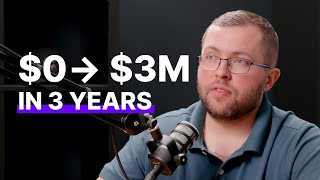
Ryan Bakey scaled his real-estate CPA firm from $100k to $2.85M in three years by building an audience through podcasts and daily social posts, then converting leads with a VSL funnel that hit 6x return on ad spend. He qualified clients at $200k minimum revenue, hired a tax strategist named Austin to remove himself from the work, and used email as his core hub for retention.
Questions this video answers
$100,000
$1.6 million
$2.85 million
$200,000/year
April 27–29 (in Chicago)
Chapters
Every business has three elements to it. Traffic the offer and then you're going to have fulfillment. But I was the bottleneck. Imagine a company where the CEOs that.
We could say, was that you?
Well, I gotta fix that by hiring somebody to fill that role.
2021, you did about 100,000. And then 2023, 1.6 million. And then this year we're gonna close out at just under 2022, you quit your 9 to 5. What happened?
I don't think there's a greater time than now to start your own firm. There's a huge need for it. There's just a ton of opportunity right now in the accounting space.
Well, ladies and gentlemen, I'm sitting here with Mr. Ryan Bakey. Ryan owns a real estate CPA firm called Tax Strategy 365. And we've been working together since the very beginning.
2021.
2021, that was right after you quit your big four accounting job, right?
Yeah, before.
Yeah, technically before.
Before it was. Yeah. Actually it might have even been 2020, because the reason why I started posting online was I used to teach Dave Ramsey's Financial Peace University at my church before COVID happened. And then once Covid happened, our church wasn't quick enough to get everything pushed over. Remote. Now it is remote. But it took something away from me as like a giver and an educator in this, in the personal finance space. So that's when I started posting just videos online about tax and finance accounting. Because I was missing, I was missing that day to day pleasure of like helping somebody with something and then them thanking me and rewards.
Yeah, yeah. So I want to recap kind of the past trajectory of your company. And then what I want to talk about is what are the moves that we made this year in 2024 to add over a million dollars to your top line revenue. And so if I remember right, and you can correct me on this, but 2021 you did about. What was it, eight or nine hundred thousand dollars?
2021 was a hundred thousand.
2021 you did about 100. And that was on the side.
Yeah.
While still working your 9 to 5. 2022, you quit your 9 to 5. What happened?
We did 850 or 820, something like that. And then 2023, 1.6 million.
And then this year we're going to close out at just under 3 million. Is that right?
Yep, 2.85.
So I want to talk from a marketing perspective, I want to talk from a sales perspective, and I want to talk from a systems and operations perspective, you know, what have we done this year to scale the business? And obviously I'm, you know, intimately familiar with a lot of the marketing side of it and a lot of what we did there, but less involved in the sales and the ops. And so I want to make sure we cover those things because those are still like crucially important parts of scaling. Right?
Yeah.
So from a marketing perspective, just to recap what we've been doing, you know, up up until this point, you know, basically the entire time we've been working together, you've had your podcast, which has gone out every week, long form on YouTube and Spotify. We've had short form that's gone out on Instagram, TikTok, LinkedIn, Twitter, like all the platforms. And for, you know, for a while that was like your main source of traffic. Right. And then over time we've added different paid channels. But I think the thing that really was a game changer this year, I would say we really cracked the paid channels, the paid ads. Right. We got a VSL funnel in place that basically we can put a dollar in. We're gonna get. I think right now we're sitting around like a 6x return on ad spend. And then we're also adding the all these leads to your crock pot of your email list. Right. Where there's. They're sitting on here, they're getting nurtured kind of, you know, over. Over long term. And you know they're gonna buy eventually at some point down the road. So talk to me a little bit about that strategy. Like the difference between getting leads that are gonna convert right away versus. Versus getting leads that might not convert for even a year.
Yeah. And truthfully, you don't even really want. Sometimes you don't want the people that convert right away. Cause they haven't warmed up to your brand and business yet.
They're a lot harder to sell.
They're a lot harder to sell. I mean, for every person that's been in your audience for six, seven months versus a lead that just found out about you this week, ten times harder to sell to somebody that just found out about you, versus having that. We call it the conversation before the conversation with people for months, maybe a year before they decide to book a call and end up buying something. But in its core, every business has three, three elements to it. So you're going to have traffic, which is marketing, you're going to have the offer, which is sales. And then you're going to have fulfillment, which is the actual product. And most What I've seen is most accountants are good at the fulfillment. Really bad at traffic and offer.
Yeah.
Really bad at marketing and sales. A lot of accountants think that they don't have a lead problem because their phone's ringing off the hook. People are booking inquiries. But they do because they have a qualified lead problem. Right. So. Because if you think about it this way, like I would rather, I'd rather get on the phone with 10 people that are super qualified and that are showing that pain and that are showing that they could use our solution versus a hundred people that are unqualified. So you don't lack leads, you lack qualified leads. Most accountants lack qualified leads. So kind of fixing that top of the bottleneck is helpful to get quality people coming in. But even then you, how are you gonna take 200 calls a month and fulfill. You're not. There's like a couple stages of hiring people, right. So the first stage is you're hiring somebody to kind of take task off your plate and do something else. Stage two is to say, well, that person actually needs to be smarter than me. Because then they can see holes and cracks that I don't necessarily foresee coming and they fix it before I even have to find out about it. But then there's another stage where it's those people that you're hiring are blocking and tackling for you. So that way you don't get bombarded with a bunch of questions on a day to day basis. So there's different stages with hiring that were really successful for us. I mean, this is the year that I finally got out of the fulfillment. For the most part, the only fulfillment that I do on my end is I do a one hour call each week for all the clients. Most, you know, everything else is done by our team.
Yeah, let's. We'll talk about fulfillment in a few minutes here. But I want to really double click on this qualified lead thing. Cause I think this is so important. Right. This is like a known thing in the accounting industry particularly, but really in a lot of professional industries, there's a lot of people who need this service. But they're like, you still have to be able to filter out the people who are price sensitive or the people for whom you're not the best fit or just the people who are, they're going to be more of a pain in the butt than is actually worth their fee. Right. And so, you know, some of the ways that we've done that with your clients is number one, you can't book on Ryan sales calendar. If you're making under 200 grand a year, that's just a minimum qualification we set. So unless you're going to lie on that, which then we find out immediately on the sales call because it's kind of an important thing when, when we're talking tax strategy like how much money do you make? Yeah, so that's one big thing. I think the other thing is just the messaging that we're using of always trying to kind of hone in on what's the message that's going to attract those higher level people. Because ultimately it does. It just comes down to the words, the phrases and the concepts that you, that you use when you're speaking to your audience that's going to determine who you attract. Does anything else come to mind that we've done to get more of the qualified people coming in?
Even if they're, even if they're not qualified, like having a channel for them to fall back into whether, whether they are buying a cheaper, whether it's like a course or we do the boot camps or whether they just subscribe to a live event like having that, that basket there to kind of catch those unqualifieds is important because most people will just say goodbye and they won't even capture their information.
Yeah, kick rocks, buddy.
You know, we, we kind of hold the unqualified people like there are our baby. They just can't work with us yet, you know, so then they get put through that, they put through that, they honestly get put through a qualification process, the podcast, the, the YouTube channel, like the templates. So that way when they are qualified and they've already shown interest to work with us, it's a, it's a much easier sale. That goes part of the marketing because telling people, the world who you work with tells the world who you don't work with. We don't work with people who make less than 200 grand and we, we try not to work with people who have never bought rentals before because a lot of people, unfortunately in this space, they get all dressed up but they don't go out anywhere. Like they think they're doing something by, by booking these calls, but they're not. They haven't bought a property yet. So we tend to stay away from those people and let them work, work through the process.
I think it's, it's important to note too like we didn't come up with a real like downsell offer until you're already kind of dialed in the high ticket. Right. Like your, your tax strategy.365. Like tax strategy service hasn't actually changed all that much since before we created the downsell offer. And I think that's, I think that's something that like either people never create a downsell offer or they create it way too fast just because they're getting a bunch of unqualified leads. And, and it's like that's not the solution to your problem right now. No, the solution is crack the high ticket, get that to where it's very consistent, the service delivery is pretty streamlined. Then you go create the downsell offer, which now we've done with boot camps. We launched some courses at one point, which that wasn't a huge hit, but that's all right.
Or the, a different, totally different company.
Yeah, you've got a completely different company now for, for tax preparation, which we can talk about as well. But asking those people what, what, what they want from you and then figuring out, okay, how can I create something that scratches that itch at a price point that they would actually be able to handle.
Yeah, well, the problem with that, I've seen with a lot of accountants. Cause I'm doing this six week master sales and marketing course for accountants. It's a program. We got 10 accountants in there and everybody's offer. From what I've seen so far, their downsell is literally just a cheaper version of their main offer to where they're putting in 75% of the time that they would have put in the main offer, but the only reason they're doing it is because they'd rather have three grand than five grand or six grand.
Right.
Like, or nothing at all. You know, like they want to prove that value at that, at that lower price, but it's still your time at the end of the day. So your down sell. You know, the best advice I ever got about down sell offers is you have your main core offer, which for us it's a strategy service. And then your downsell is just all the objections that you get for that main offer other than price. Because of course price is always going to be an objection. So naturally your front end offer, that's, that's going to be a, you know, third of the price of your core offer. But you take those objections of like, I don't have time, it takes too long, or typically in any offer there's gonna be four major objections. There's gonna be the price objection, there's gonna be time, like I don't have enough time or it's gonna take too much time. There's a Belief objection, they don't believe that they can do it. Or there's a product specific objection like, oh, well, this doesn't have xyz, so I'm not gonna buy it. Well, we can't give you everything there, but what we'll do is we'll take some of it out of the main offer and stick it on the front end. So instead of the main offer being, hey, you get review prior returns, you get three one on one calls, you get access to weekly support. Well, the front end offer is, well, you still get the review of your prior year returns, but maybe you just get one call instead of three. You know, that's the front end. And not a lot of accountants have a front end offer.
How is that not getting, giving away 75% of the value there though?
That's why typically your front end is not going to be anything that's like one on one intensive because you'll give away too much value. I was telling them the story about this was, and you probably remember this, this was like early 2022, I think we just got done with 2021, tax season in May and people were flooding my calendar and I was basically on my own still. I had a couple of employees, but I was like, you know what, I'm going to charge to book an initial consultation. So I was charging 500 bucks for a one hour call and my calendar was flooded. I mean I was making 25, 30 grand a month just doing these one hour calls, but I could never get them to convert into the 5K into becoming regular clients. And my mentor at the time, he said some really good thing. He goes, well, you're giving them so much value out of that one call that they feel like they don't need you for the rest of the year. So you got to repurpose how you're doing that. So instead of taking, Instead of taking ten $500 an hour calls, I just need to do ten sales calls and sell three of them into a 5K package.
And now you make three times as much.
That's right. And your work three, you know, three times less because you're dealing with one person as opposed to ten to make the same amount of money.
We've got a lot of different traffic sources, right. We've got people coming from social media on basically all the platforms. We've got people coming from your podcast, we got people coming from your Facebook group, which is now over 10,000 real estate investors, which is about to be 12. About to be 12. That's awesome. Yeah, and now what we've done this year is we really cracked the paid channel where we're getting completely cold traffic, basically strangers from ads. We're putting them through a very shortened funnel. And then, you know, a percentage of them are kind of, a small percentage of them are closing relatively quickly. And then the rest are just on your email list, which kind of the way we like to think about it is like all roads lead to Rome, right? And Rome is your email list. It's like if we can get them in there, then we can kind of like direct them back out to wherever we want. So we could, if we can get them on your email list, then we could say, hey, you know, you should check out my Facebook group, you'd love it there. Or we could say, hey, you should check out my podcast. We've got content on X, Y and Z topic. And it's, it was really good this week. But by getting them on the email list, that just ensures we're able to show up in front of them regularly. And so then finally the way we get them on into your sales process is basically just through the, the direct like application to book a call. And so it all kind of funnels down to this one location where they can go in and book a call with your team.
Yeah, I mean, that's what I was explaining to the accountants in the six week program is it's not a, it's a, it's a flywheel. So you got a circle and you stick your, your whatever, your core product, your main offer is in the middle. So all roads are gonna lead to that. So you might have, you might do a lead magnet get that gets their email that you email in to book a call to the main offer. You might speak on a podcast. And then you're sending them, you're getting their email for this free thing. Then they book a call and then they get into your main offer. Like all roads lead to Rome. And first it's getting their email and then it's sending that traffic to whatever your main offer is. Like, what are you known best for? And then downsell or upsell accordingly from that. But I think I spent some time with Mike Michalowicz. He's the author of the Profit first book. We were in Montana, this was about two years ago now. And he goes, it's the frequency at which you show up that builds trust with your audience. So the more that you show up on a day to day basis, the more trust that your audience builds with you. And I'll never forget the Story. It's where we were at a holiday party. This was end of 2022 in Chicago, and I met this guy named David. And we're talking and then at the end of the night he's like, oh, do you got a business card? I was like, no, I don't have any, but follow me on Instagram, give him my Instagram. And then a year goes by, I haven't talked to this guy at all. Never. I forgot his name. Right? Go to the same holiday party. He goes, what's up, Ryan? How's the business? How's life? I just saw you got married. How's the property? Miami, like all these things. I'm like, whoa, whoa, whoa, whoa, whoa. Slow down a sec. I don't know you.
He goes, what was your name again?
He goes, yeah, but I know you. And it's because I've seen you every day on Instagram.
Yeah.
And so I had this light bulb moment that just clicked and I was like, oh my God, how many one on one relationships like that can I create through social media just by showing up every day and building trust with the audience? And the more that you can do that, especially just film a video one time and it, and it has a relationship with people, the better off you're going to be. And then, and then the bigger strategy becomes how can we compress that timeframe to a shorter amount of time?
So Google's got a study on this. They did a, like a social trust study. And what they came up with is on average, in order to be like a dedicated customer of your brand, somebody needs to spend seven hours with you across 11 touch points and on four different platforms. And so the, this is the problem is the majority of businesses like yours don't. Like, they don't. There's no way you could do that. Like they're gonna spend seven hours on your website, like looking at an About Us page that doesn't even have pictures of your team. Like, it's just, it's a preposterous thing to think about. But when you have a podcast, it's like, I could listen to like, you know, I could listen to your podcast for three months and I've spent, I've now spent seven hours with you.
Well, think about that, right? If they just have a website and you're funneling traffic through the website to a call, how many calls does that person need to get on with you before they're ready to buy a lot versus you can eliminate that, have all the content that's evergreen, that's just running for you and then go to a one call book, you know, one book call and close.
Yeah.
Which one would you rather prefer as a, as a business owner? I'd rather spend my time with people that I know are ready to buy or like that have shown a lot of interest versus if you just have that website you're almost proving to proving you have to prove yourself why they should work with you.
Yeah. Okay, so we've talked marketing. We've kind of gone over, like, the strategy there just to kind of like round it all out. What would you say is the, the biggest change we made in, in marketing strategy this year? Is there one or two big pivots that you think really moved the needle?
Just being able to get people to, like, raise their hand? I mean, we had so many people on the email list, but then some. You know, most of my emails I try to do value add or like in content and posts I try to do value add. But it actually hurts your audience to not ask them for money or ask them for the sale because you have a certain percentage of your audience that's ready to take the next step with you. And I had to learn this lesson. But if you don't offer them the next step, well, somebody else is going to, and then they're going to take your customer instead of you. And so that's where I think, like running ads, especially to people who have already engaged in the content, it's just, it's just a way for them to finally raise their hand and say that they're interested in working with us as opposed to before. It's like, oh, I might send out an email once a month saying we have spots, open book a call. But now, I mean, people are seeing my ads every day everywhere. They know that we're open up for business. Pretty much. Yeah.
I'll say. For my part, I think getting a, getting a cold traffic funnel that actually works, I think is a game changer because we can get an ad in front of a stranger, we can put them through a video sales letter and some emails, and within a week or two, we're able to reliably get them on a call and get them into your sales process and ultimately within maybe a month or so, getting them to convert. Whereas before we were kind of relying on, hey, we're going to get people into your ecosystem via content and it's gonna, you know, we're gonna be okay with the fact that it takes them six months to warm up and to convert. And obviously that's a Much easier sales process. But there's also a less predictable lead flow because, yeah, you know, content kind of does this over time. It goes up and down. Right. And so the seasonality, the whatever's going on on the individual social media platforms like that all plays a role in there, versus with a cold traffic funnel. It's like we can get in front of a stranger, we can get some of them to buy right now, which basically covers our ad cost and then some.
And it covers the time that it takes for the others to convert.
Exactly. And then, you know, the long tail effect, you know, you could run a profitable business just on the people who convert in that first two to four weeks. But then we've also got the long tail effect of the people who are going to convert six to 12 months from now. And that's all icing on the cake.
And you don't want to just have one sort of source of traffic. I mean, I know a guy that's doing, you know, he's doing 2, 300 grand a month on paid ads, but you know, he's spending 100,000amonth, $80,000 a month to get there.
Yeah.
It's because he doesn't have any trust with his audience because they're taking a long time to convert or close or the conversion rates just low because they're not as warmed up. So having a little bit of both, it's a lot easier to start with like a good organic social media channel and run paid because all the people that don't convert should just fall into the bucket.
Yeah.
And then eventually kind of get warmed up through your organic marketing that they end up, they end up buying.
Yeah, well, it's a data thing too. Like the Facebook ad algorithm needs to know who to put your ads in front of. Right. And when you've got an organic audience, when you've got people following you or, you know, you've got a few hundred sales calls that we can, we can plug into there as data of like, hey, this is the type of person we're trying to get. You can get really, really good results with your ads really quickly. It's just the people who try to like, go from zero with just paid ads. Yeah, they, they have a hard time getting traction initially and then they end up, you know, long term, they end up in a situation like that where they're, you know, they're profitable on the ads, like sort of. But it's just like this, this like grindstone of every month starting over from zero versus having kind of a brand that people can look at and like respect your brand and they get value from it and they like your brand. That's a big deal.
Yeah. And there's, you want to just have options. I mean there's different times of the year where you want to go harder on different like faucets of marketing. So like, right. I mean right now we're hitting DMS on Facebook really hard over holidays because we know people are on their phone.
Yeah.
On Facebook.
Yeah.
Because they're communicating with family, trying to schedule gatherings and stuff like that. So we're hitting DMs out of the Facebook group really hard right now. You know, you may not want to run a bunch of paid ads during the election month. Right. Like they're going to be super expensive. But not only that, that's what we found. But all these, all these companies are all these, the politicians are trying to get their ad out there too. So the ads costs go up. So you want to have different like ways of marketing. But the reason why is not just because of getting your ad in front of the person. It's that omnichannel marketing. They see you in different places. It just builds more trust. I always use the Cadillac example of, you know, you see a TV commercial, you see a billboard, you see a Cadillac and the newspaper and then you see somebody driving one and you're like, I want that. It's different channels of marketing. And plus not all marketing works for the same people. Some people buy based off different modalities.
There are people who are never going to answer a cold email in their life.
No. And there's people that are never going to sit on a two hour webinar either. Yeah, but it doesn't mean you can't market to them.
Exactly.
Because I'll throw that two hour webinar in front of somebody's face, get them to fill out an application and knowing damn well that they will not be on the webinar. But they just filled out the form that said they make half a million dollars a year and they have three rental properties. Like that's a qualified person. Yeah, but I've also had people with a $10 million net worth get on the webinar and convert. So it's, it's not as predictable. But I just know you kind of figure out the game by, by falling forward. I mean we've ran so many campaigns or webinars or events. But like we know what to expect now.
So. Okay, let's move into sales. So start of the year you had two sales reps on your team. End of the year you still got the same two sales reps. The they're doing pretty good. We've now got a setter on the team, which is cool. Talk to me about like what kind of changes do we make from a sales perspective this year?
Yeah, I mean the number one thing you want to do is try not to get people like revolved around working with you as the head figure person. And a lot of that's through messaging and that's where it's ebbs and flows with having the personal brand because like people see your content, people see you engaging every day. Well, they want to work with you. Right. They don't want to work with people on your team because they haven't seen them as much. And so that's where sort of featuring your team members become super important if you ever want to transition out. That's the number one thing. Like when we look at buying and acquiring firms, the number one most important risk factor is like how involved is the owner in the day to day business. Because if that person is super involved and they're the one doing all the client calls, it's going to be tough to buy that business because those clients are going to leave. And so that's what we try to do in our marketing sales process now is hey, it's not, it's not Ryan. You know, Ryan's just kind of the authority figure he does. And we'll talk about this a little bit because it helps for me to be on those weekly calls. Yeah, but they're not getting used to or they're not getting sold on the idea of working with me. It's, it's our company, it's our firm. That to me is probably really important. I think for People if you're 0 to 500k or revenue, it's gonna be all you for the most part, maybe even zero to like 750. But as soon as you make more than 500k like on those sales calls, you need to be telling the client and setting the expectation that hey, it's me and my team. You know, you're going to be working with my team. So you know, when you order a package on Amazon, it's not Bezos delivering it to you himself, but he's got a team for that. Right. Or like Tesla, you know. And so I think once you hit that 500k revenue mark, you know, don't be afraid on the, on a prospective call to tell the client like, look, you're not, it's not going to be me. That's doing everything.
When you bring up a good point, too, because before, like, if you're under 500k a year, you're not really a business. Like, you're just. You're kind of a solopreneur. And so, like, that's. That's an advantage, though, in the sales process. Because if. If I'm coming to you, like, there's some people who are always going to appreciate working with that solopreneur, where it's. You're, you know, you're working directly with the business owner. And they like that. Right? They, you know, they. They like that they're supporting, you know, a small business. They like you as a person. They want to work directly with you. And so use that advantage starting out.
Yeah.
And it's going to be a little bit of a painful process with some of those clients once you do pivot down the road, once you start bringing on a team. But I think it's. It's still worth using that advantage up front because you have so many disadvantages against a larger company that you kind of got to work with what you got.
Right. I mean, that's the reason why we did get a lot of sales in the beginning. There is, you know, all these other people that were our competitors, they're posting the content online, but who's taking a sales call? Not them. Who's doing the fulfillment? Not them.
Yeah.
So we got a lot of people in the beginning because I was the one that was doing the sales call and doing the fulfillment.
When did you realize you needed to stop doing your own sales calls?
When I hit a plateau. This was probably summer of 23.
Okay.
I was hitting a plateau of like 40 to 50k a month, which doesn't sound like a plateau, but for me, it was because it was so dependent on me being there. And I got married that I got married in September, and we were gonna go on the honeymoon. And I'm like, man, how is this thing gonna run if I'm not. If I'm gone for. Because up until that point of that honeymoon, if I wasn't there, the company necessarily wasn't making money.
Yeah.
Any new money anyway. We were making money on the clients and contracts we already had, but it wasn't making any more new money. And then I got, you know, the first salesperson in before we left for vacation. And then just seeing, like, a lot of close sales while I was sitting in Jamaica was pretty cool. Okay.
So you were kind of hitting this plateau around 40, 50. And by the Way like if you're watching this is going to depend entirely on your ticket size, your lead volume, you know, do you bill monthly or is it a one time payment for your service? Stuff like that. But there is going to be that plateau moment where you know, your schedule is maxed out with sales calls.
Yeah, something's gonna break your system, you're gonna break, your system's gonna break. And so it's better to like get out in front of it before it happens to you 100%.
So you got out of the sales process, you brought on your sales reps. How did you go about bringing on your first sales reps? I think this is like a question a lot of people probably have.
My best piece of advice, don't use accounts to do sales. They're not salespeople, they're accountants. But it really does help to have a salesperson that has conviction in your product. So in fact, like our first salesperson was a client that just had happened to have a sales background. And so they got the kind of experience and the testimonial working with us. So they had conviction in our product and service because it worked for them. So it really helps if your salespeople have true conviction in what you're selling and they're not just there to get a paycheck, but they, they do truly believe what you're doing is helping people save money. So that, that helps with, you know, having a salesperson. And then my best piece of advice, it's always easier to go downstream rather than upstream in terms of marketing. So before we were just selling my brand and image really hard. But sometimes you have to do the harder things like eat the frog first type of thing. So if I was restarting it out again, I would try to remove myself from the day to day as much as possible. Have those sales reps, they're selling into tax strategy 365. They're not selling into Ryan.
So I want to talk about fulfillment in a moment because you've finally gotten out of fulfillment completely on the day to day. But before we do that, what was the reposition you had to make in like your sales script and your sales process to kind of reset expectations with people now that they're not working directly with Ryan.
Well, the biggest thing I think that really helped was a lot of marketers just sell the end result or the destination or the vacation when they'd be a lot better off like selling into the pain point of the prospect. And so then it becomes more of like a, oh, you don't get to work. Like, not, oh, you're working with Ryan. Ryan's going to help you do all these things. But it's like, no, no, you have a problem. You have a pain. You're overpaying in taxes. You're this. You have no expectation of what you're going to owe or get back. Like, you have a pain problem. We're here to solve it. Now, how that gets solved, whether it's by Ryan or by somebody else, doesn't matter. It's still, you have a problem that we can solve. And so a lot of people, and this doesn't just go for accountants, but a lot of marketers would be better off selling into the prospect's problems rather than selling like, oh, well, here's the end result of what it looks like to work with us, but rather sell into the. The pain to me. Instead of selling the plan to heaven, you sell the plan plan out of hell. The path to heaven is not the path to heaven. You got to sell the plan out of hell first. Yeah, yeah.
My friend Joey has a great thing. He says whoever demonstrates the clearest understanding of the prospect's problem is going to get the privilege of solving it. That's it. And I think that's really important because, like, you can't, you can't accurately sell the vacation because I think it's, it's, it's very important to sell that dream outcome. But you can't accurately sell that dream outcome until you've established what their actual pain points are and you've established the authority of, hey, I understand your pain points actually better than you do.
Yeah.
Like, if you can dive deeper and give them that light bulb moment just on their pain points and like, you know, hey, by overpaying in taxes, you're actually holding yourself back from investing in that next property. Right. They're like, oh, I didn't even think about it that way. I just thought about how much I hate paying taxes. You're like, yeah, see, we get it. And by doing that, you establish, like, this authority, but you also establish yourself as kind of this, like, compassionate, like, beneficial character in their lives. You're like, yeah, like, dude, I get it. I understand the problem. Here's how we solve it. And so they're much more inclined then to. When they hear about how you solve it or what the service looks like or whatever, they're much more inclined to believe that that's going to be the actual solution that they need versus if you just went, oh, you're overpaying in taxes by 20,000. We can help you save the 20,000.
Then it's like, okay, it's almost like, you know, if you had to ask somebody, what is the perfect dog like, look like? Like the perfect pet. Explain what a perfect dog looks like. Does he listen? Does he eat on time? Does he. It's really easier to say what a not a good dog is. Shits everywhere, tears up the couch, barks at people, bites people. So it's easier to, it's easier to establish and point out the pain of the problem, like what makes something bad than it is to say what makes something good. And so that's why probing into those problems, before you ever bring up the way and how you're gonna solve it, you gotta just probe into those problems a lot better. 90% of the sales conversation all the way up until they buy should all be negative. All based on negative. Once they give you money and they've shown that, you know, gratitude and they've shown that interest, then you can get into positive motivation.
Interesting.
But 90% of the conversation up until they buy should all be negative.
Alright, let's talk fulfillment. So, biggest thing was this spring you hired Austin, who's awesome first tax strategist you hired. And that got you out of most of the day to day, like tax strategy calls, right?
Yeah.
So I guess talk to me a little bit about, like, what made you decide that that was the right time to hire for that role?
Well, you know, it goes back down to the three, three core pieces of a business. The traffic, the offer and the fill. Fulfillment. What? Well, at the time in the spring, that was where the bottleneck was. It was me. I had the traffic figured, I had the offer figured out, but I was the bottleneck because the business resulted around me doing those calls. And so. Okay, well, I got to fix that. I got to, you know, unblock the bottleneck, so to speak, unclog it, whatever, by hiring somebody to fill that role. But it's not just like hiring them to fill the role. And you see a lot of big accounting and law firms make this mistake of just dropping anybody in. Anybody. In that scenario, it has to be the right person. And more importantly, it has to be the right transfer of authority to that person so that the prospect can feel confident working with them. Because one of the big problems in the beginning was people would get on a call with Austin, he would tell him something and then they would ask me if that was right. I'm like, no, no, no, look, he actually knows about it than I do. Yeah, I don't do this a lot anymore. He knows it way better than I do.
So talk to me first about how you knew Austin was the right person for the role. And then second, let's get into how did you transfer that authority to him to where people like customers start trusting him just like they trust you.
I knew he was right for the role because he had already been doing a very similar role at a similar accounting firm. That's how I knew he was somewhat qualified to work this role. It's just like how a lot of private companies and C level, they recruit from the big four because they know the expectation of, okay, well if you've spent three or four years at Deloitte or kpmg, like you have some level of competence in the accounting field to where you're going to know your stuff and you're probably going to fit in at like a C level role. So I had that sort of expectation with him going in. But like, one of the best pieces of advice that I ever got on brand building and transferring the authority is you have to feature your employees. I was getting mentorship by the same person that told me, you're giving away too much value. He goes, you have to Drake future your employees. I'm like, what does that mean? He goes, well, anytime. A lot of rappers now that are popular, 21 Savage, Lil Baby, a couple other rappers, they became popular because Drake featured on their song. So that was Drake transferring his authority to 21 Savage, Lil Baby, a couple other rappers.
That was how Eminem came up with Dr. Dre, right?
Yeah, Dr. Dre. Yeah. But they're transferring the authority to that person and that's important. And so how we were able to do that was.
So explain how that works in the prospects mind. Like seeing that like they see you on a call or on a video or on a webinar with Austin.
Yeah. Again, they see you as the authority, as the Buddha, we call it. Big undeniable authority, basically. Buddha.
I like that.
Like you're the person that can solve the problem, Right. You're the only real estate CPA that gets them. Well, how do I go about, number one, I'm the Buddha, but how do I go about transferring that to my employees? Now you have the authority, now it's your job to then transfer it to your employees. And you do that a lot. Just the more you can name drop them, the better. Like in the pre call notes, pre call videos, we obviously did some of the webinars together so people that weren't clients already could get used to interacting with them. There's a lot of ways you can transfer authority. It just has to happen.
I think a big part of it is your ego, too, as the business owner, because a lot of business owners will hire people dumber than them because that makes them feel good and that makes them feel like, you know, when, you know, if I've got five employees all coming to me with their questions and I'm, you know, I'm the guy, like, to a certain extent, that makes me feel good because, like, that means that I'm the smartest guy in the room. But that's a huge problem. If you, as the CEO, are the cap on your organization, if you're as the founder are the cap on your team, how smart of people you have on your team, then, well, the team's only going to grow better and smarter at the rate that you grow better and smarter, and that's that. That can be a problem. And so for you, bringing on Austin and being like, he's actually better at a lot of this stuff than I am, I think that's where a lot of that transfer of authority comes to. Having him on the webinars to answer some of the Q and A, having him come to the boot camp to give seminars on different strategies. We had him on the podcast. He flew up here to Chicago for a podcast when he first came on the team. Like, all of that stuff, allowing him to demonstrate his expertise, allowing him to kind of outshine you at certain times, I think that's a lot of what does that in the prospect's mind.
I played football in high school, and I remember sophomore year, our coach is like, we're only as strong as our weakest link. The weakest, shortest, slowest person on the team. That's. That's what we're as strong as. Right.
Was that you?
No, it wasn't me. But it was all about lifting up that person, like, and making them more competent and stronger. And together the team grows. Right. Well, imagine a company where the CEO's the weakest link. That's probably a good company to have.
Yeah.
Because everybody else, the managers of each position, are stronger, more competent leaders than the CEO. CEO should be probably the dumbest person out of the company, to be honest, because it should be the people that are on the front lines that are smarter, competent, you know, better. Better to run the company than the CEO.
Well, there's that analogy people use of, like, imagine you own a restaurant, right? You're a restaurant owner, and your main cook quits if you've got a background in cooking and being a chef, then you might try to jump in there and like, be your own chef for a little while. And that's inevitably going to lead to your. You're spending months in this chef role while you're also like part time on the side in your evening hours, like trying to find the right person for the job, versus if I own a restaurant, I don't know the first thing about cooking. And so if my chef quits, I'm just going to immediately spend 12 hours a day for the next two weeks trying to find a chef and I'll have a new chef in there within seven to 10 days.
Yeah.
And so it puts you in a way better position if you actually don't know the craft as well as your employees do. You just have to know resource allocation. Where do I put the money? Where do I put the time? Where do I put the energy? Where do I put the people?
Yeah. What's the focus?
So you got Austin in this role as a tax strategist. That got you out of the day to day of the tax strategy side of things. You've actually been out of the day to day of the other part of your business for quite a while, though, the tax preparation side of things. So I want to like, backtrack a little bit because that's. I know that's not really a big move we made in 2024, but there's a big move towards the success of your business is not even touching tax returns. How did you build out that system to be so operationalized?
Just. Well, it really does help to have a niche, like one specific service line. Whether it's real estate, doctors, lawyers. It's really helpful to have a niche because you can build systems around it and really good processes. Yeah, workbooks, automations, templates. And you see, you see so many things where at the end of the day, it's real estate. So there's only so many things that can happen with a real estate deal. You buy a property, it's successful, you're renting it out, you know, you sell it one day or you buy it fails, you sell it, you get rid of it. Like, there's only so many things that can happen to where, okay, at the end of the year, we're collecting the client's information. What do they say that occurred or happened? We're asking them the questions that we need to ask. Did you sell a property? Did you buy a property? What happened with it? And then it all flows into our process where we have assistance that will communicate with the client before the tax return gets prepared. Once we have all the client's documents, then it starts getting prepared. It gets prepared and reviewed in a matter of a week. And then it gets to a second level review by a US based CPA that communicates with the client and then delivers the tax return at the end of the day. And it's all, it's all done. It's all automated.
How often does that break?
It breaks because of the stupid time constraint that the government puts on you to get all the returns done by a certain deadline. So it'll normally break like the week of. Luckily, I think we didn't have a break in October, but we had semi break in April 15. There's a few things I'm thinking about that you can do to limit that.
You know real quick, how did it, what broke exactly?
What broke is our senior tax reviewer had an issue with a kid so she had to leave for a couple of days.
People issue.
Yeah. There's a people issue.
Yeah.
Where we, we had, we were one man down basically.
Yeah.
Right.
So what did you do at that point?
I had to cancel a trip and step in.
Yeah.
Because at the time there was no.
Second level of defense.
That's right.
So what's the second level of defense then now?
Well, the second level of defense now is number one, let's try to not to get to a scenario where there needs to be eight returns reviewed in like three days, two days that right up on the deadline like that. Okay. And if so, who's the next person up? Is there a backup somewhere? A lot of accountants, you know, the most income months are going to be those first three or four months. They don't like to keep staff on in the summer, fall, winter, but do whatever you got to do to have that person there. Because you as owner can't step in at the end of the day to fix that.
Yeah. I mean like not being able to have the right people in those places to, to get delivery handled and to have a backup.
Yeah.
Like that's just a sign that you don't have the other aspects of your business in line.
Yeah.
Like your offer isn't dialed in, your lead flow isn't consistent and predictable. And so it's like, hey, go fit. Rather than say no, I'm just going to lay everybody off over the summer and you know, bring them back on for a little bit in the fall and then you know, again full time in January or February, like get those other aspects of your business in Order so that you can feed those people year round. And you're gonna have a much better life, you're gonna have a much better business and frankly, it's gonna be a way better quality of life for these people on your team. And so you're gonna be able to attract and retain higher quality people on your team as well. Because that's the thing too. Like if I'm an accountant and I've got the option of working at Firm A, where I'm gonna be working 60 hours a week all tax season and then laid off on the summer, or I'm given the option of working at Firm B, where I'm going to be working 50 hours a week all tax season and then 30 hours summer and fall. I'd way rather have the other one, the Firm B, because it's more consistent, it's more predictable and it's going to allow me to like to flourish in my life.
Yeah. Employees really value consistency.
Yeah.
More than anything else. That's why they're employees and not owners.
Yeah, exactly.
You know, they can't deal with the peaks and valleys like that, so they quit. They find something that's more consistent.
Well, and frankly, who would? Yeah, right. Like for, for the, for a tax preparer's hourly wage, like you can't, you can't stack up enough cash over tax season to then like live comfortably the rest of the year. It's just not designed to do that. Anything else important that, you know, important moves this year that would be good to go over.
If you're building a virtual CPA firm. Having in person events with clients I think is super important to brand building. I can't explain it enough. Like I look at the people who have been the longest clients of ours. They've all been people that I've at one point met in person and had that relationship with. It's also really good, like social proof elements too. Like as much as you can speak from stage or even host your own online events. But more so like we're gonna start getting in person events. I think it keeps people longer because with accounting it's interesting because for up until about this point it's been really seen as a commodity. It's a thing that has to be done every year following my tax return. So a lot of people have the mindset of like, I'm going to go to this option until something else that's either cheaper, better or both presents itself. Right.
Yeah.
And so the only way to like combat this whole AI train and all these companies doing that like buying up these other accounting firms and then charging half of what you charge so they can get all your clients and then raise the fees on them. The only way to combat that is to have a strong personal brand. People want to work with your firm not just because they know that you're doing an amazing, phenomenal job, but so that they can be aligned with your mission and journey. That's why I like, if you see all these people that like the Dean Graziosi, Tony Robbins, part of the reason why their customers stay with them so long is the customer feels tied to their story. The person's story. Yeah, like the, the influencer or the guru's affiliation.
Yeah.
The more like live events you could do in person I think are important. And then just showing up like that's why I still do, that's why I think it's really important that I still do that once a week call so I can still show a face and show support that I, that I really do care about the business.
Yeah, that's actually a great point. You bring that up because they're like you're selling, getting, getting your problem solved, your tax problem, but then on the back end they're also getting this relationship or this semi relationship with you and that's then how you retain people. Right. So you've done a really good job of this, I think with the in person events that we've been doing in the past. Like you haven't hosted your own in person events yet at all, but you go to these conferences in your industry, in the real estate industry, you make a point to meet up with clients who are at those conferences. And then even like the one we had in Nashville last year, you had a whole house party for all of your clients. One of the nights of the conference, which I thought was really cool. Going into 2025, we're exploring like in person events for your own, like your own in person events, which I think is going to be really, really cool. But at the end of the day I think like AI and in person are two ends of a spectrum and it seems like everything is moving towards one of those ends. Right. So it's like either you're going to have the AI, hyper efficient, super impersonal experience or you're going to have the completely in person, old school relationship style experience. And I don't think being somewhere in the middle really benefits you.
Yeah. Because AI is either going to be a super volume, lower price sort of game and then the in person, more brand building that's going to be like a lot of time spent but also more higher ticket.
Yeah. So stay tuned I guess for this for the same video next year to see how the in person events went for us.
Yeah, yeah, yeah. Just I don't think there's a greater time than now to start your own firm. I mean if I would have said that to myself three years ago. Oh like, oh, there's already so many people out there. But the accounts that are posting content online are like half of 1% of the total accounts out there. And so there's just a huge, there's a huge need for it. There's a lot of these firms that I see posted for sale sub $1,000,000 revenue, very owner dependent. Those firms are never going to sell. What's going to happen is that guy is just going to take the listing down and just walk away from the business. Yeah. But then where all those clients go. Yeah, well, they're going to come to us. And so there's just a ton of opportunity right now in the accounting space.
Ryan, thanks so much, man.
Yeah, awesome.
All Ryan's links are going to be down in the description below. Anything particular you've got coming up?
If you're an accountant, come check out our in person event. First one's going to be April, end of April, April 27th through the 29th here in Chicago. Come say hello. Come learn about tax strategies that you could teach some of your clients too.
Awesome. Thanks so much, man.
Thanks.
More from Peter








How This Bookkeeper Scaled From $30k/mo → $92k/mo in 2025 [LIVE WORKSHOP RECORDING]

