How This Financial Planner Tripled His AUM in 12 Months | Tyler Murphy
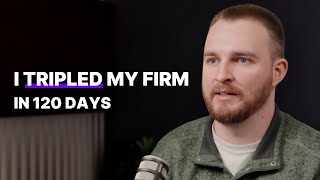
Tyler Murphy tripled his financial planning firm's AUM in a year by switching to Instagram ads and consistent content. His flat-fee model for small business owners now projects $150–$200K annually, with just $2,500 in ad spend generating $26K in recurring revenue from seven direct clients.
Chapters
We are bringing in clients where a lot of them really feel they know me really well because they've seen me on social media, they've seen my ad. Our projection for the year was only going to be, you know, between 50 to $80,000 in revenue moving forward. You know, our latest projections, we're looking at 150,000, potentially $200,000 in revenue. We're bringing on a lot higher quality clients as well. I say Peter is the architect and that's what has created that transformation.
So guys, I'm sitting here with Tyler Murphy, AKA Major League Finance on Instagram. Tyler, you and I have been working together for probably about five months now. You just re upped for another 16 week commitment. So it's been super awesome working with you through this time. But I guess starting out, would you just kind of introduce yourself and kind of like share like what's your main offer in your business?
Yeah, so I'm Tyler Murphy, Major League Finance and really what my core offer is is really coming to the table with different business owners and teaching them a little bit about business structure, a little bit about retirement accounts that are exclusive to business owners and ultimately saving them money on taxes while turning their business into an investment vehicle to compound profits. When we do that, we work for a flat fee. We serve as kind of a fiduciary advisor to them. So they pay us, you know, a quarterly monthly, yearly amount and we look to add value on top of that amount that they're paying us to show them that our service is worth it as an investment advisor and with a little bit of tax planning on the side.
So like financial advisory plus wealth management for small business owners in a nutshell, right?
That's exactly right. So it's financial planning and investment management for business owners because you know, you're as a business owner, you're definitely different from a W2. And there's a lot of different strategies that we can implement that are beyond what a normal W2 can be. We also serve W2s, but we push them to start businesses, you know, if they have the know how.
Yeah. So talk to me about like before we started working together, kind of paint the picture, like where were you at with your company? Strong side, what did revenue look like? Where were you getting clients from? Just kind of like paint the picture for us.
Yeah, so we really, on a reoccurring revenue basis of what we were kind of working with at that time, you know, really even 5ish months ago, our projection for the year was only going to be, you know, between 50 to $80,000 in revenue. So it was okay. We had lost some business that didn't reoccur. But moving forward, you know, our latest projections, we're looking at, you know, really 150,000, potentially $200,000 in revenue for 2024. So we're bringing on a lot more clients. We're bringing on a lot higher quality clients as well. I'd say the reach that we've kind of seen in our ads is really going after the exact client that we serve the best, that we add the most value to. And that allows us to charge a premium dollar, which is increasing for us, you know, month to month.
So who is that ideal client for you guys?
The ideal client for us would be, you know, small business owners. You know, really a husband and wife business. I'd say, you know, that is where we can add the most value because of something called a solo 401k. But you know, really, any small business owner that could have a couple contract, you know, contractors that work under them, they could have a couple of employees, you know, especially if they have some turnover issue, that's our ideal client. So it could be a service business, it could be construction businesses, it could be short term rentals. Really anything that small that's scalable were an incremental piece and helping do that.
And like, what, what drove you to choose that as your particular niche? Because like, a lot of, a lot of small businesses I talk to, particularly in this like financial services niche, they're like, yeah, I do tax planning for like real estate and small business owners. And it's like, buddy, that's everybody.
Yeah.
So like, how did you come to pick a niche? Because I think a lot of people listening will find that valuable. And like, how, like, how you picked your niche?
I picked my niche kind of just with the people that I align the most with. You know, in high school I was a painter, I worked for a painting company. I learned that business in and out, got into financial planning, knew I loved it, and I chose to stick kind of around those, those service businesses just because I know exactly, you know, what those business owners go through on a week to week, month to month, year to year basis. You know, I have empathy for it, I align with it, and I can provide a lot of value to you. So those are the business that I would say are my favorite to work with. The other piece of it, again, that's kind of the business owner side that I know through that experience. The other one is the short term rental side. I Like the short term rental side, because a lot of financial advisors will only put you into mutual funds or a set of funds. And when you ask them to take that money out and put it into real estate, they have all sorts of shutdown mentality of why you shouldn't do that. Me knowing that space and knowing how to transition you successfully into something like real estate helps me differentiate from a lot of financial advisors, financial planners, whatever you want to call them.
This is something you talk like when we were first starting to work together and you were explaining why you do a flat fee structure. You're talking about how most financial advisors are incentivized the wrong way. They're not incentivized perfectly in alignment with like their client's success. Right. You kind of explain like how that works.
That's exactly right. So most advisors, what I tell people is they are vested in your assets under management and not your net worth. And that's a huge problem in my eyes because an example would be you have a million dollar stock portfolio and it's doing well, it's growing, you have funds, you're paying some fees, all that's good. But the fees the advisor is making and the fund managers are making are tied directly to those assets that they manage. You might be at a point where you want to leave your W2 and you have to replace income. The portfolio loan isn't going to do that. So Maybe you take $500,000 out of that investment portfolio and you put it into a real estate deal or two or three, you know, whatever it may be in hopes of creating cash flow. When you tell your financial advisor that you're going to do that and they're making 1% on your million dollars, you know, that's $10,000 per year they're making plus the fund fees, which is probably another 5 to 10 grand. So 20 grand total. Now if you cut 500,000 out of the investment portfolio, their fees get cut in half. So that's where their red flags start going off, saying, you know, you might not want to do that because real estate is difficult, interest rates are too high, you'll never. Cash flow, short term rentals are volatile. But the real reason they're saying that is because they see their bottom line go from 10 to 5 or 20 to $10,000 in revenue that they're going to make off you. And they're probably going to be doing the same amount of work where if you work with an advisor, that's a flat fee model. We are not incentivized to keep you in assets, under management, in the market, buying real estate, investing into your business, your small business, investing into other businesses. Our bottom line is not going to get affected. So we are not incentivized one way or another to push you towards certain products and not others.
Yeah, no, that's super interesting and I love that you've like picked a model where you can like be fully in alignment and your best interest is fully to serve the customer's best interest, which is awesome. So talk to me about like where were you getting clients from? Before we started working together, you just, you know, you lost a number of clients and you were kind of trying to come back from this, this bit of a hit. You're looking at like 50 to 80 grand in revenue for the next 12 months. Like where were you looking to get more clients and replace those old clients that had left?
Right. So what had happened is I had another advisor with me and we were doing a lot of one time plans that created a lot of revenue for a year, but it wasn't reoccurring. When that reoccurring revenue doesn't come in, you know, your revenue outlook looks shaky. So when that advisor had left and we still have a very, very good relationship, a lot of portfolio consulting there, what we still do today, just less of a sales role and a lot of the business went back to just kind of being, you know, on my back, you know, I'm doing the planning, I'm doing decline acquisition, I'm doing everything. And really what had happened was it was me going after friends and family, me going after my business network and getting, you know, referrals. We did a good job with referrals, but it wasn't at all where we wanted to be. It was all, you know, organic, more personal network things where now after, you know, starting with Peter, we are bringing in clients where, you know, I hop in a meeting with them and the first question I have to ask them is, how do you know me and what do you know about me? And it's because a lot of them really feel they know me really well because they've seen me on social media, they've seen my ad, they've checked out my website, but the way they found me was through my Instagram, through the ads and me speaking to the problems that they've had. So we're now bringing on clients, you know, that I would have never ever have been able to reach before because they're not a friend of a friend or a friend of a friend of a friend. You Know, these are people that don't know me at all, that we're building rapport from day one as kind of business associates, and those become friendships too. But it's, it's been huge, hugely transformative for my business and bringing in not one or two clients per month, but it, you know, realistically could be at 4 or 5 per month because of the ads we're running. And kind of, I say Peter is the architect behind kind of the marketing of Strongside and Major League Finance, and that's what has created that transformation.
Yeah, and it's been so much fun to watch too, because you were literally the first consulting client I brought on. I come out of doing this for people in the marketing agency charging a ton of money, and I'm like, trying to figure out what it would look like to create something that's more accessible for those entrepreneurs doing like 100 grand a year.
Right.
Like, how do I help them go make 300? A lot of people talk like, Grant Cardone's been talking about how like 300k is the new 100k salary. Right? So, like, how do I help, you know, essentially struggling entrepreneurs? Because 100k in business revenue kind of, you know, it's. That's, that's not great.
Yeah, it's tough.
It's hard to make ends meet with that. But yeah, just to see you just like, take it and run with it, man, it's been super rewarding. But so how much have you spent in ads in total so far?
So we only have at this point, a $2,500 ad spend. In total?
In total over the last, like, four months.
That's right. So we have not. We do not have a huge ad budget. We do not have a huge marketing budget. You know, for all intents and purposes, we're still bootstrapping it day to day in terms of ad spend. So with very little input, you know, that's. That's all we're at for ad spend.
And what has the, like, new sales revenue off of that ad spend been.
Reoccurring yearly revenue just from the. Directly from ad spend of how clients found us. We're gonna be at $26,000 per year.
26,000. So like 10x on your ads revenue.
That's right.
And that's not. Is that including or is that not including the, like, startup fee that you charge?
That does not include any startup fees.
Explain your fee structure here.
Yeah, so the fee structure comes down to client complexity. You know, if a mom and pop business, you know, I might be Charging you, you know, $300 per month and a $3,000 onboarding. Maybe it's a $4,000 onboarding fee, but the majority of business owners can expect to come in and Pay, you know, 400 to $500 per month with a $4,000 onboarding fee. So in that $26,000 figure, I don't count any onboarding fees because it's not reoccurring revenue. And I want to build a business on reoccurring revenue. So that's just, you know, added money that would come in from new clients, which is really, really nice to have. But the fee structure is monthly plus an onboarding fee. And depending on your complexity, you will have a higher onboarding fee and a higher monthly fee. What that means is I'm probably just going to be spending a lot more time with you and the problems and the efficiencies we need to create and the upkeep on making sure things keep running smoothly.
So essentially, $26,000 in yearly, like, not quite autopilot, but like kind of autopilot revenue, right?
Yeah. The bulk of the work is up front. The maintenance fee is really that $400 per month. You know, we're spending, you know, it could be, you know, four hours per month, you know, trading your portfolio, looking at the tax ramifications, you know, making sure all the accounts are allocated correctly, making sure you're. You're on track for your, your budget, your cash flow, things like that. There's a lot of items that go into it. But yes, I, you know, you could, you could call it autopilot, you could call it maintenance. That, that's, you know, really what the, that monthly fee is for.
And how many, how many new clients is that in total?
So we have brought on. I would have to look at it exactly. But I think we are at nine clients directly from ads, and we've also picked up some indirect clients, or. I'm sorry, I think it's seven direct clients from ad spend, and I think we're at nine or 10 indirect clients, and we have four or five other prospects that we're working on just for the month of January.
That's incredible.
So it's speeding up. One thing I would tell people to keep in mind is I started with no social media, zero followers. We're over a thousand now. And people follow me at a more aggressive pace now because the ads not bringing them to a page with 200 followers and five posts or 10 posts, you know, a thousand followers and it looks more legitimate.
Yeah, 100%. So what, what is, in your experience, what's been the difference between like these prospects that are like family and friends or like third degree personal connections versus the ones you're getting through these ads? Like, is it way harder to sell the people who are coming from the ads and the content?
The ads and the content people are much easier to close the deals with because they have the means to hire a financial planner and they have the exact problems that we are going to solve and that we kind of picked out and chose that we said we know how to solve this in the ad. So the people that the ads are finding really align with what we do and how we're going to solve that problem. And they just need somebody to do it. Where if it's friends and family, you know, you're walking into anything and everything. They could have a 401k that's sitting in cash, they could have a 401k in Vanguard funds. They could have a huge range of different problems. And it either won't be a fit for us as a firm or it won't be a fit for them as an individual. And there's no point in creating any business there, which is the exact opposite of what we see with the clients that we're bringing in with ads.
Yeah, you're able to just like cherry pick the best people out of social media.
That's exactly right now.
Okay, so one, one thing that people, people bring up a lot, particularly people running financial service firms like financial advisory or tax and accounting, they're like, I need to be on LinkedIn because, like, that's where my, that's where my target audience is. What has, like, have you ever tried with LinkedIn at all? Like, we've been building everything on Instagram for you. Right. Have you thought about LinkedIn at all? Have you thought about the difference between the two platforms there?
I've posted on LinkedIn in years past, just, you know, starting off a post saying, hey, this is really boring, but if you read this, you're going to learn something.
And again, that's a great hook.
I probably should do it. It's, you know, I get hundreds of messages on LinkedIn. It's all people just trying to just sell, sell, sell, sell. And it's just, it's not helpful to me, it's not helpful to them. I've never been one to go out and directly message people on LinkedIn to try. But I have posted and I can't confidently say I've ever gotten a client off of LinkedIn. I just, I guess I view that platform as more, more of a joke than Instagram, which is kind of crazy considering it's business oriented. But I feel like it's just a lot of people saying well deserved and cried congratulations when they don't really mean it versus Instagram. I can put educational content out there and show people how to do finance better.
Yeah, I mean, the thing I always tell people is there's 2.3 billion monthly active users on Instagram. That means, like, and especially if you take into consideration probably half the world is undeveloped to the point where people aren't spending a considerable, you know, if you're like, rooting around for food and water and like, trying to survive, you're not wasting time on social. Right, right. And so that's even more concentrated in the US So all of the people who are your target market who are on LinkedIn, they're also on Instagram. Right now for you, you're on LinkedIn, right. You're also on Instagram. How much time do you spend on LinkedIn per day?
Probably none, I'd say. On average, it's probably. If I broke it down into like a week, it's probably, you know, under 15 minutes a week.
Yeah, you just check it and like scroll through your notifications once. But you're not like doom scrolling for hours and hours.
Right. I'm just glad that everybody does.
Yeah, everybody does that on Instagram. You know, I sit down on the toilet for five minutes and, you know, next thing I know, my legs asleep.
Right, right, right, right. And Instagram is, you know, and you might have different thoughts than me is, you know, in the past, you know, and even like my dad or my grandparents would say, like, oh, post ads in newspapers. Like, I'm like, I do do that. I just do it differently. What you guys think of it as?
Yeah, it's the modern public forum.
Right, right. It's a public forum where people post and you keep up with people. And, you know, it's not your Daily Herald that you're following that's posting, but you get, you know, the firsthand knowledge of everything that's happening on Instagram through those people's, you know, lives. And however you want to use Instagram, you can, it could be very business oriented. You could follow a lot of business people and pick up a lot of business acumen, or you could follow a lot of sports teams and know exactly what the Buffalo Bills did this past weekend. The algorithm is what you make it 100%.
Well, dude, thanks so much for hopping on it's been incredible seeing your business just explode these past few months. And looking forward to continuing that scale trajectory with you.
I appreciate it, Peter. Keep going.
More from Peter








How This Bookkeeper Scaled From $30k/mo → $92k/mo in 2025 [LIVE WORKSHOP RECORDING]

