How to Get Tax Strategy Clients (full marketing strategy)
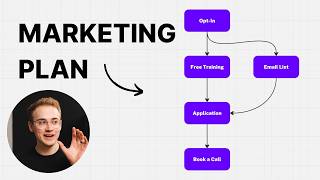
Peter Vanderwaal (Social Club Studios) presents an end-to-end marketing system to acquire high-ticket tax strategy clients. He distills marketing to three tasks (get in front of new people; build know-like-trust; convert to purchase) and three traffic buckets (outreach, organic content, paid ads). He prescribes a three-step funnel—Video Sales Letter (VSL) that answers who this is for, outcomes, and case studies; an application with minimal vetting questions; and a discovery call that diagnoses needs and pitches a productized service. Finally he outlines lead acquisition tiers: pro (ads + organic content), intermediate (ads-only), and beginner (organic content + warm outreach), with operational tips for conversion optimization and testing.
Chapters
In this video, I want to show you a full marketing plan to get high ticket tax strategy clients. This is going to be an end to end marketing system that if you literally just copy what I show you in this video, you will be able to get tax strategy clients online. Now, if you don't know who I am, my name is Peter Vanderwaal. I own Social Club Studios where we help accounting firms scale past the seven figure ceiling. Over the past few years, we've helped accounting firms make millions of dollars. And what we're going to be covering in this video is number one, just how to find the right strategy. Number two, we're going to talk through the funnel system that every single accounting firm owner needs. And, and then number three, I'm going to show you how you can get leads into this funnel. So first off, how do you find the right strategy? And the reason this is important to talk about first is because obviously there's a lot of different ways you can get in front of your ideal client on the Internet, but conceptually marketing is actually very simple. And so I want to just like simplify and condense this down for you as much as possible before we get into the funnel itself. So there's basically three things you need to do in marketing, right? You need to get in front of new people, you need to get these people to know, like and trust you, and you need to get them to buy from you. That is it. A lot of people like to way overcomplicate this, but if you have something to get in front of new people, another thing that gets these people to know, like and trust you, and a third thing that you know, gets these people to buy from you, that is basically it. And any marketing funnel that has all three of those and they interplay together will work. The only question is, how well is it going to work. Now the other thing that's important to understand before we get into this is there's really only three ways to get customers, AKA three ways to get in front of new people. And that's either through outreach, organic content, or paid ads. Essentially every possible way there is online to get in front of new people falls into one of these three buckets. And before you pick any specific way, whether it's Instagram Reels or YouTube content or Facebook ads or cold email, you need to understand which bucket it falls into and what are the pros and cons that come with that. So all of these are different, viable ways to get in front of new people, but we still need to get them to Know like, and trust us and, and we still need to get them to buy from us. And so that brings me to this funnel system that I believe every accounting firm owner needs. Okay. So before we're ready to run ads or posts on social media, or start reaching out to people on LinkedIn or whatever strategy you're going to use to get in front of new people, we need a funnel. So we actually have somewhere for these people to go, somewhere that they can get their initial questions answered and at least understand what it looks like to take the next step with us. And so just really quickly, I wanted to find funnel here because this is a term that has so much baggage attached to it and people way over overcomplicate it. A funnel is simply some sort of system you can send leads into that will get them to know like and trust you and get them to book a call. So for the purposes of this video, that's what a funnel is essentially. Just think of it as an assembly line. You're sending traffic into this through social media or through your outreach or through your ads. And when people go into this system, a certain percentage of them are going to come out the other side as new customers. And the more effective this system is, the more efficient this system is, the higher a percent of people are going to come out on the other end. So for example, if you're running a paid ads funnel, you have a Facebook ads sending people to this funnel and a certain percent of people who hit this funnel are going to book a call with you. Right? And a certain percent of those people who book a call are going to actually end up buying from you. And so then you can very simply just do your math backwards and figure out how much do I need to spend on ads in order to get the number of clients I'm trying to get this month. So this is the minimum three step process that I think every accounting firm owner needs in their funnel. Okay. And I'm going to show you what each of these looks like. So step one is a video sales letter. Okay. And this is just a short five or ten minute video that's going to answer a couple of key really, really important questions for every single prospect. Right? So it needs to at least answer who is this service for? And do I fit that profile? What will I get out of this service? Not in terms of what line items do you have on your delivery, like oh, we'll do your bill pay and we'll run your payroll and we'll do your books once a week. But actually what is the outcome of this service, what do I get out of this service? How does this service make my life better? Is a big mistake. A lot of people make. They focus much on, we're going to sell you X, Y and Z services that we're going to do. But that's not a compelling offer for most people. Most people don't actually care what individual services you offer as long as it gets them that end result that they're after. They feel a little bit squeezed every year when they have to pay their taxes, and it holds them back from making investments into other areas of their business that they'd like to do, or they're trying to make some big move in their business in the next couple years, like they're opening another location or they're buying a building or something along those lines. And. And they need a financial strategy to do this. There's a lot that goes into that that most business owners don't fully understand. And so the outcome there is, hey, I'm going to be able to help you navigate this big move very successfully, or, hey, you're going to have more money in your pocket to reinvest into your business and buying back your time. And then the third thing this VSL needs to answer is, has this worked for people like me? And so it's really important here to use case studies and to paint them in a way where your average ideal client could resonate with at least one or two of these case studies. So there's a couple of ways you can go about this, right? Some of you have an ideal client that is just a specific industry. So like one of my clients, Brock, he works only with residential moving companies. And that level of specificity is part of the reason he's actually been so successful with his marketing. This is actually a screenshot message from him. His annual sales are up $130,000 between tax and bookkeeping. So that's about 20% growth for him in about 20 days, which is incredible. And part of the reason for that is because every one of his case studies is a residential moving company owner. And part of the reason that's worked so well for him is because every one of his case studies is a residential moving company owner, and every one of his prospective clients who are coming to him are residential moving company owners. And so immediately, if he's got five or 10 case studies, then I'm seeing five or 10 different results for people that I can all resonate with. I can see myself in all of them. I recognize that they're all Similar to me. And so I go, man, this company's really good at what they do. Now the other way to go about this is a little bit more nuanced and I think this is going to probably apply to more of you, right? Because most businesses, their ideal client isn't just a specific industry. You might serve a couple of different industries, but the clients that are best to work with all share a few commonalities. Regardless. Maybe you're a tax firm and you work with high earning professionals who invest in real estate on the side, right? So that could be tech sales, that could be medical professionals, that could be lawyers. There's many different industries these people could be in, but they all have some sort of commonality, right? Which is that they're high earners and they invest in real estate. And there's a certain set of problems that comes when you're a high earner who invests in real estate. And so maybe you've got a tax strategy offer for them. So the traditional definition of a target audience or an ideal client doesn't work anymore, right? Where you go, oh, my ideal client is small business owners making $500,000 or more and they're 35 to 55. Like I have to make so many assumptions to come up with actually what matters to this person, and that's the only way I can effectively get their attention, right? Is if I'm talking about things that matter to them. And so the way I like to go about it is more we call it psychographics. And so the way I like to go about finding your ideal client is more psychographics based. And so we're talking about like, what does your ideal customer value, right? What's constantly on their mind? What questions are they thinking about? What's keeping them up at night, right? Because these are the things where if they, let's say they see an ad from us and it's talking about the exact thing that they were just thinking about five minutes ago with their business, then they're really likely to click on that ad, they're really likely to watch our video sales later, they're really likely to book a call and end up purchasing from us. But if I'm just shouting at everyone who paid over $50,000 in taxes last year? Well, most people don't actually know how much they paid in taxes last year because guess what, you paid in probably $35,000 throughout the year and maybe you had a $15,000 tax bill at April 15, right? And so you probably don't even realize you paid $50,000 in taxes last year. And yet for like 90% of tax strategists online running ads, that's like their main hook or their main shout out. It's if you paid over $50,000 in taxes last year, then blah, blah, blah, like, it's just the worst hook of all time. But with this video sales letter, you basically want your ideal client to see this and you want them to have this realization moment. You want them to realize that you're answering questions they didn't even realize they had. Okay? So you hook them in with the main thing that's on their mind, the main thing that they're thinking about. But all of your subsequent points after that are also resonating. But it's something that they hadn't even thought of at this point. So I want to show you a couple examples for tax strategy firms that we've worked with and the type of VSL that they use. Right? So one hook that we use or kind of one headline for the VSL you could say is, is your CPA just a good CPA or an outstanding cpa? And so in this vsl, we basically compared A versus B, a good cpa, like an average CPA versus an outstanding cpa. And by the way, the outstanding CPA is just everything that this particular tax strategy firm offers. And so we're positioning all of these things as, here's what you're getting from your current guy, just the average everyday CPA down the road from you. Here's what you can get when you work with us at our tax strategy firm. And so it made this really natural, really easy comparison. Now another one that we did was how to know if you've outgrown your cpa. And so we talked with this client and she's like, yeah, this is the main thing that a lot of people are saying on their calls with me. They're like, I think I've outgrown my cpa. They're not getting all of the support that they need from their cpa. Now. It was great starting out. It got, you know, when they just had a tax return to file that was a little bit too hard to do in TurboTax. Like, this local CPA down the street was great, but now today, their situation is a lot more complicated. They want advice. They don't just want, like a number cruncher who fills out forms. And so this is, you know, they need a little bit more help there. And so this is also a really, really effective angle from a tax strategy firm. And then A third one we did here was does your CPA understand real estate? So you can see kind of the common thread here of here's what you're getting with your current cpa, here's what you could be getting with us, and that's essentially just what we're trying to do, right? Is this service for me? So here's what you're getting, here's what you could be getting. Do you want that? If you want that, then this service is for you. What will I get out of this service? We can paint the outcomes of when you switch over here, all of that pain that you're experiencing with your current CPA is gone. And then has this work for people like me? Well, all we got to show is a couple of case studies of clients like them, right? So if you're that example from before where you work with high earners who invest in real estate, then you want to show a few different avatars here, right? You want to show, like, here's a tech sales employee that, you know, makes 500k a year and invests in rentals, and here's the outcome that he got from working with us. Here's a doctor, and here's the outcome he got from working with us. Here's a lawyer. And then, you know, go through your client list and just be like, okay, what are the common industries that people are in? And just make sure that each of those most common ones are represented there. By the way, if this sounds like a lot, honestly, this video sales letter portion is the most intensive part of this marketing strategy because everything else revolves around it, right? Once you've got your video sales letter put together, you've got the right angle, you've got the right message that's going to resonate with your ideal customer. It's actually fairly easy to come up with content ideas to push people to this or come up with ad ideas to push people to this. It's pretty easy to come up with email ideas that you can put on the back end here to retarget and nurture the leads that you're getting for this vsl. And so the video sales letter itself is probably over 50% of the heavy lifting for this whole marketing strategy. Now, by the way, if you want an expert team to come into your business, craft this whole marketing strategy for you, and implement it for you, then just click the first link in the description. There's more info on how my team and I can help you there. But step two here is going to be implemented implementing an application step. Okay, and the way I like to think of this is the VSL is designed for prospective clients to vet you and kind of self select in or out. So if they watch the video sales letter and it resonates with them and it's like, hey, I think this is what I'm looking for, then obviously they're gonna select in. They're gonna, you know, go to the next step. If they watch it and they're like, this doesn't really sound like what I need or what I'm looking for, then they're gonna dip. They're gonna, you know, go off to the next thing and probably never pay attention to you again. And that's fine. That's what we want. We want them to self select in or out. Because if the marketing message in the VSL accurately reflects what your service actually looks like and what people will get out of your service, you don't want people coming to you who would look at that and would say, this doesn't really sound what I'm looking for. Your sales process is going to be a nightmare if you've got all those leads in there. And so the point of this application then is now that they've been able to vet you and see what you offer and how you can help them, then the application step is for you to vet them. Okay. And a lot of people have applications, by the way. A lot of you probably use Calendly to like book your sales calls. And maybe you've used the routing forms thing. Maybe you even just ask these on the call booking form itself. But a lot of people screw this up massively too. And so I want to show you the proper way to do the application step here. So you need to have the minimum number of questions possible on the application. And I'm going to show you what a good, good application looks like. Okay? Okay. So this is for a tax strategy firm that works with real estate investors. And this is the application. So obviously first name, last name, email, phone, that's like bare minimum. And this all auto fills, by the way, on the next page when they actually get to book a call. But here are the four actual vetting questions that we're asking them. So number one, what's your total annual income? And this is the only one that we're qualifying or disqualifying them based on. Because if they watch the vsl, then they know that this is only for people who invest in real estate, so they really should only be real estate investors coming through. And so we just want to qualify them based on Their income if they make under $200,000 a year. Just historically, these types of leads very rarely actually convert into sales, and it's not really worth the time it takes to talk to them. It's maybe 1 out of 10 to 20 that actually convert. And so that's just too much pain in the sales process. We'll just route them to a lower ticket offer to some free group or something, which right now we're sending them to a school community offer. So that's. That's cool. So the rest of these are basically, we just want to understand going into the call, you know, kind of what level are they at? Right? So we don't just want, like, are you under or over $200,000 a year? But we also want to know, are they kind of in the lower six figures? Are they high six figures? Are they seven figures? Because that just gives us some frame going into the call, right? Question number two is, how many rental properties do you own? And the really important thing here that you'll notice is all of these are dropdowns, because if you ask them to actually write in a number, then they're much less likely to actually fill it out. It's too much friction. So we got zero yet, which we really don't get, people who only have zero properties, because we're clear in the video sales letter. This is for real estate investors. Then we've got 1 to 3, 3 to 10, 10 to 25, 25 plus. Again, I don't care about the exact number, Especially because for some people, like, they might not even know the exact number off the top of their head, or they might be like, well, I've got 14, but I'm in the process of acquiring two more. So do I put 14 or 16? We just don't want to leave any room in here for them to have to think about what the proper answer to this question is. We want to make it super easy and obvious. Okay, so how many rental properties do you own? And then what do you hope to get out of this call? That's the third question here. And the answers here are basically, I know you are the right firm for me. I'm excited to work with you. I know I need a new cpa, and I want to find out if you're the right firm to work with or I want to see if I need a new cpa. Basically just gauging where they're at in that journey of coming to buy from us. Right? One of the things with this particular company is they have limited sales Availability and sometimes we actually have to go through and like cancel some calls with prospects. And so we want to be able to gauge basically who's the most likely to buy versus who's the least likely. And so somebody who selects this top option or the middle option is obviously much more likely to buy than somebody who selects. I want to see if I need a new cpa. Same for how many rental properties you own, right? Like if they own. The more rental properties they own up to a certain point, the more in need of this service they are. And then the fourth thing here is, where did you find us? This is only for like website traffic. You can see this is the website application here for somebody who's coming from like a paid ads funnel or from an organic content source. We already know where they're coming from and so we don't even ask this question. So step three here, once they get through the application step, then obviously it's just a discovery call. And so these very simple, very straightforward. Most of you are probably doing these right on a mechanical level in terms of you've got calendly or some kind of calendar scheduler where they can book a time with you. It's 30 or 60 minutes. And the really important thing here, because this is not a sales coaching video, you just need to know what your objective is on the discovery call. And so this is basically where you're going to identify where is the prospect at currently and then where do they want to be in the future. And then you can very simply just position your tax strategy service as the solution that's going to get them from point A to point B. And so by the time you get through your five or 10 discovery questions, you know, they might have told you, basically, I'm paying a lot in taxes. My local CPA doesn't really do any strategy for me. He says no to all my suggestions and ideas. And I just feel like he doesn't really care about me. And so that's basically all of the points you need to cover to then be able to pitch your service as the proper solution. And the thing here is to tailor your pitch, but not tailor the service. Okay, so we're not coming up with like custom tax strategy packages, but we are tailoring the pitch on what value they're going to get out of this. Right? So you've hopefully got a productized tax strategy service where it's like 5 or 10 or $15,000 for the year and they get X number of calls with you and you're going to do A review of their prior year return. And it's basically just the exact same service for every single client. And I don't want you to tailor that service, but there might be certain elements of the service, certain line items of the things you're going to do that are particularly important in terms of getting them towards their specific goal. And so I want you to highlight those and basically just ignore the rest of the stuff. Because what happens a lot of the time is if you go through every line item on your service, even if two or three of those are what's going to move the needle and the rest are just kind of part of it because it's productized, then what you're going to end up with is people saying, oh, you know, I think I really only need those first two or three things you talked about. I don't think I need the rest of that. Like, you know, can I get a lower price for that? And they're basically trying to get you to customize the service so they can get a deal. We don't want that. And so let's just take away the opportunity for them to do that, right? So we really only highlight the elements of the service that are actually going to move the needle in terms of getting them from point A to point B. And at this point, all of the parts in the funnel that came before this discovery call are framing in the prospect's mind what to expect, how to interact on this call. And so if you find that you're getting a lot of common objections, or if you find that people are getting on the call and they're like, I booked this call, but like, what, what are we supposed to talk about again then that's obviously a problem with your funnel. And so we need to go back into the video sales letter or the emails that they're getting sent before the call, or the application stage, or maybe even all the way back to your ads or your content. And we need to go, okay, how can we like snip this at the bud, right? So this is your funnel. And just to reiterate, it's just three very simple steps, right? You've got your video sales letter, you've got your application and you've got the discovery call. And so once you've got this funnel built, then this is kind of just a one time thing. You need to get this out of the way. And then all you got to do is just like make small tweaks here and there over time as you learn new things about your ideal customer. And so really the main thing here becomes how do I get leads into this funnel in the first place? And before I walk you through some of these strategies that we use with our CPA firms, I just want to be clear, this is where the strategy starts to depend on a few different factors. Okay? So every single accounting firm needs that funnel that I just showed you. No matter where you are at in your revenue, what type of services you offer, what your business model is, what type of customers you serve, every one of you needs those three steps. But once we get into actually getting leads into this funnel, the optimum strategy can depend based on your business model, the size of your business, how quickly you're looking to grow. And to be clear, basically all marketing methods work. Again, it's just how efficient or effective or optimal are they for your specific business? Okay, and so I'm basically going to walk you through a pro, intermediate and beginner strategy here, and I'm just going to start with pro. The absolute pinnacle marketing strategy in today's world is ads plus organic content. Okay. And so the organic content is basically training people to associate your face with getting value, right? So you put out short form content on, let's say Facebook and Instagram, people see five or 10 of those short form videos and then eventually they get hit with an ad with your face on it. And because they saw those five or ten short form where you were giving, giving, giving without expecting anything in return, you know, Gary Vee's jab, jab, jab, right hooks, if you're familiar with that, because they saw all those videos from you, they liked what they saw, they got something out of it. They associate your face with value. Now they're way more likely to click on that ad that's also got your face on it. And so again, the objective here is not necessarily to make money from your organic content, although you can do that, you can directly generate leads from it. The main goal is to get that association between with your face being, I'm gonna give you value, and then you use the paid ads to send people into your funnel. And by the way, this is literally Alex Hormozi's entire strategy for short form content. If you watched this video in the fall of 2024, fantastic watch. Basically walking through his entire social media strategy on all the platforms. If you haven't, I would definitely recommend checking it out. But this is basically what he's doing, right? His shorts are designed to get his face in front of business owners and get them to associate his face with giving them value. And then he uses ads to send people to his various offers, right? Whether it's to one of his books or whether it's to one of their workshops@acquisite.com or their scaling roadmap or, you know, you get the idea. So that's the pro strategy here. Every one of you should aspire to get to that level at some point. But of course, we've all got limited resources and we need to allocate those resources as best we can in this present time. And so the intermediate strategy that I would recommend here is basically just ads, right? So this is going to be a little bit more expensive on the paid media side. It's going to be a little bit less efficient because essentially now your ads have to do the work of two things, right? So we talked about before, your content is associating your face with value in front of your ideal customers. And then your ads are actually getting people into your funnel. Well, in this case, your ads have to do both of those things. So your ads have to first get people to associate your face with value and then secondly send people into your funnel. So it might be that your ads are going to cost twice as much to get a booked sales call on the calendar as it would if you were also doing organic content. But again, we've got limited resources at this point and we can still be profitable on a paid only funnel like this. And so if we can get to that point where we're profitable there, well, then we use all that money we're making and we reinvest it back into some organic content. And now all of a sudden you're making insane money, right? The thing to remember here is that content and ads together just basically ends up being a full time job, right? So you got to play media buyer, you got to play conversion rate optimization, you got to play funnel designer and content research and videographer and on camera talent and video editor and project manager. And you can outsource these things. But obviously that's going to cost you in terms of your money. And I would rather you just spend that money back into ads because that's guaranteed to make you money back once your funnel's set up properly. So if I had to choose one between content and ads, nine times out of 10 starting out, I would choose ads because the feedback cycle is much faster. Here's what I mean by that. So if I want every step of my funnel, the vsl, the application and the discovery call to be operating at 100% efficiency, I need to be able to put data through that funnel. To test different elements of it. So, for example, if we've got a VSL page with your video sales letter and then the application right beneath it, and the goal is to get people to watch the video sales letter and then fill out the application to book a call with you. We can look at how many views does this page have in total, we can look at how many plays does the video sales letter have, and then we can look at how many applications have we gotten through this page. And so those are our conversion rates for each of those, right? So maybe you have 100 page views and 50 of those people actually watch the VSL, and then you have five applications. And so that means basically one out of every 10 people who watch your video sales letter are booking a call. That means five out of every hundred people who visit this page, just in general are booking a call. Now, that's a fairly decent number. It's not like a blowing my socks off, but I would be okay with that. But here's the thing. With organic content, I can't necessarily force more or less traffic through this funnel in order to get the kind of volume I would need to make educated decisions, right? So if you took statistics in college, you remember the term like statistical significance. Basically, what that means is there has to be a certain volume of data here in order for any sort of metrics to be worth making a decision on. Right? So if I only got 100 page views on this funnel, well, guess what? The difference between a 5% conversion rate, which is like fine, versus an 8% conversion rate, which is kind of pretty good, is really only three people. That's a lot of room for random chance. If I have 1,000 people visit this page. Well, the difference between 5% and 8% is now 30 people. Well, that's a little bit bigger of a gap. It's harder to leave that up to random chance, right? Like if you flip a coin 10 times, it's not impossible that it would be head seven out of those times, Even though we know statistically it's a 50, 50 shot. And the more you expand that number of how many times in total you flip the coin, the more likely it is to settle right at 50. And this is the same concept here. Okay, so with organic content, if I'm starting out and I'm learning organic content, and I just built this brand new funnel, I'm essentially testing two skills here. I'm testing how good am I at organic content, and I'm testing how good am I at building this funnel. I want to Test one thing at a time. And so with paid traffic, not only can I dictate how many views I get on this funnel simply by the amount I spend on ads, but I'm also mostly eliminating, needing to be really, really good at content here because I can just spend money to get traffic into this funnel, figure out how the traffic converts and then potentially I can add organic in later, now that I know the funnel's converting really, really well. So this is counterintuitive to what a lot of people recommend because a lot of people recommend starting organic first. But if you're in a situation where you don't have a lot of time to invest into just becoming an organic content expert, which frankly most of us marketing our own businesses don't have that kind of time, then you really probably should follow this path, this intermediate path here. So that' that's the intermediate approach. That's assuming you've already got a six figure business and you're just trying to market it and grow it to probably seven figures and beyond. If you're a complete beginner, meaning you've probably made less than six figures in the past year, then the strategy that I would probably recommend to you here is actually organic content plus warm outreach. Right? So I'm assuming at this level you don't really have the bandwidth to spend like three to five thousand dollars a month on ads. In fact, if you're watching, maybe for some of you, that makes you choke a little bit. And so basically you need a way to get clients that's either or basically free. And so we can create content, right? The content's not going to be flashy, it's not going to be super highly produced, but it will get ideal clients interested and that's really the main thing that matters. Right? So I want to show you here. This is my business partner Kristen on TikTok and we just signed up a $10,000 deal through her TikTok account where she's really only got a couple thousand followers. She just started posting a few months ago. So this is a fairly fresh account and this is I think totally reasonable for you to be able to do in the span of, you know, three to four months, basically. So you can see most of her videos here. The actual views on these videos are like fairly low. Actually it's pretty rare. She's even getting over a thousand views. It's probably like one out of every five to ten videos is over a thousand views. But that's not necessarily a bad thing because if you watch these videos, I Won't go through them now, but every single video from her has the exact same message. It's the exact same points of value. And so if somebody's interested in this, if you're one of the 524 people who watched this video, then you're likely a good candidate for our service. Now, every once in a while you have a video absolutely pop off. So this video was, I think probably a month or a month and a half ago. This got 110,000 views and we got 200 leads directly from this video. Literally people like messaging her, like, how can I work with you? Or can you help me? And out of those we booked a handful of sales calls basically right away. And one of those turned into a new $10,000 client for our marketing firm. And so if I was starting a brand new business, I didn't have like a bunch of money from a previous business that I'm investing to get this started up. I'm literally just starting from zero bootstrapping this thing. This is the approach I would take. Just very unpolished talking to the camera content where I have, you know, just some captions and maybe a short little headline on there. And then when people are interacting with this content, reach out to them. Right on TikTok. It's a little bit weird. There is a messaging thing on TikTok, but like it's not super intuitive for a lot of people on Instagram. This works amazing because messaging on Instagram is very intuitive. Everybody uses DMs on Instagram. Same for Facebook and same for LinkedIn. Very intuitive. You could do this on all of these platforms, by the way. And so you post this content, people interact with this content, you go and you start conversations with these people. That's warm outreach. And the reason I want you to do this rather than just send people into a funnel is because we don't have time to build a whole funnel and learn like the 10 or 12 metadata skills that we talked about up here that are actually required to get high quality results from the funnel. Right. Like I just talked about, if you're trying to learn how to do organic content and you're trying to learn how to properly build a funnel, it's going to take forever. And the results that you're going to get from it are not going to be high quality. And so we can basically just skip that entire step for now as a complete beginner by just reaching out to people who follow your account, reaching out to people who comment on your videos, even reaching out to people who like your videos and by the way, I would do it, I would prioritize it in that order, right? Because that's kind of signifying how much intent or how how much they liked the content. And so you just have a very simple conversation with them, right? You qualify them. Just see if there's somebody that you could actually work with. If you have a video sales letter or you have some other sort of free resource you can send them that would help them out and get them kind of a small win. You can send them that and then basically you try to book them in for a call. This was actually my main marketing funnel for probably four to six months a couple years ago and I made solid like probably 50 or $60,000 from this over the course of like four months. So it works. It's a great way to get started and then you use that money to invest into things that will continue to grow your business, right?
More from Peter








How This Bookkeeper Scaled From $30k/mo → $92k/mo in 2025 [LIVE WORKSHOP RECORDING]

