The Content Advice I Wish Someone Told Me 2 Years Ago
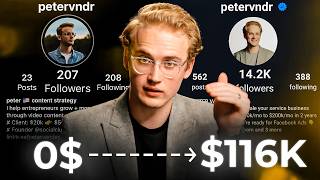
A creator shares how she uses Instagram to land high-ticket clients by showing results instead of talking about expertise. She posts behind-the-scenes wins, tax-savings screenshots, and client funnels, then sells directly through Stories with a consistent sequence: engagement bait, sales hook, context, call-to-action. She has 14,000 followers and closes deals in DMs.
Chapters
I have been posting video content on Instagram since summer of 2022. Right now it's summer of 2024, and I feel like I've just cracked the code on getting really great clients from social media. I sell a high ticket service and so getting a ton of views or engagement isn't actually that valuable to me because I don't need a ton of clients to grow my business exponentially. Right. I just need a few really good ones. Now. When I first started creating content, the advice that you would see online was just very like surface level, kind of hormozy ripoff content. Just give, give, give, and ask for nothing in return. And so that was my strategy. Te about business, about social media, about marketing, and asked for nothing in return. And here's the problem with that. When I was starting out, I didn't know about social media or marketing or business. Today, I may know a little bit, but it's still nothing compared to so many of the content creators I see out there. And so it's so easy to kind of get this imposter syndrome. But what you have to realize is that people aren't going to buy from you because you know the most. Otherwise they would all be buying from a few people and none of the rest of us would be able to get clients. They're going to buy from the person who they have a relationship with the most. And so obviously Alex or Tai Lopez, like people who have achieved kind of guru status, they're a lot more distant from people on social media, right? A lot of times they're not in their own DMs or they're not the main person in their own DMs. They're not the person posting their social content. They've got somebody off to the side of the camera giving them content ideas. All this just means they're further removed from their audience. And so that's where you can come in. Because, you know, way less than Alex Hormozi, you know, way less than Tai Lopez, you know, way less than, you know, insert whatever influencer here. But there is a level playing field when it comes to actually creating a relationship with your audience. And so the one tip that made no difference for me at the start and took me forever to understand was show, don't tell. People say this all the time. If you follow any one of the, like, social media influencer influencers, like the people who teach you on social media how to create content for social media, they all say show, don't tell all the time. Show, don't tell. Show don't tell. Show don't tell. And so I know this is super basic. A ton of marketing people will preach about this, but I want to get super tactical about what this could actually look like for you. Anyone can talk about information, right? Whether that's this sales strategy or this marketing strategy or this way of doing your accounting or that team management software. This. They could talk about this all day. But if you actually show behind the scenes at what it looks like, people are gonna be way more interested. It stands out. It piques their interest. It puts you more forward in the viewer's mind because you're showing the thing. Here's an example, right? Normally I do my testimonial videos with clients who we've done a really good job for, and we do this kind of podcast style, right? So I'll either be sitting with them in person or I'll be sitting with them on a remote interview, just kind of like asking them about what the experience was like working with us. And then I'll clip some of those up for social. The way I've been doing it lately, though, is I actually don't even bring the client into it. And I'll literally just film my computer display here with my iPhone. I'll show a funnel or an ad strategy or a client win. And this has been a game changer for me because now people are seeing behind the scenes, they're seeing the actual sales pipeline, they're seeing the actual funnel and what it looks like pulled up on my computer screen. And so it's not just that there's a win. There's not just information about a success story that they're being handed, but. But they're also being shown a visualization of it. That is the key visualization. So show, don't tell. The key here is how can the audience visualize the thing you're talking about that you're sharing with them? Basically, the less they have to use their imagination, the better. Now, another great example of this is my friend Theo. Okay? He's a tax advisor, and he's constantly posting screenshots of the tax return emails that he's sending people. He'll take a photo of his computer screen when he sends off the email to somebody, and he's got three things in the email. He. He kind of blurs out all their confidential info, but he shares how much they were gonna pay in taxes this year, how much they're actually paying in taxes this year, and then what, you know, the difference how much he saved them, basically. And he just shows these. You know, him post five in a day because he's just sending these all out. And these are all people who have implemented the tax strategies that he's told them to implement. And now they saved a bunch of money on their tax bill. And, you know, ta da. Theo's the man. You come to his Instagram for one day, you see eight of those all on his Instagram story, and you immediately know, oh, Theo's. I don't see any other tax advisor doing this as consistently as he is. But this brings me to my second point, which is that you cannot be afraid to sell. Okay, I used to buy into the idea that you needed to build your audience for a while before you sell, right? I'll start selling when I have 5,000 followers, or I'll start selling when I've been doing this for a year. And I think I got this value from just misunderstanding Alex Hormozy's idea of just overwhelming your audience with value before you ask for something in return. But this is a complete misunderstanding on my part. This was a misinterpretation of what Alex is actually. If you scroll Facebook, you'll see three to four regular posts and then an ad. Then three or four regular posts and then an ad. Now, I think it's safe to say Facebook's got it pretty well figured out how many ads you can show per content before people start getting annoyed and start leaving the platform. And so I think this 20 to 25% rule is a pretty safe one to follow. 20 to 25% of your content max should be salesy, quote unquote, while the rest is delivering value. If you really want to overwhelm them with value, make me make it 9010 value versus salesy. Now, one way to do this would be through ManyChat comment, where people comment a keyword, and that enrolls them in an automated sequence of DMs that gets them into one of your lead magnets. You grab their email, you get them on your email list, and then they get access to a free guide or a template or whatever. But another great way that I really like that's a little bit more direct is through selling on your stories. So two to three times a week, I try to show up on my Instagram stories and I try to sell my audience currently have around 14,000 followers. These salesy kind of calls to action usually get around like 600 to maybe a thousand views. And so I feel like I can do this pretty frequently without burning through my audience. Now there's four slides that I do pretty much every time. So number one is just engagement bait. There's a few ways that you can kind of hack the Instagram stories algorithm to get more views on a sequence of stories. And so you can do this through posting a meme that people are going to respond to or people are going to actually look at and, you know, laugh at. You can do this through a poll, like asking people their opinion on something, but at the end of the day, Instagram likes when you get engagement on your stories, and so it's going to bump you up and show you to more of your followers now. And this is where we get into slide number two. So the first slide was just purely engagement bait, more for the algorithm than it is for your audience. The second slide is your sales hook. Now that I got your attention, I need to direct you to my pitch. Now, this could be through showcasing a client win. It could be through showcasing a feature of my offer or even a transformation in my own business. Right? Because I am my own best testimonial and best case study. Then there's slide number three, which is some explanation, slash context. So you showed them the thing. You kind of piqued their curiosity. They don't exactly know what they're looking at, but they know it's interesting. And so now you can literally just explain the context around this thing. And so you could do that as a video of you talking to the camera. You could do that through just a photo with a wall of text on it explaining everything that's going on here. But either way, you're giving them the context to understand the importance of what you just shared. And then finally, number four is the call to action. So the call to action for me, every single time, it's always the same. I just say, hey, if you're interested in installing this into your own system, DM me the word clients and I'll personally reach out. That's it. There's no automations on this. Okay? It's just me responding to these prospects now, even me at 14,000 followers, like, sometimes I'll post these calls to action and I'll get nothing. Whether that's because it's just an off day and the wrong people are seeing it, it's totally fine. There's also times where I get five to 10 people booking in on my sales calendar from conversations that I'm starting here. So it's really important to just do this consistently over time. And eventually you'll kind of learn the features or the aspects of your offer that really pique people's interest the most, and the features are the aspects that they don't really care about. So between these two pract practices of showing and not telling and also doing some actual sales in your content, you should start getting better qualified prospects off of social media. Been super helpful for me. I've gotten a good number of clients this way. Hopefully you can start doing the same too and you can see some good results from it. So I'll see you in the next one.
More from Peter








How This Bookkeeper Scaled From $30k/mo → $92k/mo in 2025 [LIVE WORKSHOP RECORDING]

