This Accountant Makes $3M/yr With One Simple Funnel
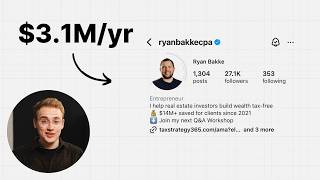
Peter Vanderwaal (marketing lead) explains the single three-step funnel used to scale a tax-strategy firm (Ryan) from zero to about $3M/year in roughly three years. The funnel: 1) a targeted Video Sales Letter (VSL) landing page that self-qualifies real-estate investor prospects, 2) a short dropdown-based application that screens by property count and total income, and 3) an immediate book-a-call flow with a confirmation page and pre-call video/resources. Traffic comes from social (Instagram ~25–30k followers, YouTube ~1k subscribers), referrals, affiliates and paid ads (~$5k–$10k/month). The team enforces qualification thresholds (exclude < $200k total income; note high-net-worth > $1M often behave differently), tightly controls calendar availability (about a 5-day booking window), and uses CRM pipeline stages (Opt-in, Applied, Booked/Confirmed, No-show/Reschedule, Showed→Follow-up, Cold/Dead) plus automated nurture sequences to convert and prevent leads from falling through the cracks.
Questions this video answers
Just under $3,000,000 (about $3M).
About 25,000–30,000 followers.
About 1,000 subscribers.
Approximately $5,000–$10,000 per month.
Less than $200,000 total income are effectively routed out.
Chapters
This is Ryan. He's a cpa. He owns a tax strategy firm. And last year he did just under $3 million in total sales. You can see these are both of his payment processors from 2024. Now, my name is Peter Vanderwaal, and I'm the marketing guy behind this firm. We scaled him from zero to $3 million a year in the last three years. And in this video, I want to show you the one simple funnel that we've used to get him to this level. And by the way, this works across the accounting industry. So my client Tony added 42,000amonth in his first 90 days working with us. I made $70,000. A new offer we launched last year. Brock added $130,000 to his annual recurring revenue one month into working with us. And Anna was able to double her prices in her first few months working with my company. And so in this video, I'm going to show you the entire funnel we use, how it works, start to finish, and how all the different pieces interconnect together. So first off, just to visualize this funnel and how the different pieces fit together. Right, so obviously we've got a bunch of different sources of traffic here. So he's got an Instagram account with about 25 or 30,000 followers. He's got a YouTube channel with where he posts his podcast that's got maybe a thousand subscribers. We get referrals, we run ads. We probably spend around 5 to $10,000 a month on ads. And we've got affiliate partners amongst other traffic sources. We'll even see leads coming in from LinkedIn or Twitter or Facebook every now and again. But these are kind of the main ones. But this is not the funnel, right? A funnel is not where you get in front of people. A funnel is actually where you send people. So this is, is the funnel. And so it's this very simple three step formula that we've come up with. It works time and time again. And so it starts with a video sales letter, then we move them to an application and then book a call. And so I'm going to actually pull up these pages so you can see exactly what this looks like. All right, so if you go to Ryan's Instagram and click his link in bio, if you click the first link in his podcast, show notes. If you click an ad or you're sent over by an affiliate partner, this is the landing page you're going to end up on. And so this right here is Ryan's video sales letter. Now, what we've Done here is we've identified exactly what his ideal client is looking for, what they want to hear. We've identified kind of their pain points that are causing them to look for a solution like this in the first place. And we've identified what they want that solution to bring them. And this video sales letter showcases all of that. And so somebody can watch this video, at least watch the first little bit of this video, and they're going to get a sense that man Ryan and his team really understand what I'm looking for. And by the way, there's a whole bunch more on this page. There's kind of this written note here, which is like the, a summarized version of the video sales letter. There's, you know, here's meet your real estate tax team. There's see what our clients say about us with a bunch of screenshots of people talking about how great Ryan and his team are. And this page is designed for people to self select in or out, right? Because we're getting traffic from social media, complete strangers who have never seen Ryan before, they're following him on social, they're watching a few videos, they click his link in bio to see what it is that he does. Same on the podcast, same for referrals and affiliates. Like they know the person who's referring them or they know this affiliate partner, but they don't really know Ryan yet. And so we want them to know this is what we're about, this is who we're for. Are you in or out? And by doing this, all of that low quality, unqualified traffic, all those people with like not a lot of money to spend, maybe they haven't invested in real estate yet. Maybe they don't really run a business. They're just kind of a person with a day job who's like looking for ways to make money. This page screams very loudly to them, this is not what you need. All of this is designed to speak to real estate investors who make, you know, 200, 300, 400 grand a year. They have a couple of properties they invest in. Maybe they're consistently buying properties every year or a couple times a year. They're growing their real estate portfolio, they're building their net worth. And everything on this page is designed to say to that person, I understand where you're at. I'm in the same position as you because Ryan literally is, and I know what you need. And so if you draw a funnel shape, right, it looks something like this, and this is your top of funnel here, right? This is the Random traffic, the people who are finding you on social media and they're kind of interested in what you have to say. Well then this VSL is the next step in that funnel. And you can see as the funnel goes down, it gets narrower. And so what that means is there's a lot of people here and there's less people here. Right? Because some people are going to watch this vsl, they're going to say, oh, this isn't what I'm looking for and they're going to leave. That's okay. And that's actually what we want. Now let's say somebody watches this video sales letter, they kind of scroll through this page and they see these client testimonials, these things people are saying about Ryan and his company and they're like, oh, this is interesting. I've kind of been looking for like ways to save money on taxes. Well, the next step here is our application. And so we've actually got the application on the same page. You don't necessarily have to do this, but let's just show you what's on this application. So name, email, phone, obviously. And the questions we're asking here are just very, very simple. And you can see they're drop down. So it makes it really easy to fill out. The way I like to go about these application surveys is you don't want people to have to think too much while they're filling this out. If they have to think too much, they're just going to put in a bullshit answer anyway. And so how many rental properties do you own? Well, everybody knows what range that they would fall in here, right? If you have them type in the answer then they're going to go, well I have three, but I'm thinking about selling the one. And so you know, if I sell that maybe then that I should just put in two. Or you know, maybe they're like in the process of buying another one and they're like, oh, so do I put in 2 or 3? No room for thinking about it. Same as their income. So we just say how many rental properties do you own? Oh, I own two rental properties, so obviously I'm in one to three. And then what is your total income? And so again this is ranges and we're clear here. Real estate plus business plus W2 job. So we're very clear. And the only person that we're disqualifying here is the person who makes less than $200,000 a year because technically, yes, they can still save money on taxes if they own a couple of rental properties or if they're buying a rental property this year. But these people are generally just too price sensitive and just not worth the time that we spend with them. And so it's better to just route them out, boot them from this process, and just only spend time on a sales call with people who make at least 200,000 DOL dollars a year. And by the way, before we move on, the other thing we've noticed here is actually the people who make over a million dollars a year are often not a good fit client either because they're a little bit more advanced. They know some of the tax strategies that Ryan and his team use already. And so they have kind of this sense of like, well, I already know this stuff, like why do I need to hire you? Obviously, if you're a tax planner or a tax strategist, you know that that person actually probably has more to gain by hiring a tax strategist, but it's just the perception in their mind. And again, Ryan is trying to build a very efficient business here. And so it's not an efficient business if we're dealing with, you know, kind of like smarter, higher IQ people who think they're even smarter and higher IQ than they actually are. So we don't kick these people from the application. But it is good to know going into the sales call, like, what level of sophistication do I need to display if I want to close this deal? By the way, if you own an accounting firm and you're looking to scale past the seven figure ceiling, that's exactly what my team and I do. So we will create the messaging for you of exactly what you need to say to attract high quality clients. We will script all of the videos for your funnel, we'll build the landing pages, the automations, the email sequences, we'll launch your campaigns. And all you have to do is just spend two hours with us up front at the very beginning to just give us all the information, everything we need to understand about your business to be able to act as an extension of your brain. And so if you're interested, you can click the first link in the description below, or if you're watching on your tv, you can use this QR code and that'll take you to the same link to learn more. And so the last step of this funnel is just to get them booking a call. And by the way, most of you are probably doing this like mostly right, but there's just a few small tweaks that we've made from what kind of everybody else does that I want to show you here because this is really helpful. All right, so first off, it's a very simple page. The only thing here is the call scheduler. And so they put in their name and email and then obviously it'll take them to the next page where they can actually select the time for their call. And so there's a couple things I want to show you here. Number one, we've got lots of availability throughout the day in terms of like what times and what hours were available. But we don't have a ton of days out into the future that are available. I think it's set to five days right now. There could be benefit in making this like six days just to open up another day on the calendar. But we don't want people booking a week or two weeks in advance because they're going to actually forget about the call. They're going to get further away from that moment when they were feeling enough desired to book this call to where they might not show up. Even if they do see it on the calendar. There's just a lot that can happen in that span of time. We want to get in touch with them as quickly as possible. And so, yes, there's going to be people who apply. They fill out that application form on the last page. They land on this book a call page, and they don't end up booking a call because they wanted to book next Thursday and next Thursday isn't available. But that's okay because those people are more likely to cancel. They're less likely to show up and they're less likely to close because it's so far into the future. I mean, just think about the last thing you were doing on your phone before you watched this video. Like, what even was it? For me, most of the time when I'm on my phone, just an hour later, I'm in a different planet. I don't remember what I was doing. Like, that's not meaningful time that you commit to memory. And it's the same even if you're booking a call for potential service that you're kind of interested in. We have to realize people are in their lizard brains when they're on the Internet. And so they're not going to be thinking and acting and responding the same way they would if we were having a face to face interaction with them. Now, the other mistake I see a lot of people making is when they fill out the book a call form, they schedule the call, they hit schedule, it's booked and it sends a Calendar invite. It's just this little thank you message on the calendar scheduler that says like, hey, your appointment's been confirmed. Great, see you. And then the only thing between now and then is like a couple reminder emails or a couple texts. And so the system that we like to use, it's a more in depth thing that we can go through the entire system, but the very first and most important thing is the confirmation page. Okay. So instead of just a little message popping up on the calendly bubble or on the calendly form, like your call is confirmed, see you next Friday at 3. We're going to create a confirmation page that looks something like this. Okay. So step one, we want them to confirm the call. And so I always like to like literally screenshot what they're going to see in their inbox in Gmail where they need to click yes. Okay, so you can see I've got that it's highlighted. It's, you know, as if I had booked a call with this company. And it's got text here telling them exactly what to do. So respond yes to the text message we just sent you. It's gonna send them a text message saying, hey, Kalija here with Tax Strategy365, looking forward to our call. Please respond yes to confirm your time. And then it also asks them to confirm it in their inbox so that it actually shows up on their calendar, which is also important. Now step two, some additional information to prepare you for our call. Now, I don't actually recommend putting a price in here because you probably have multiple packages, multiple levels of service for different people. And so they might see that it's $7,500 and they might come to the call, but then you pitch them a $12,000 package and they're pissed off because they thought it was only going to be 7,500. Well, okay, our main service is 7,500, but based on what you told me on this call, you need more help than what our base service provides. So that's why it's 12 again. They don't like that. It's dissonance in this process. It's going to make them pissed off. So I don't generally like to include these. What I'd rather do is create a pre call video, which we've actually got one we're filming literally tomorrow to put on this page. This is another one of our very successful clients. And this is what his thank you page looks like. He's got this just 44 second video, just kind of setting the frame on what they should expect next. So you're going to get a couple emails with some free resources. We need you to confirm the appointment. Oh, and by the way, check out below this page. You can see exactly what our financial reports that we provide look like. You can hear from real customers that we've worked with and how they're getting results from working with us. Right. So this is what we like to put on this call confirmation page because it just sets the frame, it gives them more information. Now that they booked the call, they're more likely to kind of binge your videos and binge whatever content you have available for them to be able to try to figure out what it is you do and what they're getting themselves into on this call that they just scheduled. And so you can see one of the things we did for Ryan, he's got a podcast that publishes on YouTube and Spotify and Apple and all that. And so we actually put a few of his most popular podcast episodes up here for people to check out. And we put some case studies and testimonials on here as well for people he's worked with who have gotten really good results from working with him. Right. Like they've had great tax savings. Like this girl, I think she talks about how, like she got $30,000 in tax savings and used that as a down payment on a new short term rental that she was buying. So we're just kind of showing like what the possibilities are when you sign up to work with Ryan and his team. So I've shown you the front end of this funnel, basically what the leads and what the prospects see as they're going throughout this entire process. But I also want to show you what the back end looks like for us because obviously if we're running millions of dollars of revenue through this funnel, then we're going to have a lot of leads in here that we need to keep track of. And so this is essentially how we do that. Now, this is going to look a little bit different depending on your business, but I'll just show you how we have it set up for Ryan and his team. So first off, we've got opt in. So this is anybody who's filled out a name and email form that's not signifying intent to work with us. Okay. So if we're offering a free training or webinar or a lead magnet, some free resource that people can get with no expectation in return, this is where they end up. And so these people, we basically only hit them with just like Broadcast marketing emails, like an email newsletter, basically, because they haven't said, like, hey, I'm interested in your service. Now, people who have filled out an application, this is the people who literally filled out the application survey that I showed you when we were kind of going through the funnel here. And so these are people who have signified intent to work with us and to learn more about our service. They are qualified to work with us. But for whatever reason, they didn't book a call. Maybe there wasn't a time that worked for them. Maybe they got distracted or forgot about it, whatever. There's a lot of different variables in here, but this is just a list, hey, you know, for the sales reps, when you guys have time, reach out to these people, see what's going on. Then we've got book to call and confirm. So book to call is obviously just literally, they booked a call, they've got a call coming up. Confirmed is the same thing. The only difference is that they've responded. Yes. To that text message that we send. And by the way, the reason we do that is because if they respond. Yes, they're much more likely to actually show up to the call. And so we can look at it as basically, these people are guaranteed to show up to the call. These people are maybe going to show up, maybe not. Then we've got no show rescheduling. And this is just a list of people we need to go through and we need to follow up. We need to try to get them to reschedule and book in for a different time on the calendar. Then we've got showed follow up. So you had your first call with them. They didn't say, no, I'm absolutely not going to buy this thing. And it's just going to take a little bit more nurture and a little bit more time to get them across the finish line. That's what this section is for. And we've got another. I actually don't know internally what their sales team uses these two differently for, like timing slash nurture versus showed slash follow up. I'm thinking this one is a little bit longer term, but then once we get past this, again, this is where it gets like totally customized based on your individual business. And so I typically would just have it as this is the last stage and then from there it's your internal CRM like Taxdome or Carbon or whatever you're using. But they've found it more helpful to build a lot of this out to track current existing clients in here as well. And then of Course we've got Cold Slash Dead, which is like people we've spoken to who maybe didn't necessarily say no, but they just kind of stopped responding to us. And so again went like for the sales reps, when they have a little bit of time to follow up with somebody or to reach out to somebody, go through here and see who we can reach out to. Now the reason this is important is because Obviously we've got 2,400 leads in this, this sales pipeline here. If we were trying to manually track a dozen leads with different people we've been talking to about different things, we'd get confused and forget about stuff and miss stuff and people would fall through the cracks. And that's money, right? That is literal money falling through the cracks. And we don't want that. And so in here, what we're able to do is we're able to track our appointments with them, we're able to leave notes on what the conversation looked like and when to check back in. We're able to leave reminders for ourselves of hey, check back in next Tuesday. We're able to see what payments they sent in to be able to confirm whether they signed up or not. And you can see if we actually go into their contact details. We actually have a record of every single message and every single conversation we've had with this person since they first reached out about our service or about our free resource we were offering. And by the way, I know this is like the boring, unexciting stuff that's not super sexy, but this is incredibly important because the money you invest into marketing is going to get completely wasted if you don't have this backend stuff figured out. Now the other element of this backend that's incredibly important to have down is the automation side of things, right? So we can have this sales pipeline and people can end up in this opt in stage. But if we had to like manually move somebody over into this application stage every single time somebody applied to work with us, that would just be an absolute nightmare. Right. Same for booking a call. And like everything else here, I will say once you actually speak with somebody live on the phone, it's actually better to keep it manual from there because you've had a conversation, you've had this face to face interaction. And so we want to be able to customize the follow up, customize the pitch, customize every, every conversation and every message that goes forward from here to that conversation we've had. If we have a face to face conversation, you're like hey, you know, I've got this specific scenario and I'm looking for help with this. And we're like, yeah, we can totally help you with this, here's how. And then afterwards, I just send you a completely generic automated sequence of messages. There's no way you're going to get a positive impression of my company from that. So we've got a ton of automations in here, but I'll show you just a couple of the most important ones. So number one, when somebody, like, fills out a form to get a free resource from you, you shouldn't just, like, give them the free resource and like, let them go. Because there's very, very, very little chance they'll ever end up filling out an application, watching a video sales letter, or booking a call. What we want to do instead is have what I like to call a new lead book, a call seat, which is just a sequence of daily emails that get sent out to people over the next 10 to 20 to even 30 days. And these are going to be a mix of a couple different things. Okay, so we want to include client success stories or client case studies. We want to include helpful content that we've created to build goodwill and build authority. And then we want to include CTA's calls to action to apply, book a call, come work with us. So there's a few other email sequences that we like to plug in here at different stages in the lead pipeline. And also, like, at the end of the day, I just don't want to manually be moving people between stages in this pipeline. So it's pretty much completely automated all the way up till you actually get on a call with the person. Which means that the workload of, you know, people you gotta manually keep track of is like, pretty easy. They're all organized in lists. And so this is just what a professional sales pipeline looks like. Hey, if this video was valuable for you, then you'll definitely like this one. Go check it out and I'll see you over there.
More from Peter








How This Bookkeeper Scaled From $30k/mo → $92k/mo in 2025 [LIVE WORKSHOP RECORDING]

