Tony Robbins' Sales Trainer Reveals How To Sell High-Ticket in 2025 | @brianmayoral.
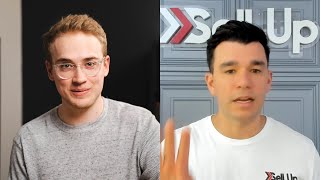
Brian Mayoral, Tony Robbins' sales trainer, breaks down high-ticket selling for 2025: respond to leads within five minutes for a 391% higher close rate, follow up at least five times (80% of sales happen after the fifth), and match your pitch to four prospect types. He says business owners should focus on sales until hitting $2M revenue.
Questions this video answers
391% increased likelihood, if responded to within five minutes.
"80% of sales are won after the fifth follow up."
48% of salespeople never follow up more than once.
Around $2 million annual revenue.
They "4x" that client's sales month over month.
Chapters
The number one metric for any sales is speed to lead. It's a 391% increased likelihood that you're going to get the sale if you respond to a lead within the first five minutes of their inquiry. The number two thing are touch points and adding value throughout the sales cycle. Number of aha or light bulb moments you can create for that person. The fastest way to grow the quality of your business is to actually sell more people and get the feedback from them. That's the only way that you get a big enough data set to know if what you're doing is actually valuable.
Brian, what is going on, man? Welcome to the show.
Thank you so much. Appreciate you having me.
How do you describe what you do?
I help people make life changing decisions. So at the end of the day, it's the moments of decisions that truly shape the direction in which our life goes. And I don't know about you, but you've probably had a mentor, a family friend or someone in your life who their words inspire you or their actions got you to take action yourself or got you to believe in yourself at a different level and you made a decision and that decision changed the trajectory of your life. We help other people make those decisions for a living. So we're a sales organization that either teaches people how to get better at sales or we actually do the selling, outsource selling for a lot of companies as well.
Dude, I love that outlook on sales because so many people come at it with like this selfish perspective of like, you know, trying to make money, trying to get more customers. Which by the way, nothing wrong with that. Like the, there's a time and place for being selfish and looking at it from that perspective. But I think first and foremost there's a whole different frame and a whole different conversation that happens when you come at it with the customer's best interest at mind.
Totally. At the end of the day, thousands of years ago someone would trade cows for wheat and that barter was considered a fair trade. Now we have green pieces of paper with dead people on it and either services or tangible goods, there's no difference nowadays other than we now have this medium in between things, which is that green piece of paper. And now people think it's like icky or gross or weird or uncomfortable to like stack that up. And it's, it's never been the case until we had money where people had those types of beliefs. So I just believe that at the end of the day people should get rewarded for their efforts and their value, that they bring to the world. And I also think that sales is one of those only careers where the amount of money you make is in direct proportion to the impact that you make in somebody else's life. And I think most salespeople are gross, are weird, are pushy, and that's what gives sales the wrong vibe. But if it's done right, it's truly transformative for people.
Yeah, how do you make that clear in the sales conversation? Like, how do you make the prospect feel like you've got their best interest at heart?
Great question. So there's two factors at play here. The only difference between influence and manipulation is intent. Right? The intent of the person who's doing the persuading. Then the number two is the perception of the person being persuaded. Right. So, number one, the only way you can ethically influence someone is if your thought processes, what you really are trying to get for that person, are pure. All right? If you have what we call commission breath, where all you're thinking about is the money that you're making, that will do well in things that are transactional sales, because people are willing to buy fast, pressure, and it's not high stakes. But the higher up you go in business, the more sophisticated the buyer, the less that it can be about you, and the more it has to be around the problems that you're actually solving for people. And so you can get, like, used car lot salesman, and you can get trinkets and things like that that sell very quickly and people who have low intent who can still thrive for a long period of time, but the higher up in business that you go, the harder that becomes. So number one is pure intention from the person doing the influencing. Number two is the skills and the tools that allow your message to land appropriately in your prospect's mind. Now, we can't control everyone's perception, but we can truly influence it. So have you ever said something to a family, to a friend, to someone that you love, and you meant the best and you had the best intentions for that, what you were telling that person or the feedback you were giving them, but. But somehow it landed, like, in left field?
Yeah, totally.
Those are things that we would consider outside of your control. Right. I can say have a nice day to somebody, and if they just got in an argument with their spouse, they can cuss you out because they think you're being a D I, C K. Right. So those are things that are outside of our control. That's like 10% of the time. The other 90% of the time are things that are truly within our influence, within our skill set and within our intention. So intentions matter, and the skill set in which you. In the way that you deliver it matters.
Dude, this, it's so interesting because this is actually something I've been working on a ton, just like, in my personal life, because I tend to be like a very direct, very straightforward person, but that doesn't land well with everybody, right? And so, you know, I had a few experiences with, like, personal connections, you know, family and friends, and I had a few experiences with business connections, like clients of mine, where, like, I realized, you know, I'm like, my communication style is not. Is not landing right with these people. So I need to tailor it a little bit so it's going to. It's going to be received better. And like, having gone through that, I feel like there's like a million little different tweaks and different course corrections that you have to make. It's not like one big thing, but, like, could you share, you know, maybe one or two of those, like, little minute course corrections that you would make for that person who, you know, they're realizing their communication isn't landing quite right?
Yeah, I'll take it. I'll take it. Two different directions for you here. So number one, the foolproof and number one way to influence anyone is to actually care and show empathy, right? So empathy will get you through a lot of tricky situations where people perceive what you're doing in the wrong way or in a way that you didn't intend to. That's number one. Then number two is we break down our prospects into four different types of prospects. Number one is what we call directors. Directors are the type of people that they just want the nuts and bolts, right? They're the kind of people who get on a call and just tell me how I'm going to get an roi. Get. Get rid of all the fluff in this presentation. Just tell me how I'm going to get what I want. That's what we consider a director. The second type of person is a connector. These are the type of people that they. They buy based off of trusting the individual first before they get into numbers and metrics. Meaning they have to trust you, Peter, or they have to trust you. Whoever's doing the influencing before they're willing to trust your company. Their primary motive for making buying decisions is trust with you first. Then do you solve my problem versus directors? It's do you solve my problem first? Let's get into all the fluff later. Those are the first two types. Then the third type of prospect is called a mismatcher. This kind of prospect is the person who, if you tell them the sky is blue, they're going to be like, well, how do you know that? Right. They're the ones that are always looking for the flip side of the coin, always give you a different perspective. And so with these types of people, you want to give them reverse psychology. So you would say something like, you're not the kind of person who would want to save 20 to 30 thousand dollars on taxes, are you? And by saying that, you use reverse psychology, probably use this with like 2 year olds and 4 year olds as well. Not put mismatches in that category because mismatches are very important to the world because they're not the people who just take blanketed statements and believe it. They need proof. In the pudding. Right? You follow what I'm saying?
Yeah, 100%. This is great.
The fourth type of prospect and buyer is the person who we call a processor or an analyzer. This is the kind of person who makes either data decisions just like a mismatcher, or they need time to process, they need reassurance, they need validation. Right. So this is the kind of person you'd want to use testimonials with. This is the kind of person you want to write reviews with, you want to get a great follow up email. This is the kind of person, if I could exaggerate it for a second, when the cleaning crew is coming over your house to clean, they're the kind of person who cleans the house before the cleaning crew comes. They're the kind of people who don't like their T's not crossed and their eyes not dotted. They want everything in place. Right. So when you think about influence, there's obviously a wide spectrum of personalities, but our brains can't focus on all of them. So we break it down to four. You got your directors, your connectors, your mismatchers, and then your processors and analyzers. When I speak to somebody, I can tell within the first 30 seconds do they have a propensity or a higher likelihood to be a director, a mismatcher, a connector, or a processor and analyzer. And then I change my language patterns to match and mirror them.
Which, which, which type of my.
I'd say, when the times that I've spoken to you, you are connected with me because we're in a, in a low stress environment. We haven't been in a situation where like I'm trying to sell you something right away. We started our relationship off of A connector relationship. But I would say just. Just like on a sub read when you're. I. I've never seen you stress, but typically one will show up. You might show up as more of a processor mismatcher when you're stressed or director. For me, when I'm in a good mood, I'm a connector 100%. But when I am stressed, I become a director and hard to deal with sometimes. So everyone has their tendency of, like, how they're feeling in the moment. What would you say you are?
I think your Reid is probably right because I like when I'm in a good mood and when I feel. When I'm like, in a safe environment, I'm like, very chill, very laid back, very quiet. But the moment I feel like a little bit stressed or a little bit anxious, it's like I kind of got to take charge and like, control the situation.
Sure. Yeah. And I've only seen you in relaxed settings.
I try to stay that way.
Yeah. So. But yeah, that makes sense. Cool.
Yeah, dude, that's so interesting. And so what you're saying then is just like, figure out those cues to where in the first minute or two of the sales conversation, you can figure out, okay, who is the person I'm talking to? And then you've got the exact. There's only four paths you can follow. So it's just. You've got the exact path now to follow with this person to make sure that the way you're communicating lands with them. That's so valuable.
It makes sense. I actually had a speaking and sales training gig in Israel for a large tech company, and we went there and they obviously have a different culture, but when I was there, the thing that landed the most is when we did deep exercises on these four personality types, and it was the number one thing they rated. After the session was over, we spent two days with them, and they said that this was the number one most impactful thing for them.
Wow. Yeah. That's so good. You alluded to this a little bit ago, but what do you feel like are the differences between selling to somebody kind of your average everyday consumer, versus selling to somebody a little bit higher level, like a business owner or something like that?
The higher up you go, the more data driven solutions you need to have for them, the more sophisticated the buyer? Typically, two things happen. Number one is they typically know their numbers better and they typically have more people signing off on the decision. Right. So if you're selling B2C, it's. That's how you can click something on Instagram ad or Facebook ad and just buy a $20 product online or $100 product online. That's easier to do. The higher up you go, the tens of thousands dollars, a hundred thousand million dollar deals, you're gonna have more sign offs and more people who are looking for specificity in a problem that you're solving. And how can you back that up with numbers, data and metrics?
Yeah, yeah, no, I've noticed that myself because I'll talk with, you know, I'll talk with professional firms doing half a million a year and I'll talk with. We just brought on a client about a month ago who's doing like four and a half million a year and he, he was like total. First off, he's very much like what you would imagine an accountant being just like very numbers oriented. Not the most, like not the most social or talkative guy, but just very analytical. He's just, what can you do for me? What does this all include? What is it gonna require from me? What are the results gonna be afterwards? And yeah, I think you're 100% right. Cause with the smaller, almost like solopreneur type of business owners, it's very much an emotional thing. It's usually a lot bigger investment for them too, depending on the service you're selling. But talk to me a little bit because there's a ton of sales advice online, man. And so I want to kind of like, I want to get your take on this. Like who do you feel like is the best sales advice online? And then who do you feel like is the worst? Like you should never listen to this person.
Well, it would be not humble for me to say that I'm the best. So I'm not going to say that I don't really put my stuff out there online. When we first started the business, I was thinking I wanted to be a sales trainer. And then when I saw who are the people that are doing sales education, a lot of them are really great marketers. So they, they sell, they sell to what you want or they, they market to what you want, but not necessarily what you need. For me, the old school stuff is usually the best. Not too old school though. So Sandler training has been the staple for a long time. They were old school, but they've revitalized a lot of their content. So I wouldn't look to the people who are like influencers to get the best sales advice because those people, if you read like books like Traction and you read some of the best entrepreneurial books, it's very rare that you have someone who is an influencer who builds a very big and powerful company because it's all about one person. So I would look to the companies that are not branded around one individual. So Sandler training would be a good one. Challenger sales is pretty good. And then if you ever want to check out our stuff, our stuff's pretty dang good as well. But we're more of on the empathy selling with some logic because we sell B to small B and B to medium B business. Sandler training can get you all the way up to higher level business. Medpic is a good one and Challenger sales are a good one as well.
Okay, so that would be getting more up into like enterprise.
You got it. Obviously Hermosi's got some good stuff for if you're selling like Internet. If it's like quick sales, Internet marketing type stuff where sales cycles are less than two weeks. Hermosi is coming out with some pretty good stuff too.
Yeah, I've always been a big like Hormozi. I actually have a humble brag here because I was, I was watching his stuff when he was only at like 50,000 subscribers on YouTube.
Epic.
But yeah, no, I. There's this comedian guy on Instagram who filled out some lead form for Andy Elliot and he started recording the sales calls that he was having with this guy's sales team for like one of his events and he's just posting this stuff because it's just so egregiously bad. I wish I could pull it up here because it was really, really great stuff. But I think your point, the like the influencer centered businesses is totally right.
I mean that's, I mean don't get me wrong, I won't like call any specific person out. I don't. Yeah, everyone's got their take on life and I, you know, whatever floats your boat. Go, go for it. I just think, I just believe that if you look at the Fortune 500, how many of those companies have a frontman other than like an Elon Musk? But he's done that purely off of not clout but he's delivered on results time and time again that he's earned the right to be that. You see what I'm saying?
Well, it's like he's not even trying to be the influencer who's at the head of his company. Same with everybody knows Tim Cook and everybody knows what's his face Jensen from.
Based off their results.
Exactly.
Because they're trying to market themselves.
It's just purely the Fact that they're a Fortune 500 CEO is why they're known. It's not because they're, like, trying so hard on social media or anything.
Correct.
In your experience? Because, like, different price point brackets are. Obviously, it's going to kind of like, change what the sales conversation looks like, how long you should expect it to take. So, like, in your experience, what are kind of those price brackets where, like, hey, the game is starting to change here in a pretty significant way?
I think there's a couple of different ways to look at it. Price brackets is one of them, but it's only one of the indicators. Right. Like, if you're selling a $10,000 product to, for example, we. We do business with some really big brands like La Mer Cosmetics, Celebrity Cruises, T Mobile. If I wanted to sell a $10,000 product to those companies, it would take months. If I wanted to sell a $10,000 product to a small business owner who has a team of 10, it might take hours or days. Why is that? Because you're speaking to the ultimate decision maker and there's less hoops to go through. Whereas if you speak to a large organization, it's got to go through a lot of checks and balances. So I actually think the size of the organization tends to be a greater indicator than the dollar value. I would say that something over $25,000, in my opinion, does take a little bit longer. But it also depends on who you're talking to and what you're selling. Like a great example is you could sell a Mastermind to someone who's doing $100 million a year. If you're talking to the right person, they'll buy it in a minute. But if you're selling $25,000 mastermind to a target audience who is only doing about 250 grand a year, it might take a little bit longer. So I think it's less to do with the dollar value. It has more to do with who you're selling to.
Yeah, that's a good way of thinking about it. So, like, you guys mostly at your agency, you guys mostly sell to. You said B to small B and B to mid B. So, like, paint me a picture. What are that. What does that look like?
Yeah, so I believe small businesses broken down as businesses doing less than $50 million a year. Think about that. Any business, I think this is it. So don't quote me on this, but I believe small business is considered a company who's doing less than 50, 50 million a year. So that's basically the Majority of the United States of America. Right. For small businesses. So we sell to small businesses. We specifically work on business services that we sell as an outsourced sales agency and we do a lot in the tax advising space. It's been a great niche for us. We have just crushed it. Why? Because it's real tangible value with a direct ROI and everyone needs it. So now it's just about how well can you demonstrate that value. I love talking to the business owner who's running the operation versus the person who's a C suite who got hired with, with a plush salary and didn't create it themselves simply because the, the person who created the business is going to know is going to have the final say at a business that's probably any, any business that's doing under around 10 million, that business owner is still making the final say for purchasing decisions of around 5, 10K.
Yeah, for sure. And so what's kind of the sales system that you find works best in those types of selling scenarios and selling that type of product?
When you say sales system, are you talking about talk track? Are you talking about how many points of contact like the actual sales?
Yeah, yeah, I guess more so like the workflow and the kind of like ramping up to from first contact to like making the sale?
Yeah. So the number one metric for any sales organization, if you, if you put a good salesperson next to an to to a bad salesperson, here's how you eliminate skill set and you just focus on process. Right. So the number one metric for any sales is speed to lead. It's a 391% increased likelihood that you're going to get the sale if you respond to a lead within the first five minutes of their inquiry. Meaning if I go online and I say I want tax advisory services, I didn't like my tax bill last year, you want to try and contact that person within five minutes because that's when the impulse is strongest and their desire is strongest. There's a thing called the law of diminishing intent. Meaning every minute that goes by with someone out with someone not making a decision, their intention to do it dwindles. That's why New Year New me falls apart 15 days in, right. Because it's high intention. But the more days that go by without you following your purpose, your dream or making a decision, the less likelihood that you'll follow through. So speed to leads, number one most.
Important real quick on this one, does this apply to a lead magnet or an opt in where there's not necessarily Purchasing intent or is this more so for book a call inquiry form?
Here's, here's what I would say. With technology nowadays, you should be trying to reach out to any lead within a few seconds of them buying. Right. So one of the things that we've actually added onto our service is AI texting. So we have an a personalized text message goes out to somebody within five minutes of their inquiry, regardless of what their intention was. And it feels and acts like a human being, but it's an AI and it can answer any of their questions for them. And it could be as subtle as like, hey, I saw you on our landing page and you downloaded the 10 reasons why you should do tax advisory. My name's Sarah. Do you have any questions for us? So that's one way you can do it. Another way companies do it is just a live human being actually calling those people right away. I think that's going away in the next couple of years with AI voice coming. There are some decent companies with AI voice doing that speed to lead action. So I would say that's number one. The number two thing are touch points and adding value throughout the sales cycle. So I can't speak to top of the funnel because I'm not a marketer. I can only speak to like middle and bottom part of the funnel. But as soon as someone shows buyer and intention that speed delete is number number one. Most important number two is the number of valuable touch points, number of aha or light bulb moments you can create for that person before before they get on the sales call. So the more value you can add, the more the aha moments you can create for that person, the higher likelihood. So that could be personalized video that could be picture with with additional webinar solutions or whatever it is. Quick tidbits before the call, setting the expectations. But ultimately 80% of sales are won after the fifth follow up. Yet 48% of salespeople never even follow up more than once. So what does that mean? That means if you have someone who's solely dedicated to sales versus a business owner trying to do wear all the hats, if they just continue to add value and follow up five or more times, their likelihood of winning a deal skyrockets compared to the person who has a great quote unquote closing script but doesn't follow up. This is why Internet marketing and a lot of people who are doing training on the Internet for sales, they talk about become a closer. It's all about closing. One call closes. And that sounds sexy, but the truth Is if you look at the statistics, it's very rare that someone makes a buying decision on their first call. You actually want to have repeated follow up. Now depending on how good the marketing is and depending on how good the branding is, you might have a higher likelihood of winning those sales on your first call. But if you want to be elite, you still have to have a strong follow up game.
Yeah, and I think that's one of the hardest things when like you mentioned like when you're a business owner who's trying to run the business and like, you know, you basically have to be a part time sales rep at your company. Like that's kind of the stage I'm in. And a lot of times, you know, once we kind of get the marketing system up and running for clients that we're working with, like that's kind of what happens for them. What would you say to that person who like, they don't feel like they've got the lead volume yet to be able to hire a full time sales rep or to be able to like work with a sales agency, but it's kind of getting to that point where they're feeling their schedule really stretched with doing sales themselves.
If you understand the meaning of business, you understand that it's all about bringing dollars into the door, number of people that you can impact and then what's left on the table after you pay your cost. Right. So, and I forgot where I read this, but until your business has done about $2 million annually, your sole job and focus as a business owner is to, is to generate more sales. That is your number one job as a business owner until your business has gotten to $2 million or more. After about $2 million, then you can kind of take a step back. But 80% of a business owner's time should be focusing on some form of selling, whether that's marketing and lead gen or, or that's closing deals on the back end. But I think most business owners, because it's uncomfortable for them because it's not their natural skill set, they have a tendency to go towards the thing that's most comfortable. That being said, $2 million is usually that mark. I forget where I read it. I apologize for not having the, the person to reference or the book to reference. But what I would recommend is if they feel like they're doing too much in their business, I would say what is on your plate today that is not marketing and sales and get rid of it. Because most people are like, well my product has to be perfect and my Delivery has to be perfect and the way we deliver for clients has to be perfect. Yes. And the only way that you make your product or service better is by getting more people to pay you more money and get their honest feedback. You see, if you ask someone who got something for free to give you feedback on your business, it's going to be very different than someone who you charge $10,010,000 to.
Yeah.
Because that person who paid is going to have expectations and they will share their feedback with you whether those, whether you met that expectation or not. By do they, do they upsell or do they buy again or do they complain or do they write reviews or do they refer you? All of those are indicators if you're delivering at a high level. The fastest way to grow your, your, the quality of your business is to actually sell more people and get the feedback from them. That's the only way that you get a big enough data set to know if what you're doing is actually valuable. Because if you only sell it five or 10 people you might be listening to five people who weren't the right person for you to be selling. And then you might change your entire business based off of their feedback. Not knowing that, that if you only sold, if you sold another hundred people, that the data might show that you actually just needed to change your product market fit, not your actual product. So the feedback loop on getting customer feedback is more important in my opinion. That's why that $2 million mark is known to be kind of the rough number of now the business owner can take their, take themselves out of selling. Number two is besides spending 80% of your time on, on revenue generating activities as a business owner until you've hit 2 million, the, the, the focus should be I need to get this, I need to do some form of sales myself. Especially if they're bootstrapping because the only way they're going to know what a good sales hire looks like is if they've done it themselves. What I see far too often is business owners start making revenue in their business, they get overwhelmed because they're trying to do all the things in their business. And then they're like, I just need, I just need, I just need someone to do sales for us. And then they hire a friend or a family member or someone who's gone through their program. That person fails and then they blame that person or they blame themselves. And all it is, is just they didn't know what they were doing. So making sure unless you have, you know, venture backed or unless you've gotten outside funding. You should spend your time selling so you know who to sell, who you, who you should be hiring and how to manage them once they come in.
Yeah, I think. Have you read Buy Back youk Time?
No, I actually just bought the book though.
Okay. Yeah, so I read it in. I read it a couple months ago, I think September or something. Read it in a day. It was so good. Couldn't put it down. But Dan's got this framework, he calls it the replacement ladder. And so it's kind of the order of operations of what do you replace in your business? And he said the exact same thing. Sales and marketing is basically the last thing that you're going to outsource because it's so important that you know how to do those things. And frankly, it's so hard. It's much harder to find somebody who can actually do sales and marketing on your behalf than it is to find a technician who can do delivery on your behalf. And I think, you know Brandon hall, he's got a CPA firm in the. In the real estate space.
I do not know him.
Okay. So he was on a podcast recently. He's kind of. I don't know if he actually coaches CPAs on how to grow their practices or anything like that, but he, his content seems to have started leaning that direction. But he was talking about if he had to start over. You know, he's got a 10 or 15 million dollar firm now. If he had to start over, he would hire a cpa, like basically day one, to do all the technical work for him, do all the client delivery, and he'd be okay with living in a, you know, $1,200 a month apartment and eating rice and beans with just, you know, no margin in his business, just so he could focus exclusively on sales and marketing and actually like getting leads in the door. I think your comment on sample size was super important too. We talk about this in the marketing world. We'll launch a campaign and maybe the ad creatives aren't hitting the way we wanted them to or something like that. But there's always a certain threshold we need to hit before we can actually make an educated decision. Whether that's on a small scale, whether that's, hey, this individual ad needs to spend 500 bucks before we can even start to say whether it's good or bad or whether it's on a large scale. Like, hey, we need to serve 100 customers before we actually know whether we have product market fit here. I think that's something like super underrated. And people will make like these really emotional, irrational decisions based on this, like.
Tiny sample of data because they're emotional buyers. So they may not be as sophisticated or they just expectation is that this needs to work today because they are low on funds.
That's a big thing, right?
It is. And it's tough because as a business owner, early on, your number one job is to find a sales channel that works. Right. But some people aren't willing to weather that storm long enough to see if the channel that they're working on actually works.
Yeah. So from your standpoint, as on the sales side of things, what does a sales guy like in terms of lead quality, in terms of marketing channels, like, do you guys care? You like Facebook ads or do you like more organic leads? You've maybe watched a few podcasts or something. How do you guys kind of think about that? Or look at that?
Yeah, well, warm leads are always going to be better than cold. But if you make cold leads warm through your funnel, that's a different story. Right. So in general, the number one type of lead is a referral, number two is warm market, and number three is cold market. So the more bought in they are on your service, the faster that they're going to tip. Right. The less education you have to do on a sales call and the more influencing you get to do. Right. So we have a client right now. He's a tax advisor. We 4x his sales since we started working with him month over month.
Wow.
And you know, his funnel is like so simple. There is no webinar. There is a simple one and a half minute video and then a simple button that says if you're, if you're doing X in business, click here to get on a call with my team. Now, we've been able to forex his company doing that because we have a two call closed system now, because that first call has to be education because they simply just don't have enough of know like and trust with that client. That being said, he has a rather big social media presence, so clients can look him up. And when they do look him up, they're like, oh, this guy's legit. He's worked with some really big names, so that helps. And unfortunately, you can't always measure that kind of stuff.
Yeah.
But the less, the less, I guess, social clout that a business has, I think the more that they need to do some of that upfront indoctrination throughout the sales funnel or the marketing funnel.
Yeah. How much, how much of that, like Googling or like kind of side, like looking the person up that you wouldn't necessarily see in a CRM. Do you feel like people are doing?
I think it's happening all the time. Me personally, anytime I have a meeting with somebody, the first thing I do, five or ten minutes right before the meeting is I go grab the domain on their email and I look it up and I see how legit. If I'm clicking an ad and I book a call, I would think at least 50% of the time they're doing their own research.
Yeah, that's something we talk about a lot, is just making yourself googleable. Like you might not be able to rank in SEO for, you know, tax advisory for real estate investors, but you could absolutely rank in SEO for your own name. I. And like, it's not hard either. It's just like having like social profiles that look professional and look halfway decent.
And get a couple articles written or something.
Yeah, totally. I mean, I was just demonstrating this the other day with a client. I was like, okay, I want you to Google my name. And they Google my name. And like the first few results are like my Instagram and my YouTube and my LinkedIn. I don't even have like a Peter Vanderwaal website. I don't have any articles written about me. But just the fact that I've got those social profiles, like, that does its job. And then I was like, okay, now Google your name. And the first thing that comes up is like a janitor from Florida who's on LinkedIn, some obituary about a guy in Arkansas who like died three years ago and then one of his social profiles that happens to be private too. It's like such a low hanging fruit kind of thing.
Like, you have to do it.
Yeah.
Today's world, you have to do it. The social validation is a big thing.
Yeah. And that's the stuff too that like it doesn't, you're right. It doesn't show up in the data, it doesn't show up in the CRM when you're like looking at their lead history of how they've interacted with your brand. But like everybody's doing it nonetheless.
It will like it does. It does contribute to show rates, it does contribute to longer sales cycles and it does contribute to people just not buying because they just don't have a lot of no like and trust. So the more the way I look at it is social validation is like putting more deposits in a piggy bank to get that thing as full as you possibly can to make it to make it easier for your clients to say yes.
Yeah, I think that's a really good analogy, dude. You're like super knowledgeable on this stuff, but how did you first get into this sales agency industry? Like, where did, where did you get started?
Yeah, man, you wouldn't believe it if I told you. Just like Forrest Gump, you wouldn't believe it if I told you, but I was actually a junior high school PE teacher for a living. Eight years ago, just eight years ago, I was rolling out basketballs for a living with a straw hat telling kids to run the mile every day. And I hated, I hated it. I loved. I wanted to make a difference in the world. But I followed a path of becoming a teacher because that's all I knew. So my family did. And I knew after like the first week it wasn't the career for me. But I stayed in that career and hid for four years. And it got to the point where I was battling some heavy depression. And for the first I was a very confident guy. But over the course of that four years, I became less and less confident in myself because I kept denying decisions that I knew were the best for me and hid behind fear. And it got to the point, for the first time in my life, I started like questioning like, what's the point of being here? Why be here? And I was getting scared. And one day I was driving home from school and I stopped at from school because I was a teacher dropped off at Del Taco. I forget the number. I think it was the number six, but it's like two tacos, a burrito and french fries. And then I got a large Coke with it, go home and I jump in bed, lights are off, and it's that time of the year when there's not a lot of sports on, you know what I'm saying? Like there are no real sports on other than like there's no football, there's no basketball, there's no baseball. It's like, what do I do? And I just found myself like flipping through channels looking at like sportscenter highlights. And then I just broke down crying. I was like, it is 3:30 in the afternoon, I am a 24 year old man and I am in bed with the lights off, not doing anything with my life. And my best friend had tried to get me to go to a Tony Robbins seminar since college. So five or six years prior to that, because midway through college he started trying to get me to go. I was like, I don't need that. I don't need to listen to someone else tell me to jump up and down and hug other people and walk on fire changed my life. And I let my ego get in the way. But I had. I had gotten to a low enough point in my life where I'm like, I'm willing to do anything. And I ended at a Tony Robbins seminar, ended up there, and I sat in my car for two and a half hours watching other people go in. And I couldn't get myself to go in for those two and a half hours because I was too afraid. Long story short, I go to that seminar, completely shift some of the beliefs that I had in my life and start ripping open some of the potential that I have again to start getting more confidence. And I go online that night, and it's. I'm looking for positions on. At Tony's company. And I see this one position. It's the highest position in the company. It's like, become a national speaker for Tony Robbins. Travel the country, get a company car base of like 250k. Here I am a school teacher at that time. I think I was making like 58K. I'm like, that's me. So I. So I apply, and I actually got a response from the person who does the hiring. His name was Brooke Bishop at the time, and he's no longer at the company. And he's like, hey, you match our profile. We'd like to do a personality test. So I do a personality test, and I'm like, oh, this is great. Like, this is it. So I'm like, well, here's my plan. I'm gonna go. I'm gonna go apply for other roles, and I'm only gonna stay focused on getting this Tony Robbins role long term. I don't know how long it's gonna take, but I'm gonna get it. So he hands me 15, 15 minute script where I had to memorize it and then film it and then send it to him as, like an audition. I ended up getting a software sales job right after I quit my job, became the number one guy in California for that company. And that battle to get that Tony Robbins role lasted 16 months. So, wow. Every. Every quarter, I would fly myself to Tony Robbins seminars to become a volunteer to be the person who like, ushers you to your seat and gives you like a high five and welcome. Welcomes you. Just so I can get in proximity to people who work at the company. Because I kept emailing, sending videos in and then getting denied, emailing, sending videos in, getting denied, hitting people up on LinkedIn taking people out to lunch. And now mind you, I'm making commission checks for the first time in my entire life. So I go from making $58,000 a year to about 120 grand that year in software sales. I spend almost all of it flying to Tony Robbins seminars and taking people out to lunch and networking just so I could get that role. They ghosted me for like three or four months at a time. And then finally I find Tony's brother in law at one of the events who's the head of sales. And the first time I go up to him, I'm like shaking, I'm like. And I said, hey, I submitted a video to Brooke, what do you think? And he's like, I usually get any of the videos that are any good and I haven't seen yours yet. So I'm like, hey, can I send it to you anyways? He's like, sure. And he hands me his business card. I still have that business card today by the way. I email him and he replies, not passionate enough. And I keep battling for like another five or six months. Three of those months I got no talk back, nothing back. They're ghosting me. Then finally they send me a 18 page script, single space that I had to memorize word for word. And I'm having the hardest time doing it. I almost quit a couple times and I'm like, I'm just gonna fly to one more event, go to that event, walk up to Tony's brother in law, I shake him in the hand, shake him, shake him in his hand, looking in his eyes. And then he just ignores me and starts talking to different customers and people and networking and I just don't leave his side. I just stood in front of him for about 20 minutes, maybe 25 minutes. And then he eventually walked over to me and he said, you're my guy. I did a live audition the next week, got hired on the spot and then I sold everything I own and I was on the road with Tony's team for three and a half years after that doing sales. So I was traveling around the country giving speeches to sales organizations, training their teams and then selling them to go to big Tony events. So I was both a speaker and pitching and selling from stage, doing a lot of it on my own. I gave 950 sales trainings and presentations in my three and a half years. So like three, sometimes four a day and became the number one guy, broke the all time sales record in the state of Florida and there was nowhere else for me to go. Other than start my own company after that. So in 2021, we started sell up, which is our sales agency that focuses on two things. Number one, we focus on selling other people's business services and products for them. So tax advisory firms where their outsourced sales team. And then the second thing that we do is we recruit, filter, train, and then place recent college graduates into salary plus commission roles. Those are for larger enterprise organizations that we do that for.
That's a hell of a story, man. What happened in there? That. Because, like, this is like a very stark transition from like this depressed guy eating Del Taco in bed to like being this, this top sales trainer. Like, what happened at that one first Tony Robbins event?
I think I just got permission to be myself for the first time in my life. I was always the kid on a sports team that if you told me to run 10 laps, I'd run 11. I was the kid that, like, after practice I would have my mom drop me off so I could run more hills just and. Or I would even run home sometimes. So I was always the hardest working person in my group. I just never had someone who had succeeded at a very high level believe in me or I never met those people. And then I go to a Tony Robbins seminar. I'm like, oh, you can be a good person, change a lot of people's lives, and be a savage at business. I didn't know that there were people out there like that. And so it's just like, oh, I can totally be myself. And I didn't. I didn't. I didn't know that I didn't believe in myself at that particular time. I think that. And I had gone through. In that. When I went through that bout of depression, I'd gone through like three or four things that just like, just put me at my rock bottom, so to say. And I was. I just knew inside of me, like, everyone listening to this call you have, there's that little fire inside of you sometimes that we, like, we try and like, we try and put it out. We try and pour water on it. We try and like, burn that flame out because of our doubts and beliefs. But that. That still burning, man.
Yeah.
And. And everyone, everyone's got that flame inside of them, and I definitely have it. And I just think for the first time, I stoked it, man. Yeah, I just, like, I don't care what people think. I don't care what's going on in the outside world. I'm just going to be myself and I'm just going to Rip it open. I'm going to be a great person. There's the model, like, Tony, Tony's a good person, does those things. It's out there. So if it's out there, I can do it. And I just stayed locked in on the goal. And, you know, I waver just like anyone else. I'm not, like, I'm not infallible, but I definitely have a. Just a burning desire now never to let that happen again.
Yeah. Have you ever read 12 Rules for Life? Jordan Peterson?
No. That sounds like a good one, though.
Okay. It's incredible. Changed my life. That was, that was like my, my, like, okay, I'm gonna become a man book that I read when I was in college. But the entire first chapter, he's going through this, this research study they did on lobsters, where the lobsters, the males, they'll get in these fights for dominance, like for females. Right. And so when a lobster loses a fight, it becomes more likely that it's going to subsequently lose its next fight and its next fight and its next fight. It's like a momentum thing. And it's a purely psychological thing for the lobsters. Like, it doesn't have to do with any sort of physical injuries or anything. But humans apparently are the same way. In a very striking side by side comparison, the similarity between a human psychology and a lobster's psychology is very strangely correlative. But he translates that then into your life as a human being. It's like, hey, we get knocked down once, it becomes more likely in our psychology to get knocked down again in the future. And so that's why you have these stories like you talked about. Of course, four years of just like, suppressing what you knew you had within you, suppressing this potential that you could have lived up to. But then there's these events that break that and the momentum actually goes the other way too, where if you win once, you become more likely to win again in the future and again and again and again, just like building that momentum through your life. So.
Couldn't agree more. There's actually some research on this that if, like, if you're watching your favorite sports team play and you're emotionally invested and they lose, your testosterone goes down, both male and female, up to like 20%.
Oh, my God.
And vice versa, if your team wins, it can. It can go up by up to 20%. So what does that mean? I think, and I, I don't have the research on the rest of what I'm about to say, but you, we better freaking win, right yeah, because like it's a vote for our biochemistry to keep winning. So it might be the same kind of idea. And I think there's a caveat to that. It's like even if you lose, you can still win as long as you get the value extracted from the loss. So like in sales, one thing that we talk about is every sales call is a win if you evaluate what you did well and what you didn't do well and what you're going to do differently next time, or if you extract some level of value from the client. So the key part of a sales cycle is always extracting some piece of value. So you're always leaving with at least some win. Right. Where most salespeople, professionals get it wrong is, oh, I didn't get the close today, so I lost. No, I didn't get the close. But what else could have you gotten? Did you get more data on the client? Did you set a follow up call? Did they agree to a verbal proposal or a written proposal? Like how else are you still progressing that sales cycle and still extracting value? So even if you didn't get your best outcome, you still gotta win. So it's a way to continue to set up your psychology as always being a winner. So I think there's ways to hijack that as well.
Yeah, well, I think, I think it's Hormozi. He talks about this. It's like even if the only thing that you get out of that no. Is just the fact that it is another no that's still getting you closer to the next yes. Like imagine if, if somebody told you you have to hear a hundred no's before you get to that first yes. Then like you'd be excited for every no that you hear.
Yeah, it's just framing. It's just psychological framing. Yeah.
Yeah. So like statistically that is the case. And so every no that you hear gets you closer to that statistical. Yes. And so yeah, if you can frame it that way, it's. I mean for me that's been, that's been a complete game changer with sales and just with, I think with life in general. Whenever you're starting something new, that's hard.
Totally.
But dude, Brian, absolutely amazing talking to you today. I really appreciate you taking the time. Where can people go if they want to get in touch, if they want to find out more about you?
Yeah. So the first place is we sell up dot com. That's where you can go learn about our company, our organization. You can check out my bio on there. There's some free downloads. If you get on a call with someone from my team, just let them know that you heard from Peter's podcast and we'll send you some free content. Anyone that wants it, you can Message us@actioneesellup.com and we'll send you a free referral script. So at the end of the day, one referral is equivalent to about 75 cold calls. So what would you rather have, 100 leads that are cold or 100 leads that are referrals? I'll give you some math in case anyone is data dominant here. If you ask 10 people for three referrals each, that's 30 new people and 30 new referral leads that you can go after. Let's say that you close only 1/3 of those 30 new leads. If your business is worth $10,000 per, you now just sold 100k worth of product or service just by asking for at least three referrals anytime you deliver value for your clients. So at the end of the day, the lowest hanging fruit if you want to close business at the end of the year. At the beginning of the year, if you want to close your month strong, make sure that you're asking for at least three referrals to every single one of your clients to make it a standard part of your sales process. Just reach out to us@actionasellup.com and just mention Peter's name and we'll send you a referral script.
Awesome. And we'll have those links down below in the show notes. Brian, thanks so much for being here, man.
More from Peter








How This Bookkeeper Scaled From $30k/mo → $92k/mo in 2025 [LIVE WORKSHOP RECORDING]

