Top Marketing Strategies For Accountants In 2026
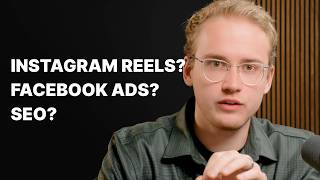
Peter Vanderwaal ("the accountants marketing guy") ranks common marketing strategies for accounting firms—short-form video, email marketing, Facebook ads, SEO, affiliate partnerships, and referral programs—explaining strengths, weaknesses, and tactical tips for each. He favors affiliate partnerships and paid ads (A–S tier) and strongly endorses email as a bridge, criticizes SEO for most advisory/CFO-type services, and positions short-form and referral programs as useful but limited or situational.
Chapters
In this video, I'm going to be ranking the best marketing strategies to implement. If you want to get more ideal clients for your accounting service, we're going to be talking SEO versus Instagram reels versus Facebook ads and much more. Now, if you don't know who I am, my name is Peter Vanderwaal. I'm the accountants marketing guy. I help the CPA firm scale from 0 to 3 million a year in three years. And now my company works with about 22 other firms around the US helping them do the exact same thing. All right, so for each of these, I'm just going to rank them and then briefly explain to you why I would put them in in that category. So starting off, we're going to do short form video, and I'm going to call this a solid B. Now the reason I say this, short form video. And we're talking Instagram reels, we're talking TikToks, we're talking YouTube shorts. This was the hottest marketing strategy of like 2021 to maybe 2023. It's really saturated now. It's still worth getting in in my opinion for sure. But you have to go about it a little bit differently and look at it a little bit differently. So, so 2021 to 2023, you could basically set up an entire marketing funnel on Instagram by just running short form content and posting clips. You get a ton of views and a certain percentage of those views will like click your link in bio or they'll comment. Like the, the comment automation you set up to like get your lead magnet and have it like direct message to them, you still can do that. It's just everybody else is also trying to do that. So it's a much more competitive space than it used to be. What I really like with short form content is actually pairing that on the same platform. So if I'm posting short form content on Instagram, then I'll also run ads on Instagram. And the cool thing is you can run ads that will only directly hit people who have seen your organic short form content in the last 90 days. So they already recognize your face, they're already familiar with you. And if they got value from one of your organic videos, then the likelihood that they'll stop and watch an ad is a little bit higher. And so your ad spend goes a lot further. When you just retarget everybody who saw your organic content and you just show your ads to that same audience, your ad spend goes a lot further that way. And so that's where organic Short form content is really, really valuable if you're not going to be running ads. Then the question becomes, how much short form does somebody need to like watch to be able to really trust me, really know me, really like me? And the answer is they need to watch a lot of short form. Right. If our goal is to get them to watch, let's say, two hours of content before they actually like book a call with us. And let's say your average short form is 30 seconds, that's probably generous. A lot of them are shorter than that. So that means you need to get them to watch 240 shorts from you. And like, how often are you really posting shorts? Like, for me, I post a lot of short form content. I post like multiple shorts a day sometimes. So let's say I'm posting two a day times 30 days in a month. So that's 60 in a month. 240 divided by. So it'd basically take four months to get somebody nurtured enough to like book a call with me. That's a really long time. And again, that's if you're putting out a ridiculous amount of volume like I am. So if you want to make shorts work, you really got to use shorts as your top of funnel where somebody new finds out about you. And then you need some sort of middle of funnel where they can cook and they can trust you. And that could be a podcast, that could be a YouTube channel, that could be an email newsletter. But all of that is like the reason why I put shorts at a B this. They're still good, but it's not a marketing strategy all on their own. All right, next up is email marketing. And email I'm going to throw at an A. I'm going to say that's an A. I love email marketing. Okay. I think if you're doing short form or if you're doing Facebook ads, this is like the best possible bridge you can have between the Facebook ads or the shorts and actually booking a call with you. Because realistically, if somebody's only watched one or two shorts or they've clicked my ad once and they've never heard of me before, then like the chance that they actually book a call or they buy my thing is really, really low. I actually have statistics on this. If you're running ads to complete strangers and you're sending them to a landing page with a book, a call, you're going to get just like maybe 2 to 3% of those people actually booking a call with you. But if you were to Put an opt in in front of that where they have to just like fill out their name and email to get like some free lead magnet type of thing, like a free training or a free tool that you're giving out. You're going to get way more people filling that out. You're going to get probably about 25 to 30, 30% of people filling that out. And then some of those people will book a call on the next page, but the rest who don't, you've got them in your email list now, so you've got way more of them and you can nurture and warm them up over a longer term horizon. Right. So they're seeing our emails now and they're also potentially seeing our ads even more, or now they're seeing our short form on the social media platform and they're getting retargeted that way as well. So it just kind of accelerates the speed at which they're getting warmed up and they're getting to know like and trust us. The cool thing with email too is if you have content you're posting on other platforms, like say a podcast or YouTube channel, you can tell your entire email list about it with an email and then the call to action is like, watch the podcast or watch the YouTube video here. And so if they go do that, then now they're watching like a 30 minute thing or a 60 minute thing and so they get warmed up and nurtured even faster there. And finally with email, it's the only audience you own, so there's nobody gatekeeping you from your email list. It's not like you gotta play to like a social media algorithm or like, what if my account gets banned on Instagram and I've got all these thousands of followers that I lose with an email list. It's literally a list of emails that you can plug into any email platform that you choose to like send emails from activecampaign or go high level or mailchimp, like whatever email platform you use and you can reach that email list. The only determining factor of whether they're going to read it or not is whether you're sending stuff that they think might be interesting. That's it. By the way, if you own an accounting firm and you're looking to scale this year, that's exactly what my team and I do. So we actually step into your business as your chief marketing officer. We plan out your entire marketing strategy with all of the systems you need to build and then we actually build all of that for you so you can Start generating leads who are real ideal clients for your firm. So if that's interesting, you click the first link in the description. You can book a call on that page. Anyways, back to the video. All right, next strategy we're going to rate here is going to be Facebook ads. And I'm going to give Facebook ads. I'm going to give it an A. There's a couple of reasons for this. Number one, I'm biased. I make a lot of money from Facebook ads every month. It's really our bread and butter. It's how I make money. It's how some of our clients make money. And those of us who make money off of Facebook ads, we make a lot of money off of Facebook ads. The downsides. All right, the only reason I'm not putting this in S tier is because it is expensive to get started. Typically with our clients, we see an investment of about 5 to $10,000 into their ad spend before they're profitable and they're making money back from it. So if you don't have five or ten grand to throw into ads and potentially not get anything back right away, then I wouldn't invest into it. The upside and the reason I like it so much is if you do have that money, it's about the fastest way to build up a marketing Strategy that makes 5 to $10 back for every dollar you spend. So at least for our clients, within six months, they're profitable and they're making somewhere between five to maybe seven to sometimes even up to $10 back on their paid ads on Facebook. I personally get about 12x on my money most months that I put into Facebook ads. So, like as of right now, I might spend like three or four thousand dollars a month on Facebook ads and I usually make about $35,000 back. Actually, there is one more downside that I kind of forgot. You do need to have a strong sales team because these are cold ish leads. All right, so you run a Facebook ad to like a VSL to a book, a call page that's like a typical ad funnel if you're trying to book sales calls. And these leads are fairly cold still. Okay. So they know somewhat who you are, what you do, how you help, but they haven't seen you for very long. It's not like they've been seeing your face for months and months and months on social media. And it's not like they've been sitting down watching all your podcasts for a few weeks. They saw a 30 second ad, they watched a five minute video, they're like, this seems applicable to me. And they book a call and then maybe they saw a few things from you, like between booking the call and showing up for the call, they saw a few more emails, a few more videos, whatever that might be. So, like, a good close rate on paid ads is somewhere between 20% and 30%. So if you can hit, you know, one in five to maybe one in three leads that you're closing, then you're doing really, really well. A lot of times when people are first transitioning to Facebook ads, they're closing like 1 in 10. And it's brutal, especially because they're oftentimes used to coming from referrals where you close like 80, 90% sometimes on super warm leads like that. So it is a hard transition. And if you're not ready to make that transition with your sales process and get your sales process ready to handle, like selling to strangers, then you're probably not ready to do Facebook ads. Now, if you are ready to make that transition, here's the beautiful thing, is your conversion rate on all your other leads is also going to go up. Because if you treat every lead like they don't know anything about you and you have to sell to them that way, then the ones who do know a bit about you are going to be even easier to sell. So as soon as you nail down selling to cold traffic from Facebook ads, then you usually see a pretty big increase in the conversions and the amount of money you're making from any other leads that you're having come in from affiliate partners or from referrals or, you know, whatever organic sources you've got. All right, next up is SEO. And I'm going to give SEO a big fat F. I hate SEO. Okay, here's the thing with SEO, Search engine optimization, right? We're only capitalizing on people who are actively looking for what you offer. Now tell me this, how many people are actively looking for a cfo? How many people even know what a CFO is or what they do? It's not that many, right? Like, most people are not familiar with that. You need to kind of like, educate them on what it is and what the importance of it is. And you can't do that with SEO. What's the situation people are in when they're actively looking for help? They're googling keywords, right? They're probably in a really bad spot. And so this is where, like, in some certain cases, if you're building a firm that does, like, you know, kind of cheap tax prep work, you know, everybody needs their tax return filed. And if you're, if you've got a decent price where you can kind of compete with TurboTax or, or one of the, you know, H and R block, then sure, SEO may work well for you. If you have a tax relief or a tax resolution offer could work also, because these people are in pain. They're looking for how do I get out of this? You know, how do I deal with IRS debt? But let's be honest, those are also F tier clients to work with. And so that's why I give SEO a big fat F. All right, next up, we've got affiliate partnerships. So I'm going to give affiliates an S tier. This is probably the best marketing strategy you can put in place. What you're basically doing is you're getting lead getters. Actually, that's the language Hormoza uses in the big blue marketing bible. But you're getting lead getters for you. Okay? So you make these industry connections with attorneys or financial advisors or mortgage brokers, like whatever other professionals are in the industry working with the same type of clients as you, but like offering a different service where you're not competing with each other. And if they introduce you to one of their clients or one of their leads that came in, you, you get an immediate credibility boost. All right, so this is almost like getting a referral from one of your existing customers, except it's coming from this professional instead of it's coming from, you know, your customer. And so one affiliate partnership is, like, not that difficult to set up, especially if you've got connections in the industry. But they start sending you leads, and as long as you treat those leads well, you give them a really great experience working with you. Ideally, you're paying some sort of kickback to the affiliate partner. Maybe you're paying them a percentage of, you know, whatever this person signs up for. And you get these leads that are fairly easy to close. They're fairly barely warmed up, and you didn't have to do a whole lot of work to get them. Now, the only thing here is you have to also nurture those affiliate relationships. Okay? So you can't just set up an affiliate partnership with somebody once and then expect that they're going to continue sending you leads for the next five or ten years. Right. Over time, they're going to forget about you. They're going to, you know, stop caring about you as much. You need to continue to, like, refresh that relationship. I actually have a client who does, he does cost segregation Studies. And so he obviously, you know, he can partner with accounting firms, he can partner with real estate investor coaches as affiliate partners for him. And when he came to me, he was basically like, hey, like, all of these affiliate partnerships have kind of died down. They're not really sending me leads anymore. And so I just asked him, I'm like, what are you doing to nurture these affiliates? What are you doing to, like, stay top of mind with them? And he's like, oh, well, you know, kind of nothing. Like, most of them haven't heard from me in the last three months. Well, there's your answer, bro. I talked to him again maybe like six or eight weeks later, and he was like, dude, your advice was so right. I reached out to all these affiliate partners again, and I started kind of like nurturing the relationship and, you know, dating them a little bit more. And we just did $135,000 in sales this last month. I mean, come on, how do you get any better than that? How do you get any better than that? All right, last marketing strategy we're going to talk about is going to be referral programs. All right? So I'm going to rate this one as a B, and just to, like, define our terms a little bit. So a referral program is basically saying to our customers, hey, if you send us anybody, we'll give you, you know, a bonus, we'll give you store credit, we'll give you, you know, credit towards your service, or we'll give you cash based on how much they sign up for. Right? An affiliate program is going to somebody outside of your company who is, you know, maybe a service provider or an influencer in the space and saying to them, hey, anybody, you send us, I'll give you a kickback. Okay? That's really the only difference. Now, the reason I like affiliates better than referrals, because with referrals, you can kind of get stuck in the wrong market. So, for example, most of you started out and you were taking on kind of like anybody and everybody, right? You would take on whatever clients could pay you because you needed to pay the bills, right? That's kind of the common story. I did the same when I started my company. I've never met an entrepreneur who started out with crazy high standards on the type of customers they were willing to take on. You need cash in the front, right? The problem is, over time, you get pickier, right? And so if you get to that point where now I'm super picky about who I'm willing to take on, but most of my clients are still like that old, like kind of anybody and everybody crowd. Who do you think they're going to be referring to? Me. Right? It's probably going to be more people like them. So it's going to be people who are paying lower fees, who are maybe in different industries than the industries I want to focus on. Maybe they're signed up for different services than the service I want to focus on going into the future. And so not a lot of these referrals are going to be like super high quality leads or perfect fit clients. And so that's why I say like referrals are great because it's totally risk free for you, right? You only pay a referral bonus based on, you know, the person signing up and giving you cash, signed contract in hand. But the downside is the quality of these referrals starts to decrease. And there's kind of this point between like, I would say, you know, maybe half a million in sales per year and like 2 million in sales per year, where your referrals are like almost useless to you because you're trying to level up the type of client you attract. But most of your existing customers are still that old client base. And so there's just a complete mismatch between the type of referrals you're getting and the type of clients you want to take on in the future. Hey, if you like this video, you're definitely going to like this one. Go check it out and I'll see you over there.
More from Peter








How This Bookkeeper Scaled From $30k/mo → $92k/mo in 2025 [LIVE WORKSHOP RECORDING]

