Your Accounting Firm Isn't Ready for Paid Ads
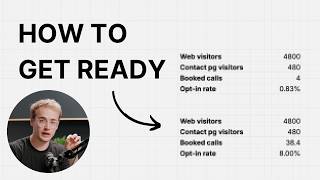
Peter Vanderwaal (accountants marketing specialist) explains when Facebook (Meta) ads are — and aren’t — the right growth channel for accounting firms. He outlines major pros (semi-predictable ROAS when systems are working, granular targeting potential, extensive analytics/KPIs) and cons (high upfront/ongoing spend, cold traffic requiring strong sales processes, platform needs historical data). He gives three readiness qualifiers: (1) you already get target customers organically (case studies/testimonials), (2) you can tolerate spending ~$10k–$20k into ads to train the platform before consistent returns, and (3) you have enough lead/client volume and a sales process to make the CAC economical. Practical examples and cost math (booked-call cost, ROAS, CAC sensitivity to price/volume) are used throughout; CTA directs viewers to notes/link below the video.
Chapters
Facebook ads are perhaps the most scalable way to get leads in most niches of accounting. But that doesn't necessarily mean it's the best path for everyone. So if you've been thinking about running Facebook ads for your firm, I'm going to walk you through the pros and cons that come with paid ads so you can understand whether this is the right route for you. Now, if you don't know me, I'm Peter Vanderwaal. I'm the accountants marketing guy. Over the last three years, I helped one of my firms scale to $3 million a year. And Facebook ads were a big part of how we got from a million dollars to $3 million a year. And now today, my company runs the marketing just shy of two dozen firms across the U.S. so let's get into the pros, right? What are the pros of running Facebook ads to get leads for your firm? So pro number one, and I think most people kind of conceptually understand this, is you can get a semi predictable roas. What does that mean? So roas just means return on ad spend. And basically that's how many dollars are you spending on ads versus how many dollars are you making off of the ads? So if I have a 5x roas, then that means I spent a dollar and. And I made $5 or I spent $10,000 and I made $50,000. It's basically just like, what's the multiplier on the money that I'm putting into this paid ads funnel? And that's the beautiful thing about paid ads that you can't really get anywhere else. If you have the system down, if all the pieces are working, then the return from this investment is quite predictable. Aside from some big algorithm update like Facebook likes to push every couple of years, you should be able to get fairly predictable roas through this funnel once you have it set up and once you have all the pieces working coher. And so what this means for you is you can kind of start with your growth goals of, let's say I want to take on five new clients this month, and I know that I close on my sales calls at, let's say, 25%. So that means I need 20 sales calls booked. And I know it cost me roughly $250 to get a qualified booked appointment on the calendar, and that's a $5,000 advertising budget. And so I know if I spend $5,000 on ads, I'm going to get those five new clients, and maybe each client is worth $5,000. So that means I'm getting a 5x ROAS. I'm going to spend 5,000 this month, and I'm going to make 25,000. Now, again, that's assuming that all the pieces are working properly together. Right. There's a lot of work that goes into getting you up to this point, and I think a lot of people take that for granted. They think it's almost this, like, magical thing where you launch a Facebook ad and you have like a book, a call page, and then people book calls and they buy from you. And that's just not true. But we're going to get into that later. What other benefits are there for running Facebook ads? So another thing that people really like about Facebook ads is that conceptually, it's very straightforward. It's very, very simple to understand. I spend money into this platform. It puts me in front of people. Some of those people are, you know, ideal customers, and so they'll come through my funnel and they'll buy from me. Another awesome feature of this platform is that you can target almost anyone. Facebook has, like, a little over 2 billion daily active users, and so that's literally 25% of the world. And the majority of that is concentrated in the highly developed countries that obviously would be be able to afford a service like yours, right? US, eu, you know, the more developed parts of South America, Australia, the more developed parts of Asia, most of us are targeting US Markets, but the majority of Americans can be reached on Facebook or Instagram, which are, you know, it's the same ad platform. Facebook, Instagram. Now, to go a layer deeper, I think we all conceptually understand this idea of targeting, right, where we put in, like, these different demographics. And, like, I want to target people who are interested in commercial real estate, who are between the ages of 30 and 55, who live in the Dallas Fort Worth area. And those targeting options do exist. But what's become more important than ever is the actual content of what you're saying in the ad. Creative. So the video that you're running as an ad, what are you saying in that video? And is it something that is going to be interesting to the person who's going to watch it? And I'm going to break this down a little bit more in depth a little bit later. But all this means is that if you understand what's going on inside your customer's mind, you can get in front of them, almost guaranteed. Now, the last major benefit of Facebook ads that I want to highlight here is just great for data nerds. Like, if you're like, Me, you don't like to make decisions based on, like, gut feeling or based on what you think is going to work. You like to be able to look at numbers and statistics, be able to read those and understand what they mean, and then make decisions based off of that. And if you've ever seen the inside of the Facebook ad dashboard, which we'll put a little screen recording up here so you can see what this looks like, there are a million data points that you can select on your ads manager to be able to see. Not only that, but you can actually export a spreadsheet with all these data points on it. And then you can come up with your own formulas and whatever you need to be able to see the kind of, like, custom statistics that matter to you. And so if you understand what each of these KPIs mean and what your benchmark should be, it's really easy to isolate problems in a Facebook ad funnel because we can look at it, we can say, okay, this KPI is good, this KPI is good, this KPI is good. This one's bad, this one's good, this one's good. So our problem lies with this one that's bad. And if we can fix this one thing, then we're going to start getting throughput on our funnel. We're going to start getting leads and clients from it. Okay, let's talk cons. What are the downsides of running Facebook ads? What are the sacrifices you're going to have to make that you want to be aware of before you get into this? So number one is just it's very expensive compared to some other marketing methods, particularly if you're starting from scratch, where you've never really had a successful online marketing kind of campaign before. Even if it's not a Facebook ad campaign, you've never had a successful organic campaign or a successful podcast or SEO articles or anything like that, then you're essentially starting from scratch, right? And the way the ad platforms work is they respond to data. So they put your ad in front of somebody based on how that person responds to the ad, they'll either put it in front of more people like that or less people like that. So if they put an ad about commercial real estate tax strategies in front of somebody who's a short term rental investor, it's like, okay, we got close, but. But this person still isn't quite right. And we can tell because they're skipping right past it. They're not paying attention to it. Or maybe they watch the first third of it. But then they realize, oh, this is totally not for me. It's extraordinarily sophisticated. There's a lot that goes into it. But really the important thing to understand is just that it tracks user behavior and how people are responding to the ads. And that's one of the main determining factors in whether it's putting it in front of the right people or not. And so if you're starting from scratch, Facebook has no prior history to go off of, of, okay, you know, past ads run by this company. We put it in front of this type of person and that worked really well. And you have no data you can artificially input, like an email list of your customers, for example, or a larger, like, marketing email list that maybe you've put together, or a list of, let's say, a thousand people that you've been on sales calls with over the past couple of years. If you have none of that data, then you are starting from scratch. There's not this history. And so you essentially have to pay to create that. So when you start completely from scratch, Facebook has no idea who to put your ads in front of. And so obviously it's going to be searching around for a while trying to figure out who the right person is. And that might actually take a couple months of spending a few thousand dollars a month. So we tell most of our clients who are starting from scratch on Facebook ads, hey, you need to be willing to spend 10 to $20,000 directly into the ad platform in order to get that really sexy, consistent roas that we're looking for, that 5x or 7x or even 10x return on your ad spend. That's not going to happen right away. It's going to take time of spending this money through putting data through the platform. And we're going to make sure that this ad spend goes as far as humanly possible. But this is just the reality of starting from scratch like you are now. The other major con of Facebook ads is that it's an incredibly cold audience, especially if you're just trying to go direct to the sale. One of the common ad strategies that we use is something called a VSL funnel where you run an ad to a landing page, you collect name and email, and then you have a video sales letter that the person is going to watch. And that video sales letter is basically like a five to ten minute video going through, like what you do, how you can help them, maybe a few case studies of people like them that you've worked with, and then there's like a book, a call or an application just beneath that. And this is a really effective way to get in front of the exact right people and get them to book in because they are watching this video. And by watching the video, as long as we're describing what you do accurately, as long as we're communicating your value, well, then they're going to watch this video and they're going to go, oh, this is what I'm looking for. And so we're kind of qualifying them in that way or we're almost letting them qualify us. Right. But we're still in control of the situation. The problem is by the time the person gets to the sales call, they've seen, let's say, a 30 second ad from you and a seven minute video sales letter. And so they've spent exactly seven and a half minutes with you before. And so they're very cold. They still don't have a lot of trust built up for you. And so what that means is you're going to need a really killer sales team. Selling to cold traffic from Facebook ads is not the same as selling to referral leads or leads coming from an affiliate partner or something of that nature. With those leads, there's a high amount of trust already built. But with a cold lead from Facebook ads, you have to do that work yourself. Now there's still a lot of, we call it middle of funnel work that you can go through to basically like build that relationship of trust with the prospect before they get to the call. But there's only so much you can do when it's a lead who came through an ad, they watched your video sales letter and then they booked a call for two days from now or three days from now. There's some only so much material you can send them and ask them to go through before they actually hop on that call with you. And so that just means that you need to have a really good sales process. Now, in some cases, you might be in a situation where you're going to say, okay, my sales process isn't quite dialed in yet. But I know that with repetitions, with time, with practice, I'm going to be able to get it dialed in. I'm going to be able to get that script figured out. Exactly what I need to say, what questions I need to ask, how I need to pitch the service. And you're going to get a really good sales process down because you've got repetitions, you've got a consistent flow of appointments coming from these Facebook ads. And that's a valid way to approach it. It's just something you need to be aware of going into it and say, hey, I know I'm not as good at sales as I need to be to be getting this really sexy 5-7x return on my ad spend. And I'm probably only going to get like a 2 or a 3x for now, but over time, I'm going to work really hard on the sales process. I'm going to get it dialed in. Maybe I'm going to get enough lead volume to the point where it makes sense to hire a sales rep to come in here and take my calls for me. And long term, this is going to be a good investment. It's just going to suck a little bit in the here and now. That's not to say that if your sales process isn't perfectly dialed in, you're not 100% confident in it, that you shouldn't run Facebook ads, But it's to say that you need to be prepared that once we get the Facebook ad funnel installed and it's, it's working and we're getting leads coming through it, then the next constraint, the next bottleneck you're going to run into is going to be sales. And you better be prepared to invest time, effort and money into fixing that problem next. By the way, if you want somebody who's done this before for firms just like yours to come step into your business, build all this out for you, that's exactly what my team and I do. So we'll step into your firm as your chief marketing officer. We'll tell you exactly what strategies you need to implement, and then we'll build those systems for you. If that's something you're interested in, click the first link below. There'll be a page with more info there. Anyways, back to the video. Who should be running Facebook ads based on these pros and cons, who is this the right strategy for? And so I'm going to walk you through three criteria or three qualifiers that I look at whenever one of our clients wants to run Facebook ads to be able to say, are you ready yet? And so, number one, here is just what you're doing organically already is working. And so what that means is the type of customers that you'd like to get from ads you're already getting from some other source. You're getting them from referrals or social media or an affiliate partner or something of that nature. Right. If you're trying to move into a completely new market that you've never worked with before, that you have Very limited experience with then running ads is not the play. There's much simpler, much more cost effective ways to get into that market. Get your first few success stories and then once you already established there's, then we can move into the paid market and throw gasoline on that fire. And this is the important concept to understand is ads are just gasoline. So if you just pour, if I just poured gasoline on my floor right now, that's not good. That's not going to spontaneously combust and start a fire. Now it might really easily catch if, you know, I spark something or if there's any static electricity going on, but that's something else creating the fire, the gasoline is making it, you know, more powerful, basically. But if I go home and I start a bonfire in my outdoor fireplace and it's, you know, kind of struggling to get a light, maybe it's kind of windy, then I put some gasoline on there, then this fire is going to immediately erupt and it's going to burn really robustly from there on forward. And that's what ads will do for your particular service that you're trying to sell via ads. So if you don't have an existing fire, you don't have something that's already at least kind of working, then pouring gasoline on it is just going to be a complete waste. And again, the very simple way to look at this is if we, you know, look at the type of customers we're trying to get from ads, are we already getting those customers from any other organic source? And if the answer is yes, then we can take what we know from that. We can take our case studies and our testimonials and what we know about those clients and what they need, and we can translate that into a Facebook ad campaign. We can put that data into the Facebook ad manager and we get kind of a jumpstart here. And yeah, we can be profitable in the next three to six months. But if you're a firm, like I talked with an accounting firm owner the other day who works mostly with like home healthcare companies. They're, you know, that's probably like 50 or 60% of his client list. But he's got this idea, he wants to work with franchises. He wants to like, go to a franchisor and become their bookkeeping partner or their accounting partner and basically get recommended to all of their new franchises that open up. And I think it's a great strategy, but he's never done it before. And so I would never run ads for that because we have no idea what to say. That's actually going to resonate with these franchisors. We have no data, like a list of franchisors that we've already spoken to that we can plug into Facebook and basically be like, put me in front of more people like this. Like, we have no case studies and testimonials to be able to show to a potential franchisor that we get in front of to say we can do this really well. And, you know, we've done it really well for other people. And so if I'm getting it in the head of a franchisor and I'm going to see an ad that doesn't necessarily resonate with what I'm thinking about in my day to day, and then I'm going to go through this funnel and speak to this person who's never worked with a franchisor before. Why would I invest in that? There's no incentive for me to say yes to that offer. And that's assuming that our ads even land in front of franchisors. So that's just an example of a situation I absolutely would not run ads starting out because he's trying to pour gasoline on the living room floor and hope it spontaneously combusts. Now, the second qualifier I look for before I tell a client, yes, you're ready to run Facebook ads is I want to make sure they're comfortable and they're okay with spending 10 to $20,000 into the ad platform directly before we see that really sexy return on ad spend. And the way I consider it is it's just a sunk cost that we're going to get back eventually. But we're comfortable investing this money to essentially pull the future in closer and be able to get to that 5-7x roas down the road. And this goes back to the data thing that we talked about, right? Ad platforms need data. Who do we show these ads to? And the way it figures out who to show an ad to, there's a couple different things. So number one, they actually do transcribe the video and so they know what you're talking about in the video. I'm fairly confident they can actually see what's on screen in the video too. And so they can see, you know, if you're in a gym, then it's probably a fitness related ad. They can see the text that's on screen. The AI and the algorithms over at Meta are incredibly advanced. So I wouldn't bet against them being able to do basically anything. So basically they understand everything that's going on in your video, everything you're saying in the video. And then they also understand every other video on the platform and how every individual user tends to interact with different types of content. And so they can kind of categorize you into a bucket based on that. And so as you get in front of more and more and more and more and more people, then it can kind of get a better impression and a better idea of what type of person responds well to this particular ad and what type of person is going to go through and do the actions we're trying to get them to do, like book a call. Now, there are also the targeting options built into the ads manager. Like, you know, I want to get in front of people who are 25 to 55, and I want to get in front of people who are local to the Chicago, Illinois area, or I want to get in front of people who are interested in, you know, tennis, whatever. But these targeting options are becoming more and more irrelevant as time goes on, especially as their ability to understand what's going on in the video and what you're talking about in the video gets more and more advanced. The actual targeting of you telling it, hey, I want to get in front of x, y, z type of person matters less and less and less for the clients we run ads for. We do a very light amount of this. We'll pick usually, like, one, maybe two characteristics in the targeting, but we don't go crazy on it. What we're really relying on is the messaging of the video, what we're saying in the video to be able to make sure that this gets in front of the right type of person. If we're saying something that we know is going to be really interesting to our ideal customer and something that they're already thinking about in their head on a regular basis, then we have a fairly high level of confidence that this is going to get in front of that type of person. Because Facebook is going to see, okay, everybody interacts with this video in this way. They don't really pay attention and don't really watch it. But a ton of this type of person tends to watch this video and tends to, like, pay attention and click through and even book a call down the road. So we need to get it in front of more people like this. Now, the third qualifier is really just, are you ready for the type of volume that you need to be able to put through Facebook ads? So there is kind of a minimum budget to be able to get effective results with Facebook ads. If you're spending less than a couple thousand dollars a month, then you're not putting enough data through the Facebook ad platform and through your funnel for Facebook to be able to continually iterate and keep getting you in front of the right people. So there's the testing budget up front, and. And then there's like the maintenance budget of how much do you need to be spending at minimum to make sure that you stay in front of the right people? And so typically, most of our clients who are running Facebook ads at kind of a maintenance level, they're not trying to scale, like, extraordinarily hard. We're talking like three to five thousand dollars a month. And so the question I would ask then is, like, how many calls per week are you able to handle? And how many new clients per week or per month are you looking to bring on? Right. So if you're only looking to bring on one or two clients a month, then it's like, okay, is that even worth a three to five thousand dollars a month ad spend? Not really. I mean, that's like a $2,500 CAC. That's you're spending $2,500 to get a customer. Unless you're charging, like, extraordinarily high prices, that's probably not worth it to you for the typical, like, $10,000 tax plan or $1,000 a month bookkeeping service. A $2,500 CAC is pretty steep. Paying $2,500 to make $10,000. I mean, that's probably most of your margin gone right there. But if you're in the position where you're trying to bring on one or two clients a week, well, that would be worth it with a $5,000 ad budget. Right. That'd be like eight clients a month. And so that'd be like, what's that, like, $750 cost per customer. So you're spending $750 to get a. A $10,000 sale or $1,000 a month sale. That's quite reasonable. Now, this all depends, obviously, on your pricing. You know, what percentage of your sales calls do you close into a new client? That's going to matter a ton. So there's not like a good CAC CAC like objectively for any business. But if you're selling a $10,000 offer and you're spending 25% of that to get the client up front, like, that's a pretty obvious red flag. And again, this goes back to the volume of data thing, right? So we need to be spending a certain amount to make sure that we're continually getting in front of the right people and we need to be able to handle enough new clients to make that spending amount worth it. Guys, that's going to be it for this video. If you want the notes, go ahead and click the link down in the description below. You can get access to my notes from this video and if you enjoyed what we covered in this video, then you'll definite like this one.
More from Peter








How This Bookkeeper Scaled From $30k/mo → $92k/mo in 2025 [LIVE WORKSHOP RECORDING]

