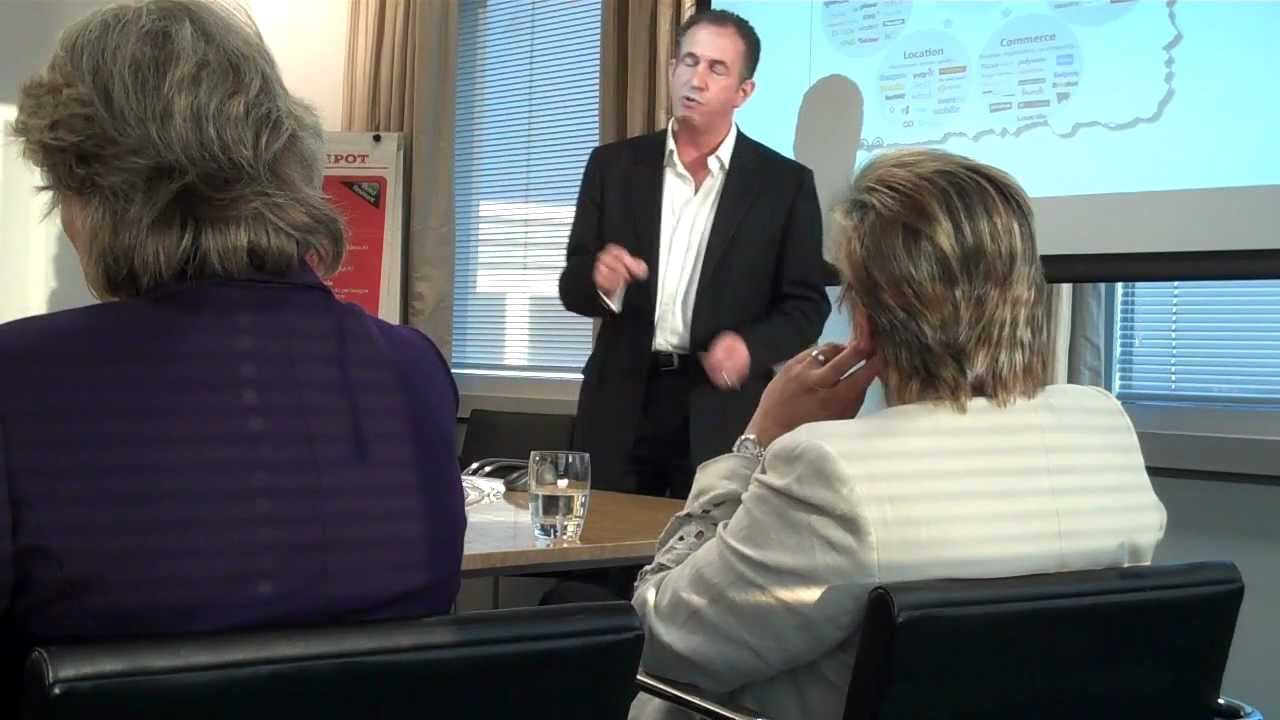
In this presentation, the speaker argues that financial‑services firms should stop avoiding the internet out of fear of compliance. He explains that social media actually simplifies compliance because the regulator cares only about the content of communications, not the medium. There are no specific “social‑media rules”; the only rule is common sense – do not try to sell or make financial promotions within community platforms. Instead, firms should treat each platform as a community (Facebook, Twitter, LinkedIn) and engage by answering questions, providing helpful links, and having informal, dinner‑party‑style conversations. Many pension‑investment companies want to use social media to reach independent financial advisers (IFAs) but lack time, resources, or expertise and mistakenly think of it as advertising. The speaker advises against banner ads and sales pitches, recommending genuine engagement. He notes that the UK Financial Services Authority (FSA) repeatedly states it is not interested in the medium but only whether a message constitutes a financial promotion. The overall message is that compliance is not a barrier; it is a “dream” for compliance officers if firms simply avoid selling and focus on helpful, non‑promotional interaction.
Chapters
I think the key issue for financial services is actually not to shy away from the internet. We put up all sorts of barriers to avoid getting involved with this stuff, the C-word being number one— compliance. And yet, if you take the trouble to learn about social media, you'll very soon discover that in actual fact, social media is a compliance manager's dream. It's a great opportunity. dream because of what you should do and what you shouldn't do within social media. The most obvious one is— the thing about social media is whatever site you're on, whether it's Facebook or whether you're using Twitter or whether you're on LinkedIn, you do feel a bit like you're part of a community, particularly on Facebook. And none of us really like people barging into our community and telling us to buy stuff. We talked to life pension investment companies every single week who all say to me, Phil, we've been looking at social media for the last 18 months. We think it's something we want to do to engage with financial advisers. They don't mean engage, they mean advertise at. But we don't know how. We haven't got the time. We haven't got the resource. We haven't got the expertise. And we don't really want people talking about us out loud in a forum. But other than that, we think it's something we want to do. The rule— and first of all, let's get this one straight. There are no rules. There are people out there selling all kinds of services that will tell you the rules of social media. They'll tell you the rules of Twitter. There aren't any. There really aren't. And because there are no rules, some people get put in jail because of it. We saw it happen yesterday. So there are no rules, but there is some common sense. And the common sense says people don't want to be sold to in these communities. Some of them are just supposed to be fun. So when a financial services provider comes to us and they say they want to engage with IFAs, I have to kind of say, how do you plan to do that? They say, well, we'd like to put banner ads on there. No, you don't. If you want to genuinely engage, then just answer people's questions that they're talking about. Help people out. Point them to useful links. Don't sell anything. Don't do any financial promotions. Just engage. Just chat like you chat at a dinner party. At a chat at a dinner party between a financial advisor and someone else is not a regulated activity, as is chatting on Twitter is not a regulated activity. So the good news is, if there are any rules at all, don't do any selling at all. So that is the compliance officer's dream. And the FSA have also commented on this many, many times now. They said they frankly are not interested in the medium with which people used to communicate with customers. They're only interested in what they say. Is it a financial promotion or isn't it? And if we've got time, I'll show you an example.