George had a right above-knee amputation in 2015 and spent years struggling with socket prostheses that caused pain and limited him to a wheelchair. He underwent bone-anchored implant surgery combined with nerve reinnervation, which reduced the metabolic cost of walking by roughly 30% and let him walk up to a mile, bike, and dance with his wife.
Chapters
I started having all these cramps and stuff in 2014. I developed aneurysms behind me knees, and I was getting blood clots in my right calf and my foot. My big toe and that. I went to see my GP at the time because I was getting bad cramps in my calf muscle and he did like a standard sort of doppler, or got the nurse to do a doppler test on my foot and my foot was cold. July 2015, a week after my birthday, I started doing internet and I heard about this thing, Osteo I had no idea what it was, but I'd heard that there were people who were having inserts in their own bones which enabled them not to have to wear the socket, which I thought, yeah, that'll do me, that's ideal for— because of my fluctuation in size and volume. So I investigated it online. And it was from that moment onwards when I found out that it was a possibility for humans, because I know that there's that Irish vet who does it on small animals, and that's amazing. So I thought, yeah, and I contacted my now current GP and said, can you get me a referral? And that was 2, 3 years ago. Lots of different sockets made, and prior to the socket being finished and given and stuck on my leg, they make check sockets. Well, at one point I had a prosthetist and a junior prosthetist both measure me at the same time within 5 minutes of each other, and both had check sockets cast. The week following, I went down back to Oxford to the limb centre and tried on both sockets. One I fell into, like a bathtub, and the other one I couldn't get into. Yet they were measured 5 minutes apart. So I've had untold check sockets made. Probably in the region of a dozen or more. I've had at least 7 full sockets made and none of them fit properly. So one week they'll measure me and if I'm the smallest volume, when I put the socket on it falls off, literally. When I take a step, off it comes. And if they measure me when I'm at my smallest and I'm at my largest on my volume, I can't get into it. It's just too tight. And when they get a happy sort of medium, which they've tried to do, when I'm at my biggest It's very uncomfortable and pinches and causes abrasions up the inside of my leg and whatnot. And when I'm at my smallest, I flop about in it. I couldn't pace properly, and when I did start walking, although I actually could walk without crutches or a stick or anything, after about 50 yards I was in a balcony because of my hips and my lower back because of the socket pushing the way it did. It pushed my hips all out of kilter. The Osseo is gonna do away with all of that because I don't need a socket. Being able to get back on a bike and ride without worrying about whether me leg's gonna fall off or not whether it's gonna slide away from me without me knowing when I put my foot down. Whereas with a socket, I have no idea where the foot's gonna land. It could land anywhere in that sort of diameter. With Osseo, from everybody I've spoken to who's had it, you get so much feedback from your prosthetic foot through your own limbs, you know exactly where the foot is. And that's what I'm looking forward to, being able to walk and have a life and go on holiday without having to plan everything, that's make sure that everywhere we go is wheelchair accessible, because that's been my life since 2015, and I just don't want to be in that for the rest of my life. You know, I want to be up and walking. I want to be able to dance with my wife because we used to dance quite a lot. And just little things like just being able to have a dance with her, it's going to be magical. Give us back some of what we used to have. Because although this has been tough on me, it's been tougher on her.
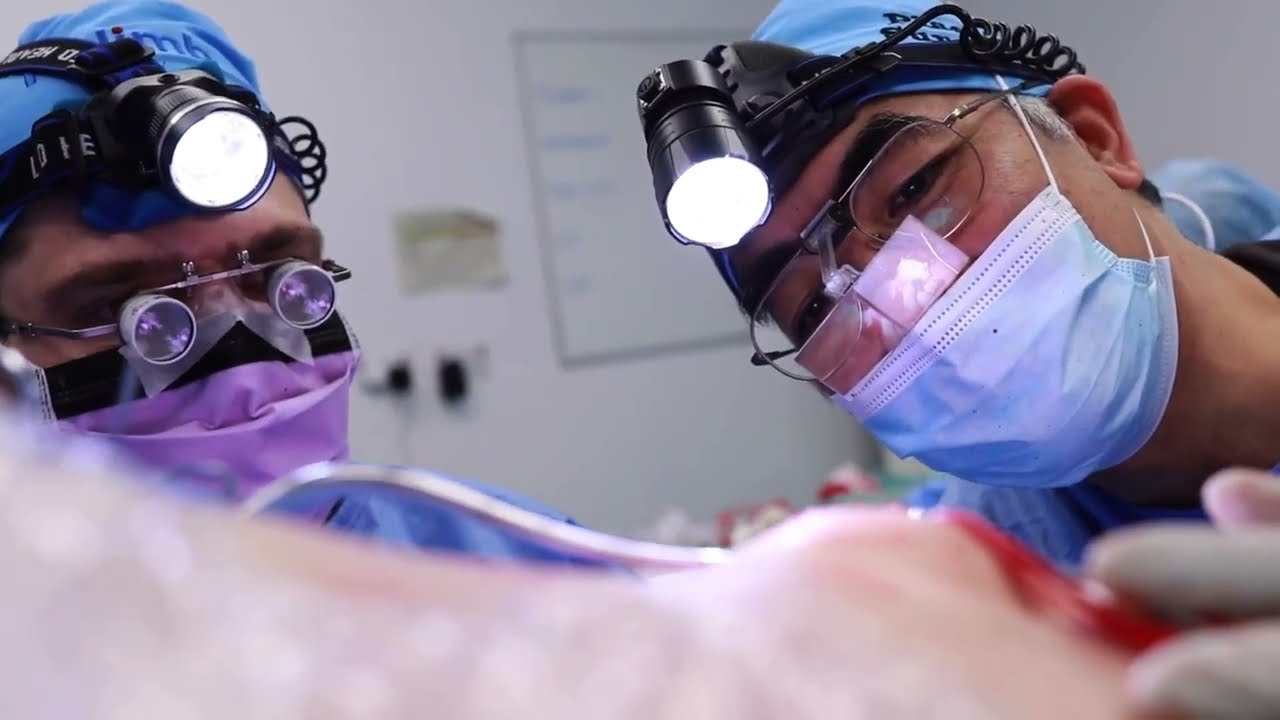
So George came to see us a couple of years ago having sustained an amputation of his right leg above the knee in 2015, and this followed a problem with the circulation to his right leg, which unfortunately resulted in quite a high amputation. And immediately after his surgery, the rehabilitation teams tried to get him mobilized because mobilization after any amputation is important in terms of maintaining the health of the individual. But unfortunately, George struggled to use a conventional socket-fitted prosthetic device. So he tried his very best. George is the most amazing individual, and he, he persisted with trying to use this socket-fitted solution, but it just didn't work for him. And in the end, at the recommendation of his rehabilitation team, he came to see us at Dr. Reelin to discuss the possibility of having a different way of attaching a prosthetic limb, which is to use an osteointegrated implant. And that surgery was carried out last year. And at surgery we also carried out some surgery to the sciatic nerve, which is the source of the neuroma pain and the phantom limb pain. Pain, which is present in his right above-knee stump. And at surgery we did both procedures, putting in a bone anchored implant and carrying out what's called a targeted muscle reinnervation procedure. One of the most important aspects of a bone anchor from the point of view of an amputee is that not only is it much easier for them to attach prosthetic limb prosthetic device to their residual limb, but the amount of energy that they require to be able to walk is reduced by about 30%. So if a patient is already struggling with trying to use a prosthesis, for example, because they've got problems with heart disease or they've got problems with their breathing, then often the amount of energy that's required for them to be able to walk with that prosthesis is more than they can manage, which means they become wheelchair-bound. But with this bone-anchored solution, the energy requirements are reduced, and that means it's well within his capacity now to walk distances up to 1 mile before he becomes short of breath and then has to sit and rest. And that's transformative for him. It's been possible for him to recapture parts of his life and his quality of life life, uh, that he thought were lost to him forever.