AI Hype, Specialist Fund I Myths, and the VC Tradeoffs No One Talks About
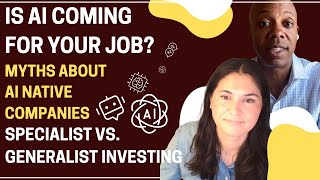
Charles Hudson from Precursor Ventures discusses why AI is already displacing copywriters and translators on Fiverr, why most enterprise AI adoption fails to deliver ROI, and why specialist venture funds tend to outperform early but drift as their insights spread and they scale.
Chapters
My older brother is an artist. He's a glassblower in the middle of Vermont. My sister works at a massive tech company and I work in venture. My brother's job is probably the most protected job right now with AI. It's the week of May 12th. Welcome to the Learning Corner, a Precursor Ventures podcast.
Welcome to the Learning Corner by Precursor. I'm Mia Farnam and I'm joined by our GP and Managing partner Charles Hudson, where we will be talking through the articles and Goodreads that caught our team's attention over the week. For our first topic In a candid LinkedIn post, Fiverr CEO Misha Kaufman acknowledges what many in the freelance economy have been quietly fearing. AI is already displacing large portions of creative and digital gig work. Misha highlighted that services like copywriting, image editing and translation are increasingly being handled by generative AI at lower cost and faster turnaround. Rather than resisting the shift, Fiverr claims to be leaning into it launching AI assisted tools, creating categories specifically for AI enhanced services. Rethink what create at work means. He frames this moment as a critical turning point that will require platforms and workers to adapt. I think it really impressed a sentiment that quote, AI is coming for your end my job. So investors and CEOs have all been avoidant of the topic of AI displacing knowledge workers. It was refreshing to hear Misha speak about it so candidly. Maybe because it has had an outsized effect on Fiverr's core business. Yeah, do you think Charles, that we'll see more CEOs begin to share their real thoughts? Or was this kind of a one off?
Before that came out? I had been wrestling with the same issue and I had written something on substack about like why won't anybody say the thing? And everybody wants to talk around it and nobody wants to say that this is going to come for knowledge workers and probably sooner than we think. And as soon as I published that, a bunch of people were like, oh you should Read this Fiverr CEOs I was like oh wow, he gets credit for saying the quiet part out loud. I think he's right. The evolution of Fiverr's business. A lot of what they were able to do was find people in low cost countries who had high skill who could do things like copywriting and image editing that could be done across distance in time and they were able to build a marketplace around that and they were super successful in the same way other people did the same thing for coding. And I'm waiting for someone who runs Like a BPO or coding shop to talk about what Windsurf and cursor maybe mean for the sort of offshore low cost coding world. I could cut that one both ways. But I think he's right. I do think society will probably employ fewer humans doing image editing, writing those type tasks. And I wonder what will replace that work. You know, the optimist says, oh well, like we will find some new high value tasks. AI will create new jobs for these people that we didn't know of before. You know, like my friend said, hey, you know, electric vehicles, yeah, it's not as great for mechanics, but now you have all these jobs around charging station management. I'm from Michigan and the auto industry went through its own big upheaval. And you know, yes, some jobs left for other countries, but also some jobs were just replaced by robots and automation. And no human does that job anywhere in the world. It wasn't like it was shipped somewhere else. So I appreciate the candor and I appreciate him not trying to tell people, don't look over here, pay no attention.
The Shopify memo, the Duolingo memo. Fiverr's also a public company too, so I do again appreciate the candor of it. But then you also have to weave in of it's another company that also has to push a narrative that they are building an AI capabilities within the platform. I've used Fiverr like all my life and I've found it to be quickest, low cost way to get a good value output if you put it on like a plane. There's Fiverr which I'm asking somebody to turn something around quickly for myself. And then the other side of it is I'm just doing it by myself with one tool. I've tried that, it's not there yet. The middle I always think about, which is things that I already use that have better distribution with AI tools. So I think about it with a podcast studio today, like video editing that exists in like Riverside and Descript, podcast, AI, all of that. That's where I kind of wonder where the value is going to transfer. But I feel like even if you have these AI tools, I don't think it makes bad video creators top tier. You miss some of that creative flair that you would get from somebody who actually is strong. Last week, our team conversation internally touched on how AI gives generalists a meaningful edge. In Nisha's post, he encourages people to use AI to further specialize in their respective fields. So from your pov, what are the limitations to this and realistic gains?
I Just think the problem is AI just gets better. And so if you're a specialist every year, the AI video editing tools are going to get better and better, ironically, probably because they're going to be trained on your work. And so I think there's diminishing returns. Then some people say maybe the new job is managing all of these AI tools that do work. I'm like, oh, managing agents? They're like, yes. I'm like, well, at some point someone's going to build a manager agent whose whole job it is to manage. The problem I have is like, if you take this all to the extreme, there will be very little repetitive work that isn't done by AI or machines. And most work is repetitive work, which kind of only leaves creative work for now. And of course we will have AI things that are creative and generate brand new novel things. But I kind of feel like maybe we'll all be artists. I don't know. I know, but I think the danger in specializing is like you're running against a machine that can learn from the Internet, never sleeps, never gets sick, never has a bad day. It's like Waymo is the world's most experienced driver.
Yeah, no, it's true. It's funny. My older brother is an artist. He's a glassblower in the middle of Vermont. My sister works at a massive tech company and I work in venture. My brother's job is probably the most protected job right now with AI. Turns out he has the most security when everyone told him he would never have it. This is a good bridge actually into our next topic, which I'm excited to break down. Casey Newton wrote a larger piece titled the Myth of the AI Native startup critiquing companies that aim to run on minimal staff through AI. Despite the hype, and from what we've seen, seen real examples typically disappoint with companies either not using AI in a meaningful way or facing reliability issues. For example, Klarna's attempt to replace workers with AI fell a bit short in a large way, forcing them to rehire humans after a large round of layoffs. We're seeing that large companies AI initiatives often stem from a fear of missing out rather than striving for success. Recent IBM survey of over 2000 global CEOs noted that only 25% of initiatives meet ROI. Expect trust remains the key challenge as AI tools like customer support bots still make pretty costly mistakes. And so while one person AI startup, that dream still exists, the reality is more like SaaS. Businesses with experimental AI features and so I have so many thoughts here and felt like Kasey was surfacing data to back up some of the hypotheses we've had here on this podcast and just within our own team internally. I know you shared this article and it confirmed a lot of things that you thought would play out with AI adoption and usage.
Yeah, first of all, everyone should subscribe to Platformer. And I read this article and I was like, finally someone has connected all the dots. Because I remember when the Klarna thing came out and they said, we're just going all in on AI and we're getting rid of people. And I was like, well then it should show up somewhere eventually. Part of me said, is this related to their desire to go public and is this like a marketing narrative that they want in the ecosystem as they look to go public? Is this an attention grabbing marketing story independent of going public, that positions the leadership at the forefront and gets attention? Because the difference between saying we're not going to hire anybody and we're going all in on AI versus we're going to slow down hiring and integrate AI, you don't write a story about a company slowing down hiring.
Right.
Someone who says like, we're not going to hire anybody and we're going to fire all of our SaaS vendors. That's how you get in the press. So I won't impute any motives. I don't actually know what motivated them to do that. I will assume they did it because they thought it was the best thing for the business. And then when the financials came out, I was like, cool, where? Where is it? Shouldn't it show up in savings somewhere? It didn't feel like it could really move the needle. And I was like, well, maybe it will just take time to peter out and filter through the financials, or maybe it's not really what's happening. And it sounds like, you know, it's not what's happening. And the two things I've believed strongly since all of this AI stuff really got momentum. CEO wants to go to their board and say, we're not doing everything we can. I went to a dinner in LA and Robert Smith rattled off just a ton of statistics about how hard he's pushing all of the Vista CEOs to integrate AI into their organizations. And I have to assume every private equity and every growth equity venture firm is pounding the table about AI. So CEOs got the memo, which means you have to spend money, but spending money and getting results are actually not the same thing. And I weirdly think this is the best thing that could happen to AI is for the pressure to simply spend money on stuff that you're not sure works, to check the box or to not be perceived as a Luddite. As that pressure abates, people will actually find the stuff that works. They will actually spend money on things that make their business better and we'll.
All be better off to that point. From that IBM survey, 64% of CEOs from that report claim that basically this fear of missing out drove their decisions to invest in ATT and CK before they had a clear understanding of what that ROI looks like. And so clearly even though there's data to support that, there hasn't been clear mountains worth of value extracted from these changes. People are still pounding the table to make that change. The article even goes in further to share that a large portion of business leaders plan to double their near term AI investment. Perhaps this sentiment is fueled by watching one's strong companies so think Chegg get absolutely destroyed by the emergence of these tools. And at the C suite level, I just wonder what balance do you think these folks are trying to strike?
I think also if you just think about it, how much would you pay for meteorite insurance if you were a dinosaur? It's actually a low probability event that you're going to get hit by a meteor if you're a dinosaur. But if that meteor happens to hit Earth, boy would you wish you had like a plan.
Sure.
And I think about like the amount of money these companies are spending relative to the scale of their business. It's actually not that much money. So if I were running a SaaS company and if you told me for a few million dollars a year of spend you can get some sense of how disruptible your business is by AI and whatever your internal processes you could make more efficient, it is okay to have this experimental recurring revenue or this exploratory budget. Like that's exactly what you should do be doing. You should be trying to figure out what works. And I don't think we're used to the scale of investment to find out what works. This is good hygiene. As much as I'm cynical about the top down pecking orders, as a leader in a manager you should want to understand what this technology means for your business. And in the grand scheme of things, getting a ChatGPT Pro license for everybody in your company isn't actually that much money to find out.
The last thing I will say is like on the other side of the coin, I think the Financial Times released a piece that said the insurer Lloyds of London released a product to cover companies for the losses caused by malfunctioning AI tools. Really there's a enough issues that people are kind of asking how do I protect myself? So you kind of shared like the meteorite, what if, I don't know, you overpaid for that protection in the long run and then now you're kind of hemorrhaging out.
I think the Internet has short memory and I think for the companies that over invest in AI and maybe go too crazy, they'll just say it was transformative tech. It was the thing of the moment. We were totally comfortable being excessive, but we weren't willing to under invest right?
Like no price too high if it really does pay off in the way, which is how venture capitalists think about their best investments that maybe they overpaid for our last topic In a recent LinkedIn post, Nick Moran from New Stack Ventures reflects on the conversation with an institutional LP who shared her observation. It's that specialist VC funds tend to outperform in Fund one, but then see their returns fall off in subsequent vintages. The insight highlights a common pattern in venture that we've touched on before. Specialist funds often begin with strong thematic clarity and tight conviction, which helps them win competitive early deals and deliver breakout returns. But as they grow, many struggle to maintain discipline, drifting into broader mandates that dilute their original edge. So the LP's advice was a reminder that what makes Fund One great, your focus, your hunger and a clear thesis is often exactly what get compromised as firm Scale wanted to get your perspective on it.
We've talked a little bit about this as a team. It's funny, the longer I do the business, the better I'd like to think. I understand why LPs make the decisions they make. And I think what Nick outlined is true. I think oftentimes there are specialist managers who understand something about a problem space or a category that others do not. The founders who are building in those categories tend to want to seek out people who understand their industry problem set. And so if you think about it, 15 years ago, not that many people were doing fintech. It was regulated. People are like it's too hard to sell the banks. And people didn't say, well what if you don't sell the banks? There wasn't a deep expertise of fintech in the ecosystem. So if you were a founder building a fintech company, there weren't that many people I know Mark Warrenberg, a handful of people I know who had real expertise in that world. And so I think that's why the early people in fintech were able to get access to many of the best deals. Because the knowledge of fintech regulatory technology stack problems was concentrated in the hands of a few people. I'd say the same is true for Forerunner when they really lean hard on cpg. I could name a bunch of other things I think about Basusset and Zeta being relatively early. I think the problem is Venture is now such a big business that any unique insight you, you have that is scalable, every big multi stage firm will stand up a practice to go after it. And suddenly the ability to find an expert person in your category is more distributed. You don't have to go to one of the specialist firms to get that access. Also the other thing is these insights get diffused over time because those CEOs go up on stage and they go to CEO dinners and tell people stuff, right? And people figure out how the business works. The downside is I still think the firm that I think really got this right was emergence. They figured out SaaS way before everybody else. And because Venture back then was slow in the sense that information didn't travel at the same speed, and because SaaS was like really disruptive, they had a pretty long window where they knew more about SaaS than just about. And now there's not a single big standard firm where SaaS isn't like the main event. I'd argue crypto had some of the same elements in that it was really disruptive. It was a different way to wire your brain. And if you wanted to be really good at that, you had to not be good at other stuff. And I talked to LPs and he would say, well then why would an LP continue to back specialist managers if we know this is true? I look, well, the optimal strategy is you back a bunch of specialists in fund one and maybe fund two and that's it. And every LP I talked to is like, you know, just like a fund manager has a portfolio construction, we have a strategy, a precursor. They're trying to pick funds. And I talk to LPs who are like, well, we like specialist managers. And I'm like, me too, but only for the first couple funds. Because if those people are going to graduate, they have to find a way to rebrand or reposition themselves in one of two ways. They either have to become kind of a multi stage, vertically integrated fund in their category, kind of like a vmg, or you have to say, our original thesis was just that the original thesis now we do everything.
Yeah.
So you end up a generalist anyway.
The SaaS example I feel like is directly related to how I feel about AI right now. I think specialist funds that came up maybe after SAS emerged who were maybe healthcare focused fintech now for the past five years like but we do SaaS for healthcare, we'll do SaaS for fintech now. I feel like the hype cycles are almost a good way of dressing up, maybe like an overdone thesis. So AI right now is that again I'm picking on healthcare because just that's my background. If you were a healthcare only fund for the past X amount of years and you're seeing returns plummet on your digital health investments or tech enabled services, AI right now opens up this whole new window for you to suddenly get re excited about this that you've been in for so long. But to your point, does that make you still a good specialist or are you just kind of jumping in on the hype cycles and how long will it take for us to figure out who's good at this or not?
I think a lot about the other problem you have when you start a fund is you have to market that fund to limited partners. And as someone who's run a Generalist Fund for 10 plus years, it is a lot harder to go into a room and say you should pick me as a generalist because I am good at this job versus I am a specialist who has specialized knowledge about a market or an industry that isn't well understood.
Here are all my advisors and great CEOs that I know in these spaces.
The advisory council and all the things. And I think that's. I always ask myself what goes in the memo? Eventually the person you're sitting across the table from is going to have to write up why do I want to give money to this person? And I think the specialist memos are easier to write. Yeah, this person has deep domain expertise in this category. The category is not well understood. We think they could build the franchise fund here, et cetera, et cetera, et cetera. The generalist is basically like, I think this person's an exceptional picker. That's a hard memo to write.
Well, we are all out of time today. Thank you Charles for calling in from Bentonville. Thank you to our listeners who are joining in. Please like and subscribe and we will talk with you all next week. Thank you.
Bye.
Sat.










