Venture Capital Has Collapsed Into One Strategy
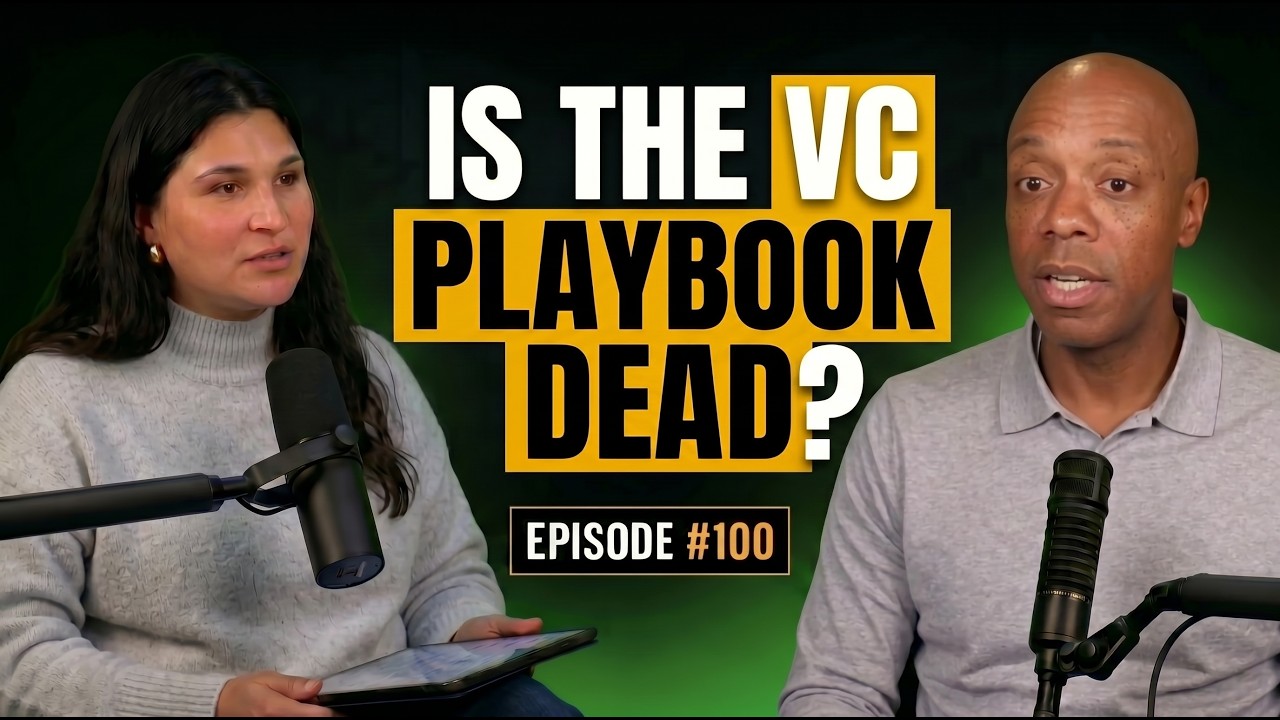
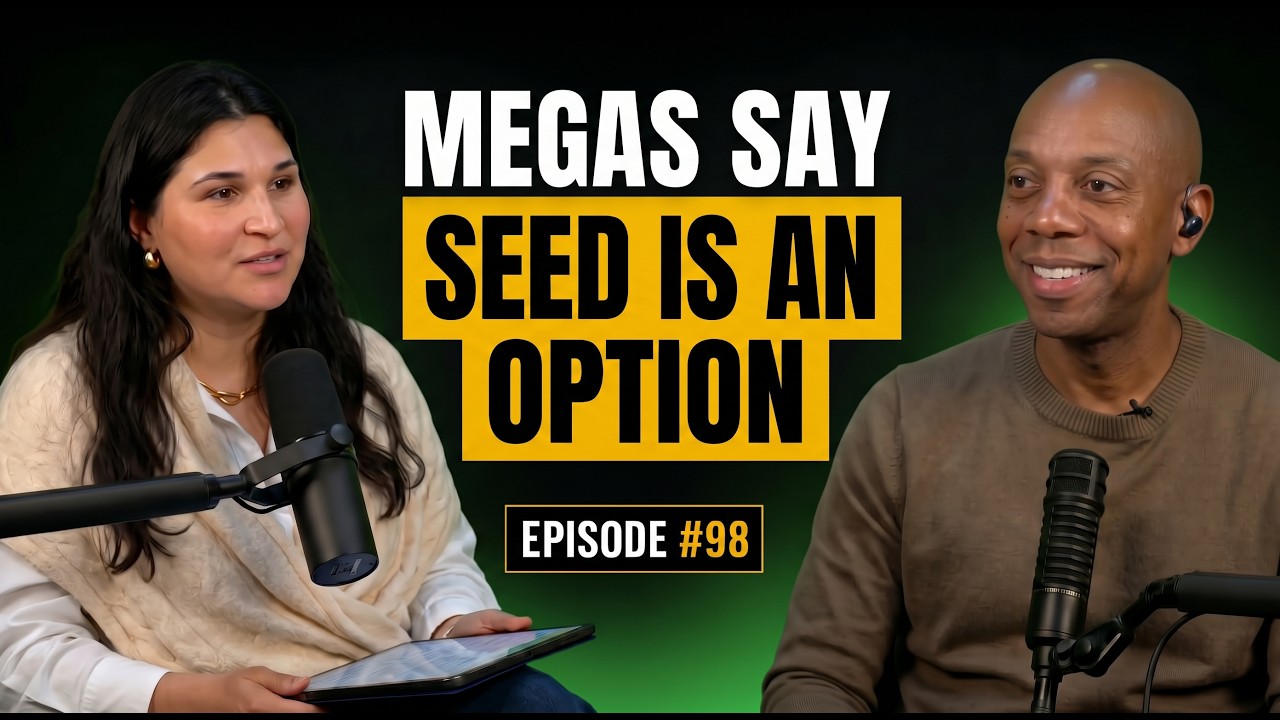
In the 100th episode of Precursor Ventures’ podcast The Learning Corner, host Mia Fornum sits down with GP and managing partner Charles Hudson to reflect on the major trends that have shaped venture capital over the past two years. The conversation is organized around the most‑frequently‑cited themes from the show’s archive: AI’s transformation of how companies are built and staffed; the “seed squeeze” and the concentration of capital in megafunds; fund‑survival pressures and the rise of alternative monetization models such as SPVs and secondaries; growing founder and operator burnout, especially as AI agents become ubiquitous; the increasing importance of brand, content, and online presence as a competitive edge; the fracturing of information ecosystems (X, LinkedIn, Substack) and the tension between consensus‑driven narratives and contrarian voices; and the shifting expectations around VC platform support for founders. Hudson argues that despite surface‑level changes, the core job of a VC—convincing top founders to take your money over others—remains the same, but the tactics (brand, content, liquidity structures) have evolved dramatically. He warns that the market is converging on a single strategy: chasing $20 billion‑plus outcomes, which squeezes diverse strategies and harms both the ecosystem and entrepreneurs outside the “white‑hot” focus areas. The episode ends with a concise 2026 outlook: venture is feeling squeezed, with many players responding to market pressure rather than intentional choice.
Chapters
And I think over the last 2 years, if I were to say there's one meta theme, everybody's being squeezed into the same strategy. Whatever, like, beauty and heterogeneous venture activity there was, everybody's kind of being squeezed into the same set of trades. No one's forced to do anything, but I think everybody's responding to the pressure in the market and it's pushing everybody to kind of choose to do the same things essentially for the same reasons. I don't think that's good for the business. It's certainly not good for entrepreneurs unless you're in that white-hot focus area that everybody cares about.
It's the week of October 19th. Welcome to The Learning Corner, a Precursor Ventures podcast. Welcome to The Learning Corner by Precursor. I'm Mia Fornum, and I'm joined by our GP and managing partner, Charles Hudson, where we will be talking through the articles and Goodreads that caught our team's attention over the past This episode is gonna look a little different. It's actually our 100th episode, which is insane to say. We've been doing this for literally 2 years, which means like roughly 300 or so articles, Goodreads that we've featured since we started the podcast. So instead of the usual rundown, I wanted to turn the mic on Charles and ask him to reflect on the state of venture right now, using all of the different themes that we've seen. Yeah. seen show up again and again on this show. I went back over the past week through every episode since we started and pulled the themes that showed up the most often. Some of them were basically on every single episode. First, AI rewriting how companies get built, staffed, and run, which was the single biggest thread and showed up in well over half of our episodes.
Yeah.
Second, you had the seed squeeze. So talks around megafund concentration, the consensus capital machine, and the fact that the same check into the same exit now returns a fraction of what it used to. Third theme was fund survival and firm building, from the VCs are cockroaches narrative to Beezer's data that fewer than half of fund ones ever raise a fund to. Fourth theme, founder and operator burnout, which went from kind of a side topic to near a weekly feature in different conversations once AI agents had entered the picture. And then some rotating themes underneath these all included concepts like Bubble versus balloon, taste and judgment as the real edge, the founder and VC relationship, which is changing, and liquidity and secondaries, which we've been pushing on since day one of the podcast. So Charles, hearing that list, does anything surprise you about what we're talking about the most? Is there a theme that should have been bigger that was, that was not?
I went back and looked at some of our older episodes, and I think I was telling someone this over the weekend. I felt like when we started, we were very near the peak of all of this.
Mm-hmm.
And I think it was for me a failure of imagination that 2 years later, things could have gotten to the point where they are in terms of like enthusiasm, craziness, hype, excitement. I just think when we started the podcast, I didn't, I didn't have an idea that we weren't in fact at the top, but that maybe we were at the midpoint of the journey to the top. And I think talking through these articles has helped me see that like these things can continue far longer than you I think they can. And I think for me, the second and third order effects of like the mega fund concentration have been one theme. Then I went back, I was like, I think, I think everyone understood like the first order effects. Wow. If all these funds have all the money, it's going to be hard for other people to fundraise. I think 2 years ago I didn't fully appreciate the extent to which it would also dictate what people feel like is investment worthy, especially in a world where one of the primary currencies for small funds is how many of your follow-on rounds did the big funds do. Even though I talked to an LP who was like, wow, we've looked at the like success rate of Series A's led by these big funds. It's an argument against doing your pro rata when they come in to do the A. And I'm like, yet you still reward people for being able to say that. So I think if anything, one of the best things about our podcast is it forced me to like on a weekly basis reexamine the way our business works. And I think it's changed a lot in the last 2 years. And I think, you know, 2 years ago, agents, In my opinion, weren't very good. There was a lot more conversation about, it's funny, there's a lot of conversations 2 and a half years ago about agentic commerce is coming and it kind of didn't. And now only with like Instinct in town and agent technology being better. So in some ways I feel like the story that, hey, these things take a long time, they don't happen overnight, is both true and is happening faster than I have ever seen for any other technology cycle. And it's this weird duality where things are happening faster than ever, but maybe not as fast as they need to. In order to like meet everybody's needs. I'm also glad we just had this time capsule of what I think will go down as like one of the most interesting consequential 2 to 3 year periods. I mean, the only time I can think of that was potentially more consequential in venture in my career was, we'll call it '96 to 2001.
I also think it's been interesting to just look at the collection of not just articles, news pieces that you could have reported on, or we could have talked about, but actual written pieces that people in our ecosystem have written that we've been able to reflect on, which is different because then it Is a forcing function for somebody to put out their own unique perspective. One of the things that I was thinking about was over the last 2 years, have you found that people have more so rotated towards consensus thinking in their writing and then in closed doors been able to kind of share how they really think? Where do you feel like that has, has landed?
I also think it's been fun to find some new people to follow.
Yeah.
And to find some new voices and to find some new points of view. on both venture and tech that maybe I hadn't considered before. And I've really enjoyed reading other people's stuff. I also think this weird fracturing that's happened with X being its own chamber and LinkedIn being its own chamber and Substack being its own chamber. I also, I feel like for most of my career in venture, everybody was kind of consuming the same stuff and hanging out in the same spaces. And in the last 2 years, it's felt very much like it's fractured. The things you talk about and the things you care about are a function of like where you hang out online. And, you know, I would say, I told someone, I was like, hey, if you're doing AI infra, you need to be on X because that's where those conversations are happening. And there are other categories and like, that's not the place where the densest conversations in that category are happening. So I don't know, I think it's cool to see that. And I also just think in the last year in particular, seeing some folks come, come out and say, hey, I'm going to argue forcefully for a non-consensus narrative. I'm going to argue for something different than just let's YOLO into the world's most expensive AI infra companies. There are other ways to invest. Like when I think we went through a, maybe a year period where everyone's like, well, can I, can I say that? Can I write that?
And I think we've also watched how this trickles down and like venture has become kind of a media flywheel. Like I think that's a prerequisite of if you start a fund now, like I think that should be an arm of your business or it's an assumption that you will have it. I wanna move into one of our first kind of themes. The big question that I had was, are the skills that made you good at this job still the ones that matter? One of the pieces that stuck with me the most was Alberto Romero's, you spend your whole life getting good at the wrong thing. And it feels like the truest version of the question we've been circling around.
Yeah.
And we've obviously talked about this in the context of venture capital quite often. That's what we do on this podcast. But we had Sarah Guo arguing that relevant decay is, you had Euclid making the case that domain judgment matters more as the technical stuff becomes legible to everyone. And Mirko pointing out that most firms calling themselves AI-pilled are still at level 1. And at the same time, a lot of what we praise on this show, pattern recognition, Ignition Network, being early to a founder before anyone in healthcare. It feels like it could be either more valuable or completely commoditized depending on how you slice it from where your point of view is. So Charles, you've been doing this for so long and the job has arguably changed, I would say, more in the last 2 years than probably in the past 10. Are the skills and capabilities that made VCs good at this job still relevant in today's market? What's still an edge? What has been commoditized and what have you learned from scratch?
I think at its core, the job is still the same. It's, can you convince really great founders to take your money and take your money to the exclusion of other people? So I think on some levels, like, oh, it's kind of the same job. It's picking people and hoping that they pick you and being right. I think the tactics you use are very different. I think online presence, it's funny if you think like, okay, in a market where there are far more players than in the past, what would you predict would, would matter more? You'd be like, oh, brand being top of mind. I think that is way more important now than it used to be. I think once upon a time when capital was scarce, simply having capital was an edge and founders would seek out firms, maybe not because they were the best firms, but because those firms had money and those companies needed money. And the amount of choice you had was limited. So that's like one thing where I just think being sought out and you can be sought out because of your writing. You can be sought out because of your reputation with founders. You can be sought after because you're associated with consequential companies. There's a million reasons. You can be chosen, but I think that's far more competitive than it used to be. And I think that's why you see firms spending more money on those activities than they used to.
On brand, if I were to double-click on that, are there like specific architects of brand that you feel like are resonating more now in today's market than in 10 years prior?
I think it's really impressive what Sarah's done with Conviction in a very short period of time to build the firm. And then I think you have individuals who've built meaningful brand presence for themselves on X or on other channels. I think about Nicole Wishoff. Like there's a lot of people who've sort of memed themselves into relevance, for lack of a better description. I would say through just like a relentless commitment to creating content. And I think for a long time, a lot of people go, creating content's beneath me. And I'm like, well, founders and LPs both consume a lot of content. How else are people supposed to get to know you and understand what you think about? And not everybody has to do it the same way. You don't have to be the loudest. You don't have to be in every room on every podcast. There's a lot of different ways to do it if you're thoughtful. And there's people like Elad Gil who've been very successful who don't do a ton of that stuff. I do think there's a million ways to be the person that gets chosen, but I've never felt like that's more important than it is today.
Do you feel like showing up for founders continues to be something that is the leading thing that'll get a founder excited about you? Or do you feel like that's just like an easier said than done thing that people should just assume is part of the platform? Where do you land there?
I think we're seeing the kind of gradual unwinding or rethinking of something. You know, Andreessen doesn't have the centralized talent team they used to have. I don't hear as many VC firms leading with platform and support. You know, it's funny, there's some founders I meet with, what they honestly want is they want money, they want to be left alone, but they also want to know that you'll pick up the phone when they have an issue. But like on an ongoing basis, they're like, I think I know what I'm doing. Yeah. Or I want to have that intense one-on-one relationship. whoever's written me the biggest check or whoever can be the most helpful. But for the rest of you, kind of along for the ride. And I think that's like a different, that's like a different frame.
For, and this is kind of coming from Romero's piece, which was really about the psychological cost of your expertise becoming less valuable over time and having to rethink, how do I ask for or describe the end state of what I want as opposed to kind of going through that iterative journey, which has changed with AI. For investors 10 or 15 years in, how do you tell the difference Between a skill that is temporarily out of fashion and one that's completely obsolete. And we talk about this a lot in different versions of like updating your firmware, like knowing when to pivot, knowing when to stick to your guns. So you can talk about it generally or even more specific.
I think one area is really in how do you make money in this business? And I would say most people who've been experienced are like, hey, the way you make money is you raise a fund. And you invest early and you hold for, you hold till it goes public. That was like the consensus business model. And if I think about some of the people who've had big impacts on business, they've done it differently. They've just said, well, why do I have to hold it to maturity? Why can't I sell it along the way? Or what if I, instead of having a fund, what if I just ripped SPVs? What if I just could get access to great companies mid-late stage? I'll get liquidity faster. It's not a blind pool. LPs are gonna get exposure to exactly the companies they want. And a lot of people I know were just like, well, that's not how things are supposed to work. Well, if you're not open to the idea that things could work differently, you'd miss out on that opportunity. And we did a lot of SPVs in the beginning of our fund. I wish I'd kept doing it. The reason I stopped doing it was some of our LPs were like, well, this kind of isn't how things are done, but it is now. And I was like, oh wow, we were already living in the future and we just didn't realize it. And so I think even in the ways that you make money in venture, that has changed quite a bit. You can make a lot of money right now investing in consensus growth stage companies that are working well, where the private market ceiling valuation is significantly higher than anything we've ever seen in the past.
The question is like, how strong is the tension of venture that you once knew 10 years ago versus what the job requires today? And like, can you separate being able to just do what's required in today's market, or do you want to sit out?
And I think, you know, we had, Firms that for a long time had, including us, had held to a set of operating principles around fund size, check size, valuation. And I think a lot of people held out for a long period of time. It's funny, capitulation is always a sign of one or two things. Capitulation always happens at the top where people are just like, I can't sit this out any longer. It's really too hard. Uh, whether I believe this makes sense or not, the things we've been doing, we have to update them. So we have to increase our fund size. We have to get rid of any sense of valuation. We have to just go for it. That always happens when things have actually changed or at the top. And the problem is in the moment when you're trying to make these decisions, you don't know which is which. Am I being smart and updating my firmware and changing the way my firm operates now because the world really is different? Or am I throwing away my principles right at the moment of maximum tension and will I regret it? The good news with venture is if you, if you raise a fund that's too big and it doesn't work out and you did it and you're a good brand, you could always
Similar to what you said in the beginning, I think if there's one thing 100 episodes gives us, it's complete record of what we thought was going to happen or we heard from the ecosystem what people predicted. In July of last year, our friend Rob Go told us CVCs need to evolve in order to survive. And then 2 months later, we had Michael Rosenbaum counter that VCs are cockroaches and never actually go away. And this time last year, I thought that we were at the frenzy stage of the Perez cycle, and we spent the next 5 months reading pieces titled, hey, there's a bubble, bubble's ballooned. And the AI wildfire is coming. We covered the Coatue stat that 52% of venture dollars went into 10 companies. We saw Clueless, $7 million in ARR before their pivot. We saw Menlo putting secondaries into term sheets and Will Manidis arguing venture would follow private equity into permanent capital. Some of that did play out. Some of it has not yet. The question here for you is what has surprised you about venture over the last 2 years that you would not have anticipated or that you would have swung the other way? Like, is there also a founder behavior or market behavior that you were sure was a phase and turned out to be a new baseline? I'm thinking about, I don't know, agentic burnout, sure, but also like 996 culture, young founders, all of the interest and hype around that.
I feel like right now it feels like nobody or very few people I've talked to have a really clear sense of how this is all going to play out and where we're going. So people are running a ton of experiments with the hope that they're running the right ones. I think I understand the like ethos of young founders. Oh, they're young, they're smart. This is a new technology wave, but we've, we've run this play before. We've seen it. And I think what ends up happening is sometimes you really do find these wunderkind people who both have like great vision, high IQ, and are able to rise to the occasion of like managing people and building companies. In other cases, you're just like, wow, that was a really talented, really smart person. And I just funded a portion of their entrepreneurial education and maybe they'll do better on the next one.
And the first version of what you described, that's, that's traditional venture. That's N-of-1 founders. That's like why you get into the business regardless of age is you hope that you find the once-in-a-generation entrepreneur. I think right now because there's emerging technology similar to internet, people are assuming that the people who should be funded are the ones who are young, hungry, hustling, putting aside anything else to, to build, which I find really exciting. Like I don't think there's any more exciting time to be in SF right now.
Oh yeah.
It's like completely brought back just full-on enthusiasm about building, which is incredible. The pricing of most of the deals that are aligned with that specific segment, I think, is a little, again, you've said it, like we've run this play before, so we won't know. We won't know for, for a year where things will go. I think the 996 culture one is another one that's interesting too, in that people have found one archetype to run a business. And if you're not subscribing to that, then you're in the permanent underclass. I've never heard so much doom and gloom from my friends who work at big tech companies that are not philanthropic and OpenAI about the disdain for their own jobs. And I don't know if any of that has like real credence.
I think one thing I didn't anticipate either was what a bad job of narrative the business would do around AI.
Yeah.
And I think some of it's the stuff you mentioned, working in AI companies, the impact that AI is going to have on society, data centers. It's almost like people were just asleep. It's funny. I think when you're inside the machine, you're like, all of this stuff is great. Everybody should love it. Then you go outside of the machine and people are like, this is very scary. This is not good. This is not what I want. And the disconnect is huge. You know, I, like, my mom came to town to visit me and she's like, I don't understand any of these billboards in your town. And I was like, well, you're not the target. That's why you don't understand them. Mm-hmm. And I do think it's created this world where people in San Francisco who are using AI are either living in the future that we will all inhabit in 3 to 5 years, Or a weird, weird branch of the future that only we're on that no one else will ever experience. And I think this to me is like the real question is like San Francisco 996 obsessive AI usage thing. Is it like a vision into the future that we'll all live in or is it a warning? And I don't know.
Lastly, like a lot of what we read this year had kind of like admittedly a tired tone to it. Yeah. Remember when Michael Dempsey argued that VC-backed startups are low status now? You had Kyle Harrison call Flop startups, a natural extension of chasing a scalable model in an unscalable asset class. Even for optimistic pieces like Yoni's What Capital Wants, it came with a catch of showing credible path to $20 billion or just don't bother building at all. And yet the whole premise of a pre-Series A fund is that the next great company is usually sitting somewhere nobody is looking in a category that's out of favor with a founder who doesn't fit the pattern. We've all seen the graphs on it. I mean, where do you feel like venture needs to go to regain some of that exciting optimism? Oh man. What has to change about how capital founders and like firms all behave?
There's 2 things I think about. Constantine from Sequoia posted that thing that said, hey, here's every year, here's what we've been excited about. And here's the companies that got created that mattered. And there's basically no relationship. We all know that, yet nobody seems able to act on that. If anything, it's getting harder to act on that, not easier, because there are fewer people who have the scale and resources to behave differently and to invest in and support companies that are doing different things. And so I think a lot about what that means for innovation and like what's going to get funded. And I mean, the other thing I think a lot about is I do think in some ways Cursor broke people's brains. And I think I didn't anticipate how quickly we would go from a billion-dollar company being exciting to a billion-dollar company being sufficient, but not exciting to a billion-dollar company being neither sufficient nor exciting as an outcome. And I think if your goal is like, well, how do you find $10 billion companies from scratch? My cynical answer is maybe that's not possible or knowable, but we have a bunch of people who have firms where like, that's just not an acceptable answer. They have to be able to find these companies and they're competing with everyone else who's trying to find them, which pushes everybody to go earlier, which pushes everybody to then say like, I have to have a theory or a thesis on how you spot these things at day one, even if that's like a low probability event.
Do you think your perspective Or thoughts around fund size being a strategy has changed in the last 2 years as well?
I think it has a lot just because I think venture has collapsed into a single strategy, which is funding $20 billion plus outcomes. And now instead of the question being like, how does your strategy produce good returns and where's your edge? Now I think the question is like, does your strategy allow you to get access and exposure to the categories and companies that matter? And if you're a digital health fund and all the money's in defense tech and that's where all the energy and action is, you're at a, you're at a disadvantage. And, you know, if you're a small fund that cares about valuation and everything that's getting funded, whether it works or not, I mean, it's getting funded, it's expensive and out of scope for you. You've got to make a decision. Do I stand pat? Do I like work on the things that make sense to me? Or do I like take the plunge? And I think over the last 2 years, if I were to say there's one meta theme, it's that everybody's being squeezed into the same strategy. Whatever, like beauty and heterogeneous venture activity there was, everybody's kind of being squeezed into the same set of trades with the same. And I don't think it's good for the business and I don't think anyone's doing it intentionally. I think everybody's just responding to the pressures that they feel and those pressures are real. They're not imagined.
That was gonna be my last one is like, do you have a one-line summary of venture in 2026 for someone reading in 2036? I imagine it's you feel squeezed.
Yeah, I think a lot of people, we were talking about this before we recorded, a lot of people are like, well, I'm forced to do this. I'm like, no one's forced to do anything, but I think everybody's responding to the pressure in the market and it's pushing everybody to kind of choose to do the same things essentially. for the same reasons. I don't think that's good for the business. It's certainly not good for entrepreneurs unless you're in that white-hot focus area that everybody cares about.
Well, we are all out of time. Thank you, Charles, for 100 episodes. Thank you to everyone who's listened since the very beginning and the folks in our network who've continued to surface such great pieces that we get the pleasure of sharing on our podcast. So thank you so much. Please like and share. We will be back next week with another episode. Talk to everyone soon.
Bye.