Why are people acting like everything’s fine? with Rahaf Harfoush | ReThinking with Adam Grant | TED
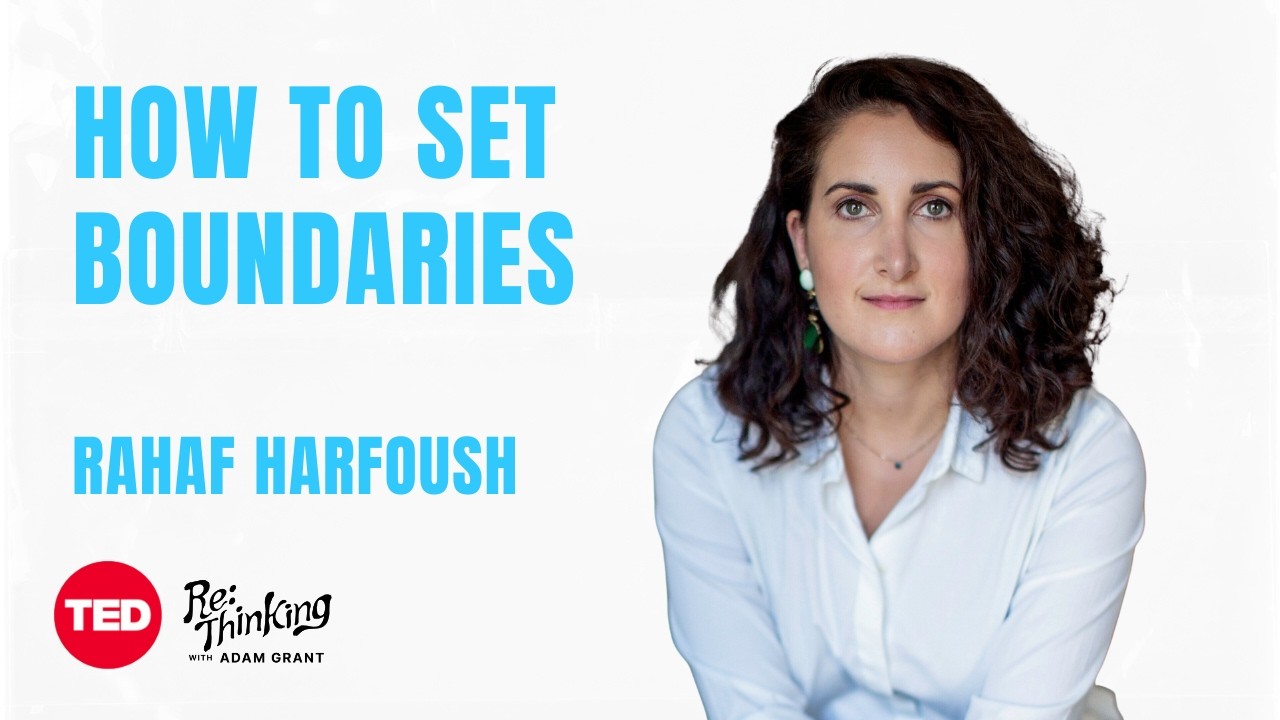
In this TED ReThinking interview, Rahaf Harfoush and host Adam Grant explore the phenomenon of "hypernormalization"—the collective tendency to act as if everything is fine despite deep societal disruptions. Harfoush traces the term to anthropologist Alexei Yurchuk and explains how overlapping macro‑stressors (climate change, rapid tech change, post‑pandemic fatigue) create cognitive dissonance and emotional dysregulation. The conversation moves through psychological parallels such as pluralistic ignorance, the role of grief, and the need for emotional granularity. Harfoush critiques the cultural glorification of productivity, proposing "humane productivity" that aligns work systems with human energy cycles and rejects the identity‑based worth tied to output. She discusses personal growth around people‑pleasing, boundary‑setting, and internal validation, referencing Nedra Tawwab, Internal Family Systems, and research on self‑worth. The dialogue also covers the importance of receiving help, the dynamics of reciprocity versus community, and practical tools for navigating uncomfortable emotions. Finally, Harfoush offers a "digital‑anthropologist" mindset for online engagement—approaching internet interactions with curiosity, non‑judgment, and an awareness of assumptions. Throughout, the interview balances optimism about long‑term progress with acknowledgment of present turbulence, offering concrete practices for emotional regulation, purposeful productivity, and compassionate connection.
Chapters
The problem with hypernormalization is that you pretend that everything's okay, and you pretend, and you pretend, and there's a little crack here, and a little crack here, and you go la la la la la la. There's no cracks. Everything is fine. But that means that if we had just patched up these couple of cracks, the whole wall wouldn't collapse.
You put a word to something that a lot of people are feeling right now—a word that I had never heard before. Hypernormalization. What is that?
So hypernormalization is a concept that was initially created or coined by an anthropologist named Alexei Yurchuk to describe a very specific feeling where you as a regular person are living your life, but something feels weird. Things feel off. It doesn't feel right. And you're sort of looking around and you're just saying like, why does it feel so Strange, and hyper-normalization is that feeling where you understand that the world is changing or that the world is different. But the people around you, the institutions, the people in charge, your elected officials—they seem to just be ignoring this change, and they're insisting to keep going as normal. And so there becomes this weird, almost like emotional mental disconnect where you're like, I know. Things are really weird right now, but why are you acting like everything is fine? And it creates this like cognitive dissonance that makes you feel like you're going crazy.
So fascinating. It seems like there's symptoms of this everywhere. I've never asked so many people, how are you? And gotten back, you know, different versions of, well, you know, all things considered, I'm okay. So what do you, what do you think is going on here?
So I think we are at this intersection where a lot of different macro factors are like colliding at the same time. You've got climate change accelerating, so people are experiencing just flash floods and storms and unpredictability. We have new technology that we're gonna talk about that is also just completely changing the way people work, raising a lot of uncertainty about creative skills or cognitive skills. And we're still sort of grappling with having gone through a pandemic. And so I think we're trying with our very primitive human brains to understand this era of disruption and exponential change. While also grappling with a reality where we are connected to more sources of information than ever before. So, not only are our brains trying to process all of these macro trends that are so abstract, our nervous systems are also trying to figure out how do we cope with, every single day, having a tiny little device that enables you to consume the entirety of joy, rage, fear, Anger, apathy, right into your brain, right into your nervous system, 24 hours a day. So I can understand how it would feel very destabilizing at this exact moment in time, because we are incremental beings that are being asked to navigate exponential times.
Yeah, that makes a lot of sense. And I think you've pinpointed the major factors that are making people feel this way. I think when you talk about how it makes you feel like you're crazy, That reminds me of the psychology of pluralistic ignorance, where the classic Darley and Latané research was about bystander non-intervention in emergency situations. Hmm. And the basic finding was that one of the reasons a lot of people didn't act was they looked around under uncertainty and they were trying to find signals from other people, like, is this a real emergency situation or not? And everybody else was doing the same thing. And so Everybody internally is thinking, oh no, something is, you know, is going wrong. This person needs help. Should I do something? And then they look to other people who are having the exact same thoughts, but nobody is voicing them because they're all looking around. And so everybody feels like, well, I'm the only one who's concerned, and therefore it's probably just me. I'm overreacting. Nothing, you know, nothing's really going on here. It's not clear what the intervention would be for an individual. Given all these macro changes. But at a micro level, is that what's happening, that people are internalizing this feeling but not expressing it, and therefore they think they're alone?
I think the reality is a little bit more complex than that. Like, I almost think it's so big that many people feel frozen just because the complexity of what we're dealing about— what we're dealing with is really abstract, you know? And then we have this, like, cultural idea, which I think is part of the problem, where In the West, we have internalized this idea of hyper-individualism, right? Where we tell people, in a lot of different ways, that they are responsible for their own success, that they are responsible for their own progress. And in some ways, we've taken problems that require a collective response, and we put pressure on ourselves to solve it. Like, sometimes I find myself thinking, before I go to bed, and I'm like, just my brain is racing, and it's like, how am I gonna solve climate change? Climate change, just me alone, completely. And you're like, that is not a logical thought at all. And I think we have this feeling that we have to find the right solution, the perfect solution, all alone, when in reality, the solution's gonna be messy, it's gonna be imperfect, we're gonna need a million solutions by, like, a million imperfect movements that are gonna make a lot of mistakes and disagree and be chaotic. And that's really hard. for people to navigate when we've been trained to look for simplicity and look for really like black and white answers.
That makes sense. I guess I'm curious about the functions and dysfunctions of hypernormalization. As I hear you talk about it, it sounds like one of the dysfunctions is that the people, they feel sort of lost and disconnected and maybe destabilized. and dysregulated. On the flip side, it seems like a major function is that it allows people to function. I'm perfectly content to act like, you know, in the grand scheme of things, things are okay, because otherwise I can't be a good father and husband and I can't do my job and I can't enjoy the world. And I also, of course, want to try to improve the world, but I need to figure out ways that I can add value in doing that. And freaking out does not help with that. So I kind of feel like hypernormalization is beneficial to the individual, but maybe there's a risk that it stops us collectively from fighting for change.
I think it's helpful in the same way that all coping mechanisms are helpful. It's helpful in the short term because it allows you to continue, but coping mechanisms are just like a Band-Aid on like a bullet wound. The problem with hypernormalization is that you pretend that everything's okay and you pretend and you pretend and there's a little crack And a little crack here, and you go la la la la la la. There's no cracks; everything is fine. But that means that if we had just patched up these couple of cracks, the whole wall wouldn't collapse. And that's the most frustrating thing about hypernormalization for me: is that I look at the urgency of you know something is wrong, and I think okay, like there's a lot of ways that we can address it. And it's very frustrating for me to have to empathize or to try to understand the different perspectives of someone that says well, it's working right now. I'm gonna wait until. Until it's completely broken before I'm forced to address this big mess. Part of hypernormalization, at least for me, as I worked through it, was this understanding that I had to shift my mindset psychologically to be able to say to myself, can I actually see clearly the things that need to be fixed, the intensity, the unknown, the unpredictability, and still— Be a good partner, be a good friend, have joy, and not just, like, be so overwhelmed with grief that I also am then frozen. Because, you know, you wanna move forward. And I think that's the interesting conversation, because I've learned that the skills that I need are an emotional expansion, where it's learning that this grief can and must coexist with joy and presence and happiness and— And, you know, all the good things and gratitude.
I love that. So that speaks to the next thing that I was wondering about, which is I don't want to suggest that people who are grappling with hypernormalization are Chicken Littles by any sense. But when, when, you know, when you talk about things breaking, like, well, yeah, if you zoom in on any one thing, it feels like they're breaking. On balance, it seems like people's lives are getting better net. I think about the evidence that most things are getting better for most people around the world. I think about Hannah Ritchie, Not the End of the World. I think about Steven Pinker, Better Angels of Our Nature, with violence dramatically declining. I think about Hans Rosling, Factfulness, right? These, these more macro views that if you look at poverty or hunger or disease, we're like, yeah, we just had a pandemic, but It also could have been so much worse. So how do you reconcile the sentiment of hyper-normalization with this idea that the trend line is actually upward, not downward?
Well, even though the trend line is upwards, we are tiny dots that are living the little up and down of that upward trajectory. And so for me, it's about having, going back to that emotional granularity, going back to the duality, to the complexity of our emotions and saying, I understand that I would, if I had to pick any other time to be alive, I would still choose today. You know, as a woman, as a creative, as a freelancer, the opportunities that we have, the medicine that we have, like I would pick today, no questions asked. However, I can also empathize with myself and say the changes that we're seeing, which are normal, normal cyclical changes. Like there's a lot of models that explain very clearly why this is happening in a way that it's not surprising. It's just sort of the end stages of the cycles of society. But those end stages can still feel very turbulent for the people that are experiencing them on the ground.
That's really well put. I can't, I can't tell you how many times I've had the thought, this would be such an interesting moment to live in if we weren't in it. It would make for great TV or it would make for great history, to your point. It's not necessarily fun to live through flux. I think also it seems that as things are getting better, our expectations and standards have gone up. And I wonder if that's part of what's going on too, is that we're just more acutely aware of the flaws in our institutions and systems than we might have been if we were facing, you know, a pandemic a century ago. Or if we were looking at land wars a couple of centuries ago.
Yeah. I mean, I think about that a lot. I think about the access to the information that we have, and I think about what people had access to before the internet, or I think about the times where it would take people 6 months to receive a letter. And I think about how the internet has sort of captured us in this temporal anomaly where everything is now all the time forever. It's so intense. I think it's very destabilizing. We also have seen what's being called the justification, where I think a lot of people are reading just a little bit about a lot of things. So you have just a little bit of expertise to maybe identify some issues where you feel like, oh, that would be so easy to fix. It's so easy to fix government. It's so easy to fix democracy. And then you miss the nuance of just how hard and complicated people are. I mean, I'm so curious, Adam, like you tell me, Do you feel hyper-normalization or are you just like examining this concept in just an abstract way? Or am I just your Chicken Little on this podcast?
No, no, I think your perspective is really balanced on it. And I find it helpful that, you know, that you're optimistic, but also, you know, concerned and empathetic. I think that's exactly the combination that I want to have. My instinct is always to zoom out more than zoom in. I think that's my orientation as a social scientist, and it's also just my disposition psychologically. And so, you know, sometimes I think people are overreacting, but I think they're overreacting in part because, to your point, the information in front of them is— it's presented in a way that's disconcerting. Hmm. And I've started to wonder if we need to reinvent both traditional and social media So that you could identify one expert on each of the things you want to be informed on, and they could just tell you once a week, here's the stuff that happened that you should pay attention to. I think something like that would be incredibly helpful. It's almost like if you ever watched John Oliver's Last Week Tonight.
Yes, I love him.
If you could have somebody doing that for AI and you could have someone doing that for climate change, you wouldn't need to read the news day to day. Those are blips. So, yeah, I don't know. I guess to answer your question more directly, I think there have been days when I felt hyper-normalization, but I think more often than not, I actually take the historical perspective. I think about other periods in history where people worried a lot about technological shifts, Or about social changes that turned out just to be blips. And so I don't want to over-index on the emotions of the moment.
That is also my instinct, just to always zoom out, spot the pattern, spot the cycle. But I actually think if we're going to move through this moment, we have to zoom in very, very deeply on the individual. Because I think my theory, this is just my speculative theory, is that I think Post-pandemic, we absorbed as a society so much uncertainty, grief, anger, fear, resentment, like, so many emotions, but we never processed them. We never released them. We just sort of pretended like the pandemic was finished and then we moved on. So, you have all of these people. And I think when we spoke ages ago, I told you that my belief is that most of us are just like childhood wounds in a trench coat, like just walking around completely dysregulated, Smarting from something that happened to us when we were 16 or when we were 6, trying to make these rational decisions from very activated bodies. And I think, as a society, we experienced something really scary and really unprecedented, even though I hate that word, and we never dealt with it. So, we just shoved it all down. So, it doesn't really surprise me that we're collectively acting out through the only mechanisms that we have. We're temper tantruming as a society, I feel. Because we were scared and we were sad and we were lost and we were upset. And then we were collectively told, it's all good, world's open again. Those 5 years never happened. And so I feel like if we're gonna move forward, at least in my own experience with how do I deal with this, the hyper-normalization, just the crippling sense of dread, honestly, that sometimes I feel when I just look around, it's to come back and to say, okay, like— Where's that feeling in my body? And am I actually feeling that because I read something in the news, or am I feeling that dread in my body because I feel fear? And that fear comes from not knowing, and that not knowing comes from not feeling safe. And if I calm my body, will I be able to handle these solutions differently? That's where I think the key is, because everyone wants to intellectualize. We wanna zoom out and we want explanations. And my gut feeling tells me that we have to actually feel. feel how scary these turbulent changes have been in order to be able to think clearly, because no one's making rational decisions from a place of emotional dysregulation.
Oh, this is so interesting. First of all, I think the response that you're describing is really constructive and probably more actionable for most people than my default of just saying, well, still the best time in human history to be alive. That doesn't mean it's perfect.
Is that what you write on the cards? Sorry you're feeling bad, but well, still the best time. Still the best time in human history. Feel better soon.
If you ever get a note like that from me, please punch me in the face. But no, I mean, honestly, that works for me, but I realize I'm probably an outlier. So the second thing I like about your response is that it tracks really well with the name it to tame it idea in psychology of of affect labeling, and then trying to make sense of where is this feeling coming from? And do I, you know, do I need to internalize it, or should I, you know, think about actually changing my emotional response? That being said, I'm torn because you described part of hypernormalization earlier as grief, and, or at least leading to grief or stemming from grief. You associated grief with the experience. Mm-hmm. And there's a whole literature in psychology. Wolfgang and Margaret Stroeb are probably the key researchers on how grief work doesn't always work, that sometimes grief does not need to be processed, does not need to be analyzed. For some people, diving deep into the emotion does more harm than good. And closure is a little bit of a myth. You sort of, you know, you experience grief as something that waxes and wanes, And when it happens, you sort of, you look at it, you, you know, recognize you're feeling it, you accept it, and then, you know, you wait till the wave passes over you and you move on with your day or with your life. And that also seems to me to be a healthy response. I'd love to hear your take on the tension between these 2 approaches, because they're very different.
I mean, I don't know if they're different. I think we're kind of saying the same thing. Like, I'm not saying that you have to Spend a lot of time deep diving and unpacking. I just think many of us are, and I'm gonna speak for myself here, I am learning to not intellectualize what I'm feeling and to not make stories about it and to just feel it in my body and just let it move through my body. Then, at least for me, when I started, you know, figuring out how I was going to live joyfully, I was like, I need some tools, because I, this cannot be the answer. Spinning incessantly, or this grieving. And the easiest thing was being told, like, listen, you're gonna have emotions and sensations that come up. You don't need to make an entire story about it. All you need to say is, where am I feeling it in my body? And what do I actually need right now? What is the need that I need? It just might be a blanket, it might be a snack, it might be a glass of water, it might be the fact that I'm hunched over my computer and my brows furrowed, and I just need a bit of a stretch. Thich Nhat Hanh, whose book Zen and the Art of Saving the Planet was probably one of the most life-changing reads for me, he really just says it doesn't have to be so complicated. You just have to take care of yourself. And he has this quote that I absolutely love. He says, everybody wants to change the world, but no one wants to do the dishes. And I think of that all the time because we think changing the world— I gotta come up, I've gotta fix climate change, I gotta world peace, but changing the world might just be that I learn how to hold discomfort in my body so that I can show up as an embodied friend and a partner and a sister. Because when I act from that place of peace, then my nervous system calms your nervous system. And then maybe we have an interaction that isn't just like both of us activating each other. So that I think has been my big learning.
You've given us a very Buddhist perspective. Which is recognize that these things that are changing are upsetting in part because they're taking things that you accepted as permanent and showing you that they're impermanent. But actually recognizing that things are impermanent makes the things that are freaking you out a little bit less stressful too, because like that too will pass. Is that, is that essentially where you're, where you're landing? Yeah.
I love that, because, yes, I've been leaning very Buddhist, I guess, unintentionally. But I also think it's this idea that we tell stories about the things that are happening in our lives, and we assume that we know what the outcomes are gonna be. And oftentimes, we assume that if something bad is happening, that the result of that thing is going to be bad forever, that it's gonna be like a net negative. And I think the thing that I learned the most from experience and from sort of reading about this topic, was that you never know what the outcome is going to be. Something bad can actually lead to something good. Something that you think, at the time, is bad might, in the long run, be something amazing. And I think the internet was talking about the burnt toast theory, which I think about a lot, which is like, if you're making toast in the morning before you go to work and you burn the toast, so you end up being late for work, And a part of you is, like, really angry because you're late for work, but maybe that delay saved you from, like, an accident on the highway or something. The idea that in the moment, you never know if the bad thing is actually bad. And so, I always sort of think about— I think, for me, it's this idea that just because something is uncomfortable and disruptive and painful and hard, it doesn't mean that it is bad. And to remain sort of open to the possibility that It could in the long run very well be good.
This tracks with an article I wrote last fall about how we just don't know the second-order consequences of events. And so whatever seems really unpleasant now, that doesn't mean it's negative. And this is a, this is a growing trend in psychology, actually, to stop calling, to stop using the term negative emotions and instead call them unpleasant emotions. To say, look, the sensation is aversive. You don't like the way it feels, but you need to separate that from the consequences of those emotions. And as you well know, many unpleasant emotions have upsides and benefits. Mm-hmm. Okay. So I think that one of the best things we can do to handle all of the change and instability and turbulence in the world is to figure out what matters to us and then channel our energy into it. And I think that for a lot of people, it means like, I want to use my time well, I want to be productive. So you've been a vocal critic of what you call productivity propaganda, which I think promotes quantity at the expense of quality and workaholism at the expense of health. Tell me more.
There's nothing wrong with the concept of productivity, which is just a metric of performance. But culturally, we've arrived at this place where we're being productive for productivity's sake. We are bragging about back-to-back meetings, we're bragging about late nights, we're bragging about nonstop output, we're optimizing everything, but it's not actually making our lives better, and it's not actually making the work that we're producing better. It's actually harming our mental and physical wellbeing. And so, for me, this idea of Productivity as performative art, it means to me, culturally, that productivity has turned from a measure of performance and it's turned into a cultural measure of deservingness and worthiness and identity. And that's very, very dangerous, because you're essentially telling people your self-worth, your deservingness of good things in life, of your success, of the wins that you have, can all be boiled down to one thing only, and that's how hard you work. When in actuality, Hard work is a very important part of an equation that has multiple variables on it. And I think a more complex story should be told because the problem is, is that we tell people this is the only thing that matters, right? The American dream. If you work hard enough, you'll be successful. The flip side of that is we say, if you're not successful, it must be because you're not working hard enough. So once again, we're taking a collective issue and we're putting it on the shoulders of the individual. And there are people, when you look at the labor statistics, especially in the US, people are working really, really hard. So, what does it mean if you're then telling somebody who's working 3 jobs, 120 hours a week, you're saying, well, the reason you're not successful is because you're not getting up at 3 AM to do whatever bullshit morning routine these other billionaires do, and that's the reason why, not like inherited wealth or access to opportunities, or— A million other things that also contributed to their success. And my last little rant on this— sorry, I'm like getting very worked up about it— but it's like, it would be one thing if the productivity advice worked. Like, sure, it's hard, it's tough, but the end result is worth it. But the end result is not worth it. We have decades of research now that shows that burnout is like terrible for you. And so I just, I get so confused because we're telling people to do something that actively harms Everything that they need to be able to do the work that matters to them and to spend their time in a way that's actually meaningful.
Yes. Yes. I mean, I think you nailed it. I think this is why I find myself wanting to tell people that effort is not a badge of honor, that they should not be worshiping at the altar of hustle. They should think about hard work as a means to an end, that it ought to be a path to meaningful goals. And if you are defining your worth by your work ethic, you are missing out on some of the most important things in life and probably shooting yourself in the foot along the way, which is your point about burnout. So you have an alternative. You call yourself a sane productivity practitioner. What does that mean?
So, okay, I call it humane productivity in the sense that if you're going to build a system, right, because we keep getting sold these productivity systems that you do these 5 steps or these whatever, and this will You're right. If you are going to build a system, let's be smart and let's build a system that reflects the realities of us as living, breathing human beings, right? Because productivity systems were originally borrowed from the Industrial Revolution, which anticipated people working on an assembly line at a machine that had the same capacity and could do the same level of work every single day, all year round. We, as human beings, we have ebbs and flows in energy for the seasons, days of the week, days of the month, whatever it is. Like, our energy, Kind of ebbs and flows. So, wouldn't it make more sense to spend some time, like, understanding your own energetic reality, and then designing a system that allows you to work in alignment with your body, to support your body, to create a compassionate container for your body, instead of this, like, weirdly self-flagellating— if you're not miserable, and if you're not crying, and if you're not sweating all the time, then it's like— You know, you're not working hard enough. So, my whole thing is, yes, let's create, and let's be intentional with our time, and let's be intentional with our energy. But let's also recognize that not everybody can have the same system of productivity. So, instead of you trying to fit yourself into someone else's system, what I propose is that we take some time getting to know ourselves, and then build a system that works for us and our constraints, right? Somebody with kids, is not gonna have the same flexibility as somebody without kids, somebody who's caregiving, somebody who works shift work, somebody who works, who travels a lot. Like, everybody has all these different considerations, and yet we go online and we see this like one-size-fits-all like garbage, and then we make ourselves feel bad because, oh, like, I'm not doing what this person who, you know, does, even though you don't know their circumstances and you don't know like what's happening behind the scenes.
This is especially hard for people who are wired like you and me. I know you've struggled with people pleasing for a long time. I'm on the record as a recovering people pleaser. So what have you done to change this? How have you thought about building your system and then creating and maintaining boundaries around it?
So what's really funny, such a switch into like my deep psychological wound. Thank you for that. But yes, I'm definitely a recovering people pleaser. I learned from our mutual friend, Nedra Taweb, in her book about boundaries, that building boundaries is actually a skill. It's a skill, it's a toolkit, it is something that you have to be taught. And many of us were not taught these key skills. Like, until I read her book, which was, I think, also another one of, like, my top 5 most helpful books to read, I did not even realize, like, that there's a category of boundaries, there's different levels of boundaries, And the thing that really changed my thinking was she has a chapter where she talks about how self-care and setting boundaries for yourself is like the greatest act of love that you can do, because boundaries are telling other people what you are willing to accept. And when you put boundaries for yourself, then you put yourself first in a way that allows you to show up in the most authentic way, in the best, most possible grounded way. And so, that was such a shift for me, because I realized that you could be kind in setting boundaries, that it didn't have to be this aggressive conflict, that it could be done with lovingness, it could be done with gentleness. And I learned that the reason many of us people-please is because we fundamentally are seeking a source of validation, or a source of acceptance, or we wanna be seen. But I read somewhere, and I don't remember who said this, but that all wounds at the root are self-abandonment wounds. So essentially everything that we've been looking for from other people, we are actually looking to give ourselves.
This reminds me of Jenny Crocker's research on contingencies of self-worth, looking at what do people invest their self-esteem in. And it won't surprise you to know that across many studies, people who base their, their sense of of value in life on extrinsic goals like beauty and fame and other people's approval tend to be less happy, more anxious and depressed than those who base their self-worth on more intrinsic goals. Like, am I learning? Am I kind? Am I humble? Am I, am I somebody who is curious? And I think at some level, like, that's the shift you're talking about because you can gauge those things for yourself. You're not dependent on other people's approval then to validate your worth.
Yeah. And that's the link to product— that's a link to productivity, right? Because like, you are worthy just as you are. And the way I always think about this is I think about the people that I love, or you think about the people that you love, and it's like they don't have to perform To earn to have your love. You just love them! You love them whether or not they've written a book, you love them whether or not that book flopped, you love them whether or not they send you an email asking, are you mad at me? 10 times. Like, you just love them regardless! And then, you turn to yourself and you say, well, that's for everyone! That's not for me! I clearly need to perform to earn love and validation! And this is where Richard Schwartz's work on Internal Family Systems can be absolutely, like, Life-altering! Because there's this concept he talks about where it's essentially like reparenting parts of yourself, where you have to go in as the adult you, and you have to say to that little part of you that's scared that someone's mad, and say, you're not in trouble! You didn't do anything wrong! And you're safe, and I'm here! And that work, I think if more people did that type of work, I actually think it would have such a big ripple effect on— The grace that people gave themselves and each other.
This reminds me of something else that we've talked about that I wanted to, uh, to surface here. Uh-oh. Which is, you, you know, well, I think at this point it has always bothered me when people respond to kindness or generosity by saying, I owe you. And yes, I remember, I remember, uh, an exchange we had before we ever even met in person. Right. Where I did something very small that was like a no-brainer, tiny act of kindness, and you responded with, I owe you. Why?
Whoa. You know, it was very small to you, but it was very meaningful to me.
I think you were looking for a very specific kind of expert, and I sent an email and that was all I did.
It had a big impact to me, but I owe you one, I realized, indicates that there's like a ledger system of something, and that wasn't at all. It was sort of like, I wanted you to know that I appreciated it so much. And you'll be pleased to note that I have never said I'll owe you one ever again. And then you said something to me that also really stuck with me, which is you have to give people the opportunity to help you and you have to Be able to receive, that if you're not able to receive, then you're actually robbing the people that you care about of a chance for them to show that they care about you. And that, I thought, was such a big shift, because we're always taught to give, give, give, and that we don't wanna take anything. And that's part gender, that's part culture, that's part upbringing. So, it's actually very hard for many people to receive. So, it really helped me reexamine my own attitude around like receiving.
It's so interesting because, I mean, for me it was literally the smallest thing. You don't owe me reciprocity, let alone now I'm gonna one-up your good deed. It's just gratitude, which you had done so beautifully.
No, it's not reciprocity. It's community. It's, you know, this idea that as a collective that I recognize that you, even if it was significant to you, that I received care from your gesture. And I want you to know that you are also entitled to receive care.
Okay, so this is a helpful rethinking moment because, yeah, I interpreted it very much as kind of an instinctive matcher response of like, okay, you do— you did something for me. Now I, you know, I'm obligated to do something for you. And the way you're narrating it now, what I'm seeing is you're saying, oh, Like, you gave, and I want to show that this is a relationship I'm willing to give to too.
Yes. Yes, that's exactly right. Beautiful.
I love that.
But you know what I love? And I think this is something I learned from you, and you've done this several times in our friendship, is you always just like ask. You ask for clarity. What did you mean by that? What did you mean by that comment? What did you mean when you said that? And I think that's so important because before I'm going to assume that I'm in trouble and you hate me, What is the actual thing that you meant to say? And to give them a chance to explain, like, just that small thing has actually also been like a really, really helpful benefit, very much value-adding to my life.
For me too. And for a long time I was afraid to do it, but I remember learning about walking down the ladder of inference and, you know, thinking about— this is something I teach every year when I teach conflict now— how often Like people observe somebody's behavior and then just arrive at a conclusion about it or, you know, overthink and ruminate about all of, you know, like all of the terrible things that motivated that behavior, as opposed to saying, I don't actually know what their motivation was and my interpretation might completely miss the mark. And the best way for me to gain clarity is actually to say, hey, I was really surprised by that, or I was really puzzled or confused. Can, can you elaborate? And that conversation might be a little bit awkward in the moment, but it's much better than the agony of, like, of, of, you know, of misinterpreting what they meant or the relationship damage in the long run to, you know, to arriving at the worst conclusion.
Yeah. I think the second you make that assumption, that first assumption, every other thing that that person does gets filtered through that distorted assumption. And then that All for nothing! You know, that goes back to, like, the discomfort, the unpleasant feeling. It's like sometimes everything that you want is just on the other side of that unpleasant feeling, the embarrassment, the awkwardness, the cringe of asking for clarity. The first couple of times, it feels selfish, almost, to actually, you know, say it. But when you say your needs and then your needs are met, and when you ask for people to clarify their needs and then their needs are met, I mean, that's That's where true connection comes from. And if the world is ending, then what is the point other than connection, right? Then it's like, what else are we going to do in the time we have left in general than be with the people that we love and be seen and see other people?
Well put. Okay. It's time for a lightning round before we wrap.
Okay. Lightning round.
Who are your dream dinner party guests?
I think Thich Nhat Hanh. I'd really love to have dinner with him.
Great. What's something you've rethought lately?
Okay. I used to believe, ugh, I have to move my body and go on a walk for my stupid mental health and do all of these things to like take care of myself so that I age well versus, oh, moving my body is such a privilege. Moving my body is such a joy. Moving my body is something that I'm so lucky to be able to do instead of just movement for the sake of movement.
What's the worst advice you see given on productivity?
You have as many hours in the day as Beyoncé. That probably would be the worst one.
What's your favorite sane productivity tool or tip?
My favorite productivity tip is to spend a couple of weeks mapping your own energetic cycle and getting to know your own creativity and then building a system around it because everyone's little creative machine is a little creative bird is different.
What's the question you have for me?
I want to know, has there been a piece of research lately that is just like tickled your brain in the best way that you just keep kind of thinking about?
Yeah, there have, there have been so many. I usually post those. So I was going to say like this, this is how I want to use social media moving forward in part is I just read this study and I think it's so cool. I have to tell you about it. You know, actually, I'll tell you one that I really loved. And I was surprised to love this one. The methods were rigorous. I read multiple papers showing that exposure to nature doesn't just make us happier, it makes us kinder too.
Ooh.
That going in a forest or, you know, sitting by a lake or an ocean actually creates not just a sense of tranquility, but also a sense of self-transcendence. Being, I guess, being in a— like, it's actually even looking at a picture of nature that evokes awe is enough to get you to think beyond yourself. and do more for other people. And I thought that was cool because it was shown in multiple randomized controlled experiments.
Oh, wow.
Okay, Rahaf, last question for you. One of the things I love most about your work is I think there's a tremendous amount of overlap in our values, but you always look at problems from different perspectives. And I think a lot of that has to do with your training as a digital anthropologist. Can you close with a piece of advice for how we can all think more like digital anthropologists in our own lives?
Yeah. I always think about it like I'm on a digital safari and I'm just going to go into a part of the internet and I'm going to be around people that I might completely disagree with, not understand, not have any idea about. And the key is to go in with a really open mind and to have no judgment and just to listen and learn and be curious. And so every time I go online, every time someone says something mean, every time I feel you know, activated by something that somebody said, I always just stop and I think, you know, this is a person. What assumptions am I making about them? And, you know, I think that's just been like a really good approach.
I think we could use more of that in the world, and we need more of your voice in the world.
Thank you so much for having me.


