AI in Sales - Helping or Hurting SDRs?- Jill Bruno
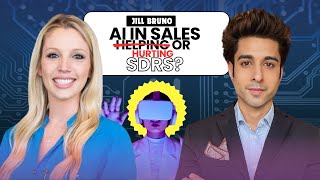
This is a YouTube video titled "AI in Sales - Helping or Hurting SDRs?- Jill Bruno" featuring a podcast-style interview recorded in February 2025. Rahul Wadhwa hosts Jill Bruno, a seasoned sales development leader, discussing topics such as sales onboarding, leadership, mentorship, and the impact of AI on sales development representatives (SDRs). The conversation covers practical advice for SDR onboarding, challenges with AI-driven sales automation, and leadership strategies to support sales teams effectively.
AI drives me crazy and I love it. What can you expedite so that way somebody can take more dials, send better emails? I am all for AI. You have your messaging and it was such a failure that I remember speaking with this company, like, disconnect my LinkedIn. Disconnect my email. Like, why are you still sending this? Because.
So welcome to today's episode of AI in Sales podcast. I'm thrilled to have a very special guest with us, Jill Bruno. A veteran in sales development with over 10 years of experience, Jill has been an individual contributor, a leader, a true advocate for sdr, especially when it comes to to supporting women in tech sales. Jill's journey from washing cars and business suites at Enterprise Rent a Car to becoming a recognized leader in sales development is nothing short of inspiring. She's been named among top 100 women in sales and has led multiple teams to success, all while championing the world of mentorship and authentic leadership. In today's episode, I plan to dive into some of the Jill's top strategies for onboarding sdr, discuss how to build resilience by performing sales team, and explore of her unique strategies on leadership in both startups and large enterprises. Without further ado, thank you so much, Nigel, once again for coming here.
Of course. Thank you so much for a warm welcome. I'm going to have to listen to that recording every morning to pump me up, so I appreciate the kind words there.
I looked at your early career and that really resonated with some of the things which I have done and other leaders which I've talked to in the past. So you mentioned Jill earlier, how working at Enterprise Rent a Car was a defining experience for you, which helped you realize your potential. Do you think there are other skills or lessons from those early days that influence how you lead today?
Yeah, I don't think people realize how hard that job actually is when you're, what is it? A management trainee renting cars? Because you have to picture somebody maybe just got in an accident. Hopefully everyone is okay, safe, nobody got hurt, but they're frustrated because their car is pretty banged up. They probably have a crazy deductible to pay and now they need to fight with insurance to try to get a rental car. So now they come into you, their day is already ruined. Our job is to upsell them. You know, get this service, get that. We have to discuss protection, that if you crash this car, we're going to go through your insurance process. And people can be really tough. So that really helped shape some of the backbone that you need, especially in the world of cold calling where sometimes you're a punching bag and it's just, you have to remember you're not doing anything wrong, but that person's probably having a really, really bad day and they're taking it out on you. So I would say that's what comes to mind first because I had some pretty bad days there, but I learned.
No, I can, I can imagine that because I come from hospitality background myself. So I've seen some of that confront. I spent some about two years, my initial career doing that. So I can, I can totally relate to what you're saying. Now my follow up question to you, that would be do you think you were trained back then by somebody to deal with all these scenarios or do you think you just had it in you where you picked it up yourself?
So I will say they do have a robust training program where they send you to the, your local headquarters and they'll throw you in a hotel and you do have a couple days of training. This was a while ago, but as I reflect I feel like a lot of it was checking tire pressure and stuff about vehicles. But I don't know that I was prepared for how to tough some of those days would be. So again, it was a while ago, but if it doesn't come to mind then clearly it didn't stick if it happened. Right. So I guess the answer is no.
Right. So you're saying just two days, no training to deal with something where you had to confront somebody. And while I understand, you know, while, while I can imagine, you know, what it would be like when you were probably too young and again, I'm not taking a dig on that in any way. So sorry about that. What I mean to say is, you know, I'm pretty sure when you were a management trainee, you were pretty, pretty young at that time and you probably would not have that kind of experience as you have today. So if you were to confront obviously today you would actually be in a better position. You have been in sales for so long, so you have learned a lot. But back then, two days of training, do you think that was enough for you to really deal with those scenarios? And if you were to think about this today, what would you do differently?
Yeah, I don't think it's enough because I don't care if you're on the job one day or 10 years in the same job. I believe that training, coaching, it's ongoing whether you're again first day or a seasoned CEO. So I don't think it's ever enough. But I would say I probably learned the most when I was on the floor and I worked with my manager and the assistant manager so they could really coach me through things in real time. But that also can be difficult when you do have somebody who's frustrated and it's not a cold call. You can click mute. They're in the office. So you do have to be mindful of how you discuss the scenario and wait for other customers to leave to really break things down. But, yeah, I mean, you have to always train. You have to always coach, because things change, you know, and scenarios, sometimes you just can't prepare for them until they happen totally.
While listening to some of your podcasts, you mentioned you had terrible and amazing leaders, which led you. To. Which, you know, which led you to want to do things differently. Would you maybe share a specific story about an experience that made you say, hey, you know what? I can do this better, and how that directly shaped your approach to the way you're supporting your team today? By the way, if I wanted to ask you, I wanted to mention that I know you work with Tito. When I first became an SDR manager, I remember writing to him on LinkedIn and I said, you know what? At that time, I did not have anybody who could train me. And I said, I was traveling to the United States after a long time, after being in sales for a while, and I said, I want to attend few events. What kind of events can you manage, you know, to recommend? And he was really shocked even at that time. And he was like, what's your objective? And I'm like, I just want to learn. I mean, I never thought about training as an object because I realized that training was a problem. But, yeah, I would want to probably hear some of the stories, you know, about, you know, working with Tito. How is that?
Like, yeah, so I can answer both of those questions. And to start with the first one, two. Yeah, no two stories come to mind where I had not the best experiences with managers, which led me to dig and find my inspiration for doing it better. And one example that comes to mind was I had a manager that thought motivating through fear was gonna work. And they used to tell me to play in the middle of traffic, insinuating that I could get hit by a car and it would be funny, but that should motivate me to work harder. It was insane, and I can't even make it up. And then there was another manager I had. I'll never forget that. They didn't understand what I did. I was the only at the time, international sdr. So my hours were different, my talk track qualification, everything was different from the US Team. And there were certain countries that we couldn't book meetings for. And I remember we did like an SDR bingo card. And he put so many countries on there, like, book a meeting here, book a meeting there. I was like, how do you not even know? I don't book meetings in this country. So when I said like, hey, can we switch up my bingo card? He said, no, figure it out. And it sounds so silly as you know, I reflect and say it now, but I was like, that's my manager. Like, you don't even understand what I do. So that's helped me to again, know the job, understand what my reps do, because how can I help somebody get better? How can I motivate somebody if I don't know what the hell they're doing all day? So I don't know. Those are the two stories that come to mind. But back to your comments with Tito. Yeah, I mean, he knows his stuff and I really value that in a leader because before joining Alti sales with him, so many people don't actually understand outbound. They don't understand what it takes to. To do the job effectively. And that's when you can get gaslighted. Your goals are not realistic. Expectations are not realistic. Where now I am privileged of, I know, like, he supports me. He will call out things that are going well, he'll call things out that aren't going so well. So I really look up to that because it's been a huge missing piece in my career that I finally have been able to fill.
That's awesome. Yeah. Great to hear that story. And yeah, I mean, I probably don't have any bad stories to share. I've always been lucky, always been privileged to work with the best bosses, so. But yeah, always. You know, I think when I hear a story like that, I think that privilege just comes on top and, you know, you realize that you're blessed. You do. You did mention how intentional onboarding is, you know, crucial to creating that first positive experience for new SDRs. I wanted to probably talk more about this. You know, do you have any particular rituals, practices that you use to help build that early connection and excitement with the team? Because a lot of my audience, I speak with a lot of early stage founders who are hiding their first SDRs or probably setting up their team. And this is the kind of question which comes up often and abailay might have my own way. I Would love to know, definitely know yours.
So I have gone through onboarding where it's 100% on me, where I have a team or an enablement, you know, team to help me through it. And some of the best advice I would get is if somebody wants to help, say yes. So if somebody wants to help, organize your calendar, make sure that everything is scheduled. Don't be a hero and try to take it all on yourself. But likewise, if it is going to be on yourself, make sure that you're prepared. So make sure that you are living the expectations that you set on the interview. There is nothing worse than if, say, somebody had multiple offers, they picked you, they wanted to work with you, and then if they start onboarding and it's a really crappy experience from day one, they could be second guessing did they make the right decision. They might have that nerve, that guilt of, shoot, I should have accepted the other offer. You don't want to have any of those expectations from day one. So be the person that you were on the interview. So again, when you're interviewing, be real, don't fake it. Be exactly who you are going to be with any other team member. But what I've also found is have an onboarding buddy. They're going to spend a lot of time with you, but get one of your top performers or maybe somebody who's been there for a while. Have them show the ropes, you know, connect them for one off conversations so that way you're not always in the room. Let them ask questions and get a really true perspective and that's going to make them feel much more welcome into the organization. So that way they're starting to bond with the team as well. Another thing that I've done to lead to success in onboarding is think about the chronological order in which you want to go through everything. What I mean by that is on day one, don't show them how to book an opportunity in Salesforce. You know, talk about your icp, your Persona, who are you speaking with, how do you speak to them? All that comes before it. So think about when an sdr, whatever role you're training, think about what they're going to do in the order in which they're going to do it and then follow that path. And also I would say, understand how they learn. You can't treat every onboarding experience the same. I'm actually onboarding or, well, ramping now, three reps and you know, I've been very intentional to know I have to speak to this person one way. But I can speak to this person the other way just based on how they learn. So if you're not asking and getting to know your reps on that deeper level, you could be a complete swing and miss just because, you know, maybe some like to read resources and it clicks or maybe some people like to talk about it and have a conversation. So you know, don't fail too early by like I said, just thinking everybody fits that same mold.
Wow. I think I have at least three or four questions follow up questions on that. I think I like the fact when you said when somebody joins and you're not taking care of the onboarding the way it's supposed to be, they are definitely second guessing and you definitely don't want that because one SDR have always been known to be somebody who has a very short tenure and they would not take a lot of time in my experience to switch to another job if they realize, you know, this is not their company. And sometimes, you know, I've seen that SDR do not Even update their LinkedIn for the same reason because they want to make sure in that one month that's the company they want to work with. And unless you know, the SDRs are pretty excited, they're pretty sure they would do that otherwise. I've seen that. So that's a brilliant point. I wanted to ask you a follow up question on that which is how would that differ? So you mentioned about having a buddy for example and I have a lot of early stage founders who come to me. Rahul, I'm hiring a first time sdr. How do they take care of the onboarding when in some cases they have never done the SDR job but they do need the SDR because they have definitely closed a few customers, they have identified their product market fit. How would they go about doing the whole onboarding?
So there's a couple of things that you can do and again it's going to be dependent upon the organization. But of course if there's somebody in seat match them up. If you're an SDR that's just doing prospecting match let their onboarding buddy be the account executive or maybe an account manager, a csm, anybody within that department where they might not be teaching you to cold call or teaching you every single day tactics, but they can still talk to you about customers, what they're hearing, their success stories, their stories where they lost a customer. So I think that's okay because it's also just important for bonding or maybe if it's going to be over, you're like another leader maybe it could be somebody if you're sitting in sales, somebody in the marketing side too. So I would say don't overthink it, but just put who, whoever is going to have the most like minded connection together. And also you can find mentors outside of your organization. Granted, it's not going to be the internal conversations that would happen if it was somebody on the team. But there's so many resources out there. There's slack groups, you know, some like Pavilion revgenius post on LinkedIn. I really believe that from day one you need to start finding your tribe because you should always have mentors. You should have a mentor for a reason, a season and a lifetime. And it takes time to find those individuals. But there's so many STRs out there who I know would love to help somebody through, you know, just the roller coaster it is of the role.
So you, can you repeat that mentor statement one more time?
I'm sorry, I don't even know what I said.
You said. Yeah, I was saying.
Okay, yeah. Oh no. Yeah. I believe wholeheartedly that you need a mentor for a reason, a season or a lifetime. So that way you have different perspectives for folks to give you advice. And you know, sometimes you need advice, sometimes you need comfort. But I was ending that statement by there's so many SDRs out there. I'm sure they would love to help out and mentor. So even if you're just learning skills for the role, it's okay if it's not going to be as particular to your product services and your industry because you can still get that knowledge. Because it really takes a tribe.
No, that's beautiful. I would definitely remember that. That could be, that could be a coach, you know, that could be like a highlight of this podcast for sure. How would you suggest, you know, as the artist would go about, let's say finding these, you know, mentors. You did mention some joining some communities, Pavel and Web Genius and whatnot. I might have a mixed opinion about joining the community because sometimes as a first time SDR or if you're an SDR, it might feel like overwhelming 17, 18,000 member and communities like Pavilion could be, you know, could be a great place to learn because you have all the, all the executives there so you can see how they're talking and what kind of problems are they dealing with. But from a mentorship point of view, are there any specific communities or any specific ways would you suggest SDRs go to find these mentors?
So a couple of things come to mind and it really, it's about, you know, start today building your LinkedIn, because if you find communities like you mentioned, I'm very big in women in sales, so I try to join as many communities that I can. And I'll also look for like demand based. They often post like top hundred SDR leaders, top 100 sales leaders, male, female, whatever it is. When I was early on, I would go through every single person and I would start connecting with these people because they're making an impact in the sales community in general. And then once you start seeing more things in the feedback, that's where maybe it's going to be a free mentor program. I can't think of it now, but I joined one once where it was just a day workshop for women in sales who are looking for mentorship and it was just networking. But I know had I not started to connect with some of the influencers or again, people on these lists or these communities, I never would have seen that. So I would say keep your eyes peeled. I don't have anything to rattle off that comes to mind for this second, but, you know, keep your eyes peeled on where other people like you are hanging out. And again, if you're an SDR in sales, like you're going to be on LinkedIn, absolutely.
It goes without saying, I think I've been shouting at the top of my voice to each and every SDR I've hired and mentored that, hey, get on LinkedIn, you know, start posting or at least start commenting, you know, if you can't comment. But yeah, I hear all these stories all the time and I wanted to hear your view on it, basically. So I've heard mixed reviews. So that's the reason I'm bringing this up, where some SDRs have come to me from different countries and they're like, hey, my company scrutinizes everything I do on LinkedIn. So I'm not really comfortable, you know, posting about it. However, I am on LinkedIn most of the time. Do you hear that a lot from other leaders, you know, scrutinizing our SDRs who are getting this feedback?
I've definitely heard that conversation topic float around and I feel really lucky that I've never been in that situation because freedom of speech, that's a thing. So I do think it's crazy for an organization to try to control a public forum for what somebody is saying. But I also mean, you know, as long as you're being respectful, professional, you're not being disrespectful in a way that could Poorly reflect on the organization. But I say speak your mind. And it's funny that you bring this question up because it took me some time to feel that way. I used to be so nervous to post. Am I going to get judged? What if there's a typo? Like, you overthink anything and once you actually stop caring and you just have fun with it, it's such a game changer. So, again, I don't know that I have advice if somebody wants to control your content, but at the same point, that could be a red flag. Freedom of speech, be a good human. And there should be no reason that there's any pushback on what you're saying. That's my philosophy.
No, I think that is the right philosophy for sure. You mentioned so much about onboarding and you know, I have to bring this because I mentioned earlier we would talk more about AI and we have to. We cannot ignore the elephant in the room. Right? Everything we see around today is floating around AI, AI this and AI that. So I wanted to ask, what are you. How are you feeling about this whole AI in sales? If there are any strategies or if there are any particular pieces of the puzzle which we're trying to solve using AI, I'd love to learn more about that.
So AI drives me crazy and I love it. AI gets thrown around so much these days that you have to understand what it truly means, because I think AI is going to be a game changer, helping humans be more efficient and effective at their job. In terms of research, what can you expedite so that way somebody can make more dials, send better emails? I am all for AI. However, I am not a fan of these spray and pray bots. I can't tell you how often I get it into my LinkedIn inbox or my email inbox if it's going to land in there. It's just junk and it's spam. And I would say I get frustrated because it's. I'm not an ICP fit. Like, I said this the other day on a podcast, like, no, I don't want to buy office furniture. Why are you sending me a generic message about that? I'm not a founder, I'm not a CEO. There's so many things that I'm like, you are just such a swing and miss. And it's frustrating because they're not doing research. And I feel like you're cutting corners. You're spraying, praying. Then what's crazy is how many of my competitors do it. Like, I am your competitor. You look really silly that you're trying to solicit me as a prospect or services that I do. It turns me off and I know you don't care. So that's what frustrates me is let it help humans, but don't replace it because again, you look pretty silly when it is a huge fail. And I see it every single week, probably at least three times a week. So that's how I see it.
You mentioned AI drives you crazy and you love it. Are there any specific tools? And if you don't want to name the tools, that's totally fine. Are there any specific, let's say pieces of the puzzle like I asked earlier, where you're using AI for sure. Where you're like, you know what, I can't live without AI anymore. Pieces like that?
Yeah. Again, I think that AI is good when it can help do certain research for an organization. If it can help you find high propensity accounts based on things that would just take a human too long to ever find out on their own. But again, how can you be better and have what you need to have a productive conversation in front of you quicker? So that is the AI that I like. And again, I just am not a fan of the spray and pray uploads because we also know it like I know when it's a generic AI message. I called somebody out the other day and I said this is the third message I got from your company that is exactly the same. Are you using AI? And he's like, yeah, yeah I am. So I'm turned off by that. Like three. You don't realize that three people from your company are prospecting me. Your AI isn't smart enough to recognize that. So that's where I think it's going to be. A little bit of an oops and not a positive.
I want to make sure I followed you. Did you say that SDRS are bad and actually we can talk about that. That's one of my favorite question I'm asking everybody. What do you think about isdrs? I know you already briefly touched upon that.
I don't think we're there yet. I think that again, replacing a human is not going to be great and I will not name drop. But I was at a company where we tested it out. We were curious. It was, you know, maybe, I don't know, maybe two years. I don't even know however, but it was that hot topic and we were like, oh great, you punch an ICP in, you have your messaging and it was such a failure. That I remember speaking with this company, like, disconnect my LinkedIn, disconnect my email. Like, why are you still sending this? Because I felt that it was representing me in a way that's not me. And I just, I felt embarrassed. I genuinely felt embarrassed by this automation in the spray and pray, which again, like my leadership was like, let's test it. And I was like, never again. Again. Like, I just don't think we're at a place where it's gonna be human. And not to completely segue it, but I saw something the other day where candidates are interviewing with AI bots for a job. Yeah, you want an AI bot? Me, when you're not a human? Like, I would be so, like, can you imagine getting rejected by a bot? I would be so mad about that. I'd be like, let me talk to a person. So I just, I don't think we're there to replace any humans.
I'm not sure if you saw recently there was a heated, you know, thing going on in the Internet. AI bot is actually speaking to another AI bot, you know, so the interviewer is also, for example, imagine, imagine that scenario, okay, that's going around, that's doing the circles all over the Internet right now. So there's no human anywhere. The last thing I want to talk.
About again, make me better, but don't replace me.
The last thing I want to talk about is your favorite exercise. Starting, Stop, continue. First of all, I would love to know more about it. What is it? I mean, I know, I'm sure audience would love to know what that is and then I have some follow up questions.
Yes, I love it. So a. Start, stop, continue. Exercise is something that you can utilize in different phases of working with your team. I think it's really good when you first join a team and then even if you do it maybe quarterly, just for your pulse checks. So it's a really open, honest, vulnerable conversation that you can have with your team. So it's hint, make sure you're a good leader, where your team's going to be comfortable to, you know, speak candidly with you. But it is, what are things you want to start doing? So what is the wish list? You know, not saying everything is going to occur, but in a perfect world, what can you start doing today or that you can be supported in by the organization to get better at your job? Likewise, what do you want to stop doing? So what is something that it's just not effective, it's wasting your time, it's wasting company money. What can we stop doing and then also what are things that we should always continue to do? What is the most important aspect that you would never ever want to change? So again it's start, stop, continue and it's going to change. It's not going to, it's going to be a dynamic list. So that's why again, I think it's good as a leader to get a pulse of okay, how does the team feel? And then if you do it quarterly, you know, is the list the same? Is it changing? What's changing, why is it changing? But again, it's just to make sure that if you want to lead a team effectively, you're making sure that their voices are heard. You know, this is their decision, this is their feedback and you're going to try to enable them as best you can to make sure that, you know, you're making their life a little bit better every day. What a leader should do.
That's amazing story and I do have a follow up question on that and I promise it's the last question. During these exercises, has there been moments where your team shared something that changed the way you approach leadership?
I would say yes. And I kind of just hit on it where make sure that their voices are heard. Nobody wants to, you know, feel like they don't have a say in the evolution of a team that, you know, nobody cares about their opinion and you know, a big piece of this is something I've been posting about a lot where I don't think STR is for any sales rep should be in a data provider sourcing their own prospecting data. And this was a thing that was always on the stop section where IRAPs would spend hours per day trying to find the right people. You know, bad phone numbers, email bounces. Now they're frustrated, they're not motivated to pick up the phone and cold call. They just got a rejection. And you know, I wish I did something about it earlier at the time, but hear them like if this is a huge frustration and instead of maybe hiring an extra sdr, maybe hire a prospecting or a data analyst, whoever it is, that's going to make their day much better. And guess what, now they're going to book more meetings because is they don't have to do hours of research every day. So I just again as a leader like I, I hear you but it's also, I've been in sdr, I understand what it's like to be in the trenches, to live that life every single day. So that also gives a perspective of like oh, if you're saying it, like, I would probably be frustrated, too, or, like, I'd want to start that, too, or, you know, I'd want to stop that, too, because I get it.
That's. I mean, that's amazing. Jill, I think this has been definitely a breeze to host you, and definitely. I think I learned a lot, and I learned a lot by listening to you over the podcast. And I could totally see. I really want. When I was listening to the podcast, I like going in my head, you know, there are questions I want to ask you. And thank you so much for answering all of them, truthfully and honestly. I really, really appreciate that.
Thanks for having me.
Yeah, absolutely. It was a pleasure hosting you.
Thanks so much. Bye.
Bye. Bye.
More from Rahul

The SDR Role Is NOT a Stepping Stone | James Buckley on Cold Calling, AI & Career Growth




Trupeer Hired an Enterprise SDR in 1 Day. He Booked His First Meeting in Week 1



