Epsiode 1- Where it all started | Episode 01||
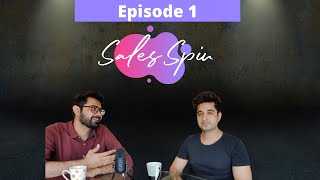
Kaushal Dayani and Rahul Wadhwa talk about working as a Sales Development Representative in SaaS, covering how the role has changed, what makes it hard, and why people stay or leave. They discuss automation's impact on the job and how you think about the work matters.
Hey guys. Hi. This is Kaushal Dayani.
I'm Rahul.
And we are making this video as a first attempt to talk about sales. The reason why both of us are making this video is because we are at completely different junctures in our lives. And I, I am kind of in a position where I've just started out in sales and Rahul here is an SDR director. Welcome, Rahul.
Thank you so much. It's my first time, so bear with me. I wouldn't say that, you know, we are probably in a different position or different junctions. I think you, from what I know you have done before and you come from a pretty big brand. Speaking of brands, I think that's what we're going to discuss today and it's going to be interesting topic. So I started my journey in sdr role like five years ago when I was 29. So yeah, I'm disclosing my 34 now. And what I want to understand is since I did the SDR role about three, four years ago, I think it's been a while. Even though I manage a lot of SDRs, what I want to understand is have a candid chat with somebody who does not work with me so that he can probably give me like a real perspective how things work right now with other companies and how does it feel to be an SDR right now in India. So yeah. You recently moved from a big brand to experience.
I can.
From.
From what you said in the beginning.
Right.
That you're just, you're getting into it and I want. You want to know as a person who is already there for five years in this industry. Right. So first thing I would like to say is I hope my manager doesn't watch this because if I'm talking about what's happening at my level that kind of gets into that scrutiny as well. So I kind of like the way you said it. I'll take care of that. And.
Okay.
But seriously, it's been great. Yes. I have worked in a role before where I was closing leads and I've just like it's been two months. I've got into this industry, the SaaS industry. And to be honest, I was reading a lot about it before coming to this industry. Right. I. And this, this is a true story. What happened recently when I joined this company, I realized I'm 28 years old. By the way, when I joined this company I realized that what I was doing in my previous organization is entirely automated here.
Okay. Like what?
So as you know, when I was closing the Deals. When I was closing the, the proposals, what we used to do was we used to speak to clients before we used to send out proposals. We used to draft the proposals ourselves. We used to manually send the proposals to the customers and then we had to manually follow up for the payments, right?
Oh yeah, I can imagine that.
I mean, so I'm adding this word manual now after getting into SaaS, for me it was something that's. Oh, there's nothing called manual automatic. This is just what humans do, right? They interact with customers, they get them proposals done, they close the deals. Even for renewals, we had to call up the customer and say, hey, can you pay up because your dues are next or your renewal is due next month. Now when I've come to SaaS, I've come to realize that there's so many tools, there are so many softwares. Name some of the CRMs like Salesforce and HubSpot. Then there are accounting tools like Xero QuickBooks. You know, I have studied this in MBA and we just had one chapter that described, oh, this new thing called HubSpot coming up. So you should know about it. But then when you go to work, you won't be using it. So now I.
Sorry, I.
Think and talk more about.
That because that's a sensitive topic. I know some of the people who are probably watching, they know my views about MBA and we'll talk about that topic someday. Yeah, I think that that's pretty interesting, that kind of transition you made. So what I'm curious about is it's. You've been in the role for about four, three months. What, how do you feel about the role? What do you think are the biggest challenges? And if I may ask a very kind question, what do you talk to other SDRs right now?
I'll answer the first question, then I'll come to the second part. Transition, smoothly. Transition. But I'll keep it subtle. Now when I. What I feel about being an sdr, I. It's a big change for me, to be honest in terms that what I was studying earlier and before my MBA also I was working, I was working with the brand and what I was doing there and then eventually went on to do my mba. And then after that also in the corporate, what I was doing is very different in terms of the productive hours that we have in sas. I'll give you an example for that. When I was, when I was at India Mart.
Okay.
It's not previous organization. I can talk about it. I'll be honest. We did have a lot of buffer. We did have a lot of window. And even in other organizations, when you go and work in other organizations they have this limit. You just do two meetings a day, you just do four meetings a day and you are done. You can go home. That was the kind of field sales I was in the Indian market. Sales is mainly field sales. You go and you talk to customers. That meeting gets counted. Even if that is getting your returns or not, it gets counted and you have done two meetings, go home. I remember I have walked into an office at 9:30amI had a meeting at 10am and the meeting at 11am 12pm.
I was, I was home.
So I'm kind of used to that lazy kind of lifestyle where you know, okay, if I'm, if I'm just doing my two meetings I, I'm sure I can probably follow up later, build my pipeline, get the, get the collections.
I'm done.
I'm done. Now what I realize now as an SDR is one, obviously you can do so much more after 12pm till the evening. And second, what I was doing in those two hours is what a fresh sales or a CRM like Salesforce can do. I don't have to like really go for a meeting just to hand over a proposal or just to give a presentation.
Yeah, I think most of the companies, especially your current company, most of the startups right now are becoming result oriented versus activity oriented. And while I understand that's predominantly the culture in a lot of companies, in fact I remember when you said, you know, logging into meetings or in the CRM or probably telling your boss, hey, you're done for meeting for the day. I think that's probably how my dad used to work. I'm not saying he was a lazy worker, I'm saying he would probably, he probably had used to have the same job environment because he was working with the Indian company and it was a mechanical company, it was a automobile company. But the point is I think he would also count hours as you know, productivity. So he would be like, you know what? I had done eight hours a day so I had to go home. Whether something was achieved or not, it would not bother because he knew that paycheck at the end of this month was anyways coming whether he works or not.
I can relate so much to that because now when I compare that to what we are doing, of course the hours are there. But one thing that I've realized is you don't get to know when the hours pass by. I'm not sure about you but or other SCRs. But that's certainly happening with me because I sit down with my follow up mails or whatever my plan for the day is and next thing I see it's 9pm, it's 10pm so that's something that has really got me going. And obviously I'm not saying that I'm not promoting that kind of work culture where you're just burning out, but at least get up for tea.
Yeah, of course.
Get up for snacks. And that's what I have realized that the work here, I'm not saying it's so hectic. I'm just saying it's so interesting to see so many tools and features working in integration with each other that every day is probably. This is two months for me. That's why I'm saying this. But every day it's such a great pattern of all the systems working together and you as a human seeing that. Okay, I heard about something called artificial intelligence, machine learning. I don't know what that is. You actually see that happening and I.
Think because everybody's working from home, it could be a possibility that you don't realize that you're working that long. I think that's real. I think I other day I read on LinkedIn news that yeah, this is happening, burnout is happening due to zone meetings. So I think we all need to take care of the health. And I think one of the tip I can probably tell everyone is just set up a timer on your phone or something where it reminds you to get up. Let's say after every hour for even two minutes, just stretch yourself and sit back. I think that should be the best advice.
That's what my director says as well. But hey, you should, you should go out for half an hour and you should come back. And my first question was, can I do that during office hours? And he was like, yeah, you can if you don't have calls scheduled. So he's doing that certainly.
You know I know your director, right?
Sorry? You know, I know your director, right?
And the manager and then YAS and the CEO and everybody else.
I just feel like that movie where that guy asks if you can become a CM for a day and then he takes a sip. That's exactly the feeling that I'm just so scared right now doing this with you. But I mean, tell me about what you people are thinking at your level. What do you think about SDRs at your level? Since you have been SDRs before, how do you see the change now? How is the SaaS industry changing when it comes to and managing is yours.
Of course, managing is slightly different than, you know, doing the same work. But at the same time, I don't see that as a difference in the position. For example, to keep myself, you know, maybe I would want to use a better word, humble. I do prospecting myself so that I can understand the real challenges my SDRs are facing. And that gives me confidence, that gives me, you know, a sense of motivation, that, hey, you know, what if my, for example, let's say if I'm able to book four or five meetings a month, I can obviously give one meeting to everyone. And that way if they can get like a bonus meeting at the same time, it also helps me understand, okay, you know what, this is a new industry right now. For example, now we are selling to sales Personas, marketing Personas. And when I reach out to them, I want to understand what do they think, what do they eat, what do they listen to. And once I'm able to get closer to them, I can get all the information, squeeze it in a bite sized format I can give to my team. So I don't see that as a, you know, big difference. Although I'm managing a team, I've never seen, I've never been able to, I don't know, get that feeling. And this could be predominantly because of the fact that maybe I also worked in big brands earlier and there was a distinction, clear distinction, that, hey, you know what, I'm the manager, you work for me and you don't work with me. And that's something which I always remember whenever somebody says, hey, I want to work for you, I always correct them, you know what? You want to work for me? You want to work with me, I'm working with you. I remember, I think in one of my previous company on Slack, you know that there's something which you have to enter, like what do you do? And I remember distinctly typing in, I work for S. Nash. So they don't work for me. I work for them. Because of them I have a job. So it's the other way around.
You know, thank you for bringing this up because right now what you did for me as an SDR is you blurred the line between our positions, right? So I think I can be candid with you in bringing this up. I'm doing the SDR's job, right? And SDR's, if you take the full form, it's Sales Development Representative. Now, I have done, I have worked for three years. I'm 28, right. And especially in India, I'll probably Get married soon, in the next one or two years. I'll get married now. I don't mind doing the same work.
It's great.
I love the work that I do. But why should I have the title representative in my name? Why can't I just have like a sales development manager or a business development manager? And this is not just my problem. I mean, it's not a problem. It's something that I don't want to show or brand myself as. There's this guy I was talking to this morning, he's an SDI, he's 30 years old, he's married and on his LinkedIn he has mentioned sales development.
Okay, that's pretty interesting. I wouldn't say what you're saying. I'm not seeing that. I just agree with that. I think a lot of times, in fact recently somebody I rolled out an offer to and this person asked, could you maybe give me the position of sales development manager? I'll do the same job, but I want that on my paper. It should say business development manager. Said, you know what is something which I've learned from my managers previously? You can put anything on LinkedIn, you can put self development manager, it doesn't matter to me. It's your LinkedIn at the end of the day, it's your brand to whatever you want to do with it. You want to write direct or self development, I'm okay with that as long as, you know, HR comes unknown. But if you ask me if you are probably tied to the title, then there is a problem because then you're looking for the entitlement and probably you are in that sort of dilemma that hey, is this the right job for me? If you are worried about how would other people react when I tell them, hey, I'm an SDR at the end of the day, what I do is phone calling or what I do is like set up meetings you've probably seen in a bad light. Then you probably need to think of your intrinsic motivations, you know, what really drives you as an sdr, if you. So it's as simple as that. You know, if you're a janitor, if you are a plumber, if you're a cobbler, whatever you are, you should be proud of what you're doing, right? So cobbler would not mind somebody calling him. You know, he's been called, let's say cobbler or plumber or whatever. When I got into the sales, I got into sales year after you got. So I got into sales like when I was 29 and I had a hard time convincing my company, I'm getting to sales and like, you know, you have a safe job. And then I was like, you know what? I want to do this. And it took me three years to convince my father and convince my parents and tell them, you know, this is what I do and this is not what I do. Because I think majority of the time is kind of spent on telling people, what do you not do? Because there's already assumption. And as Indians, we tend to judge everybody, right? Like people sitting next to us, people passing by, people in other countries, we tend to judge everybody, right? And I think the kind of image India has probably for people who do cold calling is probably spoiled or probably tarnished by a lot of credit card calls we get on a daily basis. And the difference which we have to understand and this is something which I was talking to another person on training. This person works in a well settled position in one of the biggest banks. This person is trying to get the best. And I was trying to tell him, how is it, how it is actually different from the way you get the credit card calls? Because they are given a list where you simply have to dial, dial, dial, and it's like a Springfield. You dial people, one person answer, convince them to take a credit card, your job is done. While it's not the same, right One. That's like, I don't have a word for it. That's like, that's not work. That's like slavery. What I would say you're just, I'm sorry, I'm sorry, I'm sorry for the wrong word. It's like you're not really using your head to see that, hey, you're, you're doing something which is not really resulting into something productive. That's the reason in the sales development we have something called up deleted approach because we don't know what approach might work. So in this case, I can understand in India, you know, predominant way of contacting people would be phone. People rely on phone. I get that. But instead of telling me, hey, I'm calling from so and so bank and you know, I have a credit card offer for you. You've practically not done any research for me. You practically have shown me that I'm one of the 100 people you're going to call. The moment I say I'm not a customer, you're going to move on to the next person and do the same thing. And when you're telling me I'm a valuable customer, I know I'm not. Because you have not done anything to tell me how am I valuable to you? You're simply telling me I'm one of the valuable customers. But what makes me valuable is something you're not described to me. So yeah, I think, I think it's all about understanding the role in a deeper and a better way. At the same time, I think what companies need to start doing is of course appreciating their reps more and trying to tell the world, hey, it's even though it looks like an entry level rule, it's not. Because if you think about this, even though let's say the rule might appear as entry level, it might say rep. But if you think about it, there are managers out there, people holding the title as managers who are not happy with the job, who are earning way less than you are and probably does not have a work life balance. You have everything out there. Are you still going to fight over title?
So I want to tell this to my viewers. Rahul just mentioned that there are managers who are earning lesser than SDRs. Father in law, if you're listening to this, you can go check out my LinkedIn. I will not mention representative there. I'll take care of your daughter. And the second thing when you mentioned about when you were comparing the cold calls that banks make for selling credit cards and you mentioned about how different this is, I could sense that I could relate to that so much because when I was interviewing for a SaaS company like Charge week, what happened was I was asked this question that you have a list and you have to cold call or you have to set up meetings with those people, right? A person who is selling credit cards will probably just directly start calling from 1, 2, 3, 4 and then work the 100 number that's there. But the reason why I was asked that question now I realize that is you need to pick up the hot leads, you need to do your research on the leads which are, you know, which have been contacted earlier where there's been a buffer of just a week, something like that. You don't have to directly start the people who were last contacted one year back, right? So you filter out that, you know, out of 125 leads and then out of those 25 leads you have to pick out even hotter ones and then start picking up the low hanging fruits. So that's the kind of, that's the kind of sense you need to put in that kind of work. One and second, you have to do a lot of research on the prospects before you're calling. That's What I mean that's what two months has been for me.
Right.
I can go on booking meetings without thinking about, you know, what the, what the prospects would want and what are they looking for. Exactly. Or if they really are looking for something for a solution that I'm selling. So that's one thing that I really value about this one. I may book just two meetings a day, but I know that, you know, out of the six calls I've made, they are productive. And those other four people who are left out are contacted leads and they'll get back to me or I'll follow up with them probably next week. So that's the kind of difference that we have in this job as compared to other sales jobs. That's what I think.
Absolutely. And I think that that's exactly what everybody wants to understand. Everybody has to understand. And I think there are so many leaders out there in the world in India now who are taking this job very seriously and trying to, you know, get that sense of fulfillment. Whereas the reps, people who are doing this job. Because if you ask me, this is exactly the hardest job in the world. I know, I'm not trying to compare this with a plumber job where somebody cleaning toilets. I know there are different rules, but in that role at least you know you're going to get paid. You know that you're not going to get rejected, right. Somebody's not going to reject you. The right to, you know, clean the toilet. Right. In this one you're told every day, hey, you know what, I'm not entrusted, I'm not entrusted, I'm not entrusted. And then you have to still keep the brave face, move on, I think. Yeah.
Hashtag media appreciation week.
Yeah. Hashtag BDR Appreciation week. Yeah. I think that was definitely start to something big. Hopefully this becomes like a STL appreciation day. PDR pre session hour or maybe seconds, I don't know.
So Rahul, if you, if you have to give one message to the SCRs and PDRs out there for the next steps of action or what is it? What is that one thing that can be a takeaway from this video for them?
I think it has to be like what we just discussed that where your role as a thrown on your head. Because the way I see it is if you don't work, nobody gets paid. So you think if you keep that in mind, you know, unless you don't speak to Prospect, unless you don't get the meetings, the meetings do not close, companies are not on revenue, nobody gets paid. So you are actually doing the most important job for the company. Thank you.
Thank you for saying that. I feel so much better. All right. So to the viewers who are watching this, we have tried this video out for the first time to talk about sales. And if this turns out to be something productive or something that has been a takeaway for you, we would love to make more videos with different SCRs. If you are an SEO and want to reach out to talk about sales and your experiences, your stories, we'll be happy to make videos with you. And again, Rahul, what do you think if this video gets a lot of good reaction or some kind of feedback, it kind of helps people out. If you think we can make more videos like this.
Sure. And in fact, I would love to have somebody who's like to come on the show next Saturday or next weekend. Next weekend. We love to host you. Yeah, just DM us or simply tag somebody who you think will be on the show.
Perfect. Thank you.
Thank you.
More from Rahul

The SDR Role Is NOT a Stepping Stone | James Buckley on Cold Calling, AI & Career Growth




Trupeer Hired an Enterprise SDR in 1 Day. He Booked His First Meeting in Week 1



