How to Build Sales Champions? - Richmond Taylor
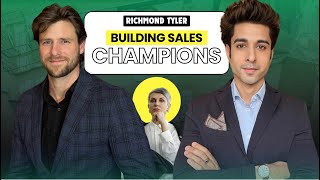
This is a YouTube video titled "How to Build Sales Champions? - Richmond Taylor" published on December 24, 2024. It features an in-depth interview between Richmond Taylor, a former professional soccer player turned sales enablement leader, and an interviewer. The discussion covers Richmond's unique career journey from sports to sales, his sales coaching techniques, the importance of motivation and competition in sales, the use of MEDDIC sales methodology, content creation for personal branding, and the evolving role of AI in sales. The content is a single-speaker interview format without the presence of Rahul Wadhwa.
I played for about six months, six and a half months, and then some sketchy things happened down there. Whenever you get these people on the phone, you have to be ready.
Our guest today is Richmond Taylor. He comes with a diverse background spanning professional sports and sales leadership. Currently, he's the DTM and Sales enablement lead at Concur. Richmond has rapidly advanced through roles from senior business development executive to Enterprise A and now to his current position. His journey includes playing professional soccer and in Spain and Costa Rica. Pretty cool, right? Teaching English as a second language and excelling in sales and marketing roles across various industries. Richmond's unique experiences and commitment to continuous learning make him a valuable resource for insights into sales strategies and team development. Without further ado, let's welcome Richmond. Thank you so much for being here. I truly appreciate it, man. And that too, in a very short notice. I've been seeing your content and I think so. Richmond, I looked at your journey merit thing, I think very exciting. More about your soccer player career. Tell us more about that.
Fell in love with the game whenever I was a kid. Played since I was 4 years old. Kept playing, kept playing, kept playing until I hit high school, I hit College, played Division 1 at East Tennessee State. I had a choice to go to finance routes and be a mortgage lender and go into whole real estate finance at a bank. And I decided not to take that job. It was a lucrative career, don't get me wrong. I decided to say no. Pursued my dream, got an agent, went to Costa Rica. Costa Rica. I played for about six, six months, six and a half months. And then some sketchy things happened down there. Didn't like it too much. And I did well enough to talk to my agent, say, hey, is there any other place I can go to? Costa Rica is a beautiful place, but I mean, it's, It's. There's still some dangerous things that happen down there that convince me to go away. So then I got to go to Spain. Played there for three years. Went from Preferiente, which is fifth division, Tercera, which is fourth. And then I went to Segunda B, which is third, which is like the same league as like Barcelona beat. Real Madrid, beat. We actually played Athletico Madrid in Del Rey. We won, which is a lot of fun. Soccer was a lot of fun. I decided to go home because the pandemic. I was gonna. I was being invited to training camps for national SC. I was gonna go to San Diego, 911 Louisville City, and decided to go to the corporate route. And it's kind of wrapped up my soccer Career right there. So I could, you know, focus more on like a future and not running so much so I can run around with my kids when I get older, whenever that happens. Then I got into where we are today.
That's hell of a career. I can only imagine. And I can relate to some of it because my brother is a huge football fan. He graduated in Spanish. Okay. He only studied Spanish because of the love of the whole game he has so that he can understand more. And he can. And he was lucky enough and I think under 17 team of, you know, some football team came to India. He was actually their manager. You know, he managed the whole team and that's one of his moment and I can totally relate to it. And I know when I tell him, when I will tell him about you, I'm sure he's going to jump onto this podcast. So quite exciting. Then you jumped onto you said you. Then I saw that you started as a bdr. Tell us about that. What was your challenges back then when you started as a bdr?
Yeah, so I was given a carrot to chase. My buddy was part of the hiring team over there at Corpay Fintech company. Awesome team enterprise selling. Got in there as a bdr but the pay was, you know, very, very low but uncapped commission. So I was like, okay, I'm going to get my feet web in this sales game. So I mean I'm so sports minded. I'm going to be able to use that and be competitive and beat up my competition on my team but also help everyone out as a team. So it was a BDR at Corpay kick butt. I got to the point where I was 3xing quota month over month because I figured out a special way to cold call, get in front of people. There's a lot of different kind of tricks innuendos you could do. And I was always practicing, always training, always doing warmups, always looking at rebuttals and sheets or whatnot. And I got a big head as I was doing so well and there was no room to move up at the time. I got offered some other options and I what I wanted to do first was okay, learn my sales. And that's what I chose to do that job. And I wanted to learn how to do marketing. Eventually I could run my own company. So the sales I got down. I had an opportunity to go work in influencer marketing. I had an opportunity to work in real estate. I did these both things then opportunity to be a fractional VP of sales for a marketing firm out of New York, did all those, really enjoyed it, and decided that I wasn't quite ready to start my own business. I. I needed to create a nest egg. So I left and went back to the corporate world, came to conquer and that's where I am right now. And I'm learning a ton more through the leadership of my CRO and some other guys on the team. And we're just building the skillset, building the skill set. So whenever I've at nest egg and I build whatever I need to build on LinkedIn and or any other social media, I can have some sort of platform to grow my own business. Which what I want it to be is consultation for growing a sales team, specifically business development, marketing. Whether you want influencers or you do in paid ads or your brand, and then from there just starting it and figuring it out as I go. And I've already got a good skill set. It's all about running the business, which I'm learning here.
Seems like a lot. It seems like you've acquired a lot of skills. And there's one thing which I'm seeing a lot. Right. I mean, I've been speaking with a lot of sales individuals and one key trait which I'm seeing is everybody with a sports background are all doing really, really well in sales. Is that. Do you have any, do you have any thoughts on that?
Yeah. So a lot of parallels in sales and sports, you got to be on time and to be prepared. You got organized, you have a undeniable sense of competition and you'll do whatever it takes to win. What do you need in sales?
This could be like a blog. 5 things you need to hire, 5 reasons you need to hire people from sport background.
Actually, I'm connected with a company called Shift Group. If you're in sports and you're looking to get into the sales game, I can connect you with Shift Group. My buddy does that. He basically gets athletes and turns them into sales pros. I've posted plenty about this, but there's definitely routes for sales guys, especially in the sports world.
Yeah, I mean, sports and I. Another thing which I'm realizing is when I'm speaking to a lot of VP sales and CROs, they all come from army background. So either it's sports or, you know, army. I'm pretty sure the discipline and, you know, the competitiveness and I think all of that plays a long role in making you successful. So I can totally see that. So, Richmond, tell us more about this medic sales. Right. I saw that appearing on your profile over and Again, why do you love it so much? I mean, is that something which you practice on a regular basis? What is that?
Yeah, anything. So whenever I coach cold calling, we try to get in medic and bance kind of go hand in hand. But if we can get as many of those letters from the acronym answered on that first call, then it's going to help out so much. So what we do is we train medic, we train Vance specifically on the first cold call, it makes sense to go to an intro call. From the intro call, we get more of the letters done. As long as they're. Sorry.
No, I was just. Go ahead, please.
Oh, you're good. Yeah. So we get more of the letters done and whether we can get at the metrics, the economic buyer decision criteria, decision process, the pain and the champion all involved, or the budget authority needed timeline on that first call, intro call, we don't show any of our platform. Right from there we build a business case to show them a tailored demo and not just a massive. Here's our fun shiny bright object that does cool things. We wanted to make sense for them. So answer your question. Utilizing medic, it helps us really make our message relevant, not only on the first cold call, but throughout the whole sales process.
Interesting. You mentioned that you coach a lot of cold call. Do you have like a different team? Are you call. Are you training people at your company?
Training? At our company, we have daily cold call warmups, which not mandatory. We have one mandatory a week. But every single warmup, we always try to practice new rebuttals, new ICP frameworks, new decision criteria, new intent signals. I would give them a good warmup or a good idea before the whole cold calling warm up practice. And I'm a firm believer. Just like it is with kicking a soccer ball in the back of the net, hitting in the side corner. Practice makes perfect because you're on these cold calls. What, five out of 100 even pick up the phone? How? Who's to say that they're the decision maker? Who's to say that they're the right person? Who's to say they even work at the company? Whenever you get these people on the phone, you have to be ready. It's like whenever you get a ball in the box in the soccer game, you have to be able to finish or you'll be let off the team. And the best way to do that is for training.
That's amazing. Tell us some of the other unknown hacks about coaching reps. You've been doing that for a While and looks like you already have this thing together. And I do a lot of coaching myself and I'm always curious to know what other people are doing to really nail the game. Tell us some of the things which are only known to you. So some of your secrets.
Yeah, so a big part of it is motivation, leadership. Every sales rep, you hire them because they're coachable and they have a sense of competition about them. Whenever you have those two things, you really are your own CEO. You're working for commission. No one wants the base salary. You're working for that commission. So they have some sort of motivation to be able to do the work themselves and do the training even outside of hours. It's up to the leader and the manager to motivate them through leadership practices, to get them to want to practice the rebuttal flashcards that I made for them or want to hop on these morning role plays or ask me questions and send me some call recordings for me to be able to extrapolate, send it back to them and teach them the right kind of ways to perfect their cold call. And it's a never ending process. But eventually you don't really have to look at some script. You can do it yourself.
Yeah, you mentioned about the pedigree, you mentioned about, you know, how you're checking for competitiveness, how you're checking for. I'm sorry, there's one more thing you mentioned, so I'm always curious to know, how do you check these, check, check for these things? You know, let's say that during the interviews because these are usually very short conversation, 15, 30 minutes max 45. Let's say, how do you check for these things? If you are, if you've actually had a lot of reps, great question.
So for the competition point, you ask them the story about how they were competitive in some sort of form or fashion. Ask if they played any sports. They didn't play any sports. Were they a part of any groups that had to do a certain project that they had to win some sort of competition? And you ask them how they went through that competition and how they performed and what effort they put in, that's going to determine their willingness to be effective. Now the coachability part, this is a fun one that's kind of built throughout the interview process. You give them homework and if they do a good job, that means they're coachable. If they don't, then they're not. Or you got some stories just to tell them or tell you.
Yeah, I think I can totally, totally agree with the second part, I help a lot of companies hire their first reps. And one of the things which we've seen is after we give them an assignment. And that's another question I want to ask you. After we give them an assignment, like 90% of them are poof, you know, gone. They never come back because they do not want to do that assignment because they feel it's like, too much. And you're right. I think that's the whole reason I think I was hired. I can recall nine years ago. I don't come from sales. I did not have a sales background. And the way I was interviewed is I had a mock call and there was a senior sdr, there was a sales leader. We did like nine mock calls in one hour, back to back. And they said, you know, can you take this feedback? Can you apply it? Can you apply it? And I think I took on the same strategy and that's how it worked for me to hire some of the best reps. I want to ask you a follow up question on that. And you said you give them homework. Tell us more about that. What kind of homework do you give them?
The homework would be, okay, rebuttal flashcards. Whenever I go ask you rebuttal, you better be on your game. It could be the script that I give them. I want them to be able to recite at least some of it back to me. Or whenever we go on these role plays, before we even hire them, they got to be prepared. And that's. It's not that hard. Um, or we give them, like, some idea of, like, who we are as a company. We give them a sheet of like, okay, be able to give this an elevator pitch. It's not too hard, but it does give them a little bit of homework to be able to push themselves to, you know, earn the role that they're applying for.
Quite interesting. Yeah. I think it's a different approach than what I typically take. So. But I mean, I don't do, you know, the flashcards. But I think. And this is, this is actually quite interesting because I can totally see this becoming a norm. Because what I'm seeing is, especially with the founders and the leaders I'm working with, all of them would give like a standard assignment which would include, hey, you know what, go ahead, find our icp, write a three, three step sequence, you know, prepare a cold call script and. But they would, they would, they would not have a way for them to check whether the cold call script actually works or not. Or at the same time, are they able to even handle that kind of conversation on the call. It'll simply be a written assignment. So are you saying that you are checking, are you checking the effectiveness of those flashcards as well on the call? On the next polling call?
Yeah. So soft skills are hard to teach and that's what they need to be able to be good at. Hard skills like the script, the sequences, we have those, we'll give them to them. But we're going to do is we're going to encourage them to be their own seller. You can't just mold someone to be the perfect little seller because that never works. Everyone's different. And the best way to lead somebody is to let them lead themselves and encourage them to do so. And you'll see your absolutely explode.
I'm going to steal that. I'm going to definitely create some content out of it. Because you what you said about, you know, how creating a script is not a hard skill if you think about this like today you can go to ChatGPT if you're smart, you know, there's so many bunch of tools, people can just, you know, bluff it and you would never know whether they did it or not, did it in themselves or not. But I think you're right. I think every company should have this process where they could check for the role plays. Simple. Yeah. And that definitely works.
Put them on the stand and if they're reading off a piece of paper, they're not going to get the job.
Yeah, totally. Richmond, I'm quite interested in how I'm seeing a lot of videos on your feed. You've been creating a lot of content. I'm often curious about what leads people to start realizing the fact, oh, I need to create content. Can you walk us through that? Like how. When did you, when did you realize, oh, I need to create content?
Great question. So creating content helps build your own personal brand. Building your own personal brand makes you invincible in the dog market and also gives you, makes you a value leader. So if you ever go prospecting or ever talk about whoever you represent, whether it's your own company or something else, people are going to listen to you as opposed to see like, oh, this guy has no one. He just barely posts his copywriting's crap. I'm gonna ignore that. And it makes your brand look so 1. It helps your brand, helps your personal brand and gives you a way to it, you know, gives you job security at the end of the day.
Yeah, I think all the right point. When did you realize that, oh, I.
Want to do this, it was about a year ago. I started doing it more and more and more. I told you, I want to learn my sales, my marketing, and be able to start my own business. If I have a following that trusts me and I give out good, valuable content consistently and help other people, they're going to want to be able to go on and ask me to help them. Yeah, they'll see all the information and all the data. But how do they use that? I have the structure, I have the frameworks to be able to help them get to where they want to be. Not just by consuming content, but doing what it says in the content.
And I can see it working because whenever I see your videos, I'm like, well, when I have to create a video, it seems like I have to go through a lot and seems like there's one guy who just, you know, can shoot a video anytime. It seems like you're very natural. Seems like you don't go through a lot of script. It seems like, you know, I can. I can totally see that that's authentic. You. Because I've met you and I'm seeing you right now, and I'm seeing your video, I think I can see it's. There's. There's no difference between real and real, you know.
Yeah. The reason behind that is, you know, just like we're getting our guys to look at the script, memorize it or not memorize it, but put their own little twist on it, that means they know the script. Just like you work at a company long enough, you can talk about whatever the heck Conker does till the sun rises up, you know, and that's because you know what you're talking about. So whenever I make a post, I make sure I do my due diligence. I read, I research, and I see what the heck I'm putting out to this world is. I'm not going to talk out of my, you know, out of left wing. I'm going to say something that I actually know about and that exudes the confidence I have in those videos. It's super easy. I mean, you can. You could get a template from Chad GPT if you really, really want to, or you can write it yourself. I don't Recommend More than 20 minutes because you. Then you overanalyze it. You write the text, you look at the text, and you talk about the text and then put the video and you can do some fun editing. I've been doing that a little bit, but it's just me.
Yeah, that. That's simple. And Definitely effective. And that brings me to the post I remember, which I read where you said how it's in a noisy world, you know, where AI is actually making a lot of noise. Video could be a great way to stand out. And I totally believe. And despite the fact that, you know, video gets you more views and whatnot, I feel I kind of hate texting. I kind of hate when. If you ask me, Rahul, can you write a post? I would, I would say can I record a video instead of. I think it's easier, it's natural. It actually brings your authentic self. So kind of makes sense. Tell us why are you doing video and why you're not doing a lot more text? Because I see a lot of videos out there.
Well, it's both. It's a double prong approach. I have all my texts with the relevant hook, double hook, call to action and all the good body paragraph stuff that's going to give you actually value and make you engaged throughout the entire post. And the video just supplements that. In case you don't want to read something, you're going to see me be a goofball and talk about it.
That's exciting. Thank you. All right, I have a couple of last questions, which are around. You talked about AI. I think everybody's talking about AI and I'm pretty sure there's some, some, some technology, you know, some AI tools which you are in fact using on a daily basis. Tell us more about that.
Yes. So right now we have our own AI built in. It's like, so if you have a call with somebody, it can extrapolate the information and it will tell you action items, objections. You could have done better with your talk time. All that jazz from video to phone calls. We also have our email that help and. But what I use mainly is ChatGPT. I pay for the premium version because whenever we're doing research, I need to do some sales enablement. I put that in our. The prompts that I've trained, look up XYZ company Find XYZ stat. What kind of sales tools? What's their sales process look like? How big is your sales team? And look in certain areas and it's going to get, it's going to give you all the relevant information. You copy, you paste that into whatever kind of document or on your salesforce is what we do. So when you make that call, you have all this data to reference and make it a really relevant call. Which is, which is a slam dunk most of the time. If they give you the chance to listen.
Totally. And in fact, I think with the new version where it's able to scrape the entire Internet, I think the possibilities are endless because earlier we had to say, hey, look up Microsoft, and it would go and fetch information, which was like six months ago. Today, it can actually find information about your prospects. Or, for example, a Richmond comes from this podcast. It can actually find that information in real time. You know, browse through as long as the podcast is up and, you know, bring that up. That, that's, that's more valuable, I believe, 100%.
And sometimes you got to actually tell them, look on the podcast. Sometimes you get to say, look on job boards for this sales day.
Virtual, virtual cloud and AI sdr. By the way, this is one of my favorite, you know, hacky question I want to ask everybody.
Yeah, I hear you. Right now it's. I see AI is kind of like a bell curve right now. It's going like this and it's going to absolutely just skyrocket. AISDRs. I personally think that I would rather pick up a phone from an aisdr, not someone that's just mumbling over their words, not giving me relevant information, just trying to push a sale, an aisdr, give you a call, have all the relevant information, know exactly what you're using, and know the exact pain points so you don't have to waste your time. You talk to them, and then you take the interest enough to be able to get on the call. Now we're not there yet. We're getting there. And it takes a human to close the deal and build the relationship with the sdr. That's so transactional. I think eventually. Well, I know eventually that's going to be the case.
It's just, yeah, it's a matter of time. I think I'm hearing all sort of views where people are like, yeah, I like it. I'm already testing it. I'm like. And then most of the people are on the other spectrum and maybe these are the people like us who are in sales who are like, no, AISDR is not there yet and I would rather pick up the phone. I think that's one of the common things I hear. So, yeah, I hear you.
You think about it like, if there's AISDR that's blowing everyone up that no one really cares about, that company's gonna get a bad rap. But the companies that do the AISDR right and relevant and don't annihilate the person, they might give them a listen.
I hear you. And this is one of the things I teach my SDRs. You know, there are a ton of company out there who are trying to repl. So you have to also evolve. Otherwise, you know what? They're claiming that they will. They will actually replace you, which. Which will actually be true for a lot of SDRs. If you think about this, some of them are actually really bad at their job, you know, and they're not really trying to upscale them in any way, so.
Yeah, Yeah. I mean, just like the conveyor belts and the Ford Motor Factory. Sorry. I mean, but we got robots. I can.
Yeah, totally. And yeah. Thank you so much, Richmond. This was super helpful and this was exciting. I think I got to discuss a lot of things which was on my mind, and I think you did bring a fresh perspect. I can totally see this blowing up on LinkedIn, man.
Yeah, me too.
Thank you so much. Yeah, great. Have a good one. Take care, Zero.
More from Rahul

The SDR Role Is NOT a Stepping Stone | James Buckley on Cold Calling, AI & Career Growth




Trupeer Hired an Enterprise SDR in 1 Day. He Booked His First Meeting in Week 1



