How to Deal with being passed over for a promotion? - Fahad Mistry
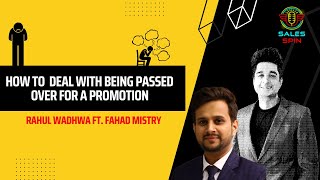
This is a YouTube video titled "How to Deal with being passed over for a promotion? - Fahad Mistry" containing an in-depth English conversation recorded in November 2022. The discussion features Rahul Wadhwa and Fahad Mistry exploring the complexities of career promotions, including the emotional impact, timing, readiness, and strategies for handling rejection and career growth in sales and related roles. The conversation also touches on hiring practices, skill alignment, and personal introspection for professional development.
This is the Sales Spin podcast. You are listening to Sales spin, India's top B2B sales podcast where we bring the world's best sales experts, successful sellers and sales leaders who share their strategies to succeed in sales right now and talk about things no one else will. And now, Raul Wadhwa.
How are you doing, man?
I'm doing well, doing well. Things have been busy for me, but it's all exciting when you, when you get tired doing something great, then you don't feel tired. You feel excited every single day. So I think that's been for me in the past couple of weeks.
I like your vision. Last time you spoke and you talked about how people think about the work life balance as work ends and life starts, kind of stuck to my head. Why don't we start with your background and then jump onto the topic, if that's okay.
So I have been a sales guy naturally from a very long time. Like right from my college days, I've been someone who's always wanted to be in, in terms of a place or a position where I can communicate and if that leads to results.
Right.
So that is something that has always excited me. But then I did my graduation in science, which was something to just, I don't want it to be. I didn't want to be a doctor.
Right.
So that was my way out to take up science. And then during science, I realized that, you know, I don't imagine myself doing research in a room. I would rather be in front of people and talk. So that's where I did my mba. And I think that two years have completely transformed the way I see myself in terms of my professional career. So I started off my career after my MBA in religion. I was handling corporate sales for them. And then I started my own company focused towards training and development because I felt that there is a huge gap between what we are taught and what we actually need when we actually get on the ground and start working. So I was doing that training not only for college grads, but I think especially in India, people are engineered that way that if you score good marks and if you get a good degree, you eventually get a good job. And I think that's the biggest lie I ever heard. Right. So I started training students from 8, 9, 10, 11, 12 and making them aware that scoring good marks is good. It's like an invitation card once you get inside the corporate, but then that invitation card ends there. It's more about the skill that you create over a period of time. So I did that successfully for four or five years. And then I couldn't replicate that into a business because, again, there are some business that cannot be replicated. It is too individual, too personal to replicate. Right. So that is where I happened to the. The entrepreneur struggle took me into recruiting. I had a company just next to my house, which I thought, okay, we'll work in the night and make some money out of it. That company happened to be Allegiance. It's one of the largest recruiting companies in the world. Then I moved to a smooth stack where I was heading their talent acquisition function for their lateral hiring, their campus hiring, apprenticeship hiring. And in. In that three years, I realized that I don't want to be in a role which is operational. I want to be in a role which is very dynamic. And that's where as a user, I bought a platform and applicant tracking system, which I really loved, and I enjoyed using it. And then I realized, okay, why don't I sell this? Because I've always been someone who recommends something that I buy. So that's how I jumped into sales. And when I moved into sales, it was like, you know, that. That calling that you always had, right? Everything came naturally to me. I was the user of the product. I was the first customer of the product. And then it was more about just being on the call telling people. And just the moment I share my experience in the first 15 minutes, the deal is done, right? Because, you know, it gives that great value. So I think now I'm completely focused towards sales. I had sales for Turbo Hire globally, and I've been a user myself. I'm a product guy as well. So, yeah, I'm kind of. Everything is fitting well for me right now at the moment. And that's how I've kind of had multiple places where I spent my time. But it. It is all making sense now.
So quite an interesting journey. And in fact, I think that makes you kind of like the perfect fit to talk about today's topic, which is how to deal with the fact when you are, you know, overlooked for promotion. And before we jump onto the most serious stuff, I think it'll be better if you can maybe talk about what is promotion? Why do people crave for it? Why is this such a fancy word? I mean, I know people celebrate promotions. There are people, you know, who kind of feel rejected when they don't get it. So if you could maybe start from there. And I think we have tons of, tons of questions.
Okay, so I think this is one question that is relevant. Everybody is what drives you? There are certain things that Drive some people, Money is a factor, right? Satisfaction is a factor. People being successful is a factor. But the most major factor for people is recognition. Right? Recognition is something that can break people, that can make people. And promotion is that big recognition that you get from the company. And if you are recognized, then your recognition gives you more recognition. Right. It's like. Like a chain reaction. Okay. So people get recognized, and then because they're recognized, they get recognized, and they want the recognition to be validated. That's how people celebrate promotion, right? In. In their. In their journey, whenever they get promoted. So it's more like a feeling. Honestly speaking, promotion is only valid for the first day when you get it. After that, it's just a job or a work, right? So I think that's where people celebrate that because it. It fuels the drive of a lot of people that know, especially you might make tons of money, but then if you're not getting recognized, because even if you make money, you spend money to get recognized. The day I have money. Right.
Okay, that's one way to look at it. But yes.
Yeah, that's how promotion is, again, a tool used by companies to recognize people. Right. Used by teams to recognize someone's effort. And at times it becomes important because people always do certain things if there is a drive towards it. Right. And if you don't do it at the right time. Right. Kind of people, then you will lose them. You will. You will always be in this struggle of identifying that. Okay, what did I do wrong? Right. I gave him the money. I gave him everything that he was wanting for. But recognition is one thing that nobody will ask for. They need it. Like, if I recognize you for something, you'll say, hey, don't recognize me. You won't say that, Right. You will still be happy about it. So that's how promotions are. Again, say, a more formal way of recognition is how I define promotions in companies at the moment.
Okay. While I understand it's a form of appreciation for somebody who's doing a good job, when. When can you think, you know, this could actually go rise? So I know a lot of young folks, you know, and especially. And you know, the full podcast is kind of aimed at everybody who's in sales, young people who have recently got into sales, and then, then they get, you know, this sort of pressure, peer pressure. Most of the graduates I know, for example, especially MBA graduates, after the college, you know, they all move out to different companies. One company might have a different promotion policy, different appreciation policy, and one person seems to go ahead in in life. Because let's assume that if you're talking about sales, they were an sdr or even if, you know, let's talk about any profession, they were at the lowest year and then they see one of their peer, you know, move up the ladder. What's happening beneath that promotion? Nobody knows, right? Like you said, it's. It's something which we see from outside. It might be a social acceptance, it might be a lot of those things which are tied to our social stigmas, social appreciation, whatever. How do you tell somebody to deal with it? If I'm that person who's not getting promoted by my peers are in other companies, I don't know what's happening behind it. He might be just getting a promotion because the company believes this is the only way to promote people. While let's say he's not getting an increment or he's probably working 18 hours while I have a healthy life balance. What would you probably tell young folk like that?
So see, the first thing is let's kind of break it down into three kinds of promotions, right? One is when you're young, right? When you're young, if your promotion is not bringing learning, then that promotion is useless. Okay? Right. So if I, if I'm an SDR for a year and the next year I become an ae, now SDR itself is a whole new world, right? Right. So if you become an SDR in one year and the next year you become an A, right? And if that is the promotion that you have got, I would suggest don't take it because you have not learned everything in SDR yet, right? Because like you're half cooked and now you become an E. Now from an A, if you move the ladder up, right? If you, if you move too quickly, your learning is not going to support it, right? So this is for young people that if you are getting promotion, right? See that. What is that promotion giving me, right? One could be recognition, the other could be stopping your learning in that particular umbrella. For other people who are, say five to 10 years of experience, who've been in sales for quite some time and now they are more recognized in the industry that they have a role and they've been there for quite some time there. If you're not getting promoted, let's say two examples, get promoted and you don't get promoted. If you get promoted, the way to see it is that where is the promotion taking you? It is it increasing something in terms of the responsibility, is it increasing the accountability? Or can you handle that promotion? I'VE seen a lot of people who become an account manager in three years time, but then eventually they are not able to manage, right? You might be a fabulous account executive, but can you do the same job with five other people? Right? You are promoted because you are individually great, but can you, Are you collectively great? Right? So for mid managers or people who have been in that five, eight years category of promotion, you need to see that if that promotion is giving something more valuable to you, right? If you're getting it. If you're not getting it, then the biggest reason why you're not getting it is because you are not ready for it. Now I am talking about only justifiable reasons. There are many reasons because of which you're not getting promoted and it is very difficult to justify it. I'm talking say from a sane mentality why you're not getting it. And that could be one of the reasons. Like I know many account executive who can just get onto a call and close a deal, but if I have to ask them to support somebody to close a deal, they should do it, right? That's a problem. Then if you talk about people who are on the upper chain there, the promotion is slow because every promotion that you get there, right, Is going to impact another 15, 20 people who are going to work with you. Because say for example, if I'm the CEO of a company and I promote someone to be the head of sales, now that person collectively only has say six, seven years of experience, but the team that is going to manage has an average experience of nine to 10 years. Yeah, I am putting somebody in a place where he or she will not be successful because he has not dealt with that kind of experience yet, right? So again, three stages. If you get a promotion, you need to validate why are you getting the promotion and what is that addition in promotion giving it to you if you are not getting a promotion that you need to introspect. Now a lot of people, when they don't get promotion, they immediately think I'm not doing something correct or I'm not worth that promotion. It could be two ways. One is there is a genuine biasness towards it, which is another discussion altogether because I might hate you as a person and not promote you. But let's talk about something which is more common in the industry is that a leader who really believes that you are not ready yet. Everybody thinks that they can be the CEO of the company because they think, okay, what is he doing? He's not doing anything. But for him just to figure out what is happening that one eye is what they attained over the years, right. So kind of just to break down because I think we had so many things discussed. But just to bring down into one category, if you are getting a promotion, you need to validate what is that promotion giving, right. If it is not giving what you need, depending upon which stage of your career you are, don't take it. I would suggest don't take it. Right. Wait it out. But if you are not getting even though you deserve it, right. Then one thing that a lot of people that they make a mistake is they start looking out for a different job. They don't talk it out, they don't discuss why they are not getting the promotion. They assume things, they become judgmental and their performance drop. So now you have, you have two situations. One is you did so well to get the promotion, you didn't get it and you don't know why you didn't get it. But you think that you deserve it, you didn't get it. So your performance goes down. So the next year you are not even eligible for the promotion because your performance went down. Right. So I think that's how I would advise people to look at it, especially in your, in your early years, right. It is very fancy. But I would say that, you know, be careful about it.
Got it so far if I may summarize. So there are different buckets. We might put it that way. Assuming that let's say somebody who's an SDR who started like a year or two back, what you're suggesting is understand what promotion means to you. Why do you even need it if you need it, let's say because the peer pressure that might derail your entire career journey and might you put put you into path where it might not be best for you. And at the same time I can kind of support that because I know SDRs who were in my team who left for an account executive position because my company, let's say, doesn't did not believe they were ready and they were not. Different discussion. They went to a different company, realized it's not their cup of tea. Now the bigger problem is, and this is something which I really want SDRs to listen now the bigger problem is, like you said, you go to a company where you an AE every the world knows you're an ae, you cannot come back to an SDR because that'll hurt your ego, that'll hurt your numbers. When you go to another company and you say I want to become an SDR now, even though you were An AE for, let's say, a few months. It becomes very hard for you to explain that during the interview. It does not go in your favor because now you are kind of perceived as someone who does not think, you know, strategically. You cannot think clearly and imagine what kind of impact would that have. So your options get limited all of a sudden. So think this very, very clearly. Second thing, what you said is, of course, for the people who have been into, let's say, a role for, let's say, four or five years, and now they're thinking about promotion, I would kind of echo and still suggest that, you know, please think what does the promotion mean to you? Sometimes I understand promotion comes with a monetary benefit. That's what people kind of look into this. But also understand with increased compensation, your responsibilities might increase twofold, which you may or may not be ready for. Some people I know kind of fail badly when they were about to get married and they became like a head of sales and they have to work us hours, crazy amount of hours. Just don't have the time for, you know, which. Which people kind of need in the first year of marriage, right? So that these are all the challenges which I've seen, which are not often talked about. But like you said, I think you need to really think this through before, you know, jumping onto this.
No, I agree with you on many fronts. And I think what we are now defining is promotions can be bad too. I think the sentiment that people think that, oh, I'm getting promoted, okay, oh, great, congratulations. But if they say that, okay, I got promoted in a year's time, okay? So I think what we are. I would advise a lot of people listening to this is promotion can be dangerous too. And if you think through it right, then promotion will complement your growth. It will not hamper your growth, right? So I think. I think if that is a message that people can take after this discussion that if you get a promotion, think through it, whether it is good for your career, whether it is bad for your career, and then decide, right? And if you're not getting it, then somebody is not willing to give you is not the reason. I think that could be the last reason. There could be many of the reason. Try to find those reasons. If you find those reasons, that will help you grow rather than, you know, getting distressed, getting detached from the goal or the company that you're working for. And then you move to a different company which gives you the promotion, right? But then it will ruin your entire cycle because you cannot cycle backwards. You can always cycle forwards Totally.
I think there's also a lesson for the companies here because it's not just for employees. The couple of previous companies I was with, they were kind of forced because they did not want to lose the guy as an sdr, and they end up promoting him or her into a position where they were clearly not qualified. Now the guy is not able to handle a team because, of course, he was not qualified. He was probably great as an sdr, but not good enough to handle a sales team, or let's say, a team of SDRs. He cannot move out. His team does not respect him. His career growth is sort of limited right now. He cannot move to an AE role. Of course, as you understand, you know, if you were to hire an ae, for example, of course your first preference would be to hire somebody who has already closed. Or if the company is big enough. Yeah, I can understand. You know, they might figure out some resources to train this guy and move into a different role. But this is also for the companies to understand. Do not promote too quickly.
No, agree. I just want to kind of share one example. This happened very recently. Like, I had interviewed someone, and she has been an SDR for a very long time in the company. And then her complaint was that I'm not being recognized because I want to become an account executive. Right? So typical problem, right? So I could see that, okay, she has the potential to become an E, but I said that if I take it slow, like, I. I wouldn't give you the title of an A, but I wanted to start understanding that how exactly an A materializes a lead, right? You have to sync your experience. You cannot detach one and then move to a new one just before the joining, Right? Her company promoted her to an E just before the start, like, a couple of days back. So I had a meeting plan with her, and then she canceled the meeting, and then she took up the AE role. Now, I feel a company that didn't recognize you for almost an year recognizes you in 10 days. So a company that didn't recognize you for an entire year is now recognizing you in 10 days. And now that she moved to an A, and I told, fine, congratulations. Great, right? But you think, right, like they are now, they were willing to lose you, now they don't want to lose you, so they gave you something that you wanted, right? And now they're giving it to you when you are about to leave. Now, what is the guarantee that if you don't perform well as an E, right, they won't ask you to leave because now Their entire responsibility changes. Right. And this is. And. And I would like to add another example here. And I appreciate that person to whom I interviewed. That person has been in SDR for three years. I interviewed him and he said, father, I want to move an E. In the interview, I told him that don't move to an AE right now. Spend time as an sdr.
Yeah, right.
Spend a couple of more years. I will hire you as an A, I promise you that. But spend a couple of more years as an sdr, because I don't have the bandwidth to train you as an A. But if you spend a couple of more years thinking like what an A does in your own company. Right. Start reflecting on the skill set, and then I think it will be easier for you to move ahead. And you won't believe that person took the advice and stayed there. And we're still connected on LinkedIn.
Wow.
So two situations. One, they wanted something the company didn't recognize for a period of time, and they recognized just the night before. Right. And then the other guy who was an sbr and I told him to stick to it and who took that advice, and I think he's still doing well. And most probably I might hire him in, say, six months down the line.
Yeah. I think the first story you shared, that's. That's very typical. That happens almost like every time when people are leaving company for monetary benefits. Company realize, okay, you know, this guy is. When this guy actually gets a competitive offer, they always match it. You know, typical strategy, I think. But in case of promotion, I think that usually backfires. I know in other cases, people might do this out of their will. This is my completely, my personal opinion, no offense against anybody. I believe, you know, there is a notion which goes like this. And I'm pretty sure as a leader, my leaders or other leaders might not have done a great job in probably acknowledging this publicly. The way it looks like to the outside world or anybody who's an SDR is, hey, AE is the one who closes the deal, gets the most respect. It's like you bring the biggest slice of pizza to the table. So, yeah, you get the biggest slice. Right. Or you, you get the bigger portion. That means there's a notion that they make more money. I know AES who make way less than money than SDRs. Like I said, companies have not done a great job maybe. And I could be totally wrong about this, where there's a stigma which goes around if you're a closer. And again, some of the movies, some of the, you know, TV series have done a probably bad job in promoting. Only if you're a closer, then only you can make money. And I'm only talking about from the perspective if people think A becoming an A can actually get you more money. I'm not denying that cannot. I'm just saying there's a stigma attached to it. There is a notion attached to it that that's the only way to do it.
I'm going to say something I think completely against the wave in the market. A company who started, say now seven years down the line for that company, if you still need an AE to close accounts for you, your brand doesn't exist.
Powerful.
It's very powerful because an SDR can always be an E.
True.
Right. I might get a lead, wrap that deal completely. I know the product, I know what he's looking for, I know the budget. I have dibs on all the information that I need from that client in the first call. Now I can close the deal and give it to the account manager. Hey, onboard this guy. Done. Where is an AE there?
And that happens that, that's happening with a lot of companies now, especially with the PLG companies. Let's say tool like calendly.
Right.
Even if I need like 10 licenses, I don't need to speak to somebody. Worst case, I might need some clarification. I could talk to support on SDR and I think get away with it. Yeah.
But that kind of validates the point that, you know, have you ever been sold a LinkedIn license?
No. I know I need it, so.
So that's how, that's how it is. And again, I've been like, it's been a couple of years now where I've seen the SaaS industry very closely and I feel, I strongly feel that in a company, the most important aspect is sales, which gets the revenue. And, and in that team, the most important piece is your sdr. Because if you don't have leads, you don't have a source from where you're getting, because you need to create an opportunity to close. If you cannot create an opportunity, there is nothing to close. Right. So for everybody who thinks that SDR is just bottom of the food chain, no. SDR is a job that everybody will do in the entire sales cycle, wherever they are. The CEO does an SDR job, the VP of the sales does an SDR job, the A does an SDR job, and SDR does the SDR job. That's one role in the sales cycle which never stops.
But let's also talk about, let's say companies in general or you know, professions in general, there are obviously two ways to get promoted. Assuming that people have thought this through, that they want to get promoted, there could be one way where they're looking for an internal promotion within the company, within the same function, outside in the different function. They're bored out of that role. They want to move from sales to customer success, vice versa, right? Or there could be a way where they're actually looking out because the company, let's say, so small, there are not enough opportunities in either way. We can think about different scenarios when they could be overlooked, when they could be like turned down. Hey, you know what? You're not a fit for it all. I was talking to some other leader today and we were talking about the same thing about different use cases where people want to get into, let's say B2B sales and how, let's say somebody who's between 25 to 30 probably in customer success now wants to test test the waters with coming into sales. There of course, he might be the senior manager in customer success. He might have to start with an sdr. And I've seen scenarios where senior manager customer success is, you know, transferred to senior leader in the sales department and then they actually face the face that rejection, right? That you know what, you're not a fit. How do you think people can actually prepare themselves for it? To make sure, like one of the point you raised earlier have the clear expectations so they know they want to move into sales, but there has to be clear expectation as well that, you know, am I even, am I even a person who's actually fit for the role? Because clearly let's a VP of sales or let's say someone like you who wants to hire somebody, why would you go about hiring somebody from success when you know what you can actually have better? People who have a sales background, what can they do? How can they prepare themselves?
So before I answer that, the one thing that I believe, right, one thing that I always keep in mind in hiring, I never hire people for what they've done. I've always hired people of what they can do. Right? Now with that thought, if we come back and advise people that, okay, if you have to move from one division to another, right. The first analysis you need to make is what is the skill required to do that job, right? And what is the amount of time that you need to invest to get the job done? If you are looking for an sdr, what are the top three skills that you would look for in an sdr? Good comm skills, number one, Right. Second, you would expect them to be very spontaneous in terms of the way they communicate. Third, that they have to be persistent. Fourth, that they should be able to face rejections, right? And be very thorough. That it's a tough role but a rewarding one. Right? So you do an analysis that if you are making a shift or want to get promoted to a different role, right? What are the skills required to get the job done? Once you do that, then you see that do I have the skill to get the job done? If these two things align, then you have the skill required. Now what you need to spend time on is learning it. I've seen a lot of people, they say that, that if I'm a good customer success manager, right? I can be a good HDR or an AE because I have good com skills. But if you break it down, right, there is one where my communication is transactional. On the other hand, my communication is spontaneous. My transactional communication will always break at some point. My spontaneous communication will not break because it is situation driven. Right? So when people do this analysis, they don't understand, right? Everybody thinks that, okay, if I have good comm skills, then I can get into an SDR role or an AE role. I can move from customer success to a different one. But if you do the analysis of the skill required to be successful in that job, if that aligns with your own skill set, then you'll do well. Just to give you an example, I have hired people who are engineers to become a recruiter. Why? Because as a recruiter you need good COM skills. But to be a tech recruiter, you need to understand the technology. Now, who's better than an engineer to understand the technology? So you have got the subject matter expert on the content and now you have someone with the skill, merge it together, coach them, you have someone ready to do that role for you. I have seen a lot of people who are, who are good at comm skills. Account executive, but they could be a great account manager. Why? Because their communication skill is transactional. Account executive. Transactional things don't work. Account management. Transactional things work because that entire process is about managing it. So whenever people are thinking of moving from one spectrum to another, first do the skill analysis, right? Second, is that something that you really want to do? If you don't want to do it, but if you are doing it because you know there's more money and honey there, right? People are growing fairly quickly there, and that's why I want to do it, then you will Fail. I might run the fastest in the first five seconds of my life, but can I run the same for the next 20 seconds? Right. That's the difference between a sprinter and a normal human being.
No, no, I get that. I think that that's a. That's an interesting example and I'm sure I'll remember this honey and money for a long time. Yeah. See, you have been into another recruitment side where I'm pretty sure, you know, you have dealt with a lot of people who were switching companies because they were maybe mentally, you know, exhausted by the fact that they're not getting promoted. And like, like we have discussed so far, people are looking to get promoted for whatever reason, something personal to them. It could be. It could be money, it could be title, it could be a social pressure, whatever. I think there's a dark side to it as well, which I'm not sure I have seen to the extent. Maybe you might have seen because you've dealt with a lot more candidates who are just going through this motion that, you know, while, let's say somebody has done a great job in introspecting themselves, hey, I'm ready. So, for example, just like you said, as an sdr, you need five skills. I'm sure there would be other skills as well, which you probably have not listed right now, or which are not publicly, let's say, listed even in a jd. But they could be as simple as presence of mind. Somebody does not have it right now, while they thought, you know, they had all the skill, they applied to the interview, did not get it. Now comes the pressure. Now comes the whole rejection state of mind. How can you tell people to deal with it? I know we're not psychologists, so we cannot probably give the best advice, but as a leader, you know, I'm sure we can.
We can do see the point. I would say the biggest disappointment across the globe now, I. I think, whenever I think, I think with the thought that, okay, why this notion is attached to it. So when we say rejected, right? Then there is a negative notion to rejection. Say, for example, you are a great cricketer, you're a great cricketer, but you come and interview for a footballer, I reject you because you're a great cricketer, right? Now, if you take that rejection, right, okay, I got rejected. And not seeing the fact that you got rejected because you cannot be a good footballer, you're a great cricketer, then you're stupid because. And honestly speaking, some people don't accept the fact that you're being stupid, right? If you go for an interview, right, and if you are rejected that there is something that you bring to the table which the other person doesn't need it.
Fair point.
That's one thing that you need to understand. The second thing is if you were rejected, then people don't analyze it. Why was I rejected? Like, I was rejected in a recruiter interview because I was applying for a role that was night shift. And I told the interviewer in my own way that I am a night owl. Now, indirectly, I'm telling the interviewer that you are night owl. So that entire discussion, and I was stupid in answering that question. Now, if I take rejection that okay, how can he reject Fahad Mystery, then I'm being stupid. But I know that I got rejected because I made a point that I shouldn't because I wasn't ready for that discussion, right? So when you are getting into an interview or a discussion or moving out and you are rejected, you need to first introspect. People don't know the meaning of introspection. People say that you have to introspect only when you're in depression. They don't say that introspection is a part of your life. So when you introspect, you analyze why you were rejected and why you were not promoted. And when you start doing that, then I think there will be more clarity the next time when you are promoted. Because people have this habit of being judgmental from point number one, right? Like jumping the gun and deciding, okay, I am not the right fit, why this is happening to me. My life is horrible. I've been an SDR for like five years. I'm not getting promoted because you might be the best HDR in the company and I don't want you to lose as an sdr. Do you see that bigger picture? I think that thinking will come up if you start introspective and something wrong happens, right? Like handling failure, handling rejection, not getting promoted. Like I have seen in my career many a times, people who are getting promoted, but that promotion has ruined their life. 70, 80% of the cases I have seen this situation because their promotion is out of stubbornness, Their promotion is out of fear. Their promotion is out of holding the gun to the country that if you are not going to promote me, I'm going to move out. And that promotion is the worst thing that can happen to you. Because then now you are at a like a very thin thread that if you are promoted because of fear, you can be cut off at any moment. On the other hand, the promotion that you get right after struggling, you know, getting Rejected, not being recognized. And eventually when you get promoted, those are the promotions we need to celebrate.
Yeah.
And that can only happen if you think through what I think this world is going in the direction is that our ability of thinking has stopped. We ask Google every single question. I got rejected. What should I do? You type it. I am telling everybody is listening to this. Type this on Google. I'm not getting promoted. What should I do? And you'll find n number of examples on Google where they suggest you what you need to do. But you need to think yourself that who am I as an individual, what my skills are, what role I am in right now? Do I need the promotion? Do I need promotion out of stubbornness? Do I actually deserve it? And is my ask to ask the company for a promotion is true or not? And one last point that I'm going to mention in this scheme of thought is it is very important with whom do you work. You don't work with the company to be very honest. Work with your immediate leader or a manager. If that leader or the manager does not understand you and does not give you the comfort in rejection as well, then you are in the wrong place. People blame the company and the culture but the immediate person you need to blame is the person you're working with. Right. Like if I, if my dad is scolding me, I'll not blame the house. I'm in the house with my dad.
Right?
Right. So there are very simple things that people don't understand. They jump the gun. And then that is where you see these people. Like there are a person has worked in seven companies in two years. Why is that happening? Because, you know, they don't deserve the moment they got it because of stubbornness or there is not enough introspection as to why do I need this promotion. So I think people need to take a step back, think through it before jumping the gun and telling that, you know, the entire world is behind me and they don't want me to be successful. It's not. And then people think that everybody is watching you. Honestly speaking, I thought this six, seven years back. Nobody is watching you.
The spotlight effect.
Yes, it's you and your life. And instantly, gradually, when you mature. What is maturity? Maturity is the difference between what you should care about and what you should not give a about. That's maturity. As simple as that.
Nicely put and thank you for the final notes. I think I'll just probably add one more small thing. I mean there's a book I read a long time ago. I know somebody Gifted it to me. It's a beautiful book. But I think the title itself should tell people, you know, that what they should do. The title is what got you here will not get you there, right? No matter what profession you are in, no matter what you're doing. I mean, I did not get my podcast right the first time. Terrible voice, terrible audio, everything, right? But only within a practice and, you know, dedication. You'll actually get better.
You know, my first ever call when I made as a recruiter, the person told me on the other side, do not call me. That was my first call as a recruiter, right? The first time I met, went for my sales meeting, right? I was asked to wait 45 minutes near the security guard. And I'll tell you something that really recently happened. I was in a meeting like a couple of days back, I was in a meeting in Mumbai, right? And I was meeting the head of TA there. And somehow I was wearing the T shirt of Turbo Hire, my company T shirt because I didn't feel like, okay, what should I wear? I'm going for a client running as well as wear my company T shirt. And I was sitting on the counter. Now a person walked into the, to the, to the counter and the security guard and told him that ask this person to leave. We don't want anything that is selling.
Wow.
I am there at an organized meeting to meet the TA head right? Now. Some people take it as an offense, right? But I just sat there and the person looked at me and the moment he saw the brand, because he has done the interview there and I'm on behalf of their request to meet the TA head, right? He immediately went into, you know, he became humble, right? Now I could take it as an offense, but nothing happened to me because there is, there is, there is a reason why people say that this concept of split personality. Every single human being has a different personality, right? If you get the promotion, you are the best person in the world. If you don't get the promotion, you become the worst person in the world for yourself, right? And then there is third, which is your normal personality. Now depending upon the situations that come up in life, in that situation, if I would have taken it as an offense that I had sales for a company, you called me and now you're saying that we don't want his services, right? I could have done that and I was, I would have been right in doing so. But the fact that I didn't do anything, I got the risk the 10 time more respect that I would have got if I would have just gone in and met the ta, right? I had coffees being served to me there. The TA head stood there next to me, ensured that I finished the coffee and then he came and met me. Right. So many a times when, when you get rejected or you are not given the opportunity, the way you handle it speaks a lot about you. And since we're talking about this topic of, you know, promotion and, you know, moving up the ladder and being successful in life, everybody wants to reach or become successful quickly. Like, I had a plan in my mind that I want to be a millionaire by the age of 30. But then I started realizing is, can I handle a million dollar when I'm 30?
Do I need it?
Do I need it? That's the what am I going to.
Do with million dollars?
Absolutely right. So. And that is again, the pressure that the world puts on us. So one, like very important thing that I want to share in your podcast is for every single person who's listening this, right? When you think the world is watching you, nobody is watching you. And when nobody is watching you, the world will recognize you. Yeah, that's a saying. I'm telling you because like we recently had a funding news announced. I didn't post that anywhere. I had calls coming to me from my every single relative of Ahad. We are very happy for you. But like name like I have not raised the money. It's the company that has faced the money. No, no, we saw 2 million and you're next to it and we're like happy. So when the world doesn't watch you, right? Or when you think that the world is not watching you, everybody's watching you. And it is completely opposite when you think the world is watching you, nobody is watching you, Nobody gives a about what you're doing. And that brings in more disappointment because people are more worried about not getting the promotion right and how the world will react to it rather than getting the promotion what they deserve. And I think the world needs to move in the latter side of things, like get the promotion, which you deserve to celebrate.
Yeah, this is all too deep. Thank you so much for doing it. This was brilliant conversation after a very long time.
This is the Salesman podcast. You are listening to Salespin, India's top business B2B sales podcast where we bring the world's best sales experts, successful sellers and sales leaders who share their strategies to succeed in sales right now and talk about things no one else will.
More from Rahul

The SDR Role Is NOT a Stepping Stone | James Buckley on Cold Calling, AI & Career Growth




Trupeer Hired an Enterprise SDR in 1 Day. He Booked His First Meeting in Week 1



