How to love cold calling? | Ft. Mighael Shane || Episode 04 ||
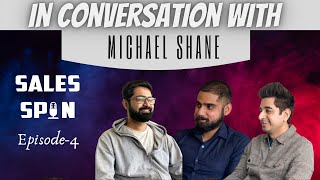
Michael Jerome Shane talks cold calling with host Rahul Wadhwa. He covers overcoming rejection, using creative openers, and why tonality matters more than what you say. Role-playing before calls helps you sound human instead of scripted.
You and until the end don't need to pretend. Yo, what's happening, guys? You're listening to the Salespin podcast and I'm your host, Michael Jerome Shane. And today we've got a really special guest, Mr. Rahul Wadhwa. So, Rahul, welcome to the podcast. Well, the funny story, he's supposed to be introducing me, but I hijacked.
You stole the thunder. I'm sure his intro was much better than all of our previous intros combined. So great job done there.
Time for some updates, I think.
I think you already impressed everyone who's gonna watch this one. Okay. How are you doing, man today?
Doing very well, Rahul. Thanks for having me on the podcast. I mean, super excited.
I am super excited to host you. I think I have tons of questions. I think. I think we've known each other for like six, seven, eight months maybe. Yeah.
Six, seven, eight months through LinkedIn.
Yeah, right. I think. Yeah. I do keep a tab on good SDRs. Yeah, I'm trying to be that. That guy from Taken. Right. I'll find all the good SDRs whenever I can. I haven't really watched the movie.
I haven't really watched the movie.
Okay, never mind. All right. You remind me of. He reminds me of one of my other sdr. I can't recall. The way you laugh is exactly like the same. I mean, if I could close my eyes. Yeah. I'd be like, I'm talking to him. Anyways, so, yeah, I think, like I said, I want to start on the note that you are, I think these first sdr, who has probably started a podcast from India. I've not seen a single sdr, especially, you know, starting that. So that's a great achievement. Already there. I see that you've hosted like a couple of people I would want you to talk about, like, what got you started? You were just asking me what got me started and you already got my answer. Now you tell me.
Looks like we're turning tables. But, you know, the reason I haven't got started with that podcast is one I realized I suck at cold calling. And, you know, being an sdr, I think one of the major things that you need to nail. I mean, so cold calling is something that, you know, let me take it a little back. So backstory was I was in field sales at Uber Eats, and, you know, I was signing up all these restaurants. So there, you know, it's high velocity sales. So per day you get to close like four, five accounts and you think you're a great salesman even without you you know, learning about any new skills because, look, you got swiggy, you got Zomato, just another addition. So there was nothing crazy about selling there. So it was pretty easy. I think I got a little too cocky, a little too taken away. I was like, sales is my thing, and I can easily pull it off. And there I go. My first job at Lead Squared, and I still remember, huge fan of Wolf of Wall Street. Been, I think, on WhatsApp like, 16 times in a row. And I thought, like, first day when I pick up the phone, I'm gonna sound as smooth as Jordan. Like, the reason for my call today, John, is I thought, that's how I'm gonna pull it off. But complete 360, I resisted the phone for almost, I think, six, seven months there.
Wow.
It was just, you know, occasional calls. I used to pick up calls like here and there, but it wasn't like, hey, I'm gonna sit and, you know, do a cold call. And that was something that made me want to get away from being an sdr. So I wanted to quit being an sdr. I don't really like that because, you know, cold calling is something. And then I just realized, you know, if there's one thing in life, it's. I mean, it's just not cold calling. If you look at it right, anything in life, the only two things that keep people away is one is fear, rejection. And around this time, you know, I happen to read these. So I'm big on these pickup books and stuff like that. So the book called the Game, and just reading that, you realize, like, even the best pickup artists in the world do get rejected day in and day out. So even if you do master your art, you can't control the outcome.
Right.
The only thing you can get good, good at is what you do. So that's all. And ever since, you know, that was something that I was struggling with, handling rejection. But then, you know, I started applying a couple of tips. You know, just going out, just, you know, interacting with random people on the street, just saying hi to strangers. I still remember, like, I haven't done as many as I wanted to, but I think I've, like, you know, spoken to six, seven strangers in a row. And, you know, first was pretty terrible, first two, pretty terrible. But eventually you get the hang of it, and then you feel so pumped that, you know, you keep doing more sets.
How did you survive without cold calling for six, seven months?
Emails. And it was a lot of LinkedIn and, you know, a lot of voice notes and stuff like that. So this was sporadic calls, right? It wasn't like, hey, I'm setting a time, you know, every one hour, like.
A complex or something.
Yeah. So if I had a number, pick up the phone, give a call if I don't have the number.
So it was really strategic. And I might say, if I want to sugarcoat this, that, you know, you would probably pick who you want to call. Not call, like, call a list. If you have 100 prospects, you will not call everybody. You'll be like, hey, this. This guy is probably opening my email twice or thrice.
Just respond to him.
Yeah. Based on the engagement, you'd probably take that call.
Exactly. And like, especially I used to do this pretty terrible thing. So I look up the profile and I see that he's a CEO. I'm like, dude, there's no way I'm calling this guy.
Hell yeah. Okay.
And supposing he's an investor, hell no. There's no way he's even hearing from me. So that was how I felt. And then fast forward, I just realized, like, look, the only reason I'm trying to avoid being an SDR right now is because of this one part, which, you know, I fear so much. So the only two ways to, you.
Know, did you get the date tattoo by any chance? The day when you realize, hey, I cold calling.
So that's the thing I'm coming to, right? Like, a lot of folks think, like, hey, you know, I dive into sales, you know, things are just going to be magic. And, hey, you know, this is my passion. But here's what I realized, right? So I was trying to get away from sales, and at the same time, I had a really good friend who was like, you know, always gassing me about sales. Like, hey, you know, do something, sales. So here's what I realized, right? It's not like everyone's going to find something right off the bat. What you have to do is oftentimes, you know, keep, you know, surrounding yourself with people who are doing it and people who keep talking about the same stuff. And so here I have this buddy, my colleague, right now, and, you know, he kept talking about sales, sales every day. And, you know, we were sharing. And so that kind of rekindled this whole fire of, like, dude, let's just conquer this thing, right? Why am I running away from it?
Why am I?
And so that's one major step. And even today, like, I don't feel rejections anymore. Picking up the phone, like, that's something I don't really care about much. But What I'm getting good at is why I'm getting these guests on the podcast is to actually learn the, you know, the skill. Like, how do you maneuver cold call? How do you go about. Because these guests are like, you know, of course pros. They're doing this for, like, 27 years and stuff like that. So there's definitely a lot you could learn, and you might want to learn from the best rather than, you know, just trying and failing. So learn from them. Implement it. But one thing I'm proud is that, you know, gotten rid of that objection. The fear of rejection.
So awesome. Yeah, I think that's. That's a leap forward, right? It's like something I'm pretty sure, you know, a lot of people who are watching this, especially SDRs, they go through this every day. And even managers, I'm pretty sure what, you know, struggling to coach their team, tell their team, hey, why cold calling is important. Even though I think every SDR believes that. You know, for example, let's say if I were to interview somebody today and I say, hey, how many cold calls do you make? Nobody would say, hey, I don't make cold calls. I hate cold calls. Nobody would say that. And there is nothing I can do as a manager or hiring manager to check whether the person has made cold calls or not. Because even if I were to tell this person, hey, you know what, let's do a cold call, I'm pretty sure he'll do a cold call, right? He will also do the whole objection handling, but there's strictly no way to find that out. And I think after being in this space for some, I also realized that, of course this is important because that's how you get the best meetings, if you ask me, best qualified meetings, if you want to, let's say, have a stronger pipeline, I think cold calling is definitely important. So what are the five tips? If five tips are too much, you can probably give three tips for anyone, let's say, who's struggling right now with cold calling. It could be the mindset. I think you're probably a better judge. So.
Yeah, yeah, like, so the first thing would, you know, if you're picking up the phone, just first step is like, you're gonna screw up your first hundred calls. Doesn't matter. And even post that, you might still screw up calls because there are things that are beyond your handle. And that's absolutely fine. You know, just here's how I, you know, started to enjoy the process. I'm like, the more rejections I get in a day the more happier I feel. So I'm like, I'm chasing rejections now. People might say, hey, you know, if you're chasing rejections, your mind is probably trained for rejections. You're gonna get more rejections. Could be true. But at the same time, like, you know, at least for me, that's what helped, like, for me to get that leap. So I was just looking at, I'm gonna make so many calls today, and if I'm gonna get so many rejections, absolutely fine. It's okay if I don't book a meeting, but at least I made that dial. I've, you know, worked on my opener. So that's one tip. Embrace rejection. Moving on to the second one. Role play. Get a buddy role play. I think you need to build before you get on the phone with the prospect. At least get your reps in. At least do some six, seven different role plays, different Personas. And my buddies have been really supportive with that. So we keep role playing before our call. And that thumbs us up, right? I put him in a different situation where I'm acting super cocky, and I'm like, hey, I'm gonna hang up. And once I'm super nice. And then. So here's another thing that trains you well, because a lot of sales reps are prepared with objection, handling. But as soon as the call goes really well, that's when they start screwing up. They're like, oh, okay, this guy is actually accepting for a meeting. Okay, okay. Like, you know, stuff like that. So we do role plays on both the ends of it. Like the bad call in third. Good to have a structure like, you know, actually check on openers and, you know, tonality keep. You need to, you know, I think the first 30 seconds, if there's one thing I could ask, even if you a bad advice, but even if you screw up your value prop. But just keep your opener tight, right? If your opener is like, you know, you. You sound like you're energetic and your tonalities, right? I think that gives you those extra 30 seconds. Now from there, you know, you can work on the next thing, like moving on from the opener to the problem statement or your value prop. So get the structure. So one of the space rejections. Get a friend role play. And, you know, get a structure with your cold calls, right? By hearty openers. Try multiple different openers. And goes back to what John Barrow says, right? A B test thing. So one of my favorite openers right now has been, hey, John, you're probably gonna hate me for this, but this is a cold call, which I haven't tried on you. And you were like, that's not something that's gonna run well. Which I realized because if you're gonna be calling to other sales folks, it's probably not gonna resonate. And this is another interesting one which I'm trying out right now is like, hey, you know, this call is as cold as ice. Do you want to hang up or would you let me do. Let me a minute to break the dice.
That's new.
Yeah, so that's something that I'm trying. I'm still not fully so into that part. That's something I'm trying. But nail your openers just by hearted and keep repeating it until it sounds natural.
Right.
You need to name your openness. That's, that's, that's key.
I think that makes sense. The last point you said about the opener, I really like that because from from where I come from or probably from where I think it's like I'm already having a mundane day. I'm already having a monotonous day. Everything what I'm going to do is already planned. And if I'm going to have an obstruction instruction, somebody's gonna cold call me. I would rather enjoy it. Exactly right. And like you said, if you enjoyed yourself even better if you don't, if you believe, you know what, it's a dead end job for you. And you actually, the least you can do is make the other person enjoy the cold call. But I think in an opening like this where, for example, if I were to hear this, I'd be like, okay, you know, this is new, let me give this guy some time. But if I were to hear something like, you're gonna hate me. You know what, dude, if you are taking this from let's say any XYZ leader and if this XYZ that has 50,000 followers, 50,000 people already know about it. Exactly right.
Exactly.
So true. So I think it becomes even crucial to experiment with your opening. I'm not saying that everybody would still know it, but let's say for example, if you're selling to sales leaders like we do, I think you would try. You would need to be like at the top of your game every day. For sure. For sure. Right. So I think makes sense. I think you gave three tips, right. Do you have two more?
So I mean, no, I'd just like to dig a little deeper on that opener because there's this one recent interview with Josh Brown and I think her name was Kendra Akela. I'M not quite sure, but she had this really funny. First off, she's a really energetic person, and I'll probably tackle it later in the video, but here's what her opener is like. Hey, Josh, this is Kendra. I'm at Starbucks ordering an Americano. Like, how you doing today? And she's all excited. And, you know, she's like, I'm in Starbucks in the middle of a drive through. Josh, how are you doing today?
Wow. Okay.
And Josh is like, well, what are you ordering? She's like, I'm ordering an Americano. How's your day going? So.
Oh, nice.
Excites people, right? So this is totally different.
I love that. I think you just. Out of all the openings, I think that that's even better. You know what? I'm actually starting my day. How are you doing, exactly? So it's stuff like that, I think. Yeah.
I mean, it's more about. It's not about the line you're using. I think it's also comfortable.
See, it's. At the end of the day, in communication, words do not matter at all, right? It's all about your tonality. So how about. So I think in communication, as we realize that, you know, I think. I don't remember the exact stats, but I think more than 90% is your tonality, how you say things matter. I think we all know this, right? If you ask anybody, hey, do you know that what constitutes the whole communication, Everybody would say, oh, it's stone. But when it comes to. When it comes to, you know, actually doing this, people. People constantly know words. So I'll give you a different example of this. Everybody, you know, thinks, you know, I need that perfect opener.
Exactly.
So if you ask anybody, why are you not getting success with cold calls? They would say, hey, because I don't have the perfect opener. The chant, like you said, you don't need a perfect opener. What you need is you definitely need few words. You definitely need probably new words, new, new sentences to open up. But at the same time, what you need is, like, more tonality. I think this. And at the same time, it might sound as easy that, hey, it's tonality. I can do it. But if you think about it, when you. When you go deeper into this, you realize, oh, dude, there's too much to it. You want to probably be able to understand people on the other end when you're not able to see them. You want to probably be able to mirror them at times, maybe bring your tone down when you see they are actually down. Because this is What I see, this is what I hear most of the time. And I. Doing the call, listening, I realized, hey, my rep is so chirpy, and the prospect on the other end is, like, almost dead. I'm not saying that, you know, be you. You be that, too. But I'm saying bring your tone down a little so that you can try to tell the people, hey, I'm with you, man. You know, I know what he's going through. So somebody. So I think in one of the. One of the cold calls, one of my rep actually found a prospect who said, you know, his friend died. And my rep kind of lost it because my rep had, you know, lost a friend recently himself. So it took him a lot of courage to actually get back and, you know, finish that cold call. He was able to book a meeting, by the way. So I think, like I said, I think at the end of the day, it's all communication, but at the same time, it's also about making yourself in control, you know, keeping yourself in control. And this all comes when you invest a lot of time understanding the human emotion. And I could be. I could be probably going overboard.
No, no. I mean, that's key, right? Like, here's the thing. So people think right off the bat they're probably gonna get good with the opener. But here's what I said is first, at least memorize that line, right? So memorize that line so that you don't skip those words and then try it with different, you know, inflections, probably with an Uptone or however you want to. Like, even for that matter, the line that you hate the most, like, hey, John, this is Michael you're with.
Yeah, I'm not saying it. It's not gonna work. I'm saying it's just too overused now.
It's overused.
It's also. So, for example, anything. And this is something which everybody has to realize that in sales, you know, things. Things. Things change, you know, faster than fashion, right? So fashion might stay a season, fashion might stay a few months, right? Openers like this, the moment, you know. So, for example, one of. One of the opener I've heard most of the time is, can I have 30 seconds to, you know, tell you why I'm calling? While there's a whole lot of science behind it, there's a lot of emotion behind it. There's a lot of theory behind it. It's so overused now when you tell me, can I have 22.7 seconds? Can you. You tell me, can I have three? You know, 30 nanoseconds or whatever. Right, Right. You're changing few things again. But. But if you can do something like this funny. For example, can I have 22 by 7 seconds? Yeah. Which is never ending. Right. If you think about PI. Right.
It's all pattern interrupting.
Yeah. If you can figure out more ways to pattern interrupt, I think then. Then you've nailed it for sure.
I mean, that's major key. Pattern interrupt, like, just be creative. I think sales folks do have certain things that have been working for them.
So.
But, you know, just think out of the box. Just do something on your own. Like, you know, there's this another rep, Matt, who had this, who's like, hey, you know, there's so many seconds in a day, like 89,000 seconds. But would you mind if I just took 39 seconds to tell you?
Oh, that. That's even better.
That's a good one. And even though ones from the sales rebellion.
Right.
Like, hey, can I reinvest 30 seconds in your day to tell you why I'm calling? That's. It's a pattern drop.
Like, you know, so I think it's all about the pattern interrupt. So maybe some. Someone, let's say, who has not done this before, someone who has relied on a lot of openers from, let's say, sales leaders or maybe his own. Or his or her own manager. How would you suggest that people look for these pattern drops? Find these patterning drops sometimes, I mean.
Like, to be honest, I mean, it's. So I am a huge hip hop fan, so I listen to a lot of rap music. So one thing in rap is word plays, right? So the idea behind, like, hey, this is a cold call. Can I break the ice?
Right?
And so this call is as cold as ice.
Nice.
Can I. Would you want to hang up or can I break the ice now? You know, you just catch on those word plays and, you know, you try playing around the words. But even beyond that, I think, I mean, sometimes, you know, I've seen people doing this. It's not like I have done this, but I've seen people who are just like, hey, this, like, you know, super excited. Like, especially Mark Mac. He just picks up, hey, this is Mark Mac. You haven't heard of him yet. Come on. How can you, like, have you missed on Mark Mac? And he says it's just a tonality, and, you know, it's just him being him. So I think you shouldn't really think that much. But at the same time, try something just. I mean, you're gonna fail you're gonna fail regardless.
I'm seeing a pattern. I'll tell you where I'm coming from. So I have. We have an account executive in our company. I was talking to him about you yesterday. He's also. He also comes from the same background, like hip hop.
Okay.
Okay, interesting. So I'm pretty sure, I think next thing. Next new thing in the sales would be, you know, you get better at cold calling. Learn hip hop first. So he taught me a thing or two. And I think he also invested some time yesterday into writing our own email. Our emails and where we were talking about the spy thing, you know, 22 by 7 seconds, right? And he writes really good email. So if you. If you like. And he's like, you know, he can write songs on the spot. Like, I'm sure he's that good. So I'm pretty sure, like, I can see a pattern. So I think next. Next. Next episode we do. We could probably learn those structures for sure.
I mean, that's the thing, right? Like, you know, another thing that kind of, you know, up towards SDR is copywriting. So for you folks who are listening out there, like, if you want to learn how to be creative with your emails, go follow Honeycopy. That's another website called Honeycopy. And there's this copywriter called Cole, and he sends these newsletters on a weekly. There's so much you can learn from those newsletters. Like those. Like, in a pool of all, like, you know, Josh talks about all those white X's. You got to be the red one. Like his email. Even if you've got millions of emails coming from everywhere, I still end up clicking those emails. That's how good his emails are. That's how good his subject lines are. So you guys need to subscribe to that newsletter. So there's a lot from your. From that you can learn. You can. You don't. I mean, just reading his letter, right. You could learn a technique or two, like how to infuse humor with your first few lines. Like one of the mails pretty recently. Yeah, it's fine. I mean, you guys need to just check that out.
Okay.
Because it's a little on the, you know, 18 plus side of things, but he's got some really good humor with his emails.
Okay, I'm glad you said that. So again, though, that's a great advice. What I believe is, and this is something which I've realized after, let's say, going through the entire Josh bond training is if you realize, you know, his templates are like, class apart, no doubt about it. But when you go deeper, when you do the training twice or thrice, you realize a pattern. You realize that he has mastered few principles, for sure. The desire, you know, how to create that unending desire. Right. And I think that that is what probably led me to, you know, go deeper into these principles, which I believe kind of gives me the confidence. For example, today I. I would have when I'm writing emails or when I'm, let's say, doing anything, for example, writing even a post. Right. You know, doing a video or anything. Right? It is. I. I read this book called the Laws of Human Nature. Okay. I've been reading this for a year. I still haven't finished. It's a total.
Peterson.
No, no. This book is by an author called Dr. Robert Green. Okay, okay. He is like a master of psychology, you might say. And every. So he has like, I don't. I don't even know how many principles are there because it takes me like one week to like, read the entire principle because I'm making notes. I'm going through this. So I would advise, if you really wanna, if you think that, you know, you want to be in sales for two or three years from today, read that book and just don't read it. Like I said, it's not something which you will finish like a storybook. Right. Take six months, even a year, just focus on that book. And I don't think so after that, you need to really look for tricks or tips because now you would have that mindset. You know, I want to create that urgency, or I want to create that desire to get urgency. I want to create the desire. So it also takes examples from the history as to how people in history were able to do it. Talks about how Chanel, when she launched the brand, how she was able to create that desire, then, you know, pulled herself from the market, which created that urgency that, you know, people actually desired her product even more. It's like the same thing which OnePlus does, right? WordPlus did initially, right. Hey, exclusive by invitation only. People are like, you know what? It must be something crazy, right? I didn't follow her all for it. I mean, I didn't like OnePlus from the beginning, but that's a different story. But yeah. So again, and if you understand, if you want to go, if you want to touch the surface, I would say you can start with this book by this guy, the Art of Thinking Clearly. It talks about the biases.
It talks about Daniel Kahneman or something.
No, no, that's not the one. Okay, you're wrong with authors, man. Terrible. Yeah. So this book touches like all the biases, like on the very surface. So you would have to again, understand, okay, this, this is one bias. And then you have to probably dig deeper into that bias as to how that bias affects us. So for example, one of, one of the things I really admired about that book or about one of those chapter one biases talks about is the effort justification. So it's like, for example, let's say you have been into sales for one year, you've no had no success, you were terrible. And now you think, because I've spent one year, let me spend one more year just to see if I can things get better. That could be one approach. But if you are taking the decision based on the effort and time you have spent in sales, maybe you're not made for sales. Maybe you're not good at it. You literally are not good at it. I'm not saying that you can't learn it, but if you think, let's say your passion lies somewhere. But if you think, and one year probably is a bad example, let's say you've been into one profession for four or five years and now you're thinking, hey, you know, what is it for me? And that's what actually happens to most of us for sure. So I started in sales very late and I had the same apprehension that, you know what, I've spent most majority of my years doing something else. Why would I do something like all of a sudden? And that's what probably cripples all of us. So I think, yeah, I think everybody should definitely try to master the human emotion versus finding these shortcuts, finding these templates.
That's so true. I mean, that's so true. I mean, I mean, I couldn't agree more on that because end of the day, look, it's people that's going to buy a product like they all say, right? It's you're interacting with human. It's not like it's no algorithm, it's no email that you're trying to trick. We're trying to get past it. Humans, end of the day. So that's another reason that keeps me, you know, still at sales. Because if you master sales or even get even like 5% better, you're doing way better than the majority of people. Because end of the day it's just communication, connecting with people, demonstrating value and stuff like that. So this could not just be in you closing a deal, but even everyday things in your life, probably, you know, you're negotiating rent with your landlord, or you're just trying to, you know, ask someone out, like trains you just to be ready. I think you're so true with that. End of the day, it's all about human connections and, you know, the temp. You could have 100 templates, but it's the same thing.
Yeah, it's the same damn thing.
That's so true.
Yeah, true. I had a question as to how you are a better wordsmith, but I think you already answered that because that's because of hip hop.
I'd like to think so. I used to write a lot of, you know, battle rap back in the day. So a lot of word plays, a lot of similes and metaphors. My skills have been a little rusty. But like I mentioned, you know, Josh Braun was born with, you know, copywriting tricks. And at one point in time, right when I wanted to quit sales, I was looking at copywriting as a career. So then, then I started digging deep into all these copywriters that you have.
And, you know, any inspiration from Mad Men, maybe? Were you trying to be that?
The funny story is I just watched Madman like, what, two months back, so I'm pretty new to that. But I've been loving the show. So I've been watching. Binge watching that. I think that's the only series I've ever got past two seasons because I. I suck at keeping up with series.
So Madman, I started like six months ago. I'm still on the face of six seasons. Sometimes it can get boring. But I think I. I like anything which is based on 60s or 70s somehow. Like everything. I don't know. I mean, there's some. Something to it. Like, and the music, if you see it's like, especially the outro. Outro. And even if you hear that there's a song called Babylon, okay, it's like 70s or 80s song, and they play it on the record, of course, in the series. So it's amazing. Yeah.
Oh, okay.
Okay. Michael, thank you so much for coming on the show. Before we end, we have a rapid fire, just like, for everybody. Explain sales in one line. One sentence, people. Okay. What do you like about sales?
Sell anything.
What do you hate about sales activities? If you were not in sales, what would you be doing?
Copywriting.
How often do you read? Every day. What do you hate about talk shows?
People talk a lot.
Okay, best advice for writing emails, Just be you.
I mean, throw in some humor. Just do your thing. I mean, don't subscribe to any templates.
And all that be you worst call opener.
How are you doing today? Super plain. Like, not even like, hey, how you doing today? Like, hi, John, how you doing today?
Okay. This was fun. Michael, thank you so much for coming on the show. It was great to host you.
Thanks for having me.
And we plan to if we'll see if we plan to, you know, release this if it's worthy of our the salesman brand.
Hopefully I made the card, so, yeah.
We'Ll stick together if we.
More from Rahul

The SDR Role Is NOT a Stepping Stone | James Buckley on Cold Calling, AI & Career Growth




Trupeer Hired an Enterprise SDR in 1 Day. He Booked His First Meeting in Week 1



