How to sell to Sales People? |Ft. Nimit Bhatt || Episode 12 ||
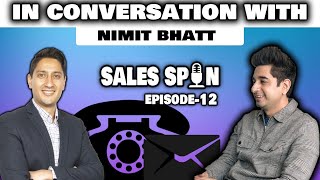
This is a YouTube video titled "How to sell to Sales People? |Ft. Nimit Bhatt || Episode 12 ||" created on June 2, 2021. It features a conversational interview between Rahul Wadhwa and Nimit Bhatt, a sales leader with extensive experience in sales development. The discussion focuses on strategies for selling to salespeople, emphasizing the importance of cold calling, personalized outreach, and unlearning traditional sales techniques when targeting sales leaders. They also cover practical advice for SDRs on improving cold calling and email outreach, sharing insights on sales career progression and effective communication methods.
A lot of SDRs I know are selling to the US, especially to sales leaders from India. Without being trained on what it's like to sell to a sales leader, few of you were never told it's important and hence never felt the need to unlearn things when you stopped selling to IT managers, CEOs and other titans. Our today's guest is the head of sales at an organization for the last 10 years. His company specializes in hiring SDRs who book meetings for other organization and hence speak to a lot of sales leaders themselves. Let's learn today the things you need to do to succeed as a rep and also things you're probably not doing which will catch the attention of a leader. Without further ado, I welcome Nimit Bhatt. Welcome to episode 12 where we have a sales leader from us. And I think this was kind of on, based on request of a lot of Indian SDRs, because my SDRs and a lot of SDRs I know in my circle are kind of trying to sell to us and. And they have lots of problems. They don't know the culture, they don't know how things work out there. They're kind of scared sometimes. They don't know if they're actually cold calling the right person, how the other person will take it. There are just gazillion thoughts which are going in their head. So Nimit is here today to address all of them and he's going to talk about how he was able to grow from SDR to head of sales in 10 years and currently in the sixth role. And what we would like to know is everything about a sales leader at US and us, Nimit. So what can you tell us about that?
Yeah, so, I mean, when it comes to, in terms of, I guess, what, targeting sales leaders, you know, I kind of equate this to. If you think about two people that do the same job and when they talk about performing that job to each other, the way they talk about it's gonna be different than if they talked about it to other people. So an example would be, so, like, I'm in sales, right? I'm head of sales. My wife is a pharmacist. When I talk to her about what I do for my job, the way I talk to her about can be completely different than the way I talk to you about it, Ronald. Right, because you're also in sales. And the same thing on her side too, is whenever we would go out with, you know, her friends who are other pharmacists, when they talk to each other about Their, their job, it's like. It's like a foreign language to me. So when you're talking, when you're a salesperson reaching out to another salesperson, you should be speaking completely differently to them than you would to any other profession. It's. If you're reaching out to directors of IT or security or marketing folks, the way that you talk to a salesperson needs to be completely different. And what I mean by that is, you know, as you're learning how to be an SDR and how to cold call and how to have these conversations, you learn a lot of sales techniques, right? You've learned about how to open the call, how to get in the line of questioning, how to talk, how to handle objections. When you're talking to a sales leader, you have to throw all that out the window. You have to use the anti technique. You have to be more human. You have to be more genuine. Right. You have to focus more on building credibility with that person. Those are things you need to be focusing on. You have to really, you know, when you open up a call with the sales leader, it should be more of, I'm reaching out to you, salesperson to salesperson. Just want to take 30 seconds to tell you about why I'm calling, and if it makes sense, great. If not, I'll never call you again. Right. Just being very upfront with them, very genuine with them. That's the first step to getting into a conversation with a sales leader.
So what you're suggesting is when you're. If you were selling to, let's say, anybody else, you know, but salespeople earlier, and if you're for the first time, let's say if I'm going to sell to sales leader now, I have to unlearn everything. What I've learned so far.
Yeah, I mean, you're learning kind of different techniques, but by doing that, you're getting. You're kind of kicking everything out of your mind that you would use for some of the Personas that you're reaching out to. Talking to a sales leader, if the conversation is going to be less salesy and just more just an actual conversation, because they know, they've heard every technique in the book. And as soon as that, as soon as a sales leader smells blood in the water, I mean, you know, it's over.
I would agree. And there's a thing which I believe either selling to salesperson could be the easiest thing or could be the hardest thing because one, they know every damn, you know, technique in the book. So you can't really use that. And I see a lot of leaders. Sorry, a lot of SDRs kind of use that. I would be guilty. You know, my SDRs kind of use that, too, sometimes. Trying to make the other salespeople guilty. Right. Hey, you know what? Throw me your bed. Throw me your best insult. And they know that it's something. It's a bookish thing, right? So everybody has kind of learned. And at the same time, I think the last time we talked, we talked about this, that you and me, let's say, follow the same sales leader, right? And if you're following their sales technique on you or either me, Right. We already know about that. We already know where this coming from. So we can already sense this, like, from miles away. How do you. How would you train or how would you untrain, let's say, SDRs from not adopting those techniques?
Yeah. So, I mean, so first. First and foremost, using the upfront contract, right? So when. When you get them on the phone saying, you know, hi, hi, Raul is a nimmic calling from memory blue. Am I catching a bad time or what? Am I interrupting right now? And kind of just going straight to the point saying, well, quick reason for the call. We've been working with other sales leaders like yourself at companies like XYZ to help do this. That, you know, quick question, and then you go into kind of your first engagement question, right? And then. And then try to get into a conversation with them. You know, if they say, hey, you caught me in the middle of something, I don't have a lot of time saying, okay, nope, no problem. Just can't have 30 seconds to tell you why I'm calling. If not, I'll leave you alone. And, you know, nine times out of 10, unless they hang up on you, they're gonna say, all right, yeah, sure. Because they get it right. They understand at the same time. And, you know, I'm just speaking from experience as a sales leader myself. I don't ever get phone calls anymore. I get lots of emails, lots of emails that are mixed in with all the emails that I get just from my day to day and just by working. But phone calls I don't get very often. And when I do, I'm more likely to pick up the phone because it could be one of my prospects. It could be. You know, I never know who it could be. And I'm more likely to listen to the voicemail and see that right before it was, you know, your phone's always getting blown up. But now, I mean, I get emails from salespeople which is crazy. I get emails that say, hi, Nimit, just left you a voicemail, wanted to follow up. And I'm like, no, you didn't.
You leave me a voice.
But I don't see a voice go anywhere, which is kind of, it's, it's not good for the industry that that's happening. So when you're reaching out to salespeople, pick up the phone. I totally understand if you're reaching out to somebody on the IT side of things or something. You know, some of these where they never answer the phone, they do everything on the computer. They're not very social people to begin with, but salespeople, they're glued to their phones. They, they're used to doing business over the phone. They're used to calling their own customers over the phone, and they know the value of, of having that type of interaction with their prospects and their customers. So it's only fair that you know that, that, that if, if, if you're a salesperson that calls them, that they should give you a couple minutes to, to tell you why they're calling. I think that that's a really important piece.
I would totally agree. I mean, there are times when I'm in the meeting and I know that I'm kind of expecting few calls, even though the, I, I, I can't see, you know, on the iPhone, whether, you know, who I'm getting the call from. And I would tell my team, hey, give me one minute. I just want to, this, this is probably important. And turns out it's not important. And the other day, I think we were in a sales meeting where my director of sales kind of, kind of got the sales. Sorry. Kind of got a cold call and he actually booked the meeting. He actually took the meeting. Yeah, because he also thought, you know, it was kind of important. It was actually 2am and he did not realize where the call was coming from. But yeah, so you're absolutely right. So at the same time, what you're saying, Nimit, is salespeople are kind of also getting glued to, you know, not phone, not voicemail. So there is a big window of opportunity which everybody's leaving at the table. Especially when you're selling to salespeople.
Yeah. I mean, it's way easier to click a button and send out, you know, 300 emails than it is to make 300 phone calls. There, there. You know, cold calling is not fun. Right. I mean, it's not, it's not a fun thing to do. There are ways to make it fun, but Overall, most human beings, it's something that they have, it requires them to get out of their comfort zone to be able to pick up the phone and call somebody who've never talked to before and try to get into a conversation with them. So because there's this, this big rise in all these different sales acceleration tools, a lot of sales organizations, I feel like now that it's like, it's like tool fatigue and there's just too much out there. And a lot of it, I mean, look, a lot of it's very, very good and it's gonna help you in your sales process, but there's a lot of it out there. It's just an excuse to not pick up the phone. I'm a big believer in using these sales tools as part of the cadence, as a way to personalize your message, as a way to send personalized touches in between the phone calls. But there are some sales organizations I've come across where all of their outbound is done purely over email. Like they don't see the value in the phone at all. That might work for their industry. But if you're targeting salespeople, you have to do it over the phone. I'll tell you, just last week, my team of ae, so myes are full cycle ae, so they're the SDR and they close their own deals. So they don't have SDRs fee in the meeting. So they're required every day to do the outbound. And we track their metrics like we would like with SDRs. Last week they averaged a 22% conversion rate over the phone. So that's getting to a conversation and converting that into a meeting, which is just, I mean industry wide like that, that's just, that's double what the industry typically sees. You typically want to be around a 10% conversion rate. That's when you know you're doing a good job. But last week, which is crazy because, you know, here in the U.S. right, I mean this is when summer is really, really kicking up and people are starting to take vacations. So you feel like you're getting in touch with less people now that a lot of travel restrictions have been lifted. But they like they had a 20, 20%, 22% conversion rate over the phones. And my A's are all targeting VPs of sales, VPs of marketing, CROs, mostly salespeople. And I think there's something to see there in those numbers.
Yeah, I'm sure there's a lot we can learn from. I'm sure you have a playbook right?
Yeah. I mean, it's not as pretty as I'd like it to be, but it's there.
You guys have an interesting model. I mean, I thought you guys are already probably in comparison to let the other outsourced SDR agencies, which kind of runs, for example, something like predictable revenue where they have their own SDRs. But you have like a pretty cool model where, for example, if I like your sdr, the one who are working for our company, I can probably hire them. Right?
Exactly.
Yep.
So it'd be similar to if you went out and hired your own SGRs, except instead of only interviewing them a few times and then hiring them and kind of taking that risk, outsourcing the function to us. First one, because, you know, we work in the emerging technology space mainly, so these are companies that maybe they tried an SDR function, didn't go well, or they're just starting up the sales development team, they just got around to funding and they need to kind of drive more top of the funnel pipeline. So first it's a way to just to test to see if it even works. Like, all right, let's use an organization where all they do is sales development, SDR work. If they can't figure it out, then we need to make some changes here internally. But then also they get to see these SDRs in action and then from there, if they like the person, they can hire them and bring them on. So it's this model that allows us one, we're always hiring SDRs. Last year we hired 221 SDRs company wide. We're going to demolish that number this year. And we're always hiring and we're always having people leave because their clients are picking them up. So last year we had an average of 1 SDR leave per week of all of last year being hired by their client.
Wow, that is, that is more than like 10 startups combined, if I'm correct.
Right? Yeah, yeah. I mean, we have over, we have over 200 SDRs active currently in the company too. It's, I mean, that's all we do. Our people are our product and, you know, if they're not producing, then we're not keeping clients happy.
Right. So, nimit, you just stress on the importance of, you know, dialing when you're dealing with salespeople. But at the same time, I think we have to also understand and acknowledge the notion that why pick up the phone when email is working? Why pick up the phone when LinkedIn is working? So, for example, LinkedIn came up with Their own restrictions. You know, a couple of weeks ago, where you can only send like 100 invites a week, which was earlier, probably 100 invites a day. So your productivity kind of got slashed to, you know, maybe 1/5 in case you were kind of relying on LinkedIn and email only. So at the same time, while there are a lot of strategies, you know, which are out in the market with a lot of sales healer pitch techniques. Right. Why do you pick up the phone? You know, it's not a scary thing, but at the same time, you think about it, I can probably, you know, sleep, I can probably lie down in my bed and I can actually send 500 emails a day. I can do the same thing with LinkedIn. Right. Cold calling will require a lot of efforts. Like you said, it has, it requires you to come out of your comfort zone. So let's talk about that a little bit. Like, why do you think cold calling exists? Why should it exist? And why do you think it's important for salespeople to really embrace this whilst not leaving their other methods of prospecting which are still working for them?
Yeah. So first and foremost, you know, if, if you are running a cadence and you're using a certain channel and it's working really, really well for you and it's not the phone, keep doing what you're doing, right? If it's not, if it's not broke, if it's not broken, don't fix it. But if you want to advance your sales career and get better, you have to be good on the phone. Because look, if, if, if you can push a button and send 300 emails and you're booking meetings, then why, why do you need to get paid to do that when a computer is doing a lot of that for you? Right. You got to think about yourself and kind of the value that you bring. And if you, you know, we call them email jockeys, right? Where, if all you do is send emails, then where's the value in kind of, what do you bring to the table? Right? You could come up with the emails. Great. But, you know, all it takes for your company to say, oh, hey, that email, it's working. Can you send it over to me? And then they kind of see whether, why am I paying this person? You know, salespeople get paid pretty well, especially if deals kind of come in or deals close. Why am I doing that when they're doing it all over the computer? So I would first look at, well, as a sales professional, you need to be able to pick up the phone and have Conversations over the phone. Because if you're an sdr, well, what's the next step for you? You want to be an AE or a closer, and what's that going to require you having to be on the phone and talk to people and have conversations. And that's going to be very, very difficult to do if as an sdr, you weren't having a lot of phone conversations. Because, you know, when you're an ae, even if you have an SDR that's feeding you meetings, you still need to take a prospect through a proper discovery. You have to make sure asking the right questions, you have to get curious, you have to navigate the conversation, you have to handle objections, you have to talk about next steps. Everything that you would have to do over the phone as an SDR is just more drawn out and longer and more, more in depth. So really, SDR and phone work as an sdr, that's practice for the real thing. I would, I used to tell my SDRs that if you get somebody over email and they're interested in talking, pick up the phone and call them. If they, if they email you, there's a great chance they're either on their phone emailing you, or they're at their desk emailing you. And the likelihood that they're going to pick up is going to be a lot higher. So pick up the phone, have a conversation with them, say, hey, I saw. Appreciate you responding by my email. I'll go ahead and book that meeting. But real quick, I want to make sure this meeting's going to be a good use of your time. I want to ask you a couple of questions and then go. And you might disqualify them, which is fine. And then you'd rather do that now than later, or you just learn more insights that you'll feed to your ae. Your AE is going to be able to use that on the call and it's going to make you look even better.
So that is an excellent point because so you might survive, let's say, 12 months, 18 months, whatever your tenure is as an SDR, you might like, be even in the president's club for, for all we care. Right? But at the same time, if you want to advance to the next level, be an account executive or be, you know, really understand those problems, right? Granular problems, which the prospect will be really facing, you would actually have a hard time doing that. So you need to really plan that ahead and, you know, start cold calling because of those reasons, I think. Excellent point. Okay, let's move on to Emails. Because I think emails is another channel which a lot of SDRs kind of use. My SDR kind of use a lot of emails. LinkedIn. So. And I know given your schedule, given everybody's schedule right now, where everybody's working from home, we are all bombarded with, you know, meetings, back to back meetings. And there might be some time when you might have a leeway where you can probably look at your email box or. How many emails. Let's start with that. Being a sales leader, how many emails do you get? How many cold emails do you get in a day?
I mean, I probably get. I want to say at least 50 to. Oh, no, you probably. I probably like 60 to 80 emails a day, I'd say. And that's, that's just internal. I mean, just, just from, from my team, from inbound leads coming in from different meetings like this and that.
I mean, it's okay.
I, I step away and go use the bathroom and I come back and there's, you know, I've got like 10, 10 missed emails and a lot of that too. We use a chat internally too, and if that didn't exist, the email number would be a lot higher. So, I mean, I get a lot of emails. I mean, what, what, what. What attracts me are the subject lines. If I see one that kind of jumps out at me, if I see one that has my name in it, you know, because my name's, you know, pretty unique. So I see that in there. I know they kind of took the time. If they personalize in any way of like the college that I went to or where I live, that might get me to open it. But I'll tell you one thing. If I open an email, even if it's an internal email and it's just a big block of text, I'm not reading it. I mean, I'm just not even. I'm not even gonna spend the time just like, all right, this needs to be kind of condensed.
So.
And I get a lot of these sales emails that are just three or four big paragraphs. And I feel bad cause I'm like, you spent a lot of time putting this together and I'm not gonna read it. And no one's gonna read this.
So they spend a curating a perfect subject line, which got your interest. You were able to open it. You're saying that context, the content inside was something which kind of pissed you off.
Yeah, well, I mean, it's just, you know, as, as. As a busy professional, as most people are, you see that, you see that and immediately, like, right, like, you know, you're like, I don't really want to read this right now or I'll come back to it versus if it's something really, really quick, something short, a couple bullet points. I call it the one scroll rule. I should never have to scroll more than once on my phone to get to the email.
Fair point.
Right. And white space on a page is more calming, kind of like mentally for people. So if they kind of see, if they see a big block of text, that's going to hit them a lot differently than if they kind of see that white space in an email. It's more like a calming thing. And it's like when you see. Sometimes on Facebook you might see like an article and it'll say. Or on LinkedIn it'll say 2 minute Read next to it. Like they do that a lot. 2 minutes to read this. There's a reason why they put that there is because people are more likely to read something. It's going to take them two minutes versus ten minutes. Right. Um, so the same, same thing kind of applies to, to an email.
I do have a lot of questions from emails. I don't know how to prioritize. So let's go with this. Number one, how do you untrain a lot of SDRs who are kind of in the habit of writing those long emails? Because it's a human tendency to believe, you know, it's my first chance, I want to give everything I should without realizing that, you know what, people are not going to even read those emails. So number one, how do you untrain those reps?
I mean, I would have them pull up their response rate. And if it's, you know, 1%, well, there you go. Then we have to change something. I think a lot of it the reason why. So if you personalize an email, you shouldn't have to put that much information into it.
Right.
If you, if you need to narrow it down as much as possible to that person's title, look for something on their LinkedIn that can help you hone your message a little bit more and provide something of value to them. Right. It doesn't have to be, you know, people are just going to take a meeting, but if you can provide, you know, like, hi, Neil is reaching out. I saw that you have a team of 10 AES was curious to learn about how your playbook looks. You know, attached is an example of a playbook that we've done for a company similar to yours. Curious to get your thoughts right. Like something like that. Because that, I mean, you know, that person I'm struggling with is, you know, we do have a playbook, but I think it can be more robust. And if a company reached out to me, knowing that I manage a team of AES knowing that I'm new at the role, they can see only doing it for two or three months.
Right.
That that's a trigger event. They can kind of, you kind of make these pseudo type of assumptions. When someone's new in a role, they're going to be trying to change some things. They're kind of learning the ropes and they want to improve upon certain processes that have been existing. And if you can hone in on those things and go right for the jugular for those types of conversations, you might get a better response. And keeping it to just maybe three bullet points is huge. And it doesn't necessarily have to have a call to action of hey, let's set up a call to learn more about it. It's more it could be wanting to get your thoughts and then in the next email reply to that original email. Never send a brand new email reply to that first email with another little tidbit of information. The worst email you can send is hi Rahul, just checking in to see where things stand or what your thoughts were on the below. It's like that doesn't really do anything for me. Provide me probably with another little, another nugget. Every prospect you're reaching out to is part of a story and you want to create that story. The story might start with a phone call and a voicemail. Then next part of the story, chapter two is I'm going to send an email referencing the voicemail that I left with some more information, then chapter three might be a very specific use case. Chapter four might be hey we, we recently wrote an a blog article about this. Or you might find value in an upcoming webinar that we're going to be having. And then chapter five, right? So you're kind of taking through this whole journey and if at the end of it you got nothing, then it might be you might send your final kind of shameless last attempt email and then move on to the next prospect.
So just so I got this right. So are you suggesting that people should not, let's say, start a new thread at all or you know, should simply you the entire story in one. Because the reason I'm asking is because if you did not, let's say open my first email and if you could see my reply all the time, reply, reply, reply. And you can see this all re semicolon, right. You would automatically see I've already ignored this email so many times. Why would you open the email, let's say on the seventh or eighth attempt?
Yeah, that's true, that's true. So one thing you can do is just get rid of all the extra res and just have it just one. Right? Just kind of make a letter on the letter on the eyes. You know, I've always found the value in having everything in one email. That way if you send them a separate one, they open it, then they have to go searching for the other one. Especially if you're also calling them at the same time. If you, you know, if you get one of these people live and you say I'm following up on the email that I sent you, then you know, they might say actually hold on, let me, let me pull it up real quick. And it's just one email they have to pull up and everything's there. You know, just because someone doesn't open your email doesn't necessarily mean they're ignoring you. I think it could just be, hey, you were one of 60 emails they got that day and it just didn't catch their eye at that time. So you might want to try maybe sending emails at different times throughout the day to see where you might get the biggest open rate. But you know, I think ultimately your goal should be to get them over the phone to get them on LinkedIn. And email can be one way for them to interact with you, but it's really about that almost that subliminal messaging that you're. That as the more they see your name and your company's name, the easier it's going to be to get into a conversation when you do get them on the phone. Because ultimately that should be your goal, is to connect with them live somehow.
That is an excellent point. I do have a lot of follow up questions even right now, but I'm going to try to maybe do a part two. I think, I think we definitely have to do part two. Okay, let's start with this couple of advices. If you have for people for SDRs to improve their email writing and you know, cold calling, both. So let's go with maybe one advice each.
Yeah, so when it comes to the cold calling, you know, if you don't have some type of call recording or call coaching software, step one, that's you have to do, you know, if you're, if your company won't provide you with one or pay for one. If I'm an SDR And I'm talking about investing in my own development. I might go and try to purchase something on my own with, you know, kind of out of my own pocket.
There.
There are lots of solutions out there that you can find where, you know, you can record conversations. So if you don't have any type of call coaching solution, that's the first step. Because the only way you're going to get better is by listening to yourself. As. As painful as that can be and as embarrassing as that can feel like. Sometimes you have to. You have to get comfortable with listening to sound of your own voice, especially on these calls. And that's how you get better. Or maybe try to get a transcript of the call or something. But that's the first step. Cold calling is very, very difficult. It is the hardest thing you're ever gonna have to do as a sales professional. The biggest mistake I see a lot of SDRs making is they try to change everything overnight. And that's going to. You're going to be very, very disappointed in doing that because there are so many different elements to. It's not like a formula again, like in mathematics, right? I mean, there's a billion different directions that a call can go and there are so many different scenarios you can find yourself in. And if you are listening to your own calls or you're trying to work on certain parts of your game, I would focus on one small part of your game. Focus really, really hard on making that one part better, master it, and then move on to the next one. And law of averages, over time, weeks from now, you're going to be a lot better. It's almost like working out, right? I mean, if you're trying to, you know, whatever your goal might be is to lose weight or build muscle, whatever it's going to be, you don't start doing every single exercise in the book and expect to see results right away, right? You focus on small little wins, small little victories, right? To build up your strength and then get to the next level.
And then.
So that's my first advice for those that are still trying to develop their game. On the flip side is you can never truly master the cold call. Similar to you can never truly master an instrument. You can always get better at an instrument. You can always get better at cold calling and having these sales conversations. So constantly look for ways, even if you're crushing your number, you feel like you're the best cold caller to ever hit the sales floor. You're going to president's club, all that. Continue to look for Ways to get better. Because the last thing you want to do is get complacent. Again, going back to the working out analogy, you're not just going to keep lifting the same amount of weights forever, right? If you do, you're not, you're going to stop growing at some point. So you have to look for ways to push the weight and looking for more ways to get better. I think that that's super key. So I'll pause there for kind of the. On the cold calling front.
No, I think that's an excellent point you raised. And I would just want. The only thing I want to add probably here is I think reps kind of look up to all these great cold callers, right, on LinkedIn where there are competitions going on and they say, you know, wow, you know what? I don't think so. I can do it. It's the same analogy, right? For example, if I've never been to the gym or if I don't have, if I'm not in my best health, right. And if I look at Arnold, right. Or any and any of the bodybuilder, right. And if I say, hey, I want to make those six packs like in the next one month or even one year, it's not possible, right. Unless you have done that, you will realize that it will take probably years of years and, you know, six hours or eight hours of workout every day with insane nutrition, with insane sleep schedule and everything. That's how you get there. Similarly, all these great cold callers have probably got there because they were excellent at the craft. Like you said, they never went complacent. They simply went on improving the craft day in, day out. And that's how they're there.
Exactly. And they practiced it. They practiced it, right? Learning a new language. If you don't practice using the language, you're never gonna, you're never gonna learn to actually get into conversations. You're not gonna, you're not gonna pick it up very well.
So. No, no. Fair point. Aside from this, are there anything which, let's say. So, for example, beside getting the, let's say, called coaching software, right. I'm not sure if everybody can, let's say, get it, because there are a lot of complications around this. So even if, let's say a rep says, hey, I'm go this on my own, I'm not sure if companies allow all that technicality, compliance. I'm not sure how that works. Any other tip which you think, you know, that's something which they can do, let's say which does not involve a lot of this, like buying or maybe procuring something.
Yeah, yeah, for sure. So, you know, if you are struggling on your calls, try to determine kind of what, like take notes. I'm sure a lot of their logging in the CRM, things like that. But run reports if you can to see. All right. What part of the call am I struggling the most? Like for the meetings that I'm not getting.
Right.
Aside from the ones that I do get for the calls that don't result in a meeting and the prospect wasn't disqualified. Where is the call ending? Where is it stopping? Is it the beginning? Do I get into conversations? Is there sort of objection? I'm always running into. And kind of. For yourself, develop kind of what, what those little milestones are going to be if you, if you realize that, hey, a lot of these prospects, I'm just not like getting past my opening statement. Well, that's something you need to work on and you got to figure out.
And that's.
That's the small thing you can on this week is my number one goal this week is to get past the initial opening statement or different parts of the game. Like, one thing I was really good at was talking to gatekeepers. That was one thing when I was an sdr, I was like, man, I can talk to gatekeepers like that. That's what I'm good at, is my superpower. And I got really good at that. And I wasn't always good at it. And I focused on. All right, this is the one thing I'm going to work on this week is I'm going to get past at least three gatekeepers this week. And you have to create. Salespeople are competitive, you're wired that way. That's why you're in the role. It doesn't have to be competition against other people. It can be competition with yourself. Set goals for yourself, make it fun as much as possible, and continue to look for ways that you can improve your game. You can get better and practice and role play. Never underestimate the value of role playing with one of your peers, with one of your friends, or just recording yourself talking about it. The quicker you can develop the muscle memory, the easier it's going to be for you.
Now, that is an excellent advice. I would definitely. I'm pretty sure all of the SDRs would kind of benefit from this. Or what about emails?
Yeah. So a lot of it's going to be data driven. Right. But one thing, one thing I would tell my SDRs to do is each Week, look for, specifically seek out maybe 10 to 15 or 20 prospects. That man, like this is the exact person I need to be talking to. That's it. I'm not going to get a referral. This is the person I should be talking to. And start to look for ways to personalize the message specifically for that person. Not just click a button and put them into a cadence, but look for something on their LinkedIn. And it's going to take a lot of time. At first, you're going to spend a lot of time looking for things, but over time you'll find, all right, this person's been at the company for a really long time. I'm going to reference that or I see where they live. I'm gonna look at the weather forecast. I used to have SDRs that if they call somebody that's kind of in the northern part of the US and they see there's gonna be snow this weekend, they might drop a line in the subject line, hey, before you have to shovel the driveway this weekend has nothing to do with the email, but it gets an opening. So I would really focus on trying to get 10 or 20 prospects that you can just solely focus on in the email game and come up with really highly personalized emails. And if you're a sales leader, if you're an SDR leader, I would work with your team to develop, all right, what are some things that they should be looking for? How can, how can we tie those things to our solution? Or what are the different Personas that they should be going after and what's the messaging that they can use to personalize the message and capture the successes? If there are people on your team that are really good over email, see what they're doing, capture that, try to bottle that up. Because that SDR is not going to be on your team forever and you're going to want to reuse that for other members of your team and emails a little bit harder because it's different for everybody. Where they're for the cold call, it's more straightforward.
I used to always think it's the other way around.
Really. Okay, nice.
Because emails, I thought, you know, it's something, you know, you can always give a structure to and because it requires like a two way conversation. Right. Calls, so you can't really predict what other person is going to say no matter what you say. Of course you can change the tonality of a little bit. But again, you have another person in the variable in the email to just like one sided. Right. So that's what I used to believe. But, yeah, fair point.
That's the best part about sales, is that I can have one opinion. You can have completely opposite, opposing opinion. And we're both right. Right. You don't see that a lot of other professions, but in sales, you can make a case for literally everything. And that's why there's. I mean, you can go to Amazon right now and type in, you know, sales books, and you're gonna find tens of thousands of books. Most of them are just saying the same thing in just a different way. But that's why, like, you can. You can read all these differing sales methodologies and it's just like. Yeah, they're also right. It's just another way of doing it. That's what I love so much about this, is like, you can. There's no one way to do it, and everybody has their own way. That's part of the challenge in teaching it as well, is because there's no one way to do it.
Totally, totally. Thank you so much, nimit, for all the wisdom you've imparted us. I think we have reached the last part of the show, which is a small, rapid fire. Okay. It's a funny rapid fire.
Let's do it.
Nothing too serious. Are you ready?
Yes.
Okay. Pick one country to live in. But us.
I would say it'd be really. I love Italian food. I'm gonna say Italy. Italy.
Oh, okay. Your favorite TV show.
Favorite TV show. So of all time. My favorite TV show of all time would probably be Breaking Bad. I think that was probably one of the greatest shows ever on television.
No kidding. I watched that. I binge watched that, like, in one week. I remember that. That was crazy. Yeah.
Amazing.
Your favorite sales leader?
Sales leader. Oh, boy. So there. So there's a gentleman by the name of Gary Smith. He's now at Elastic. He's. For several years, he was my. Pretty much my professional mentor. He was high up at Oracle, and then he went to Informatica, where he led the entire sales. Sales development team there. And now he's at Elastic. He was a big part of my development, especially when I first moved to Austin.
Your favorite podcast. Oof.
So there's a podcast called. What is it? It's the NPR podcast How I Built this by Guy Raz. He interviews entrepreneurs, co founders, and asks them all about how they built their businesses. You get to hear those really cool stories. I've been really. It's between that one and also Robin Hood snacks, which is all about the US Stock market.
Wow. Okay. I've not heard of both of them, but I'm going to definitely give one try. One thing you hate about sales.
The hope. It's the hope that kills you in sales. That's the one part. No, the parts of sales that I don't like is the parts you don't have control over. You don't have control over when your prospect is going to look at the docusign or when they're going to do. There's just so much you can't control. And I'm the type of guy that likes to have control over things.
But doesn't that make things interesting? That's what makes it makes things interesting.
But it definitely makes things a lot. Very, very stressful.
For sure. Okay. One thing you hate about marketing, and that's the last one, I swear.
Yeah, I love these questions. What do you hate about marketing? Oh, man, I'm making a lot of trouble. No, I, I think I, I think marketing has their, some. Sometimes they, they, they have their own vision of kind of. So what any man, I've got to be really careful how I say this.
We can edit this. We can totally edit this.
Yeah, okay. No, it's all good. All good. I, I think sometimes in marketing they can kind of lose from a messaging standpoint what's going to resonate with the prospect. Sometimes they kind of, they kind of focus more on the features and the benefits. When it's more about or what the value, what's the problem that's going to solve? So I think that, that, that can kind of play, play a part in it.
Okay, cool. Absolutely. So thank you so much again. I think this was simply a joyride. I'm pretty sure everybody who's going to listen to this is definitely going to benefit from it. Thanks for watching this video. If you like the video a teeny tiny bit. Would you like the video? Subscribe to the channel and tell me what you like. Throw your best insult at me. If you did not like any part and you would want me to improve, I promise you will not offend me. Seems like too much work. Right? Let's start with subscribing and let me know in the comments what I should cover next. Thanks again.
More from Rahul

The SDR Role Is NOT a Stepping Stone | James Buckley on Cold Calling, AI & Career Growth




Trupeer Hired an Enterprise SDR in 1 Day. He Booked His First Meeting in Week 1



