How to Stand Out and Succeed in SDR Interviews: Paty Araiza
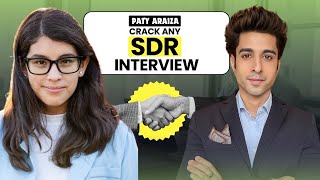
Patty Araiza, CEO of Ignite Sales Academy, shares how SDRs can stand out in interviews and succeed in sales roles. She discusses building psychological safety on teams, giving tough love feedback, and how AI is changing sales work.
You and probably everybody else is going to hate this answer because what I think is really important is being able to tell a compelling story.
What is one thing no one knows about you? Our guest today is Patty Araiza, a dynamic sales leader and the CEO of Ignite Sales Academy. With a rich background in sales enablement and recruitment, Patti has a proven track record of building and leading high performing sales teams. She is passionate about fostering diversity within tech sales and enhancing retention through impactful training programs. Fluent in English and Spanish, Patty brings a global perspective to her work. Her dedication to empowering sales professional and her innovative approach to sales training makes her a valuable resource for insights into effective sales strategy and team development. Today we are discussing interview strategies for SDR that will blow your mind. Let's hear from Patti. Thank you so much for being here. I'd love to start with your highlight. I saw on your profile that you were on Times Square. Do you want to tell us more about that? How did you land there?
Yeah, I would say like a huge coincidence. There wasn't anything crazy that I did to be able to do that and it's a little bit of a, of a shock. So I use topmate, which is a site basically to help creators monetize their time. And so I had a topmate website and I've gotten a good amount of bookings and stuff. I'm one of the top creators that use topmate and so their marketing team reached out to me and said, hey, would you be willing to make some LinkedIn posts about your experience using this product that you're already using and in exchange, we'll feature you in Times Square? And I was like, hell yeah, that seems like a really good trade. And that's pretty much it. I made some posts and then they featured me in a billboard in Times Square, which was absolutely awesome. And I just got really lucky with the opportunity.
It's amazing. And I'll tell you, I'm going to steal that idea because what I've been planning is I want a bootcamp where I help similar to you, you know, SDRs who are probably selling to consumers right now, get there and start their career in B2B. And one of the thing we do is we kind of give them rewards based on how they perform, number one, number two, number three, like a cash reward plus some recommendations and whatnot. And after I saw your idea, I thought this is a great idea because I could feature them. You know, I could actually feature the top performer on News on Times Square. And I think that would be some Hell of an achievement because that's. That's huge.
Yeah, no, it gets definitely a lot of attention and it was a great thing to. To come back to after being away.
Yeah. Awesome. So, Patti, I see you run something called Ignite Sales Academy. Please tell us more about this.
Yes. So I launched Ignite Sales Academy back in April with the idea of doing something, I guess, very similar. Running a SDR bootcamp, training, helping to bring people into tech sales. And then it actually kind of morphed into something completely different because a lot of people were looking for help with interviews and coach in that aspect of breaking into tech. I started doing interview coaching and then I had brought that up to somebody else who was like, oh, well, if you have like SDRs, we're hiring, like, is there a fee that you charge? And it kind of then turned into recruiting. So now Ignite Sales Academy has the name Academy, but actually it's a recruiting agency. So I do tech sales recruiting for primarily startups, so like seed round to Series B and helping them to scale and build their sales team and bringing the background that I have in sales to hiring and making sure that the companies are bringing in good, qualified people. So that's pretty much what Ignite Sales Academy focuses on.
Quite a transition. Right? You know what I mean? When we run our bootcamp, we are trying to do something similar, but back in India and ever since I moved to the U.S. i've also got requests from people and I'd love to send some of your. Some of the referrals your way as well. Companies who are hiring and who are seeking our help to hire the SDR in the us I'd love to understand, like, how do you do it? Like, do you have a team who reaches out to these candidates? How do you build a pipeline for yourself? Or do you do it all yourselves?
Great question. It's just me right now and maybe it'll just be me for. For the long term. It might not be something that I'm. I'm looking to necessarily scale and grow a lot. Right now I source everything myself. I use a platform called Paraform to find candidate companies that are looking for candidates through there. And then from there I, you know, use my network communities prospecting and reaching out to candidates in that way.
Amazing. Yeah. That's bringing so many questions because there's a whole wave of AISDR today. So a lot of SDRs I speak to are kind of scared, you know, if their job will even sustain for the next few years. What's your view on by the way aistr, before I ask you some other questions.
Yeah. My initial reaction when I first heard about that was, oh my God, this is a hard buying. Where is sales going to end up? And I think over time I calmed down from the initial panic that I think we all have with AI of like, oh my gosh, we're going to steal our jobs and just realize that there's a human element to sales, being able to communicate and show a transfer of emotion. Right. I think that that's a big piece. When you buy for something, buy something or make a decision, it's because you were sold on an emotional, maybe on an illogical level as well. And you know, AI SDRs can't really do that. However, I do think that there's a lot of benefit in using AI and helping SDRs use AI. And I think as a result of, of the AI and the rise in that, there's probably going to be a need, if not already, for smaller SDR teams and not as big SDR teams because now you're being able to, you know, maximize cold outreach through emails. You're able to, you know, change scripts very quickly, get really refined, increase your contact rate and so you don't have to make as many cold calls, you don't need as many people. But I do think that there's still room for SDRs and there will be in far, far future, hopefully as well.
Oh, thank you so much for sharing your sentiment. When you speak to these founders, you know, early stage companies or the companies you are associating with, what do you think their sentiment is? How are they taking aisdr?
That's a good question. I think it varies. Some people are, are willing to give it a try and, you know, it works. It's a lot cheaper than actually hiring somebody. And some people absolutely hate it because, you know, now you're a robo dialer. Right. If we're referring to the sdrais that are, you know, mass cold calling and all of that. And it kind of sets a bad precedent for somebody that is actually human talking on the phone. So I think it varies, depends on where they're at and in their growth and stuff. But I think there is something very important, especially when you're starting out as a startup, to build that credibility, that relationship and to put a good brand presence by having a person on the, on the other side.
Interesting. You mentioned that, you know, how you have calmed down since the time and when it, you know, came to the market for the first time, to the time when we Kind of embraced it when we have had a chance to look at it. And while we see the merit in it, we do see that, you know. Yeah, I mean, actually I do see a merit in it and I'm pretty sure that's the same case with you. Like you mentioned, I want to talk about if you use AI or any version of AI in your day to day selling and if you can maybe talk more about how do you do that. Are there any tools you love? Are there any tools that you use on a daily basis? I'd love to know.
Yeah, I probably use ChatGPT on a daily basis. Most times a day I have the paid version and I use my phone and I use it on the computer. It's as people have said, you know, kind of replacing Google search engine. Anything that I need to know. I used to chatgpt a lot for company research. So if I'm reaching out to a company trying to get an idea of like what they focus on, if there's any podcasts that like the founders are a part of, that's a great thing to just go like summarize this in three bullet points. So I definitely use it for, for that to really help with my outreach and making sure I'm personalizing it. You don't have to spend hours doing research anymore. You can just, you know, spend 10, 15 minutes on ChatGPT and get an idea. It's not always accurate, but I figured, you know, it helps. Another thing I use it for is optimizing emails, like shortening. A lot of times I'm writing a long, long email and it's a lot easier for ChatGPT to shorten it for me than for me to try to figure out like okay, what can I cut? It seems like everything in here is so important. So I use that, I use Grammarly a lot as well, which has AI features. So for writing my emails it really helps to just hit the quick reply and then, you know, make edits on what Grammarly saying. And the last piece that I actually use ChatGPT for that some people would be surprised to is I practice role playing with ChatGPT, it gets pretty good. You can tell it to pretend to be your ICP to give you really tough objections. Focus on this. And it's helped me uncover objections that I may not have thought would come up. And so it's helped me to prepare in that sense as well.
Correct. And when you practice roleplays, that's quite interesting by the way, what kind of icps are you going after? Like you mean what are you practicing for? Like, you don't have to make cold calls to you.
I do make some cold calls in the companies that are looking to hire salespeople just to get my foot in the door for my agency. Mostly targeting CEOs since they're smaller startups.
Interesting. I had no plans to bring this up, but I would have to. I'm not sure if you know, so I run a company called Louisiana, which is AI based roleplays. So if you want to try that, you might want to try and you know, practice that which obviously will fulfill the purpose. Like I said, I was not planning to bring it. Thank you so much. Yeah, truly appreciate that. I think these are some good use cases. I'm not sure if you have recently seen ChatGPT also now searches the web. So the interesting, the way I used it yesterday where I wanted, I wanted to, you know, instead of going to each competitor website, I said, you know, research all these websites, tell me, you know, where does my website lack? And I think the kind of results I got was astounding. Right. Because it can read everything, go through all the pages instead of me, you know, going as a human. So that's, that's fantastic. I think Grammarly was one tool which I used to love before I became AI. I think it, it also helps you become better because when I used to have the paid version, I don't have it anymore. But I believe it really made my writing even better. I mean, even though I don't have Grammarly anymore, I know I don't have to end the sentence with a preposition. I'd love to talk about, you know, something that you have mentioned on your LinkedIn. You said, you know, how you promoted 50% of the SDR teams to AES Go site. I'd love to really know what did you do differently? Because that's one of the challenge I feel I've always had when my, when I would hire experienced SDRs because they would be in the rush to get promoted to ae. So I would want to understand more about, you know, the kind of company you had. What did you do differently? Like, differently. What did you do?
I don't know what I did differently simply because I don't know what other people have done. I don't know what I've done. But I think it starts with the culture and building a culture where learning and growth is at the core of everything that we did. So, you know, everybody that came through the door just had an eagerness to learn. It wasn't just, I'm here to make cold calls and make some money and, you know, I'm going to do my job and I'm going to stop here. It was, you know, let's listen to the podcast, share podcasts. We would share podcasts in our Slack channel. We would do book clubs together and read books and reflect on them. We had, I think I had an Audible subscription at the time as well. Like, learning from that. There were people on LinkedIn that we would talk about and what their tips are. So it was like, we're coming in, we're working on this, but in your own time by yourself. All these people were very invested in their growth and took steps to do that. And I very much fostered that. I had a notion page just full of, like, resources that people shared because I wanted them. There's so much out there. You can learn so much and expedite your growth incredibly quickly by. By learning from the best. So we did that a lot. I think the other piece as well, that help with helping them grow is transparency and understanding that I'm going to be honest with them. I'm going to give them the why and why we're doing things. And in return, I also expect transparency from them. And doing that provided them a level of, I would say, psychological safety where they could go out, they could make a mistake, they could take a risk, right? Hey, I'm going to say this thing on the phones, I'm going to send this email, or I know somebody because we were selling to the services industry. Like, I'm going to go up to their door, like, let's see what happens, right? Maybe it's not something that was like, you know, on our process or our sequence, but because they felt comfortable enough to take risks, we were able to learn from that and also just find success in different areas. So I think that played a part into it as well. And then the. The last piece with regards to the culture is I gave them a lot of tough love and harsh feedback on the calls, and I gave constant feedback. I'm sure some people are like, patty was really mean. But a lot of the people knew that I was coming from a place of, I care about you, I care about your success, I care about your growth, and I want you to be successful. So I'm going to give you the tough love and be harsh so that you can be the best salesperson and person that you can be. And so I think all of that, you know, kind of played into why we had so many people promoted within My team.
Wow, that's. That's definitely a lot. And I made a note of every single thing you just said. And what really stood out for me, apart from what you mentioned about the, you know, fostering a culture of learning, you know, from each other, listening to podcasts, audible whatnot. I think two things which stood out for me is psychological safety. Right. Do you, can you. Can you elaborate on that a little bit more? Because I would love to know more about that. And this is. You're the second person who's talking about that, let's say in the last. Last one. I'm guessing there's some merit to it. I would love to know more about it. Like, from what place are you operating? Why are you offering this? What. What is in it for you? How did you learn it? How did you learn it? I'm sorry.
Yeah. You know, it's funny. I learned about psychological safety before I knew what psychological safety was and knew that, that that's what I was doing. I would say, like, I come from a back. Like, my experience before being in sales, I was a tutor, and before that I was a kindergarten teacher assistant. So my whole trajectory in management and leadership has been I. I care about nurturing people and helping them. And so when I became a manager, that was. That was kind of my goal. It wasn't like, oh, I'm moving up in management to make a lot of money. Because, I mean, being an SDR manager versus being a. You are going to make more money as an eight. Like, probably like 90% of the time, like, that's the case. Right. So you're not doing it for the money. You're really doing it because you care about people. And when you have a group of people, a team that is constantly anxious, right. They're worried about, what's my manager going to say? Am I hitting the metrics? Am I, you know, did I do the right thing? Right? You can't. You can't grow from a place of anxiety because you're so hyper focused on just like, not getting fired or not getting in trouble. And so having that psychological safety of like, hey, you're okay. You're. You got a job. You know, I care about you as a salesperson, as a person ended up itself. Then it's like, okay, well, I can thrive, and I know that if I make a mistake, it's not the end of the world. I mean, you can talk about that. You know, Mike, the micromanagement and the being able to take the initiative of doing things, of going out of their Comfort zone. I know there are multiple SDRs that would meet up with the AES and, like, shadow their calls and just learn. Learn from them as well, because they have the ability to do that. So I think just not having anxiety allows people to, you know, thrive.
I mean, that is the best advice I've ever heard. And, and you're right. I think to some extent, I believe we might be. All the managers might do it, but I think I can imagine the results would be a lot different when you're doing this consciously. You know, when. When. When you. When you go out and probably wake up every day and think about, oh, you know, what the. The last thing I would want my team to worry about is, you know, and be anxious about anything, whether. Whether it is, you know, opening up to you or whether it is. If they're failing, do they know that, you know, no matter what, I think that could definitely open a lot, you know, different. Different level of growth. So I can totally agree with this. Thank you. That. That is amazing. Tell us about tough love. You know, I've heard that, but I would want. I would. I would want to see some practical examples. Like, how would you go about it?
Well, I mean, part of the, like, if I'm listening, it's kind of hard, right, if we're. Don't have a call in front of us. But a lot of times I'm, you know, I'll listen to a call, we'll pause it, and I'll go, so where did you go wrong here? Like, what the heck happened? Right? You had the person and like, I try to make it, like, a little bit of a fun, silly thing of, like, did you just, like, throw the. Like, where did the script go? You just threw it out the window. Like, explain to me, like, where. What happened? Where did you lose the control of the conversation? And so I would say, you know, I don't hold back from pointing out their mistakes when they are making the mistakes and calling them out on it, because I think it's. It's bad if you're like, oh, you're doing great. Like, you know, you could have maybe done this a little bit better. No, like, you messed up. Like, let's. Let's talk about that.
This.
This call went completely haywired. What were you going through? What was going through your head? Why did you feel that way? And a lot of times they, like, even before I even get to that point, they're like, oh, man, we're listening to this call. Like, I got to warn you, like, this is not A good one. And I'm like, okay, that's good. You're. You're conscious about it. And we can, you know, laugh about the mistakes that they made and, and work on. On being better. And I would say that's probably the biggest indication and in all the salespeople that I've hired, of the people that are going to make it in sales and not going to make it, like immediately is their self consciousness. If I pull up a call and I'm giving them feedback because I know the call didn't go well and they messed up. And I asked them like, so what happened in this call? Like, why didn't you get the demo? Why didn't you book a meeting? Right? Like, why is the follow up? And they're like, I don't know, I thought I did everything right. And like, it's a wreck. Then, you know, that's kind of a big signal of like, you don't have the self awareness to be able to identify and improve and, and I don't know, you might not be here a long time if you don't get that self awareness quickly.
Yeah, that's amazing. Thank you. I do want to go back to the work you're doing and you said how you transitioned to helping people get placed. I'm sure there are tons of tips out there, but since you run a whole company which is around interview coaching, love to know what are some of the top three tips you have for SDRS to crack every single interview?
Great question. And you and probably everybody else is going to hate this answer because it's not somebody Silver bullet that, like, if you do this one thing, like, you're gonna get all the interviews and it's gonna be awesome. You know, just, you know, FYI, what I think is really important is being able to tell a compelling story throughout the entire interview, right? Of, you know, here's my background and my why and relating it to the company's why, to the mission of the company, as well as to the why of the role. I think that is so much more impactful than just, I want to be in this role. Here's my experience. And I want to do this because I want to make money, right? It's like it's your core being and your personality. And so being able to tell that compelling story throughout the interview is so incredibly important and it makes you stick out because we all love stories. That's what sells, right? You remember that. So that would be like my first and overall biggest piece. And that's what I really Focus on when I do interview coaching is like, what's the story that you want to tell? And how can we answer every single question that you get asked narrating back to that story. So that would be the first piece. The second piece that I think is really important is making sure that especially for sales role, you're asking questions after every interview question because you want to make it conversational. And I think so many times it's like, tell me about yourself. And you're like, blah, blah, blah, quiet, like this, right? But if you're like, how does that. But what about you? Like, how long have you been a recruiter? Tell me a little bit about you and what brought you to the company? Now you get them talking, right? Or they're asking you, like, how did you get this, the biggest deal of your career? I don't know. That might be a question you get asked. You explain to it. You go about the process, the sequences, and then you can ask a question like, how does that relate with what you guys do and how you go about acquiring deals and prospecting? Does that match? Right. You're still asking insightful questions that are going to help you to get insight into the company, but it's way more conversational. And it also shows that you can control a conversation and lead it to where you want to go, because that's what sales is. Right? So that would be my second piece is. Is really focusing on doing that and. And thinking about what questions would I ask for the questions that I'm getting asked back? Because I know it's cliche, but the, like, you're interviewing them, they're interviewing you. Like is so, so important. And then the last piece, I would say is very, very, I guess, I don't know, simple. But some people don't do it, which is baffling to me. Be happy to be there, put on a smile, be excited. Show excitement in all of your responses in the beginning. In the end, don't just like, you know, sit there and like, respond. And maybe you would give an incredible answer, but like, show the excitement that you have for that role and, you know, be upbeat and do all that. It's a very small thing, but you'd be surprised the amount of people that don't actually show any excitement when they're interviewing.
Well, I would not. I would not disagree on the third one, for sure. Yeah. I mean, we all have SDRs over there because they just had to. And then they don't get selected. They don't get the reason because we really can't put a pen to it, but. Yeah, there would be multiple reasons, but that could be one. This was exciting. Thank you so much, Patty, I think I have one final question for you. I mean, let's say, while I could find a lot of information about you, I'm always curious to know something about the guest. What is one thing no one knows about you? One thing no one knows about you? I mean, of course, you close one's mind, but not something which is not open to public.
Yeah, this is. This is so random, but I. I can't think of anything else. And actually, I'm not sure if my husband actually knows this, which is pretty crazy, but I don't have an appendix. That's, like, such a random thing. Yeah, I had. I had it removed when I was younger, and so I lack a. I like a body part that most people have.
Well, well, that's. That's always interesting. I mean, yeah, I don't know anybody who does not have an appendix. And yeah, I know it's. It's. It's not. It's not a body part you really need, but. Yeah, that's crazy. Thank you so much, Patty. It was really a fun conversation. I learned a lot. I think more than any other SDR who would be watching this pretty soon? I would let you know once this goes live. But this was super helpful, and thank you so much for making the time.
Awesome. I had a lot of fun. Thank you so much for having me.
Thank you. Have a good one. All right, bye. Bye.
Bye.
More from Rahul

The SDR Role Is NOT a Stepping Stone | James Buckley on Cold Calling, AI & Career Growth




Trupeer Hired an Enterprise SDR in 1 Day. He Booked His First Meeting in Week 1



