Selling differences between US and India | Ft. Sadique Jamil || Rahul Wadhwa || Episode-15
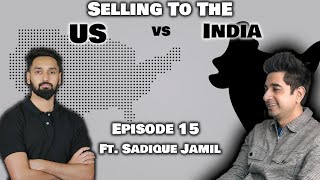
Rahul Wadhwa and Sadique Jamil compare selling in the US versus India, covering how cultural differences shape sales approaches, work-life balance expectations, and what it takes to move between these markets as a sales professional.
Today's guest is the smartest SDR I've ever hired. He was hungry, disciplined, and that is why he was able to move from SDR to an account executive in less than a year. He followed his gut passion over money. Today he's the account executive at LinkedIn where he's killing it month on month. He's probably the only SDR I know who has worked for both us and Indian market. And today he spills beans on the difference between working for both the geographies and how to succeed. An avid football fan, if given a chance, I would hire them in a heartbeat. Ladies and gentlemen, please welcome Sadiq Jamail. All right, welcome to the 15th episode of Sales Spin. Today it's special because we have Sadiq Jameel. He was my probably second or third hire. I'm not sure about the number, but he was definitely one of the smartest. Welcome. Welcome, Sadiq. How are you, man?
I'm doing good, Rahul. Thank you for having me.
Awesome. Yeah. Good to have you, man. You do look little malnourished. I might want to say that. Everything okay at home, right?
Yes, absolutely. Thank you for asking.
LinkedIn not sucking the blood out of you, is it?
No, no, it's the other way around, actually.
Oh, okay. Awesome. So, Sadiq, I'm sure today's topic is going to be very interesting because it's coming directly from the audience. It's not something which I thought of. I think a lot of people requested that. Hey, could you this particular topic because I'm pretty sure this is also the need of the hour. And before we dive into the topic, I think audience would be probably interested in hearing from you, like, how did you get into sales?
Yeah, so I think the fact that I wanted to get in sales was something that was clear to me before I even did my mba. So I got into MBA thinking that, you know, this is going to be a good platform for me to step into sales. I was doing sales before in one way or the other. But, you know, this was basically the first time that after, you know, spending some time in the college, I realized that this is something that I really want to do, which is getting sales. And then I sat for a few companies and then SAS companies. You know, when what fix came in? SaaS company was something that I was looking at but not really sure about. But then once I got into what fix, I knew for a fact that this is the space I want to be in. And you know, when you know. Right. So when I start taking calls, etc. I know this is what I want to do for the rest of my life. So that's basically how it all started.
Awesome. Tell me something about your experience before mba. So I'm sure when you got into mba, like you said, you already had decided sort of a way that, hey, I want to do MBA in sales and marketing. What probably prompted you to pursue, let's say, the higher studies in MBA, like in sales?
Yes. So I think after BCom, I kind of felt I was working for this company called Ventura Security, that I was working in security Sale, which is share market broking, etc. So I could see that there is a definite sort of gap in terms of career growth for people who had a higher degree versus the ones who were just doing bachelor's. Right. So that is where I felt that, you know, while I did want to do sales, but I felt if I have to grow in. In my life, and that growth is something which is extremely important to me, even more than money. So I knew I had to do that, you know, an MBA or any. Any sort of studies. But then, yeah, mba because it's so connected to business. So I decided to do that and turned out to be a right decision, if you ask.
Okay. I do have correct reviews, as you know. But, yeah, I do hear from people like you and other people as well, which is like, I think I've come to probably an understanding which is if you can really make good use of it, I think it's worth it. But don't do mba, you know, just for the heck of it. Yes.
Yeah. And I think it's. Given that we are in the kind of situation that we are, MBA degrees, I think it's. It's. It's very, very dangerous, I would say, because you spend so much money if you're not getting into a good college and not just getting a good college, you have to carve a niche for yourself within, you know, your batchmates as well, because everybody's competing for that one seat. In fact, even for warfare, when you guys were interviewing me, there were about, I think, 15, 20 people who really wanted to get in. So you, you know, you have to do all those calculations and then decide if it's going to be worth it.
Nice. Yeah, I think we should do another episode where you might want to talk about, like, how to crack these interviews when you are in the college campus, because that will be different ballgame versus interviewing at this time. So, yeah, I think we should probably do that. Cool. That. That is actually interesting about. About how you got into Sales, how you pursue the higher education. One thing I might want to tell the audience, I think you were probably, you were the smartest of the lot. And there's no, there's no second thought about it because I think you were able to carve your niche even at what fix because you were able to prove your numbers within, I think in the second or first or second month, if I remember correctly, then I remember, I think we used to have these book reviews, right, where I would give everybody like two weeks to do it. And you would probably come back and say, rahul, in three days, Rahul, I'm done. I'm like, wow. I mean, I never anticipated that from anybody else. So that definitely kind of showed that you showed initiative. So I think I'm, I'm, I'm always kind of a person. I want to know like what goes within somebody's head or somebody's brain or somebody's, you know, how do people function? So while, let's say other people I remember took probably a week, somebody took two weeks, somebody did not even finish in two weeks. What led you to do that? Like, did you want to prove yourself a I'm better than others? What, what led you to like finish that task or you know.
Yes. So I mean, half of it I would definitely contribute to again, my mba, we keep going back, but you know, the kind of discipline that my college taught me was, you know, we have, we were always on deadlines that, you know, we have to give a project. And for me, three days was actually a lot of time if you ask me, because we used to, you know, make presentations, like huge 50, 60 slided presentations and book review wasn't as much of a big deal. But in terms of the initiative, right. I really wanted to make sure that I stand out. I was very clear that, you know, there are 10 people who are going for that same goal. And I remember having that conversation with you wherein, you know, you said that you follow what I'm telling you to do and in a few years time you will be where you want to be. And I think that was very, very, you know, it's a strong message that a manager can send out to you that, hey, I've got your back and you know, you just follow what I'm saying and you'll do well. So I wanted to make sure that I do that and I wanted to make sure that I'm taking initiative and that kind of led me to, you know, just everything has to be done, you know, in a very fast tracked way. So yeah, that was basically it.
I like the thought. I think probably when I got into sales, my, the person who hired me said the same thing to me that, you know, just follow what I'm saying and you know, in five years you will be probably where you're not. Yeah, I told you. Right.
I've been told and this is something I'm going to tell you.
So.
Yeah, I remember that.
Yeah. So you know that I'm not, I was not lying. Okay, awesome. So for the audience, I'm sure audience by now understand what an SDR job is. That's where, that's where Sadiq came into the picture. He, you know, smashed a target like nobody else and then he move on to join LinkedIn where he's an account executive. Sadiq, do you want to tell people what an account executive in general does? And then you might want to talk about what do you do at LinkedIn.
Yeah, so account executive basically takes care of. There are. First of all, let me say that there are two kinds of, you know, processes in account executive. An account executive would look at, you know, from top to bottom of the wholesale cycle, which means you'll have to cover everything, even prospecting and then some for some refined organizations, which should be a best practice. That is an SDR team, a BDR team that passes on the lead to you. So I typically, you know, work for LinkedIn in the talent Solutions team wherein we work with companies big and small and help them with their talent acquisitions goals and strategies. And I, in my previous role, I've just been promoted again, so that's another information. But in my previous role I used to. Thank you. I used to handle the end to end, which is starting from prospecting to closing. And I didn't have some SDRs. But that was not full fledged support. I had partial support in the new role I do have full pleasure support wherein they will qualify leads for me and then I'll have to do the meetings. It's more of a field role now, but again as an account executive, which is very different to an SDR BDR role because in an SDR BDR role it's all about volume, it's about constant dials and reach outs and making sure that you're hearing 100 no's before you hear that one guess and never backing down. So I think massive respect to all the SDR since I've been there before.
Right.
So I know it's a much tougher job. But yeah, as an account executive we tend to have it a little easier.
Nice. Okay, what do you do now? And I'm sorry, I probably missed that. So when you say you got promoted, you are not handling into it now. You're, you're probably fed these leads.
Yeah. So there are MQLs that come into my, you know, SDR team and then I have a dedicated SDR who would then qualify it for me. There's another. So that's a dedicated SDR for me. I have another inbound team that will, you know, then also pick up certain leads and then if anything is in my books of business, they will pass it on to me. But otherwise, again, that's, that's partial support. Full support is from my dedicated sd. And then I pick those leads up, talk to the clients, and eventually, more often than not, end up closing them.
All right, so let's talk a little bit about the LinkedIn. I think everyone I've talked to in the past, I think everybody has been super happy working at LinkedIn. I've had, I've had SDRs, you know, who were kind of evaluating, let's say the company I'm working for versus LinkedIn and they chose LinkedIn even though it's a LinkedIn, did not pay them as high as I was paying. So what is it about LinkedIn, what people really love? I'm sure audience would love to know that.
It's a great question because I have to say this, that when I, you know, moved from what fix to LinkedIn, I did not get a lot of pay rise, so to say. So I did not move to LinkedIn because of money. I used to love working what fixed. But, but I heard so much about LinkedIn and people spoke so well about LinkedIn that, you know, I couldn't really stop myself from, you know, interviewing for them and eventually joining them. It's only when you join that you understand the kind of culture that LinkedIn has. We, we treat people first, we make sure that we understand work life balance. Every kind of individual is welcome in the company and, you know, it's a great mix and a great bunch of people. And more importantly, we are very, very true. And hon, we are. And then we like to bring our best sellers to work and the management supports you in every way. So I think that's the whole reason why people tend to not look at that monetary aspect too much and then look at the whole culture and, you know, a better life approach, if I can say that.
Nice. Yeah, I mean, that's good to hear directly from an employee, I think. I'm sure, you know, that I've had Shanton on the first episode, and he probably talked on the same line, so I know that you're speaking the truth. Yeah. Okay, awesome. So I think let's come to the topic which we want to discuss today. You started working for as an SDR while working for a US Geography so simplified for everyone. We were sitting in India, working in the night shift, prospecting into us, so we were working, like, against the clock. That's what I have done probably for the last 10 or 11 years. All the companies I've been associated with have been associated only with the US Geography because that's something I like. I think I. If you ask me, I like, I understand their culture probably more than I understand Indians. And when I say that, I mean professionally. Okay. You, when you, when you move to LinkedIn, you kind of went through the transition, which I have not gone through. So everything I ask is coming from the curious point of view. Like, let's talk about how. What is it, you know, how is it different from selling or prospecting into US versus prospecting into India or any other territory for that matter?
So there's a big difference. And I think, you know, we, we look down upon these call centers, you know, BPOs, etc, but one of the first things that they do is give you an understanding of what the culture is. When you actually move on that US to the, you know, India territory, or vice versa, you try to then understand exactly why they do it. And it makes so much sense because there's so much of cultural difference from a. From a reception perspective as to how they, you know, kind of receive the kind of messages you're sending when you call them and you talk to them. I think Americans are a lot more receptive in trying to understand why you're calling. Right. And if he'll try and then. Or he or she will then try and see if there is any benefit from that conversation. I think sadly, in India, that's not the case, wherein, you know, there are so many, I think, BPOs, etcetera, that people do tend to get a lot of calls, but they're not very deceptive. More often than not, it's always about the money and not the kind of value that, you know, spending that money can bring to you. So it's a little more difficult in India. I would be very honest in the US And I've done that job right? So I knew, I used to have a lot of conversations in India. Having a conversation is a challenge. But when you do have that conversation, I think more often than not, you know, it ends up being or going in the right direction. In the US we had a lot more conversations, but the conversions, not really, but they were, they were more open to hearing what you had to offer. So I think that was one thing that's strikingly very, very different.
Okay, let's deep dive into this. And when I say that you just, I think you just scratched the surface just now, like talking about more conversation in US versus India. Let's go through, let's, let's go into the life of an sdr, for example. Okay. How is it exactly different? And you have done both the jobs, right? If not, at least you understand what happens at let's say SDR at LinkedIn when he's prospecting in India. And I'll tell you where I'm coming from is it. And I could have like a totally bad impression, right? When I think about an SDR in India, I think about like a credit card company calling me where they say I'm calling from so and so bank. And the moment I hear the name, name of the bank, I probably hang up or I probably try to find out ways does the same thing happen in India or is it. Am I like totally wrong?
You're right in a way, I think, which is what I was saying, right, that there are so many BPOs and KPOs etc in India that every second or third call that you get is from an Internet service provider or you know, a credit card company. So I don't blame the perception coming, you know, in the picture from a job perspective, when you look at an SDR's job, I think it's a little more difficult in the U.S. i'll tell you why. Indians, while they may not be receptive, but you know, it's still easy to call in your own country, talk to people who are in, in the same continent as you are, same time zone as you are while you are in the US time zone. You're, like you said, working against the clock. You basically are expecting your first demo to come at around 4am in the morning sometimes. And you cannot, like I'm talking from a physical, you know, perspective wherein you're dead tired like you're not used to. Especially for me it was a, it was a shock because I'd never worked in the US ship before and it was very difficult to take calls at 2 in the morning or 2:30 in the morning. So from a job perspective, I think us SDRs do have it a little more difficult. I mean, Indians taking calls in India, talking to Indian side. I would say it's much easier. There's also a communication gap, by the way. Like, for example, I don't have. Have a U.S. accent.
Right.
So they know that this guy is not from India. I mean, this guy is not from US Yeah. So I think that's where the. I mean, there is a gap that needs to be filled. Right. And. But having said that, having said that, I have succeeded in that role in working in US I got used to the work timings in about, I think, one month. It's all about getting acclimatized. And some people say they get sick, they don't feel well. I don't buy it because I was really struggling in the first 15 days, but the 16th, 17th, 18th day, I mean, I wasn't feeling asleep. My. You get used to that sleep wake cycle.
Yeah. Your body adapts. Simple. Yeah.
I can't give you a definite answer because, you know, there are challenges to the Indian SDRs that us folks don't feel and vice versa. So they cannot be a correct definite answer. But, I mean, there are, you know, drawbacks and perks to both of them.
Okay, let me, let me get more specific now. So let's talk about two reasons why someone should and why someone should not consider selling to India. And think of, when you answer this, think about those people, let's say, who have been working in the US Shift for some time. They are, for example, and this could happen to a lot of people. Right. So I mostly hire people who are, who would be working for US Shift. I have been working for US Shift for the last 11, 12 years. And this could happen to a lot of people, right. Where they say, hey, my body clock is not allowing the people who want to get married, you know, settle and settle into a normal life where, you know, they want to spend more time with the spouse and all that, which is totally fair. So what are the two things which they have to keep in mind? Let's, let's talk about two reasons why they should consider, you know, selling into India and the reason why they should not.
I mean, one of the easiest things to say is the fact that you're talking to a very mature market, first of all. So their understanding of a product, I think is a little ahead of, for example, digital adoption platforms, tap, which we were selling in. What fix? I think we cannot really expect India to be in that same level of reception from a product point of view that the United States has. Also from a monetary perspective. Let me just jump right in and say that from a monetary perspective, it's very, very rewarding. And you can make a lot of money. And I have made a lot of money and, you know, I've made a lot of money and I know you've made a lot of money. So from that perspective, I think it's. It's a definite yes. From a negative point, I wouldn't say, see, it's easier. And let me bring in this, right, because if you're selling in the U.S. i think you can sell in India. I still feel you can sell in the Indian audience, to the Indian audience. But if you're selling in India, it may be difficult for you to sell in the US audience. So that aspect has to be taken into account because if you're working in the Indian time and you're used to Indian time, it's difficult to move to the US time and then change your clock. While you will have to change your clock in the Indian time if you're working in the US time. But you'll just be coming back to normal. So it's nothing extraordinary that you'll have to do. So I think that transition in itself will be very difficult if you're moving from India to us. Vice versa, if you're moving from, you know, let's say US to India. But money wise, very rewarding. Learning wise, extremely rewarding, which has kind of helped me also grow in my career. Definitely.
Okay, awesome. Yeah, I think these are, these are good points. I had another point which, when you said that. So let's consider it the other way around. You know, like you said, let's say somebody. And I get these kind of candidates a lot, right? Where they have been working for, you know, Indian company, selling into India, and they understand now that, hey, you know what? And these people are totally okay, you know, moving to night shift, it is that, you know, they're looking for that opportunity. Right. For me as a manager, I totally agree with what you said. No, there are a lot of mindset issues. And when I say mindset issues, I mean if you've been selling to India and now you want to sell to us, it's. You have to take a big leap. And I'm not talking about accent. Right. And I think we have, we've discovered that, like you said, you don't have an accent. Still, you were successful. I think that barrier has already been crossed. Right. We don't have to talk about this. I think the biggest barrier would be, like you said, you're talking to a mature audience.
Right.
In India, when you call, let's say somebody, let's say a sales manager or sales director, let's say not in SaaS company like other companies maybe where you're selling to and these people are aware of LinkedIn. But that's in the sense of the solution you're selling. So in that case they're a kind of blank slate. When you tell them things, when you sell a value prop, you know they'll buy it because they have nothing to compare. They don't know anything about it. Yeah, right. When you, when you. Now all of a sudden, let's say if I were to hire somebody as an SDR selling who's been selling to India, it'll be like a big ordeal for him. Right. No idea about the culture. And I come from the BPO background, so I have of course had that formal training. So kind of benefited me either I can of course hire people from BPO that will benefit me a lot. But at the same time, what are the two things with two challenges which you think, let's say, and I'm pretty sure by now you could, you'd also have a solution like how to fix them. So consider it. Consider, you know, go back two years ago when you have had no experience in us. Let's imagine that you started with LinkedIn two years ago. Now you have to get into us. What do you think could be the biggest challenge for you or let's say anybody? How do you think somebody should solve that?
See, I think the biggest challenge again is always, believe it or not, going to be the acclimatization to that work timing. I think that that's the biggest hurdle and more physically, I think more than physically, it's mental. So you'll have to first get used to. And I think you guys did an amazing job when you were letting me, you know, absorb the work timing, wherein I could leave at 11 in the first four, five days, then I would leave at 12, 1230 in the next four, five days and then I'd leave it 230 the next four or five days. And then after that it just became a normal process. So it's all about, you know, taking it slow. You can't just tell a guy, hey, I wake up at 8 in the morning, I go back to my house at 5 and I sleep by night. And you're now telling me to like sleep at 4 or 5 in the morning. Right. So that's not going to happen. You can't jump right in. So we'll have to take it slow. I think that's one challenge which is going to Be there, which can, again, be solved by a good manager by taking it easy. And I think the second challenge could be in, you know, understanding the kind of conversation that you're having. So you cannot have that same conversation that you have with, you know, an Indian entrepreneur or an Indian executive. You cannot be talking in that same language with, let's say, an executive. In the US they are a lot more formal, I feel, so I've spoken. And it's not a bad thing or a good thing. It's not about that's a good thing or this is a bad thing. It's more about how they are culturally. So I've had the conversations with VPs and senior VPs and SVPs and, and, and all of those things, but then they tend to get very friendly after one point of time, like to an extent that I'm not even sure if I'm talking to, you know, an executive or if I'm talking to, you know, a sales rep.
Right.
I think in the US you need to have that barrier initially. Right? You have to make sure that you're not crossing the line, let them ease into it, and then once they become friendly, it's all good and fine. But, you know, you can't really start that thing off in India. People tend to do that and get away with it. In the US you need to make sure that, you know, you have the right kinds of conversation going on with the right kinds of people. So I think that's very important. And we tend to miss that, you know, here in this region. So that can be a major hurdle as well. And I think, again, that can also be sorted for, by training, etc. In the, in the beginning stages.
Okay, what do you think companies can do except the fact, like you said, making the life of somebody, somebody comfortable, you know, where they have the relaxation to maybe gradually, you know, absorb that, shift timings. Right. So that's one. I take that as a feedback. I'm pretty sure that should help other companies or other people who are hearing this or maybe switching from India to us. What is, what else do you think? You know, let's say when you join, let's say at what, fix things where maybe, you know, hey, had I known this, I would have probably progressed faster or I would have been better.
I think. One thing. See. So again, talking from a culture point of view, and I don't want to take names, but, you know, one of the people at what fix that I used to see doing great and, you know, absolutely killing it in sales, I, I saw that not only has this person embraced the culture of, you know, us, but he's actually taken to a level wherein he knows everything and anything about the sports also that they play. So I have no idea about, let's say a baseball, right. Or, you know, basketball, etc, right. But we know that that's. They don't like cricket. So if I talk about cricket, they're not gonna, they'll be like, okay, what are you even talking about? So they need to have, we need to have a different level of conversation. So we, we talk about breaking ice, right? How do you break ice with somebody who's sitting in the US you talk about NFL with them, you talk about, you know, super bowl with them. You don't talk about such to them. Maybe it might ring a bell with people in India. So not only are you just learning how they speak, learning what time do they work, learning how to talk to them, but you also learn what they do in their daily lives. What do they talk about? What, what do they like to talk about? And then once we know that, and this is not going to be easy, this is not something that you'll just learn in two days. Even if, let's say, for example, you don't follow cricket and I tell you, hey, let's talk after a week about cricket and let's do a podcast. You can't do that. Even though, you know, cricket is so ingrained in Indian culture, but you still won't be able to if you're not following cricket. So that's why it's important to, you know, ease into it again, take it slow. But then if you know that you're stepping into an SDR team, which is selling in the U.S. i would say start learning about the culture from, you know, day minus 30, I would say, so that when you step in, you start fighting from day one.
No, that is, that is a fantastic advice. I think, I think most of the companies in India who are doing, you know, selling to us, I think they should probably have a structured program, maybe add one more month where they talk only about the culture. Like the way, you know, I was trained, for example, in BPOs. I mean, of course we had this leverage. Maybe we were kind of trained by Americans at the same time. If not, we had this whole sort of training program, training material and, you know, which. And the training lasted for three months. So you can. I already had like a three months head jump, you know, head start than anybody else, for example. So, yeah, that kind of helps.
I also want to say that it's Very underrated. I mean, from, from an outsider perspective, you'll feel like, what are we even doing? Why do we even need this? But I've seen it, you know, firsthand. Somebody bringing a deal in because they had such great rapport and because they are talking about things that nobody else in the sales team is talking about. And then that guy is the one who's making, you know, 3x the number that everybody else is in the team. I think if that's the case, then I would want to follow that. Right.
I think it's natural as well, Sadiq, if you think about it. See, we buy from people. You know, it's very human for us to do business with people whom we like. And how do you make, how do you make somebody like you is by like, like understanding the basic human principle is by talking more about themselves or making them feel important. And when I say that you don't do that just, just for the sake of. You actually genuinely do that.
Yes.
For anyone to genuinely do that, you need to understand like the underlying principles, like, for example, influence what makes how you, you know, influence somebody. But at the same time understand that main underlying principle, which is everybody is concerned more about themselves. That's what we've seen in, when we write emails, right? Email, subject line has to be, has to be something which has to, you know, strike them, strike them, otherwise they will not open the email. Same, same goes for the content, same goes for the deal and so on. So the process never stops. So I think it's time that all the entrepreneurs, all the CEOs, all the sales director, sales, everybody in sales kind of understand that this is actually a crucial step which a lot of us are missing. We might think, hey, you know what, I've been doing sales for 10 years and I would be able, as successful as I'm in India, as in other countries. That's where I think a lot of people go wrong.
Yes.
I personally know few people who were, who were like the best salespeople in India. They moved to other countries like Singapore and few moved to also Canada. And you know, they are not as successful as they were here because I'm from. I'm not saying that they will never be successful. They will take their own time to reach that. And I'm pretty sure you would probably have know somebody, you know, who probably have gone through the same stages. So, yeah, this is natural. So, yeah, I think this, you've touched kind of an interesting point. I think this should definitely help a lot of people. So, yeah, anything else you Want to add or should we. Should we call it a. You know, should we move to the rapid fire?
Okay, let's. Let's move to the rapid fire. I think we've spoken enough on this topic, so.
Okay, awesome. Good to know, man.
You can actually go on and on. I mean, I could talk about this, you know, another 10, 15 minutes, but, yeah, let's move to the next one.
Yeah, I know, I know. Thanks.
All right.
I just have three questions. I mean, let me see.
Yeah.
Okay. Let's start with the very basic. And then gradually, you know, we'll move to the difficult ones. You know the drill. Right. Okay. One, two, three. Your favorite pastime.
FIFA.
I knew that. LinkedIn or what fix? Choose one company.
LinkedIn.
I hope what fix is watching this. Favorite football team? Real Madrid. All right. Favorite city in the world?
New York.
One advice to your younger self.
Do MBA. One year, when I actually did it, maybe I think 2015, I should have done my.
Okay, one advice to people who are starting in sales today.
Read a lot of books, and I could, you know, name hundreds, but start with any. How to Win Friends and Influence People. Start with that.
Okay. I think that that's an interesting advice. We should have actually included that earlier, so. Great advice. So let's talk about, like, as. As a parting, you know, thing. Talk about three books which really helped you while you were actually growing in sales. So one we discovered it's like, how to Influence and Win Friends.
Yeah. The other one being Sales Development by Corey Bray. I think that's the book you gave me. I think that.
Do you have a copy, by the way? I am not able to find it.
I do.
I do.
Yeah, I do have that.
I think you have to return it, man.
No, but. But that's. I'm not returning that back. That stays with me.
So why. We never discussed that. I think I. When I gave it to you, I specifically said, I need that back. And trust me, I've accused people, accused like 10 people that you have that book.
It's done. I am not returning that. I know for a fact that I'm going to go back to that book someday, so I'm going to keep that. But I think that that's a great book to, you know, sort of lay a foundation to for someone who's just starting in SDR or video. It's such a basic book. I mean, it. It dumbs it down to such basic levels that you cannot get it wrong. So I think that is the first book any SDR should read without, you know, A doubt. And I think the Monk who Sold His Ferrari, even though it's not a sales related book, but kind of made me understand the importance of having a balance in life and which is so important. Sales is, I think, the most hectic, the most frustrating job in the whole world. It's the most difficult job in the whole world. And I think for anyone who does not learn to strike a balance, will not do well, Will never do well. So I think that is an amazing book which talks about, you know, how this monk who, you know, who used to be a millionaire, ended up selling everything, giving up everything, and, you know, change his life altogether. So I think that's also a great read for everyone who's watching this.
Nice. And I'm being very honest. I honestly asked, like five people. Hey, do you have that book? Do you have the book? And I totally forgot I gave that to you, like, at the time of what fix?
Yes. That was the first book you gave. That was the first book you gave.
And I'm pretty sure I would. I would have told you that, hey, this is the only copy I have, so you have to give it back to me.
And I remember you telling me that it's actually signed by Corey as well. It's signed by Cody and it had some. Something.
Yeah, I had contributed to the book in some ways.
I kept it. Yeah. I'm sorry. And you're not getting it. You're not getting it back. I'm sorry. But it is what it is.
Okay, we'll talk offline. All right. Thank you so much, Sadiq, for coming on the show. Really appreciate it, man. And I'm pretty sure this episode will. Will be like the best show I've ever had because of your reach and my reach together. So, yeah, let's combine the two.
Sure, sure. Thank you so much for having me.
Thanks for watching this video. If you like the video a teeny tiny bit. Would you like the video? Subscribe to the channel and tell me what you like. Throw your best insult at me. If you do not like any part and you would want me to improve. I promise you will not offend me. Seems like too much work, right? Let's start with subscribing and let me know in the comments what I should cover next. Thanks again. Come on.
More from Rahul

The SDR Role Is NOT a Stepping Stone | James Buckley on Cold Calling, AI & Career Growth




Trupeer Hired an Enterprise SDR in 1 Day. He Booked His First Meeting in Week 1



