Strategies for High Performance Sales Teams
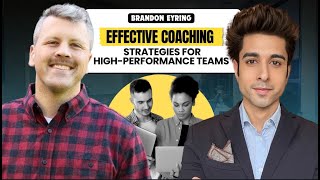
Brandon Ehring, a senior sales development manager at Deltec, shares coaching techniques for building high-performing SDR teams. He explains the difference between coaching and mentoring, walks through live call coaching methods, and offers practical advice for first-time sales managers navigating remote team leadership.
There's a difference between like mentoring and advising and coaching. When your reps are in the calls, you can advise them.
Our guest today is Brandon Ehring, a seasoned sales leader with a knack for driving revenue growth and building high performing teams. Currently, he's the senior manager of Sales development at Deltech and his impressive career includes roles at Cyber Reason, Black Kite and Memory Blue. At Memory Blue, Brandon led a team that generated over $8.73 million in net new revenue, with individual deals reaching up to $768,000. He's also the voice behind the Sales Buffet newsletter on Substack where he shares his insights on sales and personal development. Brandon's dedication to continuous learning and personal growth makes him a valuable resource for insights into effective sales practices and leadership. Without further ado, let's welcome Brandon. I noticed that we are not very far away.
I don't think so. I live right out in Arlington.
No kidding. I am in Arlington. I'm actually in Richmond. I don't even know where I am. I'm actually moving to Chantilly next week.
Okay, interesting. So you're. But you're physically in Richmond right now. I'm physically in Woodbridge. So we're both not close.
Got it, got it. Thank you so much for making your time. I truly, truly appreciate it. It's not gonna be like 30 minutes as I promised, only 15. I have done some fair share of my research. By the way, I saw you with mip. I'm not sure. Nimit, he used to be on my podcast. You remember Nimit?
Yeah, I worked for Nimit for about a year and a half. Yeah, he's a great dude.
Yeah, I messaged him as well, like a few days ago. I think he got super busy after. I think he changed the roles. And I saw you return from India recently. Tell me more about that.
Yeah, yeah, absolutely. And that makes sense because Nimit did take a look at my LinkedIn the other day. It's been a little bit since I reconnected with them, so that's fun. Yeah. So I just inherited our Bangalore based SDR team from an acquisition that Deltec made. So it was my first time out in India. Getting to experience, experience all the aspects of the culture and the food and the traffic is just absolutely nuts. So that was the first. It was an amazing time. The one thing though that it's ruined me with is I can never have Americanized Indian food again. It's just never tastes good.
It's unbeatable. Did Deltec recently acquired Replica it did.
It Was this end of Q4 or middle of Q4 of last year? So I got to Deltec at the end of January of this past year. So they were still just kind of rolling Replicon into the plans. And then when I joined Deltec, I oversee all of the SDR Org for Deltec in the professional services division. So we sell accounting, project management software to professional services firms. So consulting firms, architecture, engineering, construction, and then Replicon, they sell a time tracking software essentially and they're really, really good at it. So that acquisition, it's still been kind of rolled in but their target market's been professional services, consulting, IT consulting. So it just made sense to finally bring them under the same org. And that's kind of how that kind of mesh happened.
Yeah, I was wondering because I could not follow the news between Replicon and your company. So I thought I was curious, like what happened? Interesting, interesting. And was. Was Beck Holland there or did she join virtually?
Beck was not there physically. She was calling us from Paris. But she. So we've been working with Beck for a couple months now, helping us write our cadences. It's been a big undertake. We've had. We have a couple hundred cadences across. Across our different products. I mean we have probably at least a dozen kind of core products that serve different industries in different ways. So different Personas and different triggers. Outbound, inbound, all the stuff. So yeah, Beck, we brought her in to help us with that and through that partnership we were able to have her be gracious to spend an hour of her time to help us talk through the sequences that she's helped develop for us and just general ways to approach outbound sales. That frankly been some hard won wisdom over the years and we're really grateful for her to share that with us.
Yeah, I think she's bloody good. I remember the first time I was an SDR manager, I looked up to her sequences. Nowadays, you know, there is just so much information. But back then, you know, she and there were only few OGs there. So great to see you're working closely with her. Cool. We only have 10 minutes. I only have a couple of questions. I did some research, did some digging and I was quite interested on your take on. You mentioned something about the life coaching. So I think we'd love to take your take on if you can maybe talk more about like whole coaching. Like what is your number one tip for let's say first time SDR managers who are. Who have no idea about how to coach. How do they get started?
I think the first thing with, with coaching, there's a difference between like mentoring and advising and coaching. Coaching is about helping people discover answers for themselves, whereas advising and mentoring is about telling people you answer. And the reality of human psychology is that people's own ideas sound better than someone else's ideas. So the nuance with coaching is you have to be curious to seek to understand how someone's thinking and behaving to get them to realize for themselves the answers that you're ultimately wanting to lead them to. It'd be so easy to just tell someone what the answer is. But until someone realizes it for themselves and you guide their thought process to the questions you're asking, that's the difference between a good coach and, you know, a good mentor. Both. There are times when you should tell people directly. Here's kind of where we need to go and get to. But taking all that into mind, when you're call coaching, there's a difference between just telling someone, hey, go ahead, do this. They're not thinking about the nuances of why are they doing it, what were they doing before that necessity in the change of behavior and what's the impact that's going to have on the goal. So like you just have to get really curious with understanding why people are doing certain things and ultimately help them understand for themselves why changes need to be made. It's a fairly general kind of principle that I have, but that's ultimately anchors me in my, my own coaching.
No, that's profound. That actually, that actually makes sense. However, I'm also thinking from a point of view where first time managers, because they are into that high pressure environment and they would definitely want to resort to mentoring versus coaching. Right? Because coaching seems like a long game. Like you said, you know, you want other person to figure out and first time manager might be under that pressure where they're like, instead of that person figuring out, let me actually just tell them and that that seems easier. How would you probably coach them? Let's say if you were to coach an SDR manager, keeping that mindset, I.
Think the thing that they need to be mindful of is you're never going to out coach a bad culture. So if you're in a high pressure cooker culture that's all about performance and is less about development, you got to check, triple check if you're in the right place to develop and coaching culture. So that's number one. Number two, I mean, yeah, we all have goals that we need to hit and I think creating clarity of how to actually make that happen is really important. Here's the other thing too. With coaching, you have to be careful what you ask for because you might actually get it. What do I mean? Let's say you ask someone to get more conversations on the phone this week. Okay, that's it. You don't give them any other guidance really. And they come back to you the next week and they're like, yeah, I tripled my conversations. It's like, yeah, but they were all of the wrong people. Yeah, but you said get more conversations. So it's like, yeah, people can't read your mind when you're putting these things in place. So, you know, there's this high pressure culture to get to certain metrics, but we have to be really clear on how is the things that I'm asking my team to do actually impacting the overall goal. This goes back to another concept that I believe in, which is there's this misnomer of sales being a numbers game. It is a numbers game. It's just the wrong game that people generally think of. They think of the numbers game as a linear game, which is I make more calls, I'll get more conversations, I'll book more meetings, I'll create more opportunities. And they think that just doing more at the front end is going to produce more at the back end. But what we intuitively know is that's not going to be the case. It matters. In those conversion rates, in the call to connect ratios, are you actually getting people on the phone? And when you have people on the phone, are you actually getting them to convert into booked meetings that are qualified? So are you calling the right people from the, from the start, putting them into your list when you get them booked, are they showing up? Are you showing value? Are you actually helping them solve problems? Are you creating opportunities, tuning those conversion rates? That's the numbers game that is more nuanced and is harder to see, but that's, that's the game we ultimately need to be playing. So yeah, again, going back to the high pressure piece, if you're a first time manager and you're being asked to, well, you just have to hit this end goal. You gotta be very mindful with all the little steps it takes to get there and you have to tune accordingly. So I know there's a lot of different things packed into that, but that's ultimately how I would address it with a first time manager.
I like what you said about increasing the conversion ultimately because that's what really counts. You know, most of us, your Team, I'm sure you and I, you are a leader, I've been a leader. We all were eventually incentivized on the pipeline and not because somebody had set up thousands of meetings. Right. You mentioned the importance of live coaching and I really want to deep dive into this because I know the post did not do justice to what you probably had in mind. So if you can maybe talk more about this because you said that's the most and I'm reading your post immediately. Impactful activity and SDR leader can do for the team. And yeah, I love to love your thoughts on, you know, how you do it. If you can maybe talk about the tools, if you have any special tools in your arsenal. Yeah, that'll be awesome.
Absolutely. Yeah. I firmly believe that it's the most impactful activity that you can do day in, day out as an SDR leader. Why it's the closest thing you can get to, to the customer and the skills that need to be deployed to be effective in your role. It's the difference between. I think I put this in my post too, which is I grew up playing football, having a coach on the sidelines, being able to coach during the play or right before the player, right after the play, getting that real time instantaneous feedback versus the next couple days later where you're watching game film and you're advising. Closing the gap between when the action needs to be taken and the actual coaching is so important. So this becomes, this was like an intuitive thing when we had Salesforce. You just go to the office and you can provide that kind of feedback and advice. Sitting next to each other becomes a lot more difficult in the world where there's so many remote employees. So after a few years of trying different ideas, one thing you have to do is just set the expectation. This is what we're doing. We are going to do call blitzes. And that's just the way we operate. And what happens is I'll kind of jump to the end is like once you start to get success built through this, everyone buys in. So but at first people are going to be a little weary. So the way you do it, get zoom or a conference system, we can use teams as well. And you have a call blitz at, you know, it can be the same time every day. You can mix it up, maybe do an afternoon, we could do it morning. You can do two call blitzes a day. It just depends on the volume that your org needs and your ability to have quality data. So you get on this zoom or teams, you disconnect the audio, right? Maybe do a little bit of banter to start off, get people going, maybe set like a spiff or whoever does what. But disconnect the audio from the system. If you use a dialer like, like a sales loft or an outreach or front spin, whatever, make sure that you're logged into that as a rep. The manager is going to deal with a live call studio, which is like the feature in sales loft. You're going to be able to listen into the calls. And then if you have teams or slack or whatever, when your reps are in the calls, you can advise them on maybe something that you heard that they weren't, they didn't hear, they were starting to go down this script. But you can kind of advise, hey, ask them about this pain. And then they, you hear them in their own words. They're seeing the thing pop up on their screen while they're listening to the call, they can get right back in and ask him about that. And that level of coaching allows for them to actually put into practice a lot of the stuff that you are already telling them to do. They start asking the questions, they feel confident, they see success, they start buying into the process. Then you start to celebrate with everybody on the zoom or the teams and everybody's fired up now they want to start to be successful. They're going to want you to listen into their calls and then you just get into the habit. Do that every single day. You start to just notice that you've just developed a high performance outbound culture.
That's awesome.
Fully believe in that.
That's awesome. I remember I used to work with American Express and you know, in the customer care and my trainer used to do the same thing. He would put me on mute when the customer was asking me question and said, you know, hey, reply this or ask this question. And that used to happen. As you rightly said, I did miss a lot of points and we were not in the habit of taking notes. So yeah, that kind of makes sense. I just wanted to ask a lot, one final call up question. Do your reps not feel that, you know, they are getting disturbed? Because I remember I did this two, two or three years ago when Salesloft kind of launched this. One of my reps said, you know, I do appreciate you listening to my calls to listen to the calls. And this was a common feedback across SDR probably I did not do a good job. And this was like three years ago. They said, we cannot concentrate with you speaking and we listening. Do you see that as a Challenge.
Yeah. So I would agree. I don't use the whisper feature. I don't what I do. That's why I love doing it like the written notification. So that just like you would if you had your own kind of call scripting. Right. It's something you can reference back to. You can kind of glance over. Okay. That kind of recenters you back into the way you should be advising the call when you have either it's a peer or your leader who puts that information in your slack or your teams. If you start to feel stuck and you're not confident in the direction you're after taking this call, you. You can glance back and it's like, oh, let me try to do this line of questioning. You don't have to do that. But if you aren't feeling like the call's going that way and you have that feedback, then it's a great tool to be able to use. And that's the way that we typically see that.
Makes sense. Makes sense. I did not think about the, you know, you trying maybe the slack or something else while they're on the call. I was thinking constantly about the whisper feature. So it makes sense.
I would agree. I think that is just a terrible idea.
Yeah. Cool. Awesome. Thank you so much, Brandon, for, you know, making 15 minutes. I'd love to catch up with you. I'm. I'm in. I'm in Virginia for the next three months or so, so if there's a chance. Yeah, I'd love to catch up.
Yeah, I'm looking forward to. I. I will be in Arlington. Yeah. For like the rest of the year now. I just got back from a little bit of travel in India, then Denver, but yeah, I should be around. Let's grab coffee or something.
Absolutely. I'd love to come by. I'm actually heading to Nashville for, you know, the ambition coaching event, and I'll be back in October. Happy to catch up. Maybe any, anytime, you know, you tell me. Let me know whenever you can. I'll make it out.
Yeah, we'll make it work, man. I'm really looking forward to that, but thank you. So I'll tell them that we spoke too.
Oh, okay, sure. I'm sorry, who did you say Nimit?
I'll tell him you said hi.
Okay. Yeah, sure. Thank you so much. I appreciate that. I wish you. I wish you a good day and take care.
You as well. Thanks again for your time.
You're welcome.
More from Rahul

The SDR Role Is NOT a Stepping Stone | James Buckley on Cold Calling, AI & Career Growth




Trupeer Hired an Enterprise SDR in 1 Day. He Booked His First Meeting in Week 1



