Why Sales Development Reps need to understand Conversational Marketing and Sales? |Episode 10|
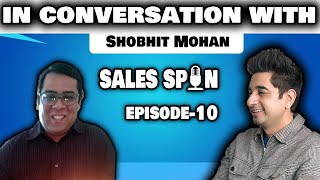
Rahul Wadhwa interviews Shobhit, VP of Marketing at a fintech company, on why sales development reps need conversational marketing skills. They discuss challenges Indian SDRs face engaging global prospects, how to hire for conversational ability, and paths for SDRs to move into marketing roles.
When you're in sales, you won't go too far if you don't understand how marketing works. At least that's what I believe. If I'm being honest, I became a big fan of marketing after I watched Mad Men and so did a lot of people I know. Today's guest is a marketing leader who reminds me of one of my college mates. I've known him for over a year and one of the greatest minds in marketing I know of. If you think I'm exaggerating. He studied marketing at IAM Lucknow. He was published in your story last year and started his career with Hindustan Times. Today he's the Vice president of marketing at Pay you, a fintech company that provides payment technology to the online merchants. He attributes his ability to switch different roles and grasping business faster to his formal education. He loved to jog reading A big fan of Michael Lewis, author of Money Bag and Blindside. As we all know, if you're in sales and have been itching to get into marketing, you should not miss this episode as Shobit reveals his hiring strategy. All the SDRs who are watching. If you're looking for an alternate career path, then this one is for you. Today's topic is need of the hour and whether you're in sales for marketing, you are in for a treat. So welcome Shobit to the episode 10 of Salespin. We are really excited to have you and this is the first time you're actually having somebody who's not from sales on the show. So this is definitely going to be exciting. I'm sure people are going to be looking forward to this. I think you have chosen a very interesting topic and I do appreciate that because I that's something which I also believe a lot of folks the one who are watching this episode, most of our audience is kind of sales, SDR and dev leaders and pretty much everybody in my network. Right. But at the same time I think we kind of tend to ignore the marketing side and I think there has been always a rift between sales and marketing. I think we're going to talk more about it, but I think before we dive into that, I would like you to announce the topic. What are you going to talk about and why should we be excited to listen to that? Sure.
So what I want to talk about is conversational sales and marketing. You know, one of my experiences both as a buyer and as a marketer in the Indian SaaS is that SDRs, typically SDRs who born and brought up in India, that's one aspect that they really struggle as compared to their global peers with, you know, when they reach out to their prospects or customers, their ability to strike up conversations just digitally through LinkedIn or through email, I think it fades as compared to some of the SDR that I've interacted with in the US and I think as sort of the SaaS ecosystem in India matures, I really feel like this is something that marketers and sales leaders need to focus on to ensure that our teams are as competitive as teams anywhere else in the world.
Well, I think you touched a kind of nerve there because I kind of believe the same. And I think a few days ago I posted about the same thing that no SaaS company in India would actually go about and teaching the Indian reps as to how to really talk to, let's say, prospects outside the country. It could be not just necessarily us, but let's say Europe or maybe other countries, because the way other prospects are brought up, it's the same logic. For example, you and me are probably sitting in the same city. You know what I'm going through. I know what you're going through. We're in the same country. But if I were in a different country, the tables would turn. Right. Even if you say, hey, I understand. I know that you're saying for the sake of. But you really don't understand what I'm going through because I'm the one who's feeling that Pete every day. So, yeah, I think bang on your touch and. Yeah, let's talk more about it.
Sure. Is there a specific question you want me to answer?
Sure. So consider me that I don't know anything about the conversation. Sales for marketing. And like you said, like you, like you said, the obvious fact that, you know, Indian reps kind of struggle with, you know, making that rapport, making that conversation with reps outside the country. So where do you think, you know, let's say if you were to teach me as a sales leader and let's say assuming that I don't know anything about it, where do you want me to start?
I mean, I think let's kind of first establish what conversational sales is as opposed to, you know, traditional sales that we follow. So. So conversational sales or conversational marketing is where instead of the standard, I will pitch and you will respond. I will pitch and you will respond. I will negotiate and you will respond. You know, it's like a tennis match where you're sort of constantly lobbying volleys at the. And hoping something comes back. This is just a sort of more natural, organic conversation between Two people, you know, like. Like we're having right now. So, you know, I. You're not pitching anything to me. I'm not an assessment. You. We're just two people speaking right now, waiting for the person to pitch in where they can. So it's sort of like a shift or a philosophy change of, you know, how do you initiate conversation itself? And that's. That, that's, I think is very useful because you are talking to very important people, very busy people inundated with a lot of pitches. You know, if you cannot get their interest, cannot get them to open up to you, the odds that anything's going to happen down in terms of deals and closures and is next to zero. I think where marketing kind of comes in and you know, give some sort of historical background. The term became really popular thanks to somebody named Dave Gerhardt, who is for marketers. He's extremely, you know, very influential marketer right now. He's for an organization called Drift, which incidentally happened to have a helps with conversational marketing. And it's kind of like an intercom alternative. It's. It's a chat tool, which communications. So. So he really popularized this term. But you know, it's important to understand that conversational marketing is not just having a chatbot on your side or tool on your site which sort of consolidates all communications. So I don't want somebody to walk out of this and saying, yeah, like if you buy Drift or if you buy Intercom, you know, doing conversational marketing, that's just infrastructure, that's just tooling, you know. But the key component of conversational marketing and sales is that the customer always feels like they're having one organic condition with the organization that you are representing. Some of the basic stuff that, you know, I've seen implemented, which works, for instance, if you're sending marketing emails, you know, don't send it as marketing at XYZ Occupation. Send it from the name of your SDR with a photograph and a. Which they can get back to you.
Even.
Even simple things like this, all what marketing is supposed to take care of. But I think as a salesperson, still a lot of onus on you to have these very organic conversations, because that cannot be automated. I don't think there's technology that exists which can organically communicate with a person at a sort of level of intelligence.
I know what you mean. So I think. I'm not sure if any companies are doing it. I'm pretty sure there are companies who are doing it even right now where they're sending, let's say, the email blast coming from marketing at, let's say, XYZ.com and I think one of the things which I personally believe is I want to understand more about the buying side rather than selling side. So I'm someone who understands that's what I do and invest a lot of my time in understanding how a buyer thinks. So, for example, if I'm a buyer and if I get such an email today, I would automatically know this is a marketing email. This is something which nobody wrote in its person. Right. There's probably a robot behind it. That's what I even tell my reps. Right. For example, all your email, even though sometimes they're automated, they should actually give a feeling that they are not automated. And there are tons of ways you can do but go about it. Like you said, you know, if it has a picture on it, you know, if it has a name on it. So instead of going from marketing, that goes from showbit, it actually looks more credible. And, and correct me if I'm wrong, we're not. But when we, when we say that, you know, have all these checks in place, it does not mean that we are trying to deceive the prospect. We just trying to get that feeling because like I said, we were thinking from both sides. We do want to have the prospect as a customer eventually. And we do want them to feel that, you know what, they actually did not buy a product which, you know, where there are no humans behind it. Correct me if I'm wrong. No, you're completely right.
And I think, look, you know, I don't think there is as a buyer. I mean, maybe because I'm a marketer, it's true. But I feel like most buyers, they are aware that a lot of the emails that you see coming from like a Rahul or xyz, you know, they are essentially automated emails. But, you know, ultimately it is the content that we respond to as buyers. It doesn't matter whether an actual human typed it out or, you know, whether that's an automated send, but you can. I have seen actual humans type out more robotic emails than marketing automation may, and the other way around as well. So it's really the content which matters. And I think it's a game or it's a sort of process of both coaching SDRs as well as marketers on how to write copy or emails or voicemail messages which are conversational in tone and not pitches.
Fair point. I think you raised another good point. I'm going to come back to that before that, I think I want to take an example. So recently I cancel a subscription of a service which I use and I haven't opened any of the email, but I'll tell you the story behind it. The moment I cancel, I think next day I got an email asking for the feedback so that, you know, they can improve, which is pretty normal, right? You would expect that email. But I think there is something to that email, right? And first of all, it came from a person. I'm pretty sure it came from a person. It did not came from like a cancellation@xyz.com so it felt personal to me. I was able to see the subject line and I knew what was the context based on the preview on the first line. Then I got two more emails from the CEO, which I know of course are automated, but they do not feel automated. They feel like the CEO has actually written himself. It feels personal. I feel like responding and I'm gonna do that. That's, that's how, that's how the good copy is.
And I think the one thing that you may not have noticed is I think somewhere in that copy there would have been something which talks about you, which, you know, when you talk about conversational sales and marketing, one thing that differentiates conversations from sales pitches is conversations. You know, if you were to meet somebody in an airport or on an airplane or in a bar or in a function or something, you want to strike up a conversation with them, you don't go to them and say, you know, I am so and so. I am India's largest AI platform. I have more than so and so. You know, you don't go on a five minute rant about yourself, maybe introduce yourself and then kind of automatically lead it to something that you want them to respond to you. Right? You can say, yeah, hey, I work in, as a company, where do you work? Or what brings you here? And I think that's where conversations are very important is you use very, very widely known things about human psychology to get open up about themselves. These are not hidden secrets. We kind of really, I think as a, as a group of people, we've really uncovered this a lot by now. But the key is your copy should lead to the person wanting to talk about things that interest them and not things which are important.
Yeah, absolutely. I think one of the good thing which has just happened probably in the last one or two years is a lot of sales leaders have kind of emphasized on this and that, you know, you should always be thinking about the buyer. You should always, the Pitch should never be all about you. The pitch should be all about how it will make the other person feel. So I think if you. I think one of the classic example I can see is from Shark Tank, right? So if you saw, if you, if you listen to those pictures, right, Those are all about, you know, bringing you into the, into the story. Imagine you're walking down the road and you know, imagine you're driving and you know you have a flat tire. What do you do? So it kind of forces you to think about it and it actually kind of breaks that cliche pitches where they have like 30 second pitches. I think that's probably another thing which probably got originated I don't know how many years back where people said, hey, give me a 30 second pitch. And then in those cases, people were kind of forced to take think only about themselves and not about the buyer because they thought if they start thinking about the buyer, you know, they would have very less time to actually talk about their own product. So I don't know. You talked about copy. I think that's a very interesting topic. I think that's another thing which I'm reading in my free time, like really finding out how I can write a better copy. And I think that also I'll give a lot of credit to Josh Braun, that's one of the sales leader I admire because that helped me understand the whole thought process behind the buyer, the books. I should read the copies. And I think I would give it to you. I think this session would feel a little empty if I don't talk about Mad Men. I'm sure you have watched it, have you?
I've seen like two episodes, so.
Okay.
I mean I. It's just now what the time.
Okay. You must watch it. I mean, it's set in 60s, I'm sure. You know, 60s or 70s. If the classic. I think I've finished like five or six seasons. It just gets a little long. So that's why I'm not able to spend a lot of time. But it's a classic. I think I have learned a lot from admin. Like how can you write, for example? I'm sure since you are a marketer, I'm sure nobody understands this more than you. How can you like write an ad copy in less than five words and still instigate those emotions which you want to. Which somebody would not be able to even do even if they write like a page. So how do you do that? How does marketeers, let's say able to, you know, bring that emotion in as less words possible.
Look, I think honestly I have never approached it as a five words or less or a ten words or less. Kind of a challenge.
Right.
I feel like if you box the activity itself without focusing on the outcome, then everything is going to be a failure. So it's. Everything is about the outcome. So if I'm writing copy and I have to kind of put myself in the shoes of person who's going to read it and say, am I trying to make them happy? Am I trying to get them excited? Am I trying to make them afraid? Whatever, you know, what. What is the emotion or response I'm trying to evoke out of it? And generally, yes, five words is better than six, six words better than seven. You know, the briefer, the copy, the sort of less complicated language that you can use so that that comes second, you know, the sort of word limit and readability level. But fundamentally, are you able to evoke a strong response is the first thing that I would go for. So, you know, you kind of write down your copy. You, before you start to try and capture like, you know, in a word or two or maybe in a sentence that this is what I'm, you know, I'm. Best case scenario. I'm hoping if Rahul reads this, this is how Rahul feels. And then you kind of write it down, step back, read it, figure out, you know, do you feel the way you want Rahul to feel at the end of it? If you don't rewrite it, maybe run it by two or three people and say, you know, how does this make you feel? Does it make you feel excited? Does it make you sad? I think that that's the process, you know, like, if I don't think marketing is about like, you know, five words or 50 words or 500 words? That's a very transactional activity.
I think we can probably start with that answer again where we're talking about like how seven words are better than six words or seven better than seven.
Yeah, I think, like I was saying, I. I don't think the answer to how, what makes good copy is the word limit, but it's really the emotion that it drives in the person who reads it. So if I am writing good copy, I have to kind of capture and say this thing that I'm writing. Do I want to make people happy? Do I want to make them excited? Do I want to keep them afraid? Write down what I have thought of. Test it for myself first. Say, you know, does this leave you with the emotion that you wanted to work? If Possible tested with a couple of other people, see if the emotion you're getting is right. And then you can sort of trim down the word link, your word length or readability, etc. These are sort of traits that can be imbibed. But I think what is really hard to do in copy or any marketing messaging is emotion. I think one sort of, you know, one very common example that I use.
Is.
So like a lot of the Marvel Cinematic Universe movies, while they're incredibly popular, the reason why they're not at, let's say, you know, the peak of cinematic achievement is because they don't leave you feeling anything. You know, you kind of watch the whole movie. You have like your. So you oscillate between like a little excited, a little bored and a little happy and a little sad. But, you know, compare that to, let's say something like a Schindler's List, which leaves you just absolutely broken. Right? Like you watch the movie and it just. There is absolutely. Or, you know, something like the first Jurassic park movie, which leaves you completely, you know, just this sense of wonder or like the first Star wars movie.
Right?
And so maybe that's. Yeah, possibly.
Right.
Like, so whatever works. But, you know, that's. I think that's the difference between like a great story and a good story. A good story just kind of leaves you feeling. Yeah, I mean, this is good, but what's the big deal?
I know what you mean. I think I'm gonna. I'm gonna circle back to the first question I had. I think we talked a little bit about conversational marketing and sales. Where do you think sales for marketing leaders can maybe train their reps or maybe subordinates. Whosoever is working on the front line to become more conversational?
I mean, I think one is just at the hiring process itself. Hire people who are good conversationalists. Hire people with background in jobs which require them to be in conversations more than, you know, on basis of the degree they have or the organizations they work in. I think one of the major reasons I mentioned, usually, you know, why folks in the US So good at this is because from the time that they're 14 or 15 or 16, they work jobs in retail, they work jobs in customer service. They may have worked at a restaurant or they may work after car rental service, may have worked at something else. You know, so that involves them speaking with customers day to day, you know, knowing how to deflect angry people, knowing how to excite bold people. You know, that that innate sense kind of gets instilled on them unfortunately in our country, you know, people get first professional job once they're done with like all this cooling and education. But 23, 24. So yeah, I mean, I would say like if I was hiring for folks, I would value background in things like, you know, somebody who may have worked in retail or a call center or maybe hospitality. You know, jobs which require people to interact with people on a day to day basis, develop certain people skills. I think that makes people a lot better conversationalists in the interview process itself. You know, I feel like sales leaders and marketing leaders focus too much on, you know, what was your metric? How much of your target did you attend? Was it 150 or 180? You know, who's your customer in vouch for you? I mean, it's a great thing, I'm sure. But ultimately none of these convince you whether or not this person can have a good conversation. So a good test is when I do a lot of interviews, one of the first questions I ask myself is, you know, I spoke with this person for 30 to 60 minutes. Do I feel drained at the end of this or do I feel energized at the end of this? And you know, this is the same person and same energy that I'm going to be putting out in front of my customers if went and hired him or her. So I think, you know, maybe use those kind of tests to see is this a person who can.
No, I think that's, that's an interesting approach. I think I like that. In fact you talked about something like, and that is totally true in terms of like how sales leader, for example, I know would always ask this question, hey, tell me about your quota achievement in the last six months or so. I think I never asked that question. And I'm not saying I never asked that question. I don't ask that question anymore because I know one people are under so much pressure, especially reps, that one, you're kind of forcing people to lie. And a lot of sales leader would not appreciate the truth. So let's say a rep would probably come up and say, hey, you know what, I haven't met my code. I'll say three in six months. For a lot of sales leader that will be like, you know, that'll be, that'll not actually sit well with them. They'll be like, you know, I only want top performers. So one of the things again they have to understand is not everybody's top performer. I think that there's, there has been studies in US where they say only 70% or 2 3rd of the team is kind of meeting the target. So one year you will never get the talent. But I think your point is right. I have hired people in the past based on their core achievement and they were not able to perform versus when I had people based on. So I had a couple of people who have no background in sales. One of, one of the person actually traveled for two years, took a break because he wanted to chat with people. He wanted to understand the culture. He had a better understanding of human world than anybody who has done the SDR role for two years. So I think what you said is bang on. How can you help, let's say make the leadership from this? Because understand this is something which they've been doing for and this is, this is also human. Right? So for example, if I'm. If I'm doing something for a while and you tell me, rahul, that is totally wrong, you should do this. I would actually take some time to, you know, adjust to that and I'm not sure if I will be able to take that feedback as well. So why do you think while I understand, while I understand right now after listening to you that this is important, how can you make founders and other early stage founders or other early stage, you know, said leader who are setting up the team understand that this is crucial?
I think the sort of primary motivation for following what is the beaten path is this coercion. So you know, why do sales leaders continue to ask for entertainment is because that you're kind of dealing yourself and saying look, I'm hiring. This person used to do 120% in the last company. So the odds that they will fail are way lower than somebody who's doing 80% right. Is this. You are sort of, for lack of a better word, protecting your backside if things go down not the way you want them to. So I don't think this is so. So one is, you know, definitely I think if you're a founder or a leader, encourage like your hiring managers or your team to hire for attitude and skills. And in a way if you're a founder especially you know, hire people that. And I think this is from a marketing standpoint, obviously the right key is I don't think many sales leaders look to hire for a certain brand or a image that they want to convey their customers. You know, so sales leader hire or track teams with people who they feel can meet quotas. But if, and a sort of way to look at it is so, so sure like you know, if you have, if you have a top Performer who sort of core tactic is just sending a lot of emails. They may not be great emails. They may send a lot of emails every day or make a lot of cold calls every day. And, you know, one out of 30 connect connects and at least two a day. So, you know, the sales organization really happy. But what about the 29 cold calls that didn't connect? You know, this person left like a really poor impression, especially for the startup.
Right?
Like, if you're a startup, this is the first time that very important person in the industry heard of you was this very poor page. And that's the first impression that they will hold a few till somebody kind of comes and changes that. So I don't know if people really kind of weigh the pros and cons of that. So I would rather, I mean, it's easy for me to say I'm not a founder or a sales leader, but I would say if I was to hire, I would hire five or six people who I feel like even when they don't convert calls are ultimately leaving unclosed prospects with the right impression about my company and the right impression about my brand and product. So if you hire guys who are good at conversational skills, you know, they've not irritated or annoyed somebody, you know, and maybe that's the thing, right? Like, I think maybe it starts on top or if you start attaching like a numerical value to it. You know, most SaaS companies today, I think early state science companies don't have at the market of greater than, let's say 1,000 companies. So I would say largely a good company has no more than a thousand customers that they could potentially sell to. And if you have a rep who's managed to annoy it, five in the first quarter, attach a value to it and say, look, is this the outcome you really want?
No, that's, that's an interesting point. Toby, thank you so much. What are we going to do next is we're going to have a rapid fire for you. Okay. I hope you're ready.
Okay.
All right. Okay. Yeah. I'm going to start with simple. And again, this is going to get tougher as we move along. And, but again, at any point in time, don't feel the, don't feel the urge that you have to respond immediately. You can take a couple of seconds, but I think that that's what, that's what will make it fun. Okay. Your favorite movie.
Apocalypse Now.
Oh, nice.
It's warmly.
Yep. Your least thing, least favorite thing about sales.
I think the lack of linkage of outcome to effort. You can work very hard on a deal or a customer can totally bomb and you can just send a lazy first touch email, but the customer just happens to be ready to buy a product and it'll work. Oh, I find that pretty annoying.
Okay, nice you were to choose your career again. Sales for marketing.
Marketing for sure.
Okay. Why does marketing get a bad name?
Because it's not measurable. And I think we live in a world where if you can't measure something, it has no intrinsic value.
Oh, okay. This is something which, which is kind of exciting. One tip. If you could make, if you could actually give to sales or marketing leaders to make the sales and marketing coordination better.
I think just give things time. You know, nothing in marketing. Good marketing does not change overnight and it takes time. You give your marketing organizations and leadership time to show results, quiz them on the plan and not the immediate outcomes.
A lot of viewers, a lot of people who are watching this could be SDRs and could be also said leader SDR managers. And I think as a, as a leader myself, I have always often struggled that my reps sometimes want to switch to marketing. But honestly, if you ask me, I've only had like a couple of reps who were able to do that. And there are only a handful of organization which kind of support this moment. I think a lot of SDRs are kind of getting mature enough to understand if their company is not able to, let's say, give them that opportunity, they should look for that opportunity outside. How can an SDR prepare themselves for an entry level position, let's say, in marketing if they were to.
Look, I think the one thing that you have to do is really use the opportunity of being an SDR to understand the product and your customer segment really well. I don't think, you know, attaining your numbers or having a very good page or you know, bringing in the best customers is going to make that switch. But I think what would make a good marketing leader stand up and take more is if you are able to bring an insight from the front lines that the marketing team will never have. So insight is I think a big, big driver for being a good marketing person. So use that, you know, try and understand trends of when four people said yes to you, what was common to them and three people said no to you, what was comm to them and try and identify those trends and share that with the marketing leadership. So I think from a aptitude standpoint, that's very important. I think from an attitude standpoint, I would caution and say don't get into like, honestly, I feel like a lot of SDR sales people want to get into marketing, but they're tired of quotas and numbers and they feel like, you know, marketing is this pushy job where, you know, months to month pressures are not there and bosses are not like railing you all the time. Which might be true, but I feel like that's, you know, an escapist motivation and a good marketing person will see right through that. So, you know, you never get hired into a marketing position if your motivation is to have a pushy job. I have had a dozen SDRs come to me in my career and you know, through some shape or form really kind of just want to move to marketing for this one reason. And I don't think I've hired any one of them. I've hired a few SDRs into my marketing org but not a single person who they do run away from the quotas.
Let's say if you, as Yash were to approach you today after watching this show, would you be open to speaking to them or position in marketing?
Absolutely. I mean, I, you know, I mean different strokes for different folks. I think there are certain goals within marketing that definitely, especially product marketing that people with the sales and SDR background fit into really well. Given that, I am convinced that they can offer this insight that I expect a good product marketer to have. I'm absolutely open the idea.
Okay, I have a follow up question. Have you ever hired, let's say somebody who does not have any background in sales or marketing whatsoever and you've hired them in your team as an entry level marketing position?
Possibly. Like, I think we've hired people from like a custom, I mean one, you obviously hired freshers in different organizations that I worked at. So freshers for sure. Also people with a background in. I think I know early on, like we hired people with backgrounds in hospitality as well, like people who had worked in hotels or restaurants and stuff like that. So we hire that and we've also hired sort of customer operations folks into marketing.
Got it. I think I can see why you're saying that because I think when my first leader hired me, I think he hired me for pretty much the same reasons given that I had a background in hospitality plus like four or five years into customer service. So I think I kind of got selected as a primary those principles. I know what you mean. Last question for you. What is one thing which you would want sales to learn from marketing?
I would like them to learn how to work with others. I think most Sales organizations that I've worked with, my one criticism of them is while they are more or less without failure, very very competent and very good at what they do as organizations, individuals, maybe good or bad. But I think organizations that I work for, all very competent, all very good. But almost every sales team I've ever interacted with has very deserved repetition for being very hard to work with. And I think if you are a sales organization, I don't know if that's necessarily very good for you. I, you know, so at the very least, you know, you want to kind of step back and say, what can we do to make ourselves easier to work with? Because I feel like that's where the job of being a salesperson gets very monotonous because when you are down, there is nobody in the organization really looking to help you out.
Fair point. I think. Yeah, that's something. So I worked with the leaders who were actually I earlier I used to report in marketing. Then I reported into sales. So I think I've seen both the site. So I know what you mean. Like how. Especially for example, when our. For my focus right now, for example, is an outbound. I think while I want to depend on in marketing for the inbound leads, of course, but I think for outbound, I think I know what you mean. Like how should a leader, for example, function without marketing in place? I'm not saying that I don't get help for marketing. I think I get a ton of help. But at the same time, I think you can probably learn to grow without them as well. So, yeah, I think. Fair point. Thank you so much, Shobhit. It was a fantastic chat. I'm pretty sure a lot of SDRs are going to. A lot of viewers who are actually watching this will enjoy this. At the same time, I'm sure you're going to get a lot of applications. People I know who are into SDR role for a long time and then the pandemic has kind of pushed them to stay on that role for a longer time because companies are not probably promoting them anymore or giving them more opportunities. And they're also kind of scared. Some of them are kind of bored and they want to. They want to try different things. A lot of SDRs I know in the past have come to me that they want to move to marketing, but honestly, I had no idea how to probably tell them. Luckily, few of the previous companies I worked with, they kind of had this structure where they could move to other departments. But good to know that there are people like you who would welcome SDRs and people with those sort of mindset to give them an option, give them an opportunity in marketing. So that's definitely a great job. Anything else would you like to maybe say as a last thing to the viewers?
No, I think, you know, I, I didn't finish the whole answer on conversation. Sales and marketing. You asked me how sales and marketing leaders can train teams, so I talked about hiring. I think once you hire people, it's also really important to help your SDRs or reps understand your customers in depth as people. I don't think we do that enough. Right. I think whether that involves, you know, very simple, very small things. You know, right now, travel is restricted, but please, you know, when, if travel is open, allow, if your primary market is the US or uk, allow your SDR to travel frequently there, stay there for a week or two. You maybe go to one of these car rental services, maybe go to an event and interact with these people. Because they really need to understand these people as human beings. You know, who are they, how they're made of, what are they made out of, what do they respond to? I mean, I think one, one very common example that I found is people who grew up in India are very respectful of people in positions of director or, you know, so they're always very high, sir, and, you know, they want to offend them. Whereas if, you know, if you. For any amount of time in the U.S. that's not the culture there at all. And I know how you can train a bunch of young people in India to understand and respect that sort of culture which exists in the US without them really, without really exposing them to travel. You know, you can't watch that on Netflix or you can't see that on a PowerPoint. So, yeah, encourage people to travel, encourage them to interact with these folks in their free time. You know, one good practice could be to allow them the first five minutes on a sales call. You know, it's really annoying for me when I get on a call, you know, when an SDR does a lot of hard work and gets me on a call, and then the minute I get on the call, they're like, oh, so here's my sales rep. And, you know, they're going to take over and one slide pulls up and that person is. It's really, really irritating. As a buyer, I can say that for sure. And I think sales leaders need to think more about that. You know, they need to expose these people to the customers that they're selling to give them the opportunity to have conversations with them so that they get better at it and then our sales team come in and do whatever they need to do.
No, that's a. That's absolutely a fair point. So one of the thing. And I. Your point is absolutely right. I think you should travel as much as you can. And I think in the past what I've done is whenever I had an opportunity to travel, I would rather send my reps because I think they would probably learn more a lot. Because anyways, I think I've stayed in US for some time. I've been into customer service, so I think I've probably been trained formally, I might say. So I think I've already learned that side, so I don't need to maybe brush on that. I think your point is bang on. I think my leader also was of the same thought that, you know, we should send as many SDRs as possible. And we did not even used to run contests like some of the companies do that. You know what? We will only send you if you hit your quota. We would send everybody. Everybody would get a turn. So there was no partiality or anything. So your point is bang on. I think until the pandemic doesn't end. I would. I would. What I would suggest, maybe anybody, and there's something I have done as an SDR is I would spend one, once a week, an hour or 30 minutes at least, with an SDR who is actually in US so that I can understand. I can. I can see how he's operating. You know, the tech stack is using everything, whatever is possible to, let's say, you know, to succeed as a U.S. rep. Because at the end of the day, we are selling to us, right? So it makes sense for us to get to understand the culture, get to understand, for example, how they talk. I would listen to every cold call recording, for example, possible. Like when the US rep is selling to US leader, right. What I would do is I would reach out to sales leaders. I think there's a lot of. There's a podcast which my team heard a couple of days ago, where we heard from a sales leader how he would want to be pitched. Right. So once you get to understand these, I think these can probably put the barrier. But your point is, right? I think nothing works like travel. Nothing works like talking to people in. In real person. So, yeah, that's. That's a great advice. Thank you again. Yep.
Yeah.
Cool. Thanks.
Thanks. Thanks for having me.
Thanks for watching this video. If you liked the video a teeny tiny bit, would you like the video? Subscribe to the channel and tell me what you like. Throw your best insult at me if you do not like me thought and you will improve. I promise you will not offend me. Seems like too much work, right? Let's start with subscribing and let me know in the comments what I should cover next. Thanks again.
More from Rahul

The SDR Role Is NOT a Stepping Stone | James Buckley on Cold Calling, AI & Career Growth




Trupeer Hired an Enterprise SDR in 1 Day. He Booked His First Meeting in Week 1



