Advanced Forehand Timing & Sequencing (John Isner Tennis Technique)
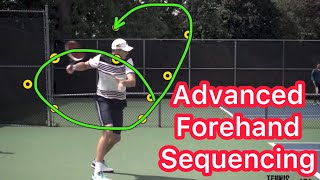
Ryan Reedy breaks down John Isner's forehand into four phases: takeback with both hands, racket drop, non-hitting hand rising into contact, and finish over the shoulder. The C-shaped swing generates power and topspin. Use cues like catch the racket and wave to your opponent to nail the timing.
Chapters
Let's use John Isner as an example of perfect timing and sequencing on the topspin forehand. Now, if you're looking for people in your local area to play against, practice with, or even find a coach who's near you, then use my link in the description playyourcourt.com two minute tennis to get 50% off. Now, I wanted to make this video for a while now and I'm glad I'm doing it today. I'm so excited for this. Let's first just look at his swing path and you can see why this is called the C swing, right? It's like he's drawing the letter C right here and he swings up, up over the shoulder, which we'll talk about in a minute. But let's get a little bit more detailed here. So first let's look right here as he takes his racket back with both hands. So he's rotating his shoulders, both hands are on the racket. Now from right here you're going to see his racket drop down in the back. Now while he's doing that, notice that his non hitting hand is going forward. So what you want to do on your forehand, you got to film yourself to make sure you're doing this. Film yourself from the side, take the racket back with both hands and then watch your non hitting hand. It should be going forward as your racket is dropping down in the back. Next, when your racket is going down toward the ball, your non hitting hand should be rising. So again, this is all color coded. So when the racket's going through the red, his non hitting hand is going to through the red. When his racket's going along the yellow, his non hitting hand going along the yellow. This is how you should be looking at your technique to make sure that the proper timing of your arms and your body and your rotation is occurring correctly. Next is his upward swing. You can see he swings up over the shoulder. Now as he's doing that, you can see his non hitting hand going up over the shoulder as well. Now this is actually why I teach people to catch the racket because you can just easily catch and then you're exactly doing what I want you to do. And then last, you can see that his non hitting hand is higher than head level. This makes it so easy to make sure that you're swinging up for topspin. But when you film yourself, this is what you should be looking for. Take the racket back with both hands as the racket's dropping, the non hitting hand should be going forward. As you're swinging toward the ball to contact, your non hitting hand should be rising. This is why I say you should be waving to your opponent. Right now it looks like he's waving to his opponent non hitting hand and then you just swing up over the shoulder. When you swing like this, you get tons of power and consistency.
So the first thing you got to go out and film yourself hitting forehands from the side. So you actually know what you're doing and can compare it to what you're learning in this video. So the first thing is take your racket back with both hands. But here is where we get the relationship between the red, the red, the yellow, the yellow, the blue, the blue, right? So when we go up and we take the racket back with both hands, we then start the C swing. That means we can handle pace. We can also hit the ball very fast because the racket never has to slow down and the speed can build on itself. So we're going to take the racket back with both hands and this is where the racket begins dropping as the non hitting hand is going forward. So it's turn with both hands and then we make this move at the same time. This is that red part, right? Now it's time. Once I've dropped, now it's time to go to the ball. Well, when I'm going to the ball, that's the yellow part, right? The non hitting hand should be rising. So as you're filming yourself and looking at your video, as your racket is going after it's dropped, as it's going to the ball, whether you're going into the back or whether you're dropping way below and putting a lot of spin, it doesn't matter. We want that non hitting hand rising from here. This is when you're going to see the rack going up and you can see the the ball on the topspin. Pro spinning for topspin. Right? This is where that blue part I want that non hitting hand and we just saw Isner do it going back slightly. And this is why I actually teach people to catch the racket over their shoulder. We want the racket going up, we want the non hitting hand going up to ensure that we can turn our hips. Why not just catch to make sure that we did it correctly. Now here's where people are correct and incorrect. Generally. In my experience with the forehand, most players know to take the racket back. Most players know the red part which is the racket drops and the non hitting hand moves forward. But this is where they get in trouble. Instead of going up during the yellow part with their non hitting hand, they go down. That creates a counterweight. And now you're not going to be able to turn your hips. And this is when we see people hug themselves on the forehand. This is why I teach people at the yellow part when you're hitting the ball that you're waving to your opponent. So we just saw that. We've seen that with so many players and we see it with Djokovic and we see it with we just saw it with Isner is we see players as they get to contact that looks like they're actually waving to the opponent. Highly recommend that you do this in order to turn your hips effectively on the forehand and then just catch the racket really high over the non hitting shoulder. And this is, you know, you see Nadali and he finishes above his head all the time. That's an upward swing. In order to get the topspin you're looking for, do all players swing up as high as we just saw Isner use? Of course not even Nadal sometimes finishes here, but most of the time he's up here. And and the more you swing up, the more that ball is going to spin down for topspin. So I'm going to practice what we just saw in that video. Both hands go back with the racket. I'm going up as I do this. Then my non hitting hand goes forward as the racket goes down. As I'm hitting the ball, I'm waving to the opponent. When you hit on your topspin pro, by the way, always add a split step so you kind of get the idea of what you should be doing as your opponent hits, you can breathe as you hit the ball. Go out and film yourself. If you have footage of your forehand right now from the side, review it and compare it right now with what you just learned in this video. If you don't have footage from the side of your forehand, you need to go out and you need to film yourself right away. Compare what you are doing to what you just learned in this video and there's no doubt you're going to gain confidence, win more matches and play much better tennis. This is ryan reedy from two minute tennis.net you got this.