Get Unstuck: A Tactical Job Search Session for Product Leaders
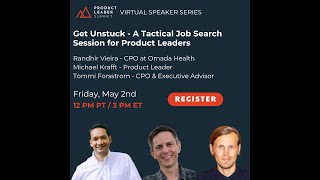
The session, hosted by Nasheeth as part of the Product Leader Summit virtual speaker series, brings together three product leaders—Tomi Forstrom, Randhir Vieira, and Michael Kraft—to share tactical strategies for product leaders navigating role transitions. Tomi outlines a rule‑based, sales‑funnel‑style job‑search framework emphasizing financial safety, top‑of‑funnel activity, tight personal branding, and the importance of treating the search like an enterprise SaaS sales pipeline. Randhir demonstrates an AI‑driven resume‑scoring tool he built on Replit, showing how it parses PDFs, benchmarks against industry scores, and provides prioritized improvement suggestions to help candidates become “unicorn” matches for job postings. Michael presents a custom GPT interview coach trained on product‑leadership interview content, walking through a live demo of question generation, answer scoring, and iterative feedback to improve storytelling, structure, and depth. The remainder of the session is a Q&A where participants discuss practical networking tactics, how to extract feedback from silent rejections, recruiter relationship management, and handling ambiguous “informal interview” calls with founders or investors. The conversation repeatedly stresses systematic, data‑driven approaches, the value of high‑volume activity to build confidence, and the long‑term payoff of generous relationship building.
Chapters
Oh.
All right, folks, thank you all for joining our talk here today. My name is Nasheeth. I am a product leader in the Chicago area. I've got years of experience in a few different verticals. And what's really taught me and brought me into this is to join with other product leaders. And that's the. The gist of what the Product Leader Summit virtual speaker series is about. It is about bringing the product community together and sharing a voice. So what we want to do is we know the Product Leader Summit happens every year once, and it's a great place for us to meet in person and network. And I've met so many of you on the call here in those sessions, but There are still 363 other days in the year. So what we've wanted to do is consistently bring topics that are relevant to us as product leaders and allow the next generation of product leaders to actually bring those topics to light. And that's what we've done over the last year and this previous quarter. And as we go into Q2 of this year, we are really focused on a topic that is really highly still relevant among the product leader community is how do you actually get better at transitioning your roles between whether you're actively in one or you're actively looking for your next role and finding ways to improve our own craft? And today's topic is really about getting unstuck. And it's a tactical style session here today that will showcase how fellow product leaders right now are actually finding ways to improve themselves and helping them land their next transitional role. So if you can go to the next slide here today, what we're going to do here is we're going to do some quick introductions and all three of our speakers here today will showcase their talks here. And then we'll have a Q and A session towards the end. And then really, we still want to continue to foster the networking. So if we have time at the end, what we're going to do is break into small groups so we can actually chat and potentially relay how, what our learnings are from these, but also just meet other product leaders and build connections. So I'll kind of go ahead and start. We've got three amazing folks who volunteered to walk us through this. So we've got Tomi here. Tomi has been a CPO and a fractional product leader for a few years, and Tomi is candidly works with him myself to be a lead volunteer in bringing these or conversations together. We've also got a few other volunteers here I'll shout out to with Juhi and Mahip on the call. Thank you both. So Tommy will walk you through what his tactical approach is. And then we've got Randir. Randir is a cpo. He is actively in a transition mode right now. I think today is actually his last day so it's a really great time to talk to him about this. But he's got a fantastic tool that he's put together to help you figure out how to actually improve your resumes. And hopefully if you want to ask a question, you can ask him how his resume actually fed into his tool and what yielded back to him. A little surprising. And then we've got Michael. Michael is another fellow product leader. Michael has I think just as of yesterday started as a new new role in product leadership. He's the I'll let Michael introduce his new role as new company but he is actively in a new role here. So I think perfect timing on all three fronts here for us to really talk about how to get unstuck in this space where you're transitioning into new roles. So with that said Tomi, I'll let you take the floor here. If you guys want to give a quick introduction each before tell me you start.
Yes sir. So did you mean that we'd go through a round robin of intro?
Yeah, we should just start with a quick introduction each and then we can start into the talks for each.
Totally. And as Juhi has already started the the ball game on the chat please, we're here to to connect and network. So please drop in your LinkedIn URLs and make some new friends. So I'm Tommy Forstrom. As Nishit already introduced, I'm not going to spend too much oxygen here on enjoying myself, but I've been in product in different roles for a good 25 years now, last 10 of them dedicated almost completely to growth stage B2B SaaS companies. And as Nishit said, I kind of pivoted from in house operator to fractional CPO last summer and have been on that road and now focusing almost exclusively on private equity fun meaning doing a lot of due diligence and helping out value creation as an advisor.
All right, I can go next. I'm Randy Vieira. As of today I'm still chief Product officer at Omada Health. But that ends and a new chapter begins at 5pm Pacific. So hopefully going to be walking in similar footsteps to Tomi and a bunch of other folks who've walked this path before me taking some time to really dive into AI, which is how this project was born of just trying a whole bunch of stuff and it's exciting and surprising sometimes, as Nishit said. And so we'll get into that. But my next step is to just take some time to recharge, dive deeper into AI and do fractional or consulting work, especially in the digital health area, given my background at Headspace and Omada. So, so excited to share what we've done here
and hello everybody. Thanks Randir. My name is Michael Kraft. I know some of you, so nice to see some of you. I actually saw some of you last night at the Products that Count event. I am a growth focused product leader. I've got 15 years of experience sort of scaling AI powered fintech and tech products across B2C and B2B. I think I have been lucky to drive toward a couple liquidity events both @ninjatrader recently was acquired by Kraken and Alight, another company where I led product went public in June of 2021, spent 10 years at American Express and now as mentioned as of a couple days ago, I am the SVP of Product and Engineering at a company called FoundersCard right here in New York. So pleased pleased to be here.
All right, cool, thanks. Really excited to hear more from Randir and Michael in a sec. But before that I'm going to spend some time going through some of my core thesis on how I've personally run every single job transition for at least the last 10 years or so. And I've been doing this a lot with people in person. So for whatever reason, a lot of junior and sometimes even peers and colleagues come to me with asking for help and support and I almost always give the exact same spiel. But this is not like a simplified framework. It's going to be more of a just a list of of rules that I kind of apply on my own own searches. And before I go in I want to give one really important disclaimer. The times are weird right now. A lot of this rule set came to be in an era of a little different type of dynamic in supply and demand. So again your mileage may vary on some of these because we're living in very unprecedented times in terms of product leadership, job market, but the fundamentals still really apply. So let's, let's, let's get cracking. The number one thing that I've always held myself to account for after making a couple of really bad mistakes in in choosing the wrong roles is I came to realize that it really is a numbers game and when you are employed, when you have your previous job, it is really hard to make good decisions and kind of follow along to the next six rules that I have. So I've made it a point first of course, building myself to a place financially where I can miss paychecks for, you know, as long as it really needs to make sure that I can run through the whole process and make the biggest value out of it people. Because I found that whenever I search while unemployed or whenever I've kind of made flying transitions, those have been bad because there's a huge sunk cost fallacy when you're interviewing covertly, when you're kind of. You only have time for one process and it just always has led to bad outcomes. I embellish a lot. I use high contrast. Of course, not always, but generally if I want to transition, I want to pivot in my career at all. So the only way I found it to be successful is clearing the slate. Obviously the times we're living in right now make it a little easier because not everybody gets the luxury of choosing how to go about this kind of. The rest of the rules kind of all stem from this. And I do think some of this may have already been reinvented by a number of other people as well. And most notably, if you follow the Never search alone playbook, there's a huge amount of overlap. But actually guarantee I've actually have not read the book. I've just come to realize that a lot of the same theses have have emerged. But basically I look at my, my search, I look at my transition always very strictly as a B2B SaaS sales funnel and more specifically as an enterprise SaaS sales funnel. I'll explain in a second why that's critical. And I kind of look at look at the whole picture of the funnel very much like a chief revenue officer would be looking at the opportunity is that a B2B company in their go to market would. There's some really notable things here. Like one of those things is nothing keeps a chief revenue officer up more than a funnel. That's just there's no activity except in the bottom of the funnel. Meaning that the sales team has gotten lazy at feeding the top of the funnel because they're working on bono or funnel activities. What I mean by that is again, if you only have a couple of things cooking, you're going to have a huge incentive to have sunk cost fallacy and either just kind of interview from a place of low power or be over committed to a hand if you Will. And some of these come from having played a lot of poker when I was younger. And nothing gives you better power than the ability to drop a hand when it looks like the odds are not in your favor. So again, I learned this the hard way. I joined one company, this is like 12, 15 years ago. I joined a company despite them throwing ample red flags my way because I was so committed to the bit, I had nothing else cooking. And I felt like when we're reaching the bottom of the funnel, I had to take the role despite them throwing every possible red flag my way. And the only antidote I found for that is to have a significant amount of things cooking at the same time. The other thing I'm usually always very adamant about is to be super tight on branding, meaning who am I, who, what is the product I'm putting forth? So almost like what is kind of the product and the product marketing I'm putting forth from on my own product. The tighter you can get, the better, the more specific, the more niched your brand. And when I talk branding, it's like your LinkedIn, your outreach, your cover letters, your, you know, your CV. Be as kind of opinionated as you can be in order to like, you know, you're narrowing kind of your top of funnel opportunities, but you're dramatically increasing the impact of your profile when it actually matches the job. But loose on top of funnel. And I mean that in terms of like, I've always taken this approach where since I interview kind of without a job that I have time and I can take literally any call that comes in. I can engage in almost any interview process because again, I found that I've surprised myself a number of times on what role ends up being the best one. And if I had been overly qualifying at the top of funnel, I would have ignored or rejected a number of opportunities that turned out to be total winners. And inversely, I would have overcommitted to those that looked really appealing at the top of funnel but then kind of lost it, lost their charm going further. And this also means always, always, always be ready to walk away. Like the whole game is rigged in a way where you as a candidate, like it's almost unheard of that you walk away. It's like you're being tested if you are worthy of this role. That's bs. Always be ready to walk away. The other thing is interviewing is a muscle. Never, ever, ever go for your dream job first. Again, some of the most painful mistakes I've made was when I've like, there's Been an opportunity floated my way when I've been employed that's been like, oh my gosh, that's the job I want. And then I go in and I'm just, I bombed the interview. Because interviewing again, and I'll talk about this more in a second, is such a muscle. And you will suck at it if you haven't interviewed a lot in the last couple of years. And so I should have always kind of delayed that opportunity just a little bit so I can get some more interviewing in. And it's like no dry runs, no interview practices, except for Michael's interview prep tool. That's the only thing that's going to turn this around. But you will suck at interviewing. At first it really is you. You put in the reps to get your muscle cracking. Next thing is, and this comes back to the funnel part, every part of the funnel. So like, of course, every company interviews differently. They have their own process and they think they're so clever and unique. Every part of the funnel has different stakeholders and different buyer Personas. Again, it's very much like selling enterprise B2B SaaS is you're going to have the CIO who's going to be like, well, great value prop, but I'm not going to buy this if it doesn't have all of these checklist items or you're going to have the CFO who's like, yeah, the price is like five times too high. Fundamentally, you have to be constantly analyzing your funnel and seeing where your drop off is. If you always breeze through cv, like kind of CV reviews and you breeze through the early reviews, then maybe you won't need Rand here's tool because you're already great at top of funnel, but maybe you crash and burn whenever you meet with the CEO. That's a signal to you that you're underperforming with a specific buyer Persona. So like, again, the reason why you need to analyze your funnel is that you also need to analyze where your biggest drop off is and then over index on that specific part of the process and kind of where you're developing your skill set. Next thing, and this is something where people often kind of frown or at least feel pain when I say this. You should, you should study stand up comedians. And this is not, that's not a joke and that's not me saying you should become, you should start telling jokes in interviews. What I've come to find out, again, analyzing a lot of bad performance of myself in interviews, is I've been trying to answer the question that they ask too literally. When in fact when I've observed really successful interviewees is there's a talent in having kind of a solid set of half a dozen to a dozen canned stories, basically like stories from your career that should be true, you shouldn't be lying, you shouldn't be over embellishing. But basically stories that are interesting tell something about your, your, your qualities and your talents that you can, you know them so well, you've told them so many times that you can tell them at the drop of a hat, you can riff on them, you can improvise and you can keep them interesting and engaging. But whenever somebody asks especially like a behavior behavioral question, like tell me of a time when blah, blah, blah, and you start like thinking through your history books and you're trying to kind of tell a story for the first time, no matter how well it answers the question, it is not going to be memorable. It's not going to be interesting. And the reason I bring on stand up comedians is if you watch like somebody special on Netflix and they tell these stories that are like timing is perfect, like word choices are perfect and then if you can find some sort of like shitty YouTube video of them telling that bit the first time, it is terrible. And the only reason, the only delta is that they've told that joke, that story so many times. And that's kind of, for me it's, it's critical that I have this like stock of stories from my journey that I just know so inside it out I can almost like a politician, I can connect it to any question. And then lastly, and this is important, I suck at my short game networking, but I'm pretty good at being generous of my time. And almost all of my really exciting opportunities have come from some seeds that I've sown years before. Just a call, I took an advisory call, a mentorship call, a free coaching call, whatever. It is just like networking and creating relationships. So I'm glad all you guys are here on this, this session. Those things grow in value over time. You just never know which ones they are. And that's again why I make sure I invest time in the transition process is that is a great time to go hog wild on meeting people, helping people pro bono and the kind of like just getting yourself out there anyway, that's, that's kind of the general rules that I've tried to follow. I've been really successful with this. I've always had really good transitions. I know the times are hard and different, so, so I, a lot of you might also be battling with confidence. What I tell all of the people who I have sessions with is, it is not you, it is the market. Don't lose faith, just stay systematic. We're product people, we know how to do this. Just be systematic and go get that. Great job. Randir, you want to talk to us a little bit about how to ace the top of funnel part?
Absolutely. Thanks, Tommy, for that awesome overview. So before I share my screen, I'll just give you a little bit of context. So, as Tommy mentioned, we are all in a tough market. Omada Health is not a direct to consumer brand, but even our company, we post a role and within 24 hours, 48 hours, there are thousands of applicants. So you can only imagine how much worse it is at other companies that are more direct to consumer. And so I was getting a lot of feedback or requests from friends and people in the network to review their resume. And I found that I was giving the same similar advice. Active voice, write impact, write short statements, don't give a list of responsibilities, tie it into the job position, etc. And as with all good product people, we get bored of doing the same thing over and over again. So I'm like, all right, one of my jobs or goals in the transition was to try and get deeper into AI. And there are a lot of amazing tools that I'd heard about but never used. And so my goal was let me take these things that are annoying me and make them efficient and learn something with it as well. So that's really what I did. And that's where this came from. So I'm going to share my screen and then I'll give you a demo and then I'll tell you a little bit more about the background. So I used replit for this example. If you are able to see my screen, Michael, are we able to see my screen?
I can.
Yep. Yep.
Okay, thanks. So it's obviously very bare bones. I didn't even put my name to it other than in the URL. But this was my first project with relet, and I'm not a software engineer, so I have zero coding background, but obviously a lot of product background. And so it was multiple iterations. I think this may be like 15 or 16 iterations of not only doing it myself, but also getting feedback from people who are sending me requests. And I said, hey, let's do this first, and then I'm happy to chat with you. So it certainly changed the conversation, I think, for the better, where it wasn't the basics, it was Much more useful. So I think many of the folks who are doing the demo have used this tool and I'll make the link available. You're free to use it as well. The irony, I think, in all of this is none of the advice that this thing will give you is new news to any of you. And when I put my own resume, having built this darn tool, I put my resume in it. Let's just say my score was lower than I thought it would be. We are all guilty sometimes of not following the basics. And so this can just be a good help or nudge to get there. As Tommy mentioned, getting as specific as possible is key. Getting your resume in front of the hiring manager, getting considered is incredibly important. People, including on my team, my hiring managers were writing ridiculous unicorn job descriptions. And I'm like, guys, what are you doing? And they're like, well, let's just see what we get. And wouldn't you know, we are finding and hiring those unicorns. So it is critical to not just write a good resume. It is critical to write a resume that makes it seem like you are the unicorn for that resume. That does mean, obviously there has to be some truth to it, but you do have to invest in tailoring your resume to make it seem and showcase that you are the unicorn that they are looking for and that they need to talk to. So we'll talk about the interview piece in Michael's section next. So this one is normally, you know, I would put the job posting here, so then it's trying to give you feedback, feedback that is specific to that particular role, but that's optional. Many times, including the one that I'm doing, I'm going to just upload my, my resume to it. And we'll give it a few moments to parse the PDF. So this was interesting. Even this PDF parsing, some of the other tools I used struggled with. So with replace, it worked really well. I think. V0vercel struggled with it with the parsing, and I figured the PDF would be easier than just copying and pasting, which I also supported. So this was interesting. Of course, you know, confetti, all this jazz there. But this was one of the iterations of helping people understand where they were relative to the peer group or what I call the industry benchmark. And then there's a prioritized list. So when I started, I was in the low 70s. And then it gives you a prioritized list of if you were to put, put these changes in, how much would it bump your score up so right now I'm in kind of the low hanging fruit of +5, etc. Some of the big changes that I'd made earlier were getting me into the plus 10 or plus 15 each. So it keeps going. I think there are some folks who are, who got in the 90s, so you can keep going there. There's obviously some element of randomization with LLMs that I haven't been able to completely narrow. So as an example, when I uploaded the same resume without any changes earlier Today, it was a 92. So I haven't totally nailed it and got it to be as tight as I would like, but it's good enough for what I had in mind. So there are a whole bunch of other enhancements that I could have done, like showing the bar or the chart of your progress over time, etc. But I didn't. I didn't do that yet. All right, so with that. So hopefully this helps you prove to the hiring manager or the recruiter that you are the unicorn candidate that they absolutely have to talk to. And once you get in front of them, Michael will show you the prep that will help you nail that interview. So over to you, Michael.
Thanks, Ron. Dear. Before. Before I get going, one thing that just kind of occurred to me, having gone through a number of these searches is, and for those of you, like me, who have been out of school for a long time, and I know there are a couple of my classmates from business school on this call, I went back to the alumni site. Alumni, whatever. The recruiting, not recruiting. What do they call it?
The.
Yeah, basically like for alums, you can go back to that, to the job careers office. And they have some really good tools, kind of like what Rondir was showing there. So I know that maybe that wouldn't be your first port of call, but like, check out what your, you know, universities and other schools have. They. You may be surprised at some of the good tools that are available to you there. Okay. All right. I'm pretty nervous about this, guys, because I will be doing a live interview for you. So. So my name is Michael. As, as mentioned before, I've led product and design at some companies like Amex, Ninja, Trader, True, ML and Alight. And now I'm at a company called Founders Card, which is right here in New York. Small company, about 15 people. And I've, I've struggled with product leadership interviews. They are hard, they're ambiguous, they're inconsistent. You can prepare a ton and still not do well based on, you know, the questions that come through and what I was going to and I don't think I'm an interview expert for sure. And this is definitely not a talk on how to interview. There are hundreds and thousands of videos and you know, interview best practice, you know, books and articles that will talk about star format and how to prepare. You should definitely read those. I really think that Akash Gupta like
his
articles on especially when I think about like product leadership interviews are really, really good. So I use those to prepare a bunch. But anyway I'll take you on a little bit of a journey. So 18 months ago I was interviewing at a very well known fintech that everybody would know. I had my like 10 star stories ready to go. I was really well practiced on those and really confident. But this interviewer went really deep and we only covered about three questions in 45 minutes. And this person just kept going deeper and deeper and deeper on these questions and it kind of made me realize that it's not just about, you know, having that like two minute question memorized, but really kind of like going deeper and being able to make sure that you really own and understand your stories and also just being ready for questions that you know, you wouldn't normally think of getting getting asked. So I knew I needed to train more and I was kind of thinking like man, how do I, how do I do this? How do I get more practice? I know I can hire an interview coach, but like how scalable is that, right? You're going to get like an hour with an interview coach, going to cost you 150 bucks, like how many times you can do that? And then I had through some product leader groups I had done some kind of practice interviews with people which I think is good. However, I've been kind of product VP for a while. Like a lot of times it gets matched up with somebody who was, you know, a lot more junior and I ended up just coaching them the whole time. And so how do you get really solid feedback on your interviews and something that is low, low risk and non judgmental. And at the time open and OpenAI had started allowing people to create GPTs. So I started playing around on ChatGPT and seeing if I could create something that would be kind of like an interview coach for, for me. And I was amazed at how good of an interview coach I could create. So I created this product leader interview coach. I shared it with some other product leaders and people are like, wow, this is pretty, pretty good. And now the models have gotten even better and I've kind of tuned this thing Even more. And I think it can be a really good tool for people that just want a lot of repetition, help constructing your answer and, you know, not non judgmental. If you mess up, it doesn't matter. You just go back and start over. It can ask you questions where you go deeper. You can ask it to have it go deeper. It can ask you random questions. It can do product sense interviews, it can do product leadership interviews, behavioral interviews, and it's in a very conversational flow that kind of keeps, keeps you rolling along just like an interview. So I'm going to demo this GPT for you all. So if you give me a minute, I will pull that up and this, this is the part that I'm nervous about because if I flub this, you guys will all laugh at me and see that I'm actually not a professional interviewer.
It's all good, Michael. You already got the role.
Exactly. Exactly, I got the role. Okay, so here is the, here's the little UI that I set up. You know, there's a few buttons here that are kind of just thought starters. Ask me product leadership questions, Ask me behavioral questions, Ask me leadership questions. Give me a product sense interview. And sorry, before I jump in, I will tell you that I trained this, I trained this model on a ton of articles about like different interview types and questions. So this is, this has a lot more than just sort of like whatever ChatGPT would find. So anyway, let's, let's, let's give this a spin. So I don't know what question this is going to ask me. So this will be. All right. Tell me about a time that you inherited a team or a product that was struggling. What did you do in the first 90 days? Okay. And then here it kind of gives you, it gives you a little bit of like, here's how this is going to work. It doesn't present all this information on all the subsequent questions, so it allows you to, you know, just, just get into it a lot faster. So I'm going to enable this dictation mode and I'm going to give a really short answer because obviously we're not going to do a full thing, but great. I'm going to talk about the time I inherited a fairly demotivated team at True ML and how I motivated them into action and delivered a ton of value in Q1, which is the super bowl of our revenue at True ML. So this was back in 2023. I joined a team that was struggling with a ton of technical debt and replatforming and they hadn't been able to focus on what they had been hired to do, which was to deliver some good new UI features for, to drive kind of consumer value. And the business was requesting more like more work on this tech debt. And I kind of looked at where, where we were coming in our seasonal revenue, with our seasonal revenue and recognized that we had this very short window to deliver a ton of consumer value before we kind of got past our super bowl, which is, which is tax season. And so I pulled together a number of key stakeholders from across the organization, aligned them on that. We wanted to prioritize, you know, driving, you know, on, on features that would deliver revenue during this time period
and
that we could possibly push out some of the re platforming work till after that period that will help us deliver more value in the short term and also achieve this goal of replatforming. I pulled together the team, we met for two days. We ran through all the features. We prioritized the high ROI features and ultimately prioritized those. We drove a 10% improvement above our forecast in Q1 and then we were able to hit that re platforming afterwards. So that was an example of. And, and, and so, and, and that also sort of motivated the team to, you know. Yeah. Become more excited about the roadmap ahead. Okay, so you can tell that was probably not a great answer and a little bit rambly. So let's, let's see what, what the interview coach has for it. So it kind of gave a little bit of an inflated score. I don't, I wouldn't give myself a 7.5 out of 10. But what I like about it is that it kind of talks about, you know, what worked well. I did hit some elements around, you know, leadership and alignment. I hit some impact. But, you know, it's calling me out for not having a good structure, more about the team. I really only hit that at the end. My messaging wasn't really clear. Again, I hadn't really practiced this in a long time. Like, why are we doing this? Tech debt? And then it proposes a better version of it. So, you know, situation, task, action and then result. And so, you know, this, this could be a better version of this. And then it kind of prompts you for like, okay, what do you want to do? Do you want to try that question again? Do you want to, do you want to drill down? Do you want another question? Do you want different categories? So I'm not going to do another question, but let's just say, you know, you could do try again. And it'll reprompt you or let's say you want like a drill down and it'll ask you a kind of follow up question and you can see how this will go and you can kind of guide it to the types of questions that you want or you know, you can just kind of follow the flow and say another question. Do a product sense interview and I will tell you like and I'm as surprised to anybody like how well this works. It's pretty cool. So I will copy this, I'll put it in the chat in just a minute or if one of the other folks on the call can just pop it in the chat that will be good. So I'm going to stop sharing and let's see if I had any other kind of notes. So I think the reason that I think that this works really well is it's non judgmental. You can mess up as many times as you want. Just keep practicing. And I do find that when you practice over and over, you do get better. One of the things that I then would do is I would copy those answers that it would give me and then I would kind of iterate on those in ChatGPT and then I actually would ended up just very tactically like printing those out so I didn't always have to be, you know, using the computer. I could practice on my own. But that actually helped me craft some pretty, pretty good stories and I think has helped me get a lot more effective in my interview which I know I didn't demonstrate in that particular instance but I think it can be pretty helpful. So you know, happy to answer any questions that people have later or talk about other kind of job search stuff. But that was kind of what I was planning on showing for today. So thank you.
Amazing. Thanks. Michael. Michael, did you say you want you're free for me to share your link?
Yeah, yeah, yeah.
I mean I'll drop it in there. Just wanted to double check with you.
Yeah, yeah, please do. Awesome.
So I think we're at a portion where we can start with some questions. I've been trying to keep track of everything that's been in the queue so far. So I'll tee them up here. If I've missed any, please feel free to come off mute. First and foremost, I think Tony, this is probably related to you. This came from Amber. She's like an example of a loose on top of funnel versus candidate market fit.
Yeah, I mean I guess so for me, for me like kind of my core brand is focused on a very specific Life cycle stage in the B2B SaaS universe. If I were super true to my brand with whenever I'm like looking for work, I would basically disqualify any opportunity that doesn't smell like an exact full on match just because it's kind of like again as your your go to market as product people, you know your go to market team is going to sell to anybody with a heartbeat and then you have to deal with it when they bring in like, hey, I brought this big customer. It's not really in our icp, but they're really ready to give us a couple million. The only downside is you have to build a couple of tiny little features. I'm kind of encouraging you to take the go to markets team mindset in putting yourself out there in front of not perfect ICP is. And the nice thing is the downside is a lot smaller, right? Like nobody's building crazy features. Like you'll have to build some skills if things go the right way. But the reason is that number one, that that activity in your funnel gives you confidence. That's the other poker thing I learned is you play significantly better poker when you're playing with money you can lose. And when your funnel is full of activity, you just interview better. It doesn't even have to be quality stuff. You just have confidence and swagger that carries to your performance. But if you're panicked, if you're like, oh my God, I hope I don't bomb this interview, you will. And so that's kind of why the loose on top of funnel is like, like be very tight on the way you brand yourself, but just take anybody's number who will dance with you. Just don't take a job if it sucks. It's top of funnel specifically, don't be loose on bottom of funnel.
Awesome.
Thank you. Tomi. I think we had one queued up for you again. Dig it if you're on. Otherwise I can ask your go for it.
I'm on. Hang on, I gotta scroll. Oh yeah. So I'm finding right now I'm getting, I've had I think three or four silver metal finishes and of course it's very hard to get real feedback. So silver metal. Hey, it was between you and another candidate. Tough decision, sorry. We also can't give you any feedback. So it's like, you know, this is after 8, 10 rounds of interviews, panel presentation, blah blah, blah, case study, whatever it is makes it really hard to troubleshoot. Like where in the funnel I'm dropping off, right? Because I'M getting that feedback at the end of the process. So any, any recommendations? I feel like I'm hitting probably 8 or 9 out of 10 and something's either I'm too expensive or something's not connecting.
Yeah, I mean, first of all, I'm super sorry you're going through that because that's like the most painful stuff, right? Like, it's one thing to get filtered out at the very top, but like going all the distance especially they make us jump through hoops and then some these days it sucks. I don't want to like belabor the whole analogy to B2B sales too much, but it is kind of similar to like, you usually don't get a lot of info on close lost deals, so it can be hard to triangulate with your sales team. Like, what should we be building in order to get more successful in this segment that we really believe is a good fit.
Right.
So like with. And with interview processes, it's similarly like, usually you just get the brick wall of like, thank you for your participation. We have decided to go another way. Yeah, I found that if you get creative and this absolutely doesn't like, your mileage may vary heavily, but I found that if you get super creative in back channeling, just trying to beg, steal, borrow and use every dirty trick in the book to try and backchannel for info, even if it's like inmailing people on LinkedIn, like sending like, oh geez, would have been so cool to work with you, but unfortunately you went the other way. Totally get it. Any chance, you know, I could get more info or, I mean, heck, even go, go like, hey, I'll, I'll buy you coffee or whatever. Like sometimes you find the odd people who are willing to crack open the veil of secrecy a little bit because at the end of the day, you can't optimize and improve your funnel if you don't know what's broken. That's right. And so whatever you need to do. I don't know of a silver bullet, but like information on closed loss deals is the only way a B2B SaaS funnel starts working. And, and the same thing here. You got to get that information somehow.
If I can just add to Tommy's point, and I think Parul mentioned this as well, most people will never put things in writing because of liability reasons. So whether it's on LinkedIn or email or whatever, so just acknowledge that they will not do that. And if you are feeling any affinity with whether it's the recruiter, the hiring Manager, somebody on the interview panel. Just when you're. At least that's what I've done. And I've found it helpful because to Tommy's point, I can't change what I don't know. And the feedback has been invaluable. So in one case in particular, the recruiter was just not helpful. The hiring manager, all the standard stonewall. But there was somebody else that I felt there was a connection with and I emailed him and I said, hey, I totally get it. You went a different direction, that's fine. I know you, you may not want to put things in writing, but just, here's my cell, just call me. I would really appreciate your feedback. And he gave me some really interesting feedback that I would never have known and I would never have been able to change. So, you know, see if that works for you, but if not, try being creative. But getting that feedback is key. Otherwise we're going to be in that same cycle without knowing it. Thanks.
I really like that idea. There's a few people I clicked with and they might be willing to, yeah, like you said, open up the veil a little bit.
Real quick anecdote, by the way, I'm a former engineer. So early in my product career I was really able to connect with the engineer people. But when I started talking to business people, I'd usually bomb because I had no idea what the hell they were talking about. And I came across this, you know, classic tech myopia, myopia problem. But then when I made the conscious transition to be a business person and kind of an executive and blah, blah, blah, blah, blah, I didn't realize it, but I started bombing the builder interviews. I had no idea. So yeah, I just suddenly I was like, the CEO's role is like great. But then like, oh, sorry, but couldn't can go with you because their team was like, if you bring that a hole in, like, we're all quitting. Probably not that that stark. But basically my point is I had to. I actually had to. In one interview cycle where I had bombed, I actually knew somebody from the company and I had to kind of really heavily back channel to then learn that I had come across a little too type A for. For the engineers and people. So it's. That completely changed the way I approached the interviews.
That's so funny because I got. So I'm also a former engineer and I literally get questions like, oh, well, can you execute? And I was like, I literally lived in execution for the first half of my career. Like, so it's It's I hear you.
Right.
And then I also got similar feedback. Like, you seem like you're, you know, you'd work well in a product led organization, not a product guided organization. And they explained the subtlety of like the culture of the company. And I was like, ah. Then I was able to go back and say it's probably this interview with this person, right where I came on too strong about how I would try to convince the engineers to focus on tech debt in this one instance that probably undid the whole interview.
So.
Yeah, I appreciate that. That's really helpful.
Awesome. Thanks y'.
All.
Let's move on to. I've got another question here from Josh. Tips on making the most out of general purpose networking.
If Michael or Randir, you want to jump in. I honestly, I've always been more of a brute force person here. Just network. I'm really bad at purposeful or ROI driven networking. I found that I just plant seeds and long term they do something. But I'm really bad at networking with a purpose. Randy or Michael, do you guys have any, any better tips on that?
Yeah, I mean, I, I don't, I don't think there's any like magic either. But you know, try to go to some product events. I, I agree. Like, just try and talk to people, get their LinkedIn. Like, you never know when these things are gonna, you know, pay off for you. If you think of it that way, just be, be open to opportunities and you know, I, but I think, you know, in those conversations, let's say somebody has put you in touch with somebody at a company. Like, you know, you, you do need to be thoughtful if, especially if it's a company that you want to work for. And I think I had put a comment in the notes, you know, be really thinking about what are the problems that they're probably facing. You might want to think about how you could help them solve those things. And maybe that doesn't come up and maybe you just sort of end up having more of a theoretical conversation about like the problems that they're facing. But if it's a person that could be in a hiring position, they just want to see that, you know, you have, you can digest and help them solve the problems. They're sort of thinking, hey, could this person like help me solve the problem? And maybe it will be in six months or a year, but that, that's kind of a recommendation I have. And then, you know, I know it's kind of cliche, but asking for like, is there somebody else that I can talk to and then usually they'll have somebody or even if they don't, I like to have a like a four bullet point summary of myself and also what I'm looking for and I'll typically send that to them, say hello, thank you so and so, like great talking about whatever you talked about. You know, here's a little brief about me and what I'm looking for, you know, that you can send to so and so for that conversation. Just you're trying to make it as easy as possible for them to, you know, follow up and forward and you know that that kind of thing, you know, is really helpful and you don't want to be kind of like waiting too long after your conversation to have that like really tight CV and short summary that you can send over to them. So that would be kind of another kind of thought I had.
Yeah, I love that suggestion from Michael. The only other thing I would add is once you've. You sowed the seeds, you've. You've done things in advance like Tommy was saying, you built the rapport. Don't be afraid to ask for the favor. So if you see a job and you see Tommy is connected to somebody there, then you follow up after you've done already what Michael said. Say hey Tommy, remember I was looking for this thing. You're connected to somebody here. This role seems really interesting. Could you forward this to the hiring manager or the person you're connected with? Really make it as easy as possible and also relevant because people are getting bombarded and I've certainly been guilty of this where despite my best attempts, I forget the beautiful note that Michael wrote two months ago. So don't feel bad. It is awkward to ask, but I don't know of a better way than to continually to. To pay it forward and when you need the help and somebody can be helpful to ask. Thanks.
Awesome. Thanks. Ran there. I think I'll just add on things that two things I've found to be helpful is like when I've reached out to somebody cold, I've tried to be in an adjacent space, be like, hey, I am in a similar space. I'm kind of going through this problem. It sounds like you may have solved this. I'm wondering if you'd be willing to provide some feedback. The other portion is once I've been able to get on a call, I think what's helped me is try to be more vulnerable on a personal or personal side. Specifically, in the last few months I've spoken to some folks of some things I'm doing in my personal life around like finances and been trying to connect with folks who have potentially been trying to do something similar. So it's not necessarily like work to work related but like goals I have. And I've found someone who's been trying to do something similar that's helped bridge that gap between us And Nishi just
I know this is star studded. One thing that I'll share is while you're in this job search mode, think of the short and think of the long.
Correct.
So you may be talking to 50 people as an example and five of them will exactly help you out for the next job. But there are another 10 that you actually keep in a repertoire for three jobs later. So people today who ping me are people recruiters who first pinged me about six years ago actually overall sort of thing, or actually there are conversations I'm having now sort of thing that I'm thinking hey, these are operators that will help me with the board seat actually six years later sort of thing. So just keep that in mind. That always while you're focused on the transaction and the search right now you actually. It's like a plant, correct. You go to sew for the job three jobs out as well. So just do, do that as as well and, and take people up. If you live in New York, which I do, people visit, take them up, grab a coffee.
Right.
Like people, people love to do that if they're traveling.
I couldn't agree more with that. And that's kind of what I meant by also my short game sucks because I'm really bad at like transactional networking. But I've always like, if you're just, if you're just generous with your time and you just like seek to put value in the universe, most of it will never bring anything back. But for example, my fractional journey in the last six, seven months, I want to say like 75% of my revenue can be attributed to something I did out of just, you know, pure whatever, professional courtesy whatever whatever. Like five, 10 years ago, a call I took, somebody I helped, somebody I guided and just. It's been a total game changer. But that does not help anybody here and now. But it will help you five to ten years from now.
Can we double click on the recruiter part of the conversation? Because what I've found there, even you know, the recruiters are really good at chatting, especially if you're the perfect fit for their search right now. They're great. You try to follow up and they don't have something on their books that's like you like I just have found them to be very non responsive. So like any tips or tricks or just assume that and just you know, post so that they see you when something again comes on their plate and they remember you. What are your thoughts?
At least personally I've found that you're dead to them the second you don't match the immediate thing in front of them and that they don't usually have the best like somebody should build them a better CRM because they generally everything starts over. But at the same time recruiters are humans and they do remember. So even though they don't always kind of do the right thing in that like you're next in line for the next role but if you wrong them like it's a horrible job, right. It's a really hard job and they will remember the ones that were a holes at them.
I would say yeah, I would just add to that. Playing the recruiter game is a long term game, right? Think about it from your side too. You don't reach out to them until you like need something. Right. So I mean they could say the same thing. And you know, I always try and pitch to them, you know, hey, hey, if you ever are, look, if you have a role that you're having a hard time filling, feel free to send it to me. Even if it's not for me. I can, you know, I can check it out with my network. I might have somebody for you. And I have a few recruiters that send me, you know, random senior manager roles and try and help them fill those. And you know, I do try to, you know, if ever one says hey, can I like take you for coffee sometimes I always try to take them up on that because those are the people that when you're, you know, looking for a role or you get laid off or something like that that are going to be more willing to just provide advice to you. But yeah, it's, it's, it's not that tough. I do think that you, you should have like a structured approach to recruiters. There are articles on there about which, you know, which are the different firms. Riviera, Diversa, Trusearch. I mean there's a whole bunch of them and you should try to have one or two contacts at each of those. I've seen they're really bad at sharing across the different people there. So you can't say oh, I've got one person at True Search. Therefore you know, I've got True Search covered. Like it doesn't work like that. So I do think it is helpful to kind of try to maintain relationships with as many of those folks as you can. You can also send an email, like they like hearing, like, I forget who was talking about like, I made it to the final round. That's a good update. You know, you could, you could send them in, you know, say you're six months, six weeks later in your job search. Say reach out to somebody that you talked to before, hey, you know, I made the final round of these two. I'm keeping going, I'm encouraged, whatever. Like that is a good way to sort of stay top of mind rather than just saying like, hey, you got anything now? You got anything now? Got anything now?
So awesome. Thanks, Michael. Ayan, I think I've seen your hand up there for a minute, so thank you for your patience.
His hand was falling asleep. It's been up for like 15 minutes.
I feel, I thought about clicking lower hand but glad I kept it up. But no, just a quick follow up on the networking. So, you know, I want to be able to add value. Like I beat somebody, great conversation, I want to meet them again. Any tips like, how can I be helpful? How can I that's more organic, it doesn't seem artificial.
It's a tough one, at least for me. I've always, I've always kept a high bar on like the organic and sincere and it feels like a lot of networking is actually like, you need to, you need to be able to be a little more forceful on, on that. Or at least the people who I witness who are really good at networking. It, it's oftentimes a numbers game. So I often like throttle myself because I feel I'm not being my sincere, grumpy, curmudgeonly self. If I'm like, so I really suck at that, I can't really help you there, unfortunately. Hopefully the other two are a little more outwardly disposed,
I would say. It's so situation dependent. Right? Like, who are you talking to? What is your level of expertise in those areas? You know, I do think that this idea of understanding the challenges that they face and thinking about how you might help, even just talking through some of those challenges and if you've sort of seen some of those things in the past, I feel like that is kind of valuable because a lot of times you'll get into these conversations, you don't know what you're going to talk about exactly, or you try to steer and it goes some other direction and then you end up having A really fruitful discussion on some topic that you hadn't thought of at all. So, yeah, I do think that trying to diagnose what the. Their likely challenges are, that's what chat GPT is great for. Say, hey, I'm talking to the head of engineering at like, this series C, B2B, FinTech, whatever. What are the biggest challenges they're facing? You know, I think there's, there's good prep ways to prep for those kind of calls.
Awesome.
I think we've got time for one more. So, Samar, I see your hand up.
Hey, guys. Hey, Mike. It's been a while, by the way. Mike and I went to business school together. My question's around. I've had a couple of folks, I've been, I've been on their boards. They're now CEOs of new companies who've reached out about roles. And obviously they have worked together with me in the past, and it seems like it's my role to sort of lose. But it's not a interview. It's just, hey, I want you to meet with the founder. I want you to meet with our lead investor. And I had one of those calls last week and it was, it felt a little awkward. Like, it felt I, I was learning, calling to learn more about the company, about their vision, but it almost felt like an interview without questions really been being asked of me. And it felt like I was supposed to lead that discussion. So I'm curious how I, how would you prepare for something like that,
Tommy? I feel like with your sort of fractional, you have this kind of interaction more than either of us.
So, yeah, it's tough and especially like, you have to try and read the tea leaves to understand the framing of the conversation. If they, if, if there's any inkling of, like, there's a role that they're actually actively sourcing for. It's always better to kind of bias your thinking that this is actually an interview. Even if it's just like, hey, we just want to chat. Because, like, the fact is when, when it comes to like, sourcing candidates, it gets a little funkier on the top seats. But anything below kind of executive team, it's usually, it's just like formal, very strict interview process. There's a little more flex and leeway in kind of the upper echelon. But I've been through that same same thing you're describing, where it gets pretty awkward when neither party has like, openly admitted that this is an interview. And so it's harder to be kind of results or like there's an outcome here of this meeting when it's just like hey, we're just chatting. But it usually helps if. If there's even a slightest whiff of. There's like a role that they're looking to fill. It's almost like this is a recruiter sourcing call. Even if it is like two peers or equals just shooting the shit.
Yeah, it's definitely they're. They're both looking for that sort of chief innovation, chief product person. They're both health tech. You know, they just submitted for their FDA clearance and it's a play. That's the area in which I play. So it's very much a. Here's a role we're looking for. Didn't know you were available or that we could afford to get you since you are. Would love to connect you with these two people or three people. And so I know it's treated like an interview but at least one of these conversations has been very much, you know, not questions being asked. It felt it's very much like I have to drive that discussion and so any thoughts on how to make it seem very organic that I'm almost asking myself to demonstrate the skill set, to demonstrate fit, etc.
So tell me before you start. I'll just give you. We're at the top of the hour so if you want to keep it short, I want. Do want to let folks wrap up and get back.
Yeah, I think that's like a. A topic we should be riffing on a lot longer. I think there's like a 30 second answer to it. So Samar, if you want to chat like feel free to reach out. I'd be happy to to jam if. If you feel like I could be of any value, I'd appreciate that.
Thank you.
Awesome.
Well, thank you all. I know Juhi is going to go ahead and drop in a poll here to help just kind of help us inform us. I kind of kicked off said the topics we bring and how we do these calls is heavily based on the feedback you provide. So any feedback here would be tremendously appreciated. With that. Also said same on the topic around transition, I've dropped a link to our next call or next talk which is around LinkedIn makeover specifically for product leaders. It's next Friday so please do join. It's going to piggyback heavily on top of this call. And then to keep up with it, I believe Juhi has dropped in a couple links to our newsletter. But tell me if you want to drop a final one in here. That is the best way to keep up with it. Tell me.
I'll let you go.
Speak about.
Gosh darn it. You caught me off card without having it on my, on my clipboard. But there you go. That was fast.
Yes.
Basically, we, we, we do these events. They, they're also always awesome. We send newsletter or emails about upcoming ones, usually also recaps. And we might just start sneaking in some other great content. So never hurts to be on the list.
Awesome.
Thank you all for joining. Appreciate it so much. And thank you to Tomi, Randir, Michael for taking time. I will definitely be using both of your tools to play around a bit.
Best of luck, everybody.
Yeah, all the best. And thanks for pulling this together.
Thank.