Prosperity Unleashed: Mastering People Connections with Randy Garn
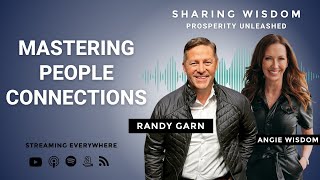
Randy Garn, author of Prosper, talks about building wealth through intentional relationships. He recommends writing a list of 25 people to cultivate, serving before you sell, and choosing partners whose principles outweigh ego. Prosperity, he says, rests on money, happiness, and sustainability.
Hello. Welcome to another episode of Sharing Wisdom. I'm your host, Angie Wisdom. And today we are sitting down with somebody who seems to know everybody. Randy Garn is a Wall Street Journal and New York Times best selling author of the book Prosper. He's a life and business strategist. He is named entrepreneur of the year investor. I mean, the list goes on and on speaker, especially because he's going to be at our event on March 9th. Forget intentional, but truly just a person that is conn to and loves people. So, Randy, I'm so excited to have you here and have you chime in a little bit on the whole philosophy of prosper and your people connection.
I love Angie. It's so good to be here with you. I'm so pumped to come out to your event and see everybody that you're bringing on stage. You know, Ben's going to be amazing, Jen's going to be amazing, and you're going to be amazing. So it's, I'm, I'm super excited to just meet everyone there in the audience. And so one of the things that I think is most important, you know, is your event get intentional and getting intentional. What I really wanted to share with people is one of the things that when I sold, you know, when I sold our second company, I really had a really great mentor share with me. He's like, randy, now what are you going to do? And I was like, well, I don't know, I need to figure that out. And you know, you get into that space in life where sometimes you're like a grasshopper, great on takeoff and you never know where you're going to land. It's like, boink, I'm going, you know, so I was, at that point in my life, I was like, I didn't know what, I didn't have any intentionality.
Yes.
And so he gave me some great advice. I want to hit this with, with the listeners and, and I'm actually going to go super deep on this at the event is he said, randy, what I, what I would suggest you do. And he was my mentor, amazing coach, I mean, amazing business leader. He said, randy, what I would do now that you've had some great success in your young career is get super intentional about your relationships. And he said, I would take write down 25 of the top people that you love like, and respect and that you would want to do business with. And he said, I would take the next six months or even a year and go learn about them, go see how you could work with them. Go see how you could create a life together with them. That was the best advice I'd ever been given Angie.
Wow. And, you know, it seems so simple, like, when you say it like that. Wow. Six months to go connect with 25 people who you, you know, you love and you want to connect with. But when you really think about it, like, if most people were tasked with that, that it feels a little intimidating. Like, you put yourself out there and go connect with these people.
Well, and that's the thing is, like, you think that the 25 people I had on my list were not people that you could just call up and get on the phone call with.
Right? Sure.
So I had to really strategically think about it. So also, you have to have that confidence. Just be like, you know, we all put our pants on the same way. And so I made my list of 25 people, and for the next. You know, I'd say it took me about three months to get in touch with most of them and figure things out. You know, one of them. I was on their board for nine years. A really awesome man named Brandon Steiner. He runs Steiner Sports. He partners with.
Oh, yeah, yeah.
All kinds of. This is an amazing, amazing man. And I always. I'm huge in sports, and I love memorabilia. In fact, if you. If you look at my office, I got, like. I got memorabilia and stuff. My whole home office. What's up here? So my dad was a high school football coach for, like, 33 years, so Brandon was one of those. And, yeah, you know, he's a New Yorker, and he's pretty aggressive, but, like, we're very, very best friends now, and he was on my list, and I needed to reach out to Harvey McKay. I needed to find out what Brandon like. So anyways, you have to. With relationships, it's. You have to really think about that. So for the next six months, I did that. I met all 25 people, and it changed my whole entire life. Seven of those 25 people, I found out, were not anything close to what I thought they were. So as. As I peeled back the onion and you'd lift up the hood, like, I actually don't admire that person. I don't like that person. They aren't a real. Real. They're not true. But the guys that weren't. And I will tell you, like, I'm doing business with 15 of them and either on their board or doing just amazing stuff with. So you just have to think about that. Are you. We get, like, everybody at the first of the year, you know, or I do it at the end of the year, in December, I put together my strategic plan. How many of us have a strategic business plan, but we do not have a strategic people plan and a person plan. And our greatest joys and our greatest sorrows in life come through our relationships, Right?
Yeah.
So be thinking about that and get really, really intentional with who you do life with.
So huge. And that brings up two things for me. One, the fact that I was talking to Steven Scoggins today and we were talking about the event coming up and me being on his podcast and I said something about you, and he was like, well, anybody you meet, just assume they know Randy. Like, just assume, because he knows everybody. And this is so. It ties exactly to what you're saying. I mean, if you literally have a strategic people plan every single year, eventually you are going to know a lot of people. You're just building your people network. But, you know, in addition to that, you can't do that unless you are really a great person. And that's what kind of attracted me to you. When I read your book Prosper, and I started to follow you and understand who you were, was like, man, this guy just has this beautiful approach to life, to values, to going in the right direction, doing the right thing, serving people with no expectations. And I believe you have to have that in order for those people to be willing to open their door and even connect with you from that list.
Yeah. You know, and honestly, it takes some intention. You know, when I was 18 years old, again, another mentor of mine gave me the book, gave me the book, how to Win Friends and Influence People by Dale Carnegie. And I. And I pay my kids to read that book when they turn 18, 19 years old. I mean, if you haven't read that book, if you haven't read that book, it's one of the all time classics. Get on audiobook, go for a run, get on the peloton, listen to it. Because I found right now, Angie, like, for me, I don't. Like, I don't need a lot of things. You know, I don't need a lot of cars. I don't need a lot of homes. I don't. My. My wealth and my riches come through my relationships.
Mm.
A hundred percent. And I've kind of found out what drives the most fulfillment and joy for me. It's actually seeing you win for me. I've seen Brenda Burchard win for me. I've seen, you know, my buddy Dean Graciosi just feel it and crush it. And I really found out that in My life, like, I do love speaking, I love crushing on stage, but I'm going to actually help everybody in the audience know how to do that and how to operate in that way and how you get on stage in a certain way and how you open up doors that you never, ever would have thought you're open. I'm right now the chief strategy officer of a massive fund out of Israel, New York, London, and Dubai. That was through relationships. Right. So I always say, like, when you're thinking about people, you have to know that if they like you, they'll listen to you. If they trust you, they will buy from you. But if they have an experience with you, they will never leave you. But if you transform their lives, they will become a disciple of yours and shout your name from the rooftops. You want to get to that fourth level where you transform their life, where you make an impact, where you become so memorable that they will always remember your name and your brand and your smile and who you are. And it doesn't matter who you know, who knows you, and what they say about you when you're not in the room. That's the most important thing in life.
I love that. Oh, my gosh. That resonates so much. I share that love of helping people succeed with you. I mean, it's why I do what I do. And I always say sometimes it feels a little selfish because I just want to see you win, because I get so much joy out of it and so much excitement. But it truly is like, taking it to that fourth level is huge. So for the people that are listening out there and going, like, it's hard. It's so hard. Like, I'm scared to connect. How do I reach out? You know, where do they start?
Well, for me, it's, you know, Angie and I'll get. Like, we talked about this before we jumped on the show.
Yeah.
It does have to start internally. You really do have to have what I say. You got to have that courage, muscle. But also, I've got to a state in my life where I treat the Uber driver and the CEO exactly the same. I don't see myself better or below anyone. And in doing that, you know, I'm a very. I'm a faithful person, too. I believe a lot in God. I believe that we are all have divinity with inside us and that we are all great. And so I don't. It doesn't matter to me how much success somebody's had. That's not like for me. I'm gonna. I'll go talk to Donald Trump. I mean, I'm, I'm on the advisory board of Tony. I mean, it doesn't, it doesn't matter who they are. I see you, Angie, as just one amazing, powerful woman. And. But I also will see that through the person that I just went and got a sandwich from checking out the line. So if you think about it in that way, that way I'm not fearful of anybody because I see everybody as awesome. Everybody is great and everybody is super amazing and you never know. And this was actually a mentor of mine too, Tyler Norton. He said you never know who the treasure map to the treasure is.
So true. Yeah.
So you never know who that one person is, that their brother is. The exact connection you need that is going to make, like, open up some huge things for you.
So true. And you have to be open minded and judgmental. Comes up to me, you know, like, because I think, and I had this conversation earlier with Damon actually, who's coming to the event is like, you have to release all that judgment because if we have this judgmental mind, if we're closed off to who somebody is, then, yeah, we're shutting doors that potentially are huge doors to open. But I, I just love what you said about, you know, nobody is below you or better than you. And when you take that bias away to the downside, then obviously you don't have it on the upside and it becomes this very natural, like, why wouldn't you reach out to them? Why wouldn't you try to connect?
Yeah. What's the worst thing I can say is no. You know?
Yeah. Yeah. I mean, the dreaded no.
Because then, then you start. Right. That's the thing is like, you try when you're doing it. I always try to serve before I sell.
Mm.
So I always try to do something nice for them or kind for them or valuable. When you're building those relationships, you got to think about, like, what matters to them. And so again, you never know who the treasure map to the treasure is. But if you look at everybody as in that way. My dad shared with me right before I went to college, he shared with me a really interesting thing that, I mean, I even, I have it on my wall as well. Like, a really good friend of mine made me this, this awesome plaque. That's my dad saying is like, if you do as much as you can for as many people as you can, as often as you can, and expect nothing in return. So again, do as much as you can as often as you can to as many people as you can expect Nothing in return. That's living. That is just literally another way of saying the real law of reciprocity. And it takes some time to build it up, but sometimes we get so transactional. But that's about transformation, right? So we're so transactional for re with relationships. What's in it for me? What's in it for me? Okay, next, next, next. We don't think about how we could actually do something for other somebody else before that, you know, so. And I think you've seen that with me too. Like Andrew, you call me. I'm like, hey, let's open up this door. Let's get on this podcast. Let's do this. Like you're, you are, you're allowing me to come speak with your audience. I, I want, I want you to crush it too. I was just like, how do we do that for everyone we meet? And I promise you what will happen is you will have so much opportunity, you won't know how to shut it off.
Yeah, it really is coming from that place of abundance and trusting that you doing the right thing by you serving, by you putting that out there, it's all going to come back around. And I talk about this often with clients is like, you know, stop chasing the money, you know, and do what you're passionate about. Connect with the people you know you're passionate about. And all of the money, the revenue, the growth will come from that. It's a byproduct of it. But I think people get really hung up in like what they need and the business, the system, the transaction. Like you said, and we talked about this before we started again about it almost feels like the easier way to just do the work, to check the boxes and to follow the system to try to get your business to grow than it is about connecting with the people. And I'm curious your thoughts on that because not everybody does like what you're saying. Nobody does this people strategy plan at the end of the year.
Well, it's interesting because I sit on some pretty large advisory boards and the main thing that I help with is leadership. But you say like, man, I can't get my business to grow. Like, I'm like, if you keep going through people, you actually might want to do a self evaluation with yourself and be like, I need to take a deep breath and I need to become a better leader and you might want to help skill up your people. And I always say, like, if you can't change your people, change your people. And I do, you do need to make sure you're fine. You're always finding the best if you want to scale and grow. So as I sit on some of these advisory boards and things, it's just like, what's the most important thing in your business is your people. They are your greatest asset. It's the only way you're actually going to really build a real business that you're not like fully entrenched in and doing everything and exhausting yourself out. The only way you're going to get to that point is people. And I always say, like, my business is mankind, my business and my whole life is dedicated to make the human race better. And so how do you scale your business? You literally have to become amazing leader and help lead and direct your people the very best you possibly can. You got to learn how to automate, delegate and eliminate things in your life. But you have to get really good at helping. Sure. That you have super clarity with those that are working with you. So if you think your business is not without people, then you, you are never going to be able to become the CEO. The thing you become, you're never going to move to the chairman of the board and you're never going to have an exit.
So important. So on the flip side of that question for you, because this comes up a lot with people. If you know you're so people driven that you've all of a sudden put like all the weight in them like they are the end all be all for your company. I get leaders in this situation where they've, they've now empowered their people so much that their people think like, you could never survive without me. And they've got themselves in this kind of like uncomfortable situation where I got to give a lot of money and I got to do all these things because I've made these people think that they are the backbone and the reason why company exists. And I know that came from left field, but I'm just curious because it comes up a lot with leaders who tend to their people heavily.
No, it's, yeah, it's a, it's a real thing. And, and that's where being a leader too, like I say building really good jazz, really good team should feel like playing jazz. You know, you really, when you get in that circumstances, because there's probably either been miscommunications or arrogance involved.
Sure.
And. But really good teams are those that actually have those very hard conversations. It shouldn't get there, but yet it does. And I think it does get there because there's not alignment as a leader. You got to get really good and really clear at being. Ensuring that your team is. And again, this goes back to, like, the Polaris point and having clarity is that I always want all of my team members to win and it to be freaking awesome for them, but not so much that it puts the business enterprise at risk and that it puts you at risk that, you know. So there just has to be really good alignment. And I think aligning compensation, aligning goal, aligning. Having good, clear conversations all the time and often are the most important thing for leadership. Because if you're. I mean, I, I. It's funny because I have people always tell me it's us, like, Randy, you're. My wife's so funny. She's like, randy, you just want to work with your friends every day. And I know, I know, but we work. I have amazing business partners that have high confidence and high trust.
Yeah.
And we are aligned. We have the hard conversations. But I also have been in partnerships, just like what you said, where I've done humongous things for the organization and all that. And it's just like, then you get a pat on the head. Oh, thanks so much. While you're building up somebody else's kingdom. And that doesn't feel good either. Right. So there's two circumstances where you can be the CEO that you feel like, man, I've given these guys all the authority, and, man, if they were to do something that could just crush my whole entire life, you know? And the flip side, you can be like, man, if I left, he owes me, and he needs me. So the best thing to have is really, really, really great conversations. Get complete alignment. I have a formula for it. You want me to share it with you, or do you want me to wait until the event?
No. Well, I know that's tricky because as you're sitting here talking about, I'm like, some people are going, what's the Polaris point? And I literally have your book here on my desk. Prosper. And it talk about that. So I feel like we need to give them a little bit of, like, something there. But, yeah, they'll get a lot more at the event. But, yeah, share a little bit of that, please.
Yeah, I'm just scratching the very tip of the iceberg because I'm gonna get. I'm gonna get my hands on the meatloaf at the event and really, really do, you know, and I'm not a motivational. I'm literally, I'm gonna bring some really good tactical things that they can take away to help grow their Business.
Yes. Love it. That's why you're coming.
So I think, you know, that's why I'm coming.
Yeah.
And you know, I, I think some of the things that you need to think about are, you know, yourself as a leader, like if you're that CEO, really it's like, what's your Polaris point? What drives you, what fuels you, what puts you in a state of flow all the time? And even when things are hard, if you're actually in alignment and going strong, it's okay. It's totally fine. What sucks is when you're out of alignment and things get hard then, then that's when depression and anxiety and like frustration set in. But if you know you're charging hard on a, on a very aligned mission, both yourself and your team, then it gets super exciting. And that's the, that's the Polaris point is knowing really the players point is actually finding true intention of what God created you to do.
Love it. And there's, that's for you individually, but I think people sometimes miss the mark on like there's that for the company as well and for your whole mission, your vision statement, you know some people call it, but really that player's point that you've got to have your whole team aligned on in order to be going in that direction together.
Yep, yep, 100%. You know, I. So it is, it's like, are you just driving a car or are you driving, are you creating a bus? Are you creating a jet airliner? Are you creating, you know, what kind of thing are you building and what kind of team are you building? I want you to think about that. I hear you creating a team of high performers. Because if you're going to create a team of high performers, you better be a high performer yourself. And you better be the number one habit for high performers. According to all of the research that my buddy Brendan Richard did was to seek clarity, to have great energy, to raise necessity, you know, to demonstrate courage. So the very, very thing that we wrote about years ago was to know your Polaris point. And then as you know your Polaris point, start gathering those people that are aligned with your Polaris point and theirs. That's the, that's the key to success in life. I really do think so.
Yeah. Oh, I believe it. And that's why I was so jaundiced.
After I read your book. Not everybody deserves to get on your bus.
Yeah.
Not everybody deserves to get on your plane. Not everybody deserves to get on your bus. You can still love everyone yeah. But at that same time, if you. If you really understand people, you want to build a team of. Team of leaders around you.
Yeah. Not everyone is going to be aligned with your same vision and your Polaris point, but I think that's the crucial piece of it. And what I see oftentimes is people starting businesses or, you know, they're. They're in it and it's working, but they've never really taken time to define that Polaris point. They've just like, hey, this is what I want to create and this is what I'm good at. And all of a sudden it just starts going and it's snowballing and it's growing big. But now you've got this team of people, you don't really know your players point, so you certainly haven't conveyed it to them. And I don't know what you call that, but you got a lot of people going in a whole lot of different directions.
Yeah. It's called. It's called chaos, and it's called hard, and it's called not fun, and it's called going home at night being like, dude, how do I get everybody aligned? So. So I think the biggest thing that I think everybody can do as they come to your event and as they go through their lives is to take a big, deep breath. In fact, I'm. I'm doing it myself right now. It's just like you have to check yourself before you wreck yourself. So every quarter, you know, I spent some good times up in the mountains, up at our cabin and at that place, I'd be like, am I going in the right direction? Am I seeking clarity? Do I have the right team members? Have I had the necessary conversations to make sure that we're all aligned? Because a lot of times, too, you've got to get really good at communicating. You got to communicate your intentions. It's like you said, if you're the leader and you're running even a team of five people.
Yeah.
And if you don't know where you're going, who else does? Nobody else knows where they're going either. And guess what? You're not being productive. You're not being high performing. You're not reaching your potential. And so to reach your potential, you need to spend way more time on strategy, and then you can execute way quicker.
Yeah. So love it. I feel like people are listening right now and going, man, again, it sounds simple. And we're really talking about slowing down and kind of taking inventory and digging in here. And we're just A society that doesn't usually typically operate, operate like that. It's like the next thing, the next thing, we got to keep going. We got these goals. You know, business doesn't stop. But I've always advocated and told people I'm a big fan of CEO retreats. I don't care if you are the only person in your company. Take your, take your CEO retreat on a quarterly basis, do this inventory and check, because it's really what's going to keep navigating you. But, you know, gives. Give me something for people that are listening and going, man, that's where I'm at. I'm. I'm in the state of chaos and I've got this thriving company, but we're all over the place and I'm overwhelmed and I've got this anxiety. What's that first step to really come back to, to try to get the wheels back on the bus and things going in the right direction.
So for me, I always. And again, this, this came from. We built a huge club called the, the Hero CEO club. And we ended up having, you know, selling that. But one of my super close friends, Tyler Norton, his father was Bertis Norton, who worked with Jim Kilts and at Nabisco and Kraft and all these big companies. Warren Buffett said that Jim Kilts was the best CEO in America. So if you can imagine this, delineating this down to all these small businesses and entrepreneurs and everything, and he simply ran Kraft and Pepsi and all that. He said, if you don't have your strategy on one page, you don't have a strategy. So talk about slowing down.
Right?
And he has a really, really good form. So if I work with a group, whether large or small, like, I ensure that they have their strategy on one page because what happens, there's. Dude, there's so much opportunity, Angie, but it's just like, are you just gonna snorkel around in life or are you gonna scuba dive and go deep with, with what you're gonna accomplish?
Yeah.
You know, are you going to go deep with those relationships? Are you going to, like, are you going to do the things that matter most and cut out all the nonsense I say, like, quit messing around with the thick of thin things. Right. So that then you don't end up at the end of your life being like, dude, I could have done so much more. You don't. I want to leave this earth with zero regrets.
Yeah.
So I would say if you have too much going on, cut it all. Cut everything out. Take a deep breath, do a Control, alt, delete. Go out for a weekend by yourself and do the deep thinking. Too many times, people want somebody else to do it for them. No, you have to think the hardest thing in this life to do is to get people to think. So you have to come up with your own strategy because nobody else is going to do that for you. They can help, I can help. You can help. But at the end of the day, it's going to be John or it's going to be Sam or it's going to be Sarah or whoever it is. They have to determine what their own Polaris point is. I can't determine what Angie's Polaris point is, but I can help you structure a really good strategy.
So, so powerful, so darn good. You, you are a, A life strategist, a business strategist. So, I mean, you did a ton of coaching around all of this for years and years in your book. So I gotta ask you this mindset question about people. Cause you've worked with so many, like, what gets in the way for people? I mean, so many people don't do this and they even hear you now, and they're probably still not going to do it if we're really honest. But, like, why, why is it that the head stays down and we just got to keep forging on, you know, the chaos instead of hitting that E break and taking that breath?
Because they're not willing to go deep and answer the tough questions.
Yeah.
A lot of times the biggest thing that I find, angie, it is 100% fear that they also don't feel like they're worthy themselves to have great success in their lives most of the time. Most people that I know, the top 1%, are there because they decided not to worry about what everybody else thought. And they learn how to say no, no, no, no, no until their tongue bleeds. So for me, a lot of it is fear is number one. Number two is skill set and knowledge. And that's why I go to events, that's why I still go to masterminds. And I have, I just want you to know, like, I have never, ever, ever in my life paid for coaching. Never paid for it. I have only invested in it. I have only invested in it because if you're going to get coached and you're going to get mentored, you better freaking do the work. And I think what people need to do is find a really good mentor and a coach because they're going to help you skill up. I really do. I think that it's fear and then a skill set. So you always need to be learning, you always need to keep getting better. You always need to be going to events, you need to be a lifelong learner always. And be like, dude, I am going to continue to get better every single day and I'm going to do that. And so, and then the other things are really understanding people and getting yourself in the right rooms. So I think it's fear, skill set, and relationships. Those would be the three things that I think stop people from massive ultimate domination. Success in her life.
Yeah, it's so true. And I mean, I get asked this question. It is. And you said, you know, they're not willing to do the deep work. And I love all your analogies about snorkeling or scuba diving. I love all your randy sayings here. But it's so true. Like I said the other day to somebody, it's how much you're willing to look at and how deep you're willing to go is in direct correlation to what you can actually accomplish and succeed in life. And, and people don't want to, like, see the things that are going to be painful, the things that are going to be hard to work through because of that fear, you know, maybe because they're not worthy. So I think you hit, you know, initially you said that doing the hard work, you know, the deep dives and, and the fear and not feeling worthy are so key. And those tie right to do you invest in yourself. If you don't, you probably have that lack of worthiness. Right. Do you make those relationships? If you don't, there's probably again, something going back to the fear and the lack of wor. It just all ties together so well. And it's my life mission to get people out of their head from that space because absolutely anything's possible, you know, when you can break through those pieces.
I, I, I mean, not only do I agree with you, I have seen it done. Yeah, I've seen it done so many times. And I have also seen a lot of people fail because they're not willing to be put in the work. And then they live with the pain of regret instead of the joy of success and the joy of fulfillment and what they could have done. And so that's what, that's what I want people coming to yours is to get very intentional about their life, very intentional about the kind of success they want to have. And you know, when I think, when I talk about prosperity and you know, this about me and you too, is like, prosperity isn't all about money. But money is important. Like wealth is important. And it is, but it's, but it's a three legged stool. Prosperity is, it's the balance between money, happiness and sustainability. So is what I'm, is what I'm doing, is my polaris point, can it make me a good income? And can I figure out my economic engine around what I was born to do and what my core competencies are as an individual? Like I believe that I was sent here on this earth and I feel like I just, I collect friends, I collect friends as I go through life, you know, and I just keep getting better and better and better friends and I try to become a better and better friend too.
Yeah.
So my, that's my happiness right, is you've got to figure out what's your business model, what's your economic engine, how do you going to be like generate an income and generate wealth to what makes you happy and what drives, you know, joy in your heart and fulfillment. And if you align that you can do it for long periods of time and that's where the sustainability comes into. And sustainability, is it good for others, is it good for myself? But can I do it for long periods of time? Because the greatest people I know stick to really what their Polaris point is instead of going all over the place their entire life jumping from job to job, jumping from person to person, jumping from this. I always say if your job sucks, if your leads suck, if your industry sucks, you probably suck. You know, you start like thinking about how you make it better.
Yeah.
And so that's like really understanding prosperity. Is that three legged stool.
And that Randy, is why I wanted you to come to the event. Because I literally, and I say this in with extreme genuineness that I don't know that I've seen anybody accomplish and succeed at life from such a holistic, organic, like natural place. I, I told a good friend of mine, Steph, who you'll meet at the event, I was like, I'm attracted to him and what he does because it's just natural. Talk about going kind of with the flow of life and not this place of resistance. And like, gosh, you got to push through and grit and you know, sacrifice everything. You're the complete opposite of that. And it's just, it's beautiful to see and that's what I really want people to learn from you. That yeah, you can have that. And it doesn't have to be the battle that I think most people create in their minds and you're doing it through people which I absolutely, I love. We love. So I'm super excited about it.
Well, I feel, I feel blessed to know you and you know, my, my thing about grit is like sometimes grit, sometimes grit is like blowing through walls and, you know, scorching earth and getting what you want to get and you leave everybody else. You may sit on a pile of gold at the end of the day and have no friends. That's not going to be my life.
Yeah.
Grit for me is being. Having gratitude, having gratitude, being resilient, being, having, you know, having integrity and having massive trust. That is my grit. So my grit is being the kind of person that when I leave this earth, I've accomplished great things and I have tons of friends and I have tons of people that say Randy changed my life and he impacted me for good. He brought me either closer to God or closer to my family and closer to my business and that I loved and enjoyed. That's what I want to leave as my legacy. Angie.
So good. And I, I resonate so much with what you said. The other definition of grit was because I was there for a while, you know, years ago, back in, you know, 97 when I was at Morgan Stanley. I really believed from this place of like, you know what, you steamroll it. You just roll over whatever you need to. You power through it and you knock down any wall. And it's a really lonely, unfulfilling way to do it. You know, I mean, yeah, you can get a lot done and you can create success. But I hit that wall and was like, this is not, this is not fun. This is not what I want it to be like. You know, I don't think you get any trophy at the end for, you know, knocking down the most walls and sacrificing everything you love to get where you want to go. So. And I think that's a big part of it and something that I've really focused on in the last year is you don't have to do it alone. You know, people. People do know the way and they can help you. And it's part of the reason why, you know, we've connected and I'm excited about it. But I have to ask you something. Were you always, always just like this, Randy?
You know? Yes. When I, when I was young, uh huh. Then I had really just amazing success as a business. Then I let, I let myself be put into a place where I wasn't in charge for several years then. But yet the success probably got to me where I was like, you know what? And I went To a place where worked with some people, where it wasn't the best environment and it wasn't aligned with my heart. And so I came back. So I had to go through that experience and I want to share that with people because I, I have been through hard stuff. It always hasn't been easy. I did make some decisions where I put what I call the, the, you know, the E squared over the P where I let people's ego and self economic interest be over my principles. And so I was on a bus that I wasn't driving that was with a driver that didn't have the same values towards people. And I watched him just scorcher leave this guy, like deal with a partnership the way I wouldn't have done it, you know. And it was starting to hurt my heart and reputation. So I go home for about four years. I'm like, I don't know why it took me that long, but I'm just telling you, like I'm not perfect either. Right. But I am more perfect now because I went through that. And I want to teach people, never, like, don't put yourself in that because I have done both. So I do want you to know, like as soon as I was able to get out of that, and to be honest with you, I gave up a lot of money that could have come. And instead of that, I said, you know what? I'm going to drink my own destiny. I got off my Polaris point. I got back on my Polaris point which is dealing with people that I love like and respect, doing things that are aligned with myself, with my family and with God, building businesses up that make an impact and a difference. Working with people that are actually completely true to who they are and not making about the bunny. And now I'm doing better than I ever have. Right. And also sleeping at night.
Yeah.
So I think that it's important to know that, Angie, that I have been through both sides and I'm only going to stay true to who Randy Garden is at all times.
So good. So, so good. I'm glad that, you know, people could hear that you tested the other side, but it sounds like you, that, you know, three legged stool that you were talking about, some of those things were missing. Right. Maybe the income was there or the, the wealth, but you kind of realigned.
The income was there, but the, the happiness was not there and the sustainability was out there. Because I will tell you that, and I'm going to go deep in this at the conference is what the formula for making sure that you never choose bad partners. It's the P over the E squared where only do business with people where their principles are higher than their ego or their self economic interest. If you do that, if you work with people that have high trust, high integrity, high confidence, you're going to win. If you deal with people that are more concerned about the money and their ego, there's more likely you're going to lose. And at the end of the day, you're going to waste a lot of your time and deal with Sportster. So I want to prevent that from happening. And that all has to do with relationships. That all has to do with that. Your Polaris point, it all has to do with negotiating. You don't get what you deserve in life, you get what you negotiate. And so all of that kind of comes into play with how you communicate and how strong of a leader you are and how much you value relationships.
It's all right there. But I have to say, like, everything you're giving, I feel like this is like. Yeah, and this is the business piece of it. Like how to kind of start building out from yourself. I always go back to, you have to do the work on yourself first. You can't do all the things that you're talking about if you haven't done the work, if you don't know your principles, if you don't know your values, if you don't have that relationship, trust in everything else. So it's why I put this magic combination of all the speakers together for our event. Because we've got the personal side, we've got the business side. We've got so many magical pieces there. And you are going to be an amazing component of it. So.
Yeah, I will tell you this. Yeah. For me, there is no delineation from my business, my family and my life. It is all, all one. It's all one thing. And so I think that's the other thing that, that you have to get to. Like, I don't separate what I'm doing for business, what I'm doing for family. Like, I bring my kids with me places like my wife's fully engaged and involved. So it's just like, you know, if you can, if you can get to that place too where you're fully aligned with business and life. That's, that's the, that that was a massive win.
Absolutely. I could agree with you more. And it's why I think it's, it's unique. Right. Like you see my title and I say I'm a life and business coach. And you are a life and business strategist. And some people don't get that. They're like, oh, would you do it? And I'm like, it's one of the same. You can't work on one without the other. You know, you are. Your business. Your business is you. So you have to be able to tend to both of those 100%. Well, I appreciate you coming on today and sharing a little bit of your wisdom, kind of some snippets of it right now. But I'm so excited to have you at the event and have people meet you live and in person, and. And even for the people who want to be up close and personal and sit down next to you at dinner, lunch, there's those opportunities, too. So we are looking forward to having Randy Garn in Orange county on March 9th. It's gotta be warmer here than what you're dealing with right now in Utah.
Yeah, it will be. We got some good snow last night, so it'll be warm.
We saw that. Yeah. Unbelievable.
Well, I love you. I love you to death. And I honestly am. I got your. I got your book. You sent me. Awesome. You sent me this awesome, awesome gift. You know, I haven't even opened this one yet.
Oh, your journal yet. You haven't done your journal. Oh, you're gonna love it.
This is. I am a journaler. I journal every night. So listen, everybody out there, this is. Start with you, and this is Angie Wisdom. I'm gonna dive into it, buddy. I appreciate you. You're amazing in every way.
Thanks so much, Randy. We will see you in the OC Soon.