The Future of Space Investing with Raphael Roettgen
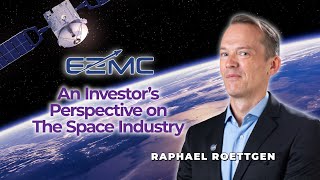
A 2025 podcast interview where investor Raphael Roettgen (founder of e2mc) discusses the rapid cost reductions across launch and spacecraft, early-stage investment experience since 2017, portfolio examples (Antares, Polaris, in‑orbit manufacturing startups), and how space will impact nearly every Earth industry. He emphasizes the need for specialized investors, outreach and storytelling to break the sector’s bubble, and expects operational heavy-lift vehicles, Starlink growth, and expanding in‑space manufacturing in the near term.
Chapters
I think space will impact probably any sector I can think of on Earth, and it's going to impact them in different ways. So for some sectors, the more immediate impact may be more like satellite data, like agriculture, insurance, using certain types of satellite data and the insights they derive from that. For other sectors, it might be more of the futuristic applications I'm mentioning, like the. In space manufacturing. Right. So for example, semiconductor sector or the pharma sector. And yet other sectors it might be the space resources. So of course the mining sector. Right. But at the end, I believe almost every sector on Earth is going to be impacted by space. And yes, executives would do very well to learn about it. And you have this funny effect when you have these types of very dramatic and also sort of very, to some extent, very nonlinear impact of new technologies. People kind of, for a while, don't really make an effort to learn about it, and then suddenly it happens all at once.
Welcome back to the smallsat revolution powered by GomSpace. I'm your host, Frank Felker. My guest today is Rafael Rotkin, founder of e2mc, a longtime investor in the space industry. Rafael, welcome to the program.
Thanks, Frank. It's a pleasure to be here.
I really appreciate you taking the time, Rafael and I, I want to speak to you about some very fundamental aspects of the relationship between the capital markets and the space industry. But I'd like to start with this. As I say, you have been an investor in the industry for quite a period of time. What initially drew you to the space industry as an investment opportunity? And what did the landscape look like then? And when was that?
Yeah, Frank, I love how you and frankly most other people would characterize me as a longtime investor in space, which I think says a lot about the current state of our sector, because I've been an institutional investor in space for not even five years, and if you count in the private time, so where I was making personal investments in space, so that adds another three years, so eight years, which for me isn't a very long time. Right. But of course, so much happened in the space sector in those eight years. And you're asking a quite an interesting question of, like, what did it look like when I started out? So this was in 2017 when I took a fairly detailed look at SpaceX, which I had never done before. I was always fascinated by what they were doing, but I'd never looked from a sort of financial point of view. And I tried to look as deeply as I could based on public information, because of course, the company doesn't give out any information itself really. And I got immediately fascinated by realizing, you know, how they were changing the industry, how they were bringing down the cost of going to space, how much more potential there was for them to bring down the cost of going to space even further. So I started digging in and then became like a rabbit hole for a few years and started realizing the costs were coming down actually not only for launch, but across the board for spacecraft, for the components, really for everything else. And to a degree that was so big that, you know, we're talking sort of like 90% plus cost decreases very often, that, you know, I had been a generalist investor in the financial markets that I had been for a while, let's say like 20 years or so, and looking across many sectors and I've never seen a sector where you bring down cost that much. It's not going to have a very dramatic. So I got immediately excited and I also realized, though to the second part of your question, it was really early on because there wasn't really that much else to invest in. I mean, SpaceX was the obvious investment, right? And I started digging in, I realized, okay, there's you know, there's some other later stage space companies around, same ones which are well known today, companies like Planet or Spire and so forth or Rocket Lab. And the more I dug, the more I found, but it still was probably something like a few hundred more serious companies. Right. And so it was very early on. And also on the investment side, right? There weren't really many publicly listed space companies, I mean, excluding old aerospace defense type majors like Lockheed or Airbus. And on the private market side there were almost no specialized investors.
Interesting. So you saw this as a tremendous opportunity, multiple orders of magnitude of costs dropping and the impact that that could have, the ripple effect that that could have throughout the industry. And so then in the early times, what types of companies were you investing in? Launch platforms, satellite manufacturers or what? No.
So again, the most obvious investment, and again I was a private investor, not an institutional investor, was SpaceX. Right. But once you had kind of that box ticked, so to say, I mean between 2017 and then basically 2020, I just spent three years just studying up. I have a tremendous, I mean now I think I know a reasonable amount about the space sector. I'm learning every day, but I still have a tremendous respect for this sector. Right. I mean there's, there's a reason we joke about something being rocket science, right? And stuff here is literally rocket science, which is why I think we also need specialized investors. But we can come back to that topic. So as I was digging in, you know, certain things evolved that I considered interesting. I perceived certain things. I'll just give you a couple of examples. I was, I was looking across the board, but all of the things you mentioned, I mean, launcher satellite communications, of course, remote sensing as another traditional space application, but also more frontier stuff. Even back then, you know, I thought about, okay, space tourism or in space manufacturing, space resources, this type of thing. So during, during those first years of research, to give you some examples, you know, I came across, as I was analyzing satellite communications, I very quickly got fascinated by optical communications as a, you know, as a very interesting alternative to radio frequency communications. I made a small angel investment in that sector. And I also thought space tourism was interesting because I could see how there would be a supply demand imbalance for, for the foreseeable future. But those are just examples. I, I pretty much looked at everything and now as we're, as institutional investors, we're kind of investing really across the board if you look at our portfolio.
And that was my next question, although I'm going to interrupt myself, you mentioned that it really is rocket science. I, I got quite the education when I read the book Liftoff, which is the backstory behind SpaceX. And I had no idea how many ways a launch can go wrong. And then even if they make it to orbit, ejecting the payload and it's got to be positioned correctly, it's amazingly complex area with a lot of risk. And this is another reason why I'm so fascinated by people like yourself who take on that risk, which I'm sure is in a very measured way. So if you would then please tell us about some of the companies that are currently in your portfolio or that you're considering if you don't want to name names, if you could just speak to sectors and applications as a team.
Somewhere above 25 investments in space startups to date. So and of course in order to get to those 25, we have literally looked at many hundreds and probably into the low thousands of opportunities. Right, so let me give you some examples. So actually you can't fully see it, but today I'm wearing a T shirt of a company called Antares. I also, I always love to get the clothes from the space companies. It's one fringe benefit of being a sector. And so Antares is a, is a, is an American company, American space startup and started by two former very senior people at Planet well known Earth Observation company and they perceived that there was a need or it should be desirable to standardize the software for satellites much more because there basically was almost no standardization. It was like you build a new satellite and you start a new satellite platform. You almost did the entire software from scratch. And they and actually some other competing entrepreneurs thought that was not sensible and that should be changed. So they started this company to, you know, to resolve this problem, to have standardized software to design, integrate and ultimately also operate satellites. And we invested about three and a half years ago and they're doing really quite well and getting good traction both with government and commercial customers. A totally different example of our portfolio and another part of the world. So we as a fund, we're probably one of the fewer funds which actually I believe can truly invest worldwide. And when I, when I say worldwide, given it's the space sector, I immediately have to caveat. Worldwide in this sense means anything that's not a strategic competitor of the US government. So of course, you know, we can't really do anything in China and other places like that, but we can certainly. We know the U.S. canada very well, we know all of Europe very well, we know the Middle east, including Israel, India, Singapore, Japan, Australia, and we can invest in all of these places and we have invested in many of these places. So that was a long winded introduction to the second example, which is a company in Germany called Polaris. And they ultimately want to do basically a space plane, so horizontally taking off and horizontally landing, so an alternative way of space transport. But on the way there there's basically a whole product roadmap which then includes supersonic and hypersonic drones, which have very interesting defense use cases at the moment, as probably you and many listeners appreciate. And, and those guys are really the former German space agency people. They're really technologically extremely sophisticated and have moved along at the pace. And also capital efficiency, which is unlike anything we've seen in the hypersonic sector actually worldwide, which is surprising because usually I would expect to find something like that in the US but they've really knocked it out of the park. Just as an example, last year they became the first company ever in aerospace history to put a so called aerospike to actually ignite so called aerospike engine in flight on, on this type of vehicle. And there's going to be a lot more useful coming out of this company. So, and then to give you yet another completely different example, one area we are very interested in for the future, so kind of looking out 10 years or so, is in space manufacturing, manufacture something in space, actually in orbit, taking advantage of microgravity, principally to bring that product back to Earth. There's also in space manufacturing for use in space. That's not what we're talking about here. This is for bringing back to Earth. And we actually invested in a couple of companies already that are engaged in this type of activity. But to mention one, it's a company that's doing replacement retinas. So for the human eye, so you can treat conditions like retinitis pigmentosa. And the way you replace the retina, they basically take something that's called bacteriorhodopsin and they layer it, I think for maybe 200 times, which you can't do on Earth because the gravity, after a few layers the whole thing would collapse. But in microgravity it's no problem. And this is proven, this has been proven on the iss. It never made any commercial sense. But again, space is getting cheaper and cheaper. The cheaper we get, the more use cases make sense. This is why this is a sector so exciting. And this is one very, very futuristic sounding example of such a use case. But honestly, there'll be a lot more futuristic sounding use cases becoming reality soon.
I think that's perhaps my biggest interest in the whole industry is the fascinating applications of the technology to make life better on Earth. And I know that's a big deal for you personally, but I don't want to go down that rabbit hole right now, if you don't mind. I saw presentation that you gave, I believe in Riga recently and you were talking about the incredible drop in the cost per kg to launch mass into space payloads and you gave an example of, I believe it was an optical company where their cost, the factor was 3, 500 times less cost, something like that. I may be misquoting you, but is that, how do you see that impacting? Obviously it's going to impact every industry. But a better way I think for me to put it is how can business leaders even outside of the space industry better plan for a future with these types of opportunities opening up and change happening so rapidly?
That's an excellent question, Frank. So first of all, let me give credit where credit is due. So that specific example you're mentioning that was basically comparing the cost of a medium resolution Earth observational satellite From I believe 2013 with 2023. For me, something like that. That was not an example I developed, that was actually friends at McKinsey. I'm very thankful they did that because I always wanted to find a really good example. What's fascinating about that example is it Combines various types of, let's call them cost decreases or capability increases, which are all happening at the same time in the space sector. And what are those? What I already mentioned, it's not just the launch costs coming down, it's also the cost of the spacecraft, the satellites and the components coming down. Right. And they're coming down. One is just technological deflation. These are all technological components, but also because now we're actually mass manufacturing them where in the past we only manufactured very low volumes. You're getting economies of scale now. The other thing that's happening though, which is also a general technological trend, is miniaturization, right? So the kind of stuff you can do, the technological capability you can put into 1kg, that capability goes up all the time, right? And so it's not only the fact that the 1 kg of launch is getting cheaper. What you can, the value you can derive from that 1 kg is, is going up. See what I'm saying? So you get this like double whammy. It's actually like call it a triple whammy effect and that McKinsey calculated and that's why they got you this really impressive number of that like 3500x cost decrease. I mean, it's just insane. And again, like you don't get this type of cost decreases without, you know, some really significant impacts. Now to the heart of your question. I think space will impact probably any sector I can think of on Earth, right? And it's going to impact them in different ways, right? So for some sectors it may be, the more immediate impact may be more like satellite data, right? Like agriculture, insurance, using certain types of satellite data and the insights they derive from that. For other sectors it might be more of the futuristic applications I'm mentioning, like the, in space manufacturing, right? So for example, semiconductor sector or the pharma sector and yet other sectors it might be the space resources, so of course the mining sector. Right. But at the end, I believe almost every sector on Earth is going to be impacted by space. And yes, executives would do very well to, to learn about it. And you know, you have this funny effect when you have these types of very dramatic and also sort of very to some extent very nonlinear impact of new technologies. People kind of for a while don't really make an effort to learn about it. And then suddenly it happens all at once, right. Even though it could have happened earlier. And so the other example I will give to you and listeners, which many people are at the moment will be familiar with work in AI has Been going on for a very long time. But it was some, I think it was, I would argue, the release of ChatGPT 3.0 when everything went ballistic. And you do get these moments and sometimes they're hard to explain. But you know, I think in space we could have moments like that as well. Maybe it's, you know, when starship has a fully successful commercial launch capturing both the booster and the starship, I don't know. But these things can suddenly flip very, very, very quickly and then people realize, oh, now we really have to learn about it. But I think people should learn about it right now. Right. Because if I come back to the example of AI, I think probably most executives in the world today would agree, yeah, I better know like the basics of AI and how that impacts my business. So look, I did a graduate degree in AI and machine learning in, starting in 2013 and I was coming off of Wall street career and I was, I remember telling my friends who are so very smart, like Wall street hedge fund people for the most part saying, hey, by the way, I decided to go back to school. You know, this AI thing I think is going to be really interesting. I'm going to study, you know, I'm going to get a graduate degree in AI. And the consensus response was something along the lines, oh yeah, yeah, it sounds intellectually really interesting, but it doesn't seem to have any commercial use. This is how quickly perceptions can change. And you know, I think with space, we're kind of still almost in this 2013 with AI moment where if you go to a lot of non space companies and non space executives, like, you know, very smart qualified people, otherwise they wouldn't be there. They don't have the knowledge yet, the education and you know, frankly, partly that's on us as the space sector. We also, I think have to go out there and do more outreach. I mean the space sector, you know, I love being part of the space sector. I love going to conferences like you know, satellite in Washington next week. But as many of us say, we are self aware. It's, it's also to some extent it's a bubble. And you know, we gotta, we have to break out of that bubble and do our part in educating people who are not from space companies about why space is important to their company, to their chemicals company, their pharma company, their insurance company, whatever this is. That's, you know, that's frankly why you may know, I have my own podcast. This is why I wrote an introductory book to the space economy. I spent probably I estimate something like 10 to 20% of my time, of which I don't have a lot on outreach because I think it's so critical to building the sector.
You know, you may not recall, but I maybe six months ago reached out to you about the idea of helping space companies do a better job of telling their own story. I agree with what you're saying about them being inside a bubble. But a big part of it is the ability and the correct words and structure to tell a story that's memorable and can be retold. And in both the case of AI and space industry and many other deep tech industries, it's complicated, it's difficult to tell that story. But what I have learned is if you focus on the mission, for example, building new retina that could, you know, fix retinitis pigmentosa. Wow. Now that's a mission that somebody can get their arms around and can feel passionate about. And I really feel that it starts with that. So I won't go again. I'll try not to go too far down there.
You are, you are absolutely right in that. And I think the better leaders of space companies, you know, at the top, Elon, they get that right? I mean, right. I'm sure if you ask most people why they're at SpaceX, they're like, well, we're making life multi planetary, we're going to Mars. Mars. Maybe. There are some people who like, you know, I'm, you know, building broadband communications and that's great. I love styling. Right. But I think the masking is the really powerful thing here.
Yes. The employer branding aspect of it is a whole extra value of being able to attract highly talented people and investors to your company based on your story. So I think it's a big deal and it leads me naturally to my next question, which is as an investor and a member of the capital markets, what are you looking for in. I'll tell you, I put it to you this way. I've, I've interview a lot of investors in other industries as well. And one guy I love, he talks about green lights and red flags when he sees, let's say, a pitch. And you know, red flag is whatever the bad team, nobody to lead the company, what have you. What sort of green lights and red flags are you on the lookout for when you watch a pitch?
So it's a good question. Let me take a step back. The first thing I'd say that before I was doing this venture investing, I was actually a public markets investor. So I was a prop trader and then I was in hedge funds. And in terms of this sort of, let's call it the balance between green lights and red flags, this is actually very, I came to learn eventually those are very different disciplines. If you're talking about public markets investing, and I won't go too much into detail because it's not what we're talking about today, but basically you are paranoid about downside risk. There's actually a saying in the public markets, some people say if you take care about downside risk, the upside takes care of itself. Now, early stage venture investing in general, but including space in my mind now is actually the complete opposite. You, like, you're completely aware that there's a ton of risks around and across all of the categories. Tech risk, market risk, execution risk. Right. To name like three main buckets. And what you have to do on those risks is you, you have to, this is where the red flags are valid. You just have to make sure you're not taking any stupid risks. Right. So, okay to state the obvious, but this is very important for people to hear, including if there's any sort of journalist investors listening to this. This is again, this is a deep tech sector. This is many times the literal rocket science. And if it's not rocket science, it may be some other really deep science. You know, trust me, the artificial retinas, the biology is very deep science, not rocket science, but it's a different. And so what you don't want to do is you don't want to be caught with your pants down where you invested in something that was never feasible and you could have seen from the like, you know, or at the extreme and outside scam. Right. Which are not exactly the same things. It could have been something never feasible, but people didn't look in enough detail. And then of course, the extreme, you may have an outright scam. This, we can't like, this should not happen. Right. That would be reputationally very bad if that happened to us or to other investors. So this is a type of stupid risk you don't want to take, you want to exclude. Right? But then there's other risks we consciously take. You know, we take on technologies very early. This is possible that once we start trying to mass produce these retinas, something unforeseen prevents us from doing that as possible. We are consciously taking that risk. We're consciously taking some market risk, consciously obviously taking execution risk. You try to minimize all of these execution risk. You try to bet on the right team. Right. But so the general point I was trying to get coming Back to was saying the beginning difference of public markets is as an early stage venture investor, once you've sort of considered the or, you're comfortably not taking stupid risks, you're actually thinking much more about the upside. So you're thinking. Whereas the public markets investor very often thinks like what can go wrong? The early stage venture investor, at least in my mind, you think, what could go right? What if everything goes right? What would the world look like? What if we end up mass producing retinas in orbit and it becomes the main supplier to address retinitis pigmentosa and actually certain other related conditions? How much could this company be worth? This is sort of the interesting question to ask, I think, in, in early stage venture and I hope, I hope we are, we're asking this question systematically in a disciplined way.
That's great, excellent insight. Thank you so much for sharing that. Now I feel as though, as I don't think you'd give me all day of your time, but I feel as though I would be happy to spend all day speaking to you about all these things. But I want to ask you before we sign off, what do you see in the near future? I often talk about the foreseeable future of the space industry. What do you see next five years?
Yeah, that's probably some of the things which I'm seeing, which many people would answer. So I'm biased, right. SpaceX Investor I do believe Starship is going to become commercially operational in some form. Probably going to start out as obviously delivering Starlink satellites primarily. You know, the payload capacity may slowly creep up over time, but I think it's going to be an operational vehicle. I also think other rockets are going to come online. We already saw the first launch of Blue Glenn, you know, I hope we're going to see, excuse me, the second launch relatively soon. So you have another heavy lift vehicle there. I believe we may see also some smaller rockets launch out of some other places in the world. I do believe that the build out of the, on the satellite communication sites obviously can continue. Starlink has very, very impressive growth by the way. As a side effect of that, I do, I do believe at some point in time, possibly very soon, we may seen a listing of Starling on the stock exchange which would be very good for the space actor, I think, in terms of news flow, but also of the tangible effect that, you know, that would recycle back a significant amount of cash to SpaceX investors who then I hope would reinvest at least part of that in the space sector, including in early Stage companies. So that's another thing which I think is really interesting to watch. I think, you know, we're recording this, I think sort of three days after a successful landing of a probe on the moon and one day before the potential landing of another probe on the moon. That's really quite significant, right? If we end up having two successful commercial, like lunar landings in one week, I mean, wow. So we haven't invested in anything luna yet, but out of our, you know, future, out of future funds, you know, I hope that will certainly be the case. So some of these things are more followed. Then I come back to things like. And it's really sort of a big topic for me the, in space manufacturing because I just think that, excuse the pun, but like the, the stars are aligning for that in so many ways. We know what, what use cases make sense. They never made commercial sense because we didn't have the cost wasn't right and we didn't have the capacity. That will all change over the next few years. The costs are going to come down. There will be capacity for commercial in space manufacturing. So if I look over the next five, 10 years, I think that's going to be a hugely exciting activity in the space sector.
That's beautiful. I really appreciate your look into the crystal ball there. Well, Raphael, we're just about out of time, but I always like to ask one question before we leave, which is, is there a question I should have asked you that I didn't, or is there a thought that's come to your mind that you'd like to share before we go?
Well, I think, you know, one message I'd like to leave always at the end of interviews, independent of the setting is we're talking about the bubble and the need to educate people. And I hope you have also some listeners who are not yet from the space sector, but maybe listening in, trying to learn something. And really I want to put a message out to people. There is going to be so much to do and it's going to touch, as we discussed before, I believe really virtually every sector on Earth that if you're a motivated person, either at the beginning or still in the middle of your working life and you're sort of fascinated by the space sector, don't think that you cannot be part of it because, oh, it's only for rocket scientists or like, I don't know, MIT graduates from aeroastro. That is just not the case. Of course there are those roles, but we need, there's going to be so many other roles. You know that we need people for and anybody can be part of that. And it goes out even to places like, you know, there's like, need for space, lawyers, for physicians, for aerospace physicians, frankly, even for artists, because the changes are so dramatic. We'll need, we're talking about the storytelling. We, you know, you need the storytellers as well. So there's going to be space for everyone. And it's one of these really exciting, I think, periods in history where you can be part of a really significant thing that's about to happen that's happening right now where you may have seen other things like this. Like, I don't know if you're old enough, the Internet revolution or bitcoin started. And then sometimes people said, oh, if I only had been at the right place at the right time for space. You were at the right place at the right time. It's now like, you know, if you have an interest, you can get involved.
Raphael Rotkin, thank you so much for joining me today.
Thanks. It's been a pleasure, Frank.
Thanks again to Rafael and thank you for joining us. Until next time, I'm Frank Felker saying I'll see you in Space. The Small Sad Revolution podcast is powered by GoMSpace. With platforms, components, systems and services to meet every smallsat requirement, GoMSpace brings their innovative technologies and a flight heritage of over 2,000 successful deployments to your next mission. GoMSpace leading the smallsat revolution. Learn more at gomspace.com.