My Hip-hop Career Started in Boston| part 1
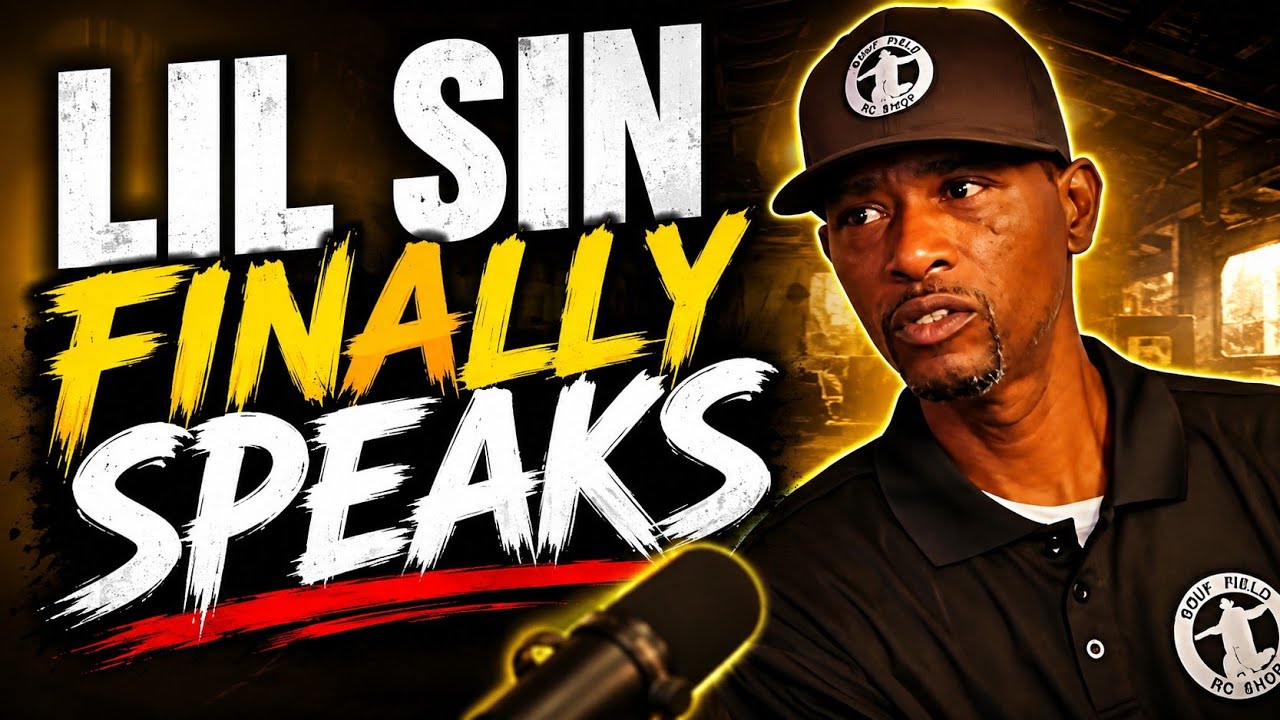
In this interview‑style YouTube video, host Ray Sorrell sits down with San Antonio rapper Little Sinz to trace the arc of his hip‑hop journey. Little Sinz recounts his musical lineage (the Warner family), early drumming in church choirs, the death of his father and a family move to Boston in 1988, where he first heard Tupac and entered the local talent‑show circuit. He describes forming his first group ATG, recording his debut vinyl, and the release of his debut album Frustrated by Death (1998). After the album’s modest success, Boulevard Records pushed him to Houston, where he linked up with radio personality Mean Green and built a new network. He details the financial realities of the independent label system—quarterly payouts, lack of cash despite notoriety, and the emotional toll of arrogance and depression. Returning to San Antonio in 1995, he pursued a deal with PKO, faced rejection from early demos, and refined his sound to match Southern tastes. Throughout, Little Sinz reflects on humility, the influence of his family, and his ongoing dream‑chasing mindset at age 52.
Chapters
Life is too short, bitch. Now turn that corner, corner, corner. Real player, real player, dream chaser.
You know, there's times in life where you just feel like you want to give up. I tell people, right up the street there's another corner. Turn that corner. Today we have a San Antonio legend, a Texas legend, A hip-hop legend, one that's talked about by other artists. He's your rapper's favorite rapper.
Man.
He's someone in San Antonio that had the city on fire, even though at times the city didn't support. This guy right here is my My cousin, my brother. He's a dream chaser.
Yes, he is.
He is someone that I've looked up to over and over. He's the one that put me outside. My boy Glenn, who's sleeping with the ancestors right now. This man right here has motivated more people than he can even imagine. Um, I am warned about giving flowers when people are alive. I am one about trying to let people know it's okay to live your dreams. Ladies and gentlemen, let me introduce to some, present to others, my brother, my cousin, Little Sinz.
What's, what's up, baby? Oh, family! Ray, Ray, Ray, Ray, Ray, Ray, Ray, Ray, man, what's going on, brother?
Listen, man, one, thank you. Because I know you don't really do a lot of interviews.
Nah.
That's not your thing. It's crazy because when you're on the mic, when you're on stage, you're a whole different person.
Yes, sir.
You transform into this beast. Your voice is different, your tone is different, your energy is different. We gonna talk about all that.
Yes, sir.
But how you doing, brother?
Man, I'm doing blessed at 52 years old to still wake up to chase a dream, man. I feel blessed, Ray, man. I really do, brother. Yeah, at this day and time of my life, man, I'm very happy. I'm very settled. I'm calm, you know what I mean? This is the— I want to say the best time of my life. You've been knowing me a long time.
Yes, sir. Yes, sir.
And right now, as I speak, sitting next to you, this is the best time of my life that I'm living right now.
Listen, man, you, you made me go out and Buy chairs.
Huh?
You made me get dressed. You made me get dressed. Look, look at the videos.
No, man.
This chair is brand new today. Today I was like, nah, I can't put little sin. So what people don't know is oftentimes people talk about what A person meant to them.
Yeah.
When they're in the casket. Wow. You know, rarely do, especially men.
Yeah.
Come to other men and say, this is what you mean to me. Let me, let me take you back to this place called 639 Dory.
Oh, rough time.
Eastside San Antonio.
Ooh.
1996.
Yes, sir. You got the year exact.
We are sitting in my Aunt Diane's garage.
Yes.
When I say broke—
Yes.
Broke is an upgrade.
He being nice, y'all.
Am I right? We— yeah, broke is an upgrade. I was doing, uh, day work and not getting paid sometimes, where you work that day, you get paid that day.
Mhm.
Uh, She was looking at foreclosures at the time. You know, we gonna tell the truth.
Yeah, we telling the truth, bro.
Um, we were sitting at Garage Man and listening to Pac.
Yeah, yeah. Uh, Seven Day Theory album.
I remember Pac died. We sat and we listened. We talked like we knew the guy.
Yeah, yeah, right. Yeah, right. I got you. Yeah, yeah, bro. You taking me back to a meaningful time though, brother. Yeah, you taking me time back to a meaningful time, man, where I think I gained this humbleness. Um, you know what I mean? Uh, that was at a time I was taking things for granted. I knew I was one of the best rappers in the city. You know what I mean? The moves I was making.
Okay, go ahead.
You know, the moves I was making, you know, working with the Pimpsies and the, the Beatles and the Platinum Producers, man, it was, it was fueling me a certain type of way.
Yes, sir.
To where I was getting very arrogant of my accomplishments. Like, man, I can't be touched. Can't nobody touch me. These producers can't make a beat I can't handle. I'm not gonna lie, man. My mom was just getting real arrogant, man. Uh, and it seems like the more success I was having talent-wise and producer-wise and this and that, I didn't have enough money to match that success. So it starts sending me in a depressed mode, man. Oh man, Dory did something for me, bro, in that garage. Wait a minute, hold on.
And I'm asking these questions Because these are real legitimate questions I have.
Yeah.
All the talent, everywhere we went, that's Lil Sin, that's Lil Sin, that's Lil Sin.
Yeah.
And depressed?
Yeah, man. I got all this notoriety, but the pockets ain't matching up to the notoriety. You feel what I'm saying? Going through record labels, you have to wait certain quarters to get paid.
Really?
Yeah. So it was like, man—
So y'all don't get paid all this? So go ahead, I'm sorry.
No, no, certain quarters to get paid. Now don't get me wrong, you can do a show or something and get a certain percentage of that show, but you know, the first year or 2, man, you're trying to pay back the budget that was spent on you. So as I'm getting all this notoriety, this boy go hard, you want to be the best rapper in San Antonio, but I had nothing to show for it at the time, you know what I mean? So I'm working with all these people, I'm in all these mansions doing all this work.
Yeah, I didn't know that.
But in reality, money wasn't there. And I'm not blaming nothing because the label treated me good, you You know, I'm not here to say I'm getting messed over by the label. You can never hear me say that come out of my mouth. But you got to understand how record business work. And at that time when my name was high, I'm not understanding how record business work.
Yeah.
Oh yeah, y'all, yeah, you're the best rapper. That's why I'm humble about it today, you know what I mean? To this day. Yeah, man, you, you accomplished this, you was this, you was that. But I really didn't accomplish the true dream, and that's having financial gain to take care of my family. And through music, I never really had that until now, you know what I mean?
That's crazy, bro. And, and, and I guess the reason it's so crazy to me is because—
wait a minute—
I recall sitting in—
You were there with me.
Like, I recall sitting in the garage, but I also recall going to shows. I recall sitting in the garage, but I also recall incidents. We're going to talk about that in a minute.
Yeah, we talk about it all.
Where you arguing in the front yard with people, coming up to the barbershop. We're going to talk about that later on. The thing about— the thing about success Some people judge success by money.
True.
Some people— yeah, yeah, yeah, that's real talk. No, real talk, real talk. Some people judge by money. Some people judge success by accolades. 5%. I've always judged success by influence.
That's down to 5.
And it's crazy because at that particular time So, so let me just say this. This is me before I went into the Navy, right, in '96. And I got out the Navy in '99, '98. You was on fire.
Yes, sir.
You was on fire. So between '96 and '98, take me through that journey if you don't mind, because again, while I'm gone, my little cousin Who, you know, is, you know, yeah, uh, the mother of my son.
Yes, second son.
Yes, sir.
Yeah.
Was, you know, y'all going through whatever y'all went through, Spring Hill Apartments, you know, all that shit, right? But those that's from San Antonio, y'all know what the fuck I'm talking about.
Oh yeah.
But in those times when I'm gone, I'm hearing you, you on fire, you on fire, you on fire. So when I get home, I'm excited because I'm like I need to see what's up. How can I add to this? Because you are doing something I've never seen done before.
Yeah.
You are a certified dream chaser, and up to that point, I had never met one.
Man, I wouldn't have known that. But, uh, '96, end of '96, this is the tail end of Frustrated by Death, my first album. So Boulevard Records come to me, hey, we did kind of had some good success off of Frustrated by Death. We want to move on to the next album with you. And I wanted to move on to the next album with them because it's like we created a brotherhood, man. Me, Trey, C.R. Dell, um, Pete, um, this is a lot of us. George, Michael Parker, Finesse One. We created a brotherhood family. So it was like family first and then let's get to this music. So anyway, at the end of '96, we wanted to do our next album. So Bad Boulevard Records had came to me like, man, what are some of the artists and producers that you want to work with on your next album?
This is after Frustrated by Death, which was in 1998.
This is '96. When me and you in the garage, that's the end of Frustrated by Death.
Okay.
So we're trying to go move on to the next album. So at the end of '96, They came to me. Long story short, I named the people who I wanted to work with. So Boulevard Records decided to move me to Houston, Texas.
I remember that.
'Cause everybody that I'm naming and wanna work with is based out of Houston, Texas.
I remember that.
So they moved me there, man, and we hooked up with Mean Green. Mean Green used to do radio remote outside a club called Jamaica Jamaica in Houston. So Mean Green had already was doing me favors by spinning some of my songs off the Frustrated by Death album. Everybody in Houston knew me from the Gangsta Horn song. Oh, they didn't even call me by name when I first moved to Houston. Oh, that's the Dead Homie song dude. You know what I mean? He's the Dead Homie song dude. So they moved me to Houston, man, and I got with Mean Green, and Mean Green, the rest is history. He hooked me up with everybody that you hear that I work with in Houston on that section.
So, so before we move on to that, let's just talk about Frustrated by Death.
Yeah.
What was your inspiration? First of all, first of all, hold on, hold on, hold on, hold on, hold on. Before we even get into that I gotta ask some questions because we're jumping, we're jumping, and that's okay, that's okay. We're kind of moving around a little bit, okay? Um, one of the questions that I, I need to talk about, because you come from a musical background.
Oh yeah, most definitely.
And I can't— I don't want to skip over that.
Okay, cool.
Because people don't know you play the drums. People don't know you play different instruments. People don't know how deep your music That— okay.
That Warner bloodline go deep. I'm the tail end of what they're doing, and it's more after me. You know, you got my cousin Ronnie and all them after me, generation after me that does music. But my musical background comes from my grandma and my dad, Ronnie Warner, Doris Ferguson. Those 2 people raised us like the Jackson 5 family. We had to get up, sleep, eat, talk music.
Really?
Yeah. From the age of about 4 to about 13. Yeah, I played in choirs at Holy Redeemer Catholic Church. This is where I met my friend 13. This is where I met C.R. Dell as a kid. Yo, 13, yeah, yeah. We all knew each other before we even started doing music. We were childhood in the choir together, raised as music. So at my grandma house on the hill, what we used to call the hill, 223 Archer Road, If you're up there, you're doing something with music.
So I'm gonna say the hill, you talking about these terrace?
No, no, no. The hill stayed on top. Archer Road was like on top of the hill.
The sticks. The sticks.
By Cape Radio Station.
By Cape. K A P E. There you go.
Or I could chunk a rock. Or K A P E. Yeah, man. That was that radio station a big part of my life too. But that's how we were raised, man. So at from the age of four to thirteen, I'm playing drums inside of a uh, youth choir in church at Holy Redeemer. So that's where the music comes from with me.
So, so what, what someone told me the other day, because your name comes up a lot, I don't even know if you understand. We was talking the other day, I was, I was telling somebody, I said, yeah, I got an interview, um, Lil Sin coming through. They said, I remember Lil Sin at Take Pride in the East Side. Oh man, y'all ain't from San Antonio. Y'all ain't from San Antonio. Yeah, y'all don't know about Take Pride Eastside. It was 2 stages.
Yes sir.
You had the kids stage over here, which shout out to Big Tim who sleep with the ancestors, right? And then everybody else was pop locking, so all the young folks come over here.
Yes.
But then the main stage, you was on the main stage.
Yeah man.
Wait a minute, hold on, come on.
I shared the stage with Roger and Zapp. Come on, boy. That night, uh, who else was there? Ready for the World, man. You talking about people I grew up, uh, people I idolized. And you know, when you talk about these shows, Ray, these are dreams come true.
And how old were you at this time?
Oh, fresh 21 years old. Fresh 21 years old, man. I was a kid. in the mind, but life was going fast, man. But to put me in that position, true enough, I give myself credit. But going back to the Warners, their legacy put me in a position to be where I was in that lane as growing up, literally saying as an artist. So I give them— Miss Doris Ferguson and my dad Ronnie, my Uncle Rodney, my Uncle Ralph, my Uncle Roger, man, they names around San Antonio.
Yeah, yeah.
Warners, San Antonio. Yeah, so I'm just the next generation that followed their footsteps. That's it. I'm a product of them, man.
Okay, but— and I know you hate to do this because you don't, and I, and I respect the fact that you don't want to take credit for what others brought you to, but you still had to do the work.
True.
You still have to study. You had to play the instruments. You still have to You know, true. Do your 10,000 hours, as they say nowadays, right?
Most definitely.
The thing that gets me about you is that it seems like you've always been good. At what stage did you realize, I'm really good at this?
The stage I came to realization that I'm really good at this— most people don't know, even With me coming from a background, the legacy of the Warners that I had, to become a rapper, I actually went to class and was taught this. In 1987, I moved to Boston, Massachusetts.
Come on now, talk. Let's talk.
Boston, Massachusetts, when I got there, now I'm in a school that develops art. I'm not dissing Boston's, uh, academic things, but they don't care about math, English, or none of that. They want to know who you are, what you want to be in life, and then they send you to that school. So you might want to be an actor, so I'm gonna send you to theater class— theater school, I mean. So you're doing that. I want to be an artist, so I'm going to an artist development school. We get our math and English, but most of the day I'm taught how to be an artist. I'm taught how bars are made. I'm taught how beats are made. I'm taught in the window in the class— I'm in a mirror for 3 or 4 hours practicing practicing my moves. I'm being taught how to be an artist, not looking on TV dreaming how to be one. Mass Effect taught me. A lot of people don't know I dated Ronald DeVoe's sister in New Edition. That's how I started getting into talent shows around Boston. I dated a very good friend. Still good friends.
That's where they from?
Yeah, that's where they from.
I'm slow, I'm slow.
No, no, no. Um, where New Edition grew up, when I got to Boston That became my home. My best friends were from Orchard Park, so I'm around the art all day. And when I leave the block—
So Orchard Park is the area where New Edition—
It's the projects, the projects where they were from. Oh, it's rough, man. I'm just a little Texas kid, man. Shout out to my homeboy JD, he moved to Texas now, and my homeboy Trash. If it wasn't for them 2 people in Boston Man, Boston would have ate me up, man. They just gravitated to me and made sure I didn't get swallowed by those streets and made sure I went to those theater classes every day because they even saw something in me that young. It's something about you, bro. Nah, these streets ain't for you. They wouldn't let me peddle no drugs in Boston, none of that. You take your ass to that theater class, man, because I already know you're gonna be an artist, man, when you grow up.
I never knew this.
Yeah, man, I was taught how to do it.
So, so I'm curious now, if you don't mind.
Yeah.
What, what, how did you—
shit, how did you even get to Boston?
Yeah, how'd you get to Boston, bro?
I mean, that's a weird story, and I have to, you know, I'm— Ray, we here to be honest, bro, and I'm glad you interviewing me. Uh, my dad died in 1987. I was staying with my dad And his mom because he had caught sick. At this time, my mom and dad is separated. My mom did a job transfer to Boston. So I stayed here with my dad while he was sick, me and my sisters. And once he passed away, my mom sent for me. So then I ended up in Boston. So in 19— the summer of 1988, no, '88. Yeah. This is a year after my dad died. I'm in Boston now. With my mom and her new job. She was, uh, working in the medical field, so she got transferred to Boston. So I land in— this Texas boy just land in Boston, boom. And where am I at? Because my father had passed away. Yeah, and that's really where my hip-hop career begins, in Boston. In Boston.
If you don't mind me asking, about what age was this?
I was, uh, 13 going on 14. Yeah, going on 14, bro.
Boy.
Yeah, man. And the first artist that I got a whiff of and wanted to be like, it was on a cassette. I didn't even know how to mention his name back then. I got it— my first cassette was Tupac, Trapped.
Trapped.
And man, when I heard that song, that changed my life. I want to be a rapper, man. So where do I go and how do I go do this? And it's everywhere, man. You got your sign, your talent shows everywhere. They, they're about the culture up there, you know what I mean? So Where's the talent shows? They're over here. Oh, Maury Starr is holding that talent show, you know what I mean? So I'm trying to get— how do I meet Maury Starr and get in there? But back then I was determined what I wanted to do.
So for those who may not know, Maury Starr, that's the one, Candy Girl.
And he was the one, first manager. So at the time I'm there, he's holding big talent shows up there, you know what I mean, man? I knew who the Biggie Smalls and the Mary J. Bliges were. They were running through his talent shows before they even came famous. I was in that circuit with them as a young star. I had— I was in a group. Shout out to my homeboy Euclides and, uh, Edward and Gemini. I had a group called ATG. That was my first rap group. And we were all another type of gangster. That's what it stood for. And what was so good, man, that's when I cut my first vinyl. Yeah, my first vinyl getting recorded. We were 3 different MCs. We were like the Wu-Tang before Wu-Tang. Man, he raps South, he raps East, he raps Gully, he raps Nice. So we all had different styles and we were from different places formed in a group. Oh man, I was all in New York by 10th grade, man. I'm gonna cut my first album in New York, man, looking at myself, my album get pressed in the 10th grade. So now it's been a long journey with this here, man.
Bruh, okay, so So, so weird. I'm rarely lost for words. You've been knowing me my whole life, you know what I'm saying? You've been knowing me for a long— you in Boston, you're doing your thing, come back to Texas, okay? Which is a whole nother environment. Now, matter of fact, I'm not gonna say Texas. I'm gonna keep it a buck. Come back to San Antonio.
True, that's a way different environment.
San Antonio, as much as I love my city—
Love it.
It's not Houston.
No.
It's not Dallas.
Nah.
Shit, we're not even Austin.
We're not even Austin.
We don't support— we don't necessarily have the push as far as big stars, big things. How do you navigate that to still get a— get signed? Because at the time, correct me if I'm wrong, the only thing I knew about was PKO.
Yeah, PKO, them were the first people I came home to sign to.
Okay, so, so I— because I remember me, you, and Glenn went out with Nino, and we're gonna talk about that later, uh, because I walk— I saw you get in the car with a tape, sit in my back seat, and make a song with overlays— that I now know overlays— in 20 minutes and came back, got paid, and said, y'all ready? What the fuck? With Nino. I remember that, right?
Yeah.
Um, how, how do you go from that to come back to San Antonio where everything is completely different. Again, not dogging my city. No, we never do that. No, it's just different.
Uh, I came back with a mission when I moved back to San Antonio. This is in '95.
Okay, '95. Okay.
I moved back to San Antonio to come get a record deal. Uh, me being bullheaded, learn from what I learned in Boston, how things go. At the time in my city, we have nothing but PKO.
Right.
And I knew I had something different to offer. Not that I'm better than PKO or none of that, because I wanted to sign with PKO. My dream was to sign with them first.
Okay.
I did go with my demo to Nino, true story, you know what I mean? Philip Martin at the time. And he's like big bro to me. Uh, big bro is very important to me today. He's the reason that I'm getting paid for my music today.
Wow.
Nino, Philip Martin. Yes, sir, 100%. He is the person. He is the reason I'm getting paid. But come back from my Boston story, I come— he's the first person I go to with my demo tape. Hey, I got my demo tape. He listened to my demo tape, handed it back, and said, right here at the moment, you're not ready. I wasn't Lil' Sin yet. I'm S.A. Fool.
S.A. Fool, that's your name?
Yeah, that was my name in Boston. In Boston, I'm S.A. Fool. I'm San Antonio Fool.
Okay, okay, okay.
So he told me I wasn't ready. So I hooked back up with my, uh, kinfolk, uh, well, he was my best friend for years, Dietrich Daniels. He had a cousin named Johan who was a DJ and had a studio. So he's the first person I hook up with to do another demo tape. Okay, this ain't good enough for PKO. What I can't— I'm coming down with Boston music, so I'm sounding like an East Coast dude.
Yeah, I didn't think about that.
Yeah, yeah. So I'm sounding East Coast. I got my East Coast friends on here, you know what I mean? We Wait a minute, man, we ain't feeling that. Yeah, we different. It's good music, but we different. I'm thinking what we care about in Boston is the quality, the mixing, the mastering, how professional it is, not what we're saying and how the beat is made, you know what I mean?
Yeah.
Down south, man, we want to hear that bass and make us move, you know what I mean? So that wasn't going down. So I hooked up with Yohan to make a whole new demo, but now I got down south beats. Life is too short. Now turn that corner, corner, corner. Real player, real player, dream chaser.
More from Ray

Grown folks only #rnbmusic #raycantgetright #oldschool #grownfolks #viralreelschallenge