S3 E5, Capital impact: tackling global challenges, with Douglas Hansen-Luke, Future Planet Capital
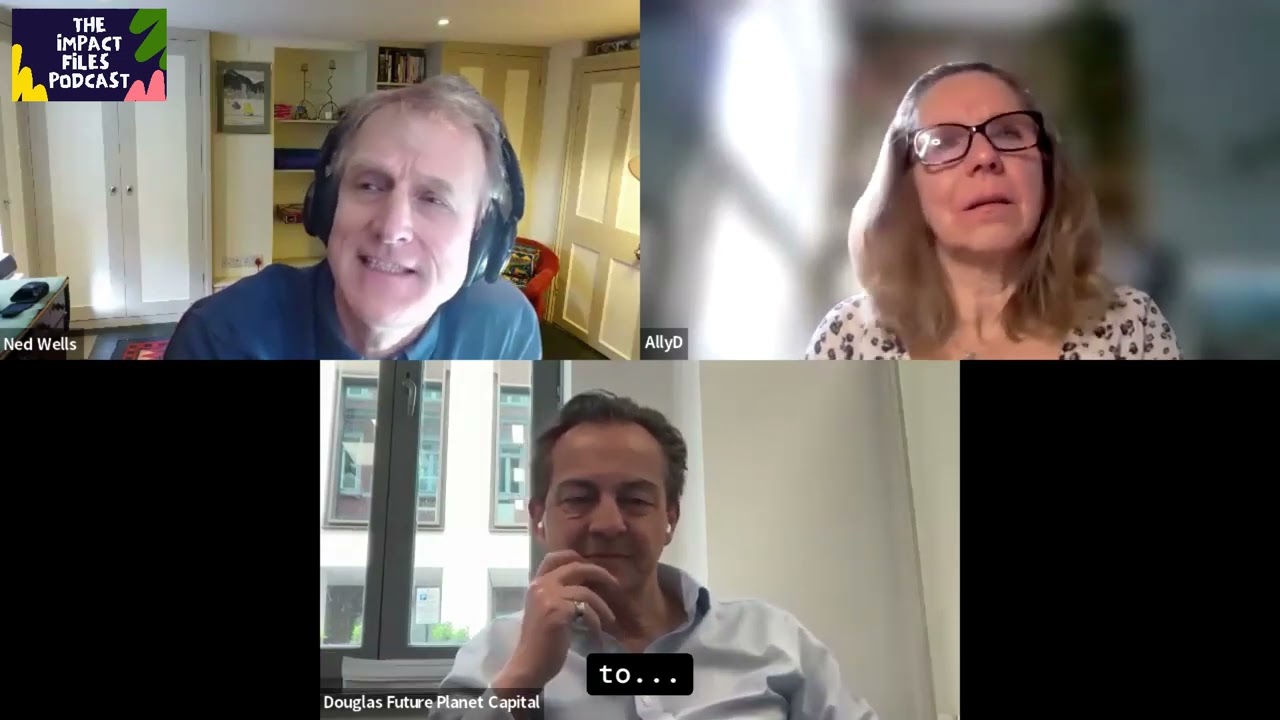
In this episode of the Impact Files podcast, hosts Ned Wells and Ali interview Douglas Hansen‑Luke, founder and executive chair of Future Planet Capital. Hansen‑Luke explains how Future Planet operates as an impact‑led, profit‑first venture capital manager, channeling capital from large institutional investors into high‑impact, high‑growth companies emerging from the world’s top research centres. He outlines the firm’s three‑tiered fund structure – global growth, a national Deep Tech fund for the UK, and regional funds focused on the West Midlands – and the five thematic challenge areas (climate, education, health, security, sustainable growth) that map onto the UN Sustainable Development Goals. The conversation delves into the firm’s “impact value gap” methodology, which quantifies the market size and externalities of a global challenge to assess investment opportunities, and the DataLase AI‑driven screening tool that scrapes and scores startups to prioritize deal flow. Hansen‑Luke shares concrete case studies, including the Breaking Free addiction‑recovery app (scaled from a Manchester university spin‑out to a tele‑medicine platform in the US with 20‑30× returns) and the Oxford COVID‑19 vaccine (low‑cost, globally impactful but less financially lucrative than competitors). He reflects on the inherent bias of benchmarking against elite universities, the risk of perpetuating inequality, and how Future Planet seeks to mitigate this by benchmarking and investing in non‑elite innovators like the Coventry‑based Maven electric motorbike. The discussion also covers the Mansion House Accord, a policy initiative linking UK pension funds with venture capital to retain domestic innovation capital, and the design of the British Care Investment Fund, which allocates 75 % of capital to scaling companies and 25 % to high‑potential early‑stage firms with clear milestones. Throughout, Hansen‑Luke emphasizes the need for disciplined, data‑driven decision‑making, transparent impact measurement, and a balance between altruistic motives and realistic profit expectations in impact investing.
Chapters
So the professor behind this, he, um, developed an app, uh, which would effectively be the easiest way to describe it perhaps is like a Duolingo. So Duolingo nudges you to learn a language, it makes it fun, gamifies it, uh, did the same thing for breaking free of addictions to work through what it, you could do, what behavioral patterns you could see from an app on your mobile phone that would nudge you away from addiction, even, even so far as kind of rerouting your way home so you didn't pass an off-license, or you, you didn't go past an area that was known for a high rate of incidents of drug dealing or whatever. So the impact case then, very clear. Um, it— the company relocated to the Midlands. We invested in it from our regional portfolio. Uh, we helped develop it, grow it on scale. It was then purchased by a Canadian, uh, private equity group, um, and then sold to one of the biggest telemedicine providers, the proventure arm of one of, uh, Canada's largest, uh, telecoms companies, and now is being rolled out across America, both for individuals for fentanyl addiction, but also being used in penitentiaries throughout America.
Welcome to the Impact Files podcast. I'm your host, Ned Wells, and I'm really pleased you're here. Welcome to the Impact Files podcast. And this week, Ali and I are joined by Douglas Hansen-Luke, founder and executive chair at Future Planet Capital.
Welcome, Douglas. Great to have you here.
Thank you, Ali. Thank you, Ned. A pleasure to be with you.
So Douglas, let's start with an introduction to yourself and Future Planet Capital and the work that you do.
Sure.
So why don't I start with Future Planet Capital quickly and then go back into why I established this company a decade ago. Future Planet Capital is an impact-led, profit-first venture capital manager. So our vision is to be able to channel and invest on behalf of some of the world's largest institutional investors, uh, money into the brightest minds, the smartest founders, and the best science from the world's top centers of innovation. And to do that with a specific purpose and goal of addressing global challenges. So, you know, as far as we are concerned, it's about the, the biggest investors, It's about brilliant minds. It's about creating a better planet for all of us. And that, that future planet, I set up the business 10 years ago, co-founded it with the designer and architect Norman Foster and with a friend of mine from the Middle East where I was working at the time, Saif Al Suedi. In my career, which has been mostly in emerging markets and emerging asset classes and investments, I'd spent a lot of my time doing new things, trying to do that in a data-driven, systematic way, feeling ultimately that it was for the good of the world, you know, the efficient deployment of capital. All of that, you know, it's very easy to be able to say that you are kind of pushing the, moving the needle a little bit, you know, just expanding that envelope just a little bit in finance. But The, so I'd always felt there was a purpose to what I did. I think there's a purpose to what many, many people do. But I wanted to, when I reached a certain age, I wanted to actually make that impact bigger, to make it more focused and to use the experience that I'd built up over 20 or 30 years for the biggest challenges. The moment when it crystallized, 'cause I'd always wanted to do something, which I think many of us do with a sense of purpose, something bigger than ourselves. But for me, the, the moment it, it really crystallized was reading Peter Singer's book, The Life You Can Save. And those people who are fans of effective altruism may have read that as well. And, you know, he just talked about use what you've got, use it in the most effective way possible. I ignored his advice 'cause actually his advice was if you're working for a big investment bank or asset manager, carry on doing that, pay lots of tax and you'll make the world a better place and carry on. Whereas, but he also said, if you are going to move into doing something directly to address those challenges, make sure you're not just doing the glamorous ones. Make sure you're also looking at the problems that are the biggest problems and addressing them. He gave tapeworm as a very unsexy, unglamorous example of causing one of the biggest problems in the world, but no one does it because it doesn't lend itself to cute faces. So it was that that inspired me, got me off my ass, and I began working with sovereign funds. For impact. It's helping them in their new mandates to deliver mandates and emerging asset classes that would both make money for them but also address challenges. Then, and this is a big moment, and the, you know, in working for sovereign funds, we saw what sovereign funds were doing on a daily basis. We had the relationships that I'd built up over 20 or 30 years. One day, And I still remember this day, we saw that the Chinese Sovereign Fund had invested in spinouts coming out from Trinity College Dublin. And Trinity College Dublin had secured money from the Irish Sovereign Fund. This was 5, 6 years after the global financial crisis. Got money from the Irish Sovereign Fund, from the Chinese Sovereign Fund, but it's about $50 million or euros as it was. Now for most people, $50 million is a fairly considerable amount of money, but the Chinese Sovereign Fund, which manages over a trillion. It's really a rounding error. And I joked at the time, what will happen is they'll fly one person over for the signing ceremony. They'll go, they'll have some photos taken and they'll never come back again. It was just a kind of soft power influencing to make Brent an island. But by the end of the day, we'd said, well, that may be potentially pointless, but what really does make sense is the idea of saying, why wouldn't you want to harvest the very best ideas and the greatest talent from top centers of innovation? Instead of just doing one, instead of just doing Trinity College Dublin, why not do 10? Why not make it not very early stage, which is difficult for big funds to invest in, but later stage growth stage where the technology is more tried and tested and it's ready to roll out. And absolutely both out of personal interest, but also 'cause the markets are bigger, you know, link it to the biggest challenges the world's face. And that we had that in one day and it was kind of revelation. And that was a, we'll start a business because not only would it make sense and no one else was doing it, but can you imagine anything more enjoyable and fun than working out with bright people who are committed, uh, ways to solve issues and actually deploying capital and large amounts of money to make it happen and fast. That's certainly what got Norman Foster excited when I talked to him about it. And my friend Saif, who was working at a sovereign fund.
It's a fascinating story. And I guess I wanted to dig a little bit deeper into that in that, what was the sort of, so you mentioned you sort of reached a certain age and you read the Peter Singer book. Was there something deeper down in you, Douglas, that was sort of interest, that was sort of motivating you to to want to go and attack these, as you say, these kind of huge issues. Where does that sort of come from inside you?
Yeah. I think, and it's actually quite a well-meaning question, but I think it's actually also a very difficult one for people to answer. And so I'll just try to answer it as honestly as I can. You know, there's a deep, I guess, Christian side of me. There's a, you know, my education was also very much about service or the importance of it. I think anyone brought up and Britain has that as part of the culture. It's good to do something for those around you, for those in society. Um, you know, there's, there's ego. Um, there's the, the want, um, and the understanding, particularly when you have traveled around the world and, and seen people suffering, to actually say, well, wouldn't it be good if we could do stuff? And particularly Um, there's a certain part of me, um, which, you know, gets frustrated when things do carry on being wrong or bad when you know that there is a solution. So there's, there's that part of me which is energized. I couldn't tell you which of those different things it is. Um, I don't think they're all noble. I think it's very wrong for people in impact investing to, to, to be noble. Um, I mean, you should be doing it for a noble cause, but you shouldn't think of yourself as noble. There's a, there's a whole range of, uh, different motivations. But I know since starting this, it's been the most exciting, happiest part of my professional career. And I can't see that changing.
How interesting. No, that's an absolutely great answer. Thank you. Perhaps we could turn to the business. And it would be fascinating to just hear about the scale of the business, the sorts of opportunities you are working on. And you mentioned the sort of the largest challenges and in the, in the world, whether you could sort of, uh, to categorize what you actually work on, that would be fascinating.
Cool. Absolutely. So Future Planet, we are currently managing just under half a billion sterling. Um, so a reasonable amount of money that's divided into three areas. Global, global growth, which is exactly the thesis that we set the business up for. Um, investing in those companies, uh, coming from those top centers of innovation. We have a national strategy and team which is primarily managing the British government Deep Tech Fund. It's a mandate that we, we purchased, um, 5 years ago. And that's for the last 20 years, they've been looking at the very exciting, very competitive deep tech coming out from Britain's myriad research centers and the 50,000 researchers that, uh, the government employs and commercializing the best, most exciting ones of them. And then finally, regionally, You know, you talked earlier, um, and I think both of you, Ali and Ned, work with local, uh, impact. And so we work regionally, mainly in the West Midlands at the moment, but around that. So global, national, regional, uh, all of the money that we manage split probably fairly equally between those and, um, linked with one investment, uh, combined investment philosophy, which then leads to a process which is to benchmark everything against those centers of innovation with a track record.. And also, of course, to give people confidence that you're doing the right thing. If, if you're not globally competitive, then ultimately you won't be profitable. Ultimately our investors make a loss and they won't put more money into impact investing. The second area is, um, the, the impact itself, which I'll come to, and the challenges that we look at. Yeah. The third unifying element of it is data, um, and data layers so that we look at things globally. We analyze over 30,000 startups at the moment, planning to increase that to 80,000 2,000. And frankly, if you're doing that globally, you can't do that with the help of, uh, computers and data. But it also keeps us objective. Um, so those three elements— data, impact, global benchmarking— are unifying threads across all three of those, uh, business lines that we have. Um, and our challenges— so we're— we began just before the UN SDGs were announced, so we looked at long list from lots of, you know, sensible sources like the United Nations, The Economist, Financial Times, World Economic Forum, the World Bank, et cetera. And we came up with climate change, education, health, security, and sustainable growth. And we're really glad we did that because when the UN SDGs did come out, there were 17 of them and there are about 217 sub-goals. So it, it's You know, it's quite difficult to quickly say what you're investing in, but those 5 main themes pretty much cover all of those UN SDGs. And they're something that certainly for climate, education, and health, people can quickly tangibly understand. Security, I spend a bit more time talking about because I think without peace, there can be no prosperity. So security includes things like cybersecurity, water security, food, but it also includes for us defense and making sure that people can be, can live safe. Safely. And then finally, sustainable growth. This is very mean, but it's almost everything else that's good that you can't put into another category. So Lord Foster's smart cities, autonomous movement, fintech, all of those areas would go into sustainable growth.
Fantastic. So interesting. Ali, I'd like to hand over to you.
Yes, certainly. Yes, I'd just like to follow on from the points you've made already, Douglas, about the UN Sustainable Development Goals, which as you say are, they're designed to be comprehensive, but by extension that means they are multifaceted and measuring and tracking against them is a challenge. They're robust, but it's a challenge. So I'm interested to hear how, whether you do, whether your starting point when you're looking at potential investments is your, the 5 broader brush categories you described, whether you start there using the SDG measurements as a backup, or how you go about that, how you get the right balance and ensure that you're benchmarking consistently?
I'm a really impatient person. Um, it, it makes me a great entrepreneur, I think. Um, it, it could be a dreadful thing if you're investing in stuff quickly without some guidelines, um, and guardrails. So, so for us, you know, the fundamental truth is it's, uh, it has to be a major challenge. But I'm impatient as well. So how do we go about this in a systematic way? The first is if we can't explain within 30 seconds or a minute why something is actually addressing a global challenge, how it matches a UN SDG or one of those 217 subcategories, if we can't do that straight away, then we don't need to spend many days, weeks, or months agonizing about it. It's just not there. There are enough big challenges out there where the solutions are obvious that you do it. First check, and that's the impatient bit. The next bit though is also quite important. It's trying to understand not just does it address a challenge, but what's the scale of that challenge? And that we look at and we use the equivalent of cost-benefit analysis to see how much is this problem costing the world. Okay. And really in a kind of Fermi best estimate way. We say, okay, if, you know, let's use, it's very topical right now, let's use energy, right? You know, if the global energy industry is about $12 trillion a year, it's huge. If we could invest in something which provided energy, which wasn't polluting, which didn't lead to wars or to conflict over energy security, then wouldn't that be a wonderful thing? And, you know, we can say that that is a, It is, you'd be looking at a market that's $12 trillion, but you'd also be looking at the fact that if you could do it in a way that didn't have particulate emissions, which you get with hydrocarbons that didn't lead to all these other problems, you'd be saving 6 million lives a year or whatever. So you can actually get to a figure for what not just the market value is, but the total value of the market plus the externalities, which very often aren't priced in. So you put that together and that's your total big picture. This is a problem, how much it's worth. You can see what the market value is. You can then look at the startup that you're investing in and you can say, well, this startup is valued at, I know, 50, 100 million or something like that. And you go, well, that's great, but compared to 12 trillion and maybe 20 trillion, if you include all the externalities, frankly, there's a massive gap there. So we try to look at that impact value gap. As a way of actually scaling and looking at both latitudinally and longitudinally the opportunities available to us. So that was a good example with energy where you can either, you know, you can do it with the cost of carbon or you can do it with lives saved by things like particulate emissions. So we try to get to a dollar value and that allows us then to both see what the biggest challenges are. We have our list of 100. And then we, and by the way, now that I've said that, I'm gonna ask our impact head in a moment to give me the top 10 and send it to you, 'cause I know you're gonna ask that. And then we also can look at, so we can look at it, you know, in terms of biggest challenges. We can also compare something like education to climate change, to security, which is quite often quite difficult to do. But that I call it a Fermi estimate because it's a best estimate. It can be calculated quite quickly. And then we go into the investment to check our thesis on the impact, to work out whether other people could do it. You know, will it really make a difference if we invest in this company? Are there actually 20 companies? Would it happen without us? And, you know, we want to be the ones who are making that difference.
That's so interesting. So is everything you've described just there, does that fall under the impact value gap? Tool, which I've seen referenced.
That's right. Yeah, a large part of that. And we've got a, I think, an excellent impact report, which we put out every year, and it's fully explained there. So I'd recommend that to anyone. You can get it both from our website, but I think on request as well.
Thank you. That's really helpful. I'll certainly be diving into it myself. That's for sure. Because it sounds like such a I don't know whether it's right to describe it as a matrix, but what I'm hearing is you're looking at the cost of doing something, the cost of not doing something, are other people doing it, what's the wider environment, all those interconnections which, if we had more time, I'd love to talk about more, the connections between biosecurity and—
Yes, absolutely.
Cybersecurity.
And the value of natural capital, which is unpriced, for example.
Yeah, indeed. But no, that's really helpful. And just to just triple-check my understanding. Am I right in saying that every potential investment you're looking at, they're always connected or an offshoot of a higher education institution, that they're all allied?
They're benchmarked against it.
Benchmarked.
So, you know, one of the, well, first of all, the arguments for and against, okay. The argument for You know, top centers of innovation around the world or top universities says, well, actually, if you look at the 7 most valuable, fastest growing companies in the American Stock Exchange, they're all venture-backed. But if you then look at the founders and the science that, you know, was behind them, they've come out of Harvard or Stanford or Berkeley, in case of NVIDIA, Wharton and UPenn and MIT. So you've actually got these institutions that have The youngest one is still over 100 years old. The oldest, if you look at Oxford, um, you know, close to where you're both based, that's 1,000 years of, of track record of innovation. So it's proven, people can understand that. And the people and the science that comes out of those places tends to be at a top level. That's why they're ranked number 1 in the world or in the top 10 in the world for their science. But also the network, the credentialism that allows it. If you go into a meeting and say, I'm from Oxford, I'm from the department that's the number one vaccine university, uh, vaccine department of the world. You tend to get the meeting. So it's both the right reasons and also the network reasons which de-risk these things. However, we're also acutely conscious that there's, you know, we said there's 80,000 companies in the world and not all of those founders went to those universities and not all of those, um, not all of the, the science or the business is, is great. So what we do is we benchmark it. So a great example we've got at the moment is a company called Maven. So Maven is from Coventry. It's an electric motorbike company. Fantastic way to get around cities in a non-polluting way to use up less space. So yes, it's fairly clear impact to have an electric bike, which one person or two people use rather than a car, which is, you know, most of the time 75% underutilized or empty even when you're driving it and it's only used 5% of the time. The two founders studied humanities at Durham, so a great university, but not one of the top centers of innovation that you'd normally think of. It's not Stanford where Google came from, but they're outselling Harley-Davidson electric motorbikes in California. Their battery technology is something that both the Indians and the Chinese are studying really carefully because their battery battery technology, which allows you to take your battery, plug it into a wall socket at home for 10 minutes, and that gives you 100 kilometers of range. That battery technology is world-leading. So, and we know it's world-leading because we've checked it with the companies that we see from our benchmark areas. So that's a great example of, we acknowledge that not everything comes from those centers, but at least make sure you are checking that rather than the slightly lazy habit we've got in Britain. Of saying Britain's the best in the world. We're a scientific superpower and assuming we're right every now and then you need to prove it, which is why data is so important to us as well.
Sure. That's fascinating. Thank you, Ned.
And that's a super segue as well, Douglas, into your Datalace tool, which you mentioned earlier. Do talk us through that.
So there's an element of artificial intelligence in our DataLase project. It's called DataLase in homage to Ada Lovelace, the lady who invented the computer. Our data scientist, Peter Mitchell, who actually lectures on AI at All Souls at Oxford, he came up with it and with the name, and he's really taken our original idea that you should be systematic and data-driven We created a platform that allows us to automatically scrape with just the domain name of companies and identify and score those companies against the criteria for our mandates, you know, making the world a better place. Also being able to flexibly screen it against mandates sometimes of our clients. So our British government Deep Tech Fund, Uh, which is primarily run for UK research and innovation and agencies around that. Their objective is to commercialize and scale up technologies in particular sectors. So we can use the same data to really search for the companies that will do that best, um, to do it incredibly fast. It allows us to look at the top 25% of companies, the top 10% of companies, and then our team of 30 incredibly experienced professional venture capitalists to then use their time where effectively they're fishing in those waters where you're going to get the most fish, um, rather than just doing it with the people that they know or they approach. It gives them that focus. It also, and this is where it becomes, uh, it moves from being a kind of screening or, uh, advanced selection cool. It brings in things that we wouldn't know because they're outside of our network. So it expands our network, we've seen, by about 30% versus the deals that we just saw on our own through our network. And our network's probably one of the biggest in the world, but still we find new things by using data. So we're not blinded. And then it also helps us to be more productive and to be more objective because we can then see who the other competitors are. All those companies are scored as well, and we can see who the most likely investors are because in venture, it's a good and a bad thing, but it's very much a brand-driven industry. So if you see top investors who've made money in the past investing in a company, again, it's got that much better of a chance of succeeding. So we're able to see who's likely to be investing, who's going to provide the capital. This company's scale, will it match? Is it competitive against others? All of those things are what I'd call a kind of productivity thing. The things that the data makes us more productive in the same way that ChatGPT or Copilot does. But there's an earlier element of this where actually the signals that we've put together and the response we can make to them, they're also predictive of success. So you've got both productivity and also an element of AI, not pre-selection, we always use a human, but AI pointing to what may be or is likely to be the most successful. So, so then you use Datalase and that does it in a very systematic way. Ali?
Yeah, I wondered if I could ask a follow-up question because as you were speaking, Douglas, I was thinking of just that point about bias before you started speaking about that. And it's really interesting. And I wondered, it's a, it's a slight pivot, I think, from what you were describing there, but I wondered whether there are scenarios where The data is going to tell you that the investment opportunity, pure and simple, so the opportunity to grow funds and have long-term financial sustainability. I wondered whether there's a risk of whether there is any bias towards, I'm thinking Global North potentially. Yeah, Global North actually generally, and if that bias exists, whether Datalace then there are other factors which it takes into account, or whether that's where the human piece comes in. You might look at an opportunity and go, yeah, that's, that's going to grow faster and has less risk associated with it, with this opportunity over here, which potentially is proposing doing something very similar, but actually I should go for that one with more risk associated because ultimately there's greater benefit to that sector or that region, actually, I mean, globally, so more, more people. Benefit. Does that make sense?
And yeah, well, part, part of it makes sense. Um, and I, I'll, uh, I'll address that primarily, but very quickly, just to pick you up on one point, you've talked about, well, something may have more risk, but it could, uh, but it could do more good. Well, actually, that's also just the basis of finance. The greater the risk, the greater the reward. So, you know, having, having picked you up on that, let's put that aside. The, the bigger, the bigger point So we are risk-loving, but the bigger point you make is there are two elements to our approach which I think could be biased or could perpetuate inequalities, okay? Which we don't like. Well, the first is, you know, clearly our model is elitist. You know, we're saying we want to benchmark ourselves against the world's top 10 most innovative universities. And given that in each year, roughly only 30,000 18-year-olds will go to those, you know, top 10 universities, and there are, you know, something like 30 million 18-year-olds in the world, that's clearly a very, very small sliver. And we are giving them more money to be more successful than they already are, right? So you can think of your, think of that as a kind of self-perpetuating elite. And you then look at the extremes, which, you know, you've worked in altruism and charity, you'll be well aware of the statistics about how the top 100 billionaires own more of the world's wealth than the whole of the African subcontinent. And you can see how, and I can see this, I think we can all see this, that what we're doing is we're helping fund the next Elon Musk or Zuckerberg. So how can we actually feel good about that? Well, the first point is that in actual fact, the top centers of innovation in universities around the world are probably some of the most open institutions in the world in terms of access. If you're super bright, they want you. Stanford is now, for a long time Stanford has been a kind of needs-blind within America. There as an educationist. If you're bright enough, they will find a way for you to pay there. Uh, Hoover, one of their early presidents, um, worked in the laundry rooms there as an undergraduate to pay for his education, and then he went on to be a very successful, uh, industrialist and then president. Um, and they're now moving to be globally needs-blind. Um, if you look at Oxford or Cambridge, again, very very high proportion of scholarships and so on. So provided those institutions actually stay looking for the brightest people regardless of what their background is or where they're from, then that helps at least give you that opportunity. Yeah. Steve Jobs, Bill Gates, definitely from a privileged background. Zuckerberg the same, but Elon Musk, whether he's a good guy or a bad guy, not from a massively privileged background. Steve Jobs, absolutely not. You know, his father, his natural father was a waiter in Palo Alto and an immigrant from Armenia. So there are risks with that approach, but you know, it's something that we're aware of. And certainly what we do is to provide as much access to people we recruit and portfolio companies as possible. And frankly, you know, looking at Coventry allows us to invest in the motorbike company from Coventry, even though it's not connected to those networks because we benchmark it. Then to the global south, it's a— the biggest problem of course is, I mean, we invested in the Oxford vaccine. So the Oxford vaccine started out as a fantastic investment for us. We had the relationship with Oxford, which followed the company when COVID occurred. We had a strong suspicion that it might actually be a company that could be effective because of the work that we'd seen them before and we tracked them. We phoned up the company the same weekend that Sarah Gilbert got the COVID DNA strain from Wuhan. And they said, yeah, we think we could actually do that. We invested before they began developing it. We invested more before the trial results came out. We were very, very nervous, as you can imagine, when the trial results did come out. And yet they became one of 3 companies in the whole world out of more than 100 companies that actually had the science that could work. They then moved on to be the most used vaccine in the world, the lowest cost. We, um, invested, the company was quickly listed on NASDAQ. So you could say, fantastic, we've made money and we've provided a low-cost vaccine to the whole world, particularly to the global south. However, You know, we never crystallized that value. The value for humanity and to society was absolutely there because it was a vaccine that was available to the global south. But our value wasn't crystallized because the other two companies, Moderna and BioNTech, great companies, great science, much more expensive products, which sold to countries with much higher per capita incomes. And they made a fortune compared to that in that short period of time. And that's an example where we were able to make a difference to the global south. But very clearly the economic impact of one being, I think it was about 10 to 20 times more expensive than the other, actually meant 10 to 20 times more profit. And profit went for the ones that had a benefit for a smaller number of people. So what we do isn't perfect. There are examples where it doesn't always work, but by addressing the biggest challenges, you would hope that if we develop nuclear fusion, for example, then we'll be able to power the whole world and it'll be at a lower cost and it'll be at a cost that doesn't, you know, harm those people who would otherwise be harmed by particulate emissions or coal mining, et cetera. So it's not perfect. As a quick answer, uh, and we acknowledge that. Um, but at least by looking at the biggest problems, if it does go wrong, maybe it goes wrong with us not making enough money, but it certainly can have an impact with those company, uh, those individuals.
That's a really, really powerful example with the vaccine. And I'd like to ask you, Douglas, about if you could talk about a couple of the businesses that you've recently exited in a similar vein?
Yeah. So Breaking Free is the example that I like to use most. And then I'll also talk about a company called Eagley Vision, which we're, you know, which is getting to the point where it could follow a similar route. Breaking Free was a company developed by a professor at Manchester University. First trialed at Strangeways Prison, famous for many people, but for international listeners, probably most famous because of the Smiths and it being mentioned in some of their songs. But Strangeways is a major, a big prison in Britain. Like many prison populations around the world, major issues with people having addiction, substance abuse, either before they go to prison and as a result of or as a result of going to prison. So the professor behind this, he developed an app which would effectively be the easiest way to describe it perhaps is like a Duolingo. So Duolingo nudges you to learn a language. It makes it fun, gamifies it. Did the same thing for breaking free of addictions to work through what it, you could do, what behavioral patterns you could see from an app on your mobile phone that would nudge you away from addiction. Even so far as kind of rerouting your way home so you didn't pass an off-license or you didn't go past an area that was known for a high rate of incidents of drug dealing or whatever. So the impact case there, very clear. It, the company relocated to the Midlands. We invested in it from our regional portfolio. We helped develop, grow it and scale it. It was then purchased by a Canadian private equity group, um, and then sold to one of the biggest telemedicine providers, the corporate venture arm of one of, uh, Canada's largest, uh, telecoms companies. And now is being rolled out across America, both for individuals for fentanyl addiction, but also being used in, um, also being used in penitentiaries throughout America. So a really good example where we Uh, in this instance, and this is where we get it right, because if we get it right, more money will flow in. Um, we made a return of 20, 30 times on our investment. Um, the founder made even more, so he is now, you know, lecturing other founders and mentoring them, but also starting his next business. And, um, and the benefit to society is huge. So you've got all of those things working together. So you've got this flywheel going around in a circle, a virtuous circle. And it's a great story and a great success.
That's an absolutely fantastic story. And it's not an app that I've heard of. And as soon as we're over here, I'm going to be jumping straight onto—
Absolutely. Straight onto Google and going to have a look at it.
Do you remember the origin story, how you were introduced to them, how they were introduced to you, how you found out about it?
I mean, in that instance, it was a regional fund. Those regional funds go out there into the market telling people that we are ready to invest, to support. Their primary goal was actually government policy driven. That was about reducing regional inequality. It's about providing access to finance for businesses. So, you know, the professor there would've met one of our people in an outreach program saying, you know, you've got a great idea. He was looking for money. We've got money. And it was partly a policy instrument from government. A policy instrument for government where government might have been willing to say, well, actually we'll accept a lower return, but they didn't need to. You know, if you get it right, that should make a far— you make the outsized venture returns and you do good at the same time.
Fantastic.
And, and it was, it was, you know, it was, it was help building that founder who's a scientist, you know, an entrepreneurial scientist, but nonetheless a scientist. Building him and then connecting him to the next level of investors, the next round. And doing that where we've gotta be very realistic in Britain, and this is why Future Planet invests globally as well. You know, Britain is very innovative. It does have lots of lateral thinkers, very creative, but we are less than 1% of the world's population, less than 3% of the world's GDP. So a key part of our job when we operate globally, it's not just a benchmark against what we see globally, but it's also help our companies scale abroad and access the biggest markets as well. So, you know, made in Britain, proved in Britain, but let's go global as well.
Fantastic. I'd like to move us on a little bit and in the context of our listeners are typically leaders of businesses who are on a purpose-led journey where they're looking to balance revenue with sustainability. And it's always interesting to hear, as well as successes, some of the things that perhaps haven't gone as well and your learnings from them, how you overcame them. So I'd love to hear an example of that if you can share one.
Sure. I'm not going to be in the, I mean, we've certainly talked about a big success, but also the fact that, although we made money on it, it wasn't as much money as perhaps in a perfect world you should make when we talked about the vaccines, you know, real world-class science leading to real world-class production distribution, but not outsized returns, not sufficiently to value. So that's one big example, but the— but it was nonetheless a success. What I will talk about now is the kind of invidious risk that I think anyone who wants to be purpose-driven can— it's a trap that we all fall into, and it's a trap that people in venture fall Venture is, it's an industry where 70% of what you invest in will either just return money or it will fail. Okay. Only 30% will actually show real outsized returns. You know, if you invested in a Google, you, you made a 10,000x. If you've invested in something like SpaceX, that same type of level. So you've got very skewed returns. Quite often those companies that are going to do really, really well will do really, really well. And you've just, you've spotted them. You can connect them to big markets, but the founders will be able to do the rest. Because 70% of your companies will be saying, we want to be an outside success, but we're not quite making it. Please help us, nurture us, spend time on us. And that's the most difficult thing for someone who is altruistic or wants to help. If you think of wanting to make the world a better place, shortcut that to want to help, then the biggest risk you have is to be very kind, to nurture everybody and to spend all of your time on the companies that actually aren't going to succeed. And in reality, what you want is for those companies to work through and help them with very clear milestones. You know, have you achieved your targets? Yeah.
Yeah.
Is it going to be worthwhile? Is it worth putting more money into this? 'Cause you are almost certainly talented people to have got where you've got so far. But if it's not gonna work now, stop, reconsider, work out whether you could be an intrapreneur at a big company, whether you are gonna be an entrepreneur. If you are gonna be an entrepreneur, go for it with something else. And for us as venture capitalists and for most venture capitalists, uh, but especially for impact venture capitalists, the tendency to work with the companies that are not doing well is something which is, it's almost a kind of ingrained. You want to help and you want to help, and the people that need the most help aren't necessarily going to be the ones who make the most profit. And that, what I call red-blooded capital, capitalist approach is something that's got to be injected into venture and it's got to be injected into impact. Or be very open about it when you're setting up your impact business, your impact fund. You can be a no-profit, you can be a limited profit, or you can be maximizing profit, but you've got to be very clear what it is and very clear to your investors, to your customers, your suppliers, and to your employees.
And I think you're the— I suppose the point you made there about needing to have very clear milestones and a process is going to help you to remove the emotion from, from those, those really difficult, yeah, decisions.
Yep. And with our latest fund, the, the British Care Investment Fund, which is, as the name suggests, you know, for, for Britain, it's, it's to help with a scale-up challenge. Um, 75% of that money is going to be in companies that are already scaling up, that have already got their technology working, um, that are growing fast and just need capital to grow faster. 25% will be spread into smaller companies, but which have a shot at greatness. But so that when we, so when they do, so with the winners in that, we can quickly put money into it and keep a really fast flow of impatient capital returning, returning money. But of that 25% level, we're explicitly telling them, we'll put money into your first, maybe your second round. But we're not putting it into your third. So when we're, we're giving them a firebreak, you, you have to be able to get this. You, you reach a milestone, we really supportive. You then go out on your own, kind of grow up a little bit, and then when you have grown up, then we'll come back again. There is a risk for much of venture, and remember, 90% of venture underperforms. There is a risk in venture that you provide it to those, you create a dependency culture. And we want to make sure that that's clear and open.
I want to move us on to the role of media, communications, and marketing in driving long-term sustainability. And specifically when we were talking of Earlier you mentioned the Mansion House Accord that you were involved with. Talk to me a little bit about what that was and how that, the role that that played.
Sure. So that's a really good example where you can actually have policy impact and just good common sense working together. So Mansion House is where the Lord or Lady Mayor lives. It's the capital of the City of London, and they worked with the Association of British Insurers, with the pensions industry to work together to say, how can we connect Britain's biggest investors? Sound familiar? If you think of Britain's Chief Planner's vision, how can you connect Britain's biggest investors, which is the third largest pensions industry in the world? To its venture capitalists who are the third largest venture market or work in the third largest venture market in the world. Amazingly, in the UK, our pensions who invest in long-term savings to meet long-term retirement outcomes, those pensions weren't matched by venture capital, which is also about investing for the long term. A venture fund is usually 10 years. Even Google took— Google and Amazon took 20 years to reach profitability. So a natural fit. Mansion House recognized that there was a natural fit, but they weren't connecting. Pensions in Britain put less than 1% of their funds into British companies. So the pure data showed that 80% of our growth was being financed by overseas investors, which meant that those overseas investors in America, in China, Australia, and Canada, which is where most of those funds came from, they They were making money out of our innovations. Nothing wrong with that. We want people to invest in Britain. But what's kind of crazy is that pensioners who are going to live in the society and retire into the society where these innovations are coming from, they weren't getting it. So that was what Mansion House was at. It wasn't very difficult for us to see that this was a good thing intellectually. It's absolutely right. Absolutely matches our vision. So we put a lot of effort into a solutions-oriented way. And everything we do, we've talked about our impact as, you know, how we look at it when we go in, but what we measure and why we were recognized as one of Britain's leading venture capitalists is we care about the outcomes. You know, how many lives were saved? And in this instance, we took the same type of approach and said, let's not go into Mansion House and analyze what all the problems are and say why we can't do it. Let's go into Mansion House and analyze what the ways are that we could do it. How can we make this successful? And what are the answers and the solutions? And we took all the different stakeholders, so government for sure, civil and civil leadership like the mayor's office, venture capitalists, but also academic institutions and also founders themselves, put them together and said, in your experience, what are the solutions? And quite often we found around the table we actually had workable solutions and what one group would tell the other stakeholder, we said, oh, we can do that. And, uh, it's a, a 6-month, 1-year process for us, but it's allowed us to develop a project and a product which is first in Britain and one of the first in the world to allow venture capital to take in monthly savings from long-term investors like pensions. So hopefully in, in this call, you've had an opportunity to hear from me in a, in a thoughtful and not just an action-oriented way or, or a sales way to where we can make a difference, where the challenges are and where there's still work to be done. As Future Planet comes to the end of its 10th year, you know, our vision of being able to move money at scale, half a billion or so, it's a lot of money, but it, it, it could be a lot bigger. Pensioners in Britain, pensioners globally need to have returns on their investment, but there are still a lot of very big problems to solve. And we've just seen that, for example, around security. We've seen that with climate change. So, you know, my hope is in the next 10 years that the Future Planet, we're significantly growing, but with the same discipline, the same vision, and in that enacting that by focusing on impact, the biggest challenges, focusing on benchmarking against proven areas of success and doing that in an objective data-driven way. And I can't see why all three of those don't accelerate significantly, cuz scale begets scale. What does that mean for Britain? And the Mansion House and our product for that British Co-Investment Fund. It should mean, you know, I've talked about having your cake and eating it. This is about actually enjoying making the cake and smelling the cake and looking at it and eating it and sharing it with all your friends. Because if we get this right in Britain with the strengths that Britain has, not only will it provide better incomes and retirement outcomes for members of UK pensions, but it will also addressing the challenges that face not just the UK, but which are truly global challenges. And that's a great opportunity for Britain, which is a small population center, a small market compared to others, but it's still the fifth largest, sixth largest economy in the world. And it's a way for us to use our influence here to actually make the world a better place for the billions of people who still aren't living a comfortable life, who, when they talk about global challenges, these are real existential challenges. Mm-hmm. And you know, for me, that's what, when we look back after our 20th year, we will say, yes, we've rolled this out in a way that genuinely creates a sustainable future for the greater part of the world and not just for us here in Britain. Although that of course is a nice thing too.
That is a fantastic note for us to finish on. Thank you. Thank you so much, Douglas.
Great to see you then. Bye-bye. Bye-bye. Thanks for joining us today.
If you've enjoyed this episode, episode, please subscribe, like, and share it with your colleagues. For more about the podcast, about us, our marketing services, and our wider support for purpose-led organizations, please visit our website at theimpactfiles.co.uk.
More from Douglas
Douglas Hansen-Luke Announces the Finalists for the Future Planet Capital Prize