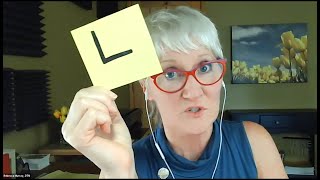
Engaging Virtual Meetings Podcast ft. Rebecca P. Murray
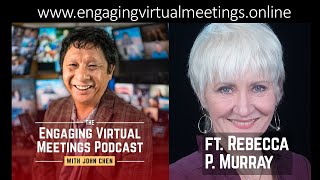
In this episode of the Engaging Virtual Meetings podcast, host John Chen interviews speaker and vocal‑influence coach Rebecca P. Murray. Rebecca shares her unconventional career journey—from construction safety and dog training to video production and full‑time speaking—and explains why she focuses on helping women amplify their vocal presence. She introduces the concept of "voice equity," arguing that merely having a seat at the table is insufficient; women must have a voice that others listen to. Rebecca outlines four categories of "elegant interruption" (distill, redirect, move on, advocate for another) as practical tools for leaders to claim space in conversations. The conversation then moves to concrete tactics for making virtual and in‑person meetings more engaging: using breakout rooms wisely (offering choice, mitigating a 25 % drop‑off rate), employing "time‑to‑engagement" cues, integrating music, pauses, and varied vocal intonation, and leveraging the "middle voice" with proper breathing. Both hosts share personal anecdotes—Rebecca’s breakout‑room mishap, John’s silent‑presence timing technique, and a speed‑round of rapid‑fire personal questions—that illustrate their expertise. The episode closes with a call to action for the Engaging Retreat, encouragement for listeners to become allies, and a memorable takeaway: "pursue voice equity above all."
Chapters
We have got heart. Now we're playing the game and we're totally scoring. Learning how to make a virtual world of business boring. Showing up every morning ready for the show. I'mma get ready. Golden Gaging Virtual Meetings 2.0. Happy Monday to you. It's the beginning of the week and you got another episode of the Engaging Virtual Meetings podcast. Well, I'm so excited. I just returned last night back to lovely Seattle, Washington, and I got a chance to visit with the Florida Speakers Association in Fort Lauderdale and got a chance to keynote there and share 6 new ways to be engaging in your keynote and got extraordinarily high ratings. It was really exciting there and got a chance to really meet some of the members afterwards. Then I flew to St. Louis. I got some Sugarfire barbecue for those who are in St. Louis, probably know this place. Jasmine Webster got a chance and the opportunity to produce the Association of Talent Development St. Louis' 79th conference, and it was really exciting. Look for the blog post about this. The blog post is going to be called "Can't Touch This," and you've got to figure out why when you see that blog post if you're subscribed to my newsletter. The second part around it is that it was just really great to be able to see the speakers that they have there, and they're getting ready for for their 80th, their 80th anniversary of their chapter. What an achievement. We celebrated our 40th here for National Speakers Association, but they have double the amount, 80 years. Hey, if you're watching on social media, make sure and subscribe, share, like, and comment. If you want all the episodes of this podcast, just go to engagingvirtualmeetings.online, subscribe on one of your 15 favorite podcast platforms. And if you want to learn how to be more engaging in the world, come to the Engaging Conference, now known as the Engaging Retreat. You can go to this URL. Or scan this QR code, you can get a free ticket or more importantly, get a paid ticket. And if you are in one of our first 50 in-person people, you will get a chance to have your own 5-minute edited video, right? All for the low price of the in-person ticket. So you gotta go check that out because our next guest is gonna be one of the speakers. So you're gonna get a little preview of that today. This speaker has a program called Finding Your Voice vocal influence. And I got to tell you that when you see her, when you meet her, we're going to talk about some of these tips about how you can use your voice when you're speaking. She is also a pickleball clogger, and she is National Speakers Association's Northwest Member of the Year. Please let's welcome Rebecca P. Murray.
Thank you.
Gotta get going, right, Rebecca?
It's a very energetic opening. Thank you so very much. It's a pleasure to be here.
Well, thank you, Rebecca. Uh, you remind us that we have royalty visiting us in, uh, in November, right? You have to work on your Patricia Fripp impression.
That's indeed correct. Yes, yes, yes, that's funny. Yes, it'll be fantastic to to meet Patricia Fripp in person for the very first time.
Yeah, I think you gotta get on the coaching, you gotta raise your hand immediately, Rebecca, and get on this coaching list, right?
Absolutely, yes. Okay, I will do that.
Meanwhile, some of my friends don't know you, but the best part is a lot of my friends do know you now too. I love too, one of the things that I think that was best said at one of our last meetings was like, It's just been a year. You joined National Speakers Association and made really a splash, and lots of people in our chapter got to know you. But some of my other friends don't know who you are. So why don't you just take this moment and share a little bit of who you are and what you do in the world?
All right, thank you. Well, I have a diverse background starting in the construction industry. Actually, before that, insurance. Then as a safety risk manager in the construction industry, one of the very few females in the construction industry in the Puget Sound area of Seattle in the early '90s. So not just a unicorn, but a flaming pink unicorn on those job sites. I learned a lot about vocal influence back then. Transitioned then into dog training. For 12 years and then became a video producer. When I saw the power of video to teach people how to better be with their pets, I thought, "I want all in on this video thing." So I had a very successful video production, photography business here in the Skagit Valley. And when I decided to go all in on speaking full-time, from behind the camera to in front of the camera. Let's say one of my incredible employees stepped up and he now gets all my business. Still to this day, I give him many referrals, and he is just tearing it up out there, very successful in his own right. And I'm honored to be considered his mentor and influence. Now what I do is I work with teams, mostly women, I would say, to enhance their vocal influence, to find ways so that their voice can rise above, their voice can shine in the world, so that they can influence through their number one asset, their voice.
Well, a very, very important trait, I think. And what kind of led you to that, and why maybe women specifically? I'm just curious why you chose that. All of us have to pick a niche and a lane. I'm just curious why you chose that lane.
I think it's because throughout my life I've always found myself in male-dominated industries, and I've done a lot of not just my personal experience but a lot of research on this. As we all know, women still get a smaller piece of the leadership pie, have struggled for influence, especially vocal influence at the table. Now, one of the sentences that you gave me during the speaker showcase last year when I was putting together my 7-minute piece on vocal influence, starring Margaret Thatcher as a key as a key actor in that role was that it's not enough having a seat at the table. What really matters is having a voice at the table, and further, a voice that others are willing to listen to. So part of that is how your voice sounds, how you come across, and part of that is building your status within this group so that you feel comfortable and confident speaking up, even to the point of interrupting somebody so that you can get some words in edgewise. So this has become more and more important as I work with classically audiences that are mostly female, and I realize that this is where my passion comes from. I was raised by a feminist mother, a woman who raised 4 children while putting herself through law school as a single mother. And, um, you know, she, she had a huge influence in my life. And I still see there is work to do.
Now, I actually got a chance to watch, uh, um, so I think you might know the social media dating platform called Bumble.
I've heard of it.
And so there's actually a documentary now of the behind-the-scenes story of the woman who created it. She actually became one of the first early entrepreneurs who became a billion-dollar company founder.
Oh, I love this story. Yeah, so yeah, that'll be one I'll have to look into.
Yeah, I actually— yeah, I finally got a chance to see this. So I'm just curious too then, um, like maybe what's a challenge— what's the number one challenge that you see for women in the boardroom, and how can you, um, you know, what do you suggest to them? So again, like in team building, we see patterns, right? We see patterns and traits. I'm just curious if you see like a recurring pattern or something that happens more often than not.
And having experienced this myself as well, right, women in general were better listeners than men. I mean, research bears this out, and that's wonderful to have that as a superpower, right? But in the boardroom, it's interesting, research also bears out is that those who speak the most have the most influence. And if you are not willing to step up, interrupt, interrupt with elegance and grace, to have a piece of the vocal pie, then the consensus might be that the person who's dominating the conversation, that everybody agrees with that person. And we know that that's not true. So you're having this conversation in your mind like, Yeah, that this person is going on and on, I have something to say, I'm uncomfortable interrupting. That's one of my— actually, that's the program that I'm bringing to NACE, the National Association of Caterers and Event Planners, next month in October. And again, for Skagit Island, actually, that's our whole regional SHRM chapter, is how to master the art of elegant interruption. This is essential. Essential, essential for women to learn to interrupt well. Research also shows that women who learn to interrupt well do rise up into leadership faster.
Oh, interesting. I think too, we just talked about this topic like as an MC. So as an MC, one of the things that you have to deal with, for instance, is speakers who go long. Right? They go over their scheduled period of time. And then recently, I had to do one. I'm curious, like I'm asking you if you have some other tactics around this. But one of them was I had, I emceed a room with 5 people. And one of the, here was my strategy. 2 minutes, I'm in the corner of the room. Like I get out of my seat, I'm in the corner of the room. At time, I physically move till the end of the stage. After time, right, then I start walking on stage closely to this person. And this person got to the 4-minute over stage. And I'm standing right next to them. Now, I haven't said a word. This is the funniest part, Rebecca, is I haven't said a word. But they looked at me and they're like, are you going to play me off? And I said, I haven't said anything. But I just stood there, right? And eventually, you know, within 1 to 2 minutes, she finally finished the part. And so, yeah, I just developed this physical presence part to be able to keep this thing on time. And so that was one of the ways that I do it. I don't know what you see in the boardroom because I do see that It's an important skill to have, but it can be uncomfortable.
It absolutely is uncomfortable. And what made me laugh is thinking of everyone in the audience watching this play out on stage.
They did.
And the impression that you get, that you form about that individual who seems to be in love with their own voice so much that they don't want to stop talking. And it's not a good look. It's not a good impression. In fact, when I see that, I get an impression like maybe I don't want to end up in a long conversation with this person because I'm gonna feel like in order to— like, you're not going to stop talking so that I can talk. That's the other side of interruption. If we all learn to be brief, stay on time, and stop talking to allow a pause for others to step in, this is what's called voice equity. And I am passionate about the topic of vocal equity. Passionate about it, because there are people that will not step in unless there is a pause. And there are people that don't even know what a pause is, or for them, pause is a half of a half of a breath, you know, a quarter of a breath. Well, I paused, they didn't step in, so I guess they want me to keep on talking. I'll just keep on talking and they'll keep on listening. And I love that. So yeah, I'm thinking about that. There are actually 4 types of interruption that I cover in the session. Interrupt to help someone distill. We have to do that sometimes as leaders. My philosophy is that most people who use an overabundance of words and take a long time to get to the point— oh, I picked up this card and this gets to it.
When someone says, oh yes, and to make a long story short, it's usually too late. I know I've been noticing this trend with some people, and I'm like, uh, you have to really work on stories to make them short. Like, like sometimes when I first tell a story, you can tell it's too long, right? And then as you tell the story more and more, you can actually find and boil down the point sometimes to to an essential part. And it's a favor for everybody if you can do it.
It's a favor. It's a favor. So interrupt to distill. Most people who use an overabundance of words, they're very aware of this. They've been told this their whole life. They see our eyes rolling back in our heads and they get a little nervous, a lot of them, and they keep talking. This is like a nervous habit for a lot of people. Understanding this, never feel bad about using the tactic of gracefully interrupting to help someone distill because that helps both of you. Interrupt to distill. Interrupt to redirect back to where we started or the topic at hand. Interrupt to move on elegantly. You're having a great conversation with somebody You're at a networking event, but you promised yourself, you know, I need to meet more than one person. So interrupt to move on. And then also, lastly, and this one, we don't have to do this very often, but when we do, this is a high-level leadership opportunity for you, a way to use your influence. Interrupt on behalf of someone else. Oh, this is when you're in the boardroom.
Yeah.
And the person who's pretty quiet, but you know that they have something to say.
Yes.
Finally use their voice to speak up. And then the person who, oh, I know how to finish this for you. Yeah, yeah, we've already covered that topic, or whatever it is. Or the person in love with their own voice overtalks that person, talks over that person. And then you as an observer can say, Hey, Jim, I think we're— I think John wasn't finished yet. John, you have the floor. Go ahead.
Yeah, and that's advocating or allyship or whatever you want to call it.
Yes, yes, power.
I think it's really valuable in social capital as well as the whole conversation in general, right? Ideally, or, um, in facilitation, we're trying to make it easier. We're trying to make it easier to hear everybody's point and then make a decision.
Yes, yes. And so the boardroom, of course, is sort of like a laboratory. I think of everything as a laboratory. Yeah. Where it's more of a controlled situation. Conversations in the wild and interrupting, that is a little bit different when you have more— like, let's say you're at a networking event where this circle of people forms, right?
Yes.
And maybe they're talking on a subject that you have no experience with, and they're going at it right, left, and center, and you feel like, well, I guess I'm just an observer here in this conversation, and you start to feel a little bit invisible. So I think that is sort of a two-way thing. I experienced this the other night, actually, and I— so I'm always observing as I'm participating, right, because I'm a social scientist at heart. And I'm thinking, I'm feeling invisible. No one's asking me anything. And yet this other person— and they all know each other better than I know any of them individually. They know me as a speaker. I presented at their event in the past, an event that several of them were at. But on a personal level, I don't know them as well as they know each other. And I don't do this hobby that they're all talking about intensely. Also their children, which mine are grown. And then this other person comes into the circle just as I had my opening, right then. And like 2 sentences in, she comes into the circle, and a part of my brain was like, "Ah, that's it, that's my opening. I lost it." And now the whole focus is on her Bringing her in and yet here I'm feeling invisible again. So what I did was this. I thought about it that somebody said something that I actually could contribute to and yet these people were the kind, all of them, rapid-fire talkers. This is sort of like more of an East Coast kind of thing really where they're just coming in at all angles. It's like a freeway, you know? The fast lane in the freeway and I'm trying to cut in and I don't see any way to do it except for to crash into somebody and I don't want to do that. But I did it. I did crash in. So knowing that they've all had plenty of words and I've had very few, going back to voice equity, I decided to overtalk one of them as she was coming down on one of her sentences, redirect it back to something that we had talked about that I wanted to know more about. And that does take courage to do that, you know, and a little bit of practice. Like, you basically talk over somebody, but you've thought about it. You're not doing it to be rude. You're doing it to achieve voice equity.
Yeah, when it wasn't already being achieved by somebody else, right? I think that's the other key that comes around to this. Well, it kind of actually leads me to this question too, Rebecca. You know, what has to happen in like a either a virtual or in-person meeting for you to be engaged and especially around voice or voice quality? I'm just curious, what are the things that have to happen for you?
Yeah, well, I think a laugh up front is always a good thing. That's where you can hear people's voices. That's where everybody knows, you know, I like to lay the groundwork as a presenter and I love it when speakers do that too. Like everyone is There's something here for everybody. You know, if your form of engagement is to sit back and listen, hey, that is on the menu. If your form of engagement is, let's say we're in an online meeting, is to let your fingers do the talking, that's on the menu too. And if your form of engagement is to use your voice when the opportunity arises, you know, raise your hand, we'll, I'll yield the floor to you. So that you can contribute. And just to make that very plain and simple at the forefront of any meeting, like, we're serving up engagement today any way you want to take it off the menu.
You might appreciate, like, at ATD, there was a speaker and she talked about, we're going to do a reflective exercise, so we're going to dig up some stuff. And so she had a tiny little garden thing and then the slightly bigger garden piece, and then she had a gigantic shovel. And she goes, you could pick any one of these. However, however you want to dig up, right, whatever it is. So I thought that was a unique way to do that. What are some ways that you use your voice to do that, or other speakers use their voice? What do you love when, like, you're the attendee and there's a speaker there? What are some things that they do with their voice that you really like, that you appreciate?
When they stop talking. Momentarily, you know, to let something sink in, to let laughter fade. For whatever reason, that they're very in tune with their audience. They know that they can stop talking and that that will add emphasis to something or allow something wonderful to happen in the room. Also, you know, I'm a character actress by training going way, way back, and so when we are talking about something that happened, to switch into dialogue and to bring the character on stage with us so people can not only see the character but hear that character in their voice. Vocal intonations, inflections, the way they talk, so that we have something different going on up here. I call it, you know, the audio change-ups, what we can do with our own voice. We can bring in, like you do so well, music or some sort of audio on a slide to get our attention. I love it when a a speaker will really think about the audio of their entire presentation and that we need to have, I mean, we love to have the variation.
And the support too. So something that I end up doing a lot of is what I call improv producing. And so there was a woman, Jen, who was the closing keynote and she was talking about Joyosity, right? Her program was about joyosity, and she had a reflective assignment about joy, right? And what song do I end up playing very low, right? Except this song, which is joy to the world, all the boys and girls. And it's just really low, but it made her smile on stage, and it actually like went through the audience. And it's like less than like 90 seconds of music, but music it added something in the moment for when people were supposed to be ideally reflecting. It doesn't work for every style, but overall, right, it usually works for the mass of the majority.
For sure, for sure. A little bit of singing even. I love— that's what Brooklyn Dissent— Brooklyn and I both spoke at the Seattle King County— King's the homeless county— Master Builders for the Professional Women in Building, their annual event last week in Bellevue. And she had the music as she kind of walked through the audience up toward the stage, you know, and everyone's clapping, getting out of their seats clapping, and it was spectacular. My opening did not include music, but it did include laughter and just getting the audience doing something in the first few minutes is— I mean, that's one of the things that you talk a lot about. What is it? Time to engagement?
Yeah, TTE. I mean, yeah, more and more this, this time to engagement, uh, is getting great reception because I think too people will then start being aware of it. I think, you know, awareness is like 9/10 the battle on most of the stuff that we do, especially in speaking, like like filler words or other things like that. Time to engagement is one of them, which is did you talk for 45 minutes of a 50-minute keynote, or do you purposely look, how do I engage this audience? Whether it's laughter or music or technology, it doesn't matter what it is, but as long as you engage the audience in something besides just talking at them, I think it's super important. That's something that's high on my list.
Yes, yes, yes, exactly. And also customizing that opening engagement to the audience, understanding who they are and how they are in general, how they show up comfortably. I mean, I've made some big mistakes, you know, that I've learned from in the past. That's how— I don't know about you, but that's how I learn best.
And can you share one of them? Would be okay?
Or— yes, yes, yes, this is, this is a good one. In fact, this is one that I'll be sharing at the Engaging conference is that when I first met with the event producer, the person that hired me, the event planner, I mentioned to her that this workshop that we were doing would include a breakout. This was all online. It would include a breakout. And initially she's scheduling me like 6 months out, so I'm thinking, well, we'll talk again before you know, then. And then a few weeks later she said, "Oh, our speaker in 2 weeks canceled. Can you go ahead and do your workshop now?" Sure, okay. So she did not remember that I said breakouts because that was just an initial conversation. I did not send her a run-of-show, although I did think about it, to highlight the fact that we were doing breakouts. I even hired somebody to help me conduct the breakout sessions. And as soon as we got to the breakout part where I said, okay, we're going to open the rooms, blah, blah, blah, I get this note in the chat from my producer that says everyone's leaving. Like, people left in droves. We ended up from an all-time record high of people coming to a virtual event that this organization was putting on to like an all-time low in an instant. And so anyway, the people that stayed had a wonderful time. I got great comments from those 8 people. But right after it was over, I called the event planner and she goes, oh my gosh, I am so sorry that I did not tell you these people do not do breakouts. They are all in public places. She's like, so it's not you, it's just the fact that they do not do this. So could you do this again in 6 months and not do the breakouts? And of course, that's on me, 100% on me. Great way to learn that lesson. And from now on, I make sure that I understand this audience, how they typically show up.
Right.
That's always a point of discussion.
Yeah, because breakout rooms are like that. I call it the third most engaging tool on virtual because most of the time people are more comfortable, and it's kind of like cameras on or off. It's a cultural piece where there are some cultures where they don't want to do breakouts, and there has been, you know, some documented cases of, you know, X percent logging out if there's a breakout because—
Yeah, do you know that percentage overall?
I heard there's something like 25%.
25%?
Well, like 25% log off if a breakout is going to occur. That's kind of the weird average, but I also think there's another piece around it, which is like everything else you talk about. You tell them in the beginning that it's going to happen, right? And so you say it's part of the program. You can also give them choices, which is if you don't want to talk during your breakout, that's okay too. Just listen. And then I actually do this other technique now, which is I turn on the ability for people to move breakout rooms to saying I give them the ability to fix their own breakout room. Like if you get into a breakout room where everybody's not talking, then move yourself. So by using adult choice, right? Yeah. And so hopefully that they don't log out, but if they choose to not participate, we make that okay.
Yes. Yes. And I guess, and that would work in person as well, offering those choices. So we're going to break into groups of 2. Hey, if you're not comfortable doing this today, that's perfectly fine. That's a good choice. Here's another option for you.
Here's another option.
Yeah.
Right?
Yeah. Have you ever done something where you say, okay, if you're not comfortable doing a breakout, we're going to be back here in 15 minutes. So come on back or maybe—
Oh, even better, Rebecca, is, I usually leave, like I unassign some people that were assigned to breakout rooms and put them in the main room. And then I tell people too that another choice is like, you know, if you just want to chat with us, right? And you don't want to do the breakout thing, that's fine. Just leave and come to the main room and I'll be here and we'll just have a conversation.
I really love that idea. I really love that. Takes the pressure off giving that other choice.
Yeah. And the second, well, the second part around it too is that if you are recording, it's very useful to even run one breakout in the room because that's what gets recorded. Otherwise, you have 15 minutes of dead spot in your recording and you're like, what happened, right? But if you're there, then you're facilitating it. You expertly show ideally what you wanted to have happen in a breakout room.
So in the main room, you're talking about?
Yeah, because that's the only place being recorded, right?
Exactly, exactly. Yeah, very good tip, very good tip.
Yeah, I love it. David Carr is watching us on LinkedIn and he loved the interrupt on behalf of someone else is a great general "Generosity Principle." So I just wanted to share he gave that comment.
Well, I'll just say briefly, is it David? Is it David that said that?
David, yeah.
David, there is an excellent article, and if you connect with me, I will share it with you. It will blow your mind. This was at the World Science Festival in 2012. There were all these high-level physicists on the stage for 2 hours, 2 hours. 5 men, 1 woman. After the first hour, the woman, Veronica Hubiner, from my alma mater UC Davis, she's like a black hole expert, was finally invited to contribute. And immediately she is cut off, talked over by the moderator. A woman in the audience shouts out, her name is Veronica Talkington. "Let her speak, please!" And 2,000 people started cheering like, "Let the woman talk!" And there were huge articles written about this and you can actually see that I have the link to the actual event that I've written about. But it is a great lesson on interrupting, on advocacy. Advocacy vocal advocacy.
Yeah, yeah, yeah, yeah, yeah. So Rebecca, what do you see then in the future, right, for, you know, maybe in the next 5 or 10 years for either women's voices or voices over virtual or hybrid?
Oh man, there's much work to do. And I'm glad, I'm glad to be a part of that work in progress. That's my— I mean, where my heart is, is working with women to help them, to empower them in their own vocal confidence. And if we can do this, we can do much.
Well, yes, I continue to be an ally. I'm a member of Innovation Women, which is Bobbi Carlton's project about trying to get equality on the stage and doing my own parts of just trying to look, you know, what can I do wherever the place that I'm at, how can I be an ally? So those are the things that I continue to do.
You are an excellent ally, John. Well, you know, you're an equal opportunity ally. You support all of us. I mean, I've seen it over and over and over again. When one of us NSA or one of your many thousands and thousands of contacts is doing something, you're like, you're always focusing a spotlight on it to help people rise and shine. It's magnificent, really.
Oh, well, thank you. And again, as president for National Speakers Association Northwest, even though we did all this really cool stuff, I just really thought the key point was getting our members on stages is one of the coolest things that we can do, is one of the most valuable things that we can do. So that all of our members are using their voices and making change from that location.
Yes, yes, we will ready you. We will ready you to use your vocal influence on stage, yes.
Okay, speaking of vocal influence, this is known as a speed round. While you've been talking, I've been writing questions, and if you are okay with it, this is a speed round. I'm going to ask you a question, see if you can answer it as fast as possible, and play some funny sound after that. Okay. Are you ready, Rebecca?
I am a little nervous. Yes, I'm ready.
Best construction role or tool?
Best construction role, safety director. Tool is a hammer.
Ooh, a hammer. Okay. Favorite type of dog?
All of the above.
Top video camera or tool?
Oh, Sony, no doubt. Sony has the best video camera. A7S is what I have upstairs.
You're a Sony fan. I'm a Canon fan, but they're all good. Best vocal tip you haven't said anything about yet?
To have to breathe such that you can calm yourself down and focus on in the middle range of your voice. Yes, not too high, not too low, just right, as Goldilocks would say.
Middle range. All right, uh, best example of being the voice at the table?
Well, like we talked about, advocating for others on behalf of voice equity.
Outstanding. A woman you admire the most?
Oh boy, where do I start? Shirley Chisholm, who influenced me as a young girl. I still have her campaign button promise here, a catalyst for change, 1972.
Chisholm, who ran for president, right?
Ran for president, yes.
Genius.
First African-American woman, first African-American congresswoman, and the first African-American woman who ran for president.
And I believe there's a movie about her, right?
Oh man, is it good. It's called Shirley.
Oh yeah, I did see Shirley.
I watched it many times.
This is for Shirley. And the last one is, if you could have a wish for the last part of 2025, what's one of your wishes for 2025?
I wish for the opportunity to be on a stage where there are thousands of women in the audience who I can uplift and support in their own journey toward vocal influence.
Oh, genius. I think you need your own conference, right, Rebecca? One of these days you could run your own conference. And here's the last piece I'll give you too. Last question for the day. If you could get people to magically remember one thing from today's conversation, what would that one thing be?
Pursue voice equity above all.
Voice equity above all. Rebecca, thank you so much for sharing. And make sure and check out the Engaging Retreat. You're going to see Rebecca on stage, but more importantly, Rebecca is going to be hanging around. And like, if you want to learn some of this coaching advice from Rebecca. We've seen it work. It's so valuable. Make sure and come to the Engaging Retreat. And Rebecca, thank you for bringing many of your friends to the Engaging Retreat.
You're very welcome. Very excited, as am I.
All right, we've been visiting with Rebecca P. Murray, who says find your middle voice and don't just get your seat at the table, get your voice at the table and use it.. And also here, right, for those, learn how to interrupt with elegance so that you can get your points out into the world, right? And wherever that you need to have influence. Speaking of influence, if you're watching on social media, hey, shout out again to our friend David Carr, who's watching on here. Subscribe, share, like, and comment. If you want all the episodes, make sure and go to engagingvirtualmeetings.online and subscribe on one of the 15 beautiful podcast platforms. And if you want to see Rebecca or myself or 14 other presenters, including Hall of Famers, certified speaking professionals, and the latest Cavett Award winner, Brian Walter, scan this QR code or go to engagingvirtualmeetings.com/con. And if you want to be like Rebecca, do this one thing: go to engagingvirtualmeetings.com/meet-select-interview, and you could be the next person here on the Engaging Virtual Meetings podcast. I will see you next time.
More from ✨Rebecca
Say it in 26 Seconds: Your Path to Conversational Influence | Rebecca P. Murray at NWES 2025
How to be an effective communicator by being brief. Own Your Awkward Podcast with Rebecca P Murray