AI Powered Cities with Dr Jonathan Reichental
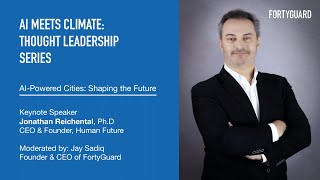
In a LinkedIn Live session titled “AI Meets Climate Thought Leadership,” host Jay Sadhur interviews Dr. Jonathan Reichental, a veteran technologist, former CIO of Palo Alto, author, and founder of the advisory firm Human Future. The conversation traces Dr. Reichental’s 30‑year career—from early programming as a child, through roles at PwC, a media company, and a pivotal move into public service as Palo Alto’s CIO. He explains how he transformed the city into a “digital city” by adopting cloud‑first and mobile‑first strategies, creating a data‑centric culture, and redesigning city hall to resemble a Silicon Valley startup. A notable success story is the incubation of OpenGov, which grew from a student idea discussed in his office to a $1.8 billion govtech acquisition. Dr. Reichental discusses his motivations for writing books and creating educational content, emphasizing data as a critical asset and the need to scale knowledge. He outlines the mission of Human Future—advising cities and enterprises on AI, data, cybersecurity, blockchain, and climate tech—while highlighting the role of AI as an amplifier for climate solutions, such as heat‑related health impacts. The interview also covers citizen‑centered participation, the meaning of a digital city, current AI applications in municipal services, and practical advice for leaders and entrepreneurs: focus on solving real problems, embrace risk, and leverage data‑driven insights. Throughout, Dr. Reichental stresses curiosity, happiness, and the urgency of innovating for the rapidly urbanizing world.
Chapters
Sam. Hello everyone. Thank you for joining us on this LinkedIn Live series. We call it AI meets Climate Thought Leadership. Those sessions are designed to bring you esteemed guests from the global climate, engineering, infrastructure, investment and city planning industries. They will talk to you about their achievements, but also their overall mission when it comes to AI and climate and we will focus there. I'm Jay Sadhur, the founder and CEO of 40 Guard and I will be hosting this session today. I will try my best to have an engaging conversation with our guest, Dr. Jonathan alongside catering to any questions you guys might have. That said, let's lay out what the session will look like before I introduce our guest for today. This session will run for one hour in total, of which the very first 45 minutes are allocated to the main discussion, followed by a 15 minutes of Q& A session. So please type your questions in the comments section on LinkedIn and we will do our best to answer as many as we can in this session session today. Moving on to our guest for the session, he is joining us all the way from San Francisco in the US we are very pleased to welcome Dr. Jonathan, a very good friend of mine, but also a multiple award winning technology and business leader whose career has spanned both in the private and public sector. He worked in software engineering and served as the Chief Information Officer at the city of Palo Alto in California. Dr. Jonathan is currently the founder of advisory, investment and education firm Human Future. He has also written different books in the Future of Cities which I personally enjoyed reading and learned from a lot of. And he is currently serving ForGuard as its technical advisor.
Dr. Jonathan hey there Jay. Great to see you. Nice introduction. Thank you.
You're most welcome. It's a pleasure to see you again and thank you so much for taking the time to join us today. I am personally super excited for this.
It's always a pleasure to be with you.
Thank you. So, Dr. Jonathan, let's start with hearing about your experience. You've had a very impressive career, I would say spanning over almost 30 years from leading technology innovation at PWC to serving as the CIO of the City of Palo Alto and now founding Human Future. So could you start by telling us about your professional journey and what has driven you to make these, I would call them, significant transitions in your career.
Well, well, well, thanks. I, I've always been a technology guy. I love, loved technology right from being a little kid, you know, writing my first offer program at around the age of 10, so selling it in fact for the equivalent of about $150 at the time. So at that point I was hooked. I said, this is cool stuff and you can get paid for it. You know, I think a lot of developers and IT people and problem solvers in general can, can relate to this story. You know, once you show that you can actually deliver some result and people, you know, get benefits from it, then you, you say, this is probably for me. So I'm kind of a technologist and a teacher, if you like. Most of my career worked in a variety of technology roles. But maybe the most extraordinary thing was, you know, I'm working for a media company north of San Francisco back in about, would have been about 2010, and I get a phone call. I'm walking between buildings during the workday and I get a call and it's a headhunter. And she says, would you be interested in working for a city? Now, I had no background in public service, but I was always intrigued and curious about working in government and particularly working in a city. So rather than sort of hanging up and saying I'm not interested, maybe look at a different role, I said, tell me more. And I think that's a good tip, by the way. You know, don't just automatically say no, but, you know, maybe, maybe be open minded and say, tell me more. And well, you know, once I met the city manager and different staff and I learned about the role, I was intrigued and I said to the, I said to the city manager, if you make a bet on me, I'll make a bet on you. And it was, it was a good bet for the next seven, seven years. So while my career can seem sort of, you know, I went from running a tech company with my brother to working, working for professional services, accounting firm, then media and then government and now my own thing. The thread is technology leadership and there's another thread which is education and teaching. And I'll probably get to that a little bit later. Nice.
This is truly inspiring. I just love how you started and how you made those shifts and the decisions that you've made to make such transitions. It's obviously not easy to go from one job to another, especially that it's almost in one sector moving into another. But it says a lot about your character and personality, which is something that I value as well personally. But what motivated you to make such a significant shift from the private to the public sector? Because, you know, that's really bold. And what were some of the, like, the biggest challenges that you think that they were rewarding, but they were also difficult to make that transition?
Yeah, I think A big driver. Going from sort of a comfortable job in the private sector to this new opportunity to serve, you know, to do public service and work for a city was driven by a lot of curiosity, that's for sure. I wanted to peep behind the curtain, as they say, and, and see, like, how does it work? How do traffic systems work, you know, how do the energy systems work and how does public safety. I just had all these questions. I'm just a naturally curious person. And. And so that was. That was a big driver. The other thing I think is a common thread through my career is I don't know that I have any interest in moving to a job that sort of seems easy and is sort of routine. I actually want to go into an opportunity that is complicated and difficult and needs help. I mean, the organization needs help. Why is that? Well, I mean, that's where you really demonstrate value, right? Where you can step up and bring something. You can get an incredible sense of accomplishment once you, once you drive things forward. But mostly a big part of it, I guess, is a personal growth, is the ability to expand your mind and have more experiences in this, in this, what I think to be a very short life, unfortunately. You know, how. How can we, all of us. And personally, I'll just say, how can I do the most in the short time that I have to bring joy to people and to bring value to the world in which I. In which I operate? Now, the last thing I would just say is, is, you know, we think about maybe the public sector as being completely different. But I was a technologist, right? I was a leader in, in the organizations I'd previously been in running things like, you know, software engineering teams, help desk organ teams, that type of thing. And when I moved into a city, I found that a lot of it was similar. I mean, you, you know, cities have data centers. Cities, cities. You'd use cloud services, cities are using AI, right? They have to have technicians and they have networks and all the things you'd find in any type of organization. This is pretty obvious, right? So a lot of it was similar. I would say maybe at least 50%, maybe I'd go crazy and say 60%, but 40% was really different. It really was. For example, how you buy things, you know, how you make decisions, how you make priorities, and how you develop strategy, how you engage with your customer base, which is a community, right? Which is everybody. So those things were very different. And the last thing I would just say is it was a big surprise to me. You know, I thought I would come to the city of Palo Alto in Northern California, in the heart of Silicon Valley, and I would bring, you know, my skills and I would work with my team and some partners, and. And we would change the city in a very positive way. And I'll admit we did a lot of good things, and it was recognized and it really did drive an innovative agenda. But something very surprising happened, and that was that the city changed me. And that's the big takeaway. You know, my life has never been the same ever since. And I'm saying that in a very positive way. I realized that cities were at the forefront of the human experience, that whatever problem we had on a big scale, whether it's climate, which you're very, very passionate about, and have a whole business around, whether it's moving people and goods, or whether it's delivering energy on all these areas, oh, I could throw in healthcare and education and so much more. Cities are at the forefront. If we're going to get a better human experience, we have to do in the cities. And. And that's been the story I've been telling now for, like, over a decade. And writing about still gets me excited, and I'm still very much involved in it.
Yeah, that's fascinating. To be honest. A lot of what you just mentioned feels to me like there is a lot about an entrepreneur. This is. I would probably frame a lot of the challenges that you've been going through, and then you're entering into a city style and then going through all of that. And I do want to touch on a lot of the points that you also mentioned, your writings, your advisory, your experience with cities, but I'll start with the latter. During your time at the city of Palo Alto, which is a city that is really known to the world and venturing into the public sector, the city was named one of the top digital cities in the US Almost multiple times. Right. And that's during your time with them.
Yeah.
What. And the question is, like, what were some of those key initiatives or projects that led you to that, you know, contribution and recognition that the city has made?
Yeah. Thanks for that. Well, you know, I'm in the job for a week or two and maybe. Maybe a month. And this is back in 2011, and I go to the city manager and really good guy, James Keane. He's retired now after 35 years. A terrific man. And I said to him, what's. What's going to be, you know, what's going to be our. Our focus, you know, what will be our legacy as we Work together for the next few years trying to drive innovation. And he said, I, I don't actually know, but can you go away and figure it out? And which I love by the way, that that gives you a great amount of freedom and opportunity to create something unique. Well, I came back and I said we ought to create, we should be the number one digital city in America. And he said, well, that sounds interesting. Remember this is 2011, so you know, the term is fairly new. It's so new in fact, that he says, what does that mean? And my answer is I'm not really sure. Right. But I think that's where we need to go. I think we need to use digital technologies to advance a whole lot of priorities for our elected officials in the community. And we figured it out. We created a, you know, a very progressive strategy that digital strategy that digital city meant. For example, we were one of the first, maybe the first in the world to declare ourselves cloud first. Right. This is a time when a lot of cities were pushing back on the notion of cloud, you know, you know, you can't control the environment. You have to kind of give the, all the decision making, a lot of the decision making a way that cities were typically very comfortable with. The other part of the strategy was we were again, I'm saying, because I don't know any different, that back in 2011 we said we were going to be the first mobile, first city, which meant that all new applications, all new solutions would have to, if they could have a mobile component, that is, they would be served up via, you know, a smartphone or tablet computer, in addition to typical ways that you deliver. So we, we had some pretty innovative approaches. We, which I think we'll talk about possibly later, in fact, I'll mention it now, which is our very assertive, very progressive approach to data. My story goes a little bit like this. You know, I noticed that in, in the city, being sort of new to public service, I knew that there was a lot of constraints, right? Too many projects, not enough time, not enough money, too many priorities, not enough talent. You know, everything was a world constraints. But something I recognized beyond all that was there was one thing that was in abundance and that was data. In, in the act of actually delivering a city, you are creating data, you are storing data, you're working with data. And so we very much decided to have a, a very progressive at the time, again, relative unique a day strategy. By the way, this is in a time where there's no such thing as chief data officers, certainly not in government. You know, the notion of even data science was not even where it is today. It was starting to be a thing, but it wasn't in place. So we all these things were very unusual, not only in general, but very unusual for city. And it was those sort of things that we said, we're going to push the envelope of the possibilities that we were recognized as a leading digital city. And in fact, by approximately 2012, 2013, like about a year or so after I joined, we were named the number one digital city in America. And then we held that position in the top five, you know, top five digital city for the next five years based on, based on our activities. The last thing I want to say about, you know, sort of shaping this group that I had at city hall and doing things different and becoming that digital city was one of the things that I thought was very important was to bring my team into the community. You know, a lot of organizations, when you work for them, you're sort of, you go to an office every day or you work from home, whatever. You don't actually go to where the customer is, right. And when you work for a city, you know, the customer is everybody. It's, it's, it's businesses, it's tourists, it's schools, it's universities, you know, and I, my role was I set, I want my team to actually see and work and ask questions and talk with the people that they serve. So we would go out and of course it was Palo Alto and Silicon Valley, so there's a lot of startups. So every month we would go and visit a new startup. The great thing about being the CIO of a city is everybody will take your call. By the way, I was able to call pretty much every, any tech person, any luminary in Silicon Valley I could call and I still can today, which is wonderful. And so what we would do, we would go to the startup and you know, they, let's say they had decent financing, they looked awesome, they were open and they had, you know, foosball and the coffee machines and the little cafeteria that you could have unlimited snacks and stuff. And then we would come back to city hall and it wouldn't look like that. It would be cubicles and it would be kind of dull and boring and non inspiring. And I made the connection very quickly. I said we need to reflect the community we're serving. We need to create a startup at city hall. And so within about, you know, it takes a while to put the, you know, the case together and make the pitch and get the budgeting But I was successful. I got the city council and the city manager to approve a handsome budget for us to actually convert almost an entire floor of City hall in Palo Alto and transform it into what looked like a Silicon Valley startup. And people would visit and they would get off the elevator on the second floor, they'd walk into our area and they would come to a sort of a modest reception area and say to Jeanne, who's the receptionist, you know, or the person there receiving people, is this City Hall? Is this. And she said, yes. And they say it doesn't look like it. And for me, that was victory. I didn't want us to look like old government. I didn't want us to behave like old government. I wanted us to behave and think and feel and be inspired by being a startup at City Hall. And that was a very big accomplishment for us as a team. And I would say a major part of my legacy as I left the city later on.
Yeah, and truly love it. I mean, I personally spoke to a lot of folks that even startups that you engaged with when you were in the city and some of them now are in IPO positions and other. You contributed to their mission. So not only that you change the city, you actually changed the entire ecosystem. Given your interaction with a lot of those technologists and a lot of this technology that was either piloted or advised or used by the city of Palo Alto.
Can I, in fact, can I in fact even a quick example? Because I think it's, it's noteworthy. I, I love that you brought that up and reminded me. In fact, I thank you for that. You know, part of having a startup at City hall, part of our philosophy was to have an open door policy. If you had an idea about how to solve a problem. We wanted to hear from you. And two sort of recent graduates and one draw that actually from Stanford came to visit me one day and they had an idea, but they needed a city to experiment with. And after a little chat and convincing, I said, look, let's experiment with this here. At the time it was called Delphi Systems. In fact, I said to them, I don't really think that's a great name. And they, they came back a few months later and said, we're renaming our company Open Gov. I said, that's a great name. I'm surprised that you were able to get that URL, in fact. And we worked with them for a little while. I said, one of the things you need to do is give us, you know, at least a year of access to your system. Once it goes live, you know, as a little bit of a, you know, reward if you like, for working with you. And of course then we would, we would pay and enter into an RFP as appropriate. So we started using it and then other cities started to use it. That was in approximately 2013, maybe even 2014. So 10 years ago. Now, some of you, some of you tech folks who are watching this will maybe know that where I'm getting with this story, it was just announced just a few months ago that this company that started in my office with a little conversation was acquired. They were acquired for $1.8 billion with a B billion dollars, the biggest govtech acquisition in history. So I'm very excited about that. So I mean, the lesson here is while I get great gratification from that happening, I haven't financially benefited by the way, but I get wonderful gratification of being, you know, there at the start and facilitating is as leaders, whether you're in any type of business, you know, with some experience and perhaps some connections, there's a lot we can do to open doors and connect people and give people opportunities. And we should think about that each day as we go about our work. You know, if you're a government leader, you know, you work in government, it's, it's so hard often to penetrate city halls, you know, open the door a little bit, facilitate that access, and you never know, you might create an enormous business that has great impact on the world, creates good economics, hires people, and you could be part of that. So you could play that role.
Yeah, and I really love that example because sort of like a great motivation, knowing that we're having you as an advisor to us, but also working together on building a climate tech scalable solution that could solve one of the world's most pressing challenges today, which is in temperature. I do want to mention as well an example that actually resonates with me, similar to what you've demonstrated. The Muslar City in Abu Dhabi. And this is one place that we started off with the help of the Abu Dhabi government. And they really not only help us pilot our solutions and when it comes to temperature, but they helped us build the business model. And this is how we really evolved from the Muslim city practice into doing a lot of other commercial activities, not only in the UAE and the gcc, but internationally. Now, given that we are in the US now, we talked about a lot of city and different other entrepreneurial activities, which I truly love. You say that the introduction, you're a teacher and I truly Love that because you do share. One of the things that I was really inspired about when I first met you is that you used to share a lot just to make sure that we are enabled enough to pick up on the idea that we're building and give us all the engine to do this at 40 guard. By the way, that's before you becoming an advisor to the company. You've written several books on topics like smart cities and data governance, which I read and really learned a lot from. And I suggest all the, all the people watching us today to visit the website of Dr. Jonathan and you know, probably get, get your copy because it's really good. But my question to you, Dr. Jonathan, is what inspired you to start writing? Because it's really not easy. And what key messages do you hope that readers would take away from your books and, and your work as well?
Yeah, thanks for that. And you can actually see on the screen there, my website is just my last name.com so rikentil.com they'll get you all my stuff, my videos, my books, my keynotes. Whatever you need is accessible there. And by the way, a lot of it is free, so I give away most of my stuff for free. And a small part of it I monetize.
Thank you.
You know, I, I've always been a writer. I've always being good at it. You know, we tend to sort of want to do more of the things we're good at. And I felt that I could articulate a, and communicate an idea or even just say a fictional story in a reasonable way. And I enjoyed it too. I had the opportunity to start working with LinkedIn learning, where I have, you know, 47 courses now and a ton of topics, and I have to write the scripts for those. And I really put a lot of energy into them. And back in approximately 2015 when I started that, so it's almost 10 years ago, you know, I got, I exercised those, those writing skills quite a lot as I was working for the City. I knew that I wanted to write a book and people were encouraging me to share my experiences and best practices. So I knew I had it and I knew I would eventually do it. I didn't want to write a book during my time at the City. I didn't want it as a distraction. I didn't want it to be a complicated thing because, you know, when you, when you do other types of work, when you're a public servant, it can be a distraction. It can be, it can be problematic. So I end up, you know, moving on from the city just a few years ago and almost. I mean, it's got to be just, you know, a wonderful serendipity, just a beautiful sort of timing that I was thinking about writing a book and I got an outreach from Wiley, the publishing company, the educational publishing company. And they asked me, they came from nowhere. I didn't solicit it. You know, they asked what I write a book on the future of cities. And I said I'd be very interested in that. We talked about some other ideas. But I really love this because writing a book would allow me to share my experiences, my ideas, my observations and scale, right? Scale knowledge. I mean, it's a form of education at scale. And so. So they came back a few weeks later. You know, you have to go through a lot of paperwork and stuff like that when you're doing a book. And. And they said, have you heard of the four Dummies series, of the dummy series? And I said, oh, sure, I have. Like, you know, it's. It, it's a. They're popular books. In fact, the dummy series is the largest reference series in the world in history. They've sold over 250 million of the dummies books on every type of topic. So I thought to myself, well, that's interesting. I wasn't thinking about the dummy series, but wouldn't that be a great platform to be able to share with mayors and city managers and startup entrepreneurs like Jay, you know, who needs to know more about cities to be able to deliver a great product? So I use that platform, and the book was a great success. I actually wrote half of it before COVID and half of it in Covid. And so Covid was the perfect environment when, you know, we were all at home to write. Good work. And it got released in 2020, by the way, the weirdest thing, it's four years later, there's been a massive resurgence. The book is suddenly selling really well again. So I'm happy to hear that. And. And that's great. So I want to tell you a little story related to this, though. So I write this book on the future cities. It's my first, you know, major publisher book. I'd done a few little things before, but this was a major publisher and it was a global release. And I called up, you know, some of my friends and I called my close friends and I said, hey, what do you think of my book? You know, I sent you a copy. Tell me honestly what you think. And my friend said, you know what? We got it, but I haven't read it yet. I said, okay. He said, the reason I haven't read it is because my kid, my child is reading it. And I said, really? Said, yeah, yeah. My child keeps coming to me with all these, you know, insights on like, the, the history of cities and like, why the, how the aqueducts came to be and, you know, what cities were like, what New York was like when there were horses and no cars and they love all that stuff. And I said that was something I did not think about. I did not consider that there was a youth or a child interest area here. So the reason I share this with you, that got me thinking. And later on, a children's author who living out of Sacramento, Brett Hofstad, reached out to me and asked me would I like to co author children's book and on cities. And I thought, heck yeah. You know, apparently kids are, have an enormous appetite to understand the world in which they live and are fascinated by cities and things like the climate, of course, and the environment and automobiles and energy. And so we ended up writing the first children's book on an activity book so you can do cool little activities, coloring in and joining the dots and puzzles and stuff. The first one for, for kids. And that's, that's been a wonderful success. I mean, to get to the core of your question, you know, I think as we have experiences and, you know, good and bad because, you know, you learn a lot from the things that don't go. Right. We know that. Right. That as you progress through your career and there's a new generation of people entering the workforce and people you're, you know, exposed to, you can, you could be useful, you could be helpful in sharing your experiences and helping them be even more successful. This is really my mission today is how can I help others be successful? How can they get some benefit from, you know, something I've done in my life? And so writing for me is just a way to reach more people, is to tell you my stories, tell you the stories of other city leaders, other cities, or if I'm writing about data, as you said, I've written a very successful book about data. How can I help others understand that this is the most important thing in every organization? Data today is the most important asset in every organization in the world. If you haven't recognized yet that yet or don't understand that point, my book's perfect for you because it'll hopefully help you understand that if you're going to drive innovation, if you're going to make more money, if you're going to run a better organization, all the things that we all want to do, or if you just want to do good in the world, never mind making money, if you just want to do good, you got to have data. Yeah, you got to have good quality data. And so I'm very much driven in my writing to help others and to have more eyeballs and brains absorb that content.
And I just love it. There's a lot of insights in what you're saying and obviously totally agree on the data part and doing good. I mean, you could be passionate throughout a skill that you're very good at, learn more about data and just take that skill to the next level, whether it's building a company, doing well at the job if you are in the city, or maybe working as a consultant and so on, so forth. But I do want to touch as well on your entrepreneurial journey, given that I'd love to learn more about Human Future, which is the global business and technology advisory firm that you founded, and I'd love to learn more about the organization's main goals. How do you see the role of shaping future technology when it comes to urban development? And if you could touch a little bit on climate as well, given your activities with Human Future.
Sure. Thanks. Thanks again. And I should let the audience know that, you know, Jay is a consummate entrepreneur and somebody that I think can inspire a lot of folks. You're doing great work. You're building an incredible company out of, out of UAE there over in the Middle east, but very present in Europe and very present here in the United States and broader. So I admire you and I get inspired by you on your journey as well. When I was leaving the city of Palo Alto, now it's coming on about six years ago, there was a number of paths I was considering. One was going to another city, of course, working for a big tech company, maybe going full time as a professor, because I do that as a little side hustle these days. And of course, building my own business was, was another, I think of all the options, you know, building my own company probably was the riskiest. But that was very consistent, certainly with my, my personality and, and, and what I like to do is do the, the bold things, right? Take those risks that have the greatest rewards. What's the worst that could happen, right? That's what you should ask yourself, you know, in this short, in this short life, you know, what are you waiting for? Come on, you know, what are you waiting for? So I went for it and, you know, it's exceeded all my expectations. I think, you know, you have to find a reason to do your own thing, to build your own business. You got to bring, you know, key skills to the table to do that. And I'll tell you why I did it. I did it well, firstly, because I would have considerable control over, you know, the people I served and what I did. But really what that means is I wanted to give myself. I wanted to have more freedom. And I think being an entrepreneur, and particularly with a small company, fair enough. I mean, if you're an entrepreneur running a big business, there's a lot of folks that you have to deliver for, right? But if you have a small business and maybe you haven't taken investment dollars, so you have an incredible amount of independence. It gives me. It has given me, and we'll give others a lot of freedom, and that's. That's a beautiful thing. I was thinking about this interview this morning, and I. What I would share about my journey. And I thought to myself, what can I share about, you know, leaving the workforce after 30 years and being successful in the workforce and working for big companies, working for a city. And, and my life has changed, and my thinking has changed a lot in these past six years. I believe that, you know, when you work for another company, the company owns you. Right? And I think we need to be sober about that. I think we all make that, hopefully, that calculus when we apply for a job and we work for somebody and they pay us, you know, every. Every week, effectively, they. They own your time. And you've said, you know, I'm worth the amount that I'm being paid every week from this company. And, and this is what my life is now for most people, that's completely cool. And you, hopefully you do work that you love. For a lot of people, that's not the case. And maybe you haven't made that change, but there is that opportunity. You know, if you are being. If you're bold enough, you have something of a significant value to bring to the world, go out and do it alone because it'll give you that freedom and you won't have to ask permission from a boss. Right? Which I loved. And so, you know, I bring what I have been doing for many years, which is things like, you know, working with cities or bringing the skills that I acquired working for city to other cities, building IT strategy, working on things like cybersecurity strategy, helping cities with policy, you know, a lot of education. So a lot of my clients, a lot of the people I work with are cities. Not Only in the US but around the world. I work with the city of Singapore, for example, with the Prime Minister's office. There's. I've worked very closely, as you know, in Dubai with the Prime Minister's office there in Dubai and many other places around the world. But I also serve private companies and I do similar things. A lot of education related stuff. Right now the questions are a lot about artificial intelligence and it's not that I necessarily have the answers because nobody knows the future, but what I can do, what I have been doing is helping leaders and people think how to think about change and how to think about the disruption that comes with the new technology or when your business is getting completely reinvented by what's happening around you. So those are the type of clients I have. Of course, I teach as well. And then the topics are anywhere from AI to blockchain, believe it or not, still popular. Digital transformation, you know, cybersecurity and, and digital twins and a lot more. Now quick story on the climate question. You know, when I was working for the city and I think maybe my colleague is even on Today watching this, he was the chief sustainability officer, Gil Friend. We became close allies and also good friends and we continue to be great friends, I think to this day. And we would go to lunch and I would talk about all this new tech and he would talk to me about, you know, his challenges and what was going on in the, in the sustainability movement. And what we discovered after a few lunches, after a few months was our worlds were overlapping. They were starting to like it was a Venn diagram where, you know, technology and data was overlapping with the needs and the world in which clean tech and climate tech were thinking about problem solving. So we became great allies sharing insights and we still do that to today. So if you are, and as I am delivering to a city the topic of how can AI and how can data, you know, how can digital transformation help with, you know, sustainability initiatives and when it comes to cities, how can it help with the work they're doing? So I find myself occasionally in this topic, but really being an enabler, right? Being the person who can say, you know, we're going to help with the environment. This is a very, very big problem. As, as probably no one knows more about this than you or thinks about it more than you, Jay, and your, and your company Fortiguard is data is a massive component of understanding things like forestation or deforestation, understanding things like heat and temperature, right? Understanding things like, you know, the impact of waste in the oceans and how to, you know, resolve that, how to optimize energy and then optimize for non carbon energy. Very data driven. These are massively data driven topics. However, we're blessed with the emergence of artificial intelligence because that is playing this, you know, amplifier role in allowing us to do all the things I just listed, right, optimize energy, right? To be able to measure and understand changes in how icebergs are melting. And in fact some work done on this. The combination of data and AI is allowing us to determine results for ice melting 10,000 times faster than humans have been able to do it. So we are accelerating and that data, that AI, the digital transformational tool set is going to help us with climate related issues. And I find myself operating in that world just because of my passion, plus the fact that I work with cities and organizations where this is a priority.
And I really love. There are a lot of things that you've touched on and I'd like to go through few. But then at the end I'd like to also touch point on. You talked about your work with leaders and I think this is a place where I'd love to discuss with you but before I do so, I want to ask you a question between a combination regarding some of the biggest opportunities that you discussed in terms of challenges or industries that can take us to the next level when it comes to smart cities, fourth industrial revolution, blockchain technology and other what. So we've mentioned, you know, a lot of different things. What, what are you most passionate about and what do you think is the most biggest opportunity in that. And then if you could also tell me about AI. So I know AI is a conversation that is happening a lot and we're all talking about is something that people are asking so what's the purpose of this? Right. Because everyone is looking for AI fit of purpose. Could you also tell me about organizations today when it comes to solutions that are effectively addressing real world problems but using AI and how. What's your view on that? What do you suggest that we should do?
Wow, that's a big question. But I love it. I love it. I love. No, so you're asking all the right things, Jay. I really appreciate that so much. I'm passionate about a lot of things. I think I'm most passionate about spreading happiness. You know, I, I really, I want people to be as happy as they can be. And, and so if you think about that, what, what, what helps people achieve their happiness, right. And, and it's different for everybody, but it can be by, you know, your health goals or it can be about your relationships, but it's also about satisfaction at work, you know, getting compensated for, for the amount that you think you're worth, maybe changing a job. So, and then, and then organizations getting happy about, you know, making sure that they're growing and they're going in the right direction and their, their, their strategies are working. So, so, you know, contributing towards satisfaction and happiness is a tremendous passion of mine. But that clearly that's a, that's a big umbrella and it takes many, many forms. And I think for me, the best way that I can be of value in that is to be a someone who can coach or to educate. And I do the education through so many different channels. But I understand the spirit of your question. You know, I'm actually passionate about cities to a huge degree. And while I did talk about that a little bit, I'll just kind of summarize a couple of my thinking about why this is a passion. What I didn't realize before I moved into being a leader in a city was the incredible role that urbanization was having and would have as we entered and progressed through the 21st century. You know, this is the century of cities. You know, the grand challenge of the 21st century is to build and operate great cities. Right. And why? Well, we are a human population now. That is, we've just hit 60% of all humans live in cities. My city colleagues love these stats, right, because we say them on every single podcast and webinar. But it's worth repeating, right? By 2030 and beyond, it'll be 70%. And by the end of the second century, about 80% of all humans live in cities. We don't have any precedent for that. We, we spent most of the history of humanity about 200,000 years being a sort of a rural, you know, species. But now we live in a built, concrete, you know, highly sophisticated machine called a city. And in some areas we've done well, in other areas we've done poorly. They've sort of organically grown and we're faced with enormous challenges, climate being at the forefront of that, but everything around transportation and energy and public safety and education and health and you name it. If there's a human dynamic, it is exemplified in an urban context. So my view is if we're going to make people happy or give people good lives or help with the quality, quality of life, then we're gonna have to do it in cities. We won't neglect the rural population, but we have to do it in an urban context. So I'm passionate about that. Because the work you do, if you're an entrepreneur with a business that impacts cities like 40 Guard, for example, you impact a lot of people's lives in a very, very deep and important way. I mean, you think about 40 Guard, you know, it's a health company as well. Right. You know, you know, if it's too hot, and we see this right now here in the summer of 2024, people die. This is not a, you know, a sort of. A little sort of side topic. This is the. This is the central topic. So I'm very passionate about what we can do. I can't. You know, I'm not a. I don't have some sort of natural sciences background, but I have a technology. I have a computer science background. So I will bring technology to bear to the best I can in solving that. So that's. That's a. That's a deep, deep passion of mine, but I'm not limited to that. Being a very curious person, as I hope many of you are, I think we have a deficit of. Of curiosity these days. I would encourage everyone to open their minds up and to help their kids become more curious. We have an incredible world. It's a miracle that we're alive all right now, and we're on a little rock, you know, flying through space, through a universe we. We barely understand. Right. But we're all part of it right now. We're conscious. I. I don't know even what that means, but we're part of it. We're doing this right now. Right. So being curious and passionate about that and making a difference in the short time we have is really what it's all about. But let me segue a little bit to the second part of your question, which was about AI. Big question. AI is a big deal. Was there ever an understatement? Right. Okay, this is not. I'm not breaking any news here.
Is it hyped or under hyped?
It's probably at the right level of hyping right now, for sure. But, you know, I can say this. I have 30 years of technology experience. I've lived through waves of new tech. I've seen, you know, as many of us have, a world before smartphones, a world after smartphones, a world before social media, a world after social media, a world before the Internet, world after the Internet. You know, tech has a. You know, is important, and, and it changes. It changes what we can do, and it changes how we can do things. That's really at the core of technology. And along comes AI in a very overt way. Right? You know, AI is 50 years old. You know, it's not like it started in October of 2022, but what did emerge in October, November of 2022 was generative AI. And that has, you know, you know that the knob now has gone from 7 up to, you know, from 0 to 10, it's gone to 11. You know, we've turned up the volume to 11. And so now we've democratized artificial intelligence in a very unique way. So it is a very big deal. Now. There's not probably the stats I heard was like something like, you know, 50% of all companies will deliver something this year with AI and the remainder in 2025. Another stat I heard was that that was actually from a good source. About 90% of organizations are doing something with, with AI. And then lastly, 75% of your staff are using AI every day. Right. And even if you have a policy that says you can't use ChatGPT or Google Gemini, let me tell you, your staff are using it or they're using it at home and bringing it to work. So these are some, you know, important, important numbers. Now the thing that I will, I want to add a bit of value here and that is it's very interesting to me that we say my product is AI enabled or I'm building an AI enabled. I think we'll say that for a while. But we don't say my product is a relational database enabled. We don't say is service oriented architecture enabled or we're barely saying it for any technology. As businesses, we need to focus on what we deliver. We need to focus on, on value and solving problems. So I think there is a little bit of definitely kind of over marketing and that's okay and it'll last for a while. But I think that does dampen down over, over time. And basically we take AI for granted. It just gets baked into everything we do. We will assume not long from now that we can query or ask questions about whatever we're doing. Right? Like 40 guard. You can, you can ask about the environment, you can ask about heat, you can ask about solutions, and you can do it in a natural language, right? And you get these amazing outputs that, you know, give tremendous guidance to all sorts of organizations. So natural language engagement, this conversational ability with all sorts of tools. I think that businesses, if they're not thinking about or trying to figure out how to think about it, they need to figure out first of all, how does AI improve their product, how does it create some efficiencies internally? Being really pragmatic about it, AI for the sake of it, I think ultimately you'll just waste a lot of money and a lot of the startups that exist today won't exist 24 months from now. Make sure you're solving real problems that AI amplifies in terms of the ability to solve. So you've got the, the ability to kind of reduce cost, to reinvent your business, to innovate. That, that right now. And there's, there's definitely sort of a goal rush. And you know, by the way, it's okay to make mistakes because you know, if you're making quite a lot of mistakes, you're probably innovating, you're probably trying, trying new things. So you know, figure out what makes sense for your business, us, right? Just don't throw everything at the wall and, and figure out, and wonder what sticks. You know, do, do some risk taking, you know, innovate, make mistakes, fail, whatever. But, but you know, align it like you have done with other technologies in how can it help us in whatever that vision or strategy is for our business. The worst thing you can do is ignore it. Let me be clear, right? You can't, you can't sit this one out. You can't, right? And that includes businesses, but also includes your own career. Don't, don't sit it out. You know, be proactive.
I love you. Touched on a lot of points that even resonates with me and I'm sure with the audience as well. I'm confident that we have a lot of questions. So I'm going to ask you one last question and then jump into the audience. Questions you touched earlier on leaders. You have a very extensive experience working both in the private and the public sector. You've advised and gave a lot of advice to leaders and innovators who want to make a significant impact in the field of technology. What else do you advise other leaders that are out there when it comes to technology, AI, climate and all the other things that are important not only for our cities, but for our planet and for our lives?
Yeah, yeah. You know what innovation is, is really hard. And I've actually spent a good deal of my career in the innovation space. And in fact I had a job where my title was Innovation Director. So I know a little bit about that and I thought about it and one of the reasons why innovation is very difficult is because you're solving problems for a world that doesn't yet exist. Right. You're solving problems for tomorrow. We know today very well. We know yesterday really well, but we don't know tomorrow so well. So innovation is about some really big bets. It's about predictions and probabilities, it's about luck. So we're doing something where we're trying to solve for tomorrow and we don't know much about tomorrow, but we can look at trends, we can look about where we're coming from. We can, we can certainly look at where issues are today and make some, you know, educated choices about what we need to do. And as a person myself, who is fortunate enough to work with leaders in the private sector, academia and public sector, but particularly public sector, because that's your question. All around the world, I hear a very loud message. It's loud and clear. There are many, many more problems than there are solutions for today. And if you're an entrepreneur, right. That's music to your ears, right? What do entrepreneurs do? They solve problems, they build products around problems and they hopefully do well and do good. Right. Just like again, 40 guard, you recognize that heat was a major component of the climate was going to affect people's lives and how could you solve it? You have your 40 guard problem solution for that. So, you know, when you go into a city and you inventorize the issues, they are incredibly complicated. And that list is very, very long, including things like climate related, you know, environmental related, things like housing. You know, in America we are short somewhere between 5 and 9 million homes. We just to meet today's demand, we really need to build 9 million new homes. Right. We need some innovation around that in all aspects. Right. Transportation. You know, one of the things that I've recognized when I travel is I go to a new city, I get to the airport and I get a cab, whatever, or someone picks me up and brings me back to my hotel. And there's traffic, a lot of traffic. And those cars are spewing carbon into the environment and heating up our planet. And it's just not good. There are questions about a world that is hungry for clean energy. How do we deliver that clean energy to more people at lower cost? Right, right. How do we make sure that people have access to drink, clean drinking water? You know, you and I, Jay, you and I are lucky enough that we just go to the sink and we, we pour water, Right? But that's not the case for billions of people. And, and water, clean water is becoming more scarce. We need, we need real solutions around that. Okay, here, here's my bottom line on all this because I could speak about it for several hours as I know you, you and I both could. Is if you're an entrepreneur, there is amazing opportunity. It's phenomenal the amount of opportunities there are. But what you should do is find a problem that you're passionate about. Like what pisses you off? What would you like to solve? What part of being in a city is something that makes you crazy, makes you angry, makes you want to solve it? Solve that problem. And I bet you if it's a good solution, not only will you solve it and do good, but you'll probably make a lot of money doing it.
Yeah, that's super true. I just love the part when you spoke about what pisses you off. Temperature really pisses me off. I'm glad that I'm in a position with an amazing team, to be honest. I give them all the credit to build solutions that can make our cities cooler. Mindful of the audience time as well, I'd like to go through some questions here so perhaps the producer can help us. So, Dr. Jonathan, how do you shape future cities with citizen centered participation? And that's a good question, by the way. So I'm interested as well to hear the answer.
Well, a big shout out to my good friend Bernardo who is down in Miami, Florida. He is running the Smart City Expo coming up soon in Miami. He is leading that event so you can check that out online. And I go every year and I'll be doing a keynote this year. So great to, great to have you question, Bernardo. Look, we, we have today more ways to engage with each other than ever before. Now if we do it poorly, that's on us. But you know, you think about social channels, the ability to reach people through all the channels. We have to ask questions, get feedback to be able to understand sentiment. Right? We all have all these tools for sentiment analysis. So we have a ton of digital tools like an abundance of where we can engage our community in solving all sorts of problems. But we can also invite people. You know, I'll tell you a quick story here because I know we want to get to one or two more questions. I ran the largest outdoor civic hackathon in history back in about 2013 in Palo Alto. We called it City Camp and thousands of people turned out one Saturday to to innovate and solve problems, right? So we invited the community. I basically myself, the mayor and the city manager asked the community. Everybody said, come on, join us and let's solve problems together. So we made the invitation. But what I want to share with you is I Wanted kids and teenagers to be part of this too. So I went to the schools and I went, I said to the head teachers, how can I get the kids engaged? And they said, you know what, the kids have their own governance, they have their own governance groups, right? This is apparently quite common. So I go to their little governance group and there's a, you know, so they're like 11 year olds, maybe 12 year olds sitting around a table, all very smart kids. And, and I, I explained to them what I'm doing and I'm saying, I would love for you to be part of this. I want, I want to hear you, I want to hear your voices. And, and I did this in several schools and here is the singular message I got from every kid at every school. We had never been asked before. You're the first, you are the first city leader who has ever asked for us to be involved in city life, right? And this was a big, this happened back, you know, early in my days of the city. And that was the most profound message that I got is you got to invite people, right? Invite them to city hall, invite them for coffee, invite them on. Digitally we have more ways than ever before to engage everybody in the civic conversation.
And the young generation is obviously makes a huge part of our city today in terms of population, which drives economy and many other things as well. But that's interesting. Perhaps we could take another question if the producer would help us put something. So from Abdul Moaz is asking, in terms of climate intelligence, what is the most important need the private and public sector should be addressing today?
Well, maybe you want to give this one a little answer too. I mean honestly, this is what 40 Guard does. It's what you've dedicated your life to these last few years is being able to have the public sector and the private sector see the invisible, see what's important to see and then ask questions of it and then make decisions. We need action oriented information like basically insight, right? We need insight to make the big decisions for our businesses, like where do you locate a new factory, you know, you know, what kind of energy do you need? How can you produce more non carbon energy? You know, what materials should you use in your products that are less impactful to, to the environment. So I think, I think the, the needs are broad. It's still not all answered. But as entrepreneurs and data scientists and others, we can bring forth the invisible to help both the private and the public sector make better decisions. How would you answer it, Jay?
Just from the problem position, just like you mentioned, you Know, we use hundreds of billions of dollars to lost workers productivity in cities today and that is projected to even go double the numbers that we have today by 2030 because of urbanization. A lot of things. But you also mentioned, you know, how heat is taking a lot of lives. You know, globally we're talking about almost half a billion individual losing their lives to urban heat. It's a phenomenon that we've almost mapped. Hurricanes and flooding and different other things. We haven't visualized urban heat yet and we really need a lot of that to, you know, half of the solution is understanding the problem. So we have to start from, from the data perspective. I mean you touched point on housing in the US And a lot of the other demanding activities. But one is obviously the US alone receives over 235,000 heat related emergency room visits annually and we're talking about a lot of increased numbers this year where heat is almost coast to coast affecting a lot of cities in the, in the US So I personally think it's, it's heap but you know, from the climate perspective there are a lot of other challenges and probably each city is suffering from one in comparison to another more. So we definitely need to address sustainability. We have, we have to focus on, to put a focus on climate tech solutions. I'm supposed to be the moderator today, so I'm not going to take a lot of time putting into the question. Would love to take another question perhaps if the producer would put the next.
I just want, I want to, Sorry, if I could really quick because I feel remiss if I didn't answer on the last question. One thing which you know is beginning to be very important is organizations are now in some countries required to report on their sustainability footprint, you know, because it's required in their reporting reports and in other countries it's optional. That's an important thing that private companies and publicly traded companies need. But I also want to say that it's clear that organizations that have climate initiatives that are driven based on insights and data and they know what to do actually are more successful, they make more money, they run better. So I just wanted to make that
point and I love it. Obviously what gets measured gets improved and the best solutions really comes from the understanding of data. I have a question here from Defer. He's asking from a city planning perspective, how can climate tech industry, and there's a lot of climate questions here, ensure that the solutions are addressing the climate challenges while tailoring them to the community being served? I think that touches on your, on the first question that we had. But maybe you want to add a few points to Madhafir.
Yeah, yeah. Mudithir asks a very good question, one that deserves a thorough answer. But I'm gonna have to be succinct because of the time involved here. And that is like every problem and every startup that comes to the table with their solution, it, there has to be a demand and they have to solve something that people are prepared to buy, you know, to pay for. So I think, I do think that climate tech and clean tech or organizations that particularly the startup, the volume of startups who have right now, they really need to understand and talk to city planners. Right? They need to sit down with them, really understand their problems. Because if the entrepreneur thinks they have a solution and they're clever people and they build something and they deliver it, but the city planner who might be the buyer doesn't think it solves the problem, they're going to fail and the marketplace will take care of it. So I do think that the way we get to answering this is we need entrepreneurs who are delivering clean tech solutions and climate tech solutions that respond strongly and in a focused way to what the buyers need.
Nice. Thank you so much, Jonathan. And probably we'll take another question as well. So I have Monica here asking what are some examples of AI being used in cities today?
Great. And hello, Monica. It's good to see you here at Ask that question. I know you're on and helping out here in the back in the background as well. Hope to see you very soon over in San Francisco with Jay. You know, if you Googled, you know, how are, how AI has been used in cities, you're probably going to get a very long list of different things that are, that are happening. But I will say this, it is early still. You know, cities do look, no surprise. This is not a shocker. They don't move necessarily as fast in terms of evolving and adopting new ideas and technologies. And there's a reason for that. And often it's pragmatic. So, yes, cities are all over AI and trying to figure out, you know, what it means and how they can use it. So they're still in the education phase, they're still in the strategy phase for sure. But cities are using it particularly generative AI because that seems to be the hot area right now to do things like customer service. So you see a lot more city websites having conversational bots. So you can just ask a question. What time is the public swimming pool open until or, you know, what days are the wine and Cheese festival on, you know, in May. So there's a lot of the conversational stuff that's a primary thing, customer service and stuff like how do I get a permit? You know, how do I initiate a permit? A lot of staff are using it for creating content, right. Things like social media posts, for creating the first draft of a city manager report. So, you know, content generation is a lot, A lot of it. The. There's two more quick ideas I wanted quick things that people are doing. For one is there's a very interesting company that for full transparency, I advise, called Legislate. And what they do is they actually help city clerks generate sort of the first drafts of proclamations and declarations. And soon we'll be able to do the first draft of legislation, right? So have AI do put in some, you know, a modicum of information and boom, it's gonna, it's gonna kick out the first pass of that. So that's, that's, that's that solution. And what was the, what was the other one I was going to share with you? Oh, yes. So there's. There's a. A company called Madison AI and what they do is they ingest the history of a topic in a city. Like, they take in a lot of content around, say, a big project, and then all sorts of people, city employees and city community can actually query it and ask questions like, when did this project start? And what's the status of this project? How much money have we spent? Because it's ingesting all the history through the minutes and things like that. So a lot of very fascinating ideas. And I'm just. By the way, I recognize I'm just scratching the surface right now.
Yeah, and it's really fascinating. I obviously, I come from the UAE and we have a minister of AI and it's interesting how each emirate is really taking a lot of, I wouldn't even call them initiatives, but they're really implementing real AI solutions into government services. And a lot of those things really advancing transportation, energy and many other sectors. So I give the UAE a lot of credit for that. Perhaps we could take one last question, Jonathan, and then we could conclude the session. We've been receiving a lot, so I wanted to address all of them. But I also want to tell the audience, if there is a question that we haven't answered, Jonathan is going to spend time on the comments sector section on the live session, and we will answer all of those questions. So perhaps another question. So Alexander is asking a very short question, interesting one. What, what does digital city mean? It. Deeply, deeply. It could mean a lot of things. But I'd love to hear it from you, Jonathan. What do you think a digital city mean?
I don't think it's as important today as it was maybe a decade ago. When we trying to figure out like, how do we actually start to use digital in, in how we run our organizations? You know, you think about a city, let's go 15 years ago, and largely when you interacted with the city, it was going to be paper based, would be analog. Like if you needed a permit, you have to go to a permit center and then fill out some paperwork and then probably have to come back and it was, you know, very manual analog based activity. For a lot of cities today, when you want to get a permit, let's say you need to have some electrical work done in your kitchen, whatever, you can go online, fill out a form, hit submit, you know, make a payment, and boom, you get a certificate. All digital. There's no analog piece to it and often it's automated too, so there's no human interaction required. So things go very fast, they're much lower cost. And so when we started saying, you know, we want to become a digital city, what we were really saying was we want to take a lot of those lengthy, expensive, error prone analog services and just put them online, make them, make them digitally accessible, make them available from a smartphone, you know, from a tablet, from any Internet connected device. And, and let's do that across the board. So that was sort of the most, that's the basics. However, clearly digital transformation now, which is the bigger term, the bigger context, is a lot more. In fact, digital transformation is less about moving from analog to digital. Of course that's part of it, but it's more about reinvention. So what digital transformation really says to a business or a city is, is how can we completely do something that we've done historically, but do differently? How can we completely reinvent how we do it? You can repair something, you can upgrade it a little bit, whatever. But can we rethink something entirely? Can we completely think about how, for example, you move people around. Might autonomous vehicles be a solution to, you know, electric. Autonomous vehicles be a solution to accidents and energy, carbon, energy consumption, just as an example, you know, can we build our buildings differently so they don't emit as much carbon as they do today? Unfortunately. So, you know, really reinventing so that. I think that's the target today. Every mayor and every city manager is either doing something is, or, or deeply considering with their teams how to deliver their cities differently because they know they can't operate like they did in the 20th century. You've got to solve, you know, 21st century problems with 21st century solutions.
So thank you so much, Jonathan. I learned a lot from you today. Thank you so much. This is what I get to enjoy. I get to enjoy your amazing positivity, your amazing character. It seems that this is all the time that we have today for this session. I'd like to thank you for your invaluable time and generous insights. Again, I've learned a lot and I'm sure that the audience share the same. I'd like to thank our audience as well for joining us today and sharing their time with us. And I hope that this was an insightful session for them and I hope that everyone enjoyed. So please look out for the announcement for our next AI Meets Climate Thought Leadership event, which is going to come soon. We'll try just like Dr. Jonathan, to bring esteemed guests here to share very insightful information and how do they look into AI, climate, tech, cities and different other topics that you probably are interested in. We'll touch on investment as well very soon with a very interesting guest. Until and until then, thank you so much all for joining us today and goodbye.
More from Professor

Technology Ethics and Responsible Innovation Coursera Specialization Launch Teaser




Technoethics: An Essential Leadership Skill for the 21st Century | Dr. Jonathan Reichental
Technoethics: An Essential Leadership Skill for the 21st Century | Dr. Jonathan Reichental


FOF 154 | Jonathan Reichental. On Cities and Governments Using Technology To Serve People Better.

Miasto to emocje, relacje i codzienne historie – rozmowa Waldemara Olbryka z Jonathanem Reichentalem

MS01┃Jonathan Reichental, PhD - Perfection, Creativity, and Who’s Actually Having Fun?