American Inequality and data governance | Jonathan Reichental, Senator Phil Gramm, & Linda Yates
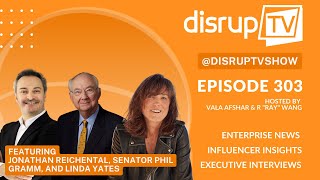
In a single‑hour Disrupt TV green‑room panel, host Ray Wong and co‑host Vala Afshar interview three authors: Senator Phil Gramm (The Myth of American Inequality), Dr. Jonathan Reichental (Data Governance For Dummies), and Linda Yates (The Unicorn Within). Gramm argues that the Census Bureau’s household‑income metric dramatically overstates U.S. inequality because it ignores two‑thirds of transfer payments and taxes, inflating the top‑to‑bottom income ratio to 16.7 : 1 and the poverty rate to 12.4 %. When those hidden benefits are counted, the ratio falls to about 4 : 1 and poverty drops to roughly 3 %. He calls for revised statistical methods to ground policy debate. Reichental explains data governance as a continuous program that aligns data quality, privacy, architecture, metadata, and business intelligence with business goals. He stresses a nine‑element framework, stakeholder roles (C‑suite, data stewards, custodians), the need for a clear vision, incremental pilots, and metrics to avoid the 90 % failure rate. Yates describes Mach 49, a venture‑building and investing firm that helps Fortune‑1000 companies launch “speedboat” ventures at escape velocity (Mach 49) to rejuvenate growth, create capability rather than dependency, and address large‑scale societal challenges. The hosts weave the three strands together, highlighting how inaccurate public‑sector data fuels policy missteps while corporate mis‑governed data leads to poor strategic decisions, and how disciplined data governance and venture‑building can restore factual clarity and drive innovation. The conversation ends with a preview of upcoming Disrupt TV episodes and a call for audience input.
Chapters
Hey everybody. Hey everybody. Welcome to the green room. We're gonna be talking about amazing topics like Microsoft, Activision and what's going on Facebook, Meta and of course Sam Beckman. Fried. Just kidding. We are in Disrupt tv. We're in the green room. I'm here with my amazing co host Vala Afshar, producer Elle and of course some wonderful guests. So going in reverse order, Linda, where are you coming in from? And of course what are you talking
about today I'm native Silicon Valley, native California. But today I'm calling in to talk to you all from Malta and we'll be talking a little bit about the book that I have that Harvard Press has just published called the Unicorn, How Companies can Create Game Changing Ventures at Startup Speed.
Wow, congratulations. Can't wait to dig in there. Dr. Jonathan Reichentau, where are we calling in from? And we see you've got some guests behind you there as well.
I do, I'm glad. So happy to be back again. I am in Menlo Park. I'm actually in Menlo College right now in my classroom with my blockchain class. And today but I'm going to be talking about my new book, Data Governance which I hope to explore with you and tell you all about. So I'm thrilled to be here. Thank you.
Super excited. Welcome back to the show. And of course Senator Phil Graham. Where are we calling in from today and dialing in.
So I'm calling in from the hill country west of San Antonio and I'm going to be talking about my new book. I'll mimic Jonathan the Myth of American Inequality.
Amazing. This is going to be an action packed episode. Turning it back to you, Al, Please just get us started.
All right.
Three, two.
Sam.
Hello and welcome. Thank you for joining us on Disrupt tv. My name is Vala Afshar. I'm the chief digital evangelist at Salesforce and your co host for the next hour. We welcome you to follow us on Twitter @DisruptTV show. Send Ray, myself, our distinguished guest, your questions live using DisruptTV. It's my pleasure to introduce my co host, Ray Wong. He's the CEO founder of Constellation Research. He's the best selling author of Everybody Wants to Rule the World, surviving and thriving in the world of digital giants. Ray's a regular television business and technology news contributor on Fox News Business, Yahoo Finance, Bloomberg and cnbc. In my humble opinion, he's one of the top futurists to follow on Twitter @RWand0 welcome Ray Wong to Disrupt TV.
Hey, thanks a lot. I'm here with My amazing co host, co founder of Disrupt tv. He's the chief digital evangelist for Salesforce, but he's also the author of the Pursuit of Social Business Excellence and executives around the world pay attention to every one of his inspirational and insightful tweets. When he's not hosting keynoting or leading events at Salesforce you can find him speaking at business TV outlets, he keynote events around the world and of course on Bloomberg and posting insightful analyses on ZDNet. But it's not about us, it's about our amazing guests and who do we have to kick it off today?
Ray, it's an honor for you and the Disrupt TV community to have Senator Phil Graham author of the Myth of American Inequality How Government Biases Policy Debate. Senator Graham served six years in the US House of Representatives and 18 years in the US Senate where he was the chairman chairman of the Banking Committee. Senator Graham was the author of the Reagan Budget in the House and landmark budget and banking legislation in the Senate. Senator Graham also taught economics at Texas A and m University for 12 years if I'm not mistaken, and has published numerous articles and books. Senator Graham currently works in the private equity and in and is a non resident senior fellow at the American Enterprise Institute. Welcome Senator Graham to the Shrug tv.
Thank you Ella, very much.
It's an honor to have you, sir.
Yeah, same here Senator. I am this is a topic that is up there in terms of what we're hearing about. And you've written a book about this. What is this myth about American inequality? And tell us a little bit more about that.
Well, the myth of American inequality is based on a single number that the Bureau of the Census puts out every year called household income. And they put it out since 1947. And increasingly economists have found that the number being put out does not seem to fit the world that we live in. And I'll just give you the most recent examples. Every year the Census Bureau puts out what people earn and they break the country into quintiles. So every year they put out how much the average household in the bottom 20% of income earners has in income. The Bureau of Labor Statistics every year puts out how much that same bottom 20% of income earners spends. And last year the Census Bureau found that households in the bottom 20% of income earners spent roughly twice their income. The second quintile spent 11% more than its income and the top quintile spent only half of its income. Even though there's no evidence that there were thrift rates anywhere in the economy that were 50%. You've got numerous other examples in public and private studies. So what we did in the book is we went back and I'm working with a very distinguished economist, Bob Eklund, and with John early, who was twice assistant commissioner of the Bureau of Labor statistics under two presidents. So we went back to 1947, calculates this number in 1947 that were made in kind. Most payments were made in cash or cash equivalent. So in 1947, they made the simplifying assumption that they were going to only measure cash income. But what happened over the years, especially since the war on poverty, is that more and more government benefits are paid for in kind. And the net result is that the Bureau of Labor Statistics, as hard as this is to believe today, counts only about one third of all transfer payments as income to the people who receive the transfer payment and does not take taxes into account as income loss for people who pay the taxes. So the Census Bureau says, for example, that the ratio of income for the top 20% of income earners to the bottom 20% is 16.7 to 1. But we show that when you count all the transfer payments as income received and all the taxes paid as income lost, that the ratio is 4 to 1, not 16 to 1. Let me mention one other thing so people know what I'm talking about. The Census Bureau does not count food stamps as income. It doesn't count Medicaid and food stamps. You get a debit card. You go to the grocery store and buy groceries in Medicaid. The government pays for your medical bills and housing subsidies. The government pays your rent. There are over 100 federal, state and local benefit programs that pay benefits where that those benefits are not counted as income of people who receive it. The Census Bureau takes no account of taxes, so that refundable tax credits, where you actually get a check from the treasury, is not counted as income to people who get the tax credit. So when President Biden said last year that if we double the refundable tax credit for children, we would cut child poverty in half, I pointed out that it would have virtually no effect on child poverty. So since refundable tax credits are not counted by the Census Bureau, and sure enough, when the Census came out with its number, it had virtually no effect. And they were so embarrassed by the whole episode that they put out a special measure. But that special measure does not include the refundable tax credits that weren't. It does include it, but the permanent number that we'll be debating for years and years to Come does not include it. Also, the poverty rate, which we're told is 12.4%. If you count all transfer payments as income and all taxes, income lost, the poverty rate is about 3%. And finally, you've all heard all of this talk about growing income inequality. The Economist magazine says that income inequality in the west is high and rising. Senator Sanders says it's obscene and unsustainable. Well, we show that when you count all transfer payments as income to people who get the transfers and deduct all taxes from the income of people who paid the taxes, that actually income inequality is lower today than it was in 1947. Now, this is pretty profound stuff. And you can argue that 4 to 1 in the ratio of the top to the bottom 20% income is too much. You can argue that, but it's a very different argument than arguing that 16.7 times as much as too much. And we go on and look at everything from the super rich. Who are they? Do they pay their fair share? Could we fund all this government if we took everything they earned? We look at mobility, we look at the growth in America and the prosperity it's produced in the last 50 years. That's the basic subject matter of the book.
For those of you joining us, Senator Graham is summarizing his new book, the Myth of American Inequality. Income inequality is lower today than at any time in post World War II America. True poverty rate is less than 3%, not 12%, figure that the Census Bureau published in 2021. And the disparity between top earners and bottom earners is not 17 to 1, but rather 4 to 1. Essentially summarizing Senator Graham's answers to that and summary of his book. Now, are there official measures of well being that are potentially similar? Similarly misstated, but for.
Yeah, they're misstated for two reasons. One, we're not counting these 2/3 of transfer payments that the Census doesn't count in income. And secondly, we're using there are five. Price industries to adjust for inflation. If you go and compare, well, then you've got to take into account inflation. And there are five different measures that are used for various things. Economists, statisticians, and the government agencies that calculate the price indices all agree that one index is more accurate than the others because it takes into account that when price relative prices change, that consumer behavior changes.
Wow.
And so we show that if you use the most accurate price index and if you count fringe benefits, for example, y' all have probably heard the statement that real wages have not changed in four years.
Yeah. We hear that all the time.
Well, that doesn't count the 25% of benefits that are paid out in fringe benefits, like what your employer pays into your retirement, what your employer pays in your health care. And 40 years ago, those benefits weren't provided. So you're missing that count. And also it's based on the use of the least efficient, least accurate consumer price index. If you use the more accurate price index, real wages have risen dramatically. And so basically in the book, we're not arguing that the government provides too much money and assistance. We're just arguing that the nation needs to get its facts straight, that we're having a debate about numbers that are not incorrect statistics, but they're incorrect. And so what we want to do is to have Congress legislate that the Census Bureau has got to use all available data. And vala, our book uses data that is provided by the Census, the Bureau of labor statistics. Since 1947, they have calculated all of these numbers, fringe benefits, for example, but they've just not counted them as income. So we're just simply saying get the facts straight and then let's have a debate. And maybe now, maybe it's the pipe dream, but maybe if we got the facts straight, it would be easier for people to agree on something because we're not that far apart. It's as if Bernie Sanders and I, I served with Bernie, he was announced, I was in the Senate. And I don't agree with him, but I think he's totally honest. It's like he went to bed and had a dream that America became a social welfare state. And when you look at the actual numbers, the actual numbers of what is being paid out, for example, in 1967, government was transferring $9,700 on average to every family in the bottom 20% of income earners. Today it is transferring $45,400. So it's as if Senator Sanders went to bed at a dream. We became a social welfare state. And sure enough, it happened.
I tell you, if you and Senator Sanders ever want to break bread, Ray and I will treat you at a table just to be at a table
with both of you. You know, is it enough? Is $45,400 enough? Well, let me tell you one thing we find that's really interesting. Is it not just that inequality is much less than, than everybody thinks, but the bottom 60% of income earners have basically the same income. Welfare expenditures, targeted means tested programs have grown so much faster since 1967 than after tax income of middle income households. That the gap between the bottom 20%, second 20% and the middle 20% of income earners has basically been eliminated. Wow.
Hey, Senator Graham, real quick, like when you were starting out the book and, and looking at this and your hypothesis, did you expect to find these kind of things or what were you expecting?
I expected to find that there was a major problem and that somehow we had the measurements wrong and we had done enough research to have figured out that it all went back to the census number, but we had never put it all together. And in thinking about making the point that we were grossly overstating inequality, it never struck me that this same policy has created equality among the bottom 60% of earners and created in my mind a problem in the 20% of income earners.
Wow. So, wow. Back to first principles.
From 68% to 36%, over 90% of people in the middle 20% work and yet they have basically the same income. Now is that just. I would say no. Now again, you can argue it either way. But the point is, another thing the book shows very clearly is that if you're going to provide middle income levels in transfer payments, you've got to be prepared for the fact that there are a lot of people that are going to decide it's not in their interest to work. And so in an economy where we're saying we, where there's a health warranty sign in every business in America, it seems like it's the ones I go into. A good starting point is these means tested programs are so large that we need to have a mandatory work requirement. You remember the Clinton welfare reform that dealt with one little sliver of welfare aid to Families with Dependent Children. It worked. A half the people that were getting the benefit went to work and they've got better lives as a result. I think we ought to apply to every means tested programs again, where you got able bodied people that are of work age to get the benefit, they should have to work or go to school or somehow build their human capital. If we don't do this, this increase in transfer payments during the pandemic which went to people that had incomes up to $150,000 a year. Needless to say, it's not a shock that over a million of them that got the benefits never came back to work. And you know, there are a few people like us that love what we're doing. And you know, my wife's always saying, how much is enough? Why are you still working? And I lie and I tell people actually I work because I have a young wife and she wants money. She put me in a nursing home, a cheap nursing home. The truth is I love working. I would die boredom. But most people aren't like us. Most people work because there are things they want they get from working and if you give it to them, they're going to quit working. And that's, that's what's happened. And the tragedy of it is, is that it can't be a good life sitting watching television all day or playing computer games all day or whatever it is that somebody 25 years old is not working. Does it just can't be Lynette. Good. You listen to an old guy with old values.
But the, the future for Ray and I is going to be a cheap nursing home.
But I believe so maybe a little memory care. I'm not even sure about that.
Thank you so much for your wisdom, really. And congratulations on the book.
Well, thank you guys and good luck to you. It's important to get, you know the problem today with books is it getting people to read the book.
Well, that's why you're here.
Custom to picking up our iPhone and reading a short text message that sitting down and reading a book is something that people just don't do and therefore we don't get the sort of background in depth knowledge that you need to understand a lot of these issues. So we got highly educated people that don't know anything.
This is wonderful. Senator, we are so lucky to have you here. Hopefully this podcast and video will get people to read your book. We're here with Senator Phil Graham, author of the Myth of American Inequality, How Government Biases Policy Debate. And thank you so much for uncovering this for us.
Thank you guys. You do a great.
Thank you, Senator. Thank you. A legend, you know, served majority of his life, you know, for the betterment of society. Speaking of a legend, we have Dr. Jonathan Ronkenthal, founder, professor and author back on Disrupt TV. Dr. Ronkentel is a multiple award winning technology and business leader whose career has spanned both private and public sector. Dr. Ranketel serves as the Chief Information Officer at both O'Reilly Media and City of Palo Alto. That's the first time I met Dr. Rocketello, the CIO of Palo Alto. Dr. Rocky is currently the founder advisory investment education firm Human Future and also creates online education for LinkedIn learning. Dr. Raichatel has written three books on the future of cities, Smart Cities for Dummies, Exploring Smart Cities Activity Book for Kids, an awesome book and Exploring City Bedtime Rhymes. His latest book, Data Governance For Dummies. And by the way, don't let the title fool you. You're about five pages into this book and you realize this is no book for dummies. This is really serious stuff. He's currently working on a new book on cryptocurrencies. Ray, you and I need to read this book.
Yeah, we're going to read that book big time.
You can follow Dr. Reichental. Clearly you can tell he was an early adopter on Twitter at Reichental. R E I C H E N T A l welcome back, Dr. Reichental, to the Shrug TV.
Thank you very much. You guys are so kind. And it seems like this is now the tradition. I'm launching all my books on your show today. I'm literally launching online data governance for dummies. So it's thrilling to be here. And I'm in Menlo College in Menlo park in Northern California. I'm an educator, so I'm here at my class. This is my blockchain class, by the way, some of the students.
It's wonderful to have you guys.
Hello, everybody.
This is just class. This is just an intimate setting with about average 50,000 people who watch. So welcome to the community.
Yes, this is very, very cool. You know, we're really excited to have you here. And, you know, like, we've had the proliferation of data everywhere, right? And data's coming. It's like the heart of digital business, digital transformation, you know, and there's not enough of it. There's too much of it. It's messy. It's not messy. It's. It's chaos. So why'd you write the book on data governance?
I think you just made the case, Ray. You really did. No, it's a really big deal. I like to write about things that are current. I like to write about topics where people are struggling because I think where I play a role here is to take really complicated topics and make them easier to understand. What I like to say is I write books for myself so that if I can understand it, and I'm pretty sure other people can understand it now, the reality is that most organizations actually want to govern their data better. They want to get the, you know, be able to drive better decisions, to innovate, to increase quality, to make the data more secure, you know, but about 90% of organizations that try to do data governance actually fail on the first attempt. So my book is to say, hey, I've written something here to help you. This is a guidebook. This is written in clear English for everybody. And I Want organizations to succeed. I want them to be able to use data and protect data and be successful.
That's great. And you do that by setting the stage very early on may have been chapter one. You talk about data culture and you say in a data culture, decisions don't rely on gut feelings, guesses, or the opinions of the highest paid persons in the room. Typically with me, you and Ray, that would be us. Decisions are made on data and insights they can produce. So you talk about how difficult it is to actually establish data governance. So can you just, in plain English for our audience, what is data governance?
Yeah, yeah, I think that that's the right question to ask right now. I think people understand data management. I think they understand that every organization creates data stores data use users data, but we don't often ask enough, you know, who does it belong to and do we have policies in place? How are we taking advantage of it, how are we optimizing that data, you know, and how are we securing it? And I think really at the core of this topic is there's so much data representing all types of stakeholders and events in your business. You know, is it, is it compliant? Are you, you know, again, reducing risk? I mean, that's really a very core aspect here. And look, what I like to say is some of that stuff is kind of boring, right? When you talk about what's, you know, we call sometimes this sort of reactive data governance rather than the, or defensive, actually, rather than I'd like to focus on the offensive of use of data data. And what I mean by that is not to offend, but actually to use it for innovation, for driving business growth. And so I split the bucket to both parts to talk about how do you protect data on the back end, how do you make sure it's working for you as a business, but also how do you use it to grow the business, to reach your customers, to, you know, to innovate and develop new products and services. So data governance is all about making data work for you in the right way. And unfortunately so many organizations are not doing that and as a consequence, they are basically living every day with high degrees of risk.
Yeah, for someone like myself who hasn't thought enough about data governance as richly as you have, you see, the book is very rich with diagrams. In this case, you talk about the nine elements of data governance, data quality, data modeling and design, data privacy and security, data integration, data storage, data management in terms of master and reference, data architecture, metadata and business intelligence. So again, it's no wonder it's Difficult for organizations, even highly successful ones, to fail early on in terms of implementing data governance because there's so much to it. And this, by the way, includes 10 stakeholders that will potentially talk to you about which you've highlighted, which again, speaks to the complexity. But the distinction you made that this is not a project, it's a program I thought was wonderful. This is a continuous journey, and that's something that requires a data culture like you reference. So again, critically important. Sorry, Ray. I'm enamored with all the graphics. I'm a visual learner. So for me, when I read and our human mind processes images like, I think, 67,000 times faster than text. So I immediately gravitated to all the graphics you had and the charts, you know, and so it's a wonderful book with respect to visual learning. Go ahead.
Well, I really wanted to make it very practical. I mean, you know, it's really humbling to follow up from Senator Graham, of course. What a great man. And, you know, he talked a lot about data, but he also talked about the fact that, you know, people need to read more books and understand topics. And so, you know, I wanted to make the book approachable.
And.
And this is not a topic that has been approachable really for forever. And I hope this is the first book that actually helps executives and IT professionals and legal people, auditors, pretty much everybody who runs a business to understand how you can elevate the data. I'll give you just one example of an area that people can make quick progress on. And I think we can all. We all feel this is. Is it easy or hard to find data within your enterprise? Right. And I think probably people are chuckling because typically it's hard. Right. And the old joke is it's sometimes easier to find something about your business by googling the web than it is to actually use your own Internet. That's still the case today. But this has real implications, you know, for, you know, where people want to understand. I'm talking about internal staff want to understand what your products are. You want details about your products to share with customers. You know, the ability for, for example, people to build systems, to be able to integrate systems together and use data and mash it up so you can even have more valuable systems. They need to know where stuff is. And we in data governance is a concept to call the data catalog, right? Which is. You can think of it as like a catalog for. For, you know, search, you know, looking down and looking through lists and finding what you need and learning about it. And Understanding where it is and how to get access to it and who owns it. You know, that's sort of almost like today for a lot of companies, they don't have that. And that needs to become a minimum. Right? We need to start talking about the value of data catalogs.
That's good. Can I give your students some unsolicited advice?
Yes, please, Please.
Yeah, go for it all.
I have write to improve your thinking. And if you can write well, that's a superpower every business needs. And you guys are in like a blockchain class. So Please, blog, podcast, TikTok, tweet, Instagram, your lessons learned about blockchain and companies like my company will be looking to hire you as fast as possible. Anyway, that's my unsolicited advice. Go ahead, Rick.
I think it's really important. It is really important to actually promote the work that you do or share, folks. Check it into GitLab, GitHub, wherever you're using. I think that's all very, very useful. Or check it into the chain. But I think, hey, there's something related to data governance I think is important that we haven't really talked about, is that these are typically not formal programs. You have one person that's doing it, a chief architect. Data's been collected all over the place. No one's looking at the upstream data that's being collected, the downstream implications that are happening there. How do you make it a program? Like what's required to make it a program? If data is the heart of all these new businesses and digital businesses, we're not investing enough and, you know, we're not even putting programs in place. What do you have to do to get started?
Yeah, that's a really good question. And one of the things I wanted to get to very early in the book is this. Data governance isn't just about big businesses. It's not about massive enterprises like Salesforce and others. Data governance applies to every business that has data, and that's every business. And so the starting point, like with a lot of things, is to determine, you know, what's your vision? What are you trying to achieve? What are you trying to achieve? What are you trying to solve? Are you, for example, trying to reduce the risk of data in your business? For example, cybersecurity, or how you handle medical data or something more sensitive? Right. You have to come up with that list of objectives. Sometimes it's about being able to find data, sometimes it's about improving the quality of your data. Think about the zettabytes of data that we're all capturing and storing and that's going to double every two, three years now. I mean it's like, it's massive. You can have lots of data, but if the data is bad, you know, it doesn't help you and it actually can get you into some hot water if you're, if you're making some important decisions in your business. So I think having a vision, you know, determining, you know, what your assets are, your data assets are today, you've got to do an inventory of that, understand the problem where the gaps are and then forming a small team. It doesn't have to be full time people, particularly when it's a small company. When the business gets bigger and bigger, you get to sort of the Fortune 1000 size or you know, even Fortune 5000. You're probably gonna have some full time staff. By the way, just so you know, why this, just to give you some more credence why this is so important, this topic is when I went out and googled, you know, on indeed or one of the job sites, jobs with data governance in the title, it came back with thousands and thousands of openings. So we know that companies are hiring for this position for data governance and data governance related and I speak about in the book all those different roles. So I think those are some of the easy first steps to do.
Yeah, mashup stakeholders for data governance, Ray. Especially you know, Fortune 1000, 5000, data owner, data steward, data custodian, data user, data governance Manager, Chief Data Officer, Chief information officer. The CEO should be involved. Data Governance Council DGC and Data Governance Program Office DGPO all referenced in Dr. Reichental's book. So again, this is not a book for dummies. Don't let the title fool you. Some best practices for Data Governance. You end your book listing 10 considered practices, best practices can you share and you know, at a high level. Start small. Alignment with interest of organization leader, advocacy for program, early change management, meaningful metrics, learn learning opportunities for team members. Communicate early and often remind stakeholders this is a program, not a project. Focus on people and behaviors and lastly, understand what data matters to the organization. Can you take two or three of these that are like really important practices that you absolutely must consider?
Yeah. When I researched this topic over the last 12 months, the the area where a lot of data governance programs fail is misalignment between the objectives of the business and the program itself. That's got to be in lockstep and really pay attention to that. Check in often on it is what the Data governance team doing fully aligned with the expectations of the C suite, the CEO and the sort of the goals of the business. I think that's, that's really key. The second thing is about, you don't have to build the program and run it on day one. You should start small, start really small, test things, see where you have strength, where you're adding value, demonstrate that value through metrics, show leadership and your colleagues where this is actually changing the game. So start small and continue. And I think related to that, and Ray said it really well at the beginning. Oh, I think it was, could be one of you. I think it was. Ray said it's not a project. Right. And maybe you said it valid. It's really, it's a program. And so you're not designing something where you build it, deploy it and you're done. This is an ongoing operational part of your business. And then I think in order to again make it more attractive for more organizations is you don't need to spend a lot of money on this. This is not another big expensive overhead, certainly not from when it comes to things like tools. You can have some people involved, but at the end of the day, when data governance is working really well, you know, people are using the tools. Their, their behaviors reflect sort of the data culture that you're looking for. The ability to make good decisions on data, the ability to find data, which is at the core of this. Making decisions, for example, that don't expose the organization to undue risk. Right. You know, sending data outside the business when you shouldn't, or, you know, storing certain data sets in a repository when you shouldn't. So I think those are some of the easy entry points to have success here.
No, I mean, it's really important, right. Get the right data to the right person in the right format at the right time, in the right security model, and more importantly, you know, with the right level context. I mean, those are things people are trying to ask every day, like business leaders. If they can just even deliver that, they'd be lucky. Right. And it's not because of the tech. It's because the governance policies may not have been there. You can build the tech. Right. But if you get the governance policies incorrect, you're going to be paying a price for quite a few, you know, quite a long time. And, and that's what made this book very, very stunning to me.
So, yeah.
Dr. Rocking Tom, this may be a rumor, but I'm gonna ask anyway. I heard that if, if, if, if students follow Ray and I on Twitter, they may earn one or two points of credit. Is that, is that. Sorry, go ahead.
Will you be. Will you be Vala's millionth follower? Is really good. We're getting to this point. All got purged on Twitter.
I didn't mean to interrupt. I think Ray was talking about. Can you tell us about the benefits of having a data governance program? Ultimately, we have a lot of CEOs, we have a lot of startup founders that watch our show and they want to read the book. But more importantly, they want to understand, you know, and you say it and then cover, boost the value, the data in your business design governance program to meet your needs and reduce business risks. So obviously I see the benefits in very bold, concise bullets here, but put a, put a bow on all of this for us.
Yeah. Organizations want to be data driven. Today. You ask CEOs, you ask leaders, what's the role of data. They want to be data driven. But the data shows on this that only about 32% of organizations are achieving that. Right. So we're not doing terribly well here. There's a big gap between what executives want in terms of the value of data and what they're being able to deliver. And this book gives you the tricks and the tools and the program to achieve that based on 12 months of deep research. I've read all the books on this topic. I've spoken to all the key players. So, you know, if you want an organization that is data driven and you recognize that data is essential to your success, you know, this, I think this is the book for you. And these are the instructions to, to get. To get you there.
I agree.
This is Wonderful. We're with Dr. Jonathan Reichental, founder, professor and author and legendary CIO. He doesn't even put that on that anymore of his new book.
He is a legendary cio. He is.
He is a legendary data governance for dummies. Of course you can pick up the book on Amazon and of course it is available right now. So make sure you get the book and follow Jonathan at Reichental R E I C H E N T A L and Twitter. So, yeah, thank you so much for being on the show and thank you for bringing your class.
Nice to meet you, class.
Thank you.
Ray.
Thank you. Val, what a pleasure. Always, always.
Cheers. Congratulations. Congratulations. Terrific.
We've never had a class before on disrupt.
That was the first we've had Prime Minister of Australia, but we've never had a class before. And you know, imagine being a CIO of Palo Alto. Like, imagine that must have been an easy job, right?
Everybody knows their job better than he does. Well, I was in tech too.
Those help desk tickets coming into Dr. Reichentom comes with code, I bet. Which our next guest would be totally familiar with because she grew up in that world of innovation. Silicon Valley. Linda Yates, author of the Unicorn Within Linda is the founder CEO of Mach 49, leading growth incubator for global businesses. Linda is a seasoned CEO with over 30 years of experience. She started when she was 5, creating global strategy and driving innovation for large multinationals around the world. A native Silicon Valley, Linda spent a decade as a member of the board of directors for Sybase, now SAP, and has been a board member advisory to many entrepreneurs and private companies. Linda was previously CEO of Strategos, pioneering the field of corporate innovation with co founder and chairman Professor Gary Hamill. Linda is a Henry Crown fellow with the Aspen Institute. Her new book, the Unicorn Within How Companies Can Create Game Changing Ventures at Startup Speed. Salesforce loves this topic. Salesforce Ventures is one of the most active CBCs Corporate venture capital arms in the country. You can follow Linda on Twitter at Lyndak Yates. Y A T E S I welcome Linda to Disrupt tv.
Oh, it's great to be here with you guys. Thanks so much.
Yeah, welcome from Malta. And you know, it's always amazing to have a Crown fellow. I mean these are folks like Reid Hoffman, Neil Bushfree, like the Pritzkers. I mean it's like it's an amazing list of big brains, smart folks, business acumen. But let's start here. What is Mach 49 and what did you do? Right? How does it work? Tell us your story. How do we get here?
So great. No, thanks so much. So. Well, as Val said, I'm a native Californian, which is only interesting because I grew up in Silicon Valley with all the people founded the venture capital industry. And so I've been deeply rooted and connected here my whole life. But most of my professional career has been in the boardrooms and C suites of the Global 500. So I'm bilingual between those two worlds in a very different way. And I, you know, my background kind of having done kind of investment banking and strategy consulting and then on into founding Strategos with, with, with Dr. Gary Hamill, who literally did pioneer the field of corporate innovation. He and CK Praholla wrote the book Competing for the Future and then Clay Christensen would write Innovator's Dilemma like two years after. So really, really kind of amazing, amazing kind of opportunity to kind of be there at the front seat as the World of business is, is changing. And what happened was, if you actually look right now, if you think about the venture capital industry, when it was founded 50 years ago, it was investing in all the dreamers. But about 10 to 15 years ago, it started to invest in all the disruptors. What we were seeing is a lot of these large companies, who I truly believe in the ability of large companies, I'll talk about that in a second, were flocking to Silicon Valley looking for that innovation fairy dust to be sprinkled upon them or to see what struck them. And I'm not a really big believer in corporate tourism, but I absolutely do believe in the ability of large companies to disrupt themselves from the inside out and the outside in to drive meaningful growth. And so I basically said, this is crazy. They've got ideas, they've got talent, they've got brand, they've got channels, they've got customers, and there's literally huge opportunities for, for these companies. And if you look at the statistics, it's really challenging right now, because if you look at the average life of a company on the Fortune 500 list, 50 years ago, the average life was 75 years. Today it's 15 years and declining. The scarier topic is that of the companies on the Fortune 500 list 50 years ago, 88% of them are out of business, off the list, or completely irrelevant. Only 12% remain. And even if you don't believe that companies are going out of business today, there's what, almost 1200 unicorns, right, according to CB Insights, with a valuation of almost $3 trillion. So that means that the large companies are leaving a ton of money on the table. And there's no literally. And you've got the barbarians, right, still sitting at the gate. You've got the foundation capitals, the Andreessen Horowitz is the nea, the Excel Sequoias, benchmarks, basically sitting on billions of dollars of capital, like, really knocking at the door. And there's literally no reason, think about it, that Airbnb could not have been created by Marriott, that Tesla couldn't come up, couldn't come out of Toyota. That stripe, which even in a downturn is $75 billion in market cap, cap couldn't come out of any of the Wall street icons. And so I basically looked around and said, this is just crazy. They're all flocking here. And I said, I'm going to create the Y Combinator for the Global 1000. And so that's really basically what we're doing. But with two altruistic goals in mind, which is really, really important because part of the reason we wrote the book is really to democratize what we do. And the two altruistic reasons are that people are living longer and longer because of healthcare and technology. And that means they're gonna work 60, 70, 80 years. And as much as we love startups, and you are all children of the Silicon Valley, I am as well. Most of those people are employed by large companies and they need meaningful, purposeful work. So they need to look, most large companies should look more like Berkshire Hathaway as a portfolio of companies so that you can be closer to the customer, more entrepreneurial opportunities, more creative, more agile, able to kill things faster. Then they do, these big monolithic kind of stones, if you will, that the dinosaurs that people like to call the large companies. The second altruistic reason is because I truly believe that the large hairy problems that are facing the world, from climate change to disease to poverty, to racism, to water to education, need our large companies leaning in, able to disrupt, to experiment, to innovate, to solve these challenges. Because unfortunately our governments, as you heard from Senator Graham, whatever side of the fence you're on, can be relatively transactional and dysfunctional in some cases. And as much as we love NGOs, they have a hard time solving problems at global scale. But our large companies can, can. And so we basically banded together as Mach 49 to in essence focus 100% on execution. Helping large companies do venture building, disrupting inside out or venture investing, corporate kind of targeted M and a strategic partnering, disrupting outside in and build their growth engines to really become, you know, solve these big problems, move from becoming value stocks to growth stocks, creating opportunity for their people, their communities, their companies, their shareholders. And hopefully with some of the work that we've been doing, which is really cool, the world.
That's very cool. Is there a cool story behind the name Mach49 and the follow up question? I'm interested in understanding that this side out, can you talk a little bit
more about that you guys will very much appreciate. So one of the things we talk about, you know, so one of the things that block 49. So besides focusing on execution and doing this work, we also I hired no consultants. They're all people like you guys who basically have our top tier, former VCs, operating executives, successful serial entrepreneurs. We joke, you have to have gray hair and no hair to work with us because we've done what we're teaching.
I have both.
I know, it's perfect.
Darn, I've been disqualified Again, got the
best hair in the industry. You're disqualified, Ray. You're disqualified.
But the other thing that was really important to us was to build capability, not build dependency. And so the reason that the book the Unicorn within is literally the compilation of, and it's very much like Jonathan was just talking about. It's a how to guide. And the whole idea is to build a repeatable scalable model that enables people to in essence, drive growth across these, these four factors. And we, in essence, our goal was to work ourselves out of a job, build capability, not dependency, which we've done. And you and all of our clients can tell you that. But it was also, when we wrote the book, it was to democratize what we do, to let NGOs, startups, nonprofits, small, medium sized businesses basically have the advantage. So the book is really a how to guide to venture building that a lot of our venture capital friends are now sharing with their startups. Because our business model doesn't work for a startup who can't burn cash. And so really that's what we're doing. So where the Mach 49 name came from is because what we're basically doing is helping these large companies launch these ventures and helping those ventures reach escape velocity. And so Escape Velocity is actually Mach 37, but that name was taken. So I, you will appreciate this. I needed a number bigger than 37 for my wonky physics friends in the Silicon Valley. So we basically went with 49 because all these large companies were coming, we were working with them, and they were mining for gold in the Silicon Valley like the gold miners did in 1849. So there's some health.
We got a Bay Area reference built into this.
Yeah, you have to. Right? Because the whole belief is, listen, I'm not a big believer in innovation transformation. I don't think it works. I do believe that if you take the mothership and you tether enough speedboats in the form of new ventures to that mothership and they're worth 100 million in revenue or 200 million in revenue, 300 million in revenue, which, oh, by the way, is a billion to 2 billion or 3 billion in market cap, now all of a sudden you got the attention of everybody going, well, wait, what did you say? Wait, tell me again, what are the. From two shifts I have to make to help those ventures reach escape velocity? Okay, now they're listening.
You know, Linda, I think this is really important because a lot of large companies believe they can't do it, right? And what's even worse, right? I mean, look at your numbers in terms of the percentage of the Fortune 500 that are around. We were looking at this number that was even worse is something like 40% of the Global 2000 are owned by the same 50 pools of capital. Right. And because of that, they're on a portfolio model and they're like, if you're not growing and you're not a star and generating cash, then you know what, we're going to take it back. Mergers, acquisitions, share buybacks, and we're going to take that cash and give it to someone else to disrupt you. Because we don't. We want to de risk our portfolio. Right. And you're basically putting the counter argument saying, you know what? No, no, no, no. We have all these assets that have not been deployed. We just got to bring them to the same point. And that's what you're talking about in when you ask this question about, you know, like, what's venture building and venture investing? So, so let's go to venture building first about disrupting the inside out and then hopefully get to venture investing on the other end.
Right. And Ray, actually what you just said is extraordinarily insightful in a way that maybe you don't even recognize because what's super important about what you just said is, and I'm actually writing, we're doing another piece of research called Value the Unicorn within. Because I actually, all the financial markets bear responsibility in the fact that these companies are going out of business. And when these companies, much as we love these startups, these companies employ hundreds of thousands of people. When Kodak goes out of business and GE goes out of business, and these companies go out of business, this is not, this is not a positive thing. And the thing that's really challenging about that is that these financial markets know how to value these unicorns inside. They do it every day. One of our startups goes public, they get a hall pass. They use two metrics, customer acquisition and revenue growth. And guess what? Those are the same metrics they could be applying to the ventures.
There's a rule of 40 for, for like existing companies.
Exactly. But this is the point, right? No, they force these startups that these vent that these companies are creating through the same metric, core and legacy metrics, that they value the whole business. And it's why we're pushing people to think about building a venture factory, to doing it at scale with a portfolio. Thinking about building your own growth division where you can create a separate set of metrics from the core and legacy, at least you would get A blended multiple as opposed to what happens now. So it's a huge opportunity. It's something we should definitely talk about later because it's a really exciting kind of prospect and a lot of the analysts are paying attention. So on venture building, it's really about, hey, how do we in essence, you know, build a pipeline and portfolio of growth, Build your growth engine, if you will, across that spectrum of new venture creation from ideate, incubate to accelerate to scale, right? And so we really say, listen, when you're thinking about that, right, Garbage in, garbage out, you got to think about where your ideas are coming from. You know, sometimes we'll teach people to do a portfolio review, right? Put your CEO hats on, or your go to market hats on, or your, your, your CFO hats on, your VC hats on, and go through and basically prioritize those ideas. Sometimes we'll do venture competition, we'll figure out where those internal entrepreneurs are. Sometimes you'll do a domain exploration. You'll say, guess what? Hey, you know what, you know, we had a client who said, look, we want to incubate water, food and road safety. Well, guess what? You can't incubate those things. But you can incubate a zero water home project, right? So you got to get. So idea is really important. Once you have an incubatable idea, you got to move to, you can move to incubate looks very similar to what you guys are familiar with in Silicon Valley. And, and we all grew up with, but we basically go through kind of understanding customer pain is the number one thing no one in the world knew they wanted a microwave oven, a DVR or a minivan, right? But what they could tell you is they weren't.
That ladder was a little painful, but keep going.
Exactly.
They weren't. They weren't getting home to cook a healthy meal. They didn't have time to watch their favorite show. And they're having to cart an ever increasing number of kids, dogs and sporting equipment to myriad places. They can tell you their pain. And I will tell CEOs all over the world that surveys are statistically significant and strategically irrelevant because all you've done is outsource your visceral understanding and empathy to the customer to somebody else.
And so customer pain versus product fit, right?
Guess what? If there's no pain, then you have to kill it. If there is pain, then you get to move to product, right? So we teach people, you got to kill things, things as well. If you, then you can go to product. Great. We know what the pain Is now is there something can we build? And if we can't build, can we buy, partner, invest. And this is where the venture investing, venture building are basically the yin and the yang of each other as you will know in Salesforce, because you guys have both these things going on. So basically you go to the product, but guess what? If the only thing to solve that pain is time travel, we don't have time travel. So you got to put it on the shelf, right. Or you got to pivot or you got to do something, something else. So but if it is feasible, then you get to go to the third part of the incubate process which is to build a very rigorous, robust business and execution plan. Right. Not just some pitch day, demo day, five minute, you know, speed dating, but a real, a real, where you are taking that, you're taking that customer pain. You've now married it with the art of the possible. What's the technology and trends? Uber doesn't exist if we don't have gps, real time payments, mobile phones. Right, right. So you basically marry it with the art of the possible and then you're placing a series of small bets. This is very similar to what Jonathan just said around the data, which is, you know what, you know, if you think of funding, funding is like an onion in Silicon Valley. Every layer of onion is a layer of risk. Could be financial market, could be technical. In the case of a large company, it could be governance. You love it to death and you starve it of oxygen. So the goal of that business and execution plan is to remove the greatest amount of risk on the least amount of capital and to have, you know, small bets, pilots, etc, so you do that. So once you've gotten to your business, you've gotten great incubate, you're now funded, then you move to accelerate. And this is where a lot of companies fall down. How do you get to zero to one? And we talk about two things very quickly. One is there's three phases. A build to validate, a build to automate, build to scale. And then there are five swim lanes which are really important. Everybody focuses on product but you need to be running experiments and testing. What's your go to market? Right, yeah.
GTM is everything.
What's your pricing, what's your business model, what's your operations, how are you going to deliver this? You could have the best product in the world, but if you can't get to positive unit economics, you're hosed. Right. And then the last is team. Can you recruit and retain kind of an ideal team. So that's really on the venture building side. And the venture investing side is just the other part of the growth engine, which is, you know, you got the organic venture business building, but then on the other side you've got the venture investing, you got venture, you've got strategic partnering and you've got what we call targeted M and A, which is large companies have balance sheets that they can augment, accelerate their ventures with kind of tactical M and A, where you're looking for something that can basically leverage those startups and, and, and partner with them.
When you're, when you're working with a Fortune 2000 companies, who's the most common executive sponsor working with? Mark 49? Is it the chief product, chief operating or the CEO? And how often do you have to bring the board into the conversation because you're making big bets? This isn't adding new software and enhancing a legacy process. This is going into blue ocean territory, perhaps for many. And so I suspect you need to have some senior folks with major responsibilities working with Mach 49 to make these decisions.
Yeah, typically if we're working with the global, you know, global 1000. Yes. You're working with CEO, you're working with C suite, it could really cut across. We're doing stuff, you know, when we're building venture factories, you know, it could be chief innovation, chief digital officer, chief. Like there's a whole bunch of different chief revenue officer if it's focused on, if they're focused on growth. So it really, for us, in the work that we're doing. Yes, but, but the methodology, what we've developed is relevant. You could do it for startups, for any of these other people as well, the boards. You know, what's interesting is that most of our clients, multi billion dollar multinational public companies, they want to be perceived as growth stocks, not value stocks. So the boards are leaning in and we're doing a lot of doing well by doing good work. And ESG is actually, you know, there are two things obviously, Covid, because you got a lot of people who are doing jazz hands on digital transformation who got their pants down realizing maybe we hadn't done as much as we should have. So that's a big thing that's pushing people. And then esg, thankfully is now coming to the fore. And so we're doing tons of work around sustainability, tons of work around mental health, tons of work around really positive things that companies are not greenwashing. They're not, they're not basically just checking the box for their board. They're actually really sincere. And the goal is, you know, build a venture factory, build a growth division. Division, do venture investing. So you get to place a lot of small bets. So you're not, you know, yeah, they may be blue ocean, but if you're removing the greatest amount of risk on the least amount of capital, then, you know, it's a really huge opportunity for people.
That's awesome.
This, this is amazing. You know, what are you doing? October 24, 2023. We might have, we might need a keynote speaker.
I'll give you a call.
It's the Half Moon Bay Ritz. It might be a little far for you, you know, but just let me know afterwards.
It'll be perfect.
No, we play golf first and then we go.
It's even better.
We are here with the amazing Linda Yates, author of the Unicorn Within Breakfast Conversations from the Alpine and Bucks and Madeira that you didn't get for your enterprise. And you can follow her on Twitter at Lindak Gates. Thank you so much for being on the show.
Thank you.
It's great, you guys, great to see you. We'll see you back at home.
Thank you so much.
Happy Friday.
Ciao. You too.
Wow. What do we do? What amazing group of folks today.
A 24 year Congressman, House of Representative and U.S. senator. You have Dr. Wright, The tech epicenter of the world, and Linda. I mean, pretty talk about growing up amongst the titans of disruptive innovation. Yeah. Please wrap it up.
Ray.
Close. Oh, thanks.
Summarize this for us.
Okay, so, so you have to look at it this way. I mean, we have been living in a world where we believe that the data we've been provided by our government entities is accurate. And what we're learning more and more is that, you know, data has been used to bias our decisions and when we don't take account. And this is really true, right? If you're paying taxes and the transfer payments show up to folks that are getting them, that's a great thing, right? We've been able to minimize what's been going on, inequality, yet we've been living in this myth saying that hey, there's inequality, when actually we've actually been providing opportunities for folks and not even telling people that. And people are saying, oh my God, I've been jaded, I've been mistreated, when actually they've been given a lot of things that they might not have gotten somewhere else. So a 17 to 1 ratio from the top earners to the poor forest earners from it's gone down to four to one when we actually add the numbers, that's really important. And that changes strategy. And that's a first principle that's really important when you're thinking about public policy. Right. And then, you know, that goes takes us straight into data governance. Right? Like who the heck came up with this and didn't even manage to think about the implications of downstream data? And why aren't we using those data sources? But that's not just public sector. That's everywhere. That's everywhere. When we get the wrong data and we make bad decisions in corporate environments, sure, shareholders will punish us, VCs and investors will take us out and to let us hang dry because it's like you got the data wrong, you got your customer acquisition wrong, you got your numbers wrong. You don't even know that, hey, you're co mingling your funds in somewhere in the Bahamas. But yes, that's all part of that. And of course data governance is super important along with the security and privacy aspects for consumers. But the one thing that was interesting here was the fact that when we at look, look at that data and we put that into use. You know, existing companies have so many benefits and that's what Linda was telling us with the book Unicorn Within. They're not valuing those investments and they're not acting like they're in charge or leading. And they could actually take some lessons learned from what startups are doing and how they not only package and market what they're doing to the street, but how they're inspiring workers so that they can be successful. And so amazing, powerful episode. Vala, we are witnessing history in front of us. I don't even know how we get be at this lucky of a job, but you know, it's amazing and we're very thankful for amazing community and people that are here.
Well, speaking of amazing, next week will be our last episode of this calendar year.
Don't worry, we'll be back.
It's just the last episode of calendar year. It would be episode 304. And we have Dr. Anand Dash Pandey, Founder, Chairman, Managing Director of Persistent Systems. We have Satyen Sangani, CEO of Alatian. And we have Shanna Hawking, leadership consultant, philanthropic advisor and author of One Bold Move a Day.
Wow.
That's Disrupt TV. That's our One Bold Move on Fridays. We've done for 304 times over six years. If it's Friday, it's Disrupt TV. We welcome you to join us for the last episode of 2022 and bring with you ideas about who we should have on the show for 2023. Ray and I and our producer, Elle and Hannah, we're trying to step up our game year after year and certainly year one, we didn't have senators and bestselling authors on the show, and now we do. So hopefully next year we'll bring you incredible, incredible guests, and we want to be able to do that with your guidance. So join us next Friday. Ray, it was great spending time with you. It's Friday. It's Disrupt tv. We'll see you next week.
Thanks, everybody.
Sa.
More from Professor

Technology Ethics and Responsible Innovation Coursera Specialization Launch Teaser




Technoethics: An Essential Leadership Skill for the 21st Century | Dr. Jonathan Reichental
Technoethics: An Essential Leadership Skill for the 21st Century | Dr. Jonathan Reichental


FOF 154 | Jonathan Reichental. On Cities and Governments Using Technology To Serve People Better.

Miasto to emocje, relacje i codzienne historie – rozmowa Waldemara Olbryka z Jonathanem Reichentalem

MS01┃Jonathan Reichental, PhD - Perfection, Creativity, and Who’s Actually Having Fun?