Book | Data Governance for Dummies | Conversation With Author Dr. Jonathan Reichental | Sean Martin
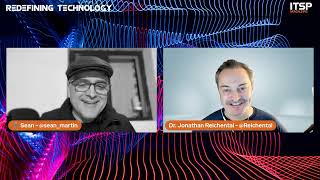
In this Redefining Technology episode of ITSP Magazine’s podcast, host Sean Martin interviews Dr. Jonathan Reichental, author of Data Governance for Dummies. Reichental outlines his 30‑year tech career, the evolution of data governance from the early information age to today’s “zettabyte era,” and why data has become an organization’s most valuable asset. He explains the book’s purpose: to help newcomers learn the fundamentals while also giving seasoned data‑governance professionals state‑of‑the‑art practices, covering compliance, cybersecurity, and innovation drivers. The conversation delves into organizational structures, roles, and the perceived overhead of governance, emphasizing lightweight approaches for small‑to‑medium firms and more formalized programs for large, regulated enterprises. Reichental shares market trends—90 % of first‑time data‑governance initiatives fail, 30 % of firms will heavily invest in tools and training in the next 12‑18 months—and outlines practical steps such as defining a data strategy, establishing policies, budgeting, tooling, and enterprise architecture. Emerging technologies (AI, IoT, Web3, blockchain) and their impact on data governance are also discussed, with a note that future Dummies editions will be updated as the field evolves. The episode closes with promotion of the book’s availability and a call for listener reviews.
Chapters
Foreign.
Welcome to the intersection of technology, cyber security and society. Welcome to ITSP Magazine Podcast Radio. You're about to listen to a new Redefining Technology podcast. Standing on two feet, having dexterous hands, developing a language that allows us to communicate and the ability to understand abstract concepts, these are all part of the equation of humanity. Still, it is the capacity to create tools and advance the technology that has allowed us to thrive on this planet and maybe on others. Knowledge is power now more than ever. CrowdSec, the collaborative and open source cybersecurity solution. Analyze behaviors, respond to attacks and share signals across the community for free. Let's make the Internet safer together. Learn more@crowdsec.net.
Devo unlocks the full value of machine data for the world's most instrumented enterprises. The Devo data analytics platform addresses the explosion in volume of machine data and the crushing demands of algorithms and automation. Learn more@devo.com.
Hello everyone. You're very welcome to a new Redefining Technology podcast here on ITSP magazine. This is Sean Martin. I'm flying solo today, no Marco joining me, but I, I feel we're going to have a conversation full of goodness even without Marco's presence because I have the one and only Dr. Jonathan Reichental on John Johnathan. How are you?
I'm good. It's good to see you, Sean. I always enjoy our, our conversations.
I know, I know we've had many here on the show, you as a guest, you as a host, always bringing good things to our audience to get them to think, which is what our network is all about. And for redefining technology, it's all about looking at how bits of technology can be used to shape how we do business, how we live our lives and vice versa, how those things should drive technology and perhaps even pull the reins on technology when it's necessary. And I think when I'm going to start here, before you let you say a few words about yourself, that just the idea that technology, for me, when I think about it at the surface level or the, my immediate thought is systems and applications, hardware and software. And I think perhaps maybe we often forget that the data is part of this big technology world. And I don't know, that's just coming to light more often now with things like ChatGPT and other things. But data is a big part of it. That's what we're talking about today is data governance. And I don't know if we're going to look at ownership and sovereignty and policy and who knows what we're going to get into here, and that's why I'm excited about it. We're going to look at this from all different angles and maybe a bunch more. But first, who knows? Jonathan, a bit about yourself. I know we're here on the heels of a new book, Data Governance for Dummies, and we're going to talk a bit about that as well as part of, as part of the bigger view of data governance. So a few words about you who haven't heard you on the show before.
Sure, yeah, thanks for that. Great comments already. Yeah, I'm sort of 30 years now in tech and tech leadership, work for several different types of organizations. A big consulting firm for a long time, then a media company than a city. I worked in government for seven years, which was an incredible experience. We did a lot of interesting things there. And then about five years ago, I broke out on my own and have a little organization here in Silicon Valley called Human Future. Big part of what I do is education. It's helping people understand new technology. And then there is an advisory piece to that. So it's one thing to tell people and help people understand, but. But then they ask you, can you help us? And so myself and some of my partners, we go in and we help cities and private organizations and all types of organizations actually try to implement and build strategy around using particularly technologies and new technologies to advance their, whatever the goals are. I'm also involved in universities. I'm a professor at several universities, including the University of San Francisco, create videos for LinkedIn learning and I write books, which is why we're here together today.
I love it. You're very prolific with the content, all paying it forward, which I love. And so I'm going to take you back in time a bit throughout some of your experiences, kind of to my point, on how we view technology and in relation to data as part of that technology picture. How have things changed over time and maybe where do we sit today with respect to data as a part of a bigger picture of technology?
Yeah, I think that's the right question. Some folks ask me, is this new? What you're talking about? Is data governance and data management new? And the answer is no. We've been managing and governing data for decades, since the start of the information age, right from the, the 1950s and 1960s onwards. So this is not a new topic. So I'm not breaking news here with a book about data governance. What's happened though, just in the last few years is there has been a transformation in the, you know, the volume Variety and velocity of data. Something that really helps us define what we call now as big data. The sheer volume and the, the richness of the data that organizations have to consume. The data that organizations produce have to store, have to protect and manage. So let's put some numbers on that, right? We are now in the Zyte era. Now you're, you're, you're in this, you're in tech and you get that a lot of people hear that word. And like I've never heard of, of, of that, right? I've heard of megabytes and gigabytes, I've even heard of terabytes, but I've never heard of a zettabyte. So what's a zettabyte? Well, you can go into a store today and buy a terabyte drive. A one terabyte drive. To get one zettabyte you'd have to buy a billion of those. Okay, so It's a billion terabyte drives gives you a zettabyte. It's one with 21 zeros. And right now, annually we're producing around 100 zettabytes as a society and that's going to double in the next two years and will continue to increase. So organizations have to think about, well on the back office, how do we protect that, right? That volume and scale, you know, the sheer and the speed at which it's all been generated and we're having to work with it is off the charts relative to even five years ago. So on the back office, are we protecting it? Do we have cybersecurity in place? Is it kept private? You know, and many other aspects on the sort of outward facing view is are we as an organization using data to grow the business, to innovate, to understand our customers in our marketplace. So I think that's what's changed. We've sort of turned a corner and data has moved from being sort of this interesting and important part of our world to being now the most important asset in every organization. And by the way, having researched and written this book over the last year, I confidently say that a year ago I don't know if I would have said it's the most important asset. Today I'm okay saying that My last point would be to your question. Look, 90% or more of leaders want to be, want to build data driven organizations. So this is a need. And as we look out over the next 12 to 18 months, you know, over 30% of organizations are going to be investing heavily in data governance tools, training and processes. So we've turned a corner. This is a big deal and it's only going to get bigger in the years ahead.
Yeah, I love it. And before we get into some of the governance stuff, I'm going to take one more moment to keep us in the past. And I remember back in the day, I'm going to date myself or age myself here as 400 and JD Edwards and OS360. But these mainframe like and mainframe actual systems that did purpose built things with specific sets of data and they were connected together in a specific way and they're fairly self contained. I mean in my early days I was, I was responsible for connecting them to Windows machines and networks across the, across the nation, which was fun in different applications. But I guess my point is it's not a specific data set. There are multiple data sources, gazillions, amounts of metadata that gets involved, and tons of applications connecting, presumably through APIs, doing things with, into and around all this data. So all of that to me says business has changed as well. So I don't know if in the context of looking at data, how has business changed over the years?
Yeah, radically. You know, every organization is a technology organization today in some way. You know, is it possible to run a business today or any organization without tech at the core? I don't think so. You know, whether you're, you know, running a farm or an airport or a factory or even a small retail store, you're using tech, using digital tools. And that's the big change. It's the digital transformation of business and organizations. We were back just not so long ago, barely a few decades. We had the first phase of the web, which was just static pages, called it Web 1.0. Then we saw an experience that's moving to Web 2.0, which is the interactive web. Well now clearly we're in a third wave of the Internet and the web where everything's getting connected and you know, more and more people of course put more and more things. So things are producing data. The Internet of things, your thermostat, us right now, you, Sean, you and I on this podcast together, just this event that we're having together here is generating enormous volumes of data. So yeah, that's the big shift is the analog to digital, the atoms to bits, you know, making that change. And it's not just about taking, you know, paper processes and making digital. What the digital transformation has done over the last, let's say five years and will continue to do is reinvent business. It's about reinventing how we deliver business and the underlying engine, the new oil of all that, sorry to use such a cliche, but it's a good one, is the data. And data is, is the, is not only the input to this, but it's also the product of all of this.
And I know know somebody who has a personofi he actually does it for as a business, but he has a personal bee farm where he's collecting honey. And it's completely decked out digitally. Yeah. And I guess to your point, it's not just turning paper into machines and, and data, it's what we see and what we hear and what we will be taste, perhaps even at some point. And how we feel about all of that can come together digitally. Now, where I want to take us is with that, with that stage set, there is clearly a need for you. Well, not a need for you, a need in the market for help with data governance. What were kind of the drivers for you to write this book? Who are you targeting it to and what were some of the challenges they were facing that you think this book would help?
Well, it's an interesting storyline, how I got to the point of writing this book. You know, it's one of those things. If you think back a few years in your life and you were thinking, would I have anticipated what I'm doing right now? You know, back then I don't think I would have guessed I was going to write a data governance for dummies book. But then, you know, now I can reflect a little bit and say, well, probably that was where things were headed. Look, I've been in tech 30 years, so data and data management and to some degree, data governance has just been part of my life. And having been a chief information officer and chief technology officer twice in two completely different organizations, you know, I got my hands dirty on, on every aspect of tech. I mean, every single aspect. And I was a person and continue to be a person who likes to get into the weeds. I do like to still build things and still understand how things work. So data has been a big part of my life. Back in about 2016, I was starting to do video courses, working with LinkedIn on their LinkedIn Learning platform. By the way, at the time, I think it was called Linda. Linda was the name. And then LinkedIn bought them and then Microsoft bought LinkedIn, but they came, they kept the name LinkedIn Learning. I do a video, I do videos for them. And they asked me to do one on data governance. And so I said, yeah, I think I can. I think I can write an hour long video course about that. And I knew enough. And then I thought, hey, everything I don't know I can research and figure out. And I pulled it together and it became actually a very successful video course. Recently I did a new version of it because you have to refresh these videos, otherwise they get stale quickly. And it continues to be, and actually it's growing in popularity because the topic is, is growing. And so that was sort of the beginning of my sort of getting deep into this topic of data governance. But I, you know, I did many other things since then. And then about four years, three years ago, I got book deal with Wiley, the big education publisher globally. And at the time they wanted me actually to write about the future cities. And so I ended up writing Smart Cities for Dummies. The Dummies platform, by the way, is people probably don't quite know how big and impactful it is. You know, to date they've published 250 million books. You know, it's the biggest reference series in the world in history, and, and so very popular in the United States. Probably every home has at least one Dummies Buck in the United States and not as popular outside, but it's in North America. It's extremely popular, as you know. And you know, I did, I didn't write Smart Cities for Dummies, if you like. I wrote a book about the future of cities as I would have written under any brand, under any label. I just like the platform of the Dummies book. In the meantime, I wrote also a few children's books. And then my contact at Wiley reached out to me and said, hey, we noticed that you've had some success with data governance and you know a bit about the topic, you're teaching it and you've got your video course and we're interested in writing a Data Governance for Dummies book. Would you like to do that? So they gave me the offer and you know, it was the right time and the right opportunity and I said, yeah, I think I can write a decent book. Hey, I'll tell you one thing which is interesting. When, when, when the guy reached out to me, he said, would you write this book? And you know, typically Dummies books are 300, 400 pages. You know, they're, they're pretty big, you know, detailed books, most of them are. And I said to the guy, my contact, I said, I'm happy to do this, but I don't think I can write, you know, 200, maybe 250 pages on data governance. I'm not sure there's enough. Well, I ended up writing a 300 page book on data governance. There is enough to write about, There is enough cool stuff. And, and of course I, I look at things like artificial intelligence and Internet of things, some of the things we might touch on. So I do take the big picture view of it. So that's how I got to writing it. And the audience is, well, look, there's a huge amount of people who do data governance for a living. Right. And part of the reason why the book is valuable is it can help all of those people. There's an interesting stat. 90% of organizations fail on their first attempt at data governance. 90%. So it doesn't always go so well. I wanted to write a book that could help everybody be successful. Right?
Then there's, let's, let's go there and then we can talk about some of the other, other audience types. But so, because one of the questions I had is, is the, is the goal for. Because with the dummy's name right on the platform, one might think I don't have, I don't know anything about data governance. That may be one audience and maybe this helps with that. But for, for those who are in this space, my question to you is going to be, is it about resetting, retooling, rebuilding, or is it a matter of tuning and polishing or what, what are some of the things that you present that might help this, this particular audience?
Yeah, well, for sure this will help anybody who is new to the topic. So that's a given. Right? And that's what you, you were saying, you know, if you think about a tech career, like a lot of careers, sometimes we have been promoted into a role or we've evolved into a role. We haven't had formal education, maybe we've not been had visibility to sort of formal methodologies and maybe even if we had those, perhaps we haven't been exposed to contemporary success, like what are the best ways to do things, the best practices. So there is an element of the book which is, even if you're doing this for a living, this is the state of the art. The book will tell you what is happening today and what is succeeding for organizations. So it could be, as you say, a little bit of redefining technology, which is in your title and as in, hey, you know what, we're doing it like this, it's good, okay? But hey, this kind of global best practice around data governance, maybe how we do structure our sort of table of organization of People who need to be involved. Maybe we can rejig that because we'll have more success if we, if we can get that right. Perhaps a better understanding of how policies are, are constructed today in a more. In a world where there are more regulatory requirements. Right. And where cyber security is much, much more of a priority than it was you can just decade or so ago. So there is definitely a high volume, a high degree of value for existing people who practice this every day. But the ecosystem is large. I mean, you know, I want to be able to convince CEOs that data is their most valuable asset. And here's how you can make that happen.
Do the data governance people, do they know that they're the data governance people? I'm just wondering, is there a time where, I don't know if some percentage, but where somebody's in a role, doing a number of things with technology and some business processes, trying to reach some outcome and in there is an element of data governance. And then of course there's the opposite spectrum where somebody's hired as the data governance officer or data protection officer or whatever it might be.
I think all that exists in organizations, it becomes. This is quite intuitive, right? As a company gets bigger, it gets more formal. And the more regulated your business is, the more formal it is. Like, if you're, if you're in the healthcare industry, you really care about data governance because you can get into a lot of trouble. There's the fines, you know, and the penalties, and there's a lot of negative impacts if you don't actually follow some core data governance principles. Small businesses, you know, startup doesn't care. Does it have types?
No.
You know, that it's like, because startup, everybody does everything right? You know, really does everything. And so at the, you know, the large banks, the large hospitals, the big companies, they're doing different forms of data governance, data management. This will help them even make it better. It'll also remind and position them to think of data governance as a way to grow the business and to innovate. That's where I like to stress that there's value here beyond just the cybersecurity, the back office, things important. But CEOs don't really care about that stuff. They just want people to take care of it. What they really care about is how do we grow the business, how do we continue to be relevant, how do we sustain the business? And that's where I spend time, because that's the real added value. Where we don't see data governance done well is in the mid tier, the sort of medium sized businesses, they need to be doing something. And it could be to your point that somebody has the job of if you like. Well, look, if you have any title around security, you're in data governance. You are just by default. If your job requires you to do system administration where you give access to or take access away, you're kind of in the data governance business straight away. So you don't need the title to be doing the work. As data increasingly becomes the core of every organization's success, or at least the biggest contributor towards it, more focus will be on formalizing the roles and putting structure to it. I think that's where we're headed.
Yeah, the structure piece. And as you're talking there, thinking about somebody in the security or the IT admin roles oftentimes, and we've done it to ourselves in this, in this industry, those are kind of inward looking, right?
Yeah.
My job is to keep that system up and running. And I may be told that there's a policy or regulation or a standard that I have to adhere to, but it's still all inward looking. And I feel that sometimes we miss kind of the outward view of here's what's possible with data if we use it securely in the right way. And there's a lot of talk about digital transformation and move to the cloud and IoT and AI and all these things that in there is data and in there should be data governance. So I'm wondering, how does a book help organizations not just digitally transform their business, quote unquote, but the data governance of the business alongside it.
Well, the question then is what drives people towards this topic and makes it a priority? Well, first of all, a regulated environment, you know, is definitely a major driver. You know, again to sort of stress if you're, if you're handling healthcare data or financial information and there's a whole lot of other industries where you have to be compliant or you get large fines. In some cases leaders can go to prison. You know, it's that, it's that serious if you don't manage your business and your data correctly or you do things that are just not allowed or appropriate. Right. Break the law. So that's a driver in of itself. Some, many, many organizations are struggling with data. They don't know, for example, how best to organize around cybersecurity requirements and privacy requirements. And they certainly are struggling now with using data as a, an asset towards innovation and growth. So that, that's a little bit of a, of a driver here. So What I made the case early in the book around is, you know, why, why data governance. Right. Number one is compliance and regulatory needs. Three is cyber security. You know, four is, is innovation and, and business growth. And there's a longer list of, of other things, but those are pretty, you know, pretty important. Very important. Yeah. You know, I wanted to pause you quick. Oh, yeah, go for it, please. Well, I was. Maybe you're going to get there. My apologies. I just wanted to say as a kind of. Because sometimes this can be abstract, right? It can be a little bit sort of. I'm not, I'm not quite getting it. One of the ways that you can get it is, can, can you, can a person find the data they need within the organization? And when they find it, what do they know about it? Is it current? Who, who does the data belong to? Who can see it? You know, those are two questions that a lot of organizations can answer. Well, you know that they can't find the data within their enterprise and they don't know anything about it, assuming they can't find it. Right. And data governance solves both of those problems.
Do we have it? Don't we have it? Why do we have it? Why don't we have it? Or why. Why don't we have it or why do we have it? Is probably another question. And yes, I was kind of going to that point because if, if we were on my show Redefining Cybersecurity, I often draw people all the way up front to say if we can look at security as we're defining the business outcome, we might choose to develop the business in a different way using technology, of course. So I have that similar thought here, of course, because that's just how my brain works. But if we can look at the data governance requirements in a clear, concise way, as I presume you present in the book, perhaps we would develop the technology in a different way, using a different stack, collecting and generating data in different ways only where we need to and not where it might put us at risk or expose us to things we don't want to be exposed to. Yeah, that point, because you said a lot of companies are struggling with, I don't know how they store the data, maintaining access to the data. If, if you define that in a, in a good way to begin with, you kind of eliminate some of the headache, perhaps downstream.
I think that's right. The limitation in the short term is that you're often sort of backing into an existing environment. So if you, if you run a medium to large size business, you, you don't really have the luxury of redesigning quickly. And so many organizations have grown certainly in the technology stack organically. I mean, the last few years have been sort of chaos and mayhem, right, as, as individuals have used their credit card to buy cloud services. And most organizations don't even know what they have or where the data is or who's using it. Now there's some good tools, good, some really good cybersecurity tools that are emerging, that are helping with that, bringing some order to the chaos. Right. So what you're doing, what you're really saying is, so the company says, we've kind of been informally doing data governance, but now we want to actually move to a formal data governance program. And I hope lots of businesses will make that choice. And they need to make that choice. I know that their leaders want that because the data tells us really, really clearly that leaders want their businesses to be data driven, regulated compliant and innovation focused. So data governance is a very big part of that. So now you decide, hey, we want to do this more formally. And my book goes through the steps. You know, you've got to have a data strategy. Look, if you're listening to this and you have anything to do with this topic, does your organization have a data strategy, like a well understood, articulated, up to date one that you're executing on? That's a good if you don't, and it's okay if you don't because so many don't. Let's change that. Let's create a sort of vision for what the role of data is. Roles and responsibilities, you know, budgeting, the tools, the training, all the stuff that will make you into an organization that values and recognizes data as your number one asset. And then you build from that, you know, broadly an enterprise architecture. Right. Which is more to your point. If you have agreements on that and the solutions within that, now you're making that migration over time, you're buying different tools, you're architecting your APIs in a certain way and over some time, with the right amount of investment, you're trending in the right direction. That's the best case scenario.
So as you're describing that now, I'm thinking the word governance. Once you start to put going backwards, a plan in place and an architecture and a design and somebody overseeing it all formal processes can weigh things down, perhaps, yes, block things. I know cybersecurity processes, they are often viewed as the department of no. Right. And governance kind of leaves me with that, that similar taste.
Yeah.
So talk to me about that, if, if that is reality and if so, how is, how does an organization overcome that?
That's a good. No, love it. That's very insightful that question. This is one of the reasons why leaders do push back on this before they do it or before they fully understand it. You know, some, you know, some advisor, you know, some, you know, leader comes in front of the C suite or the board and says we need to implement data governance immediately. What everyone thinks is oh my goodness, more overhead, more bureaucracy, it's going to slow us down, less innovation. I talk about this in the book how to Overcome this. So there's a number of ways we could think about it. Small organizations need not worry about that. Small to medium data governance can be very light touch, very lightweight. Having some modicum of light policies, some defined roles and responsibilities of existing staff. I'm not talking about, you know, hiring new staff, a better appreciation of the role of data. Those things actually can be and should be implemented in a lightweight fashion. And in fact, because the other thing people think about is this is going to be expensive, right? It's going to be cost us a fortune. You don't even have to buy, you know, incredibly expensive tools. A lot of be achieved with the existing tool sets you have or some very low cost, you know, cloud based solutions. So again, not a lot of cost and not a lot of overhead for those small to medium businesses. So immediately I want to put your mind at ease. You can get real good results with light effort. Now as we enter into the big companies, the big, big, you know, the, the big tech, the big healthcare, the big automotive companies and you know, the multi billion dollar businesses. There is complexity there and there are massive risks, but there's also big innovation demands. So, so you're going to have a higher degree of formality in the bigger organizations. Some of it will be absolutely required again so you comply with and some of it will be by choice. But I was very conscious of this question and this thought as I wrote this book because I don't want to be the bureaucrat, I don't want to be the guy who sort of imposes unnecessary overhead because that just doesn't feel like I'm adding value. I wanted to be the person who said how can you do this? So you get all the benefits, but without a lot of the downsides. As you pointed out in the question, we have to have cybersecurity today. We have to have cybersecurity, right? And so it doesn't come without any cost. It's not free. It does impose a burden. And how you do that is up to each organization what level of burden there is. Data governance at the big company level is going to impose a slightly higher degree of rigor. That is a type of burden. But you've got to design it right and work with the right people to make that happen and use the right tools. Some of it, like for example, being able to find the right data, thus that you can analyze it and get better results and be more data driven. That's worth having the overhead. Right. Because leaders want that. They want to know the answers, they want to be able to make better decisions. So it's a trade off. You want the benefits. Yeah, we know it's going to be a little bit more rigorous, you know, early in the, in the processes.
I have a gazillion questions in my mind, but we're coming up close to the time here.
Sure.
I want to. Yeah, I want to take it to this point and I don't know how much of this you get into in the book. So some of this data certainly is ip Right. Company information that the company wants to protect. But in this data set within an organization, there is employee data, there is partner data, and most certainly customer data. If we're doing B2C or B2. Yeah. Or G to C. The citizen in your government stint, you know that. So how does the end user, regardless of who they are and the role they play in this, how do they fit into this picture? I know their regulations designed to help protect. But early on you talked about Web3, which is in part a big push to give data control back to the user in some ways. Right. So I don't know, maybe, maybe the question for you is in the book, do you get into some of the preparations for the future like things like Web3? Maybe that's a better question to keep it on track with the book.
Yeah, No, I appreciate that. Yeah. Web three, the decentralized web, as it's been called, and moving the ownership of data from the, from big tech back to the individual. We're at the beginning of this. We're right at the start as we speak, in 2023. It's a positive direction. I think personally, you know, even the originators of the web are disappointed by what happened.
Right.
That big tech sort of sucked up all our data and sort of monetized it and we lost control. That was, I don't think what they were thinking would happen, but of course it happened and now we're, we have to fix that. Or take a different direction. So I consider us near the start of this. It's moving quickly though, of course, innovating. We're innovating at a manic pace. So yes, I do touch on it in the book as, as a, as an area of interest of an area that is going to evolve rapidly in the months and years ahead. Fortunately, by the way, these dummies books are, have multiple, you know, have revisions quite often. So, you know, if this topic changes radically in the next two to three years, you'll, you'll, you'll find another version of my book being made available. So I, I definitely touch in, I definitely touch on things like blockchain, Internet of things, AI, you know, the emergent technologies that have a very strong data component to it and how you might think about those things through the lens of data governance.
I love it. To me, those are the magic words. How do you think about it? Before you can answer the how you think about, you have to actually start thinking about it. I would encourage everybody to not wait for the next revision. There's plenty to understand now and deal with now. So. Data Governance for Dummies. Look at that. For those watching the video podcast, you can see the nice flipping of the pages of 300 plus page book that you've put together. Jonathan, you're amazing. It's always a treat chatting with you. Any final words you want to share before we wrap up?
Well, first of all, thank you for the privilege of taking some of your time to have this opportunity to share my book and my thoughts. I never take it that for granted. So thank you very much for the great work you do and for this opportunity. The book is available everywhere. I would encourage you to find it at your local bookstore or brick and mortar retail. But if you can't, it's definitely online as well, so you can just do a search. Data Governance for Dummies. It's easy to find and I hope you enjoy it. And if you buy it and it's useful to you, write a review and let me know what you think. Thank you.
Absolutely. And for those, those listening, we'll be sure to include all your links to your social profiles and a link to the book either through directly or through your website or however we find best to do that. But we won't make it hard for folks to find that piece of data for them to learn. So thanks everybody for listening and thank you Jonathan for another great chat here on redefining technology on ITSP magazine.
Devo unlocks the full value of machine data for the world's most instrumented enterprises. The Devo data analytics platform addresses the explosion in volume of machine data and the crushing demands of algorithms and automation. Learn more@devo.com
crowdsect the collaborative and open source cyber security solution. Analyze behaviors, respond to attacks, and share signals across the community for free. Let's make the Internet safer together. Learn more@crowdsec.net. We hope you enjoyed this episode of Redefining Technology Podcast. If you learned something new and this podcast made you think, then share itspmagazine.com with your friends, family and colleagues. If you represent a company and wish to associate your brand with our conversations, sponsor one or more of our podcast channels. We hope you will come back for more stories and follow us on our journey. You can always find us at the Interview section of Technology, Cyber Security, and Society.
More from Professor

Technology Ethics and Responsible Innovation Coursera Specialization Launch Teaser




Technoethics: An Essential Leadership Skill for the 21st Century | Dr. Jonathan Reichental
Technoethics: An Essential Leadership Skill for the 21st Century | Dr. Jonathan Reichental


FOF 154 | Jonathan Reichental. On Cities and Governments Using Technology To Serve People Better.

Miasto to emocje, relacje i codzienne historie – rozmowa Waldemara Olbryka z Jonathanem Reichentalem

MS01┃Jonathan Reichental, PhD - Perfection, Creativity, and Who’s Actually Having Fun?