Creating your own luck: The Power of Curiosity | Jonathan Reichental, ex-CIO at City of Palo Alto
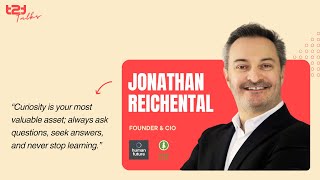
Jonathan Reichental, ex-CIO of Palo Alto, started coding on a VIC-20 and now runs an advisory firm. He argues curiosity is a societal deficit, built his startup framework around a market-driven idea and talented team, and stays current by teaching and writing books like Smart Cities for Dummies.
Chapters
What does it take to have a successful startup that becomes a good business? There's three things, but they're big things. The first one is you have to have a great idea. I work with thousands of students every single year in many contexts. I want to see us be more curious. I have noticed that younger people aren't asking enough questions and they don't necessarily have a sense of curiosity.
Any tips or comments? Just living and building in Silicon Valley.
Follow the path that makes you get up every day and sing your song and love life.
Welcome to a new episode of Taxi. Table Talks. Today we're joined by Dr. Jonathan Rackentel, the founder of Human Future, a global business and technology advisory and education firm with an amazing background in the tech industry, where he has served as Chief Information officer for both O'Reilly Media and the city of Palo Alto. Jonathan has previously been recognized as one of the top 100 CIOs in the world. He's a popular global keynote speaker and a writer with notable works like Smart Cities for Dummies and Data Governance for Dummies. Jonathan's expertise spans blockchain sustainability and digital transformation, making him a leading voice in the future of technology. Jonathan is truly one of a kind. I'm super excited for you to learn from him today. So with that, let's get started.
Hey Jonathan, welcome to Tech to Table Talks. We're super excited to have you to join the podcast today. I've been waiting a few weeks or actually a few months to have you on the podcast and we're very excited. So welcome.
Thanks David. It's great to do this with you. I'm looking forward to our conversation today.
Yeah, so many juicy topics and things we can talk about. And before planning for this podcast, I looked back and we've known each other for about seven plus years now. We first met in Melbourne, Australia, where you came to be a judge for a hackathon that I was hosting in the blockchain space. And I remember in that moment I was just like, there's this celebrity coming from America to Australia and, and to have you on the podcast here today, it feels like we're going full circle. So I'm very grateful for our friendship and your mentorship.
Equally me, I'm so thrilled. I didn't know that that great conversation and tour that we had in Melbourne would, would create a friendship that's lasted this long. And it's lovely to have you here in the US and you're having such a great time and doing so many amazing things. So, so congrats to you. Thank you.
Thank you. I think looking back, I did not think I'd be in the US and living here, but here we are and yeah, we'd love to just jump right in. You've done so many amazing things. Yesterday I even shared with you when we were planning, I did a quick search on ChatGPT and perplexity about Jonathan and it was incredible. The summary that I got about Jonathan and all the amazing things you do, it's all on the Internet, but could you maybe give a audio summary about all the amazing things in your background and career today?
Yeah. Thank you so much for that. I'll try to be brief too so we can get to some juicy stuff today. I gotta say. Yeah. You sent me the Perplexity link and it was so good, it was so accurate. And why it struck me was I did a search, an ego search for myself, as one does. We used to do that in Google. Now we could do it on AI. And I did it on Claude about a year ago, I think not. Not long after Claude became something that was released and open to the public. And it was also pretty good. It called me the king of the Internet of things or something, which I thought was really funny. But then I was reading through it, had a full page and there was quite a lot of hallucinations in there actually. And they were good ones, though. They were like. I was the host of a podcast. I can't remember the name now, but it was quite funny. It wasn't the one I actually had a few years ago. And then there was something. I was. I ran some sort of thought a think tank at Berkeley and. Which is completely made up. I don't. So to see the Perplexity One be so fantastically accurate. I'm a tech guy and all my life, right from a kid and got hooked watching my brother program a Vic 20 and then a Commodore 64. And I got into it too. Just kind of sitting there as a 8 or 9 year old watching him code and play games and. And coding myself. Wrote a small program when I was about 11 and somebody bought it actually.
Wow.
Now it was the equivalent of about $150, but that was like a fortune for me back in. Would have been in the late 1970s, maybe 1980s, early 1980s. And so I knew this was probably going to be for me, but I took a little detour actually. I was in the music industry for a while and even though I have short and kind of gray hair now, clearly some salt and pepper hair, I Had long dark hair back then and quite a rocker.
Nice.
You might ask what style of music. And it's interesting because Oasis just announced a reunion tour which is like taking the Internet by storm right now. It's quite crazy. So we were influenced by that kind of sound, the kind of what we call the Brit pop sound of the late 80s, early 90s, blur. And underlying all of that, of course, is the Beatles. That was a big, and still for me a big influence. But a pretty intense tech career. Took me from Ireland. In fact, that's where my. Where I'm from all the way to Florida. Florida in the United States. And living on south beach, which was amazing as a. As a 20 year old. And then got a career opportunity and I had a promotion. I moved up to Tampa Bay, which by the way was a little bit like living in a resort. What a great town. What a great place. Gets. It sometimes get a. Gets a bit of a bad rap, but it shouldn't. It's quite, it's quite a. It's an awesome place today. And well then I had a chance to come to Silicon Valley. It's always career driving some of those decisions. And that was now 2010, plus or minus a few months. And came over to work for Tim O'Reilly at O'Reilly Media in Northern California. And that was already fascinating. Is was known as the Oracle of Silicon Valley. It was great to work with him and with his team. Mostly he's not as active anymore, but he's still a very important thought leader and there's a guy with some great ideas and he has a great business. Then I, I took a little detour into government. That's a big surprise, right? I was invited to be the CIO and cto, the chief technology officer for citi, the city of Palo Alto, sometimes called the birthplace of Silicon Valley. Yeah, I was interested in government and cities. I didn't think I'd ever work in it. But sometimes you embrace opportunity that you. That comes your way, even though you, you're not sure. Sometimes it's worth sort of saying let's go for it, let's do it, you know. So that's something I always recommend to people. Even if you don't think you're qualified or you're not sure. Take, take the harder path and sometimes the rewards will be much greater. So I spent seven years there, although I think I only was planning to spend three. But it was so interesting. We were doing so many projects and efforts that I wanted to see through and it was getting a lot of attention that I decided, hey, let's, let's see what we can do with this and make it work. And I ended up saying for seven years when I left that I was like, what do I do next? What's next for me? And I could have gone to a tech firm. I could have gone full time as a professor because as you know, I teach at many schools. I decided, you know what, Silicon Valley should start my own thing. So I started a company called Human Future, which I am continuing to run to this day. So it's about, I think I'm like entering like the seventh, sixth or seventh year. And even though Covid was in the middle of all of it, which is, you know, I started, I guess I started in 2019, so it's not quite that long. Well, I should say full time because I was doing a little bit of work with the company while I was winding down at the city. But then I went full time, of course, with it in 2019. And then in March of 2020, Covid hit and I was like, wow, what a time to create a startup. But it actually went well. A lot of my work I could deliver over Zoom.
Yeah.
And virtually. So I was able to grow the business and grow my work. And today it's a. It's a wonderful, thriving business. Very excited by what it's become. It's really become kind of a lifestyle business for me, you know, allows me to pass on thing. I'm passionate about it. I can do the things I want to do and I can make decisions about tomorrow. Yeah. Who do I want to work with? What are the things that most matter to me? And I think essential to that is doing things that are meaningful to others and really make an impact. I just don't want to do stuff. I want to do things that matter.
Yeah. Wow. Thank you, Jonathan. Where do I even start? And a big congratulations with everything you've achieved in your career. Life today, it's super inspiring for myself and I'm sure everyone listening, but that is actually a tough question. Where do we start? Maybe I want to go all the way back to the beginning of Jonathan studying computer science, information systems. You said you started off as engineering, got you into engineering. Like, was it something that excited you in that moment? Could you elaborate on that?
There's a couple of few reasons why this aligned well. Well, my father's an engineer, so sometimes that makes a big difference. It's clearly in my genes. Yeah. I remember having the opportunity in high school to participate in an experimental evaluation of skills like It's a long time ago, so I can't really remember the specifics, but out of a year of, I think it was 200 students, they selected 15 or 20 students to go through this sort of interesting evaluation. And I was selected, I don't know how. And at the very end of it, you know, there was things you had to solve puzzles and you had to do a variety of sort of tests where you didn't have to revise, you just. Just kind of tested your natural skills. So I did that. And the end of it, they said I'd be best suited to be an engineer, as a matter of fact, and so that was a part of it. But then I will tell you frankly, there's a more sobering reason. In addition to those two, in Ireland, there's a very competitive process in which you are selected for a university place. And because it's a small country and there aren't many places, many, many more people apply for course or university than there are seats available these days. I'm transparent about everything. I wanted to be a medical doctor, I actually wanted to be a physician. And I applied to every school that offered medicine, including, by the way, in the uk, not even just in Ireland, but over in the uk, and so I did not get enough points. Now I was offered a place in a place called Hatfield. Oh, I'm sorry, no, that was a different course. Now I think of it, I was accepted to a school of radiology in the uk and in some ways I regret not doing it, but who knows? He knows what the path would provide it. But I wanted to do, like be a physician, but not just. Not just a, you know, a medical profession on the periphery. Although radiology is fantastic and I wish maybe I should have done it, who knows? But so then what happens is when you don't get into your premier courses, it's sort of like you do a list of priorities. So if you don't get the first, what would your second be? What would you think? That type of thing. And engineering was on that list, but it was. It wasn't the number one. And I did get into a engineering school in Dublin and that's how I ended up doing it. Specifically, it was industrial engineering, I want to be clear about that. And I enjoyed it, actually. Just one again, it's always nice to sort of say things that maybe people haven't heard before and perhaps if friends or family are listening, they may not know this. The course I got accepted in was funded by the European Union and it actually came with a Little salary, a little income. So it was very unusual. That was like, wow, that was such a bonus. So I get accepted and I, you know, I turn up first day of school and you know, they're telling us about the course. It's a two year course and they say you're gonna also get a monthly stipend. And I was like, wait, really now? It was nothing to write home about, but it was cash, you know, and. Yeah, back in the 80s, late 80s.
Yeah. Amazing.
Yeah. So that, that was, that was me getting sort of a qualification now. I never practiced it, I never practiced industrial engineering, but the discipline of IT and the understanding of how our world works and how business works and factories work, all of that.
Yeah.
Was so valuable to me in shaping my understanding of the world and then helping me in my many roles that I had after that.
Yeah, I see this common thread, just engineering, like passion for technology. You're very curious person, love being hands on to learn. And I always think back like one of the number one traits for a lot of people is curiosity. Having just curiosity to learn and grow. And I think especially over the last 30 years, with all the emerging technology and trends which we'll dive into eventually, you're definitely an expert in the space. It's just how do you adapt to these changes? And it's just being curious. Right. Getting hands on and learning. And that's really cool. You went from industrial engineering and then I know you started your career in software engineering, so that's very inspiring.
Yeah. Well, can I just say one thing about. I love that you brought up curiosity. I think that's a really, really important topic and one that's not spoken about enough. I was asked the other day by somebody and I can't remember whether it was another podcast or it was over dinner, honestly remember half the time where these things happened. But I was asked, what do I think is, you know, missing from the world? What's, what's our biggest issues then? Look, I could say the climate crisis. Sure. You know, a divisive culture. There's lots of things I could, I could choose. Some of those are obvious and they are so important. But my answer was a surprise to the person who was asking. I said, we have a deficiency in curiosity. That's actually what I think the biggest issue is with America. Now. I do travel and I visit many countries and I could make a sort of a, a light assessment of others. But I live and work, my time is in America, so I know this the best. And I work with thousands of students every Single year in many contexts. I want to see us be more curious. I have noticed that younger people aren't asking enough questions and they don't necessarily have a sense of curiosity. And look, you and I could talk about why that is. You know, there's something big going on, clearly, with social media and smartphones. These are two big drivers of culture today. And they're adding, but they're also subtracting, of course. So if you're listening and you're wondering sort of what can I further develop and what would be useful to me, maybe it's surprising that on your list of skills, develop a greater sense of curiosity. Ask more questions, don't assume things. If you read something, ask about it, query it, research it. And I have to your point, David, I am the most curious person. I want to know how stuff works. Like, and I'm not talking about the inside of a computer. I'm talking about, well, how cars work or how rocket engines get rockets into space or how planets are formed. I just have this unrelenting curiosity and it's amazing. By the way, it can be very frustrating too because you never really quench that thirst.
Yeah, I feel like in today's world being a curious person is actually great, but there's just so many mechanisms to learn. I find myself listening to maybe 10 to 15 hours of podcasts a week. Wow. LLMs and ChatGPT and perplexity. It's literally my best friend and right hand man. Sometimes now, these days I'm just like going down the rabbit hole, which is great. So I think like we're super grateful and we look back and I look, my parents here are like, they'd be lucky to just go to the library, borrow a book and learn from, learn from that. So times has evolved dramatically.
Yeah. There's a riches of knowledge today, no excuse, by the way, to not have get answers. This idea that you know, your lln, your you know, searches and all and your podcast writing content will all have a AI assistant eventually and it'll come sooner than later there. If you want to know something about anything, that assistant's going to be with you 24 hours a day. That is definitely coming. And it'll be personalized and it'll be our assistant.
Yeah, exciting times. I want to take a bit of a pivot and. Oh, not really. Just double clicking on the curiosity thread. I know you've gone through so many technology trends and we were talking about it just a few minutes ago. You've written books on blockchain web3 cryptocurrency and now AI, Internet of things, smart cities. I'm losing track of all the areas that you're going down the rabbit hole. What drives you in terms of just wanting to learn about all these new emerging topics and subjects? Clearly there's a lot of new things happening and you've just gone down the rabbit hole, became an expert in a space. And that is a consistent theme throughout your career in life. Could you elaborate on that a bit more?
Sure, yeah. No, it really is. Thank you for identifying that. Well, part of it is I'm interested in new things and again, the theme of curiosity in the world. I'm interested in how things work, continuing that and building on it. I really am fascinated by things that emerge and, and I want to know, where did they come from? How do they work? What do they mean? What's their impact? So there's a personal piece to it. There's a, there's a deep personal piece. But I'm also a professor, right. And I spend a few days a week in a classroom with undergraduate and graduate students. And you know, my topics are technology. Usually there's a, maybe there's an overlap with sort of management courses, but I do a lot of deep dive on tech. So I have a responsibility to be learning about these topics and being on top of them. I'm not always playing catch up a little with, with AI every day, for example. So I. By learning, Sorry, let's reverse that by teaching. I get to learn, right? If you ever want to know, if you know something, try to teach it. But that's how, that's how you figure it out.
Couldn't agree more.
And it's, it's a, it's a forcing mechanism. So I'll, you know, if I have to, if I'm asked to write about something, which also happens often, or even talk about something that I'm not up on, I'll put the time in. You know, I'm watching a series of YouTube videos, which, by the way, YouTube is incredible. Yeah, I'm the biggest fan of YouTube or my own LinkedIn learning ecosystem, which I'm part of. There's some fantastic courses there and then just articles and blogs and even I, you know, asking AI for answers. So I'm going deep and I'm going wide on these topics. Something very compelling about innovation. I do love the idea that technology innovation helps us do things that we couldn't do before and opens up new opportunities. And I just find that really interesting. New ways of doing things, new ways of solving problems. I've had innovation in my title a couple of times in my career. So I've actually done the work of an innovation person. And so you are experimenting, you are being exposed. I am being exposed to, to new tech. And so in my job and trying to be successful, I have to be interested in new technologies and new trends and new phenomena. By the way, technologies don't emerge in a vacuum. They emerge relative to the society in which that happens and the culture and the state of the world at any point in time. That's things like demographics and economics and politics and environment and more. Right. And so to understand the topic, you've got to understand that broader. Those broader set of issues too. And that is also very interesting to me. And I think the final point I would just add is there's a competitive advantage to this. Whether we appreciate this or not, or even when I think about it, when we go to work, we're competing. We're competing for the next promotion, we're competing against our colleagues. We all like to think that we're, you know, we're all in this together and, you know, we're doing it for everybody's best interest. And often we are. But at the end of the day, who's getting the bonus? Who's going to be successful in that new opportunity that arises? It's going to be the one who has something different than those others who are also trying to achieve the same thing. I've been pretty prudent about thinking about what do I bring to the table, what's net difference and positive about what I can bring. And so not just being superficial fish all the role of blockchain or the future of cities, or I actually want to bring value to every conversation, bring value to the engagements that my, my clients have me on or in the classroom. I want to bring real value and perspective. So maybe a longer answer than you were expecting, but I wanted to be really open about this and kind of share why I'm so driven around new technologies and why I spend time getting deep into them.
Yeah, I think there's people interested in it and curious about it. But then there's the top 0.001% like yourself, who creates a career out of it, writes books on it, he creates courses on it, which is like incredible. On that note, I do want to talk about your, your writing and authoring experience. I know before this, we were just talking about. You've written over five plus six plus books and From Smart Cities to Block to Everything. Could you elaborate more on just how do you get started in that and any comments on your writing experience?
Yeah, of course. I've always liked writing. Some people don't like it. I've actually liked it. I was quite good as a kid, quite good at writing in school. It's just so funny when I think back and this is going way, way back now, this is 40 years ago when I'm about to tell you I was a really bad speller. Right. And in my. Yeah, isn't that weird? Like also, by the way, I was really shy. Yeah, no, no. Like as a kid in a T and an early teenager I was pretty shy and couldn't talk in front of people and stuff. And then I'll be at an event, a huge tech event somewhere in the world in China or Europe or Even in the US I'm on a stage doing a keynote to 10,000 people and I'm loving it and I'm thriving, I'm excited and everything. And I have this thought, maybe it happens during the talk or as I walk off stage. Like how the heck did I find myself here being such a shy and reserved child and then I'm the opposite as a grown up. So it just shows you. By the way, if you're listening and you have a child, you never know how they're going to turn out. Couldn't do more. That's very funny. Now I don't know why I'm going back again. So there was a shyness. Oh, the spelling. Like in a classroom of 30 kids in elementary school. Our classes were quite big back in Ireland back when we were like 5, 6, 7 years old and. And so I was one of a small set of kids who was identified for special spelling attention. What I was a special kid, if you know what I mean.
Incredible.
I was taken aside and maybe that was like it just shows you the little things you can do in a child or young person's life that can totally change their trajectory and. And so I'm taken aside and I couldn't spell to save my life. I don't know, I was very distracted. I don't know, maybe I was thinking about things and I was curious even as a six or seven year old. So I think having that special attention and being able to be good at spelling and then beginning to write and all through my teen years up into beginning college, I started to be quite good at writing and my writing was recognized. My fiction writing in various contexts, maybe for school or university magazine and in my roles with, with a big consulting firm and even as a, as a technology leader. You write a lot, whether you're writing proposals, you're, you're writing whatever it is. And by the way, when I was, when I, O'Reilly Media is their chief information officer, they had and still have a very big blog called O'Reilly Radar. Now, I don't know if it's as big as it used to be today, but years ago, O'Reilly radar was one of the go to places, and having been hired as a CIO and come in, they invited me to write for it. And I was like, yeah, so let's do this. So every Sunday morning, sometimes, often in bed on a Sunday morning, I'd write a blog post that for, for many, many months. I mean, they're still up, by the way. They're still on, right? O'reilly ready? Excuse me. I wouldn't recommend them necessarily, because one of the things I think this is the same with everybody. If you're doing, if you've been doing something for a long time, whether it's, I don't know, playing tennis or writing or making videos for something, and you go back to your earlier work, you're often embarrassed because you've come so long. All of us get better and better, hopefully. And so the way I write today is better. So when I go Back to my O'Reilly Radar blog posts and I read them, I'm almost, you know, I almost cringe a little bit. They're totally acceptable and they're interesting, but they're nowhere near where I'm at today, many, many years later. So being good at something and people enjoying what you write, I think all of that is, is a incentive to do more. I mean, that really is about what life's about, right? You do, hopefully you get, you get to do what you like to do and you get incentivized and rewarded for it. And the market has an appetite for it. So the idea of a book. My father had a chance to write a book a few years ago, and he about his life. He's had a very interesting life and the book was very important and it was important for the family. It was important for him. And I saw how rewarding it was for him and what it did for his, the things he's interested in. It was quite inspirational to me. I knew I had to write something. And even my father would say to me, come on, Jonathan, you got to write a book. You know, what are you waiting for? You've had all these life experiences, you know, about stuff. Write something. And I said, well, I plan to, but you Know, I didn't put it on the calendar then. I was working, you know, I was working for city, of course. And I thought, when you are working in government, depending on the jurisdiction you're part of, there can be limitations. You know, sometimes you can't get paid for extracurricular work. There's certain things you can't travel to. There's. There's rules. Right. And so one of the things, you can certainly write a book, but rules can. Can limit the bit of your ability to market and even your ability to get income from it. Now, again, people listening might think, hey, that's not the case in government. It depends on the jurisdiction. So I wanted to be completely above board. And I said, what I'll do when I leave the city, then I write the book, I leave the city. And I tell you, sometimes a proportional life is luck. I think we all know that, right?
For sure. Timing, timing.
I get an email from Wiley, one of the leading educational publishers in the world, and they said, we'd love you to write a book on the future cities. And. And I'm like thinking to myself, this is good timing. So I said, okay, let's talk about it. And in fact, they had a particular brand like Wiley has, as a lot of book publishers do. Yeah, they have their. Their kind of. Their. Their titles that go under certain categories. Imprints, they're called. They're called imprints. And we were looking at a specific type, and I thought that was interesting. I said, like, okay, in principle, I'm all over this. And the person, content acquirer, who had called, who had contacted me, said, I'll get back to you after our conversation. And she got back within a couple of days. I got something I want to talk to you. Said, would you consider the dummy series, the Four Dummies? Right. Wow. And I said, I know the Four Dummies. Yeah. Let. Tell me more about it. Turns out it's the biggest reference series of books ever published in history. They've sold 250 million books, believe it or not. It's a big business.
Wow. Wow.
Today there's a Dummies book on just about everything. Yeah. And I thought that's a good platform. So I. My very first book was Smart Cities for Dummies, and by the way, still available, still current today. It sold really. It sells very well. It sold very well. A lot of mayors and city managers and IT professionals, all sorts of people, you know, continue to buy the book. And it's been. It's been a great thing. So I kind of, you Know, once you write your first book, it was such a big deal, such a milestone in my life. I got the appetite, I got the interest, and it's proving to yourself that you could do something. So I was excited to be able to actually do it. I knew that I could write more. And I wrote another six more books after that, as you mentioned.
Very cool. It's so interesting. Like the power of a brand, you said, like the Four Dummies. Like just how, how much that has grown. And it has ultimately kind of become a platform for authors to. To just write incredible topics. Have you got any upcoming new books around this topic or any new books coming up?
Well, probably this. Smart Cities needs a revision, so that might be on the cards next year too. Well, last year I released, Believe it or Not, Data Governance for that means to chat.
Oh, wow. I haven't heard of that one.
Yeah, gotta get you a copy. If you're in the gym listening to this on your headphones, I'm showing the picture right now. So you don't see it, but if you're watching it on YouTube or elsewhere, you can see the picture. And then also last year I released a book, so I did two last year, which was, by the way, crazy. Don't recommend that to anyone. I released Cryptocurrency Quick Start Guide.
Wow.
Which I'm really proud of. It's. It's a lovely, lovely book written for everybody. Written for everybody. You don't need any technical experience. I wanted to write the book not to be a. A champion of crypto or somebody who's sort of like evangelist. I wanted to write the book that sort of captured the topic in 2023 and 2024 and 2025. Like, when people look back in 20 years from now, they want to know, like, what was it like, what was the industry and the technology like in 20, in these early years of the 2000-20s? Mine is the book, right. So I'm excited. I love that. And again, it's very popular. It's an audiobook as well. And I'm, by the way, reading it when you buy. You can listen. I think it's seven hours of me reading.
Amazing.
If you like the sound of my therapeutic.
Therapeutic, Maybe.
Yeah. Maybe it'll put you asleep. That's right.
Where. Where do I buy it?
Anywhere. These books are available on all. Amazon is a go to. But, you know.
Okay, I'll check it out.
Yeah, please, you're my friend. I'm gonna come and see you. I'll bring you a copy.
No,
I Also want people to go to the local bookstores too. The retail support. Local. So. So of course you can get it anywhere you want and of course online is an option. But you asked me about next, you know, my next book. And because I released two books early in 2023, at that point it was, it was tough. That's, that's hard to do. And I did it, finished the books, got them released, and I was thrilled. I said, I got to take a break. If you write two books together, that's a lot of writing, let me tell you. So I said, I'll take a break in 2024 and then I'll pick it up again in 2025. So I have a few more months because we're. Right now, we're recording this at the end of August 2024. And so I'm not going to do anything till early next year. But what I am doing is I'm thinking about what the book, excuse me, what the next book is going to be about. And I think I know I'm getting close to it. Yeah. Well, I'm not going to break any news today on your podcast, but maybe when I do, I'm ready to announce it. You'll be one of the first to know when I'll do that podcast.
Amazing.
So I'm looking forward to. Because I've written basically seven technology centric books and this is not necessarily going to be a technology book, so there's a little bit of a tease.
You're keeping everyone guessing, which is hopefully episode 20 of Tech to Table Talks. We bring you back. I'd love that for that. I know we have a few minutes left and I unfortunately have to be very selective on what we can talk about. I do. To just pick on one final topic before we close off. You've lived in Silicon Valley for a long period of time. You've seen so many startups, founders, entrepreneurs. Any tips or comments? Just living and building in Silicon Valley that you can kind of give the audience.
It's a tough ask with a few minutes. That's true.
Yeah.
It is a fascinating place, let me tell you. I've been here about 14 years now.
Wow.
It's an extraordinary place, Silicon Valley. And I say that because not only have I lived in other places in America and in Europe, but I travel today and I go to startup ecosystems in, in many, many countries. And there's incredible things happening in the world, in London and in even places like France. And this week I'm going to Guatemala, Central America. There's these Amazing startup ecosystems. And yes, in Australia and in northern Europe and clearly in Asia too. But there's something very unique about Silicon Valley. It's, you know, it's, it's disproportionately huge in its footprint. You know, we still generate a massive amount of market capitalization here in the trillions. It's still the center of, you know, raising money. There's, there's a lot of money here. It's, it's, it's good when you're a startup, if, yeah, you know that well, very well. And it's not like just because we got lucky. We've had a head start on this. You know, Silicon Valley is decades old. You know, we've been doing this for several, many decades. And we got good at it and we doubled down on what we were good at. And we have this sort of network effect when, you know, having proximity to money and ideas and light regulation and sort of a Northern Californian culture of risk taking and support, and there's many different elements. There's a recipe that makes it work, and it's, it's close to sort of the, to the Goldilocks moment, where it's just about right, you know, But. Well, I'll give you some of some basic tips here. People ask me this a lot, including my students, and when I travel, like, what does it take to have a successful startup? But that becomes a good business. And I say only, only half tongue in cheek, because I actually mean this. But there's a little humor too, because of course there's a lot more to what it takes. But there's three things. Three things. That's all. That's it. That's all. You got three things. Three things. But they're big. They're big things. The first one is you have to have a great idea. Great idea. Yeah. What is a great idea? A great idea is something that the world wants to build. Really cool stuff. But if there's no market and no buyers, you're wasting your time. Yeah, sure, you can convince people to buy it and you can, you can educate them to buy it. Yeah, that's okay. But you got to have a buyer, period. Right? And the buyer means you got to have a great idea as you think about what you're doing. What size is the market? You know, you can only have $1 billion business if there's $1 billion market. So you have to have a great idea that's number one, a great idea.
Yeah.
And that means building something that people want and they're prepared to Hand you over their hard earned cash. Number two, you have to have great founders, you have to have talent. Right?
Yeah.
Now you can be a individual founder like yourself. You are starting a, an incredible business and you're surrounding yourself with the right people. That's very important. A lot of businesses have co founders. 1, 2, 3, 4 people. Right. That's a choice. There's no requirement for you to be more than one, sometimes two. But that team, that core team has to be talented and good. Got to be great chemistry, got to be talented, they got to offer complimentary skills. One person might be good at tech, one person's great at selling. All right, so the team, the team is number two and number three is good luck. Just having some good luck. Having luck. Now, number one and two are very controllable. Having a great idea and having great team are things you can control. You can do them bad and you won't get anywhere. You can be, you can do them great and that'll get you a long way. Very hard to control. Number three, the look part. So what does luck entail? Luck is about time and place and serendipity. Right. But you can set the conditions for increasing the possibility of luck. Right. By actually going out.
Yeah.
And going to meetings. Right. Go to meetups and create opportunities for luck. And so I think we're having a bit of fun here. And maybe, maybe there's a bit of humor to this, but there's a lot of truth also to this in Silicon Valley. You know, in Silicon Valley, people are put through the, really pushed for a great idea. Like if you go to an incubator with your kind of basic idea, if it's an incubator worth anything, they're going to push you to. You have a good idea. Yeah, for sure. And by the way, you're going to, you're going to be, you're going to be annoyed by that. You're going to be frustrated because you're like, I thought my idea was wonderful. And everybody's criticizing it. If the people are, well, meaning, they're criticizing it because they want you to have a better idea. The second thing is, in Silicon Valley, it's just dense with the right people. Dense with the right people. Many folks tell me they've met their co founder in a coffee shop or just at a meetup. They're going to an AI discussion group that's been held in some office somewhere, and over a bagel and some cream cheese, they're talking about an idea and suddenly they're co founders. You got to have that. And then the third part is getting
out there and creating your own luck.
Having some input on the ability to create luck. Of course. Look, I understand we are limited in time here. There's a lot more to say about this and, you know, maybe we can talk more about it another time.
Yeah, next time. But thank you for that. I, I love that you brought up luck and I am a big believer in creating your own luck and putting yourself in situations that opens up doors. So, Jonathan, thank you for that. I know we're coming up at time. I like to close our podcast through the Fast 5 series, which are basically five quick questions that I'm going to ask you for basically listeners to get to know you so we can keep this short and sharp.
That's okay.
First, one favorite product and why it can be digital hardware. Any thoughts on that?
Everybody wants to give you several, I suppose, but you're only allowed one. One. Well, a cliche one would be a smartphone. I love my smartphone.
Game changing.
I have to. I love smartphone. But take that one aside. Probably lots of people say that. There's a ton of stuff I love. My television is awesome. I wanted to share it. Maybe it's a surprising thing. Of course I could have a million kind of, kind of gadgets and applications and things, but when I think about something that brings enormous value and entertainment and whether it's news or just, you know, wanting to escape, TV is pretty cool.
Yeah, it does the trick. Next question. If you could have dinner with anyone, who, who will it be and why? I guess that's been the first product for tech to table. See one question.
There's by the way, just on the first one there, just, just a little, kind of a subset of the TV is YouTube and I mentioned that earlier in a conversation. Yeah, I think YouTube is a incredible foundation. Incredible. So maybe that's a better answer overall. Second one is this is easy for me. This is not a political statement. When I say this person. By the way, I would love to have dinner with Barack Obama. And I'm not saying I'm some, so, you know, some sort of left wing liberal, although I might be. Although I'm not going to say. I just think the man is worth talking to. I, I've always liked him as a human being, as an intellect, as a, as a, as a thinker. And I would, I would adore that. I would absolutely love to spend dinner with him.
Yeah, incredible. I think I would too. And I, I'll probably take him to like a great Australian restaurant or something.
Like that he would, like that he would dig that.
Next question. Someone wanting to kind of follow your career pathway, which is very hard. What advice would you give?
Well, okay, again, it's so hard not to be cliched. It really is. I'm thinking of my younger self listening to this and thinking, is it valuable? There is no shortcut to success. You got to work hard. I have worked my butt off for, of my over 30 years and continue to, I have a good life today. People ask, you're very successful. And it sort of appears maybe to some people like it happened overnight. My, my overnight Success took over 30 years of hard work, 30 years of the grind. And so you just gotta, you gotta do the work. If you're gonna give a presentation, do the research. If you're gonna go into a meeting, be prepared. If you're gonna build a product, make it good quality, you know, put the time in. So no shortcuts. Unfortunately, some people get lucky, like you're ridiculously lucky. But that's such a small group. Surround yourself with good people, that's another one. You know, you are the company you keep. And yeah, I remember this from a long time ago. Is the weaker person in a relationship will dominate. As in they will pull the stronger person down. So make sure that that other person is also where you, you want to be and exhibits the values that you, that are, that are aligned with, with, with yours. I think that's, that's really important. I don't think anybody should follow my career. That that is going to be my answer or my path. I think people should follow their passion. Go, go after, go after what you want. You have to figure out. Every single one of us has to figure out what gets us out of bed every day. You know, what is it that makes us excited? If you've given up, if you're just doing work for money and you're kind of, you can't wait till 5:30 comes, you can leave the office or log off of your computer, you know, without getting too deep too quickly. And I'll try to keep it elevated. As far as I know, there's only one life like this is it like. And the fact that we're both alive here talking is in of itself a remarkable, special miracle. I mean the chances of us being conscious and alive are so minuscule that the number is incredible. So we, we have been given this 80 year, 90 year, maybe 100 year opportunity, hopefully. What are you going to do with it? Are you going to do nothing? Are you just going to take second best, or are you going to try to get up every day and do what you love? I'll give you one last thought on this, just to kind of give you an idea of sometimes how these conversations go. I met some people briefly. I was in a restaurant. I walked past the table, and they were people I hadn't seen in a while. I sat down, and there was a gentleman at the table who had never met. And we got talking, and he said, what do I do? And I said, I love what I do. And I do my. Basically my hobby and I get paid for. And he said, I love that. I wish I could do that. I said, what would you love to do? And he says, I would love to have been a chef. Or you need to cook. And that's not what he's doing right now. He hates what he's doing right now. And my advice to him was, be a chef.
Amazing. Like, simple.
Why? What is it that's holding you up? Of course he's got his list of things, but really, maybe you take a little bit of a detour that, you know, isn't optimal for a little while to get you the place you want to be, which is so, so much more important. So follow the path that gives. That makes you get up every day and sing your song and love life. Because honestly, this could be it. So make the most of it.
Couldn't agree more. Very quick, final two questions. I was gonna. I was gonna skip this, but it'd be rude of me because the name of your company is Human Futures. Just looking ahead the next five to 10 years and the future ahead. What are you most excited about in your field or integral?
Well, I think the next 10 years are going to be phenomenal in terms of tech. I think we're going to be blown away. You know, just imagine 10 years ago, looking at today. I don't think I could have anticipated Chachi PT or, you know, podcasting like we're doing right now, even 10 years ago. So 10 years from now, you know, because things are accelerating and they're compounding, it's going to be mind blowing. I do think we're going to see some notable medical breakthroughs.
Yeah.
I do think in the next decade, we are going to see substantive progress in cancer, in diabetes and heart disease, the three biggest killers of humans, to this. To the point where all three of them may become minor ailments rather than major diseases. Right. I think it's not impossible to. To imagine that one in three people are going to get cancer. There's a Good chance that you or I are going to get cancer. That's a horrible way to think. If one of us does, I'm hoping it'll be minor and we'll get treated and move on. Right?
Yeah.
Yeah. And so you asked me what gets me excited. The possibility that these become minor issues for not just us, but, you know, our family, friends, and for the world.
Yeah, for sure.
That's a real possibility.
Yeah. Well, I'm sure you can elaborate on the Human Future podcast in the future.
Sure.
Okay, last one. I love asking this one because it says a lot about the person and it is basically, do you have a favorite quote or mantra you like to live by? I think you've shared quite a few kind of guiding principles and beliefs in this podcast. Any thoughts on this question?
I said it a bit earlier, but I said it really fast, so I'm going to say it slower because it is one that I live by.
Yeah.
There's others I'm trying to think of right now, but I'll say this one first and maybe the others, one or two more will come to mind. But is find your song and sing it every day. That's, that's it that I live by. Once I read it many years ago, I was struck by it and how it was such a beautiful condensing of so many important ideas about life and living. I discovered Icky Guy a few years ago. Yeah. And I'm on my little journey to understand it and, and, and, and make parts of it part of my life. So it's making sure you have meaning, you have purpose. You know, every day, meaning people and doing the things you love to do. All can give you a happier, more meaningful, more joyful and healthier life.
Yeah. No, thank you for that. That's an incredible query. It's something that I definitely live by and I'll remember that quote going forward. But Jonathan, thank you so much for your time. I want to close off by just being, saying a big thank you for being an incredible friend, mentor. I'm so grateful. We met seven years ago and you've been, you've given me so much advice and I mean, just to help the audience understand, we talked about Silicon Valley before. I still remember that. The moment you showed me Silicon Valley, you took me into Silicon Valley and gave my first Silicon Valley experience and that was something I'll remember for, for the rest of my life. It was a special day and. Yeah, just a big thank you.
Well, that's very, very kind of you and that says a lot about you. Too, so that you think of these things and you appreciate people in life. That's, that's such a wonderful set of qualities that you have. And I'll say it back, I so appreciate our friendship and I love our friendship. So I long may can continue and blossom. And I look forward to seeing you in person real, real soon again.
Awesome. Jonathan, we'll let you go. We'll talk soon. Thank you so much.
All the best.
See everyone.
Babe, thank you for listening to another serving of tech to table talks. We hope you enjoyed today's episode. If you found the podcast valuable and entertaining, please support us by subscribing to our Spotify, Apple Podcasts and YouTube channels. Please also give us a rating or leave a review to help us reach more listeners. Until next time. We'll see you in the next episode and also at a table near you.
More from Professor

Technology Ethics and Responsible Innovation Coursera Specialization Launch Teaser




Technoethics: An Essential Leadership Skill for the 21st Century | Dr. Jonathan Reichental
Technoethics: An Essential Leadership Skill for the 21st Century | Dr. Jonathan Reichental


FOF 154 | Jonathan Reichental. On Cities and Governments Using Technology To Serve People Better.

Miasto to emocje, relacje i codzienne historie – rozmowa Waldemara Olbryka z Jonathanem Reichentalem

MS01┃Jonathan Reichental, PhD - Perfection, Creativity, and Who’s Actually Having Fun?