Data Governance: Getting Started with Dr. Jonathan Reichental
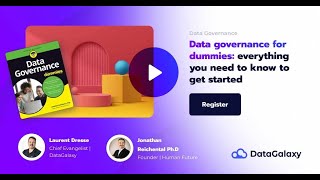
Dr. Jonathan Reichental, author of Data Governance for Dummies, explains how to launch a data-governance program. Start with a clear business need and executive sponsorship, pick one or two critical datasets, and measure success through data quality and policy compliance. He saw this firsthand at Palo Alto, where an open-data portal finally gave city council reliable information for decisions.
Chapters
So today I would like to introduce the one and the only Jonathan Washington, who's the author of Data Governance for the MEES and also author of Smart Cities for the mees. So, Jonathan, welcome.
Good morning. Laurent from San Francisco.
It sounds, I mean, just by hearing San Francisco, it sounds fantastic from a European, European standpoint. So, Jonathan, can you, in a few words, introduce yourself?
Yeah, I'd be happy to. Thanks for having me on this webinar this morning or this evening over in Europe. Yeah. I'm currently the founder of a small boutique consulting and education firm called Human Future, and I'm also a professor at a number of universities, including the University of San Francisco. And I'm also an author, as you had mentioned. I have written Data Governance for Dummies and Smart Cities for Dummies. I've written some other books, too. I've written some books for kids around smart cities. And recently I just released my book on cryptocurrency, actually.
Yeah, indeed. Plenty of topics, I mean, using or around data, because I guess smart cities, they will generate a lot of data from an IoT standpoint and you need to understand. And also cryptocurrencies involves a lot of data. But we'll come back to Data Fruits. Now, can you tell us a little bit more about the genesis of this book and why did you just decided to write a book on data governance?
Yeah, well, look, I've been a technology leader for many, many years. I've been a CIO twice a chief information officer for two different organizations, one in the private sector and one in the public sector. Helped to run a city here in Silicon Valley. And, you know, it doesn't matter, you know, what organization you're in, whether it's small or It's a Fortune 500 business you're managing and you're governing data to some degree. So my work has always involved, during my technology career, managing data and governing data to some degree. But about five or six years ago, I was invited to write a, and develop a video course on data governance, which I did for LinkedIn learning. And that course was very successful. In fact, continues to be very successful today. I just did a completely new version and, and you know, having been asked to write that, I had to get deep into the topic myself, like in a really formal way. And I learned a lot about it and I realized just how remarkably important the topic is. And I also realized that the marketplace was poorly educated on this, that leaders wanted their organizations to be data driven and wanted to have a lot more success with their data assets, but were often not really succeeding. So I had a passion for the topic and, and, and talking to my publisher, Wiley Publishing, we were talking about, you know, what books I might write next, and they had done their own market research and, and, and figured out that there was high demand for this topic, and the demand was growing as, as you all know, working for a data governance company. And so they, they came back to me and they said, hey, would you be interested in writing another Dummies book? And I like that platform. I mean, it's, it's, it's not a book for Dummies. It's just a great brand. Of course, it's the same book I would have written, you know, under any title. And I said, you know what? I, I don't know if I, if I can write 300 pages about data governance. I, I mean, I, you know, the topic is important, but maybe I can kick out a hundred pages. Well, a few months later, I'd written, you know, over 300 pages about this important topic, and I probably could have written more. So we were very happy to sort of connect and I was ready to write it, and they saw the demand and so we made it happen.
Okay, well, that's great. And even you're right, not for Dummies, but being humble when you implement data governance is one key aspect. So somehow you're a dummy at a certain stage of your maturity and you need to learn to move, to move forward. And I think your book is great because it brings the fundamentals and the different aspects with people, it's there with people just not knowing where to start. In fact, because there are so many aspects to that, it's very complex. Now you had this idea, but is it coming from real life situations and issues and challenges you had that you were able to structure this book?
Oh, yeah, yeah. It comes from a place of real practice. That's exactly right. I've been a Chief Information Officer in two different types of organization. One was with a media company, with O'Reilly Media, some of your viewers and participants may recognize that name. And then also being the CIO and head of innovation for a notable city here in Silicon Valley, the city of Palo Alto. And, you know, it became clear that in both instances, data was remarkably important to the function of both organizations. And I, I knew very quickly that as the, as the head of technology and as a thought leader and as a leader generally of the organization, that I would need to understand, manage data and govern data alongside my, my colleagues, but to take a leadership role in that and so it comes from a place of practice of a place of seeing the value. As we in both organizations began to more formalize our data assets, we saw better results. We were able to be more data informed around a whole set of complex decisions that any leader needs to make every day, in fact, or many times a day. One of the sort of examples that I can give you is when I first started working for a city, you know, on Monday night I would attend the council meetings where the council members would be, you know, making their decisions around the community with input from community members. And back in 2011, it's like, you know, 12 years ago already I noticed that almost every time I would attend, council members would, I could see that they were frustrated and I can see that they wanted more data to be, to make data driven decisions. And you know, just the sentence would come up, you know, when having a dialogue with staff members, they would say, do you have data on this? Or can you share data around this? Or what's, you know, what's the data say about this topic? And each time, often the staff would say, well, we don't have that here, but we'll go and we'll find it for you, we'll get it for you. And then weeks, or maybe months would pass before the data could be assembled. So I saw this real deficit and I worked hard alongside my colleagues across the city to make us more of a data driven city where not only council members and staff, but also community members could access all sorts of data sets in a very accessible way. In fact, you know, increasing what's called data democratization, enabling people to be able to get the data they want. And so we spun up, for example, one of the first really progressive open data platforms that exist today. By the way, you can, you can visit it, it's free, it's data.cityofpaloalto.org and you can see tens, if not hundreds of data sets about everything from sustainability to transportation to energy use. And having that platform and access to the data to easily download, to manipulate, to build reports on has improved the dialogue between the community and the council members, but also enables better decisions and better collaboration across all departments in the city.
Yeah, it's important because I think being data driven doesn't mean that you have to ask explanations about the data. You need to be able to understand the data you have offhand and making the decision based on this data and also sharing information. In Europe, we have a couple of regulations where public sector needs to publish open data, ESG on whatever, but you also need to understand what is part of these data sets with a definition or with a calculation. So that's where governance plays a very important role in this understanding.
That's right.
Okay, so real life example is very important. So now the $1 million question,
one
of the $1 million questions, do I
get the million dollars?
Okay, we'll share. Because we hear data governance every day. I mean data governance, digital transformation, data driven self service. I mean there are many, many aspects to that. But if someone in an organization wants to start a real data governance program, where and how should they start?
Yeah, yeah. Well, I hope they're starting from a place of need, right? I hope they identify that, you know, this is not another bureaucratic exercise or another checkbox. But, but the organization begins with the, at the point of like, if we implement some form of formal data governance, we can get better results, right? In some respect. We can find the data we want, we can protect the data that needs to be protected, that we can make better decisions, that the quality of data is better so that we know we're looking at current data or data that has far less errors in it. So I hope the motivation comes from a place of real need. And I think that's an important starting point. But being more practical for a second in terms of like, what do we do next? You know, one of the questions I get often is, and concerns from leaders is this seems complicated and it even seems expensive. And this is a little bit of a myth. You can actually get results in formalizing how you, you know, have oversight for your data by starting small, by just starting small. Starting is key, right? Starting is always important. So identify maybe one, maybe two data sets that are important to your organization. It could be your customer set, right? It could be your, your listing of customers, it could be your, your, your product listing or something. You know, things that are, you know, the fundamentals of most organizations and determine, you know, are we leveraging that to the fullest extent, are we in compliance? You know, that that's something that we need to be asking more frequently, particularly in highly regulated environments. Europe is a great example with gdpr. But increasingly here in the US and in countries all over the world, you know, the compliance requirement around data across, across everything from how it's handled to how it's secured, how it's archived and stored and all, you know, it's got more complicated and the penalties for not doing it correctly can be increasingly severe. Think about, for example, how you're keeping that data set current, right? You know, if A customer is if their address has changed or the name of a person has changed or the contact has changed. Do you have, you know, even a modicum of process to ensure that the right people within the organization know what to do when there are those sort of triggers to change data? So I say start small, identify one, two, you know, maybe three data sets, get some results, demonstrate those results and then start building out the program from there.
What I hear is a very nice music to my ears. I mean, that's what I'm preaching with my customers first. Dare to start. I mean, you need to start. It's not a perfect world, but at least start. And sometimes I'm not preaching for my own church, but starting with an Excel sheet is already a good way to start. Try to document your data assets and then once you get a bit more maturity, you will go for a robust platform and long term sustainable solution. And I agree with you. Pick one or two data sets or one or two dashboards which are important to your organizations, which are your use cases and in fact you start documenting everything and you build the mechanism of collaboration, data management and all the aspects of data governance. So yeah, just start. I can only agree with you. Now what we see often is indeed we start. I mean, you have a cdo, you have the management board who's ready to invest in data in general. But how can you build the next link with, with the business and ensure that literacy is there and adoption is also there at the operational level?
Yeah, you know, data governance is going to be one of those things that first of all is probably not going to be well understood when you first begin to think about it, if you are indeed the, the champion of it in your organization. So it's important to engage your colleagues and to educate and to have training and really to emphasize the value. You know, CEOs and business leaders, organizational leaders have a lot of priorities and they have a lot of things to choose from and you know that you can't do everything. So it's really important that data governance is understood as something that is critical to organizational success and why and how it's measured. So I think that's a, that's an important characteristic of this. Now the other part, of course, I think which gets closer to your question is we can't assume data literacy. Right. And what we mean by data literacy is, is, you know, just like, you know, we assume that people can read and write and kind of do basic math. Do they know how to understand, interpret, manipulate and use data? And as you said, in your comments a little earlier, even doing some basic work within Excel is a good starting point. You've got to grow from there and we have to help our colleagues, you know, become more data literate, how to take advantage of data in every respect and how to handle it and how to protect it and how to ensure you're compliant. And so I think you've got to think, you've got to determine the, you know, the gap between, you know, where the competency is across the organization and where you want to take it. Now, not everybody needs to be a data expert, right? But you know, it might be interesting to give most staff, you know, the basic skills of how to do a query, right, A SQL query, select from where you know, how can you do that, or, or some basic tableau or, you know, bi skills that are necessary to actually increase people's contributions towards success in the organization. So I think that's a really key, key, key part. And I suppose the last point I would just make is do you have the, do you have the capability for people to find the data they need? Right. And so the sort of the data catalog, as we say in the data governance world, have you got that in a formal way or even is there some modicum of the ability to be able to search across the organization and find data sets and understand those data sets? And that's maybe kind of building on the last question, you know, what's next? Well, look, you could have a lot of amazing data in your organization, but if you can't find it, and when you find it, you don't know if it's current and you don't know who the owner is and you don't know like the quality of it, that can be a real roadblock, right? It can, can hold you up. So the, you move from sort of data literacy to data democratization. We want to enable people to be able to find the data, to be able to use it and have confidence in, in the quality of that data.
Yeah, it's very important to democratize these data information. I tend also to explain to our customer the data value chain. You produce data, you transform data, you value data, and each one plays a role at some point in time in this value chain. And you need to know where you position yourself, what is expected from you, and also what is the impact you might have on the data. Because if you're working on a production line and you scan boxes the way you scan when you produce data, it's equally important to a business analyst with an analyzer dashboard so everyone needs to understand the impact they have on this value chain. So, yeah, important aspect as well. Now, let's say we identify the actions, we know how to democratize. But how do we measure the success of this data governance initiative in organizations?
Yeah, this is a great question and such an important one. You know, there's a few cliches around this, of course. You know, you only manage what you measure, and so there's truth to that.
Right.
And I write a lot about that in my book. What you want to do is first of all demonstrate value to those that are making investments in this. So, you know, you've made the case, you've got in front of the C suite and you said data governance has all these high qualities to them and if we do this, we'll have these outcomes. Well, you need to come back a few months later and demonstrate that you're, you know, the organization is beginning to reach those outcomes, particularly if you need to ask for more money or you need to grow the initiative and if you're going to get a continued support. So you do have, you have an obligation as a data governance leader or as a team to be able to demonstrate that value over time. Now, the team also wants to see the progress and you want to see where you have issues. And so you need to have that sort of data dashboard or equivalent to be able to see where are we having success, where are we not having success? And it could take many forms. Again, I say at the beginning that can be relatively informal. But as you progress and you mature your data governance, everything's just going to become more formalized. You'll probably need some tool sets. There are many different things we measure in data governance. One of the most important characteristics is data quality. We're going to have to identify early on what those metrics are. And it could be things like the accuracy of data or the completeness of the data set, things like how many issues were reported relative to data, how many issues were corrected. So again, my book actually has a whole chapter on measuring metrics and monitoring. And you'll, you know, as a team, you'll, you'll, you'll identify those other aspects that you'll want to measure are the implementation of standards and adherence, adherence to standards. You know, you don't want everybody playing off a different sheet of music, right? You want everybody sort of, you know, knowing what the goals are and how to, how to get there. A part of data governance we can't avoid it is policies, our policies, right? How do we handle certain data Sets and policies have processes. So things like conformance would be something you would measure, adherence, you know, and, and then even enforcement, you know, what was required to make it work. So you know, there are these aspects that there's another category just to be complete around technology. You know, the degree to which tools are being used and people are attending training to use the tools, the amount of staff who have acquired new skills around data management and data governance. But what's really important is getting metrics that matter to you. Right. I can, you know, you can have on your website lots of recommendations, I can include lots of ideas and suggestions in my book. But every organization has to say, you know, here are the metrics that are important to us. These are the things we want to measure because these are the outcomes we want. And I think that's what you have to sit down and decide, bottom line is and sort of to summarize early on, just choose a few, make it small, you know, don't, don't try to measure the world and you know, get results, demonstrate those results and then build it out. So this is a theme, as you can tell with data governance is don't go all in, start small and progressively mature the program over time.
Yeah, it's an iterative approach. If you try to document everything in one go, you will get lost in fact and you will not be able to measure and choose, show progress. I like also this approach of focusing on what's important. I mean, at Data Galaxy we are using okrs as a methodology based on measure. What matters. In fact, if it doesn't matter, don't spend time measuring it. I mean it's totally useless. I also, I asked you the question, but I had the question of, of measuring and return on investment on data governance because I think you can compare data governance to accounting in your organization. Do you ask the return on investment on accounting? I mean you need to produce invoices, you need to collect money, you need to produce policies, you need to produce procedures on how you manage data. And it's a support function in your organization. So, so it's also a maturity sign that in many organizations that people will not directly ask the return on this initiative, but then yes, you have return on data quality, remediation action, reducing the time to resolution, reducing the amount of issues. These are very tangible examples.
Yeah, could I add something to that? Which is sort of this other kind of way to slice how we use data. You've got sort of what we call defensive data and then we have offensive data and in you're talking a lot there about defensive data, which is the things you have to do in your organization to run a good, you know, high performance organization, right. You need to ensure that people have the right skills to use data, the data secure that their processes in place, that data has high quality. Those are the things, you know, good organizations do that when they do it, they make more money, they perform better. That's like, and, and, and it's as you say, doing it right is probably more important than having a lot of metrics, you know, ultimately. But the other side, which is offensive data is how do you use data then to win in the marketplace, you know, to identify new customers, to grow market share, to innovate, you know, build new products based on feedback. And those are a little bit better to measure. And actually, I mean, we know that we have to measure our marketing efforts, right? So there is a way to connect, for example, investment with our data efforts based on the results in the, in the offensive world. So, you know, you can think about where you want to play early on. We all organizations do a little bit of both. But when you begin to formalize data governance, you're probably focusing early on in the defensive measures and then as you get more confident and mature, you go after the offensive measures. And so that's another way of sort of thinking about the universe or the galaxy of data.
The galaxy of data, indeed. But it's also the confidence level you can have in your data. If you're starting from far and your maturity is not there and you can't trust your data. I mean, you need to be offensive first and clean up everything and then move on the strategic side on data valorization and making sure that it's competitive advantage, but it's a journey in fact before you can reach that point. Okay, well, great talk. I really like it. I think we can talk about hours and hours about it. I read your book. There are plenty of good advices and best practices. If you, I would say had to pick, let's say five best practices to be successful with your data governance in your organization, what would that be?
Yeah, thanks. Thanks for this. And yes, it was a hard actual question. As I'm thinking about it and as you told me in advance to think about it, hard to find a five. But, but here are, are in my study of literally, you know, hundreds of organizations as I was writing my book and doing my research here, here's what emerged as key success factors. Probably more than anything is you got to have buy in, so, so don't move forward if you don't have buy in from leadership, you got to get the, the CEO, the whole C suite on board. You got to get your colleagues. The organization has to come with the data governance team on the journey and they're going to go on the journey if they understand how the goals of data governance align with the goals of the organization. If they're misaligned, it's not going to work. It's not going to work. So you know, you might say, and I'll just kind of make up a quick example here, you know, an organization has been literally getting fines for not being compliant, let's say, about the handling of medical data, right. And a goal is to, we want to reduce our fines or we want to be, ensure that we are fully compliant and not have to deal with that issue. And that requires a change of approach. It requires some more formality frankly, requires data governance to ensure you have high compliance in data responsibilities. So that's a really nice alignment between, you know, the, the needs of the organization and the value that data governance brings to the table. So that would be the number one, probably by a long shot. Right. You know, if I was the data governance leader and you know, I walked into the, I, I had an opportunity to speak to the, to the board, to the, to, sorry, the C suite. So the, the CEO, the chief operating officer, you know, the, the chief HR officer. That, and I wasn't getting a warm reception and I was leaving perhaps with people confused or not fully supporting me. I would be hesitant to, to, to jump into the program. I'd want to come back, I'd want to make sure I could make a very convincing case. Very close to this suggestion is the importance of having a sponsor, having an executive sponsor. And I could be you, I mean if you're, you know, a senior, maybe the chief data officer, you might be the sponsor. You kind of want a business leader and not necessarily a tech aligned leader. Data governance is not a tech responsibility. Let's, let's just say that up front. Right. Although historically the IT organization has been considered, considered, you know, what we call a data custodian. Yeah. But just because we keep it in a data center or manage it in the cloud, it doesn't make it responsible for, you know, ensuring that data is high quality is actually driving success in the organization. So you probably, you need to find out who is that sponsor and hopefully that person will stay with you on the journey. They won't sort of jump out three months in, but they'll stay with you for a couple of years. And as the program becomes routine, sure, the sponsor, the sponsor can, can change. The third thing I would say is, and I've, I've said this a couple of times, but it's worth repeating. I don't feel like it's, you know, it's, it's redundant is, you know, start the program small and then build it over time. Those that jump in, they want to get results, right? Let's give people credit. People, people want to see results, so they jump in, they buy tools, they roll out big education programs, and they end up not having the success they want. And the fact that the statistics on this are pretty sobering. According to one research organization, about 90% of organizations are not that successful on their first attempt at data governance. So be careful. You know, you don't, you don't want to try it. And then it fails, you know, bigly. And then, and then that's true.
What we've seen from a last survey, the tenure of CDO is about two years.
Yeah.
After two years, they're gone. So I think it's very difficult exercise and it's about the mandate you get from, from, from your board.
Yeah.
To, to execute. It's, it's a tough job. It's a tough job.
It's a tough job, but it's really rewarding and, and it really can be a game changer. The, the. So, so that was the third one starting small, the next one. Well, I have two sort of like that, that kind of fall into the fourth category. It's like 4A and 4B and they're related. Which is what you asked me about earlier is measuring and understanding the data literacy in your organization. You know, without the skills, people can't do the job you're asking them to do. This is something I discovered as a, as an IT leader over a couple of decades is people want to be successful, but often they haven't been given the training and the tools to be successful. So it's just, it's frustrating for everybody. It's frustrating to you as a manager and it's even more frustrating to the individual who wants to do their best but, but aren't being empowered to do that. So you need to understand who needs data skills and, and the program to make that happen. I think that's something that you'll, you're going to have to assess early on, possibly prior to rolling out the formal program, so that you can ensure that the components of data literacy are baked into the program. Connected to that, though, the 4B here is is deciding and again early on determining the degree to which you actually have a data culture. Right. Do you have a, Are you part of an organization that.
Oops,
I'm not sure if I'm still connected. Seems like I'm disconnected. But I'm going to try something here in a moment. Well, we seem to have lost Lawrence, but I'm going to continue and we'll, we'll wait till he comes back. According to the information I see on my screen.
Had a connection issue. Sorry.
Hello, welcome back. I was trying to fill in some time there. No, no problem at all. This, this is incredible. You know, I'm in California, you're in Belgium and we're doing this online. It's, it's pretty cool that it works at all. So I, where I was before we got disconnected there briefly was just talking about the, the nature of determining if you have a, a data culture at all. You know, do people think of data as a rich asset? Do they think about data driven decision making? Are they able to elevate data questions and use data tools? And this is just sort of scratching the surface of what it means to have a data culture. So that's not something you're going to get overnight, by the way. And you shouldn't have that as a near term goal. You know, setting expectations, saying, you know, in the first year we're going to build a data culture in this organization. You know, it sounds good, but I'm not sure that it's credible. But making progress towards that is really important. And finally, again, I'm glad that we're repeating some things here because it reinforces some key points around being, you know, having a program that really makes sense and really adds value is identifying some early metrics. You know, you do have to have some mechanism by which you can say this is where we were and this is where we are now and this is where we want to be. Right here are our sort of goals we want to have. For example, in, in our major data sets we want to have a, you know, between 85 and 95% accuracy. But right now in our valuation we're, we're seeing about 70%. Right. And so that gives you sort of like the historical. Then you can say, hey, right now we were 70%, but we've just done an audit, we're at 78%, but we're headed towards, you know, more of an 85 to 90% accuracy rate. So I think those are, are some key areas. Maybe the last one that kind of traverses all of these That I, I, I, some sometimes omit to share is, is really understanding how easy it is to find data in the organization. Do you have good search capabilities? Do you have a data catalog or something equivalent to enable all staff to be able to access the data they need to do their work? I mean that's to me again it comes down to if you can't find the data, you know, what good is any of this? And then when you find it, if it's bad quality, again, what good is any of this?
Yeah, it's, it's important. I, well, I have the same top five, this is, I was pitching this morning with, with a couple of enterprises on, on what are the, the best practices on implementing data governance and data catalog. I mean it's exactly the same top five. I am a big fan of, of data maturity assessment. Build your baseline to understand where you stand and then you can track progress. That's very important and also it's very factual because we all think we master our data, we know our data, but I mean you can go to the board and ask about the meaning of an indicator or KPI or a date. You might have 10 different answers because there is no centralized information. There is no centralized way to find the information and find the meaning. Okay, time is running by, so let's jump into the other question for you now. Looking at the future, how do you see data governance evolving? We are hearing about artificial intelligence, we are hearing about ChatGPT, which is a big buzz nowadays. Do you think it will impact, I mean, data governance?
I do, in a very big way. They'll impact each other. So I look at artificial intelligence and data governance through two different lenses and I speak about this and write about it in my book. The first is everyone needs to understand that I think people are learning about AI in new ways right now. Is that the basis of good artificial intelligence is good data, right? That the source of chat GPT is a massive volume of the world's data. Right. So let's not lose sight of the fact that there is no, you know, chat GPT without massive, massive data sets. Right? And, and the better quality they are, the better the results. Now what you're going to see is, you know, versions of ChatGPT GPT, excuse me, that you can point to your own data sets so there will be internal versions. Right? And that is even more important because if you want to get good results when you are running the, you know, the training data, which is your organizational data into the models to produce results, if you put garbage in you're going to get garbage out. So the importance of having really good data sets that your AI points to is, is more important than ever. So that is, you know, a very strong argument for data governance right there. Right. Which comes down to data quality, data accuracy, data completeness. Right. So artificial intelligence, ChatGPT and all the AI remarkable emergences we're going to see in the next few months and years will be tied directly to data. So that's on the sort of enablement piece of it. But the other side is how will artificial intelligence help us work with data for better results? Right. I mean, there is AI already built into things like Microsoft Excel and many of the other commercial data products. And, and so, you know, where, for example, you needed to be much more competent at putting together a query or building a report. What we're going to see is, you know, you can either just type in, in plain English, I want the following report. And AI is going to find the data, spin up the report, you know, make it look beautiful and then, and it'll do that work for you. And it's already doing that. So what we're going to see in the next few months is a leap in terms of the capabilities of tools to support the data governance function. Right. And that's good news for everyone. That's great news. So you see, so be real clear, artificial intelligence and data governance are really good friends. They work together.
They will work hand in hand. Agree, Agree. Now, a bit on another topic. You also wrote a book on, on smart cities. How do you see the correlation between smart cities and data governance? In fact?
Yeah, you know, sometimes people might think that, you know, I kind of write just books that are interesting and they're maybe not connected, but there is a lot of connectivity between the books that I write. First of all, one theme is I try to write books that are, you know, about topics that are important and in high demand. I want, you know, fundamentally I'm an educator, so I'm trying to help people be successful. I mean, that's what I wake up every day trying to do. And so, you know, one after another, these books are about topics that are important, relevant and in high demand. Beyond that, though, there's connective tissue, right? They often have a technological component to them. That's my field. You know, technology, leadership and data is underlying almost maybe if I think about all my books, I'm. And so, you know, the city topic is a hot one, right? We are now an urban planet. Increasingly more and more people are moving into cities by the Middle of the century, you know, 80% of all humanity will live in a city context. So cities are really important. It's where we're going to, you know, where we play, where we live, you know, where we work. And it's also the place where we'll either just destroy the planet or help fix the planet, you know, because cities are the major contributor towards our climate crisis and things like transportation, things like energy. These are all big city topics. What I found after a year of writing and researching my Data governance book is that data is the most important asset in every organization today. Right. I wasn't entirely convinced of that a year and a half ago, but today I'm very convinced that data is the most important asset. And that applies to cities too, right? In a big, big way. City leaders want to have better data to make better decisions. City solutions need data to function better. Communities want more good, quality data to make their democracies richer, to have greater participation. If you think about something like the Internet of things, right, the cities today are the largest utilizers of the Internet of things. So this is your, you know, you deploy a series of cheap sensors, you're capturing some data, you're processing it at the point of capture, or you're sending it to the cloud. You're then doing, you know, again, some processing, perhaps you're doing some analysis, and then your. You're actioning it or you're taking some decision based on the data you received. And we're using that for air quality, for water quality, for traffic management, for emergency management in so many ways.
And
what's really key here is that at the end of the day, what is the Internet things? It is a data machine.
Every second.
It is absolutely a data machine. It does some other things, but fundamentally it's managing and helping us run things better through data. That's just scratching the surface of the linkage between data governance and smart cities. They are, again, connected at the hip, really important.
Very important. Okay, nice. Thank you very much, Jonathan. Before answering questions, if any, I will. I will have a kind of fireside question for you. What's. What's the name of the person who inspires you the most?
Well, okay, okay. My father.
Okay. I would have answered exactly the same. What is your favorite food? You know, I'm running the data governance kitchen, so a very important topic for me.
There's so many, but, you know, this is actually Belgium, I believe, has Belgian french fries. French fries.
Okay. Yeah, perfect answer. Good. What's your favorite movie?
Saving Private Rhyme.
What are you afraid Of.
Oh, my goodness. So personally, it's. It's not fulfilling my potential.
Okay. Okay. That's. That's also a good one. If you would be a. The bad guy or a bad guy, who would you be?
Elon Musk.
We agree again. I mean, very clever guy, but there are things not going right. What's your favorite movie? Then I ask it, Sorry. Which book impacts you the. Impacted you the most? Book, Book.
Data Governance for D.
What do you think? Which piece of technology is the most useful to you?
A web browser.
It's the window to the world. Yeah. Yeah. Good. And what's your favorite band or. Or singer?
The Beatles.
Okay. Yeah, I'm more a heavy metal fan, but. No, but they. They definitely impacted their generations. It's amazing how they created something. Music. What is the most important human value to you?
I love this question, but it's so tough because you want one. Outside of the obvious, I would say curiosity.
Yeah, It's. It's a mindset which allows you to try to learn and discover new things every day. Last one is, what's your favorite quote? Beside, data governance is important.
Oh, that's right. Find your song and sing it every day.
Did you make it up? Or it's. I don't know. It's. But it seems
I didn't make it up, actually. Sorry. I don't know who to give credit to.
Yeah, but it's highly meaningful. Okay. I don't see that we have any question from the audience. So, Jonathan, thank you very much for being here today. It was a pleasure. I mean, I really enjoyed your book. I enjoyed the talks with you. We are evangelists. We preach the good words on data governance every day. And also people in organizations. I mean, everyone is an evangelist. Everyone needs to preach data governance. Walk the talk, communicate. It's also one big success factor in the implementation. So thank you very much for being there, Jonathan.
Thank you very much, Laurent. It was such a pleasure to be with you.
Yeah, take care. Talk to you soon. Bye.
More from Professor

Technology Ethics and Responsible Innovation Coursera Specialization Launch Teaser




Technoethics: An Essential Leadership Skill for the 21st Century | Dr. Jonathan Reichental
Technoethics: An Essential Leadership Skill for the 21st Century | Dr. Jonathan Reichental


FOF 154 | Jonathan Reichental. On Cities and Governments Using Technology To Serve People Better.

Miasto to emocje, relacje i codzienne historie – rozmowa Waldemara Olbryka z Jonathanem Reichentalem

MS01┃Jonathan Reichental, PhD - Perfection, Creativity, and Who’s Actually Having Fun?