Falling Back in Love with Your City | Dr. Jonathan Reichental
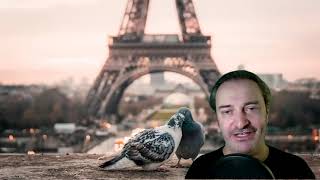
Dr. Jonathan Reichental argues that loving your city is essential for civic innovation. Cities have lifted billions out of poverty, but face traffic, pollution, and inequality. He shows how smart-city tech, pedestrianized streets, and community challenges can transform urban life, and offers practical ways to reconnect: explore neighborhoods, talk to strangers, co-create with local officials.
Chapters
Hi, everyone, I'm Dr. Jonathan Reichental and I'm just thrilled to be here with you, even if it's virtual, to spend some time sharing my thoughts on the future of cities. In particular, today I'm going to be talking about how you can fall back in love or in love for the first time with your city. Think about it for a moment. If you don't love your city, why would you innovate? Why would you participate? Why would you try to sell it to others to invest or to move to your city and create opportunities or people to come to your city to fill jobs? You've got to love your city, and it's a great feeling when you do. And I want to talk about that today and the intersection between this idea and smart cities and the future of our cities. So I thought I'd kind of build the background of where we're at currently and why there are so many challenges that we have to overcome and why. Actually, I'm an optimist about this. I'm an optimist. Well, as I travel around the world, I'd be very lucky to visit many of the great cities and many of the more not great cities in the world to help them to speak with their leaders, their mayors, their city managers, and their technology leaders. And I see a lot of similar trends also. In my research, I identify some of the challenges that we have and what those challenges are going forward. One of the things all of us, I think, can easily align with, and it resonates is, is the problem with traffic and with the use of the automobile. I mean, it's been a great thing for us to create cars, but there's been a tremendous price that we have paid. In many urban centers, 30% of cars are those just looking for a parking space. That activity is causing a lot of congestion. In some cities, up to 60% of real estate is just for cars. And this is not even talking about the amount of pollution, the amount of carbon that's been spewed into the environment because of these transportation mechanisms. And it's causing, of course, a climate crisis that we have to overcome. It's an existential threat in the decades and centuries ahead. Our cities have been a great success. They have brought more people out of poverty than just about anything else. Between 2008 and 2015, well over 100 million Indian people were brought out of extreme poverty, out of that circumstances, and had the potential to enter the middle class as a consequence of urbanization. Cities provide great education, great entertainment, great economic opportunities. They are the Most complex of human inventions, but they've come at a price. Price of our air, price of our land, of our mental health. Here you see a picture of the kind of exhaust that is given out as industries become providers and are providers for how cities operate. The World Health Organization maintains that millions of people each year are affected by the quality of air because of this human activity and support of our urban areas. And of course, this good life also results in the creation of a lot of waste. You know this already, here's a developing country and you can see how enormous amounts of waste, and particularly plastic has entered these streams. This should be a clean, wonderful, watered area that people can swim in or perhaps even drink from, or attain water from. And this is not unusual around the world. In fact, in the center of the Pacific Ocean we have the great trash heap, which is an area that's about the size of Texas or greater than the country of France, that is full of little plastic beads from all the plastic that we consume in our day to day life. And by the way, the fish eat the plastic, the fish eat those little beads, and then us humans, we eat the fish. So we in fact are consuming that plastic. But it's not just the infrastructure, it's the lives of people that are impacted by our cities, the happiness that they have, and also the tension and struggles they have. Our cities have created a densification of ideas and conflict, often particularly when the wants of proportion of the people doesn't align with the other proportion or with the role and the direction of of a particular government. And we see these protests around the world taking place in our cities. We see this rising tide that is pushing up against democracy and we must fight for it. And this is happening in our urban areas. People are not satisfied in many respects with their lives. And cities do serve a lot of people. They serve billions of people. Over half the planet is served by cities. And by the middle to late part of the 21st century, 70 to and closing on, 80% of all humans will live in cities. But have we made them inclusive? Have we made them places where everybody can prosper? Well, the answer is no, obviously not. Our cities are not yet inclusive. Whether it's a digital divide, an economic divide, a political divide, a race divide, Our cities are in often unequal places and we have to work hard to fix that. We have to work diligently and persistently to create a better quality of life for everybody. Now it's not lost on anybody. I imagine that the world is in the beginning decades of a climate crisis. That is an existential threat to humans. The Earth will survive, but the question is, will humans and will life survive? On the current trajectory, things aren't looking great. There's some progress in some areas, but we need to do a lot more. As the temperature of the earth increases from 1 degree Celsius to 1 1/2 degrees on average per year, or has increased by that much at this point, the waters around coastlines will rise and flood cities. And we have almost 1.7 billion people living on these coastlines. So it is a threat and a risk. Then you have storms. When the storms happen, they will be worse. And when the droughts happen, they will be drier. And when there are other natural disasters, disasters, they will be more extreme. If we're going to solve the climate crisis, we're going to do it inside cities. And that's why cities really matter. We got to start with our behavior and how we consume things and the energy we use and how we design our cities. And when we think of the experience, it's not great, right? The experience in our cities is not fantastic. When we think of our cities, we often think of this analog services place where you go for a city service and it's inefficient, it's a waste of your day, it can create errors and it can be frustrating. People want a better quality of life. They want a better constituent experience. And so far in many communities in the world, we haven't got there yet. What people want is a good experience. They want a seamless, accurate, low cost experience, much like they experience many times in the private sector when dealing with consumer solutions. In the consumer space. Here you see a service provided over smartphone. People like that. Why go to a place like this when you can do the activity on your smartphone or on a laptop computer or your smartwatch or some other device? People expect that when they do activities and the experience is good, they like it and they appreciate it and they think that they're getting value for the tax dollars or tax euros that they spend. What people want in their community is a better experience. They want a better quality of life. They want things to be connected, they want things to work. They want things to be easier to use. When a person needs to pay a bill or pay a ticket, when a person wants to find their birth certificate or if they want to request a permit, they want their experiences to be smooth and accurate and low cost and fast work has been done. Some good work has been done. When people are exposed to these smart services, they provide quality feedback. They Say they appreciate it. Now, the challenge to move towards a better set of services for constituents, visitors and businesses and all the other stakeholders in a city are very diverse, as you can see from this diagram here. It ranges from buildings to waste management to energy management, public safety and education, and so much more. We have a lot of challenges to solve. That's a difficult thing and that's, you could say, is a negative. But I look at it as a, as a positive. I look at it as opportunity. When I see the variety of domains in a city context and the amount of challenges, I say, let's go fix them. Let's build businesses that hire people and create economic value and present a better outcome. And cities are changing. New ideas are happening that are making people like the experience better. For example, pedestrianization, moving from our cities that were built around cars to cities that are now built around people. In this image here, you see New York Times Square prior to the pedestrianization. In one picture, people are moving, they're not talking to each other. It's dangerous because there's lots of traffic and there's pollution and the air quality is not great. And in the other picture, people are sitting and talking and drinking coffee and socializing and they feel safe and they feel happier. We can change our urban environments to be better places. And we've shown we can take on the big, the big, big problems. Like for example, smog here in Los Angeles. If you were unlucky enough to visit Los angeles in the 50s, 60s, 70s and 80s and even into the early 90s, you would have noticed so much smog, so much polluted air. But decisions were made. City leaders made better decisions, innovation happened. There was some new technology for vehicles that were able to reduce and almost eliminate that smog. And today, as you can see from the picture that I'm sitting in front of, the air quality in Los Angeles is vastly superior. Clearer. We can solve, we can fight and solve these problems. People will be happier under those conditions and they'll be healthier. Of course, we also have the challenge of energy and there's a good news story about energy. We're moving away slowly from purely carbon based to now non carbon. And solar seems to be the big winner. As you look out over these years, from 2010 right through to 2030 here. I'm trying to sway here so you can see things, but you get the idea, right? You get the idea. We won't be totally carbonless for a very, very, very long time, but we might have a good mix of carbon and non carbon and Might be much less carbon and much more non carbon energy provided. That's good for the environment, that's good for people, and that's good for our cities. Of course, solar will be the winner and we'll see our communities change and they'll be. Air will be cleaner and the cost of electricity will drop considerably. In some cases, it may even be free. Or as a homeowner, you might actually generate money from it. And as urban innovation becomes more prevalent and we have more entrepreneurs and innovators participating in the ecosystem, we'll be able to do things like add sensors into our environment for security and for monitoring air quality and noise and many, many other things. Here we see, for example, an Internet of things device on a lamppost on a main street in the city that I used to be the tech manager for. And people are getting more data. And when people get more data from their communities, they can feel more empowered, they can appreciate the transparency and that increased transparency through dashboards like this creates more trust. And with more trust, there is more happiness. People feel better about their environments. They want to be involved, they want to engage in civic engagement. Let's provide lots of different ways for them to do that. Let's invite our communities into the conversation. Let's bring young people into hackathons and technological challenges and other types of challenges so that we can solve the greatest problems. When people are engaged, opinions are listened to and people have a voice, they're happier people. You can create a challenge, like I did in the city of Palo Alto back in 2014, that engages all sorts of people in solving problems. But I've been talking a lot about tech and the future of how urban innovation can change our city environments and make people happier and healthier, in which case they enjoy their environment more, they appreciate their city more. But there's some non tech things you can do. This is advice for each of you as individuals so that you can fall in love or find love in your city. Once again, pretend you're a stranger. Get lost in your city. Roam around, visit neighborhoods that you've never been to discover things that are surprises. Now talk to strangers. I don't make that advice to children or young people, but as adults, most strangers will talk back in most places in the world. I found this in my travels. I have direct experience of this. And people will share with you their life stories and they will share. Ask them, for example, what they love about the city and they will share equally. They will share what they don't like. I bet you there's a museum or a castle or someplace in your city you haven't been to. There's a good chance. Try it, Go there, discover it. Find an art gallery or cafe that you've not been to. Try something new. And finally, don't get frustrated with your city or with your city government. Try to participate with them. At the end of the day, they're also just constituents who happen to be in roles that helps lead the city. But you can co create with them, build things with your community, with your city leaders, and if the city leaders aren't cooperative or don't have the capacity, co create with colleagues and with your neighbors. There's so much opportunity to do that when we do some of these things, when we build a better community, a place where people are happier, services are better, where the air is cleaner, where the water is clean, where there's great entertainment, where you realize the cultural significance of your city and that there are passionate people at City hall trying to do the right thing, you may begin to fall in love with your city once again. Now, I just had a short amount of time with you today. It's been a great privilege. I hope you've enjoyed some aspect of this short presentation. I know you're passionate about urbanization, about urban innovation. I know you're passionate about smart and sustainable communities. I just wanted to quickly show you the COVID to my best selling book, Smart Cities for Dummies. If you liked my presentation today and you want to go deep on every aspect of the future of cities and actually where the opportunities lie because there is significant multi trillion dollar opportunities over the next few decades, please check out my book. You can find it in a local bookstore or your local online of course from Amazon by going to smartcitybook.com I would be so honored and privileged if that book was valuable and useful to you. With that said, I just had a short amount of time. I'm really thrilled to have spent it with you. I wish you a lot of luck today during this event and the remaining days. I hope you'll have lots of success with your startups and with your urban innovation ideas and your entrepreneurship. There's so much opportunity. I hope you get lots of support you have continued or new success. Again, thank you very much. It's been my great privilege to be with you today. Thank you.
More from Professor

Technology Ethics and Responsible Innovation Coursera Specialization Launch Teaser




Technoethics: An Essential Leadership Skill for the 21st Century | Dr. Jonathan Reichental
Technoethics: An Essential Leadership Skill for the 21st Century | Dr. Jonathan Reichental


FOF 154 | Jonathan Reichental. On Cities and Governments Using Technology To Serve People Better.

Miasto to emocje, relacje i codzienne historie – rozmowa Waldemara Olbryka z Jonathanem Reichentalem

MS01┃Jonathan Reichental, PhD - Perfection, Creativity, and Who’s Actually Having Fun?