From Chaos to Control: How DataGovOps Transforms Data Governance
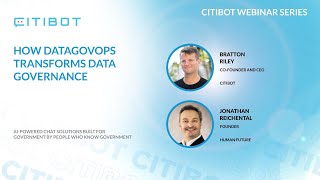
In this 2025 webinar, Bratton Riley, co‑founder and CEO of Citybot, interviews Dr. Jonathan Reichental, former CIO of Palo Alto and author of several data‑governance books. The conversation begins with personal backgrounds and the mission of Citybot to improve citizen‑government interaction through AI‑powered chat services. The dialogue then shifts to the paradox that local governments generate massive amounts of data but lack the governance structures to turn it into actionable insight. Reichental defines data governance as the combination of processes, people, and tools that both unlock data value (innovation) and manage associated risk (compliance with GDPR, CCPA, HIPAA, etc.). He introduces “DataGovOps” – an emerging discipline that applies DevOps/DataOps principles to data‑governance, accelerating the creation, integration, and monitoring of data pipelines through automation and AI. Practical advice for municipalities includes starting small with a few high‑value data sets, identifying master data, assigning data owners and data stewards, and establishing a governance leader (e.g., CDO). The discussion highlights common challenges such as siloed departments, missing data owners, bureaucratic policies, and the need for trustworthy data. AI‑driven tools can automate metadata tagging, maintain data catalogs, and flag compliance issues early. Reichental notes a booming market for data‑governance solutions, citing rapid vendor growth. He shares two case studies: Merck’s enterprise‑wide data‑governance overhaul that improved data quality by 70% and cut time‑to‑insight from weeks to two hours, and New Zealand’s federal data‑governance program that respected Māori data sovereignty, increasing public trust. The session concludes with optimism about the expanding role of DataGovOps in both public and private sectors.
Chapters
All right everyone, let's get started. So again, my name is Bratton Riley. I'm the co founder and CEO of a company called Citybot located here in the US in Charleston, South Carolina. Have the privilege of having Dr. Jonathan Reichental with us today. We're going to nerd out on data Governor Ops and really understand how we can push the ecosystem forward, that is the government agency, the ecosystem of government agencies forward and help them sort of empower the data that they have access to and operationalize it with one of the world's leaders on the topic as we try to push the, the whole ecosystem forward. So. So Tanner, we can move to the next slide. So just a brief introduction about citybot. We are a AI powered customer service chat solution across different channels from text message, through the website, through WhatsApp and voice. Now, as we help our government agencies provide self service, customer service 24, 7 in 75 languages to really at the end of the day build trust between the resident and the government. The data is very clear. If you create positive digital experiences for your residents, they're going to trust you more. And that's the essence of the work, the privilege that we have as a company to work with our local government people around the country and whether it's 311 systems or smaller cities and counties to you know, aid the customer service infrastructure that they have and really think about how can we serve all residents, in particular those that maybe you've never heard from before. So that's the essence of our mission driven work. And we do these webinars not because we're trying to sell our product, but we take very seriously that we are members of this precious ecosystem and it's a privilege to do that. My father was the mayor of Charleston, South Carolina for 40 years. I'm very familiar with, with local government and the impact that it can have on each person that lives there and, and that drives our work. But we're members of this ecosystem. We want to add value to this ecosystem and, and bringing in some of the best and brightest representatives of the ecosystem to share their expertise that we hope might help you in the government context, provide, you know, better opportunities for your residents, better opportunities for efficiencies, better opportunities to have data driven decision making be right in front of you. And that's really what we get to work. We get to work with the people who serve the people. And those people wake up every day they they to show up for the people that are their constituents. And we are very privileged that we get to show up for those people. So with that, Jonathan bringing you in here, I'd love to just get a little bit of your background. First of all, thank you so much for joining us. You're a world traveler, as you told you just got back from Southeast Asia, and you've been able to interact with people around the world, entities around the world, around operationalizing data, and you have such a rich government background that, that we're going to pull out. But I'd like to just, you know, intro, let you introduce yourself from kind of, what's your background? How did you get to Palo Alto as the CIO of the city, the IT innovation leader of the city. And maybe we'll start there and then kind of bring it up to date as to what you're doing now.
Yeah, thank you so much, Brad, and thanks for inviting me. Great to have a conversation with you here online with an audience. I've enjoyed our conversations privately, too, but great to share both of our insights with big audiences around the world. I love what citybot is doing, by the way. Great work, Love your business. And you're adding tremendous value to agencies as you spoke about. So good work and really pushing the envelope on the newest tools. Right. Bringing AI into a real practical use case to enhance the interaction between government and community. I also love your background. Your father spent so many decades as a very popular and admired and loved leader there. And so that was interesting how it informed your career choice and, and what you've in many ways kind of continued a legacy, but through a different channel. My. At least you weren't turned off by it. You know, that, that's, that's good.
Thank you.
I, My, my arrival in public service is so different. I, I, my family and I have no background in it, so in many ways it's a big surprise. I mean, I, I've spent my whole career in the technology realm, but in different industries, you know, in, in, in professional services, you know, in, in media. And then, you know, so about a decade and a half ago now, back, back in about 2010, 2011, I was invited to become the CIO of the city of Palo Alto here in, in Northern California. And it was sort of out of curiosity a lot on my part. You know, as, as, as a, as so many of us just going about our day, we don't really think about local government and what it's doing and the complexity of how cities function. And I was curious. I'm just a curious person. You know, I wanted to, as I say, kind of peep behind the curtain how does this all work? You know, how do our traffic signaling systems work? And, you know, how do. How do our water and electrical systems all kind of play together? And what are the systems that make that work? And frankly, the bigger question is, could I help make it even better?
Could.
Could I play a little role, you know, in. In moving the ball forward and. And the performance of our local communities, the performance of our. Of our cities? So I jumped into it, and as the. As the city manager at the time said, he took a bet on me, and I took a bet on them. And, you know, if it didn't pay off, I would have, you know, walked away within a few months. But I stayed around for about seven years and fell in love with it. I fell in love with the work. Many people who are on this webinar or who will watch it later, I imagine, also come from that place where you are immersed in public service and you realize how rewarding it is, how incredible it is to. To do work that matters. You know, to get up every day and know that the work you do in local government in particular, impacts people in a very direct way. Now, when I went to the city, I thought, you know, I'll bring my years of technology experience to bear, and we'll try to figure out different ways of doing things, and we utilize tech and, you know, I would, you know, change the city. Working with my team and partners. Now, we did a lot of that and perhaps some of the stories I'll tell today, but what really happened was the city changed me. Right? And what I mean by that is I completely found out so much more about who I am and what I want to do and how I want to spend the rest of my life, you know, serving others, to educate, to help, to do work again that has meaning every single day. And I've continued to do that. And when, you know, I decided that I'd done everything I could do for the city of Palo Alto, which was incredibly rewarding, and I'm very proud of my team's work. I wanted to do it on a bigger scale. I had already been asked, and I was doing a little bit here and there from other US Cities and humbly from cities around the world. I thought, you know, I've got to make a choice. Do I, do I do that sort of as a kind of on the side, kind of do a little bit here and there, or do I say, let's do this on a bigger scale? And I made that choice, and I started a business called Human Future. And right up until Today, that's what I do. I have a lot of different type of clients, but many of them continue to be government, city, sort of local, state, federal, and all around the world. And with technology now being the. As you know so well, Bratton, you know, the central topic in government and in every industry, this work that I do and my teams do and my partners do is more important than ever. So hopefully we're doing things that make a difference. It's all about quality of life. It's so. So as things like AI emerge and data and the Internet of things and so much more emerges in this new time in which we live. Can we help? Can I help, you know, or you know, cities in particular take advantage of that. So that, that's my sort of brief story. I, maybe there's one last piece just to share along the way. I continue to be an educator. You know, I teach at the University of San Francisco and Menlo College here in a town called Menlo Park. Some of you will know it, as well as doing little stints at universities around the world. And I also have my LinkedIn learning videos. I just published my 50th, which, you know, it used to be a side hustle and now it's like it's a big deal. I have 50 courses, a lot of them are translated, you know, into many, many different languages. And I write. I, I always wanted to write one book. That was my goal. And I just published my eighth book and so I've exceeded my own expectations.
So tell me about that a little bit. Just like you wrote your first book and, and you know what has inspired you? We'll get to the.
Yeah.
Latest book in your latest video series on.
Yeah.
On Data Gov Ops. But, you know, how did you go from one to many.
Yeah, that's kind of a surprise. You know, I always want, I mean, I've always been a writer. I, I think a lot of people know my work. I have written for many publications and I write online a lot. I have a popular column in Forbes actually that, that comes out a couple of times a month and I've written for State Tech magazine and some others and. But I wanted to take my sort of 30 years of technology experience and put it in, in writing and actually publish a book. It was a kind of one of those bucket list items that I wanted to do and I didn't want to do it while I was necessarily in government because while you can do it, you know, here in California, you know, there's, there's kind of a lot of Restrictions on what you can do as a public servant. We, I think many of us know about. There are, there are rules that, and, and good ones, you know, so there's no conflict of interest and other, other things. And so while I had people approach me, I said, you know what? I'll do this when I leave government. And so finally I move on from the city. And amazingly, I get a call from Wiley, you know, the big global education publisher. And they said, well, people were already familiar with my work in cities, in particular, smart city work. And they said, we'd love for you to write this guidebook on the future of cities. And I said, what? The timing is perfect. I would love to do that. And, and so we talked about what it would look like, and a few weeks later they called me back and they said, we've been talking about this internally and we think this would make a great Dummies book. And, you know, the Dummies book. And I said, of course I do. I know the, you know, I think somebody figured out there's at least one Dummies book in every house in America. You know, it's. It's the largest reference series ever published, over 250 million dummies books. And so I said, I love that platform. It's a great brand. And so I ended up writing Smart Cities for Dummies. Now, it's obviously, it's always a joke, you know, having Smart and Dummies in the title. And, you know, I don't consider mayors and city managers and, you know, city people to be dumb at all. In fact, I'll say this. When I started working in government and I had a chance to visit many cities and in fact, even go to D.C. and work with a couple of federal agencies, I met the smartest people in the world. This was a lovely revelation. Some of the most passionate, smartest people I ever met work for government, and we should never forget that, actually, particularly nowadays. And so I write this, and it works well. It's a big success, and I think today it's considered one of the, you know, most popular books on the future of cities. It's a few years old now because I wrote it just before COVID and the first half before COVID and the second half in Covid, so we could measure everything against that, against the pandemic. And, and, you know, I still reference it and people reference it all the time, and it's still pretty current and some point I'll need to do an update. And then, you know, I just, oh, there's A kind of a little twist here, which is I, I would ask friends, you know, what do you think about the book? After I published it and I mailed it out to lots of friends and family and many of them said to me, you know, we haven't read it yet because our kids are reading it. And I was like, what do you mean? They said, yeah, our kids are reading it because there's a lot of great stories in there about, you know, horses and cities and about aqua ducks in, in Roman times and how they were able to come carry water up, you know, in an incline, you know, rather than down. And they, they, they love all that stuff. And I said, that's a big surprise that kids would love it. Well, maybe not. Maybe children are interested in their communities, in our cities. So I ended up writing a children's book on the future of cities and we made it a, an activity book with lots of little puzzles and stuff. I did it with a co writer, Brett Hofstadt, who I made an acquaintance, became friends with over time. And later after that I, I wrote a couple of other things. And then recently in the Last sort of 18 to 24 months, the publisher came back to me and said, would I, would I write a book about Data for Dummies? Same, same company. And I said, well, I've been an IT guy for over 30 years, I probably know a little bit about data. And, and in fact, let's really super focus on this under appreciated space called Data Governance. So I ended up writing Data Governance for Dummies. Yeah. Oh, look at that.
Well, and that's, you know, obviously we're going to be talking about this and kind of to set the stage for this. Jonathan, if you don't mind.
Yeah.
You know, if we want to focus specific on local governments, not that this is a earth shattering thing that I like to say is just the, you know, these local governments are collage of agencies within local government that do work, that many of these, many of the elements of work have absolutely nothing to do with what another department does. Whether it's, you know, booking your child to a summer camp or reporting a pothole or figuring out how to get a license for a, a short term rental on your property or paying a parking fine, so on and so forth. It's, there's not necessarily a, you know, a continuum that aligns all these departments together, but from the resident standpoint, you know, they don't know what these departments do. They don't know, you know, the what the, you know, city agencies, a lot of A lot of times are called the Agency or the Office of Development Services. It's like, what the heck does that mean? You know, it's like the, the. So it's like it's a complex organism and at the same time it's generating all this data around all the functions that it provides. The, And a lot of those functions are things that we just take for granted, like trash pickup and safety and, and all of that. But, you know, so it's, it's a complex organism and it is generating all this data. Just tell us a little bit about, you know, and I, we've talked about it. It's like, it's like a treasure trove. It's a treasure trove of information.
Yeah.
And just want to give you an opportunity to kind of speak to that.
Yeah, now you said that. So. Well, my story is, you know, I, I go into government. I come to government in about somewhere between 2010, 2011, and, you know, it's everything I expect in many ways in terms of technology, there's too many demands, not enough staff, not enough talent, not enough money. It was sort of this world of constraints and everything was constrained. And while that's not unique to work, you know, we, we live in scarcity, it was particularly amplified in, in local government, from my observation. And, and so you kind of have to work around that. And every day is a, the job is to prioritize, make sure you're working on the right things and you're applying everybody against the, the right problems. But one thing I discovered after a few weeks is we were creating a lot of data as a city and actually data in abundance. So while everything was scarce, there was more data than you could imagine, and creating more and more through all the interactions that you described. And as the city and Cities back in 2010, 2011 were increasingly becoming digital, adopting, you know, laptops and smartphones and cloud computing and apps and, you know, all the things that generate digital data. More and more was being created and sort of as a, sort of as a, in an exponential way. One of the questions I asked my operations manager at the time was, after we collect this data, what, what do we do with it after we've used it once? And they said nothing, we back it up or we just leave it on a server. So I was thinking, so we're not deriving any additional value, there's no derivative secondary value that we're creating from this data? And they said, no, no, no, we just, it happens in the course of doing business, that's the end of it. And I said, well, that seems like an opportunity. Now there's a sort of, a, kind of a parallel sort of thought going on here, which is, I'm going to these council meetings and committee meetings, and I'm noticing that all the time people were saying, God, I wish we had more data, or do we have data on that? And what's the evidence for that? And often it was anecdotal. And I thought to myself, we have that data, but we don't have access to it. The decision makers, the elected officials, the committee members, the community who want data to make better decisions don't realize that we might have it. And if they do, they don't have access to it. So there was this huge disconnect, right? Masses of data, no way to actually leverage it and tap into it so you can actually improve the community. And that was the magical moment. That was the magical moment for me. How could we solve that? And so we were one of the first communities, and I was a very strong advocate for the open data movement. You know, let's not have us solve all the problems, but make data available for others to solve problems, problems. And we've tremendous examples of that. There's one example where something that was very important to our community, and my guess is it's. It's comm. It's important for many, is what's happening in, on their street, what's happening in their neighborhood. You know, there's some construction happening and, and people are just like, whether they're just curious or they need to know they don't have easy access to that. You've got to make a phone call, you got to go to the city's development center. And so I thought we ought to have a tool where people can just type in an address or street and they'll tell you exactly what's happening at that point in time. And you think of that and you're like, it can't be too hard. But it's not because it's hard, it's because where do we prioritize that? Because these other 100 important projects. So does this suddenly become a priority? So how do you solve that? Well, you make the data available and you kind of incentivize others to build it. And we kind of went out to the tech community in Silicon Valley and said, could you solve this? Could you build this solution? And if you do create a business, then you can hire people and you can actually have a successful business. And we have many examples of that where these companies that built solutions around our data went on to scale those with other communities. And that solution itself, whose name at this very second, I can't remember, it may come to me later, but they. They've gone on to have a successful business in. In chance that. Not Socratic for the open data, but this was for the actual. What's happening in your neighborhood? Got it.
Gotcha.
Can't think of it right now. It's okay.
Yeah.
Okay. And you can probably find it listed somewhere on the Palo Alto website. And so I was like, this is great. Let's. Let's scale innovation by making data available. And. And we solved that. And it was great. We have to, you know, we didn't have to do anything other than say, here's a data set. Here's how you access it. But there's something else, and it was kind of baked into your question, which is, okay, that's all very well, and it's not exactly a revelation for folks who are tuning into this conversation today. What does become important is, is the data good? You know, is it current? Are there gaps in it? You know, what's the quality of data? So that's a big question there.
Representation of the. The residents in a community, or is it skewed to the anecdotal, as you referenced before? I think that's one of the biggest challenges today.
Yeah.
Local government is overreaction to anecdotal.
Yes, yes, yes.
Creating policy and regulations that are not grounded in accurate data.
Yes. So important in the private sector as well, and academia and public sector. And we want to be able to trust it and really act in it. And, you know, the expression are you managing data well? Is really the genesis of data governance. You can say that most organizations today, and we'll. We'll talk again about local government, many have a data strategy. It could be lightweight, it could be informal, could be very formal, but I don't have any concerns about that. The second one is data management. Do we have tools? Yes. Most organizations, most local government stores data, backs it up, you know, has tools for accessing data. Do we have data analytics? Yeah, increasingly, you know, even if it's just using Microsoft Excel, you know, we're doing some sort of extraction of data, and you're running reports and queries on that data. And then there's data governance, which kind of ties it all together and helps organizations to unleash value and to manage risk. And that is an area that's undeveloped and unmature today. And when I look at a city who's trying to do the right thing, trying to use data to, as you said in your question earlier, you know, look across a city, not just in silos, but leverage data from different parts of the city to make better decisions, to innovate, to be more transparent. The one that's missing is data, data governance, both in the private sector and maybe to a greater extent in public service. And that's where I've really been putting a lot of tension in my work over the last 12 to 18 months.
And when you talk about data governance, what does that mean to you?
Well, I try to, you know, when people ask, you know, as an, as a professor, a writer, what, what's my sweet spot? And others have said this to me, and I think it's, I think it's true, is I try to take complicated concepts and describe them in simple terms.
Thank you.
And you know, it's a little bit selfish because I do it because that's the way I understand the world. You know, we, we overly complicate and because of that, you alienate people and, and, and you, and people don't have,
Sometimes it just impacts being able to make a decision. It's like, yeah, it's just of analysis. We see it all over where like, hey, the information sitting in front of you, can you please make a decision on it?
Yes, yes. So when you ask me the question, what does it mean to me, I try to think in simple terms like you can, you can Google or use, you know, one of your tools to, to search on this, this term and you'll get lots of really interesting answers. But it is about managing data. Well, it tries to do two things. On the one hand, data governance are the, you know, the processes, the people and tools for unleashing data, making data valuable, more valuable than it is, you know, ensuring that you can access it, ensuring that it's high quality, you know, and then it is, you know, the tools to that. The second part about it is the need to manage the risk associated with data. And so risk is like making sure that you're, you're compliant, that you're compliant with, you know, the general Data Protection regulations from, from Europe, the GDPR or hipaa. Here in the US when you handle healthcare data, there's lots of fines and
you know, Information act requirements.
Yes, exactly. Yeah, exactly. Here, in, in, in here in California we have the, you know, the CCPA for accessing, you know, public information, making sure you're compliant with, with that and you know, privacy rules that are applied, for example, on a, on a government website. So in Some ways the risk part sounds a little boring. Kind of, it's sort of like the necessity of running a business or running a city and doing it well, protecting data because there's a responsibility. But on the other hand, it's about innovating. It's about making better decisions to produce better results, be a high performing community. So fundamentally it's, you know, innovation and risk. It's, it's, it's basically promoting innovation through data and reducing risk and doing that through the right set of processes, having the right talent and having the right set of tools to achieve that.
Well, and that's, you know, thanks for mentioning that's what we see. So we're, you know, we use generative AI in our system. We came up with our own data governance policy.
Yeah.
Before we ever put the Genai product in front of a government because we have, we're again, we're part of this ecosystem. Yeah, we have to, you know, I'm a big believer you don't need to be regulated if you've already regulated yourself and, and de risked yourself. And then we see what do governments want to do?
That's right.
Well, they want to de risk it first before they want to innovate. And, and so we come across all these local, well, we not we need to come up with our AI policy.
Yes.
And you know, a lot of that is driven by internal use cases. You know, like how can employees of an organization, you know, use it to a certain degree, but sort of on the external facing side, which is more where we are in customer service. It's like, well, we got to come up with our AI policy before we can talk to you. And I'm like, no you don't. If you've got a good data governance strategy, you know, and not to talk about a product too much, but just like the data generated through our product is exclusive, the exclusive property of our customer. That's like a major thing that needs to be the case when you talk about AI. And so then we wait, you know, could be a few months, could be a few years. And it's like, you know, trying to encourage governments like hey, you can do those concurrently.
Yeah.
You know, and, and so not to get on the soapbox too much about that, but back to you on, you know, okay, so we talk about data governance. How would you describe where governments are today in relationship to it? You've written a book about it, you've got a video series about it. Like how would you characterize that?
Well, a couple of thoughts and I, I really appreciate what you were just sharing. It's such an important insight. And you come from a place of, you know, a practical place, you know, running a business and meeting needs. You know, there's a question that is often asked to business leaders, what, what do they want their organization to become? What kind of organization do they want to run? And this is now the response on across, averaged across industries, it turns out about 83% of leaders want to be a data driven business. So whether it's government, retail, oil, utilities, healthcare, 83% want to be a data driven business. And then the follow up question doesn't necessarily happen right after, but eventually they ask, are you achieving that? If that's what you desire, are you achieving what are the results? And that's a lot more sobering. It's about 30% are actually achieving it. So there's this gap, as you can see, between the aspiration and what's actually being achieved. And the question is why? And again, I've spent a few years researching this, deeply researching it and working with all types of organizations. And it turns out it is the data governance gap. I call this topic one of the most unsexy, kind of boring topics in tech, but one with them with a really big impact. Right? And that's probably why it doesn't get the attention either from writers or leaders or consulting firms. Having said that, it is now because people see the opportunity, that's where the gap is. So if I was to say, if I look as I work with all types of private organizations, I work with big, you know, multi billion dollar pharmaceutical companies for example, or a very large automobile company, they're doing great work, they're making good money, but their data, their data culture is weak. And they all tell me that, it's not like I make that assessment. They all say when we want to use data to make a great decision, we don't know where it is. And when we find it, it's not very good quality, it's not up to date. You know, this should resonate with everybody, right? If you're able to listen to this
and say, just as a business founder too, yeah, there's a lot of work to be done in that area for us too.
Yeah, that's true. And look, we're not, we're not looking for perfection, we're looking just for much better results. And the thing is, we have now the way to do it. We have the process and the tools. We understand it better than ever before. If the private sector, from my observation, is weak at this no offense to the public service, but because we are focused on things like, you know, the, you know, running democracies and you know, maybe making sure our roads and have pot, potholes and, and some more fundamental kind of city management stuff. Data governance is not getting the attention it needs. Sure. And hasn't. So it's, it's, it's probably even weaker in, in the government sector. I mean, I say probably. I know it is, I know empirically it is. But I'm not here to be the pessimist. I'm actually an optimist. And the fact that we're talking and there's a demand for my books and videos on this topic means it is growing. And when I talk to vendors now, there's a good audience, you'll understand this. Vendors who actually produce data products. I asked them, you know, are you seeing increased sales, whatever? And they're saying it's through the roof right now. If you're a tech company selling data analytics and data governance tools, this is a golden era. It's good. And the projections are over the next 18 to 24 months it's going to explode. And I see this in my book Sales, which again are reflections of people's interest and in my video courses around Data Governance on LinkedIn Learning. Now the topic which is getting, which is helping us because we want help, this is not easy work at all is some automation and AI which is coming to the data governance story.
Yes.
And that's a, that's a space called Data Gov Ops. Yes, Data governance operations. It has its roots in, in the success of the DevOps space. What people recognized a few years ago, I think you again, I think you're the perfect person to understand this and many people watching and listening to this will also understand it is, you know, software is eating the world and we can do so much with it. And usually the bottleneck is we can't just write software fast enough, you know, and make sure it's tested and it's ready to go to production. And what organizations found was, yeah, we can build things, we can write software, but the cycle times are so long. It's like if you're going to innovate and keep up with the market, we got to speed that up. And development operations or DevOps sprung into action as a way to do that. Breaking software into smaller parts, connecting the requesters with the developers, bringing those teams together, much tighter collaboration and having then this continuous execution, this continuous development and continuous testing methodology meant that we could actually write software and deploy into production much faster. So DevOps has been a game changer. Data ops also emerged not long after, inspired by the success of the DevOps world to enable people like, like a marketing department or a sales department needs a report, they need to see data in a different way and they would, you know, specify the report, send it over to the data team and a few weeks later they would get the response right, here's the report you wanted and maybe there's a mistake or there's like, well we didn't want that or could you add another column or and so the cycle times were too slow. So data ops like DevOps accelerates that by again tidy integration, continuous development and integration. And then recently with the accelerated adoption and the recognition of the value of data governance, it's now adopting this, these, these similar concepts and it's producing what we call Data govops. It's pretty much the bleeding edge of this topic. So many people are probably hearing it about it here for the first time. Even the tool sets are just emerging. There's some incredible AI driven tool sets to support Data govops.
So let's talk about that like going from sort of the, the, you know, a high level, sort of theoretical aspect of it to the ground level. I know you mentioned you have a case study and yeah, and I want to get into like, you know, what are the low hanging fruit things that governments can do right now.
Yeah.
And also y', all, I know there's a question that came in. Jose, we'll get to that and if any y' all else have questions, please put them in the chat. But let's bring it down to the, the practical level, Jonathan, if you don't mind and give you the opportunity to speak to that.
Okay, so hopefully some of this resonates. I mean if you, if you stuck around or you're listening, watching this video, you are thinking this makes sense and wow, I, I, I didn't maybe know there was some really powerful ways to help us have more success with our, with our data. So we can make, you know, better decisions, we can solve more problems, we can have higher quality data sets and frankly by the way, something everyone needs to recognize when you, when you use data well and it is the most valuable asset in every organization today. It is the driver of the 21st century economy, much like oil was in the 20th century. If we can do that, we can make more money if you're in the private sector, but if you're in the public sector, you can run the organization better, you have better, higher satisfaction scores from your employees about their work because they can make more timely decisions. They can access the data they need to do their jobs and, and they can innovate more speedily as well. One of the practical ways to think about this is you're like, I love this and I want to do it. I said, I can't believe we haven't been doing it. What's holding us back? Well, the success rate on first attempts at data governance, I'm afraid to tell you, is pretty low. The data is real clear on that. Companies go all in because they're excited by it. They're like, we're going to create a data governance program for our city. They go too big and it crashes. People see it as bureaucratic. People don't understand it. There's inadequate training and communications. So to be practical, I, I got, I got a strong recommendation. You're going to start small, right? You're going to start with just a few data sets, and you're going to just do it in one part of your business. Okay. So that's the first sort of mindset. Think small, get some results, increase the
size, tie into that. I've got a city I won't mention that is working on a permitting permit, process improvement.
Yeah.
And so, you know, my first question to them, I'm just trying to, you know, put them in the right direction, whatever. It's like, well, do you have data sets around? Like, what's the average turnaround time on certain types of permits to establish a baseline? Yeah, well, like most local governments, they don't have that information. So, like, to your point about starting small, it's like thinking about a particular challenge. You know, where do you start? Yes, you can figure out where you are. So you can figure out where you want to go and how you measure.
Yeah, yeah, yeah. Very hard to build great solutions on bad data or, or data that you, you're not sure exists or is. Is hard to access. You know, you, you got to have that foundation, you know, and that's going to help you. And that's why I keep saying innovation. Good data helps with innovation. And your example is, is innovation. You know, we want to, we want to build a better solution to this, and it's going to require good data. So start small. The second thing, and this is really practical, not every data set in your city is of the same value as every other data set. There is a hierarchy, right? There's, there's data that's really important, data that's not so important. You need to understand that, you know, Identify your master data, right? Your master data is, is the data sets that are absolutely essential to the running of your, of your organization. Okay? So that, that's something that needs active work. And you know, once you've identified, well, you've identified it. What's the second part to that? You got to have what's called a data owner. Okay, this is, this is something that seems intuitive but it's poorly understood. Sometimes I'll be in front of an executive audience and I'll be talking about this topic and I will say, I assume that all your important data sets, like your product list or your customers, you know, or you know, your sales data, somebody owns that like, and what, I mean, what does ownership mean? It means that somebody comes to work in the morning and worries about it. They worry, is it accessible, is it protected? You know, is it, is it current? Is it good quality? And everybody sort of puts their head down, kind of embarrassed. Like, I don't think we have data owners for every data set or every important data set. This, this creates accountability, but it also increases quality, right? You've got to have people who are worried about your important data set. So find out. So those are the two practical steps, right? Number one is identify your priority important data sets, your master data. And second, assign data owners. That's probably part of somebody's job. There's another role here that needs to get thought of, which is called a data steward.
Okay?
And sometimes, by the way, in small organizations, the data steward and the data owner are the same, but the data in a slightly large organization and you, you get to define that as your, as your entity. The data steward is the person who works with both the, on the technical side that what we call the data custodians, the typically the IT people and the business users to identify opportunity to solve problems. So it's sort of almost like a broker, right? And these data stewards who represent different parts of the business or organization. So you could have a data steward for public works, a data steward for transportation, data steward for planning, let's say. And they get together periodically and they talk about their data sets and, and problems they're having and even opportunities. How could we share? How can we integrate? So you have now a, the beginning of sort of talent and governance around data. So those are sort of again, identify data sets, assign data owners, assign data stewards. You, you, you probably at this point, if you're that far, you're thinking that advanced already about the whole program. You probably should have a leader, a data governance leader or A chief data officer. All of this again is relative to the size of your organization. If you're a small, you know, city with, you know, let's say the city is 500 people or the, or the, the agency itself is 25 employees, some of this is not going to make that much sense. But the minute you have a decent sized, mid, mid sized city or bigger, some of this becomes very, very, very valuable. So, so those are some
steward. And sorry to interrupt you. Just like, you know, the other issue we deal with governments is the silo. Ification. I don't know that's a word.
It is now.
Oh yeah, thank you. Of the different departments and decision making that stay within the department without the cross collaboration across departments to actually be like, well, what do we do here in terms of, you know, generating permits? How does that, or how could that impact crime statistics? You know, and so like I love the concept of the data, data stewards across departments getting together.
Yeah.
And looking at that data from a macro standpoint to see how does it, how does it relate to each other?
Yeah, yeah, yeah, yeah. I, I, great. I love that you reinforced the, the core concept to that. I mean, I would just add, you know, obviously we can, we can layer on levels of sophistication here. You got to put in place some processes. Right. And be careful with those. Don't, don't make this a kind of a bureaucratic project or program. Be very smart about the policies and procedures that make most sense for handling certain types of data. And then finally is the tools. The good news is there's a marketplace of providers who can really help create efficiencies. And again, those providers are bringing to the table a lot of automation that typically was manual and people were turned off by the manual processes. They're automating that and bringing AI into the fold to, to ensure things like compliance enforcement, looking for security issues through pattern analysis and making it easy for data to be shared and to be integrated across the enterprise and to tell a story. Yeah.
Thinking about the tools, I want to pull in a couple questions Jose asked about lessons from LA fires. I'll just say quickly, we're working with the Cal Fire Agency, which we're so excited about. But my guess is, Jose, while there's been some talk about collaboration, collaboration, they probably haven't had the time to take a breath literally since all that happened, to think about, you know, the data and the processes that could, you know, help improve it the next time. That's a guess. I don't know that specifically, but it's something that we can get more information on from our, from our customer. And the next question from Tanisha is, do you see value in having multiple data stewards for one domain? Asking is it the more the merrier or does that sort of bring in too many cooks in the kitchen?
Typically you want one data steward per domain. And if I understand domain to be. Well in the, in the language of a, of a city, a department. Right. So one steward per major department, if the city is big enough, you know, departments have divisions. Right. And you may then have stewards for divisions. I think again, a steward, by the way, typically is part of somebody's job. It's not a full time job unless you're a business with 100,000 people or city that is 100,000 or more employees. Having full time data stewards might make a lot of sense, but be conservative, I think on the question, be conservative on how many data stewards. You know, a very competent person who kind of has a passion for data, loves the topic, could probably even handle a couple of departments.
Yeah. Cool, thank you.
Sure.
So when talking about the tools, and I know you don't want to identify companies by name, but when we talk about AI automation.
Yeah.
And data, maybe just describe in more detail what that means as we sort of talk about the opportunity right now and what the future might look like, you know, based on your understanding when you're applying these automation models to your data governance program.
Well, big, there's a, it's a big, big question. I'd love to spend a lot of time on it, but I'll be brief. You know, there's a thing called a data pipeline. Right. How does data flow around your organization? And sometimes, you know, data pipelines, they're not integrated. You know, one, you talked about this silofiscation, whatever that word was, they're siloed. And so, but they're not only siloed in terms of operations and decision making, but also sharing data. And we don't want that. We want to share the right data and have data accessible as appropriate across the organization. So automation is helping construct really valuable data data pipelines across your organization. Identifying data, you know, tagging it with metadata, and then being able to help integrate and overcome hurdles in moving that data securely around an enterprise. The second sort of practical way in which automation and these tools are helping is with finding and using data. Right. Again, it just sounds so simple. But yesterday I was talking to a very large group of leaders and I said, you know, talking about this idea of you know, finding data is often hard, and everybody was shaking their head like, yes, yes, yes, yes. There's this idea of the data catalog, right? Data catalog, much like it sounds, is sort of a. A website. You can go to a web page that you can do a search and it'll pull up your. All the data sets and it'll tell you about them, tell you not only all the metadata, so data about data, like who owns it, when was it created, where is it, what does it do, what's in it, but then how actually to access it, you know, what format it is in. Is there an API that you can actually plug into? So these tools are helping not only run the data catalog and make sure it functions well, but also that is kept updated. AI is helping to identify data sets that are out of date or as data flows across the organization, whether internally or from the outside, that the data catalog is kept updated as well. And I think probably the final piece is when we talked about data governance, two sides to it, the innovation and the risk part on the risk end. A lot of times, you know, an organization will get surprised when they're penalized or they get. They discover a problem with compliance, and it can happen from some random auditing. It can happen by accident that you discover it or the wrong person discovers it at the wrong time. Well, AI is helping to automatically identify compliance issues, like flag them early on and anticipate there could be some compliance issues. And for larger organizations that have a lot of compliance requirements and government does, this is like, you know, this is a big win. Right? Well, we lost your mic there.
Sorry. I'm in an airport and they started using a drill on some construction going on below me. So I'm sparing you that. And Jose asked another question, and maybe you can tie this to your case study, perhaps, that you referenced. He's looking for, you know, case studies where maybe this has been an application that, that we can all learn from.
Oh, sure, sure. I'll give you a very large private sector and then a brief example of a government case study. The private sector one is for a company called Merck. Now, Merck is. Some of you will know the name straight away. It's. It's 130-year-old pharmaceutical company, 130 years old, global pharmaceutical. They make medicine and they bring in a not too shabby, $64 billion with a B billion dollars of revenue per year. And just like so many organizations and cities, they are, they, they, they needed to embark on their digital transformation such that they, you know, the business was ready and aligned with the needs of the 21st century. And you know, it's amazing to think that a, a $64 billion, 130-year-old company would struggle with that. They were not ready and they identified one of the major challenges in order for them to digitally transform and innovate for the 21st century. It was their data that was the problem. And there was too many sort of inconsistencies in the data sets and they were fragmented across the organization, across units and across regions. Again, this sounds very familiar to lots of organizations. They couldn't rely on quality of data. And then there was limited visibility for people to know what, what data was available. And then because they're pharmaceutical company, they have a lot of compliance and regulatory requirements, they ran the risk of having problems there. So the solution for this company to be able to prepare themselves for the needs of the third decade of the 21st century was to implement data governance. And so they established data ownership as a priority. Again, isn't it amazing that a company like that had not gone there yet? They created data catalogs across the enterprise. They standardized on things like data definitions and metadata. Right, I never spoke about those, I never spoke about data definitions. But that's key here, as is basically data standardization. And they started to implement some contemporary tools for data governance, including those with AI. And the. After a few months of this work, the results became clear. They improved data quality by over 70%. That's a very big deal for their, you know, for the majority of their master data. For the first time they enabled real time data analytics and that supported things like research and development, understanding the supply chain and their interaction with customers. But finally, there's a lot more to say. But finally they accelerated their ability to implement AI initiatives, right, Such as predictive maintenance and something very personal to all of us, better medicine, basically personalized medicine. And they reduce the time from, you know, you know, when you want to answer a question and make a better decision, you need, right, the right access to the right data to make that decision. And they went from what's called time to insight from weeks down to two hours. So a major big story there. The last one, as we come to the end of the time here is the public sector example. And I love this one because I love New Zealand Otaroa. I had a chance to live there a couple of years ago. Amazing country. And they have an indigenous people, as you all know, the Maori people. And the Maori are, you know, the, the New Zealand has done more than most countries to make sure that everybody with, with diverse backgrounds and cultural heritages are respected and, and appropriately able to immerse in society. But the Maori people have a very different view on the world and on things. For example, they think that all things have spirits. So you know, trees of spirits and, and concrete and computers have spirits and they even think that the data has a spirit. And so the government, the federal government in New Zealand had data sets. And first of all, those data sets were not being shared. They had too many data silos that we've talked about across the federal government and they didn't have a different approach to Maori data. There's a lot of Maori related data. So that was an area of contention. There was anger that, you know, you're treating our data like everyone else's data, but we have very special needs. So when they developed the data governance program for the federal government of New Zealand just in the last few years, they baked into that and a major objective was that data that belonged to different communities would be handled in a respectful way and in the right way for those communities, particularly the Maori community. And through their policies and their tools and, and again, good data governance, they were able to achieve that. Thus again increasing the trust and the, and the unity of those different disparate communities in that country. Big success story.
That's awesome. That's awesome. Well, speaking of the word steward, like, thank you so much for, for being a steward for us in this space. As we think about government and think about how we can collectively work on, you know, it doesn't cost a lot to uncover the treasure trove of data that an organization has, relatively speaking, and the opportunities to effectively use the, those different pieces of information to make these organizations run better. And in your example in New Zealand, build trust. And that is something that is eroding every day thanks to currently what's happening in Washington. It's just, and it trickles down a little bit. But that's why this trust thing is so important, particularly at the local level. So thank you so much, Jonathan, for everything you've had to say and, and what you might, what you're going to say six months from now and what you're going to write and communicate to us about. So thank you all. Thanks so much to all of you for joining us today.
More from Professor

Technology Ethics and Responsible Innovation Coursera Specialization Launch Teaser




Technoethics: An Essential Leadership Skill for the 21st Century | Dr. Jonathan Reichental
Technoethics: An Essential Leadership Skill for the 21st Century | Dr. Jonathan Reichental


FOF 154 | Jonathan Reichental. On Cities and Governments Using Technology To Serve People Better.

Miasto to emocje, relacje i codzienne historie – rozmowa Waldemara Olbryka z Jonathanem Reichentalem

MS01┃Jonathan Reichental, PhD - Perfection, Creativity, and Who’s Actually Having Fun?