GIMI Think Tank with Dr. Jonathan Reichental
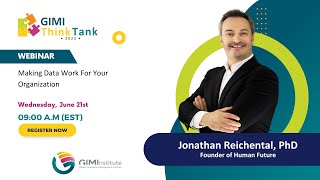
In this 30‑minute talk at the GIMI Think Tank, Dr. Jonathan Reichental, founder of the boutique firm Human Future and former chief innovation officer for the city of Palo Alto, explains why data has become the most valuable corporate asset and how organizations can turn data into a strategic advantage. He illustrates his points with a real‑world story of turning road‑condition spreadsheets into a visual decision‑making tool for the Palo Alto mayor, and with a national example of New Zealand’s data‑governance framework that respects Maori data sovereignty. Reichental outlines the three pillars of a data‑driven organization—strategy, governance, and management—emphasizing the foundational role of a data‑driven culture. He highlights the gap between CEOs’ desire for data‑driven operations (≈ 85 % want it) and the reality (≈ 30 % achieve it), and discusses common obstacles such as poor data quality, lack of access, and insufficient trust. The talk also covers the rise of AI‑driven analytics, the need for stronger guardrails, the emerging risk of quantum computing breaking current encryption, and practical advice for governments and smart‑city projects (outcome‑first pitches, pilots, vendor support). The session ends with a Q&A on AI‑generated apps and data governance, and on encouraging intelligent automation in smart cities, followed by a call to action for building data governance and culture to reduce risk and unlock innovation.
Questions this video answers
Reichental says governance must become more diligent, with clear guardrails on what data is used, who can access it, and heightened risk management to prevent unauthorized data extraction and potential litigation.
He advises vendors to start with concrete community outcomes, use pilot projects, provide hands‑on support and training, and frame solutions in terms of tangible benefits (e.g., reducing bicycle accidents) rather than technical features.
Chapters
We invite speakers from around the world to speak on topics of innovation. We ask them about trends, we ask them to speak about innovation management. We also talk about what's going on in different parts of the world and we bring in people who have got different perspectives, different ideas. And the whole point over here is everybody out there can benefit with getting more dots. And if you get more dots, then you might be able to connect them in you in different ways to come up with better innovations for the future. We've got a fantastic speaker today, as Grayson already mentioned. Dr. Jonathan will be here and he'll be talking about innovation in terms of a lot of where we're going right now. And everybody's pretty excited about AI. Everybody's excited about technology now. Technology is transforming the world and how do humans interact in that future world. So Jonathan Reichental is our speaker and we will give him about 20, 25 minutes to speak and then we'll do a Q and A and everybody get ready. He's an author, a published author, a speaker around the world, and I think we are very fortunate to have him today and tell us about the human future of what's going to happen next. So with that, welcome, Jonathan, Tell us a little bit about yourself just as we get started to warm every audience up. Jonathan, where are you right now, physically?
Yeah, I am just south of the city of San Francisco here in California. It's a lovely cool morning here on summer solstice, by the way, the first official day of summer, the longest day in North America here for the year. The days get shorter tomorrow, but I run my own little boutique technology firm here in Silicon Valley called Human Future, where I help organizations understand the impact of technology on their customers and on their business. And I advise governments and all sorts of organizations in these areas. I'm also an author, as you said, and in my spare time, I'm a professor. So I, I teach at the University of San Francisco, Menlo College, and a few other universities too. I'm very happy to be here, Jonathan.
You know, quite, quite, quite a background and collection. Everything else, sports, family. Do you, do you have a spot? Do you, did you play something specifically?
I got crazy about tennis a few years ago. I was really fanatical about playing tennis. I've said that if I'd done a sport as a career, as a profession, I would have gone for tennis for sure. But life had different plans. I like to. I used to fly planes. I haven't done that in a while actually, but I got my pilot's license, so That's a. That was a joy. As a child, I always wanted to be a pilot. And so while I didn't become a commercial pilot, I did it as a hobby and I loved it.
Yeah, no good. So look, one of the things about all of our speakers, they tend to come with very varied backgrounds and they seem to be interested in one topic. But when you actually unpeel the onion, you find that they have got a multidisciplinary background and multifunctional interests and everything else. And as a result, we always have a treat when we have people like you come to speak. So I'm going to give you the floor. You'll have about 30 minutes and then we'll do some Q and A.
Okay. That's quite the goal for me. It's very normal for me to do a four hour lecture. So for 20 minutes we'll see what we can do. Do 30 minutes, then we'll give you 40 then. Okay, that's very kind. Thank you very much. I'm going to go ahead and get my presentation on the screen for everybody. I think if you just give me a thumbs up that you can see everything. Great, thank you very much. Yeah, no, I thank you. Appreciate that. Hitundra about having different skills and different interest areas. Mine are quite broad and deep. They all are in the sort of technology leadership area. And you'll see at the very end of my presentation today, I'll share with you a few of my books. You get to see the sort of scope of my interest areas. But it turns out that, yeah, AI is hot, right? We all know that AI is pretty hot right now. So is things like mixed realities, the whole immersion that's happening. Metaverse. But underlying all of this, the topic that so many organizations want to better get a handle around is data. Data has really come into its own. And yeah, it turns out that while organizations want to do good work using data, they want to make better decisions. They're actually having a lot of challenges. They're struggling with this notion. So I want to, in the very short time I have to get with all of you today, I want to share with you some sort of guidance, some tips and tricks that you can apply immediately about making data work for your organization. But I thought I would just start with a quick story to kind of create some context around this topic. I used to be a city leader. In fact, I must spend a decade managing particularly the innovation and technology in a city. It was a city of Palo Alto, often called the birthplace of Silicon Valley. And while I Was there, you know, I, I, we, we did some neat stuff. We actually created the number one digital city in the United States. And we held that position, the sort of top position in the top three for, for five years. So we did some interesting things, experimenting with how you could deliver government. But I also learned a lot. I, I, you know, kind of peeked around the curtain to see how does a city work? You know, this, this was really interesting. And so you're looking right now at a road, right? Why, why am I showing you the picture of a road? It actually seems quite boring. But when you run a city, as you can imagine, roads are pretty important and the quality of roads is really important. Look, when you work with, with your community, they're not going to be shy to tell you, you know, when they are angry or they have challenges and they will tell you when, you know, the roads are in bad shape or there's potholes outside their house. Turns out there is actually a score on the quality of data of, excuse me, quality of roads. It's called a pavement condition index, the PCI. How about that, right? And there's a score between zero and 100. Zero being, you know, it's probably just a dirt road. 100 means it's a perfectly beautiful, probably recently surfaced road. And in our city, as in almost every city in the world, there's a plan to keep those roads maintained. Sometimes cities do a good job, sometimes they're challenged with it. So, you know, you got to make decisions. How do you decide which roads to work on? And typically what happens is you're working with something like this. All right, some of you will smile because you know that often you're asked to make some decisions around data that looks like this, right? Columns and rows. And what you're seeing right here is, is just one page of what actually is hundreds, hundreds of pages of the condition of every road in the city of Palo Alto. On the right hand side, you can actually see the score there, right? From 0 to 100. These scores are actually quite good for this page, you know, ranging from 71 right through to 89. But there's hundreds of pages. So the question is, how do you manage this better? And the mayor came to me, the mayor of Palo Alto came to me, this is about 10 years ago, by the way, 10 years ago, and said, hey, how do we, how could we think differently about making decisions based on this data? And I said, well, first of all, we got to make it more visual, you know, you know, how does a community member really understand what 71 means, right, we got to see the road, we got to understand how bad it is. Is it wide, is it, is it deep, is it, you know, does it go across, does it go along? You know, we people need to understand the data and visually is very important. So he said, well, that sounds good, but that sounds like something that's going to, you know, cost a lot of money and take a lot of time. And in innovation, that's often what you hear. It's like the, the reasons why not to do something right. In this case, too long, too expensive. I said, let's think differently. What can we do differently? So I went ahead and I quickly jotted on a piece of paper what I thought would be the interface for this new system. And you can see this is in real traditional Silicon Valley
spirit.
It's on an, it's on a paper napkin. The best startups in the world, they say, started on paper napkins. And I drew the picture and I said, you know what I'm going to do? I'm going to go up to a university. In fact, in Palo Alto, we were lucky enough to have Stanford University. Right?
Right.
Not every universe, not every town in the world has a great university, but they have a great computer science school. Many again, tech firms have emerged from the entrepreneurs, the students that have come out of the computer science school at Stanford. So I said, I'm going to go up there and I'm going to bring the mayor with me and we're going to have some students to work on this problem over the course of maybe 48 hours. So on a diet of Coca Cola and pizza, some students worked on this and boom, they pounded out this visual application that looks pretty close to my paper napkin rendering. Now this was pretty amazing, right? You know, it cost us just a few pizzas and it only took 48 hours. Pretty incredible outcome. Now you can't run a city like this, right? But what you, what it does do, it does suggest to you. There's different ways of delivering solutions, there's different ways of thinking. But the big takeaway was cities and organizations have a lot of data. Actually they have an abundance of data now. It's only getting bigger. And if you can co create and co innovate with others, all you need to do then is create that layer above the data and create incredible solutions for the city of Palo Alto. Cities all over the world, data is where the action is. And we just got to create these interfaces, these abilities to actually interact and use that data in a great way. So I love this story because it was a game changer and it reminded us that innovation is so important, but also that data is central to making change and co creating and collaborating with, with, with stakeholders. Now I have just spent the last year and a half, almost two years now, writing a book on data. And I'll tell you about that at the very end of my presentation and at the beginning of my journey when my publishing company said we want you to write a book on, a complete comprehensive book on data governance. When they asked me that, I said great, this is an area I enjoy and I have expertise in it, but I want to just not go in with any assumptions. And one of the assumptions at the time was that data first of all was, you know, more valuable than oil. This was something people were saying, it's the new oil. And they were saying it's like really important, it's the most important asset. And I said, I want to get the research on that, I want to really understand that and I want to come here and tell you today that two years after my research, talking to academics, industry, really going deep on it, I was able to comfortably conclusively say the data now is the most valuable asset in every organization. Right? That's pretty remarkable to actually come to that conclusion. And in terms of driving economic change, yes, today the biggest companies in the world, those trillion dollar businesses like Google and Meta and others and you know, Microsoft and Salesforce, you can first of all clearly a lot of tech companies, but underlying them, they are data companies, right? What is Google? At the end of the day? What is, what is Facebook and WhatsApp? They're data companies and their market capitalization now is a trillion dollars and more. So across companies and industries, data becomes a driver of substantial economic value, making it more valuable than oil. Something has happened, right? Why is this, why is this the case? Why, why is it such a big deal? Well, because we are hyper connected, highly digitalized planet now and increasingly so. And all of that hyper connectivity and digitalization is creating vast amounts of data. We're in the era of big data. I don't think anyone would disagree. Let's just get a sense of this, right? It's one thing to say we're in the era of a Cambrian explosion of, of data, but it's another thing to actually see the stats on it, right? What you're seeing here in this quick graph is how data production is growing, data volume is expanding year over year. And what you're looking, these numbers by the way, like 20, 23, let's look at 20, 23. It's 120Zettabytes. Z, E T T A zettaby, right? We, we had to make it. We've had to make up words for things because we didn't realize we'd reach that. That amount. Of course, I'm kidding. Zettabytes always existed, but we didn't know about the work because we never had to use it. But look what happens when we get to 20, 25, 180, you know, zettabytes. That's. I'll show you in a moment what that really means. And we will be producing every 24 months now, about 100 to 150, excuse me, almost 200 zettabytes every couple of years. And of course, that'll accelerate. This is, is a lot of data and. Well, actually, I don't have the other. What I want to quickly share with you is that a zettabyte. One zettabyte, in terms of numerics is one followed by 21 zeros. Right? Let me just say that again. One with 21 zeros. So this is, as you can see, sizable amount. One area that's creating all this data as an example is the explosion of the Internet of things, right? We can only ever connect 8 billion people because there's 8 billion people on the planet. By the end of this century, It'll be about 11 billion people on the planet. And so we'll only ever be able to connect to the Internet. 11 billion people. The same can't be said for things, right? We can connect pretty much anything and we will connect anything that has value, right? Our homes, our factories, our cities, you know, and, and, and things like our thermostats. And we'll put cameras into our homes. And the, all the, all the incredible connectivity that's happening today. We have, you know, the number sometimes is, is, is varied. But from statista, they say 51 billion things connected. And I'll do the math for you. We're connecting about a billion new things every single month. Now, what's important about that is to understand that by connecting, you're actually, with the Internet, things. By connecting devices which collect data, process data, move data, you're actually creating data networks. IoT at the end of the day is a Data system. And IoT alone is creating several zettabytes as we deploy, as you can see in this graph, increasing volumes of devices. And we will heading up to 75 billion and then beyond in the years ahead, just that one vertical, which does span horizontally across industries, will create an enormous Amount of data. So the question then is if we have an abundance of data, and every organization does, it doesn't matter what you do, some have more than others. But now every organization creates data, processes data, stores data, archives data, uses data to run their businesses. The question is, are you a data driven organization? Can you say that with confidence that yes, we actually get value from data? Now, what does it mean really? What does this mean? What is a data driven organization mean? Fundamentally, at the core is that you make really good decisions based on really good data, right? When you go into a meeting, when you have to make a core decision as a group or team or as an organization, is it informed and driven by an abundance of high quality data? Right. Or is it gut feeling or a sense? Right. You know, can you identify issues and what is most important for CEOs and leaders and all of us on this in this session today, of course, is to what degree do you use data to drive your performance? You know, the performance of the organization, the growth of the organization, and how does it drive innovation? Now, if you're thinking about this as I'm saying it, you're not really sure that's okay too, because maybe you've not done the assessment, you haven't thought about it this way. Many organizations are already thinking about it. For example, in one survey, actually multiple surveys, a High percentage of CEOs want their organizations to be data driven. So in this particular survey, 83% of CEOs want a data driven organization. Now, I don't know what the other 17% want. I'm wondering what, what's the deal with them, you know, but, but the numbers in my research range from 83 to 90% and over want their organizations to be data driven. So there is this acknowledgment, right? There is this recognition, okay, we get it, we understand, we have this data and we want to be informed about our, about our decisions better. We want to be able to grow our business, understand our customers, innovate and have a higher performing organization. The sobering reality though, and this is the little trick here, is that while 83% of CEOs want their organizations to be data driven, only 32% are achieving that goal, right? Only one third of organizations who make it a goal, make it a mission to be data driven, are achieving it. So that's actually a very high rate of unfulfillment. That's a very high rate of not being successful. And so we need to ask ourselves, you know, if our leaders and our organization wants to be Data driven. How do we go from 30%, how do we go get out of that 70% or get into the 100% that are going to be successful, right? That's a really key question. The data today about data is quite sobering, right? Here's just one data point on why this is problematic. To be, you know, just simply, you know, not making data. The mechanism by which you run your organization. And you're looking at this 48% of employees following their gut feeling, right? That's really bad. In the 21st century, in the third decade of the 21st century, we are going on sense, you know, what that does in a more realistic way. That creates an awful lot of risk. That's a huge risk factor. You know, it also means that, you know, bad decisions can be made. You know, it's, it's and, and decisions can be made based on errors, bad assumptions, you know, not having sufficient context, really important. Now where does it all begin, right? And the story actually begins with data culture, right? You might think, and that would be fair because I told, I've spoken to a lot of CEOs and, and leaders all around the world and all types of organizations. They want to know about tools, you know, they want to know, can we access our data, how do we analyze it, how do we build some skills? Those are exactly the right questions, but they get a little ahead of the game, right? The foundation for, for a data driven organization is something called data culture, right? And this is the bit that is not actively addressed. And you'll see in a moment how it affects a lot of different things. What do I mean by data culture or even culture, right? Culture is the way an organization does stuff. It's the way an organization behaves. Just a couple of examples, if any, any of you have ever gone to any of the Disney World resorts around the world, you know, you will see a distinctive culture, right? People that go there are called guests. You know, when staff are working, they're, they're, they're, they're determined to be on stage, right? They will do anything to solve your problem. Go above and beyond. That's a culture that Disney has formed over time. Anyone who's ever gone to an Apple store, right, anywhere in the world, that's a very different experience, right? You know, just the absence of cash registers, for example. But the, but the, but how you're greeted and how, how people work with you and the options you have and the, and the different, even the physical environment and the way people are dressed, all of that reflects culture, right? And you can think of lots of businesses that you work with that have very distinctive ways of doing things, right? So that is a data, data culture. How you do, where does it come from? It comes from leadership a lot of the time, right? It comes from the founder. Often one person can make it make a big difference, but it means that you are thinking, breathing and behaving in a way that you understand the value of data in your organization. I say this every single day to executives and city leaders and government leaders all around the world. I tell them, a data driven culture today in the 23rd decade of the 21st century is the human operating system of digital transformation. We're all going through this. We're all going through this incredible global shift from a world that was analog now to a world that's increasingly digital. And by the way, the one thing you can extract from this, that's really key is that a lot of digital transformation projects are not succeeding either, right? What is the reason for that? Bad culture. Bad data culture, specifically, right? So people go, they say, we are going to completely transform our business. We are going to be digital everywhere. We are going to change how we deliver and reach our customers. We're even going to change the products we make and the markets we're in. And they go after this. And some are successful, but a lot don't succeed. And when you drive, when you get to the, when you try to determine the heart of that failure, it's the absence of a data driven culture right now. Building an organization where data works for you, it's complicated, right? This is not a simple topic. This topic requires incredible leadership skills and talent in your organization, great strategy and the right tools, right? I've summarized it here. You have to have three core things existing. You have to have a strategy that sets the vision, right? So that's the data strategy, over and left. What does a data strategy mean for your organization? What is the vision you want for data in your organization? So you take the data strategy now and you're like, okay, we know where we want to go because that's what that's about, right? That's the journey. Now we have to have structure, we have to have a framework in which we are able to achieve this vision. And that's about data governance, right? Having the policies, procedures, enforcements, the talents, the organization to achieve this strategy. And then maybe the easiest part is the management. And when we talk about data management, what are we talking about? We're talking about tools, we're talking about processes, we're talking about how data is stored and how it's, you know, how it's secured. For example, privacy and security, cyber security. Right. But that happens to be the easier part. None of this is, none of this is really easy. But of the things that is probably the most addressable early on, the problem is organizations go to data management first without having a good, really solid approved data strategy with the data governance that goes with it. And underpinning all of this underpinning is a culture of data driven. Now what I, what I try to advise organizations, focus on data governance, right? Create your strategy, Boom, get that, get, you know, get that done. But then data governance is key. And that's what I want to just focus on here in the remaining part of my presentation is if you are going to be an organization that's data driven and wants data to work for you, you got to have a data governance program in place. Now, the way that data governance program works is going to look different for a small organization than a big organization. Fair enough, right? I'm not saying today, advocating for massive complexity for a small organization. You're thinking like the first things that CEOs will tell me is we're a small organization. We can't have layers and layers of bureaucracy that's just going to tie us up and have us take the focus off the core of what we need to do as a business. So you got to calibrate the size of the system. But it is a set, it's a framework, a set of policies and approaches to how you manage data so that you can increase the value of it and reduce the risk related to. It's quite a diverse area. And, and in my new book, I go deep on all of this. I tell you how to do all of it, you know, from A to Z. But you can see some of the areas here, right? It's, it's about things like, you know, data quality, right, that everyone can, that resonates with everybody, right? Is data, for example, current? You know, if somebody goes out and says, hey, I want that data to use for a particular project, what they don't want is data that's five years old, right? Is the data complete? Like, is it missing? You know, there are errors in it. There's a lot to be considered in just data quality alone. And you go around this pie here and you can see how there are many, many aspects to it. One thing that I think all of us can relate to pretty quickly is just the ability to be able to find the data you need to do your job right look, there is, I don't know how many. Yeah, there's 24, 25 people on the call today. And you just, you don't have to say it out loud, but think about it. When you need data in your organization, do you know where it is? And when you know where it is, you have access to it. And when you have access to it, are you, are you confident it's good data? Right. Very difficult to answer these questions in the affirmative. Right. Not just for you guys, but for all types of organizations. And you've got to have the framework in place to be able to help the right people and the systems enable people to access the right data at the right time to do their jobs and move forward with all sorts of efforts in terms of maintaining the essentials for this program. Well, you know, you're going to have to have talent, you may have to train existing staff or hire new staff, but you have to have, you know, documented processes and you need to communicate the value.
Right?
The last thing you want to do is have a big initiative where people push for a data governance program and you end up. And people don't understand what value it's adding. Right. You need to be able to communicate that. And that means things like having good metrics and actually looking at the correlation between the maturity of your data culture and outcomes. Are you growing in certain markets? Are you innovating more? Do you see higher quality, quality data? Are there less cybersecurity events? So having really good metrics is, is essential here. Now I've caught up a little bit, so I'm going to give you. I just want to describe one example of all the things I've been talking about today and I don't. I. Oh yes, I heard somebody was from Australia on our call today. But I want to take you to New Zealand, a place where I've spent a lot of time this year. In fact, I was a visiting professor at the Victoria University, Wellington in the capital and got to know the country very well. Amazing place, amazing. Everybody should visit at least once in their lives. And anyway, so it's a little bit top of mind. You know, New Zealand is a, is a, is a progressive, mature economy, developed country, lots of systems, lots of departments. It's a small country, you know, in terms of footprint and, and population wise. But it has all the typical federal agencies that you would find in, in most developed economies, all creating a lot of data, all processing and storing a lot of data. But they were finding a lot of issues. Departments were not talking to each other Innovation was almost, you know, impossible. Having things like good statistics and good reports for, you know, leaders and communities was, was hard. I mean it was getting done, but it was, was really tough. So they sort of the, the leadership of the country and, and the different ministers decided we, we need to, we need to have elevate the role of, of data in our, in our, in our federal government. And and so they now they determined that a governance framework was required for the, for the country of New Zealand. And this involved, as I talked about, you know, the beginning of starting to foster a data culture, having a strategy, strategy was really clear. You know, we want more collaboration across departments, more interfaces between systems. And they've gone on this, they have now a approved framework for doing that. Now the one area that I wanted to just call out in this because I think this is really a very nice example is so in the country of New Zealand, the indigenous population is called the Maoris and they have particular requirements when it comes to data. Their culture has very specific views on what data can be stored, who can see it, where it can be moved, what type of data. Right. They have very specific needs but they, but everybody sort of is trying to coexist and live happily together but you have to be able to separate and have a different set of processes for managing Maori related data versus non wary related data. So the only way you could do that successfully is through a governance framework. And this overall recent development has enabled the beginning of that much better treatment of the different types of data which again, if you think about it, that's a, that's an incredible outcome because it, you know, it's respecting the rights of people and the needs of different types of people. So a really good example of a large scale, you know, national effort to put in place a data driven culture and a data governance framework. My advice to leaders of all types right now is if you believe the evidence and you want to ensure that you have more chance of being relevant in the future, that you have a better performing organization, that you can innovate more, that you have less risk, less cybersecurity challenges, you need to prioritize this content that I've spoken about today. Prioritize a data driven culture. Now, as we look out over the next 12 to 18 months, all the evidence is demonstrating that there's going to be significant investment in data governance and data driven culture. Some of that will be reflected in just the sales of tools. All the amazing new AI driven data analytics tools are all going to see increasing demand over the next 12 to 18 months and of course beyond that. So showing evidence that leaders get this and they're actually taking action. Okay. As I get to my time here, of course this was like just a tease. This is like the very, very top layer of a very complex and deep and wide topic. So if you are intrigued and I want to know more, I've written the definitive book. This is a comprehensive, over 300 pages of how do you do this? How do you create change in your organization starting tomorrow. And this is available as paperback but also as an ebook. So you can go to rikentile.com data and you can get this book. Of course it says for dummies, but it's really not. It's for, you know, people who are smart and want to make a difference in their organization. And just for my shameless additional plug here, I've written quite a few books you can see here actually, books on the future of cities for kids, books on cryptocurrency and the future of cities for adults. So you can go to rikentile.com books if you would like to buy and learn about my other topics. With that I'm going to say thank you very much for listening and I'll, I think I'll hand you back to Itundra potentially.
Thank you, Jonathan.
Jonathan, that was great.
Thank you very much for sharing that and getting us on this data journey and the data conversation. A lot of good insights in there. And I'm going to start with just a provocation. Most of the people on this group are very much recognizing changes happening and data is coming and we need to use data to make better decisions faster, quicker. And so I think they are all believers to some extent. But there's also another part of us
where we are also the innovation guys.
And on the innovation guys we also like to do a lot my gut, this gut intuition based kind of thinking and the belief is where there's data you should use it and where there's not data, you should use intuition as much as you can to kind of combine them together. I would like to just provoke you and ask you from the innovation side, how will we be extracting insights, which is what you talked about, real insights that will allow us to make better decisions. On that frontier where it's not about the day job but it's about what could we be doing next with the data? What could we be doing next with our customers? Where are we going next with these things, with the data and then bringing intuition back into the combination. So it's innovation with the Fact that we need data and how do we use data to get the insights? And, and yet those insights that we get have to be uniquely yours so that it can't be available to everybody else because they can also do the same data analysis, if I want to call it that. So there's a competitive advantage in not having all the data and making decisions in advance of that before the data gets available to everybody else. So just some thoughts on that as a fun starting point of the conversation.
Sure. So I'm here in Silicon Valley. The hardest Silicon Valley in my whole network are people who are innovating day in, day out. The entrepreneur community is a community of innovators. And, you know, there's, there's a sort of a magic formula a little bit to creating either new, you know, new ways of delivering an existing business or creating a new business. You got to be solving a problem, right? You know, you got to actually really be comfortable and clear in what it is that you're trying to achieve. What is the thing that you're trying to solve or deliver in a different way, right? And that, you know, can be, that you can get, you can arrive at that conclusion through observations and data. Then you have to have a great team, right? You know, the right chemistry in the team. But the third part is a bit of good luck, right? And that maybe is a little bit more of the intuition right? Where you are, you know, you, you, you kind of have a, have experience, you've decades of experience, and you bring that to the table or you just have a sense that this is where things are going based on what you're observing, or just a little bit of a premonition of the future. So the model for even innovation of Silicon Valley follows what, what you said now in the sort of solving that problem, understanding the issue you're in, the insights are essential and they're going to make up, you know, a good chunk of this model, right. I'm not going to put a number on it, but, but certainly over the, certainly the majority will be related to the existence of data. I don't know that I would say that, you know, your access to data that other people don't have is your competitive advantage. I'm not sure I'm ready to say that because, you know, look, there's a great analysis done on, you know, two organizations that kind of do the same thing, right? And you could take Apple versus Apple's competitor and you could say they have access to all the same data, right? They have access to all the same talent. They have access to all the same supply chain and yet one does many, many times better than the other. You know, what is the difference, right? It's not the access to data. It's not, you know, financial, it's, it's culture. It's culture, it's behavior, it's a mindset. And so when it comes to building a data driven culture, you know, two organizations may have identical information or data at their, you know, fingertips, but may have completely, completely different outcomes. When you ask at the very end your question about where are things, what's happening, where's the future going? You know, I'm always sort of, there's part, there's part of me that always wants to be really futuristic and sort of inform companies about where things are headed maybe over the next five, 10, 20 years. But I'm also really conservative in that companies have to get the basics right. You know, like we sure AI driven analytics is going to be a very big deal. It's already a big deal. But over the next three years, you know, AI assistance augmentation of your data analytics from AI is going to be a very big deal. But if you don't have data governance in place, you know, people don't have access to the right data or data is in bad quality or, you know, the right roles, it won't matter, you know, you won't have good outcomes. So you got to do both. I say, you know, the, the right place to be right now. If you don't have a high performing, you know, data driven culture, if you don't have that, and that's most companies today, there's only small steps that have achieved that. You should be focusing on some of this bread and butter data platform for your organization.
Very good. We got people being to raise their hands and have some questions. I'm going to call on them. I see Gemma's going to be so Gemma, hang on a second, I got one question and then to be ready to go on that, on this data governance importance, all that I'm observing some really interesting changes going on. Whether it's from Microsoft or from Google where they are using AI to automatically create apps for you that can be used on your phones. They know which graphs to show you, they will ask you questions and somehow scrub your cloud of data, wherever your data is sitting there and it's able to pull things together and do it quite well. For example, the copilot on Microsoft. That copilot is brilliant. It's a brilliant. But now the question is which data, whose data? And in here, it could scrub through your email and your other people's emails. And so this governance that we are seeing, it's becoming more and more blurred because every employee signing off saying their data is actually the company's data, if they're going to use computers of the company and all that. And so this boundaries, where are the boundaries going to be drawn on governance? Because I do think AI can find everything and it'll scrub everything. And if I were to say, hey, what were the last 15 emails you sent to so and so company? You should be able to find it for me immediately. So are we just going to give up on the governance or you think governance is going to get even much more regimented?
Yeah, the latter. We have to be much more diligent about data governance. We have to have much more focus on what data we're using, how we're using it, who's getting exposed to it in the absence of that. And this comes down to risk, the risks are being elevated. I mean, if you have, and this will happen systems that go out and pull in data that they shouldn't have had access to, if AI is smart enough to, you know, and it will sort of traverse the Internet looking for data and find a way in and get, and bring it back to you, there's going to be a heck of a lot of litigation. Lawyers will not be without business on this. So having guardrails in terms of your enterprise around what data is used, who can access it, you know, I think becomes even more, more important. And, and you know, the, the boundaries of, we're in a world of, you know, terrible cyber security and you know, our cyber hygiene is, is terrible. You know, today if, if, if, if investment and effort is not made, that again, it's just going to get worse, you know, one, well, one of the, one of the things that I sort of maybe is relevant here to your question goes back to my government days. I was very early on, like 13 years ago, an advocate and a person who actually pushed for opening up as much government data as possible. In fact, at the city of Palo Alto, we were one of the first cities in the world to have what was called open data by default charter. And that said that, you know, if we create data, everybody should access it. Only stuff that's sensitive they shouldn't access. And so, you know, I had to talk to the lawyers, I had to talk to the city leadership and everybody was nervous. Like, you know, we can't open up data. You know, there's all sorts of problems and, and Privacy issues and stuff. But when we did the analysis, the vast majority of data that governments hold and we held is not private and doesn't need to be secured. It's a lot of very boring, you know, just basic stuff that can be shared with everybody. So you only have to actually govern a very small slice of it. And that's what we focused on. We put, you know, put the energy into making all the data available so lots of people can innovate. But make sure you've guardrails around the most sensitive data.
Yeah, no, we're very clearly, I mean today a thumb drive this size is one terabytes, right. And it can completely, you can download all your company's knowledge systems in less than like eight hours and then you can leave the company with all the information so easily. So without those sort of guardrails, I think we, everybody needs to know that that's how fast data can move. And there's a lot of data, but the data is getting faster to move and easier to store and carry in your pocket. So there is a risk and people should be more aware of that for sure. Certainly. Gemma, you have a question, let us know where you're from and what the question is.
Thank you. So, Gemma from Australia. Thank you very much, Jonathan. That was fantastic. I've worked in city governments for a number of years, so completely understand a lot of what you're talking about around smart cities, open data sourcing and yeah, it's definitely been a challenging environment working and building a culture that's supportive of data and how to use it. I'm currently working for a technology company and we support hospitals, so we take what we call small data points through real time location services and we turn that into intelligent automation and create an output or an action. And I guess what we're finding is a lot of the government agencies are quite behind when it comes to their data strategy or I guess their adoption of digital technology. And so for us, we've been trying to, I guess, find a way to communicate how we bring that human element into it, but also allowing them to trust, taking that data that they're capturing and using it for good. So for us, for example, we take a, let's say an alarm duress in a hospital, A nurse presses it because they're feeling like they're under threat. And then our system will create intelligent automation based on the inputs that the humans have put into it to create a millisecond workflow that then responds with a security team or a medical team. So, so my question Is how do we encourage more of that intelligent automation piece to happen and how can that impact in a smart city world? Because I think there's probably lots of this happening and maybe people don't realize or have there been some examples that you've seen where it's been really good, a way of integrating that instinct from humans into what they're doing with their data.
Yeah. Thanks for sharing your particular product and what you're doing. I think that's useful for people to understand the possibilities. You know, there's a lot of basic stuff, but there's a lot of really cool, sophisticated stuff like what you just described. It's a big question to think about because it ranges from, you know, kind of can a city afford it? Can government afford some of the things you're talking about? There's just a cost part to it. There's a question of what priority does it have over other projects. Right. Sometimes cities are ground down by, you know, infrastructure, you know, better roads, you know, fixing the bridges, you know, water systems, things like that. And so when it comes to kind of the state of the art, sometimes it's a little bit, you know, lower down on the list. The other thing that I would suggest, you know, I've now been on both sides of the table, right? I've been a buyer in government and also to sell into government. And one of the things I observed certainly as a, as a innovator and buyer in government was when vendors would come and visit me and I had a very much an open door policy because I wanted to hear all sorts of great ideas was they would start and put a very emphasis on a bit ahead, put a heavy emphasis on the tech. And while I'm got a PhD in computer science, while that's cool for me, it's not so great for a, a city manager, a city administrator, a public works director. I, I always said, you know, start with the, start with the, you know, the outcome and what it means to the community. Like, you know, for example, and just as a specific, a company will come in and say, oh, we have a Internet of things sensor network that deploys, you know, captures and deploys data to the cloud. At some point you're like, you're glazing over. It's like, what the heck? What they really should have come in and say, we have a solution that can help reduce bicycle accidents for kids on their way to school in the morning in your community. I'm telling you straight away, city managers will listen to that. Like, tell me more. I want to know how to do that, you know. Finally, my final point would be, decision makers in government are often deterred when something sounds like it's going to be hard to do. Now, that's not in everything because of course we have to do important things. But if something is sort of like it's cutting edge, like, and it sounds awesome, but, wow, that's going to be hard to get through procurement. That's going to be hard to convince. What you want to try to do. What I found is make it easy for it to take place. You know, find the way in which you can kind of set up a situation that. Yeah, I realized, you know, I'm, I pitched a great solution to you today and you're excited about it, but you're like, how on earth are we ever going to do it? Well, you say, well, we've done it in, you know, 100 other cities. We will take up a lot of the work. We'll actually train your staff and we'll make it easy, like whatever the language is that you need to use that gives comfort and sort of eases like the city leader and say, okay, okay, I get it. I'm ready to make, to take a bit of a risk and maybe there's a pilot element to it. Right. You pilot it first before you broadly deploy it. Thank you for the great question. It's a big question. So I just gave you some little quick thoughts on it.
Lovely, thank you.
Let me ask Jonathan. We are approaching 9:56, so we got about a couple of minutes here.
Sure.
One of the questions I have is, as we progress forward, you show the graph exponentially the amount of data that's coming to the world. We're just adding crazily how much data, sensors and cameras, and it's just exponential, right?
Yes.
And my question is that right now we're storing it somewhere in the cloud. And what that basically means that the server somewhere in Silicon Valley, servers somewhere in Boston, the physical servers, there's no cloud. It's a physical place where you're storing all the things on. Before that, we were on floppy disks and memory sticks and things like that, which got lost and thrown away and everything else. So for the first time, data, all data is going to be stored and can be upgraded and stored and upgraded and stored so we'll never lose data ever again because we're going that progress. So this data will be found one day where a server is sitting there and somebody has lost control of it. And so it's all going to be there all over history. All over record. So is there anything that's going on in the data world which says that we should destroy some data or we should somehow archive it in a way that nobody will ever find it? Not saying that I'm worried about my data, of course I'm not. But everybody is probably going to be concerned that some privacy something that you want to protect.
It's a great question. There's lots of horror stories about computers that were found in a dumpster that contained data. If you're in tech and you're disposing of hardware, make sure you're destroying the hard drives. Some of the obvious stuff, of course, is, like you said, is to have an archiving strategy that's part of data governance. Even if it is in the cloud, it's getting moved into, in archive state. And then eventually, and this is actually, there's quite a lot of data sets that are, are required to be deleted after certain amounts of time. So all of that needs to be in place. And I love that you asked the question because it's, it's such an obvious area where we're doing poorly, right? We're really doing poorly. But I. And that's where data governance can help an awful lot. But I'm reminded of one interesting sort of angle on what you said to me, which is today we, for, if we're smart, we're encrypting data that is, is valuable, right? So, you know, we're encrypting. We're encrypting it when it's, you know, in. On a hard drive, you know, just not moving and then, sorry, can't think of the word. And then, you know, we're encrypting it as it's traveling over our networks as well, right? When it's anyway moving. And so if somebody intercepts it, right, which can happen, well, they can't get it, they can't unencrypt it, so they just. It's garbledygook, right? It just isn't accessible. So. But what happens though, if you are. An actor in this situation who has nefarious intent, and you go ahead and capture all this encrypted data and you store it until such time as we have the ability to unencrypt. And here I'm talking about something called quantum computing, right? And you know where I'm going with this? You know, a nefarious actor, you know, once we get to a point where, you know, quantum computing can unencrypt the current encryption models that we use today, all that Data becomes exposed. Right? That should give us a little bit of a chill. And my guess is it's happening at scale. And so we got to do the basics and we got to get really mature on this topic. And if you are an organization that is using the cloud, which to your point is increasingly every organization, do you have a documented actionable program around ensuring that it does have an understood lifespan to the point at which it's destroyed at the very end.
As we come to an end of this thing, I've talked to friends who used to work at DARPA and other research labs and quantum computing is the fear. Whoever gets to it first will be able to do and will be able to break any code and we will be able to see anything they want to. So there is a real issue that whether half of us security advance in doing cryptography and at the same time how fast does quantum move? And so all the old stuff will be broken. There's no doubt every computer can be act open with a quantum computer. So that's something to concern about. The other part of this thing, which I find is a great business model. There's a company called Iron Mountain and Iron Mountain used to come and pick up all your folders and store them for you. And if you don't want them, you could throw them away. We could burn them if you want to, but nobody wants to burn them because the people who put them in storage were the last managerial staff and you are the new ones. And you're like, there might be something valuable in there, so let's not kill it or let's not burn it. And now we're entering the same stage of storage. We don't delete anything in fear that there's something valuable in there. And but nobody wants to dig into it to see what's in there anymore. And so your storage piles up and you continue paying money for it. And it's a business model that everybody should get into storage because nobody's going to say delete and you'll keep on paying a monthly rent on that. But very fascinating advances inside here. So I think, Jonathan, let's wrap this thing up. We learned a lot about how data is absolutely becoming the central part of every company. If you don't have good strategy around that, you don't have good governance around that, and you don't have good management around that, then you probably are going to be loosey goosey in there somewhere and you're going to lose competitive advantages of business on one side. But you will also create lots of risk for your business on the long term to your individuals, to your company and sustainability of the future. We heard about those kind of things which were very important. And then also a little bit of where this thing is going into the future with quantum computing and storage and all that. That's pretty fascinating. Jonathan, if you have the last word, scare the hell out of these people and give them hope. Scare them and give them hope. It's not that bad, but there is hope. And whatever else you want to pitch, it's your floor. You got the last minute.
Well, thanks very much. It's been a privilege to be part of this. Great to meet you and it's been lovely working with your team. First thing, I would just say I'm very accessible. So if you want to follow me on Twitter or LinkedIn, I'll look for your connections and encourage that. I do. I'm very prolific in the amount of content I produce. A lot of it is free and I do videos and books and all sorts of things that may be interesting to your world. So please do consider reaching out to me through my just my name or at Rykantal on Twitter or I have a public facing Facebook account too. Whatever is your interest. I think it's hard for me to add at this very point something very prolific, very mind altering. But I would say that one of the things that even if data isn't looked at to drive your strategy, to drive more innovation, we you need to look at data driven culture from the perspective of reducing risk, reducing the possibility of, you know, just not being compliant with government regulations, exposing yourself to cyber criminals. So I don't think that part is discretionary while some other parts might be. So do it at a minimum because of the risk, but do it at a maximum for the, for the innovation and the business growth opportunities that this presents to you.
Excellent. Well, this brings us to the end of our Jimmy Think Tank meeting. Jonathan. Thank you everybody. Please in the audience, feel free to reach out to Jonathan directly. He gave you his information and if you need the information, you don't have that. Get in touch with Jimmy and we'll get his contact details to you. I think the topic he talks about is, is critical, it's essential. And if you're not paying attention to this, you may become irrelevant. So be very thoughtful about this going forward. Thank you very much, Dr. Reichental for being on our meeting. And let me wrap this up. So Jimmy Think Tank meets. Every week we talk about trends in the world. Data is one of them today. That's what we covered. We talk about innovation management, how to make things real, and then we also talk about what's going on around the world. We look forward to all of you coming together again next week for another speaker. And our mission continues to train a thousand people. Thousand companies, sorry. To get a million people certified worldwide on innovation. And the only way we're going to do it is through all of you working together with us. And therefore, our mantra remains the same. Together, we can and we will.
Thanks a lot, everybody.
More from Professor

Technology Ethics and Responsible Innovation Coursera Specialization Launch Teaser




Technoethics: An Essential Leadership Skill for the 21st Century | Dr. Jonathan Reichental
Technoethics: An Essential Leadership Skill for the 21st Century | Dr. Jonathan Reichental


FOF 154 | Jonathan Reichental. On Cities and Governments Using Technology To Serve People Better.

Miasto to emocje, relacje i codzienne historie – rozmowa Waldemara Olbryka z Jonathanem Reichentalem

MS01┃Jonathan Reichental, PhD - Perfection, Creativity, and Who’s Actually Having Fun?