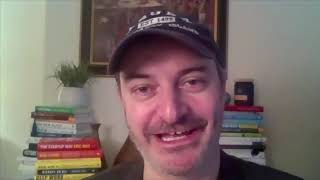
In this interview, Jonathan Reichental talks with Italian smart‑city expert Renato de Castro about the COVID‑19 crisis in Italy and its implications for cities and the smart‑city movement. Renato recounts how his family trip coincided with the first local case, leading to a rapid lockdown. He describes volunteering to set up online schooling for a 1,200‑student institute, noting how teachers and students, previously resistant to personal devices, quickly adopted digital tools. The conversation moves to why Italy struggled: an aging population, overlapping flu season, and fragmented governance between national and local authorities created a "perfect storm" that made Italy a de‑facto guinea pig for Europe. Renato then outlines macro‑level post‑pandemic shifts, predicting stronger regionalism and a re‑evaluation of globalization, while at the micro level he highlights a surge in civic volunteerism and stakeholder‑driven smart‑society initiatives that bypass traditional top‑down structures. Both hosts express optimism that the crisis will accelerate smart‑city adoption, foster cross‑border solidarity, and embed a more collaborative, kindness‑focused mindset in urban governance. The interview ends with mutual commitments to share experiences and resume on‑the‑ground work once the pandemic eases.
Chapters
Hi there, I'm Jonathan Reichental and I'm here with my really good friend, Renato de Castro. He's in Italy right now. Renato is a well known smart city expert and he's also the author of this terrific book called Startup Cities. Done very well, continues to do well. So. Hi, Renato, how are you?
Hi, Jonathan. Well, great pleasure to see you again. I think last time we saw each other it was in November in Brazil. I hosted you there in a big event. It was fantastic when I was launching the book and yeah, we were so used to meet, flying around the world and now we are stuck at home. Me here in Italy, you in the States and in a very, very difficult situation and unusual, right? I mean, to be at home, it's quite unusual for both of us. Yeah. Thank you for this video.
I think we're both quite restless. We want to be out there helping cities and helping governments and building better cities. So this is difficult for us. How are you? So Italy has had a very difficult time and one of the reasons I wanted to do this brief video with you was to learn a little bit about what's going on there. But first, how are you doing and sort of what are you doing with your time under these conditions?
Yeah, well, actually after that, November, I mean in December, I decided to stay a little bit at home, give time to my family.
So.
So it was part of my plans to stay at home till February and it was exactly during Carnival when I left for a family trip and we left here on the 22nd of February. And on 21st we had the first case here in a city that's five kilometers far from us, that was then became one of the epicenters of Italy. We had two big ones, one in Veneto, where I live, and the other one in Lombardia where it's Milan. And yeah, I mean, I was very. I spent like six days in Dubai with the whole family and it was quite critical because one day before we returned, Qatar had closed the air, the airports, the flights to Italy. So we were quite scared and then we got to return home and then it started really what they call the red zone and all these, this problem. And I've been at home since the beginning, but actually I've been working more than ever because like day two or day three of the locking down, when they stopped the schools, actually the kids went out for the carnival holidays and they never came back to school. And after one week of this uncertainty, I called the school the institute. The schools here are divided by institutes, so this institute that my kid is part, we have like 1,200 kids in seven schools, two cities. And I put myself as a volunteer to try to bring technology to make them become online school. Because we were in the middle age here in Italy, in the. Let's say in the public school system. Even device were not accepted in in the school before the crisis. You know, my kid could not bring a mobile to the. And now change it completely. The mindset's changing and that is a positive learning that we are getting from these crisis.
Yeah, yeah, that's. That's nice to hear. I see that a lot in across Europe actually a lot of people they're forced into doing home learning but also being forced to work from home for the first time. And maybe that builds confidence. So. So in a post Covid world, more Europeans will be able to work at home where it makes sense, right?
Yeah. I think that we have been talking a lot about smart cities, a change of mindset. It's society evolving. It's not the technology being used. Right. And technology just make any sense if it makes sense to people's life. So I think a lot of people here were against technology. First of all, it's the normal human fear of change. The second one was the lack of need. I mean they really didn't perceive that could be good for their lives. And when they started being locked down. And I remember the first day that we decided to do the online school, it was very fast. We got to put it together the project and in the first day the idea was to do to be doing lives from the school. We took one school that was a school of my kid for the headquarters for the seven schools. We invited teachers volunteering to go there to do the lives. The first lives were using Facebook before we got the platform. But at that time several teachers, they even didn't have a profile in Facebook. It was the first time doing a live. So the same time we saw a lot of tension because it was new things. But in the other way around, they were so excited to be in something different, to be doing something different. So you know, we see that most part of these distance from technology that was making sense for their lives. And now it's completely different now it makes a lot of sense.
Yeah, yeah. Thanks for sharing that now. So why do you think Italy has struggled with this crisis? What is your thinking currently?
Well, I think that we got a little bit of a perfect storm here. We have a lot of old people. We were ending the winter, but still we with the flu. I Mean the flu in the society, people were still recovering from the normal winter diseases. And then as we were the first, let's say western country to get a very hard, you know, peak of the disease after China. In China was quite different. The way government could manage it, it was top down and it worked out. Here in Europe we are use it to top down decisions like these. And so I think the government was quite strong but then started the internal fight between governments, local governments and national governments as we saw around the world. But I think Italy was like a pilot for this. It was the first, it was the guinea pig. And I think we reacted very fast. You see now the situation of Spain, other countries didn't learn from fast as we were trying to learn with our own mistakes. But now I think that we got the plateau, we got to control the epitome. We see the numbers going down. But the main worry now that should be the worry everywhere in the world is to see the second wave now coming back in Asia and how to manage the second wave because we put it down some social restrictions. But then of course it's a virus. The only control is to not take it, to not spread it. Right. There is no medicine, there is no vaccines. So yeah, I think that's still a lot to learn with these. And it's complicated because as we have these contagious period of about 10 to 15 days, everything that we step forward or backward, we need to wait 10 days and then can be catastrophic. Right. You see, I mean United States are also learning very fast with the delay in taking some measures. Right. You see the numbers scale as hell, you know.
Yeah, yeah, yeah, no thanks for that. That's very, very valuable. And you know, you need to know I was very concerned about you and your family. So I'm very delighted that you're well and you know, you're doing so much to contribute to the solutions. The whole of America was concerned about Italy and we were sending have been sending a lot of love to you and all of Italy for quick recovery. Tell me about as you we need to you and I need to be thinking about a post Covid world. We need to be thinking about when this is over because it's going to be over and there'll be changes and impacts. What do you think are going to be some of the impacts to our cities in general and then to the smart city movement in terms of both challenges but also the opportunity.
Okay. From macro to micro. Okay. In a macro perspective, I think that we were already talking about the new era of the city, cities becoming more protagonists. And then we are going to see this kind of regionalism going very strong around the world. Probably we have touched the maximum that we could get from globalization. Now it's time to change the way we interact and the way we play capitalism in the world. But I think that this, we are learning very fast with these. And when it comes to local perspective, I really see now that society is starting really to realize that these are moods, taking care of cities, managing cities, our cities. It's a mood stakeholder process and it should be like this. And what I see here in Italy is this popping up of cities, civic movements to help. And these civic movements, of course, most part of the time headed by people that understand what they are doing, but they are not there with their hats off, you know, their titles. They are just as a citizen, they are now leading government from one side, private sector from the other side, and the education, the academic from the other side. So I think that these will be the most important lesson that we are going to learn is that come on a smart society come from these stakeholder process that everybody contributes in what they can. I never had before the chance to put in practicing my theories, my ideas in Italy, because I was working around the world, getting really well paid to be traveling around the world to make it happen. And it was quite frustrating for me to see what I would, was doing places like Dubai or Brazil or Asia. And I could not see these in Italy because a lot of problems and mindsets. And now I can do this and I'm doing these in a volunteering way, very happy. So I think that people are realizing these, that come on, we cannot sit down and wait for governments or for whatever we call that, whatever we perceive that is in our top. It depends on us. And again, we have been talking about this for the last 10 years in a theoretical way now people are learning these by doing. We see a lot of volunteering, volunteering spirit, you know, popping up around the world. And this is really good. This is really a sign of change. And probably you're going to go to go out, these are going to leave this crisis with a very important economic and financial crisis. We already know it, but with another mindset, with another common mindset that will probably make us to grow much faster. And I see this as a third world war, but I also see the post moment as a post war, that the world became better after all the wars, you know, And I hope that that was a war that will lead us to not face a real war with People fighting. Right. We are fighting now a virus, but we are putting together all these nationalism, all these sense of volunteering and that's quite good.
Yeah. Yeah. Perhaps we'll realize that all of us have much more in common than we have differences. You know, we are one planet, one people. So there's a lot for us to take from this. I hope, and I hope the goodwill that you're talking about is sustained for, for a very, very long time, if not forever. I say at the end of the day, we need to be kinder to each other. Let's show more kindness. Hey, you know what? It's amazing talking to you. You're full of energy. Your enthusiasm and charisma come even over the Internet. I can feel it. And I hope the viewers also feel it too.
Definitely. It's always a pleasure to, you know, exchange our ideas and to discuss about these. Yeah, it's. I hope that we can meet very, very soon again in person and bring these experience now and spread these around the world. That's important.
Yeah. The sooner you and I can get back on the road doing the work that we love and creating the value that we think can be so useful to organizations and cities and governments, the better. The sooner, the sooner the better. But it's lovely to hear that you're also being able to help your, the city that you live and the country that you live in today. So that's also a bonus. So thank you, Renata. Thank you so, so much. And I hope we can talk in another couple of weeks again to see how things are going.
Sure. Thank you. Thank you, Jonathan. And well, count on us here from Italy also to support United States with wherever we can. You send us a very nice video. When it was starting here, I think you were traveling, you were in Ireland and I followed your trip back to the state. That was already something really hard for you, but now it's time. I mean, we are here. We really should share experiences and make it happen very fast. There is no time. It's a daily half day fight. We are here doing the last, I don't know, 40 days watching the news every time at 1pm and then at 7pm because everything was changing very fast. And. And I think that in the States you're facing now the same situation of need to be fighting a battle after another one. So count on us.
Thank you. Thank you so much. You're awesome. Thank you.