My interview about the future of smart cities with Jonathan Reichental, CIO of Palo Alto
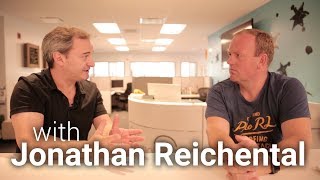
In this interview, Jonathan Reichental, the Chief Information Officer of Palo Alto, discusses the city’s ambitious goal to become the most digital city in the world. He outlines the overarching vision of using technology to improve efficiency, sustainability, and quality of life, and describes concrete initiatives such as moving 60 municipal services online, launching a virtual library, and creating smartphone apps for permits, public safety reporting, and issue tracking. Reichental shares his perspective on autonomous vehicles, estimating a 10‑30 year timeline, and explains how driverless cars could fundamentally reshape urban design—shifting cities from car‑centric grids to people‑centric, green, community‑focused spaces. He emphasizes the importance of inclusive digital access, privacy‑first data collection (e.g., non‑identifiable traffic sensor data), and the role of AI and chatbots in delivering faster, proactive, and personalized citizen services. The conversation also covers the cultural shift required within government, advocating a startup mindset driven by clear vision, credible leadership, rapid experimentation, and a focus on delivering high‑quality results. Throughout, Reichental balances optimism about technology’s potential with caution about privacy, equity, and the need for thoughtful implementation.
Chapters
Hey, everybody. I'm here for a new episode of Steven Talk Videos, and this time we're in Palo Alto, the heart of Silicon Valley. And as you can see behind us, we have the city hall here of Palo Alto. And we're going to speak here with Jonathan Reichenthal, and he is the CIO of Palo Alto. And one of his missions is to make sure Palo Alto becomes the most digital city in the world. And because I thought, hey, citizens are also customers, I thought it would be really interesting to look at his view on the future of cities and see how he thinks that he has to be ready for the citizens the day after tomorrow. So let's go to Jonathan and let's hear what he has to say. So, Jonathan, thank you very much for making the time for this conversation.
Sure.
I told the guys that you're working on Smart Cities. CIO of Palo Alto. Could you maybe tell us a little bit about your work here and what's going on in the city to make it a smart city?
Sure. Well, I've been at the city now six years, and we had a real mission at the beginning. Our mission was to see how we could bring technology to bear on making the city run more efficiently and, you know, contribute towards our vision for the community. You know, great services, a great quality of life, a livable city, a sustainable city. So that's really what's been kind of driving us for all these years. And, you know, I, like, I have a career of experimenting with technology, and I thought, what could we do in government that would be able to push the needle forward? And I think working for the city of Palo Alto, there's kind of an expectation of leadership. Right. This is the birthplace of Silicon Valley. Right.
The heart of Silicon Valley.
The heart of Silicon Valley is right here, actually. It's right in this room that we're in right now. We're in the heart of the heart. And so I really feel that is an important obligation for myself and my team. It's reflected by the city manager and the mayor and our council. So there's not one project. There's not two. I mean, there's a handful of things that are done across the city, whether it relates to trying to address some of the real challenges in transportation, finding a parking space, or trying to incentivize people to not drive alone. We have so many people in the United States and in this area who travel in their car every day just alone. We want to incentivize people to have electric cars and support that movement in our utilities we're trying to transition away from our gas utility and embrace electricity across the board in our businesses and in our homes. We are very proactive around climate change and the contribution we can make to positively impact that effectively reduce the speed at which the temperature of the earth is increasing. I mean, it's a regional thing, it's a state thing, it's a national, international. But we have a role to play and we can be again a leader for others. And then finally digital transformation. How can we take a lot of the manual processes of government which are so prevalent? All of us experience filling out a form or something. How can we bring that to a smartphone? How can we make it so that when you have to deal with government, whether it's to pay a fine or request a permit or report a crime, how can we do it? So you can just do it on a smartphone anywhere you want at any time and we are responsive, you know, we're accountable. So in each of these big areas and others, we're taking technology to the next level and that's what we're doing.
Okay, fantastic. Can we talk a little bit about driverless cars? I know you are very passionate about
that, I am sure.
How do you see the evolution? What is real and hype about driverless cars and what would be the impact on Palo Alto?
Right. Well, let me say, and this is going to be a little bit of my own opinion, right? I'm not necessarily representing the view of the city or any car manufacturer. It's clear to me that self driving cars are coming and this comes from sitting in a car driving itself. I have had that experience. Which one did you drive or did you sit? I mean, one of the most interesting experiences I've had several times now is in a Tesla X and I've had a real chance to spend some time and see it at speed on a highway with a friend and just sit there while the car is driving itself and there's lots of other traffic around and there's lots of changing environmental dynamics and the car just responds amazingly. I've also sat in some other innovation that one of them is stealth. And I can't really talk about it here. It'll be known to the world soon. But as you can imagine, there's plenty of tech companies who are experimenting. Right. So it's coming now. People say, I feel so confident about this, when, when is it coming? And it's a very hard thing to be able to be confident around. It seems to me, based on my research and some of the analysis, I'VE done that. It's coming. It's not less than 10 years. It's not coming in 2020. This is the transition, but it's certainly going to be here well before 30 years from now. So it's somewhere between 10 and 30 years. We also have to deal with the transition, right? There's going to be humans who drive cars and there's going to be computers that drive cars. So it's coming. It's going to have some big impacts. It may be the most impactful shift in society in the first half of the 21st century. Because it's not just about cars driving themselves. It's about designing cities differently. It's about, for example, you don't need traffic signals, maybe, or stop signs. Traffic doesn't have to stop at an intersection. It can negotiate with other cars. And so car flow just continues. But it also means the things we do inside these vehicles will change and how we spend our time will be different. And I kind of always have that extra thing which is the thing we can't think of right now. A good example I've thought about in the last few days is because iPhone just announced the iPhone X and some new technology. And I go back to 10 years ago when the first iPhone came out and we were impressed, right? The screen was cool and very responsive and the apps were neat. But we hadn't yet seen the emergence of the app economy. Steve Jobs hadn't yet said, anyone can build an app provided it meets a certain quality. And so we couldn't see that yet. Then Steve Jobs says, anyone can build an app. I'm going to see what happens. And that changed the world. The apps economy emerged, created a lot of wealth and a lot of jobs, changed the way we use technology, changed the way businesses function, how we interact with people, enterprises. And I think the same thing's going to happen when we shift to autonomous driving. There will be the apps economy equivalent that will surprise us and will fundamentally change how we think about things.
What do you think? Like, if you built your city, I remember you once said to us, today, we build cities around cars. In the future, we're going to build cities around people.
Yes.
Can you talk a little bit about that?
Yeah. I mean, it's very obvious in America. America is the auto nation. Right. We built our cities largely around the automobile. I mean, the grid system, the blocks, it's all because of the car. And if cars are different, if the transport paradigm shifts, it allows us to do things we haven't been able to do before. People want to get their cities back. One of the things that we regret in the United States is urban sprawl, right? And what it did to how people live. As the car really took its place in American society, people began to live further and further out from the city. And so we created these subdivisions, but with no sidewalks, for example, so people didn't get to know their neighbor. And we lost the community spirit at the town square and all. So we have a chance to regain some of that. I mean, you think about what would happen if you started to convert some roads into green space. Main thoroughfares become not places that have high speed vehicles rushing up and down, but a place that maybe has grass on it and animals are out and families are out and people are having picnics. Changes how we think about what it means to have place in a city. So I think there's a real opportunity that if you combine a new generation of people who are completely invested in the planet, I hope, I think they are. And a shift in technology, transportation, which has been the most impactful aspect of how urban environments have evolved, if that shifts now, you have a chance to have a real get back to community, get back to being urban areas, being about people and community.
You know, I'm working on a new book, right? It's called Customers the Day After Tomorrow.
Well, I can't wait to read it. Thank you.
It's about the impact of new technologies on customer relationships. And I try to look for benefits for customers. And I came up with three. I think if you apply AI and IoT data, you know all the buzzwords, that eventually what you create is a world that has faster than real time customer service, customer service that moves into more proactive, preemptive world. It's hyper personalized, more personal than ever before, and it's completely effortless for users. Do you follow those and do you see possibilities to apply that in a city?
I really like those a lot and I think there's a lot of good evidence. You clearly have thought about this deeply and I can't wait to read the details. One of the things we're seeing here and, and one of the things that we think is important as we try to lead in the future of cities is we have to meet community expectations. Many cities are not doing that. The local government is stuck in an old way of doing things and an old mindset. Potentially here at the city of Palo Alto, we want to think differently about how can we have just an excellent quality service that is aligned with the best of the private sector. I Talked to you a little bit about we need to move more and more of government onto a smartphone because that's where people are. Right? It's where the people are. But we still require people to come to city hall or to a permit center or to various locations.
You cannot leave anyone out.
Yeah, well, you got it. That's right. You got to be inclusive. So I'm really pleased that you raised that. We can evolve, but not at the cost of part of our community. Social inclusion is absolute priority for us and it should be for every city. But there's going to be a whole generation of people who are smartphone native. They don't know how to interact with the world other than through their mobile device, maybe their watch perhaps as well. So I think there's tremendous opportunity for cities to create great experiences that, as you say, are closer to real time, are high quality, use things like artificial intelligence, chatbots, data to drive better solutions and quicker solutions. I mean, my view is we need to choose to do that. But even if we don't choose to do it, our communities will demand it eventually. Otherwise, I think people will vote at the ballot or they'll certainly make it known that we're not meeting expectations.
And do you have some concrete examples of applications or tools or bots that you created for the community?
Yeah, I kind of think about it in two buckets. You've got the stuff that we are confident about that we've built and we rolled out, and then we've got a. A bucket of things that are experimental. Because a lot of this is so emergent right now. You know, for what? If someone's watching this video in 15 years, this will sound, you know, very dated. Imagine, look at those days, how bad things were. It's hard. It's hard for me to think that one day what I'm saying right now will be very, very dated, but it will be so, you know, we have moved 60 of our services to a digital platform. 60. 60. 60. Over the last little over five years. And I mean, we have an entire library that's now online in the city of Palo Alto. We have five physical libraries that you can go typical library. We have a sixth library now that's entirely online. You can borrow books. You can.
And are the books digital as well?
They are, yes. Yeah.
It's like, do you have to pay for it then?
No, it's an identical library experience. So you're borrowing books and you're giving them back, but in a digital environment. Yeah. So now in a way, that's almost a Different type of inclusion right now. Not only can you do we serve people who are local and can use our local libraries, but technically, if you're not local, you could use our virtual library anyway.
If I want to use it, I can use your library. Or do you have to prove that you're from Palo Alto?
I don't think. I think you just need to register. Hopefully I'm right about that. But I suspect the biggest library in the world we could be. Why not? We'd love that. I think we have a ways to go to be the biggest. But we certainly are in this for public service and if we can help anyone, anywhere, we'll do that. We have an app for public safety so you can report non urgent crimes. Urgent crimes, clearly 911, that's what we do here in the U.S. but we have a way that you can use your smartphone to report something that's not so urgent and we'll get to it just from a smartphone. You can get contact information. We have an app for reporting all sorts of issues like an abandoned bicycle or trash on the street or a street light that's not working. It's all digital. Comes to city hall, we dispatch an engineer, we fix it, and then we tell you, hey, we fixed it. How did we do? Permitting is a really big one for us. So we're an affluent, dynamic community and people are constantly either building new office buildings or converting them or improving them. They're doing the same things with their homes. So we have a lot of throughput around the permitting process. And just a few years ago, permitting was tough. Here, you know, you have to physically turn up at the permit building, we call it development center. You would have to fill out paperwork, you'd have to wait, you'd have to come back. I mean, it was painful. I think everyone would be okay for me to say that, but that's very different today. There's still things you have to turn up for. You still have to review things with an architect, and I mean this with an inspector and various folks. But a lot of what used to be a pain now is all online. You can initiate the permit online. You can look at status online. There's some permits actually that are entirely digital now, require no human to human interaction. We've taken what used to be, in some cases, weeks and weeks of time in many cases now it's down to days and possibly in a few instances, even just a few hours for certain types of permits. So big shift in just the user experience by using digital technology.
Fantastic. Can I Talk about data for a second, please.
Yeah.
Because, I mean, you have a city here, and I assume that the potential to learn about the behavior of people that live here is just endless.
Yeah.
Is that something that you guys are working on or is that something for the future?
Well, let me say for first of all, it's very important that we have a laser focus on privacy. We have incredible concern about making sure that the kinds of things we do when it comes to collecting data respects. Everyone is absolutely meeting and exceeding the expectations of any law or regulations. And so we're careful about it and we're thoughtful, I think. But there's stuff that we collect that has no personal information related to it. I'm going to give you an example. We can count, for example, traffic at an intersection. We can count the traffic. We can tell what direction it's headed. We can tell the speed of the traffic. We can even tell if it's a truck, a bus, a bicycle or car. Now, we don't look at people, we don't look at registrations or tags.
Just a vehicle.
Just a vehicle. So that's pretty low sensitive. But the impact of collecting that information is really helpful in terms of thinking about the risks of an intersection for bicycle safety, pedestrian safety. So we collect the data, we analyze it, we make some decisions based on that. We've made some interesting intersection design choices based on that data collection.
And did you then afterwards see the difference?
Oh, yes.
Basically the day after that, you're done.
Did it improve? And yes, we see that. I would consider this a work in progress. I think a lot of this is fairly new, and I think we have to have a record of not just a few months, but a few years. But the evidence is stellar. I mean, we are seeing some really nice results.
Fantastic. And we're also moving into a world of automated customer service. You already said we got apps to go through a process, but I can assume many people have questions that are not in an app. Are you guys thinking about automated customer service working with bots and Facebook? Is that something that interests you?
It does interest. I mean, it's fascinating. And I think there is a role for this in government. I think we have to be very careful about where we apply it, where we don't apply it. There's an important role for people to talk to people still today. I don't know if in 20 years. We'll see. We'll see.
Let's hope so.
Yeah, that's right. But I do think that here's what we're doing. We're intrigued. We are experimenting. And so in my organization, we did some work on looking at what's it take to create a Facebook chatbot. So that messenger capability within Facebook, could it be artificial intelligence behind it instead of a person? We're trying that out and the results were good. They were preliminary results based on just the nature of the experiment. But it suggested to us that in some form, that's going to show up. It'll probably show up on our website at some point, but it'll complement all sorts of other engagement.
And typically for what kind of questions do you use it then?
Well, we don't know yet. We're still thinking about that. I mean, one of the things that we can do is we look at what are the most common questions, or not only what are the most common questions, but what are the things that people mostly do on our website. And one of the things they want to do, for example, is they want to know phone numbers, they want to know open hours. Like, when does one of the community pools open and close? Those things should be pretty easy for chatbot to return. You should be able to type in what time does the Rinconada pool open on Saturday, and it should come back with the precise faq. Exactly. Yeah. Yeah. So I think that's going to be where we'll see some early uses, maybe
a last topic to talk about. This is extremely cool. We're sitting here in city hall and it looks like a startup, like across the street here in Palo Alto.
Well, thank you.
I think many city halls look different than what we have here. So clearly you convinced people to invest in this. You motivate people to go forward with that.
Yes. Yeah.
I meet a lot of companies, but also government organizations, where that is sometimes a difficult point to convince others and to convince people to really move forward with that and have that mindset. Like, I think it's brilliant what you say where you guys think like a company to exceed expectations of people. You think like the big ones. How do you imagine that I drop you in a city somewhere in Belgium and say, he's really good at that. He can help you. How would you or what would you recommend to people to create that spirit? How can they do that? And sometimes I hope they're not going to be mad, but sometimes a conservative environment, like a government.
Yeah, well, it's not easy. Let's be clear about that. If you dropped me in a place and said, change it in the six months, I certainly would say to you, let's be reserved in our expectations. But that's never stopped me. It's not stopping my team. I think, first of all, it has to start with a vision. And the vision is really, is this what you want to become? Have you convinced people that this sort of future state is valuable? It has good outcomes, so you need to make that choice. Secondly, you need leadership. There's going to be an element of grassroots. But fundamentally, I've chosen to lead. I've chosen to make the case to be passionate about this, that if we do it this way, the results will be better. So I think a part of it is that the next element is, and this applies no matter kind of what you do in life is you got to build credibility, you got to prove that you can do stuff. And I didn't do this on day one. The thing you see here, I'm here a little over five years now. I didn't say my first week, give me money. I'm going to transform this place. We're going to create a startup. At City hall, everyone would have laughed at me, right? But you start to do projects, you start to deliver on time, maybe below cost or below what you budgeted. You start to produce high quality. And people begin to observe that and they say, hey, here's a team and a leader who actually says something and delivers on it, makes promises and delivers on it. And again, I don't think it matters whether this is in your family, in your social group, or in your business or where you volunteer, whatever it is you do, people will judge you on what you say and what you do. And I think I was here already a few years, clearly demonstrating, I think, some superior results. And then I asked for the money, and then I said, we can step this up a notch by doing the following things. And it's not just by. It's not about new carpet and some paint. This is about actually behaving differently. This is a startup mindset. We want to move fast, we want to take risks, we want to do minimum viable product. We want to experiment and innovate, and we want to focus on quality. These are the things we brought to the table. And so as we demonstrated it and as we built this and showed that we can do that, people were, it's easy at that point because, you know, if you're putting the money in and getting the return and the results, it's like, well, that was the best decision I ever made.
That's fantastic. I think I really admire the work that you're doing here.
Thank you.
It's fantastic that you were willing to have this conversation.
No, it's my pleasure. And I can't wait to read your book. Awesome.
Send it to you at the end of November.
Okay.
Then that's when the English version comes.
Oh, wow. Fantastic.
Quoted in it.
Okay. Wonderful.
People can see the video through their phone in the book. So if they scan with an augmented reality app and they scan the page where you are, they will see this conversation pop up on their screen. It's like a book coming to life. We thought that was a cool gadget.
I like that a lot. And that will be my first augmented reality video. Great. Thanks a lot, John. You bet. Thank you. This is good. Thank you so much.
More from Professor

Technology Ethics and Responsible Innovation Coursera Specialization Launch Teaser




Technoethics: An Essential Leadership Skill for the 21st Century | Dr. Jonathan Reichental
Technoethics: An Essential Leadership Skill for the 21st Century | Dr. Jonathan Reichental


FOF 154 | Jonathan Reichental. On Cities and Governments Using Technology To Serve People Better.

Miasto to emocje, relacje i codzienne historie – rozmowa Waldemara Olbryka z Jonathanem Reichentalem

MS01┃Jonathan Reichental, PhD - Perfection, Creativity, and Who’s Actually Having Fun?