The Future Belongs to Cities | X Festival 2020 | Dr. Jonathan Reichental
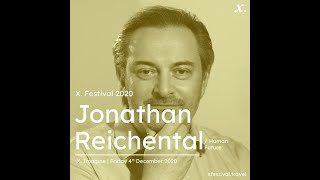
In this 20‑minute keynote, Dr. Jonathan Reichental outlines why cities are the defining arena of the 21st‑century challenges and opportunities. He begins by tracing the explosive growth of the global population and urbanization, noting that half of humanity already lives in cities and that figure will rise to 70 % by 2050. He identifies the automobile‑centric model of modern cities as a core source of congestion, carbon emissions, fatalities, and land‑use inefficiency, and links this to broader problems such as air‑ and water‑pollution, massive plastic waste, and social exclusion. Climate change is presented as an existential threat, especially for the 600+ coastal cities housing over a billion people. Reichental argues that technology—digital government services, sensor networks, data‑driven decision‑making, and renewable energy—offers the tools to address these crises. He illustrates successful interventions, including the pedestrianization of Times Square, the air‑quality turnaround in Los Angeles through emissions controls, and the solar‑rich community of Freiburg, Germany. He stresses the economic upside of building “smart” (sustainable) cities, estimating a $2.5 trillion market by 2025, and calls for inclusive community engagement to co‑create solutions. The talk concludes with a call to “fall in love” with our cities, an invitation to read his book Smart Cities for Dummies, and contact information for further dialogue.
Chapters
Hi there, it's great to be here. I'm Jonathan Reichental and I'm just thrilled to be part of the X Festival. I'm going to be speaking to you for the next about 20 minutes or so about the future of our cities and why this topic really matters for all of us. Why it matters to us as individuals, as organizations, as businesses, as visitors, as tourists. A really big topic. And I want to be able to tell you about what it means to build better and more sustainable cities and what some of the challenges are and perhaps towards the end, some advice and guidance for you as you think about what your role could be in the future of our cities. You know, one of the defining qualities of the last few hundred years of our planet and our civilization has been the sudden increase in population and with it the rapid expansion of urbanization. For a lot of history, the planet wasn't very populated. First of all, it was only made up of a few hundred thousand people, then a few million people, and it stayed at about a billion people for quite a while before we had to get into the 1900s to be able to see rapid, rapid growth as we went from 2 to 4 to 6 and now almost 8 billion people. And with that, we've seen remarkable urban expansion. The city, the world was really rural for pretty much all our history so far. About 200,000 years of human history. And the phenomena of cities, and particularly big cities is really just a quality of the last few decades. In fact, in 1980, there were about 5,000 large cities in the world. Today, 40 years later, there are 10,000 medium to large sized cities in the world, and they represent a little over half the amount of people who live on the Earth today. And we're moving into cities, about 3 million people per week. It'll get up to about 70% of the world's human population by 2050. And then as we go beyond that, it will even become more of an urban planet. You know, I've had the great privilege of traveling all over the world over the last few years and getting to experience many different cities in South America and across the United States and in Europe and Middle east and Australia and Asia. And I see certain characteristics, I see a lot of different challenges, but I see some big themes. And one of the biggest themes that is probably not lost on you is the role that cars have played in urbanization. And you could think of transportation more broadly, whether it's bicycles or trains or trucks or motorcycles. But cars for sure have been one of the defining aspects of our more Recent contemporary urbanization. That means not only do we see very common transportation challenges in most cities in the world, things like congestion and the exhaust of carbon into the atmosphere, which we now know from the scientific consensus is causing a climate emergency. But we also know that we've been building our cities around cars. In some cities, anywhere between 30 to 60% of our city landscape is used for cars, Whether that's roads or parking spaces or parking lots. Cars are also very dangerous. They kill almost one and a half million humans every year in the world, and tens of millions are injured. So if we're going to have better and more sustainable and smarter communities in the future, we don't need to look much further than tackling what is really a transportation crisis and one that's defined by the automobile. Our cities have been successful. They are the human invention first that is most complicated, but has been also the most successful to bring the most amount of people out of extreme poverty than anything else. But in the process of doing this, we have created a whole number of challenges, including, for example, our factories that are supplying our consumerism, are supplying our cities with products and services, and our factories with all the raw materials and chemicals that they need to function. The air is being polluted. The world health organization says anywhere up to around 3 million people die directly or indirectly because of air quality. If we're going to clean the air, we're going to have to start with our behaviors in our cities. Of course, with all this consumerism and this good life that cities has afforded to many people, not everybody, of course, but many people, There is a remarkable and extensive byproduct of waste. We have to fix this waste issue. Our cities create enormous volumes of waste. A lot of it is plastic. And plastic does not deteriorate quickly, as you know, takes a long time, thousands of years, in fact, if we just let it biodegrade. Where does that plastic go? Well, it flows into our rivers and our lakes and into our oceans, and of course, into our landfills. And in the center of the Pacific Ocean, there's an area the size of Texas, or perhaps more relevant to this talk today, the size of France. And there are tiny little beads of plastic that the fish eat, and then we eat the fish. We are eating the plastic. Now, our cities have been successful. They've created more opportunity for education, for good jobs, for access to health care and entertainment. But they are failing a lot of people for a lot of reasons. A lot of people who live or try to live in our big cities today are excluded from enjoying the Benefits of a decent life. With so many people in cities, not everybody can thrive. Not every service and every opportunity is made available to those who perhaps struggle at the periphery of society. So we have to make our cities more inclusive, more inclusive, so more people can get the benefits. This is a human right. This is about equality. We have to make our cities equal, more inclusive. And of course, probably the 800 pound gorilla in the room is that our earth is heating up. We do have a climate Crisis today. Over 600 cities are on coastlines. Makes up about 1.3 or thereabouts billion people live in those cities on coastlines. And as the ice caps melt and the oceans rise, those cities are becoming increasingly vulnerable to flooding. 1.3, 1.4 billion people who live in coastlines and over 600 cities. And when there are big storms out at sea, hurricanes and typh tornadoes hit our cities internally. These will get worse in the years ahead. They will get stronger and more frequent. Where there is drought, the drought will be drier. So if we're going to solve this problem, we're going to have to solve it a big part of it in our cities, a very big part of it. If that means, for example, protecting our coastlines, withdrawing from the coastlines, going to more elevated areas, we can't walk away from this. Our cities are very important and increasingly they will be at the front lines of both the impact of climate change, but also in solving or at least managing the crisis of climate change. Now, when you think of cities and working with cities, you probably think of this. Well, cities are quite analog still. They're still about going to a building, filling out a form if you want to get a copy of your birth certificate, or you want to apply for a permit, or you have to pay a ticket for speeding. And it looks a lot like this. Very inefficient. And in fact, a situation like this is even tough today because we are living right now. As you watch this presentation here in November or early December 2020, we're living through a terrible global pandemic where people can't congregate like this. Well, in some ways, perhaps we're forcing more digitalization, which could be a good news story, but for the short term, cities are not optimally equipped to provide good quality services and a good experience to so many citizens. The reality is we pretty much want to work with government like this, just like we do with so many of the technologies and services that we use in our private lives. So this is what governments present to us in our cities in particular, but this is what we want. We do want a better experience. We do want a lower cost, more accurate, and a service, by the way, that is on our schedule, not the schedule of cities. So we have work to do. We have work to do across the board here. Whether it's an issue of transportation or inclusion or lack of digitalization, digital support, air quality and water quality and waste management. And so many more issues we need to think about. How do we make our cities more successful and more accessible to more people? This is one of the questions of our time and for the next, well, as far as the eye can see in terms of time. But as our cities grow rapidly and they move from being cities to mega cities, those that are over 10 million people, some urgency is created if we're going to have a good quality of life and beautiful places for people to visit or to move to, to call their home. So we need to incorporate technology to a greater degree because technology often can provide a better experience. And frankly, technology can often be the solution to some of these big intractable issues. Now, one of the reasons I love this topic so much is because it is so diverse. There are so many areas. And if you watching this today are interested in a new career or you've always been interested maybe providing a service to a city, look how many different areas there are. And by the way, this is just a few. These are some of the areas that are moving quite quickly and are embracing change. And we see a lot of innovation, but there of course are a lot more to point out. A few. You have health here and education and waste management and public safety and the future of energy. Such an amazing big space to be involved in. And every area is so important and valuable and needs to be addressed. The future of better and more sustainable communities. We call these smart cities. The term is not as important as the work and as the vision. We want better cities. And if we call them smart cities, well, it's the word that seems to have stuck. It's an incredible opportunity. Here you see that by 2025, the economic value of providing and building better communities will be worth almost two and a half trillion dollars. That's trillion with a T. That's a remarkably economic opportunity. And this data point talks to us about the supply and the demand side. It really solidifies how important this topic is because it's so many topics. If you want to understand them, follow the money. Follow the money. So let's talk about where we might be headed. Let's talk about solutions, because I've been talking A lot about issues. So let's look at New York City here just a few years ago. And you'll see here on the image on the left hand side, I think could be right. If you're watching this. But the, but the one that's over to the furthest here, let me see if I can put my finger over there. Kind of like that. There we go. That was pretty good. That shows Times Square when there was traffic and it was open to automobiles and buses. And you can see people are, you know, in this central area. This is Times Square, as I said, and it's noisy and it's a little bit dangerous and nobody really wants to hang out there. Well, the mayor had a, the mayor had a, an idea with his team at the time, about a decade ago, why don't we, as part of a festival, why don't we go ahead and make the area pedestrianized, just open to people, as you can see in this picture right here. And it was gonna just be for a few months. And when they did it, well, the traffic was rerouted and then people started to hang out. And you can see there was some tables put out where people could have coffee or eat a lunch, they could socialize, they felt relaxed. And by the way, this was really attractive to tourists. So this was a boon for tourism. And you might think, for example, as did the cab drivers and bus drivers, that, well, the traffic's gonna be really bad now because we have to go around this area. Well, it's interesting intuitively, it turns out the traffic improved as it was optimized around this area. And this initiative, this festival, this period of time was considered such a great success that it was made permanent. It was made permanent. So if you go to Manhattan today, this is the experience that you will have. And I've been there not so long ago, very late at night, I think I was at the theater and I had some dinner and then with some friends I went to Times Square. Maybe it was 1 or 2am at. It was packed, was packed. Packed with tourists, of course, but also all sorts of people visiting and having fun and enjoying the evening. This is what's called giving the city back to people. And it's about place making. And this place making will be such an important part of building better cities and building cities that people want to visit and people want to spend time in and where people feel very safe. We've had, and we continue to have some very major intractable issues in our communities. This is a picture here. On the extreme side. Again, let me See if I can point to it. There you go. Maybe a little harder to do this because it's of course in reverse for me. There you see Los Angeles back in the 70s and 80s when because of the emissions from cars, there was always a cloud of smog, horrible smog over Los Angeles. And if you were up in the Hollywood Hills looking at the city, you could see it and it'd be hard to make out the buildings. It was toxic and not pleasant. But then you fast forward and you come to this picture here and you see what happened to the smog. Well, we implemented new innovation. We incorporated catalytic converters on our cars and we started using unleaded gasoline and we cleaned up the air. We can solve these problems. We've done it before, many times and we continue to do it. These intractable big city issues can make our cities more beautiful and more attractive. Now, one of the greatest challenges of all for humanity over the decades, and particularly in our cities, is our energy consumption. We know now that we can't indefinitely harvest fossil fuels out of the oceans and out of the mountains and hills. We can't keep extracting gas, oil and coal. Some of it's going to run out. But also we are destroying the environment by doing this. By continuing to extract and burn this fossil fuel, it's creating significant carbon emissions into the atmosphere that we think is largely responsible for, for the heating of the earth and the climate emergency we now face. Well, there's a good news story. We are starting to tap into much more non carbon based energy and one of the big winners is solar energy. We're getting better at developing solar energy and it is cheaper and cleaner and more abundant than anything else today in 2020, wind power is still very effective and still the number one form of non carbon produced energy. But solar is catching up very fast and soon we will see it in many of our communities, maybe to the extreme as we see in this community here, Freiburg in Germany. Many of these people don't pay for electricity anymore because it's free. And in fact, they produce so much electricity in their own homes because of the sun that they can sell it back to the grid and make money. Imagine not having to pay for your electricity and not having a bill, but instead getting a check. The future is going to be very different from the present. Now we have issues that range from traffic, of course, to public safety, to noise and air quality and water quality issues. How are we going to solve some of these things? Well, we're going to have to have lots and lots of New ideas and really push on innovation. Cities are going to become the ultimate platform for the Internet of things. A whole range of sensors that are connected to the Internet that collect information, collect data, send it back to a reporting source, and then we can act in it by using sensors. If we see things like a dangerous intersection and we have the data to support it, perhaps we can make that intersection safer. If we have sensors all over our cities, we can see things like detect the quality of air and where problems with air quality are coming from, and then we can solve them. Now, putting sensors all over communities, something we call sensorization. This is not about infringing on privacy and it certainly shouldn't be. This is not about a surveillance society. Certainly it should not be. I would never support that. We need to regulate it and have policies and legislation that does protect all of us and our rights and our privacy. We have to use this technology in a way that our communities can prosper and be healthier. Now, when I joined Citi a few decades ago, about a decade ago, excuse me, it feels like a few decades ago, one of the things that I found was that while cities had so much scarcity, not enough people, not enough money, not enough time, cities had a lot of data. Data. Data can make up a great component of how we begin to solve problems by enabling us to make data driven decision making by enabling us to have visualization of issues. Here you can see an example of that. Here's some real time data that is produced from people logging issues, their smartphones, for example, things like graffiti or abandoned bicycles or abandoned trash. Now we're not going to be able to solve these problems as governments alone. The next few years are going to be about engagement. We have to be able to bring more and more people into the conversation. Children, families, academia, tech companies, enterprises, more and more, every age group, every demographic. We have to have a voice for people. Because together we will solve these problems. Together, we will make better, more prosperous and more sustainable societies. Community engagement is a core responsibility for making our communities better, more attractive, and increasing things like travel and tourism to make our cities more beautiful. Now, as I sort of come to conclusion here, I just wanted to share one or two things with you. I wanted to share with you the idea of how we can fall in love with our cities again. You know, when, when you wake up as a community member and you love your city, you feel better about yourself, you feel better about your life. It turns out that communities too, that where people love their cities, they are healthier and they are more prosperous. And they're more progressive, looking out with optimism at the future. And those cities also attract more people, more tourists. They encourage travel. Cities will be the popular destinations for tourists as they think about where they're going to do what, where they're going to go and what type of life experiences they want. They want to go to happy places. They want to go to places that are beautiful and where the people are proud. So we have to find a way to either fall in love for the first time or re fall in love. If we've fallen out of love with our cities, that means getting involved. That means being a volunteer. Could also mean visiting places that you haven't visited as a member of that city. I think it's time for us to fall in love with our cities to build better and more sustainable communities. Now, if you enjoyed this presentation today, I hope you did or you learned one or two things and perhaps you were a little bit inspired. I want you to know I wrote the book on the future of cities. I wrote a best seller which came out this summer, summer 2020. It's called Smart Cities for Dummies. But it's actually for everyone. It's for everyone who might be interested in how we can build better, more sustainable, more attractive cities for attracting business and more tourists and making them places that people want to travel to. I wrote the book on it and it's available through www.smartcitybook.com. and no matter where you are watching this video from, whether it is in France or anywhere in Europe or around the world, perhaps on video, later on on YouTube, when you go to smartcitybook.com you will see links to places to buy the book from. Many, many places in the world. You should be able to get it anywhere. In fact, if you can't in your city, I will sign a copy and send it to you. You will see a link for that in smart citybook.com and so thank you very much again for spending about 25 minutes with me now. It's been a real joy to be with you. I hope you're having a great event and you'll continue to have an amazing event for me. This is the beginning of a conversation with you. If you like what you heard and want to continue to talk with me and ask questions and perhaps you want to share with me your ideas. Follow me on Twitter. There you go. It's. I can tell you'll see it on the screen there. And Also I'm on LinkedIn and I'm pretty easy to find. So please do reach out. Please connect with me. Please ask me your questions, share with me your businesses and your ideas. And I think together we can try to change the world with that. Thank you so much. Good luck, and take care of yourselves.
More from Professor

Technology Ethics and Responsible Innovation Coursera Specialization Launch Teaser




Technoethics: An Essential Leadership Skill for the 21st Century | Dr. Jonathan Reichental
Technoethics: An Essential Leadership Skill for the 21st Century | Dr. Jonathan Reichental


FOF 154 | Jonathan Reichental. On Cities and Governments Using Technology To Serve People Better.

Miasto to emocje, relacje i codzienne historie – rozmowa Waldemara Olbryka z Jonathanem Reichentalem

MS01┃Jonathan Reichental, PhD - Perfection, Creativity, and Who’s Actually Having Fun?