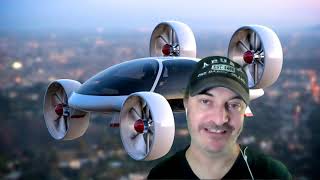
In this virtual keynote for the Chilean Real Estate Conference 2020, Dr. Jonathan Reichental outlines why cities are the central arena for humanity’s future and how technology will reshape them. He begins by tracing the explosive growth of the global population and urbanization, noting that half of the world’s 7.5 billion people now live in roughly 10,000 cities and that by mid‑century 70 % will reside in urban areas. He then highlights the pressing challenges of today’s cities—car‑centric congestion, carbon emissions, air‑pollution‑related mortality, massive waste streams, inequity, and climate‑driven risks such as sea‑level rise and extreme weather. Reichental argues that most cities remain analog while the private sector undergoes rapid digital transformation, creating a trillion‑dollar economic opportunity for “smart cities.” He describes concrete technologies that can address these challenges: smart grids for renewable energy integration, IoT‑enabled waste bins and digital signage, smart parking systems, and broader IoT use cases (public transit, traffic monitoring, flood detection, air‑quality sensing). He envisions a future populated by autonomous vehicles, delivery drones, and even flying cars, which could free urban space from parking and traffic lanes but also raise equity and safety questions. Throughout, he stresses the need for privacy‑respectful, inclusive design and resilient infrastructure. Finally, he promotes his book Smart Cities for Dummies as a practical guide and invites ongoing dialogue via social media.
Chapters
Hi everyone, I'm Dr. Jonathan Reichental. I'm thrilled to be with you in Chile for the Chilean real estate conference 2020. I'm actually here in San Francisco, but I would love to be with you in Santiago or wherever you are. I love this country and because of the pandemic, I can't be there. But I will be back again soon. I'm going to spend the next few minutes with you talking about what will the city of tomorrow be like. I'm going to make the argument that cities are a significant part of our future, a growth area, very important topic, and technology will play a big role. And I want to talk to you about that and perhaps the role that you might play in building better cities for tomorrow. Now, one of the big characteristics of the last few hundred years has been the significant growth of human population. For most of our 200,000 years as homo sapiens on the planet, we lived a rural life in small groups. And at times there were only 100,000 humans, and then there were a million and a few million. And we remained at a little less than 1 billion up until the 1900s where things started to explode and the human population grew rapidly. In addition, because of this as one of the reasons, urbanization also accelerated as more and more of this growing human population flocked from the rural countryside into urban centers. And as you can see through the 1900s, right now into the 20th century and now into the 21st century, we have the explosion of population. We're now at about seven and a half billion people, quickly closing in on eight billion people. And about half of those people now live in about 10,000 cities in the world. 10, 10,000 cities exist middle sized to large cities. And of that, 50% didn't even exist 40 years ago. So cities are becoming a dominant aspect of the human experience. And over the next 20 and 30 years to the middle of the 21st century, about 70% of humans will then reside in cities. And it'll only grow from there. Cities are our future. And I've been privileged to travel all over the world to visit many cities and work with many city leaders to help them think about what they can do to build better communities, smarter and more sustainable cities. And in each city there are lots of different issues that of course cities have to deal with. And often they're very unique to a particular community. But I also see some big trends too. For example, in most major cities in the world, the automobile is dominant and you'll see lots of traffic whenever you arrive in a big city. And you'll see congestion. And I'm reminded that these cars are spewing carbon emissions into the atmosphere, which is, if you believe the scientific consensus, heating up the earth and creating a climate emergency. For so long now, for decades, we have been building our cities around cars and not around people. They are a very key part of the history of cities. But the question is, will they be part of the cities of the future? Well, we'll see in a few moments. We have created remarkable cities and they're very successful. In fact, one could argue easily that cities are the most complex and most successful of human inventions. But to power these cities and to provide all the resources that are needed and all the consumerism that happens, we have large factories that spew out chemicals into our clean air. And in fact the World Health Organization says anywhere from 2 to 3 million people die from directly or indirectly from bad air, air pollution every single year. So we have very significant challenges that have arisen as a consequence of building incredible cities around the world. And yes, we are consuming a lot every minute of every day in every city in the world. And all of that is producing enormous amounts of waste. And we haven't quite figured yet out how to manage the waste. Of course we should produce less of it in the first place, or less products and packaging and plastic so we don't have as much waste. But when we create it, we have difficulty disposing of it. Our plastic is ending up in rivers and in lakes and in the ocean. The cities of tomorrow will have to figure out how to manage waste. And even though cities have been very successful, they've created more opportunities for economic growth, for health care, for education, for entertainment and more. They have left people behind. We know this clearly. Our cities have not been inclusive for everybody. There are major challenges of equality and equity that have to be resolved in our cities tomorrow. During the period 2008 through 2015, almost 200 million people in India were brought out of extreme poverty in into the working classes. But lots of people remain behind in all of our cities all over the world. Our cities of tomorrow need to be more inclusive. And of course the 800 pound gorilla in the room is the climate emergency. As we have been producing more carbon and heating up the earth, the average temperature has been changing and we believe through our science research that it's about 1 degree Celsius over the last 100 years and that will continue to rise if we don't manage it. And with about 630 cities being on coastlines around the world, representing around one and a half billion humans. When the water rises, there'll be flooding and it will impact a lot of people. With climate change, our cities are going to be at the forefront those challenges. When there are hurricanes and tornadoes and when there is drought or there is additional flooding, our cities will need to be preparing and being more resilient. Cities of tomorrow need to figure out how to manage this and not only mitigate it, but prevent it as well. Today, cities remain quite analog and an office like this is probably not alien to any one of us. Whilst most of the world, particularly in the private sector, is going through a digital transformation, many of our cities remain in an older analog world. And so our cities of tomorrow need to move forward and they need to digitize so that government services can be provided like this, not like this, because people expect efficient, convenient services. And our cities are increasingly starting to be able to deliver like this. And this is worth trillions of dollars in opportunities. We move more capability to a digital platform and reinvent and innovate in our cities. In fact, it's such a big opportunity that Frost and Sullivan just a few months ago this year, have estimated that the the economics of building better and more sustainable communities, something we call smart cities, will be worth over $2.4 trillion. A trillion with a T. That gives you a real sense of both the demand and the supply in building the cities of tomorrow. So what might they look like? What kind of technologies are we talking about here? Well, we're talking about, for example, being able to make our energy systems more efficient. As cities grow, they move from being major cities into even mega cities. Those are cities with over 10 million people. Our appetite for energy is not decreasing, it's increasing. And we can't keep consuming coal, gas and oil at the rates we are. We have to incorporate more non carbon energies such as wind and solar and hydro and thermal and nuclear and more. So we will implement technologies such as smart grid, which will make the management of our existing energy supply and demand more optimized and people can understand what are they using their energy on. And the energy companies can provide energy where it's needed most at the right time. All that waste needs to be managed too. We talked about that a little earlier. Our waste trash cans, as you probably have observed in many cities and probably your own, are now getting connected to the Internet so that they can alert the trucks to pick up the trash in a more optimized way and even maybe determine what materials can be recycled and what can't be recycled. The landscape of our cities are Changing and we will see greater incorporation of things like digital signage. Here you see New York City's NYC link, which converted telephone booths into digital signage for messaging and advertising. And even as high speed WI fi hotspots and abilities for people to make free phone calls or free video calls. It said that in a major urban center somewhere in the region, a 30% of the traffic is caused by people looking for a parking space. Well, we need to fix that. If we could reduce that, then we'd have less congestion in our center of our urban areas. Smart parking is doing that with things like using cameras and sensors that detect when parking spaces are full or when they're available, or directing traffic to where there's an empty multi story parking lot on the high street. Around our cities, retail will begin to evolve. Of course, it's already been impacted by Internet retail and so many of us are just getting deliveries. But if you still like to go to a store, a brick and mortar store, retail is changing. And companies like Amazon Go are exploring how you can enter freely into a store, pick up your goods and leave and you automatically get billed. And then we see the emergence of smarter buildings. Years ago, we just built buildings for people to of course have offices in. And we built them for their design and for their appearance, of course. But now we must build buildings that produce less carbon and are more energy efficient and are better managing waste and are more connected to transportation arteries. This is the emergence tomorrow of, of smarter buildings. Now, you may have heard of the phenomena of connecting devices to the Internet. We call this the Internet of Things. Eventually we're going to connect almost everything. We're doing this at an incredible rate. We're connecting our homes to the Internet, our smart homes. We're connecting our factories with something called the industrial Internet of Things. And we're putting IoT these Internet of things devices across our cities for doing all sorts of important work that we weren't able to do before. You can see that the marketplace for IoT today it's about 30 billion devices connected and within five years it'll be over double that to 75 billion devices doing all sorts of work in environment. Here are the top 10 use cases for the Internet of things in our cities already. For example, being able to know when a, when a bus is going to arrive so you're not standing at a bus stop waiting indefinitely, or for traffic monitoring so that we can see if there are issues at an intersection or if we need to change the traffic signal based on traffic throughput at any point in time. We're using the IoT for detecting water levels and flood monitoring, for surveillance to assist public safety, and for weather monitoring and air quality. Of course, all this IOT shouldn't be for disturbing people's privacy or for creating a surveillance society. I certainly don't believe in that. We have to respect people's rights. And in our environment, we're going to see more than just people, but robots too. Here you see a robot in a parking lot that's taking the responsibility for public safety. Drones tomorrow will be coming at a fast rate and you will see drones in the sky and on the sidewalk as well, delivering things like medicine and all sorts of products for people just here. In the last few weeks in the United States, the Federal Aviation Authority has approved many big retailers and delivery companies to start to use drones for delivery. Our cities of tomorrow will look different with drones on the ground and in the sky. But it's going to be interesting too, the debate, because we have to make sure they're safe and not too noisy. Here you see a ground based drone. We've seen these already in Silicon Valley and in the east coast and in London and other cities around the world, autonomously going around, delivering products. And cars will drive themselves. It won't be long before we aren't able to drive cars. And then we can start to rebuild cities around people again and we won't own cars. And perhaps we won't have to have parking spaces and parking lots and we can get rid of traffic signals and lanes and we won't have to have the grid system. So the cities of tomorrow will look different because our transportation systems will be different. In fact, we may even be flying around in flying cars, but we won't own them. And they'll be autonomous and they won't be for everybody. They're going to be expensive. It won't be something everybody can take advantage of, at least not immediately. We'll have to figure out the major economy economics of a society and a city that has flying vehicles. The cities of tomorrow are certainly going to look different and have new technologies that empower them to create a better quality of life for more people. Now, if you're interested in this topic, if you're excited about it, if I inspired you, I want to let you know that I have written the definitive book on the future of cities, with real examples, real guidance of how to create amazing new cities and the cities of tomorrow. It's called Smart Cities for Dummies. But it is for everyone. Academics, industry, cities, mayors, children, families. Everybody can benefit from this. You can get it@smartcitybook.com and it'll give you a listing there. Hopefully you can find a place in Chile or in South America to be able to purchase the book. If you want me to actually sign a book and say something nice to you and then mail it to you, you can do that too. You'll see that in the link smart city book.com so if you'd like me to personally sign a book and send it to your home, I would be so happy to do that. And you can find it at the link there. So this was a short presentation today. I hope you enjoyed it, but this is the beginning of the conversation. I'm available to continue to talk with you and to share with you and engage in a dialogue about the future of our cities and on the future of real estate and no matter where you are. And as a person who loves Chile and Santiago, I will be visiting often when we can get back on planes easily. So I would love to have a relationship with you. You can follow me on Twitter, there's my Twitter handle there, or LinkedIn. I certainly would encourage you to reach out and talk with me again. Thank you very much for the privilege to be at your conference today, the Chilean Real Estate Conference 2020. It's been a real privilege and I wish you all the very.