Renee Lossia Acho, KW Domain - IRE Episode 122

Transcript of an Inside Real Estate podcast episode (IRE Episode 122) featuring guest Renee Lossia Acho, a Keller Williams Domain (Birmingham, Michigan) broker-owner. The conversation covers COVID-era housing trends (surging buyer demand, low inventory, shifting buyer preferences for home offices/amenities), construction/supply-chain delays, the role of low interest rates in sustaining demand, local Michigan market pricing (examples: Birmingham/Royal Oak), risks from small-business/job losses and stimulus effects, and industry dynamics including mortgage companies growing in Michigan. The episode closes with personal rapid-fire questions and Renee's contact/social handles.
Chapters
You're listening to Inside Real Estate, your source for all things mortgage and real estate related. The show that brings you all the hottest topics and insights directly from those who know it most. Now sit back and enjoy the show.
Yes, sit back, enjoy the show. We have a good old friend on the show today, Renee. Actually, I'll bring her up here in a minute. We've got myself, Brad Wise, Gerber. Bradley Salvatore is feeling a little under the weather right now, so he will not be on, unfortunately. But it's okay. Maybe he'll come on a little bit. He said he was thinking I will. He's gonna be on late. Yeah, that's what I, that's what he said. So, I mean, you know, he's. He's a very busy loan officer. Right? So you gotta, you gotta respect that. So, so real quick, before we get started, everybody, I mean, that listens to our show, we appreciate it. First and foremost, what would be great is if you like, sent us like, what you think about the show. It'd also be great if you reviewed our show and gave us five stars because then more people hear it and if you think we suck, all you got to do is turn us off. That's like promote it.
It's perfect.
Irepodcast.com Facebook for let forward slash IRA podcast. For those of you that listen through our podcast apps, you can also catch us live every Wednesday on Facebook. So thank you for all, for all you that are doing that. And Bradley, before we get started, before I bring Renee on, I want to talk about the season finale of. Of Real Housewives last night. It was a doozy.
Oh, man, it was just missing Andy Cohen, man, it was crazy.
I mean, what, I mean, yeah, it.
Was an absolute show.
I don't know. Well, I mean, you know, that girl from CNN actually said show. Like I was watching CNN and she actually said show. So.
Yeah.
Wow. We're in for some room for a treat, people. So let's do. Let's do this. I do want to bring Renee on because she has a lot of great insight. I want to talk about a few things. I want to talk about Matt Ishby going public, which is pretty wild, right? And we're going to talk about Renee's take on the market because she's really in tune. She works at one of the best branches of Keller Williams in the country. I think she's in Keller Williams domain in Birmingham, Michigan. They have done an amazing job. So Renee Acho, come on the show. You've been here before, so I don't need to do too much introductions. How are you?
I'm good. Gentlemen, how are you this morning?
Doing well, Doing well. Doing very well. Renee. So, Renee. Yeah. I definitely want. I love your insight. Last summer, you, you, you just gave us a lot of insight. It was during COVID or right. Right near the middle of COVID Right. We had you on. You really gave some really great insight. So I want to talk to you about what you've noticed since like that Covet period. And like, we kind of were a little leery. We didn't know what was going to happen in the market. And then obviously after that we've had like an explosion, dude. Like, it's like the real estate market is just booming.
It is, right? It is, yeah. Of what we thought was going to happen. Of course, the unknown was the scariest part. The unknown to the health concerns, the unknown of the economy, all the unknowns were certainly creating a lot of anxiety for everybody. Whether you were going to buy or sell or not. Just it was. We were all living in, you know, in a very scary place. We anticipate the markets to be great based on what we knew. The, the numbers of new loan origination, new buyer applications we're looking at, and just the intent of buyers prior to the COVID shutdown. And so you weren't sure whether or not that momentum was actually going to land on its feet after Covid doors opened up, after the stay at home or whatever your state called it at the time, after the lockdown was open. And it was what people anticipated. And the predictions were accurate very much. In fact, I think they were, they were a little bit actually lower expectations than what, what has out there is a huge demand. It almost, almost bizarre in, in certain situations, people are. The markets are hot. My specific area, where my company is and where I do business is a little bit more of an anomaly. But if you look even across the country and I work with people all over the country and as an owner of kw, we network with our other owners as well. So they're seeing the same thing. There's a pent up demand, there's a demand for change and it's a comp. It's, it's. It's simple math. It's supply and demand. It really just boils down to that you have demand that is significant based on the interest rates. You know, lower inventory is creating the supply lower. So you have, you know, you have this little imbalance. So there's definitely, you know, lower level of supply here. Huge demand. Demand is really going to continue to chase the, the. I think the interest rate, staying low and the opportunity of what you can purchase right now. And people want to shift their lifestyles. Covid wants. Everybody wants to shift their lifestyle right now.
Everybody. Everybody wants to have a little more land. They want to have an office, they have to have a gym. They got. I mean, things have changed in the, in the real estate market, where before, you know, having a home office, yeah, it was cool, but nobody used it. It was like the bookshelves and people sitting there. Right. It wasn't. It was just like a room. Right. And people would have maybe a weight bench or like a, like, like a trap, like a, like a treadmill in the basement. That was their gym. Well, now that people don't want to go to gyms anymore, they want full array of stuff, right? So. And you're probably seeing that in your market because you do deal in a little bit of a higher price point. And in that price point, people are really probably demanding because some of those things, like they need it to be able to like, move into a house now.
And I don't even know, Paul, if it said they need it. I think what people, what, what this whole situation with 2020 has taught people and what we have all learned is that we have options. Now, these options weren't necessarily available to us. A lot of companies where you had to physically be present to do your job or they felt like you had to be in the office, we're recognizing, because we were. Our hand was forced at understanding how that shift was going to continue to let us be productive in whatever field of business we were in. And as a result of that, we have now, we've liked the idea of having the flexibility of having the options you don't have opening back the pools, opening back up, or the office space is opening back up, people still do want to go back into those spots, but they want to be able to have the option and opportunity to also do this at home. And now that companies are allowing people to do that, I've had more people transfer back into the metro Detroit area from places like Chicago, Louisiana, New York, because what they were paying for in terms of amenities prior, they no longer need to. They don't want to pay for that lifestyle that they really can't leverage or use. And they don't have to stay living in those cities. So they're coming back here. Their companies are allowing them to do that, going and doing a lot more commuting as opposed to nine to five clocking in, clocking out of those. Of those organizations. So it has opened up an entire. And it's not just at the high end. I think everybody is looking at how to shift even their own. It's not about bigger homes.
Yeah.
It's about different.
I agree.
Spaces within your home.
It's like getting married and needing a minivan instead of like. Like the truck. You're. I mean, it's like, yeah, maybe the price point is different, but the. The nuts and bolts of what they want is different. Right. And I know, Renee, you've got three minivans.
I don't.
I don't think you drive video. No.
Oh, my God.
But. Okay. No, it's interesting. We have had. I don't think that. Do you think the. The supply issue is going away? Let's be honest. Like, is it going away?
No, it's getting worse. You have a couple of things continue to pent up that demand. So it's got. It's really interesting, actually, a few reasons building is slowed down, not because it's not going to rev back up, but because supply lines have gotten. Because of COVID Have slowed down. So you've got the building spec that has, you know, created a little bit of a delay. We'll just call it delayed. It's not going to stop. It's just going to delay. Well, that's going to, you know, obviously decrease immediate inventory from coming on market. You also have a lot of people who we were fielding calls, my team and I, from people who maybe weren't sure whether or not they wanted to move. So we were consulting with them on what they. What they could do in their home and redesigning, like, the loft over the garage to become a gym or, you know, where they could put doors and maybe not use a living room and use a, you know, and make that an office space. So a lot of people are recycling the space they have and staying put. And a lot of what has also been not great is I think that we've been hitting. I think that some of the service industries, you know, restaurant owners, bartenders, salons, people who maybe don't have the disposable income to go. And we're putting, you know, even smaller shop owners and small business owners who don't have the money necessarily to make that jump anymore to the next level, they're staying put in their price point of their home. And then that's not opening up inventory. That's then moving up and up and up the chain. So. So you have sort of an odd, you know, like, almost bottleneck in an inventory where it's net people aren't necessarily freeing up the homes that they have to become inventory. And people who are then shifting their own home and investing in projects within their own home to just stay there. And so then you add that to the development end and what's happening, it's definitely continually. I, I have no doubt it will continue to go into 2021 as an inventory slowdown.
Yeah.
Do you think. Do you think the demand stays high?
Do I think what you think the.
Demand stays high going into 2021?
The demand, I think, will stay high as long as interest rates stay low, which they are. We all know that's not.
They're not going anywhere.
You can't afford it to go up.
Economy can't handle a higher interest rate now.
No. And in an election year, notoriously, nothing's going to happen. At least the change or not change or whatever happens, there's, you know, whatever happens, there's going to be. Doesn't matter what side of the fence you're on with this. Whenever there's an election year, we know that that's always going to create some kind of unrest. So I think the demand might slow down a little bit. I think Q1 of 2021 only because if you look historically at what happens during, in election year, you know that regardless of what team you're on, there's a change and that change, even if it's staying the same, there's still a shift and an unrest and a disappointment among some and whatever. So you have people who are going to kind of step back, hold the breath, see a little bit of what happens. And then probably by Q2, things start to calm down or people start to understand what this new administration or not new administration is or isn't going to do. So you'll have, I think Q1 will be a little bit quiet. I think Q4 of this year is going to slow a little bit, which traditionally it does anyway.
It's normal. Yeah, it's normal. Yeah, that's normal. It's going to be slower. Right.
And then January, February, I think, will be a little bit quieter. And then I don't. But again, I don't think inventory levels are going to go up, interest rates are going to stay down. And I think we're going to see very much of the same, the same kind of momentum that we have seen this year in Q2 and Q3 of next year.
Oh, there's Sal. What's up, buddy? How are you? There he is. Good morning.
How are you? Renee, there he is.
Nice of you.
All right, so Renee was, we were talking about a supply demand sale, and basically. Yeah, so go ahead, Sal. You want to watch?
And I mean, one thing that I've seen is, you know, a lot of my buyers who have been pre approved or looking into buying have called me back and said, hey, like, what's it look like if I do cash out on my home? Right, because they want to, like you said, repurpose their home, restructure it at additions, do whatever they need to do. And I think that's another thing kind of slowing things down. People refinancing, whether they're adding to their home or potentially just saving two or 300 bucks a month, you know, they, they're kind of more comfortable just sitting and waiting, like you said, Renee, to see kind of what happens.
The only thing that I think is going to change some people's mind and this is going to go back to creating supply, I'm sorry, creating demand is that if you look at, and I, you know, I build houses on the side because, you know, I need, I need extra things to do. So I'm renovating another house. And the, it is actually cost prohibitive right now with the cost of building and construction and materials, Materials have skyrocketed. Lumber, especially labor, is actually very expensive as well because these people are so backed up because they had to slow down for a few months. So it'll refine if you're staying, but it's, it's, it's, it's very specific to the person. But that's certainly another option that I think is going to continue to keep inventory low.
I also believe, because rates are so low and people are getting low rates in their home, let's say you get a 2.75 on your house, right? Or 3%, whatever it is. Are you really going to, let's say three years from now or two years from now, move and potentially get a higher interest rate? You know what I mean? Like, so you got to think about that, right? Like all of a sudden, let's say rates, half percent, hypothetically, right? You have a two and a half percent, right. Why would you move and get a higher rate on that debt? I think some people will, but a lot of people will be, it'll kind of hold them back for making the move. So I don't see, I personally don't see inventory increasing from like people selling their homes and any, any anytime soon. And I also don't see demand slowing down. I see millennials are having babies and wanting families and that and the demand actually increases. That's what I think.
I think the interest rates don't matter to the normal person when they're looking to buy a house, especially if they're going up. I don't think it matters. I think it's uniquely because of where we're at. But if someone's looking to buy a new home down the road, they're not going to a mortgage shop, they're gonna start looking on Zillow. They're looking at houses and they're going to decide, all right, it's time to move. And then they're looking at financing. They don't give a shit what rates are at that point. They're moving, right?
They already made that decision. Yeah, bro, I don't, but I disagree. I disagree once. One, it's, it's the herd effect, right? People are saying rates are low, rates are low, rates are low. That's what they're hearing. They're like, oh my God, I got, I can buy, I can buy, buy. And they have more buying power. And I do believe it moves the needle 100, especially for the educated buyer. Now your first time home buyer, maybe not right? They might not be as affected, but someone that's, that has counsel. I think it moves the needle.
I think it moves the needle for low rates. I don't think it's really has the opposite effect for high rates. I don't think people are, are not buying houses because rates are high.
People will still buy houses.
I don't think it's a big decision.
If rates go up.
I think it is a motivating factor if rates go down, but I don't think it affects it if they go up.
Here's where I think it's going to, has the impact people who maybe are in the higher end price point or if they were looking, they have opportunity to buy maybe a little bit more of a house than they had anticipated being able to buy prior to the interest rate. So going from two and a half or three to four or four and a changes people who are maybe more specifically controlled by what that payment is. And so what happens is they might be motivated while they can keep it lower because then they have the opportunity to upgrade where they were maybe a little more significantly than they had been able to if the price, if the interest rates were four and a half or five. Either way, let's face it, in the last 15 years we haven't seen an interest rate over, have we? I don't think we've Seen an interest rate over five and a half percent in 15 years.
I mean, no, dude, no, that was back in 2003.
Yeah, I mean it's like historical lows. Historical lows. We've got a little spoiled by it. But it certainly is a motivator for people who maybe said, well, you know, I can't really afford more than, let's just say half million dollars. I want to stay in a conforming loan. That's what I've got. Well, now they might be able to go to 550 or 575 and that changes the bar in terms of what they want to move and what their opportunity is, are to purchase. And that is where the motivator becomes. But if they are outgrowing their house or they really can't stand, you know, where they live anym, they really, they're not going to stop because it goes from 3 to 4%. But it will encourage people, I think, to do things that they wouldn't have, you know, been at.
It justifies something, right. When something makes sense, it'll like if someone was thinking about movie, it'll justify it for them. So I agree with that. 100. So one thing, yeah.
Kind of to a point that you have, Renee, is, is year over year, loan limits have been increasing. Right. What was it like four or five years ago? 416 was the top. Now it's 510, another 330.
Dude, at one point.
Yeah, it was 3, 397. I can't remember.
Yeah, it just kept creeping up.
Yeah. So what, what do you think that will happen with Fannie Mae and whoever sets those limits. Right. If prices start to stagnate and, or potentially go down a little bit.
That's a good question. That's. Now there's, there's a question for whoever wins this election and how they're going to handle it. That's a politically packed question.
You know, the American people are gonna win.
Yeah. If you watched last night, I think none of us are gonna win. But that's okay.
We're totally.
Listen, as an ex Korean government teacher, I was like this, watching it, horrified. I'm like, what is going on? This is, this is what we've got.
It was reality television at its best.
It was worse than reality tv. I don't know what was. I couldn't get in. I thought, I almost thought it was like a Comedy Central situation.
But again, moving on.
So the fact is that I think Fannie and Freddie are going to have to watch the indicators of the economy we all know that housing is much more than, you know, the American dream and every person should own a home. I know that we like to say that for, you know, political sound bites, but the reality is that home ownership is a fuel to the economy for so much more that it provides landscaping and, you know, home improvement and buying new floors and just whatever it is, it continues to help economy and employs people and what it does. So I think that right now the economy, if it stays stabilized, I think the biggest question is what the unrest or what the, what the effect of all of the stimulus has been over the course of the last year. What that stimulus is going to have truly as an impact moving forward into 2021. That's where I think, I don't think.
We tarted tell that. That's a great, that's a great point with the whole stimulus thing. I mean, I thought we were absolutely fucked up. Sal knows this. I bought gold, I bought silver. About guns. That's what I did. Right. So. But then, then the government came in and infused so much money, it was unbelievable. I was like, this is crazy. And they're continuing to do it on the back end. It's, it's wild. So now it's your. To your point, what's, what's, what's the fallout of that? It's like you're not gonna feel it today, but there will be. The piper will have to get paid at some point on that. Right. And I don't know what that looks like.
Yes, yes, it will. There's always an end game here that sometimes is. I mean, if you look at, and again, this is my history hat talking, but FDR during, you know, the New Deal and, and during the Great Depression and what happened and funneling money to Social Security and all of these things were great because it was immediate. The, the need was immediate. That's exactly what was happening during COVID It was an immediate need. But you don't start feeling the effects of that reality of that immediate need until, you know, a year or two years, three years out. Then it funnels in. So where the economic factors are going to become very interesting is how that is going to play out long term in certain things, such as inflation, you know what's going to happen to the value of those of our debts. So that's going to play in also to the Fed, the Fannie and Freddie. How are we going to stabilize housing to not shift the rest of the economic factors that might be affected by this? Because if housing isn't stabilized, you got, you Know, housing and stock market, those are two, you know, real estate and stock market are the two biggest indicators.
Huge pillars.
Yeah. Stable is going to be the name of the game to continue to, I think, stabilize what's going to be a little bit of a wobbly economic situation post stimulus. Calm down. Does that make sense?
That makes. It makes total sense.
To be a.
I want to ask Sal a question, Sal. Are you surprised because like there's massive job loss, right? There's a lot of people lost their jobs a lot in the service industry. There's a lot of things, a lot of people that aren't working because of what happened. Oh it now I think jobs have been shifted to other parts of the, of the economy. But there were jobs lost. Are you surprised Sell that like more people aren't, like less people aren't buying houses due to the job loss. It doesn't seem as though the massive job loss has really curtailed the people.
I think if you look at like a bell curve with standard deviations, like the people who actually lost the job are like outliers, right. And there's still way more buyers in that, that main part of the curve, right. The bigger deviations than there are homes for sale. So I don't think it's slowing down the housing market by any means due to a select percentage of available buyers not being able to qualify anymore because they don't have a job. Right. I think that we don't see things slow down because the people who do have the job still want to buy. Right. There's still opportunity with the low interest rates and whatnot. I think to Renee's point, what's going to be interesting coming out of this, right. And seeing the effects are how stable is the housing market, how. Because that's people's by large biggest expense that they have, right? Monthly. So you kind of look at that and you say, well, if values, quote, unquote, go down, but prices stay the same because of the devaluation of money, right? What does everything else follow, if that makes sense, right? Like are cars going to go up in price but the housing values stay the same? Well, housing prices stay the same, but the valuation of the actual home is, is less from like an inflation standpoint, if that makes sense. I don't know if I'm going off on a tangent, if that makes any.
Sense, but look, I think I understand what you're saying. Yeah, there will be some changes how.
Far I'm going to go after all this.
That's what I'm saying, Renee. Do you think affordability will become an issue as. Because the housing prices are increasing pretty rapidly. Right. And for the average buyer in the market, you know, buying a 2,000 square foot house in, in Birmingham for instance, right. In a nice area, how much would that house cost in general?
2,000 square feet of a newer construction. You're, you're easily half million or more thing.
Right?
Yeah.
Right. For 2000 square feet, call it 1500 square feet. In Royal Oak, same thing. You get 4, 3, 4, 500,000. And these are not big houses. So are these markets overheating and become and making affordability like a problem in your opinion?
You know, it's, you know, price, price is based on what people are paying for it. You know, that's, it's driven by the economy, it's driven by the consumer.
Lines out the door for them. Right?
Yeah. I mean and I think that very unlike 2007, 8, 9, you're still, thank God we are still having to put 20% down in most cases in these homes. And they're not, you know, if you remember back 10, 15 years ago, they were, they were tied into the Libor. You boys are too young for this.
I don't know. I, I was there girl. Like I saw it that six LIBOR was the London interbank offer rate.
It was going to stay low and then all of a sudden people weren't putting any money down and then it was adjusting to 5 or 6% and they couldn't make their, they couldn't afford the payment anymore. We're locked in. I mean even if you take that two and a half or 2.7% interest rate and you're at seven years, you're still at five or seven years. It's not fluctuating for them for the most part. And most people, you guys could answer this better than I could. I'm guessing most people are locking into at least a 15 if not a 30 year rate. Because at 3 2, 33 why wouldn't. You're not saving that.
We don't write arms. I mean yeah, arms are gone. Our programs are not even worth it.
There's select few banks who have lower arms, like significantly lower arms and fix. But for the most part, let's say it's an eighth of a point. Oftentimes they're more expensive. So why would you take that risk on. No one wants to buy them, right?
No, not to take it. So to your question, no, I don't think it's going to adjust significantly because I don't think the payment Adjusts. Now, what I do think is going to happen, and I hate to say this, and I hope to God I'm wrong, but I am concerned about a hiccup. We'll call it a hiccup instead of a recession. I think 18 months out from now, we're going to feel some effects of, you know, some of the companies that maybe the people who didn't get the employment back. I think most of this unemployment, a lot of people were anticipating it just being a, I hate to use this word, but sort of a timeout. Like they. It was an unemployment because the jobs weren't there. It was unemployment because it was a forced stop in business.
Yeah.
Assuming that business comes back, I don't think it freaked people out the way a traditional recession will, where you don't know if your job is going to be waiting for you at the end. I think the biggest hard hit people right now are the kids coming out of college. My son's in college and he's a junior and he's got a lot of friends that are coming out of college and they can't find jobs because they can't go to job fairs. They couldn't do a lot of, you know, the traditional things that we all did to get jobs coming out of college. And I think those people's, you know, people are hiring back their original employees who have one to three or five years of experience before they're hiring new blood. And I think that's where you're going to see maybe some kids having to stay with mom and dad a little longer than they thought they would or getting a less expensive apartment or taking that in between job that a lot of us had to do before we got our, our career started. But I think the affordability. My concern is more about what's going to happen economically. Are these restaurants going to come back? Are these gyms going to come back? Are the small mom and pop shops going to continue to see the revenue that they had anticipated? You know, pre Covid. And if those things stabilize, I think we're going to be fine. If they don't, then you're going to see an affordability shift, not because of the houses, but because of the economy in general.
Yeah, I think you're going to see a lot of companies go out because they're not adapting. You have to adapt. There's a lot of companies that just have decided not to adapt.
That's something that's interesting with like the service industry or food.
Right.
Like, think about like what Uber did to like Taxis.
Right.
And now what Doordash is potentially doing to some of these. These restaurants, Right? Like, you gotta be really good and offer a really, like, special experience, I feel like, to keep the doors open from like a sit down and eat standpoint. Right. So, like, going forward, who knows, it's just like, hey, doordash is the new way we get food.
Well, I think the scariest part is if you go into. Again, you know, I know this is a broad audience, but if you go into areas, especially like in the Midwest or areas where weather creates a shift in demand.
You know, I was about to say that.
Yeah, yeah. We have, you know, in Michigan, obviously, like, the summer is our. This is our fun time. People are comfortable going outdoors to restaurants. They're comfortable eating outside. All of the, you know, the downtown areas have opened up, you know, expansive outdoor eating spaces to be able to stabilize the. The rev, you know, the. These restaurants from having to go under. Well, what we've got, I mean, if you look outside right now, what's going to happen in the next 30 days, 60 days, especially come November, December, if we're not open, we're going to see a forced, you know, divert back. Divert back to. To not having the, you know, those restaurants.
So I'll give you an example.
You don't want to go sit outside.
And then they're putting these. What the hell is the difference?
Just go that. No, make glue. Give me a private igloo sitting there. But I. Yeah, so that I live like a mile away from downtown Northville, and they. They shut down the streets. You can walk around the streets and drink. And I was like, man, this is sweet. And then I started thinking, what happens in the winter? Nobody's gonna be doing this. What happens to these restaurants? But that's a very good point. I want to switch gears a little bit because I agree. Very, very interesting. What happens? What. What did you say, Brett?
The sun's in my eyes.
Oh, got it, Got it. All right, so, yeah, so I want to talk about something interesting. So this is a little bit off topic for today, but I'm sure you can chime in. Mattish. We had just announced their company is going public with a huge deal, and his company got valued at $16 billion. He retained 93 of the shares, and he's worth the company now. He owns over $11 billion of those shares, effectively making one of the richest people in the world overnight. Then you've got Quicken that just recently went public. And I was talking to a friend of mine, and I was Talking about my business and we're talking through and I'm like, know we're doing okay, but, you know, and then he's like, dude, you're doing it in the shadow of like two massive companies. And you, you, you are in the most competitive mortgage market on the planet. I'm like, I started thinking about it. He's like, more mortgages go through your area than anywhere else on the planet. Right between Home Point, uwm, Flagstar, Quicken. We have some really big companies here. And are we kind of. Are we being the silicone valley of mortgages or are we just like when rates go up, are we all. Because we have so many jobs, job loss? Are we gonna be like the auto industry? And it's gonna like, like be like the, like, like, are we the auto industry? Are we like in the right place? Like, I'm just curious what you guys feel about, like, how much mortgage activities being consummated in our area? Anybody can answer that.
Have you read the book Shift?
No, Paul doesn't read it.
I don't fucking or whatever, you know, and I'll answer for any of this, but real estate, mortgages. I think that we are in Michigan especially, I think is an exceptionally entrepreneurial state. I mean, we have, if you look at what, what the, our businesses are outside of, of, you know, the car industry and the health industry. But we're very entrepreneurial, very innovative because we've had to be. There's not an easy. You know, it's. And I think that if you, if you read this book, it's you. Whatever the economy of the moment is, you need to be prepared for. And I think these are especially Matt, who I happen to know, great guy. I could not be more impressed and proud of him. And if you meet him, he's just salt of the earth. So it's, it's really like, great to see someone like that who's done such an incredible, incredible job with what he's been 10 years.
Yeah, it's crazy.
And he's just. And if just said the nicest guy when you talk to him too. So certainly kudos and applause and what they're doing for, you know, the state of Michigan, just employment is fantastic. Same with, you know, with Quicken. But either way, these are smart enough people that know you prepare for a shift. It doesn't come out of left field. And in any situation, there's always consumer demand. It's how you create the consumer demand out of what you've been. And it's, I mean, listen, in the real estate industry, it goes up and down, up and down, up and down. You're shifting in an upward, you know, in. Right now, I'm shifting to make sure I get houses for people in a strong economy. And then if it shifts down and there's too much inventory, you're shifting in a different kind of, you know, so. No, I don't. I think with, with the kind of leaders in these industries that we have, they are going to be prepared and there are going to be some slight unemployment if it's necessary, but there's going to be more about how to educate your employees to learn how to handle a shift. And what do you do?
Yeah, I mean, I mean, Wall street value them at, at 16 billion. So there's something quick. And what did Quicken, what did Sal get valued at? Do you remember?
I don't.
That was an interesting question.
No, I don't know.
But basic.
What does Sal get valued at?
No, what did. Quickly. I mean, quickly.
I don't know. I'd have to Google that while we're, while we're here. But I think what's interesting about the mortgage market, I think what will happen is that people and business will probably, I think, get shifted more and more away from banks and more and more into direct and, or private lenders or brokers. Right. So to Renee's point, these, these industry leaders are setting up and doing what they can to take away from the big banks whose primary business isn't mortgage origination. And, you know, understanding that it's more or less about the, the market share, not so much the ebbs and flows with the market. Right. Like, yeah, there's going to be a contraction of, of loan originations as soon as rates go up. Right. There's a huge refi boom going on right now. But if the company takes itself and sets itself up to take more of the market share of the purchase business at that point versus a Wells Fargo or a Chase or whatever, they're going to be fine and they won't have to lay everyone off. And they're doing that and have done that year over year. I mean, look at uwm.
Yeah. So they focus on purchase.
Yeah, I agree. I totally agree.
It's, it's just really interesting that like, we've got, we've got like, we're in this area where slowly but surely we've become like a really like, like mortgage city. It was just kind of happened. I mean, you had Quicken always, but then Matt just came out of left field and like, you know like 10 years later, dude, I was at the company and he had 30 AES, like 38, you know what I mean? He was working out of a Farmer Jack, an old farmer Jack. And we were working out of the Baker Square in the retail side, right? Yeah, the pie shop. People would still walk up, we'd have desks everywhere. People would walk up and ask us for pies. And it's like I've watched Matt grow and I've watched him kind of like his intensity and that dude, I mean I don't like, I don't think there's many people, they're going to write books about him and I don't want to blow his head up, but it's very difficult to take a mortgage company from where it was to where, where he is and build it up that fast. It's been wild. It's been absolutely. His growth is exponential.
Six, seven, seven years, eight years.
It's wild.
I mean 10 years at least. It's been 10 years because I was there 10 years ago when he started it. So yeah, it's just really interesting. I'm very like. It makes me happy because we're in mortgages and we're in the right area so it works out. Renee, one last question for you. We're going to do three questions, but this is like more related to the, to the industry. If you were an agent in this market right now, and there's a lot of agents you can trip and fall into a real estate transaction right now, what would you be doing to set yourself up for success? Not, not in the next three months, but a year from now.
So again, whatever the market at the moment is, you have to set your up for yourself. Set yourself up for long term success, which is don't just design what kind of business you have for the market of the moment. That's the worst thing you can do because it's going to change five minutes later and you're not going to know what the heck you're doing. So it's about, for anybody going into specifically I think real estate, create what your own business model is. What's your niche? What is it about your value proposition that you can provide to your clients? And that's the hardest thing about my job. Very similar to your job. It's a me too business. You know, you tell people, oh, what do you do for listing? I put up a sign. Me too. I take pictures. Me too. I, you know, do an open house. Me too. So there's a real differentiator is what kind of service you're providing that can be a differentiator from the next person. And I think the best thing you do is you educate yourself not just about this market, but about the markets previous. And then you listen to the audience of knowledgeable people about what kind of potential future markets we're looking at. And the more you have as a knowledge base, not just of your own industry, but the peripheral industries that are associated with it. So mortgage, title architecture, building, interior design, having that value proposition to understanding the markets and everything that's a associated with that market. It's this. I don't care if you're selling a bar of soap. You want to know how to make that soap, why it's different than the next bar soap, why you put lavender instead of, you know, it's understanding fully a deep dive into what, what that industry is and being able to provide that to your client and not make it gimmicky. You know, it's not about your cute little tagline, you know, Renee sold mine or whatever. It's about what you're providing to your clients. Because at the end of the day, you guys know this as well as well as I do. Your referral base is really the source of your long term stay in any industry. You are your reputation providing that service to your clients and they feel that you added value, knowledge, expertise and you had their back and handling that very large transaction, whether it's 100,000 or 100 million them, that is really going to be your best resource long term in creating career in any industry. Specifically of course, real estate.
That's awesome. Renee. We'll ask you a few more questions. I want to do three questions right now for you. This is like the goofy three questions but I want to say I appreciate you being on the show. You always had so much insight. Dude, you are like one of my favorite guests we have. So I appreciate you coming on. First question I have is what what is? If you had to point to one thing that has made Renee Acho successful, what did it? What is it?
Honesty. Complete and total transparency on honesty.
I was authenticity.
Yeah, it's. I was a school teacher. I never took a sales class, I never took a business class. Here I own, you know, one of the owners of this company. But it's because it's people know it's authentic. I am not out to. I am a real estate consultant. I want to make sure that you know, if and when they call me, whether it's a year from then or five years from then, I have put them In a home that continues to be a good investment for them, a sound investment, and also what they want and what they need, Even sometimes when they don't realize it's what they want or need. So providing a consultative approach and building relationships over collecting commissions is very transparent in what I do. And I think, at the end of the day, being completely honest with my clients has been a very refreshing approach that I didn't expect. Was unusual, but it was unusual.
It's pretty wild. Yeah. It doesn't take much. You just have to be like, it's our mark. Yeah, our industry is. So that doesn't take much to, like, succeed sometimes.
Yeah. So most people avoid the hard conversations, you know, and those are the ones that make or break the whole deal.
I tell them, I'm not here to be your friend. If we become friends after, that's great. But I'm here to give you the hard truth. And it doesn't do me any good to put a sign in front of your lawn if I can't sell it. So I'm gonna have to. Yeah, I'm gonna have to be a little.
Yeah. That's awesome. Next question is, what does Renee Acho do when she wants to unwind?
Oh, let's see. Do I. I don't know that I unwind.
Oh, yeah. Everybody unwind.
I love to entertain. My favorite thing is to have people in my home. I had people from out of town this weekend and barbecued and hung out and danced and sang. And I love to have people in my home and entertain and have guests and enjoy the company of the people that, you know, my. My world is a great life, is made by the great people that are part of it. And the more I can spend with those great people, you know, not just family, but, you know, friends and new friends, and I. I just. I love to have a good time.
You hear that, Sal? You and I are invited over. Brad, since he's not a great person. He's out.
Man.
You guys have it. We're gonna give her one more question. You guys have one, or do you want me to handle it?
I feel like it's on the tip of your tongue, Paul.
Yeah, it's. I always make them up. They're just on the top of my head. If you. Renee, if you had to wear one article of clothing for the rest of your life and you could never change it, what would it be and why?
It'd be my U of M. T shirt because I'm a Wolverine. And thank God they brought big ten football back Because I'd be in my maze and blue, and I'd be happy to wear it every day of my life.
There you go. All right. That's very polarizing, Matt. Ishmael is not gonna like that.
I know a lot of people aren't, but I'm sorry. I'm gonna be at the Michigan. Michigan State game if they allow us to be here for both sides because it's fun, but I am a wolverine.
That's awesome. Renee, I literally can. I love having you on, and obviously I want you on as many times as possible. So we'll get you back on in the future. But before you go, let the audience know how they can find you, get a hold of you if they need some really good advice.
Yeah, we'd love to help. RLA is our insta. Renee Lassia at show is our Facebook. We are Renee. RLA.com is our website and you can reach us at Renee. Well, there's a few of them. Renee.realtors.com. we're here to help, to answer, to guide, and just to help with. With whatever we can. Thanks for having me again.
Yeah. Renee, you're awesome. God bless you. We'll be at your house, what, six o' clock tonight for dinner?
I'm in and the door is open. Sometimes I don't even know who's here.
I love it. You have people at your house right now eating breakfast. You have no idea.
And there are days where my kids. I don't even know who's. Sometimes I just cook and make sure they're happy.
That's amazing. Wait, wait, you cook? What's your favorite dish to cook?
Oh, I cook. I cook a lot of Middle Eastern food.
So what's your favorite Middle Eastern food?
Dolma. The wrapped grape leaves.
You make dolma?
Of course.
See, I like my favorite. That's what I like.
I make it the Renee way. It's a little bit of a cheating way. My mom doesn't quite appreciate it, but.
Yeah. All right, Renee, thank you so much. Have a wonderful day. Dude, keep. Keep kicking ass.
All right, I'll try.
All right, Have a good one.
Thanks for. Nice.
Yep. So, yeah, I mean, Renee's always good to have on the show, guys. Like, she is just super smart, you know? I mean, like, she. She knows her market. She's eloquent. I love having her on the show. She gives a lot of good insight. But she's built a really good shop there in Birmingham, Michigan. Like, they've. They've kind of taken over that. That area a little bit. I mean, there's a lot of great realtor shops out there, but they came in because Keller Williams never really had a foothold in that area, and they were able to kind of do it. It was interesting.
Too.
I think it's easy to kind of realize that, you know, it's not necessarily the name of the company. Right. It's the. The people behind it. So Domain was put together of, like, the. Some of the best agents in the area. Right. And they just. Yeah, yeah, they made kw kind of like household or okay name out there.
Right.
So it's good.
Yeah, they've done a really good job. Their office is sick. You ever been in there? Like, I remember building it. It was really. When looked at, it's. It's. It's sick. So you guys have anything to add before we. We. We shove off?
Not really. Interesting times ahead.
Yeah.
See what happens.
Yeah. You know, that, that debate was a.
Little crazy last night, I think.
A little crazy, dear. That was absolutely.
You know, there's like, a few people, like, I mean, social media taking sides of, you know, who they thought won or whatever, but really, I mean, no one won that, so nobody won, including America.
Dude, like, could you imagine being in, like. Like Sweden and you're watching these. These buffoons, like, go at it. Biden trails off every sentence because he can't remember he was saying. And then you got Trump just talking about, like, like, like crazy stuff. It was just. It was wild. It was absolutely wild.
A debate would be, like, tough. It would be tough to be on the spot like that. I don't know if they've got, you know, mics in their ears or whatever, right? People coaching them as they talk.
It's not that hard, bro. If someone wanted to beat us, all you got to do is wait your.
Turn, I'm sure, for all the questions. Right? But I mean, I don't know. I mean, all the eyes of the country around you, every single word you say is going to be interpreted one way or the other, right?
So there's so many things that were said that I didn't catch a lot.
Of words, but, you know, yeah, there.
Was a lot of things because they were talking over each other. One of them was Biden said. He goes, I'll be reelected. And Biden goes, inshallah, which I don't understand why he would use an Arabic inshallah in that moment, which is odd. And then at one point, Biden goes, you'll never finish. He goes, you don't even know how to finish. He goes, you'd be surprised. That's what Trump said.
All this is just a wrinkle in time, right? Like, literally, what, four days?
Yeah.
30, 35 days. Like, we're gonna see where. Where the. The ship is going. Right? But I think at the end of the day, like, our issues are way bigger than whoever's getting elected, right? So.
Yeah, I agree with that. I agree. Like, at this point, it's like. Like, it doesn't. I can't even look at it. But, bro, the crazy couple. Crazy things. Like. Like, what's gonna happen with these ballots that are mailed in? And Trump's like, no, no, no. I don't believe it. Just crazy. All right, guys, listen. We'll end it there. We don't want to get too political, right? Because, you know, you never know. I just think, like, if you can't just being objective either way, like, you gotta be like, what the. On both. So, guys, I love you boys. The fall is here in Michigan. I'm going golfing this weekend. I'm not gonna see you guys. I don't want to. I'm not gonna answer my phone. Playing five rounds of golf. I love you. And this will probably be the last time I talk to you until Monday, so enjoy it.
Perfect weather.
Yeah, man. Yeah. All right, guys. Everybody that's listening, please go and, like, subscribe and hit your notification buttons to make sure. Sure that you don't miss an episode. If you want to be interactive on our show, know that you can go see us live on Facebook and you can actually ask questions with our guests while we're on the show. We've added that feature, so please go ahead and go to Ire. I mean, sorry, Facebook, Forward slash Ire Podcast, and then look at. We'll send out reminders for the next show, and you can add it to your calendar. All right, people. Thank you guys all. Peace out. Be good to each other, love each other, and just be a better human today that. Than you were yesterday. Bye.
Bye.
More from Renee

Leverage Design and Market Knowledge With Renee Lossia Acho | The MREA Podcast (EP.65)

Manage Your Clients at Every Price Point | Essential Tips for Real Estate Agents

Renee Lossia Acho on The Hardcore Mortgage Real Estate Business Show - February 5, 2022
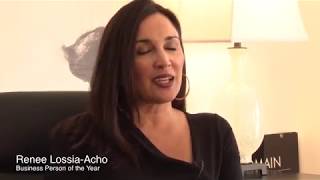
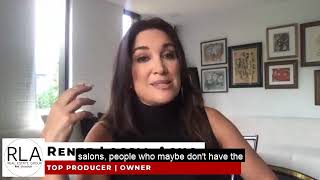


Leverage Design and Market Knowledge With Renee Lossia Acho | The MREA Podcast (EP.65)
Leverage Design and Market Knowledge With Renee Lossia Acho | The MREA Podcast (EP.65)
Manage Your Clients at Every Price Point | Essential Tips for Real Estate Agents