Full Episode - Richard Hagberg
In this Sartre TV interview, Dr. Richard (Rich) Hagberg, a psychologist, serial founder, executive coach, and author of Founders Keepers, shares his research‑driven insights on why most founders fail to scale and how they can become "keepers" of their companies. Hagberg recounts his own career path—from consulting and seven startup ventures to selling a consulting firm to Accenture—and explains how his work with 360‑degree assessments and personality testing led to a three‑style leadership model: Visionary Evangelist, Relationship Builder, and Manager of Execution. He argues that successful founders are typically strong visionaries but lack execution and relationship skills, creating a ticking‑time‑bomb that leads to burnout, poor decision‑making, and high attrition after IPO. The conversation covers the myth of the "genius jerk," the importance of adaptability, feedback receptivity, and self‑reflection, as well as early warning signs of burnout. Hagberg describes how scaling a company requires scaling the founder’s own habits, confronting blind spots, and hiring complementary talent (COOs, chief of staff). He discusses how AI can both amplify founders’ tendency to avoid human interaction and provide useful management best‑practices. Finally, he offers guidance for investors, boards, and founders: seek diverse support, build execution capability without losing vision, and remember that what got you to blast‑off won’t get you to the moon.
Chapters
Welcome to Sartre tv, an idea sharing platform founded by Russell Sarter, who's an author, Investor and the CEO of Netcom Learning and AI Certs. I'm here with Dr. Richard Hagberg, executive coach, psychologist and author of the book Founders Keepers. With decades of experience working with leaders in Silicon Valley and beyond, Dr. Hagberg brings deep insight into what it takes for founders to grow and succeed. Dr. Hagberg, thank you so much for joining us today. It's great to have you here. So just start off by telling us about your journey, your career, and how you got to where you are today.
Okay, well, I'm a psychologist by training, but I'm a serial founder. I started seven companies, so I've got sort of three Personas and the other one is a research Persona. So I started out working for a consulting firm in the Bay Area after I got my PhD and they did pre hire assessment using basically an IQ test and an interview. And I thought, you know, I'm not sure this is valid. And I went to my boss and I said the typical founder thing, which is I said, I think computer technology might really make a difference in helping us to do this. And he told me that I wasn't, and this is a direct quote, the properly deferential apprentice, and that I should go back to my office and do what he told me to do. And being a typical independent, rebellious, entrepreneurial type, I quit within about two months. And after a short stay one other place, I started a number of companies. But at some of those companies I started this is in the early 1980s and I started using a thing that was brand new called a 360 degree rating and nobody had even heard of it. And also personality testing because I'd been exposed a lot to that in my training. And what I saw right from the beginning was how different personality traits from the, from the test and different behaviors that showed up in the 360 ratings from their colleagues were dramatically impacting their effectiveness. And I mean to give you a personal example, my first 360 I was accused of drive by delegation. And what that meant was I'm exceedingly independent and self starting and I assumed other people were. And I could live with a lot of ambiguity and not a lot of other people could. And so people wanted to know specifically what I expected them to do. And that's the kind of thing I found. And so I started by looking at executives in trouble and terminated executives and could see clear profiles there. And then I started studying best leaders toward the end of the 80s, I had enough data that I started looking at the profile and the characteristics of those people who had been rated the highest by their colleagues. And there was a crystal clear profile. And they were pretty unique. They were unique because the skills that they had were what I came to see. A unique blend of three things that my initial research identified as characteristic of great leaders. And that is there are really three styles of leadership. The first is called the visionary evangelist. And that's like Steve Jobs and Elon Musk and Bill Gates and Larry Ellison. All of them are visionary evangelists. So they're, you know, creative, non conforming people who challenge the status quo. And they tend to be strong willed and have strong opinions, but they can be charming and dynamic. And that was the first group. The second group was relationship builders. They have good social skills, good emotional intelligence, they're good at getting buy in, they're good at building teams. People like working for them. They develop tremendous loyalty. They don't hold people accountable very well because they want everybody to get along and they're too nice. The third is the manager of execution, which is person who makes the trains run on time, organized, orderly, Often can be rigid, but really good at scaling things, system processes and putting structure in place. What I saw was, unlike the executives in trouble and terminated executives who often lacked interpersonal skills, they were not relationship builders. Sometimes they were really bright, but not very good relationship builders. But anyway, the best leaders were good at all three, or at least they didn't have an Achilles heel among the three. And what I came to see is that founders were almost all visionary evangelists, particularly tech founders. You'd find a few people who are good at execution, but most interestingly, almost no founders were good at execution. That's where my background came together to help me write the book. I've coached people since the early 1980s as the exclusive focus of what I do. But once I sold one of my companies to Accenture and worked for them for three years, big giant company, I decided I was going to change focus and I was going to focus on founders. And I came to see, first of all, why I had been attracted to working with founders. Because I was just like them. They're high on vision, medium to low on execution. I'm sorry, on relationship building and low on execution. And I'm high, medium low. So I found my people.
Yeah.
And they sensed it too, I think.
So you said you're also a founder, you founded seven companies. Tell us a little bit about what kinds of companies you founded.
Well, in the beginning, I founded one that was in the outplacement business. When companies fired executives, we helped them get new jobs and get repotted. And I founded a second one of those. Then I founded the original Hagberg Consulting Group, which started out as a consulting practice and ended up creating a bunch of products. And so when we sold 22 years later, we sold the assets to Accenture, who wanted to buy all those tools. And then I started a company that was a little too early because a couple of years later the Internet would have made it possible. It was the company that utilized some of the tools that I have now to do pre hire assessment, just what my boss had originally hired me to do. But I now developed a valid way of assessing people and on. And there are others too, but that gives you an idea.
Yeah. So your book is titled Founders Keepers, right? Tell us what inspired you to write this book and what message do you want to convey about it?
Right, that's a good question. Not many founders are keepers beyond a certain point. In the first year, most startups, 20% of all startups fail in the first year. Within the first five years, 50% fail and only 25% ever get to an exit. And very, very few founders are there. I think it's less than 50% when the company goes public. So depending on how you look at the data, it's kind of a killing field. I could see in the profile how that lack of execution and that lack of people skill was like a ticking time bomb that many founders couldn't get past it. And, and I could see that in the founders that I coached who got feedback, they ended up having a better chance to be keepers. So that was the evolution. One of my clients from somewhere around 2010 was my co author, Tien Tzuo, and he used my tools and my leadership model and went through it all himself. Took the tests, got the 360, did the same thing with his direct reports. In fact, I probably worked with over 20 of his direct reports over the years. And so we were talking one day and he said, you really ought to write up this stuff. And I asked him if he'd help me and he did. And so basically our mission is to help founders to survive or recognize when they need to bring in managers of execution. That's really the key, that it's very, very hard for founders, who tend to be idea people and who are persuasive and charming, to really take system and process that seriously. They tend to see structure, system and process as bureaucracy and they're allergic to systems and processes. One of the only ways around that is to bring in people who are good at that, whether that's a COO or function heads who are good at it.
You describe a paradox in the book that the traits that make founders successful early on can become all tell us more about that.
The kind of traits that it takes to blast off often don't get you in orbit and often don't get you to the moon and almost never get you to Mars. And some of that drive creativity independence, focus on ideas, don't translate into what's needed later on, and gets in the way. And so you can look at it as a ticking time bomb, or that founders have to recognize that they're good at certain things and sometimes the answer is to become a serial founder. But they sort of proudly say they're going to be the exception to the rule and they're going to make it through all the way to the ipo. It's like, yeah, okay.
And one of the most striking statistics in the book is that as you mentioned, 25% of founders stay on after IPO. Why is that number so low?
It's actually higher than I'd expect because a lot of the companies that make it to an IPO had investment money in the beginning. And the survival rate of venture funded companies is much higher than companies in general that just start off and bootstrap it. I think it's because it's a very tough thing to handle the kind of demands and stress that a startup requires or seems to create. And a lot of founders don't have the tenacity to stick in there when the going gets tough. Even though they're a tenacious bunch, it's very stressful. But the other thing is, one of the things that comes with their personality are a set of traits that can get in the way of objective decision making. And in those early days of deciding what product to build or what market to go after, many of them make impulsive, reactive decisions. And they're also intimidating enough that people won't, they'll feel afraid to disagree with them or that it's just hard to persuade them. And so good decisions are made when you have as many of the facts as you can get. But when you look at different alternatives, and if you don't create an environment and many founders don't, that's psychologically safe. People aren't going to point out to you when you're making a difficult decision that could kill you. So I think that plays a Big role in why it's so difficult for them to survive. Yeah, I think the investors will then tend to kill them off before the IPO because they'll recognize some of these shortcomings. Right?
Yep, yep. And you also, in the book, as you mentioned, sort of outlined these three pillars, right. Of leadership, the vision, relationships and executions. The execution. And so I know you outline some, what they stand for, what they mean, who exhibits what, which one tends to be the most neglected and why.
Absolutely, absolutely. Execution. But what's interesting is an execution because creative people like founders are divergent thinking. They come up with ideas. They're good idea generators. They're not good at the discipline and the focus that's required in the accountability and the follow up. They're not structured people. They tend to be disorganized. They're idea people. The other thing is all founders are a little below average on relationship building. But the successful ones are only just barely on the average. The unsuccessful ones are very low. And so that gets in the way. Their focus is on getting things done, getting the product built. It's externally, often fundraising. They're thinking about, they're thinking about ideas, not thinking about people.
So. And there's a section in the book about the genius jerk myth.
Right.
Tell us about this. And why do you think this Persona is still so romanticized in startup?
Well, it's because we have a few people who are in the news like Steve Jobs and Elon Musk and you know, there's a whole bunch of other ones and they get indicted frequently. But I think what people have done because of media coverage is to ignore the fact that correlation is not causation. In other words, founders might own a Porsche. That doesn't mean that the Porsche made them successful. Right. And so their bad behavior isn't what made them successful. And when we looked at. So what we did is we looked at 122 founders where we had financial outcome data. 122. And then we looked at the founders that got a 10x return on investors capital. We compared those to people who got nothing. And it turns out that the successful founders are less impulsive. Well, all founders are impatient and demanding and they feel a sense of urgency. But the unsuccessful founders are reactive and impulsive and under stress they lash out and they're even. Although founders are strong willed, the unsuccessful founders are just plain stubborn. And so when it comes to getting product market fit, they stick with their original idea and they don't listen to input. The thing that we found was that and this is the important conclusion of what the difference is. The successful founders were more adaptable. Dramatically. That was a significant thing. They were more open to input, they listened better. They handled resistance. They knew how to get buy in. They were better at letting the facts win. And because product market fit never ends, those people who don't listen and don't take input, whether that's from customers or from their investors, they don't make it. The second thing is, and this is where the whole founder mode discussion I think, goes wrong, there are times when founders need to jump in and micromanage. But the unsuccessful ones, that was their way of life. They micromanaged everything and they became a roadblock. The successful ones learned to work through others. They were way better at building teams, at creating buy in. They, they were more willing to delegate. They just, they learn how to work through others. They were better relationship builders. They tested. Right, Go ahead.
Yeah, I was just going to ask, why is feedback from others so hard to take for so many founders?
I'm sorry, why is what feedback? Feedback. I think it's because they're creative people who wrap their brains around a problem and they think, think it through deeply and they get very attached to it. It becomes like their baby. And they don't want somebody telling them their baby is ugly. Right. And I think that the unsuccessful founders are more deeply insecure. And so when they get challenged, they get defensive as opposed to seeing the feedback as something they could learn from. The successful founders are much more interested in learning and growing. There's a really important finding. There's one of the items on the personality test that says, I frequently reflect upon my past successes and failures. The successful founders strongly agreed with that statement. The unsuccessful founders didn't. And I think what we can see in the data are that the successful founders are more reflective and deliberate. The other thing that came out in the book is that, you know, it's like, it's Darwinian. It's like a killing field. A startup is like a killing field. And so those who can handle stress more effectively were more likely to be successful. And those who. And the successful founders also had more self awareness.
You also mentioned burnout earlier and your book does explore burnout. What are some early warning signs that might be headed for either personal or organizational collapse?
My doctoral dissertation was on the effects of stress. And what you see is their irritability and damaged relationships. Alcohol and drug abuse. I mean, they look for alternative ways to deal with the stress, fatigue. Some of them just give up because they can't Handle it could be relationship problems. When people ask me, should I be maybe somebody I might have worked with in some other setting, I'm thinking of founding a company and I say to them, how important is work, life balance to you? And unless they say it's not, I suggest they think twice. Right. Because a startup will suck the blood out of it that you give it, you know, and it wants more all the time.
Yeah. Another thing that you explore in your book is how scaling a company requires scaling oneself.
Right.
What is this personal evolution look like in real terms? And what are some of the most common blind spots you see in first time?
I think you have to come to terms with the fact that in order to scale, you need to put in place structure and you need to hold people accountable and you need to put in place systems. And one of the things we found was that this allergy that many founders have to structure, system and process was a differentiator. The unsuccessful ones waited for things to break and the successful ones got ahead of it. I think the other thing is the way in which they deal with feedback. The successful ones wanted feedback, they looked for feedback, whether that was from their board or from their direct reports. The unsuccessful ones got defensive. So I think in order to grow, you need to find out what your blind spots are. You need to find out what you're ignoring. Need to find out what's working and what's not working. When you have a product launch that fails, you do a postmortem to try to figure out why did it fail. Well, if a key decision fails, an effective founder needs to take a look at why did it go wrong and actually learn to ask what are called disconfirming questions. And that's like, if this project were to fail, why would it fail? What assumptions am I making that need to be challenged? What are your biggest concerns about this proposal I'm making? It needs to be okay to disagree. I think the other thing, in order to scale, you've got to be personally grounded yourself. And when you're stressed, the quality of your decisions goes out the window. I started meditating when I was 19 years old and I'm certainly older than that now. And that got me through a lot of the years and a lot of the difficulties. And so taking care of yourself, taking breaks is okay, taking vacations is good. But you need something on a day to day basis to deal with the constant barrage of problems and decisions. It can just over time take a toll. It feels like a sprint because you're frantic to solve these Crises that are coming up, but it is a marathon. You basically have to get your ego out of the way and be willing to look at your blind spots, look at what you're not good at. Hire around that. I had three different chief operating officers in the 22 years that I ran the biggest of the companies I started. One was a relationship builder first and manager of execution second. The second was a manager of execution but low on relationship. And the third was a woman that I hired when she was 17 years old and she is a senior executive at Accenture now. When we sold the company, she was the president or the CEO. I was the chairman and she was medium vision, high relationship, off the charts execution. And if it weren't for Stacy, it would not have worked.
So then in your coaching work, how do you help founders build that execution muscle, that third pillar, without really losing their sense of vision?
I think it's unrealistic to assume that most visionary evangelists are ever going to get much above average on execution. Teen Zuo is a little above average and he's a visionary, but he's a little above average. And he ran a public company. Right. So I think some aspects of execution, like the personal dependability or results and productivity, those things are givens. And so you need to develop enough discipline to not be dropping or violating your commitments. But I think you got to be realistic. And whether it's a COO or a chief of staff, or whether it's hiring people with execution chops in the key functions, whether that's product or engineering or whatever, for me, that was when I started seeing there were managers of execution around. I had to start letting go and listening to what they said. So when I tell Stacy I have this great idea for something, she would say to me, well, where does that fit in the strategy, Rich? Now, it's possible that the answer was it isn't in the strategy, but it needs to be. But that needs to be a discussion. She needed to feel safe saying that.
And, you know, you've worked with founders in these high growth, high stakes situations. Are there any consistent behaviors or mindsets that you would say separate those who succeed from those who struggle?
Yeah, well, we've really already talked about that to some degree. But it's a willingness to learn and grow. It's a need to let go of your need to be right and let the facts win. It's to get a lot of feedback so that you know where you have blind spots and hire around. Those. Founders are not very good at disciplined planning or they see it as an event rather than an ongoing process. And I think organizations need focus and founders need to stop chasing after shiny objects and learn to follow a strategic planning process and to focus and to say no to things. I think another one is, this is a really surprising one, kind of paradoxical. Founders are aggressive individuals, but they tend to avoid conflict and confrontation. So they're not effective in giving critical feedback. They may give feedback and it may be yelling and screaming, but they have very high standards and they need to learn to spell out what they expect and then have meetings where people are given coaching and feedback and praise and check in with them regularly and agree upon what the plan is, but continually going back to the priorities and not letting yourself go off and chase your latest idea. I think investing in building relationships with particularly your team, I think a lot of particularly tech entrepreneurs tend to think of a company as a machine and you need to invest in building relationships. And that's a lot harder when, you know, when we're working virtually these days. You can do a lot of things on zoom or on teams, but you can't do everything. And I think getting the team to gel and build trust between people, but also between you and your direct reports is very important. And let go of control, Let go of control. You're not going to do it all. And you'll disempower the people if you just keep jumping in and going over them and meddling. Now, there may be times when there's a crisis and somebody isn't doing something and you have to do that. I recognize that for sure. The other thing is, founders tend to be loners. They're very independent and they're loners. And their default is to go off on the mountain and talk to God and come down with the tablets. Right. And they need to recognize that leadership is a team sport and great teams are what create great companies, not single individuals.
So do you think AI could amplify some of the leadership blind spots you're describing? Whether that's the control, the over reliance on vision, this under investment in relationships.
Yeah. I think first of all, they're hurried, they tend to be impatient. And rather than get together their team and take apart a problem, they'll turn to their best friend, which is ChatGPT or Gemini or Claude. And then that's like going off on the mountain talking to God, except that you're going off and talking to ChatGPT. So you have to remember to not only cultivate relationships, but utilize the input of others. And it's a little too Easy to go and say, well, gee, what's my CRO supposed to be doing? I'm not happy. Right. Rather than talking to the CRO or talking to somebody else in the organization to find out why something is not occurring. I think tech founders are slightly more introverted than other founders. And it's very easy for them to default to the computer than it is to deal with people, which is a more, you know, it's a more foreign kind of relationship for them. I mean, they're not used to it. Many of them these days grew up playing video games and learning to code when they were 10 or whatever. And their computer is a safe place. It's a place where they feel under control. And teams are messy. Conversations where people disagree are messy.
So then how do you see AI changing some of these organizational structures and team dynamics? Do you see any new challenges?
Yes, I see the challenge is significant when it comes to team dynamic. But the other thing that's good, though, I don't want to focus only on the negative. The thing that's good is that you have best practices at your fingertips. And many of the founders did not have a lot of management and leadership or even business experience before they started a company. And so they have no idea how you do certain things. Like how do you ask good interview questions? So you can hire a good team, right. So you can go to AI and get help with some of the things. But that should be just a start. It gets you going, it gives you the seed of some ideas.
So then what advice would you give to investors or boards who want to founder develop?
That's a really good question. The problem is when boards put pressure on CEOs and they don't recognize the challenges that they're facing, it creates more stress. And I think it cultivates the potential for many of the Elizabeth Holmes and Samuel Bankman Fried's of the world. I mean, not all those can be attributed to board pressure, but when the pressure is on, they're more likely to give you to exaggerate the data or mislead you. So I think today's boards are often made up of, especially early stage boards are made up of people who only have investor experience. They've never operated anything, they've never run anything. And what founders ask for is they're asking for help in dealing with some of these challenges. And the help isn't to just go back and do another financial analysis. They need help with strategy and some of the decisions. So I'd say courts need to recognize they need to be supportive of helping founders get the mentoring that they need, the coaching that they need, especially if the board members don't have operating experience themselves. I mean, they also have a responsibility to shareholders. And so when we look at Elizabeth Holmes and Samuel Bankman Fried and Charlie Gravitz is her name. Yeah, I guess it was. And Adam Newman boards not in every case, but may have enabled that by not confronting it or by just focusing so much on the results that they were getting. And a lot of those people are in jail.
And so finally, for founders who are listening and those founders who are or aspiring to be a founder, what's the one thing they should start doing today to increase the odds of their long term success?
It's recognizing that they need help from people who are different than they are and who can help them make better decisions. Now, you can't always afford a players in the beginning because you don't have the brand and you don't have the money to attract them. But as soon as you can bring in people who complement you, complement your weaknesses. Or to make up for your weaknesses and bringing different perspectives and maybe more experience, the better off you'll be. Teen Zuo, when we were writing the chapter on strategy, said and he captured the essence of the book. He said, what got you here won't get you there. So what got you to blast off in the beginning won't get you to an IPO or get you to build a successful sustainable company. That's great.
Well, Dr. Hagberg, this was really great. Thank you so much for all this insight and for joining us today.
Okay, thank you.
And we'll see you next time on Sartre tv.
More from Rich
Episode 10: Founders Keepers – Why Founders Are Built to Fail, and What It Takes to Succeed
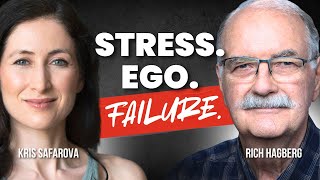
Silicon Valley’s CEO Whisperer on Why Most Startup Founders Fail (with Rich Hagberg)