What does it take to be CEO of a community-led company? | Inside CLA
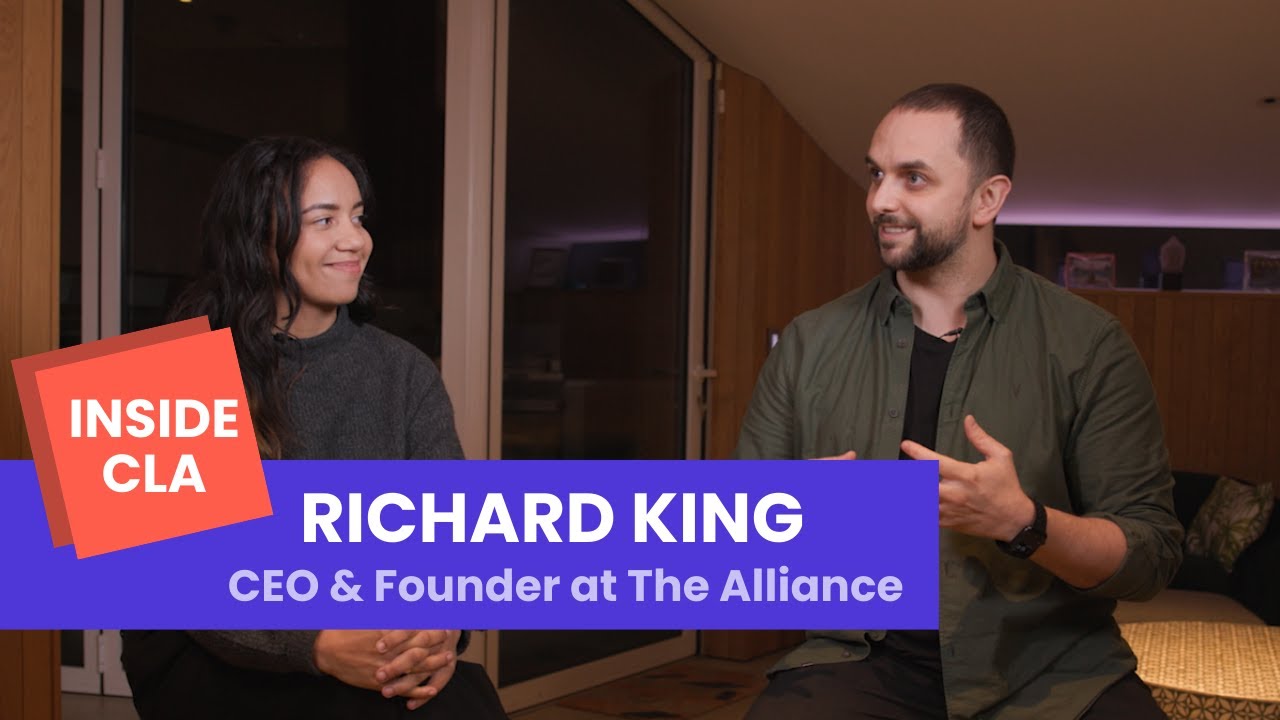
Richard King, CEO of The Alliance, runs 14 niche communities including the Product Marketing Alliance. He built the business on long-term trust and free value, then monetizes through certifications and events. His biggest mistake: scaling too fast without enough operational and people resources.
Chapters
Hello and welcome to Inside CLA by Community Led Alliance. I'm your host, Jade Warne, copywriter here at CLA. In this series, we'll be interviewing people at the top leadership level at CLA and our umbrella company, The Alliance, but through the lens of community-led growth. Community Led Alliance is one of 14 communities under The Alliance umbrella. The Alliance itself is a community-led media platform, so it's no surprise that community-led growth is at the heart of everything we do. When it comes to CLG strategy, we know our stuff, but we also know it's a unique way to set up a company. That's why we wanted to open the doors to what it really means to run a community-led media platform from the people who are actually doing it. Our goal? To give you an honest insight into why we're so passionate about community-led growth, to explore the whys, hows, dos, and don'ts of CLG strategy, and to deepen your understanding of how different senior roles look in a community-led organization. Our very first guest is none other than Richard King, CEO and founder of The Alliance. In other words, my boss's boss's boss's boss. In his words, community has always been top of mind, always has been, and will continue to be. I'm super excited to sit down with him today and explore his journey of founding and leading a community-led platform. Let's get started. Hi, Rich, welcome to the podcast. Thank you for being a guest. So please introduce yourself for our listeners.
Thanks for having me. I'm Richard King, the CEO and founder of The Alliance.
So what does a day in the life of a founder and CEO look like?
A day in the life of a CEO at The Alliance. Well, we've gone through an awful lot of growth over the last 12 months, so right now it's all about building the infrastructure, both from a tech stack point of view but also people infrastructure, to continue to scale. But for, for the next 12 months, for us, it's not that hypergrowth that we've seen Recently, it's more about that sustainable growth for the next 12 months and beyond.
Brilliant, okay. Walk us through your professional background and how that led you to the Alliance.
That's a good question. My professional background is primarily in product management, which is, you know, not something that we focus on specifically in any one of our communities. Obviously, product marketing is where kind of the Alliance started, and it was really to kind of figure out exactly what product marketing was because I was doing product management. But yeah, from a professional background perspective, I would say primarily in product management and then running or helping to run development teams.
So, what have been some of the highlights of your career then, and is that mainly the Alliance, or has there sort of been some other bigger standout points?
Yeah, so, yeah, a few highlights that I'll pull out. One, that's actually not on LinkedIn, but it was actually a company that I formed with a gentleman called Mark Lacey, and it was called Arctic Fox. Arctic Fox was primarily there to deliver on-demand content from conferences where the slides and the video were synced together. That sounds kind of rudimentary now, we've got kind of YouTube and there's a lot of software that does that currently, but back then, and I'm talking like 2007-8, we were doing this for companies like PayPal and a few other, and companies out there. So yeah, that would, that would be one highlight. But yeah, of course, right now it's, it's the Alliance and it's the 14 communities, and I see them as separate businesses, those brands. And that's, that's certainly a highlight, and it continues to be because there's so much going on in those communities right now.
So yeah, brilliant. The Alliance has a really unique structure in that it's community-led. Can you explain that for us and how it works? I know we as members of the team and the company find it very difficult to explain how it works to people who are new to community and community-led organisations. How would you describe it and how it works?
So community-led for me and maybe for this company is, it's building trust and value with a demographic or a group of people over the long term. What community-led isn't is a quick fix or win to closing leads or to generating revenue. It's really a long-term play to delivering true value to that community, and that true value should be free, in my honest opinion. The community is there to take as much value from each other through sharing great ideas or sharing templates or frameworks or any type of content, and over time building trust enough to be able to deliver them a potentially either a product or piece of software or a certification, in our case is what we do, or even events and memberships. So, that's what I believe community-led to be, is building long-term value with a group of people where you can eventually engender that trust with them for them to eventually trust you enough to spend dollars with you.
Brilliant. Walk us through the timeline of the Alliance then and how that started. I know PMA is that big one that you started out with. Was there an aha moment for you when you kind of realized that the Alliance was something you could do?
Yeah, so Product Marketing Alliance, so the first most mature community that we're running currently, wasn't, I wouldn't say started by accident, but certainly it was started from previous experience in another organization where we could see that giving away value and giving away content and building multiple touchpoints through the year was a really easy way to continue to have retention with users. So, I would say Product Marketing Alliance started with that in mind, and it really started to make sure that there was a continuous touchpoint with an organization that was running a particular event around product marketing. We eventually came around to acquire that company that just runs events, it was called SQL Media, but it was really built to make sure that we could continue to have a conversation after an event happened, before an event happened, and all the way through that year to be the place where people go. So, after building that very first, this kind of initial concept of continuous communication, so our platform of choice was Slack at that time, we, you know, we grew that business into more of a research house, a market research facility to question the community, find out exactly what they wanted, find out what their pain points were, and get as much information as possible to solve those challenges. So after that research piece then came, you know, we realized there was a need for education, so we delivered certifications, and then obviously a need for events to get people together consistently over time where that acquisition happened. So what we realized quite quickly is that there's a number of functional areas across business that don't have a a place to go that focuses entirely on their needs. So, sales enablement was at that point in time one, product-led growth was another, computer vision was one, which is very different from some of the markets that, you know, we touched on initially. So, we realized that we could essentially replicate the model that we have, which is creating value from the very start and delivering value over time, And we had an infrastructure in terms of tech stack to deliver this repeatably for these communities. So, that's what we tried. And lucky enough, we touched on some functional areas that really understood what we were trying to do. And we continue to grow and maintain and deliver value and make sure that we deliver products that are useful for them as well. So, you know, we have communities, 14 now, as you mentioned, all at different maturity stages.
Mm-hmm.
And we continue to, you know, grow those out over time by delivering products at the right time and at the right stage that they're at. So, we make calls on those kind of pretty much every quarter as to what kind of products we'll deliver to that market once the trust and that value has been built. So, yeah, that in a nutshell is, like, what we do.
So, yeah, 14 communities, it's a massive amount of growth in, I don't know, 3 years, is it? 3 years, yeah. Since you started, nearly 4. So, when do you know that there's really that space to build a community? You sort of touched on it, but how do you see that there is something there that really requires that community space?
That's a great question, and I think we probably— we've probably realised more opportunities than we can fulfil. Right now, our major issue is getting enough resource to actually fulfil the opportunities that we have, but to understand when a community is, I would say, ready to have a space just for them, or to deliver something different that they're not currently getting from a community that is trying to deliver that value to them is to just do as much market research. So, a lot of these skill sets come out of product marketing. Once you understand the total addressable market and you know, you've spoken to enough potential customers and understand that market and what's not out there for them, you can start to do simple things like small meetups or create a free Slack community and see what kind of traction you, you get. And over time, you'll, you'll know pretty quickly whether, you know, they've already got some space that is already delivering, um, good community-led approach to education or, um, events or whatever it might be. Um, and then you really have to resource it, you know, to, to build a community, um, not quickly but properly. You need to make sure that you're invested for the long term and that you fully resource it. Because the problem I see with a lot of communities now is that people think it's a quick fix to, um, to problems, or to the quick fix to generating leads or revenue, as I said at the start. And that's not what— that's not what the play is. It needs to be something that you invest in long term, and it needs to be something that you're willing to, to invest true resources in. And that's full-time resource, not just someone doing some stuff for 2 hours a week or a day. It needs someone to manage a community full-time.
Brilliant. So, you said this earlier about having that sort of value and content-first. That's obviously something that's very important to me as a copywriter and a member of the content team.
Yeah.
But why is that so important for that community-led approach and for a business and just to you?
Yeah, um, content, uh, first and content kind of led approach— the content team is the largest team in the Alliance, right? I think we're close to 20. 20 people in that team, which is very different from a lot of organizations. But, and hopefully we kind of, you know, drive home that content is that important. It's usually the first hire we make for any community. In fact, it is probably the first hire we make when launching a community. Why do we do that and why is it important is really without great content and without people that can do that research with the community that we're building, we can't really deliver trustworthy, good value for that demographic of people. And that's where the trust in that team to deliver great content over time is really important. So, what we don't expect is the team to create 5 blogs and for them to be on the first page of Google in a week, right? Or in a month even, or even in 6 months. But that long-term investment of content then that long-term play of community-led approach to delivering value to a community that will eventually trust you enough to pay for something, that's where content-led is so important with that community-led approach. And that's certainly where, you know, we've invested heavily and it's where we, as I said, we invest from, you know, the very start when creating our communities and content.
Definitely, yeah, this obviously comes through a lot in my planning. I'm in a big planning stage, as everyone is in the company internally right now. But it's all about sort of thinking long-term and doing that keyword research and making sure you're really actively looking at what people want to hear and doing the work to make sure the content is really hitting that, because it's what brings people in.
Absolutely.
And it's not going to happen overnight. It's making sure that you're sort of thinking a few months in advance at least, so you're really building it out in a good way that people are going to appreciate.
Absolutely.
I'm going to put you on the spot now with this question. Did you make any mistakes throughout your time with the Alliance or the Product Marketing Alliance?
Yes. Yeah, absolutely. Trying to scale too quickly, trying to take on opportunities when there aren't enough resources to do it properly is, is my biggest mistake. And you'll hear this certainly from most of the, you know, people in the company that know me quite well, is that as soon as I see an opportunity for, you know, a community that I think needs us to create that value for them, I'll launch a brand, I'll launch a website, and then I'll resource up to kind of fill that need. That's a problem because as soon as we start to deliver value to a community and then it takes us too much time to backfill those other resources that's necessary to essentially grow a small business unit in a company, you get issues. So, that could be customer support issues, customer success issues, product issues. Yeah, that is the mistake I would say that is often made. It's similar in a way to companies who try and do community without resourcing it. I'll try to build too many communities with not understanding, certainly at the very beginning, how much resource you need to invest in just kind of not only backend staff but, you know, marketing and sales and everything else. So scaling too quickly is not a good approach. And, and with that, I'll say if you do start to do that You, you, you have to think about the current employees that you have. So, a big project that we've had as a growing business, as many will tell you who have started a business and grown it quickly, you have to invest in your people. You have to have that infrastructure in place to make sure that they're happy, that their wellbeing is, is there, that we're meeting their needs. Otherwise, you can, you can fall apart really quickly.
Mm-hmm.
So, Josie and the kind of operation team, Josie's the COO, has been investing a huge amount amount of time in making sure that there is the infrastructure in place and the benefits in place to make sure the team, the current team, is happy and will continue to stay with us. That should have been done a year ago. We tried to scale every other department too quickly without creating, you know, without having great finance and operations teams in place and people teams in place, and we should have done that earlier. That was a big mistake for sure.
Brilliant. I think it probably is something that anyone who's— if there are any CEOs watching or listening, that sort of entrepreneurship, I know I've experienced it, I've worked in startups where it's that kind of idea-forward and excited approach, is just going to be a thing that comes with every CEO, founder, and entrepreneur, because it's just about bringing that idea first and getting it and making sure you're making that opportunity. But I like what you say about sort of making the people happy internally, because that's entirely what community is about anyway. It's about having that internal community as well as the ones that are actually a part of the company.
Yeah.
And making sure that they're happy and checking on them to keep them in and keep them engaged and keep them a part of what you're doing.
Absolutely. And part of the community is the, you know, our internal, our internal people. Like, that is also a really big part of community. So, without happy people internally creating communities, it's really difficult to feel like you want to engage with people you know, in, in, in other areas. Um, it's something that certainly I can see a lot of CEOs struggle with, and I think it's at the right time. There's a few podcasts and books that I've read where there's a critical point in a business's growth where I think it's around 100 people where you should really, um, have already invested in those kind of that backend stuff to make sure that you can not only continue to scale quickly but Um, not have to kind of spin your wheels by hiring people because you're losing people all the time. Making sure that you maintain, um, you know, great culture in the business and making sure that there are, you know, career progression plans in place and great levels for people and understanding where they can go with your business is fundamental at that stage between 80 and 100 people. I think if you don't do that, you can fall apart really quickly.
Definitely. How about the wins? What have been some of the big wins for you?
Oh, okay, wow.
Apart from hiring me. Yeah, big one, that one.
So I think obviously getting back into events, I think, and I'm talking about live in-person events, has been huge for us, and that's happened obviously for the most part this year. We did a couple at the end of 2021, It's been a great growth driver for us, but it just enables us to show the community what else we can do. It gives us a platform to go into different areas, so it allows us to educate people around our certifications if they're coming to our events or our free meetups, or, you know, all of these other areas that we kind of invested in the business. So, memberships, mentorships, frameworks, templates, everything else that the community does. That's been that's been great to get back into. I didn't know what was going to happen, I don't think anyone did at the beginning of the year. People are getting back into live events, um, so we made a big play in, in the middle of 2021 to acquire a business that just did events during a time when no one was doing events, and that's paid off dividends for us. Um, that was, uh, you know, a big risk, but it was, you know, we, we saw that eventually it would be a good investment. Um, Other areas that I think have been, you know, wins for us is actually just, you know, delivering on this repeatable process to create communities relatively swiftly. And I'm talking about the software and the tech stack behind that to deliver these, the ability for us to create value, not necessarily build the community, and that takes time, obviously. It's more about our ability to repeatedly create this process at speed and at scale to allow people in content to deliver the value and the trust that allows us to create products that we can sell.
Brilliant. And so just off the back of what you said, COVID, how has that sort of affected the company and what are your thoughts on that and what do you think you benefited from?
It's a great question and actually it was great for Product Marketing Alliance because at the time that was the only community that we had. And what COVID allowed us to do was really focus on the customer, focus on that community, focus on exactly what they needed as a product marketer and deliver value to them. Exactly, yeah.
Really getting the chance to have that conversation and just focus on that while you think about what you can do next.
Absolutely, and it was really useful to crystallize what we were trying to achieve as well. I would say that we got lucky as well, right? So, we created— I say we created, Bryony, our CMO, created our first certification, and it was filmed the day before lockdown in the UK, and it took us a few weeks to edit, but that was our first real significant paid-for product that allowed us to continue to employ people through that COVID period and also scale those other community ideas that we had.
Mm-hmm.
So with obviously an awful lot of luck and, you know, our ability to kind of crystallise what we were trying to achieve over time, COVID was good for us. And that sounds crazy to think, and obviously it was a real challenging time for a lot of people, but for us as an organisation, it was actually quite positive. Yeah.
Brilliant. So to finish off, what sort of advice do you think you'd give to a business or individual thinking about that community-led approach?
Sure, and I kind of touched on this before, but a community-led approach is, is not something that can be achieved in, you know, a few weeks. It's a, it's, it's a significant, purposeful, long-term play.
Mm-hmm.
You need to believe in what you're doing, you need to invest in the people to support that community-led growth approach, and yeah, you need to, you know, really give true value without trying to continue to sell your software or your certification or your membership. Believe in the value of giving really great information away because people will eventually trust you enough to, you know, take you more seriously if it's software or if it's education or whatever it is that you're trying to sell. So, long-term play that needs true investment is what I would say.
That's a perfect way to finish. Thank you so much for being a guest. I've really enjoyed it and I've learned a lot. Thank you.
Thank you.
Cheers. Thank you so much for tuning into this episode of Inside CLA. I really hope you enjoyed it. If you're hungry for more insights, make sure you head to our website, www.communityledgrowth.com, where you can find a wide variety of digital content. To join in the conversation, check out our growing Slack community of CLG professionals. You can find the link on our website, or if you're watching this on YouTube, in the description box below. See you in the next episode.