1000 BROILERS OUT ON PASTURE and quick decisions seemed to have paid off S4 ● E38
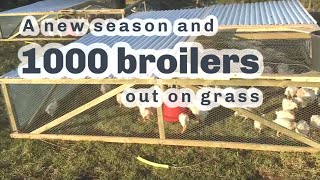
Richard Perkins moved 450 broiler chickens to pasture at day 18 despite cool nights because quick decisions paid off. He dealt with a sudden pecking outbreak in the brooder with blue spray and darkening, and explains his lightweight pen design with gravity waterers and plastic wind protection for the daily moves ahead.
Questions this video answers
Day 20
Six pens of 75 birds each
18 degrees (Celsius) reported for the day
About 5 degrees (Celsius) at night
Blue spray applied to bare skin/wounds; affected birds separated until wounds dried up
Chapters
Day 20 for the chicks, and we've got six pens of 75 birds out on pasture today. And the glorious sun shines 18 degrees today. So it's day 20 for the chicks, and they had a sudden outbreak in two of the brooder pens starting yesterday evening, of pecking each other's oil glands. And chickens, once they start to peck, they start to learn from each other and they all start pecking each other. So what we did is made it quite dark in here today and covered the windows a bit, and we also started to separate any that had sore spots. We put blue spray on the ones that had any bare skin showing. So what we've done is, because the weather is so nice, we've taken out the two pens that were affected, which was number one and number four. Here in these two pens, there's only one bird that got pecked a little bit. You might see it's blue, but there in all the other pens, in these two pens, there's no problems. We think it was where sunlight was coming in, and I think they might have been getting heat stress. It's obviously quite crowded in here now as the birds go out. We're not entirely sure what happened, but it did mean that we got a bunch of the pens finished now and birds are out on pasture. Taking the birds out really young is a risk because the nighttime temperatures are low. It could even be freezing or it could even be snowing. Right now, it looks like It'll be about 5 degrees tonight. And the main thing that you want to watch for young birds coming out is wet and wind that will really drive heat away from them really fast. But it seems like good weather that we're happy to bring them out a couple of days early because we've been so. If you've been watching the videos, we've been trying to get that brooder warm because it was 6, 7 degrees in there when the chicks first arrived. And we've been concentrating so much on getting warmth in there that now the building is really heated up. And with the sun, it was 18 degrees outside today, so it's really heated up in there. And I think the beds just were getting too strong. They're very happy to be outside. You can see we've put blue spray on some of the birds where they've had. Where they've been pecked. A couple had open wounds, some just sore. But chickens go crazy when they see a blood spot. They'll just keep pecking at it. And so we've tried to keep them separated until the wound Dried up. Now we put them outside, we put them back together again because there's so much stimulation for these birds the first time they've seen the outdoors, that it looks fine. I'm just checking through the birds as I film this and I see there's no new wounds and their wounds that were there dried up nicely. So a bit of an unexpected thing to have to deal with suddenly. But it has meant we've made a push to get these pens ready. So we got most of them ready now, six out on the pasture, but there's another. We're going to have 14, 13 at the moment per nearly a thousand birds. So some things about the design of the pens, people were asking about how we do the lids, etc. We always have a gravity fed waterer with a bucket that just clips in as a standard gravity waterer. And then we have three quarters of the roof covered and. And the same quadrants that are covered also have the protection here of some plastic because we get a lot of strong wind, so we need additional shelter here. You have to pay attention to this in the middle of the summer when it's really hot, because it can get like a little greenhouse in there. So you must always pay attention to what's going on. We always put the feed under these two side doors open, so feeders go down under this lid to keep them dry. And the waterer hangs off the open side here. With the roofing material, we're using a lighter weight plastic. Some people like to use metal, but it's very heavy. Everything about the design of these pens has been to keep the weight down and so everything's bolted. So even with thin dimension timber, it's very strong, it's very rigid. They're the lightest pens we've had and they're still really strong. And then we put fencing wire with a little insulating around it to protect the wood. Otherwise the wire will dig into the wood. Just a bit of hose in the middle to pull there. The pens feel really good. They have a bit of flex which is great for the undulating ground here. The layers are doing great. They're really utilizing their space more and more each day now. And they have some impact on the ground. But you see it's really greening up now. Someone was saying, do you leave it to go bare under them? That's precisely the opposite of what we're trying to do. We're using them to grow really good grass. This is where the birds were two days ago, but you see grass is growing now, so it looks very different already. The thing that it can look a bit brown after the hens have gone through because they're kicking up all the thatch, all the old grass, weather grass, and there's stimulating the germination of little seedlings. I don't know if it will pick this up, but their scratching action will stimulate the germination of more seedlings and then their manure will fertilise it all very nicely. And our grass, if you look in the aerial images, you see our grass has got a much quicker start at the beginning of the season than the neighbours because of the impact as well as the grazing of those animals. Maria's just fixing some plastic on the outside of the last pen. These are old pens from last year. One of them had the plastic taken off during the summer, so she's just been fixing up. And it's quite nice because it's transparent, which is much better because when you're pulling these along, you're always pulling the long edge, either this way or from this end. And because we have to have additional wind and weather protection in our climate here, it can make it hard to see the other end. This is where I'm standing if I'm pulling this along. And so you want to be able to see the other end. Ideally, dole pens are the same basic design, a little bit heavier build with thicker timber, but it's untreated timber because we always picked up free timber and it's nice but it doesn't last so long. That's why we decided to buy treated timber. This time it's going to be interesting. I'm going to come up here in the evening when I put the hens to bed, really just check how they're doing temperature wise. Often if it's a bit damp, we'll put straw down in one quarter of the roof so they can get up off the ground. But it's perfectly dry. Looks like rain forecast for Sunday. But right now they look very happy to be out in the sun. A lot more space than there was in the brooder and grass to forage. I've seen them all, like devouring little leaves and pecking at the soil, sort of working out all the new things in their environment. So pretty similar design, but I think the ones we've just built, I just hear the pigs going crazy. Reuben the boar is just chasing away a young piglet. And so these are waters the buckets have filled. These have got waterers inside these pens because we've run out of waterers, but we Just have a hose connected to the mainline, quick release in here that can be led out across the field as the birds go on their march. The way we've spaced this out, because we have tree lanes everywhere, we have to think a bit about the logistics. If you have a big straight field, it's very easy to pull these along in one big formation, but for us, that doesn't work. So, you see, we've actually spaced them out. Maybe I'll overlay some drone footage and you'll see better. We've roughly estimated the amount of space they need until slaughter time, so we've divided them up into batches, because when these pens go along, with the emphasis on the wind protection towards the south, where the main winds come from, when we pull this pen along and go around the tree lane, we move it this way and go back facing the pen in the same direction. Some people have made a mistake in the past of turning the pen around the opposite direction, but then it becomes a wind trap. And so, because we're going along, we have enough room for three pens in each of these lanes. It perfectly fits in our design. You can then turn them around the corner and come back down this way really gracefully. And if you had all of the pens in one place, it wouldn't really function very well. The garden team are doing a fantastic job. They've been putting in a lot more transplants. All the leeks, all the onions, loads of lettuce, all the kales, broccolis, calabrese. We're growing this year. It's really going to be a lot of vegetables this year and it's a great team. The whole team here is awesome. But I feel like the gardening team are just already rocking it totally ahead of time, and they've had a big meeting with a local hotel, famous hotel near us, who won a lot of supply of salad. So we might do a big change to our growing calendar right in the middle of the start of the season and reduce the number of vegetable box shares and sell a lot more to restaurants directly, which is something we would like to do to support local businesses who have a bigger demand for fresh produce. Because we are in the middle of nowhere here and it's quite hard to sell the hundred veg box shares that we're growing for. So it would be better for us to nip that in the bud and not put any more effort into selling more and cater to restaurants too, who it'll be nice to work with. It's really greening up a lot more every day. Now, it's really quick growth here is explosive. The Morello cherry that was in the video the other day, it's just coming into leaf here. The hazels are all coming into leaf. The apples are just budding up here. This is hazel here. But, yeah, growth is going to boost in a little bit of rain next week and more sun and things will really radically change around here. It's a great sight to see. There's a lot of happy birds here. There's 2,000 chickens nearly in this field and they're all doing very well. The hens have been going to bed all on their own at night. Now, we would come and put the last sort of 10, 12, maybe 15 away at night, but if you come at the right time, they, you know, there might be one or two out that we coax back in, but they, they've learned to roost. They're all sitting on their roosts and I think they're happy, hence. So it's now early in the morning and I've come up extra early to just check the birds gets light very early in the morning here. All the birds that have blue spray on their butts, all the wounds have dried up. They weren't intensive wounds anyway, but I think it seems to be a developmental stage that they've sort of gone through and certainly in these pens it seems fine. There's no birds suffered from exposure. They seem very happy and healthy. Very unusual circumstance. We've never experienced this before, but, you know, it's one of those things where you're always learning and it's good to know. So I appreciate, you know, it's good to share these things and maybe some other people have had experience with that, but we've always had a kind of easy, peaceful production. But they look happy and strong and super excited to see these birds grow out on the pasture. All for today, folks. We've got a nice weekend ahead of us and looking forward to posting more updates next week as we get all the rest of the birds out and really start our daily pasture moves. Thanks for watching our videos. Don't forget to hit subscribe and share the videos. If you think any of your friends will benefit from following our production season here in Sweden, you can find out a lot more in our book, Making Small Farms Work, available as a PDF or as a hardcover book on our website. And check out the links to Gracie's Backyard, Olivia's new film that's crowdsourcing right now. If you want to see an in depth but candid look at what goes on here in the summer. From the perspective of an outside filmmaker, it's a beautiful film. So thanks for your time. Really appreciate it, and see you next time, Sam.
More from Richard


A review of short and intensive season on a mixed farm and restaurant/event space in Sweden






Alskade Kyckling Exploring complexities of poultry production in Sweden and what we stand for


