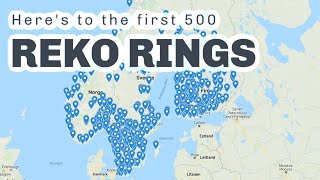
A YouTube video by Richard Perkins (May 5, 2020) describing the REKO ("Ricoh" in his spoken form) direct-sales model that uses Facebook groups to enable pre-sold farmer-to-consumer drop-offs with no middlemen. Perkins highlights a map showing roughly 500 REKO rings across Scandinavia (compiled from public sources), praises the model's simplicity and efficiency (one-hour summer / half-hour winter drop-off windows), and gives practical advice on founding a ring (keep rules minimal, aim for a critical mass of daily staples, use Facebook, 2–3 admins). He notes local adaptations (50 km self-imposed selling radius in his area, a town of ~70,000 where one in seven people are in the group) and that Thomas Snellman founded REKO; the map was compiled by Thomas's nephew Ronnie Snellman.
Questions this video answers
About 500.
Thomas Snellman.
Ronnie Snellman (Thomas's nephew, a computer scientist) from public information.
50 kilometres.
Town population ~70,000; about one in seven people are in the group.
Chapters
Welcome back to another episode.
Quick video Today, just talking about Ricoh again. I just got sent a map by Thomas Snellman, the founder of Ricoh and his nephew put it together, mapping all the Rico's in Scandinavia and it's mind blowing.
What's going on over here? Best sales model I've ever seen.
So stay tuned.
So a couple of days ago I did an interview with Thomas Nelman and talked about the history of Ricoh and where it's at right now and the future of it. That's going to be coming out in the farm like a hero experience which is be launching pretty soon. But it's been very interesting. I've basically talked about Rico a lot. Some of our students and followers have set them up. I know in Ireland, in South Africa and Canada, I thought even America also, although Thomas didn't actually, he wasn't aware of one. But I like to describe Ricoh as a pre sold farmer's market where you're basically transacting through Facebook and you're pre selling everything that you turn up with that day. It's highly efficient. It means you only turn up with things that you've already sold. And in our groups we do one hour drop offs in the summer, half an hour in the winter and we're able to drop off a huge array of products worth a lot of money in that time. It's incredibly efficient. And sales is half the work of farming, especially if you're interested in relationship marketing and getting the value out of the produce that you produce. And so it's a model that we've been heavily involved with. We were doing buying clubs and drop off points since the inception of our farm. But when Ricoh came along it allowed more producers to get together. We're trying to get other producers involved and come and sell with us. And we'd only managed to get a baker to do that. It seemed like people were a little bit skeptical of this new idea that, you know, perhaps culturally a little different to how people are used to doing things. But when Ricoh came along it really spread through Scandinavia like wildfire. And we're participating and part of founding three Ricoh rings and the larger ring in Karlstad, which is where we have the largest population in our selling radius.
We have a 50 kilometer self imposed.
Selling radius to keep the food local. And that's, you know, it will differ in different countries. I know people in the UK that sell everything they produce within a few miles, but here we don't really have many people living within a few miles. Of the farm. But within that group in Karlstad, which is on the outer circumference of our sailing radius, there's a town of 70,000 people. And one in seven people are now in that group, which is an amazing reach. So the benefit of RICO has been exposing everyone to each other's customers. And if you have a good array of products, and that would include, in my mind, vegetable producers, egg producers, meat producers, dairy producers, things like this, if you have a critical mass of producers, it really can constitute a large proportion of people's weekly shop. And what we see is the customers that purchase from us purchase from all the other producers. Even if they mainly buy our eggs, we'll see they'll sometimes buy eggs from the other producers there to support the whole thing. These are the customers we want to work with. People that are willing to meet us halfway and meet us in a car park in the middle of nowhere for a half hour drop off window having prepaid for the things that they're picking up. And it's a really effective model that I think has been really interesting to see. Well, it was interesting talking to Thomas, he was saying it was unreal the amount of farmers that have contacted him that said it's totally saved them and totally transformed the way they can operate. But on the flip side of that, I think it's also enabled young people to start up farming because it just simplifies the whole sales model, which is a really difficult and challenging aspect when you're just setting out and you haven't got a customer base and you don't know how to approach this element of running a business. So I think, and my reflection back to him was that he'll be getting a lot more feedback in the coming years because I know plenty of people who have started up as with Ricoh as their mainstay and it's where we sell the majority of our products. We discussed in the interview how important Facebook was and I've spoken here on the channel about Ricoh. There's old videos where you can see a bit how it looks like the actual collection points, etc. But the power of this model has been the simplicity. And that's really what I took away from the interview. Simplicity and keep it simple. The less rules as possible and the less gadgets and digital apps to try and make this efficient process more efficient. Something I've spoken out about and written about in my book is wishing that the back end was a little bit more up to date with 2020 living. Because there's a lot of manual, pulling out of orders, having to respond to people's comments on Facebook and compile them into spreadsheets, etc. Now, I do reflect back that our farm is much more complex than a lot of people's because we have a broad product portfolio and we have a large customer base and sell a lot of volume. Most people at the Rico Rings are selling one or two items, you know, just vegetables or eggs and cheese or whatever it is, and they don't have such a huge volume, so it's probably not complicated for them to deal with at all. So it really struck me in that conversation because I've been supporting the local food app, for example, you remember videos about that. But, but really I really took away from the conversation the need to keep it simple. And that's the power of this model. It's like it doesn't need a lot of input. And whilst there's some back end work to do, our sales is by far the most efficient that I've ever seen on any farm, certainly at our scale. And so that really stuck with me. And I think the interview, when you see that, if you join the membership site, when that comes out is it's amazing. Thomas is a really humble man who never really set out for Ricoh to become a thing, but it's been amazing to see the traction it's created. And so today I got sent this link. Let's have a look on the computer and just see to the extent with which Ricoh has spread.
So this is the map and I'll.
Put the link below.
I asked Thomas if that was okay. This is all compiled by Thomas nephew Ronnie Snellman, who is a computer scientist and he has compiled this out of public information that's from Norway, Finland, Sweden, etc. So here on the actual map you have the different RICO Ring names and it will zoom you into one and you can find the Facebook group. So that's one way you could join a group and ask if it's okay to just look at how they work.
What we can see.
You can also minimize this to see the map at its full extent. But this is unbelievable. So from the humble beginnings where Thomas was setting this up as part of his work to support local producers in Finland in this region, this has grown to what's now about 500 Ricoh rings, obviously concentrated where the density of populations are highest. But even appearing so high up here is Tromso up in the north of Norway. So quite amazing to see 500 rings here. These are the three that we've been part of setting up the Arvika Karlstadt and Sune Torshbe rings. So four rings essentially, but pretty unreal. And I just wanted to show you that because, you know, this is the best model I've seen of direct sales straight to the consumer by the farmer. And the best thing about this model.
Is there's no middlemen.
Nearly all the alternative local sales apps require the producer to pay. And what I love about Rico and why I wanted to support the local foods app is that they didn't charge the producer and the producer cannot pay for the service of connecting with customers. It's just not right because it's hard enough in farming as it is.
So this is a way to circumnavigate.
That straight through Facebook and get the value for what you produce. Pretty mind blowing.
Just look at the density.
And these are not highly populated countries. You know, this is probably going to work best in Canada and America where it's similar sort of landscape, cultural climate in some ways. You know, there are other models around the rest of Europe, but none as efficient as this. I think this is the best model by far. So I really hope that many of you will explore this and see if you can be pioneers to support yourselves and others in your area and get.
A map that looks like this globally.
What an achievement that would be.
So what to do if you want to create a Ricoh ring where you are? Well, you don't need to call it Ricoh. Ricoh means fair consumption in Finnish and it kind of translates both to Swedish and Finnish, but you don't need to call it that. I think personally there's a power to calling it Ricoh because we all respond to brands and labels and you know, it's partly why I saw that the producers wouldn't join us in our efficient drop off points when we set out were happy to join Ricoh because it had this thing to it, you know, people know what it is. So I think there's benefit in calling it Ricoh. But Thomas would reiterate is you don't need to call it that. You could call it something that makes more potent sense simply in your language. But that's besides the point. The thing is you can look these groups up on the map. I'll put the links below. You can join a group and just see how the interactions and transactions go and get a sense and a feel for it. So for most of the groups we're part of, you have one group that that is the actual front face of Ricoh and then you have another group for the admins and the producers who can then talk to each other, ask questions, etc. In our book we've detailed the guidelines of one of our Ricoh groups. And talking with Thomas, he was saying, try and keep that stuff as simple as possible.
Should everything be organic or should it.
All just be local or should you be able to sell things that are made locally from imported goods? That's all up to the admins. And he said, keep it simple. Two or three admins and they set the rules.
If other people don't like it, they can make their own ring or they.
Can, you know, it's, it's just keeping it simple is the key. And I think that's something to really stress. You can find resources if you Google it in English. I think there's stuff out in Finland as well as in Sweden, so you can find some resources but really it's about just doing it. You have to set up, you know, if you're the one setting it up, you have to do some groundwork. You'll have to find a place to.
Do this because it's all pre sold.
That often helps with trading laws because you're not actively selling as a market, you're just acting as an exchange point. And so there are many local businesses who would be happy to host such an event because it could bring footfall to their business or disused spaces around towns and cities where it would be totally suitable. Maybe you have to get permission from the local council, whatever, but there's a lot of people willing to support these local grassroots initiatives and then the main thing is just get it up and going and put some energy into finding other producers that will complement the products you're trying to sell. I can't stress that critical mass enough. I think it's really important to have a good range of solid daily products that people eat. Eggs, bread, milk, dairy, meats, etc. It really helps. And when there's more of these products, it helps sell every individual product. And the power of Facebook is that you can see everybody's sales so you can see what's going well for someone else and ah, they're marketing in this wonderful way or this creative thing or this style they've put to their thing. Maybe I can do better. And I see a really healthy element of competition in that which is driving everyone up and forward. Now some would question whether Facebook is, you know, do we want to be supporting grassroots movements on a global platform with possibly strange intentions. But the power of it is Facebook. As soon as you make another app or another site, you have to move people to something else, and that's the challenge. The thing is, most of the consumer base for this type of food typically are on Facebook already, and that's been the power that creates the momentum behind it. So I wouldn't mess with the mainframe of that. Keep it simple and just get it out there and you've got to put in the groundwork to make it happen in the beginning, but once it's running, it's fairly stable and you can pass the administration on to someone else. There's often people who want to be involved and volunteer their time for that sort of thing. It's not a huge amount of administration anyway. I still think it's the best model out there and I think it's well worth checking out more. Thanks for watching folks. Hope you got something out of that and hope this inspires others to set up their own Ricoh rings or similar equivalents. Do let us know in the comments below if you have set one up or are thinking of that in your area and where you're hailing from. Be interesting to see that. See you in a video soon, folks. Don't forget to click subscribe the notifications bell and you can find out a whole bunch more in our book or online training in the links below. See you next time.
More from Richard


A review of short and intensive season on a mixed farm and restaurant/event space in Sweden






Alskade Kyckling Exploring complexities of poultry production in Sweden and what we stand for


